Trump Tariff Headlines Versus Top Event Risk of Rate Decisions, Earnings and NFPs
Talking Points:
- US President Donald Trump announced 25% tariffs on all Mexico imports, 25% tariffs on most of Canadian goods and 10% on China
- While there remain unresolved themes around monetary policy trends, risk appetite and earnings; trade wars may be more charge to stir volatility
- As we monitor the headlines for new trade actions; top scheduled event risk includes rate decisions (UK and Mexico), earnings (Amazon and Google) and January NFPs
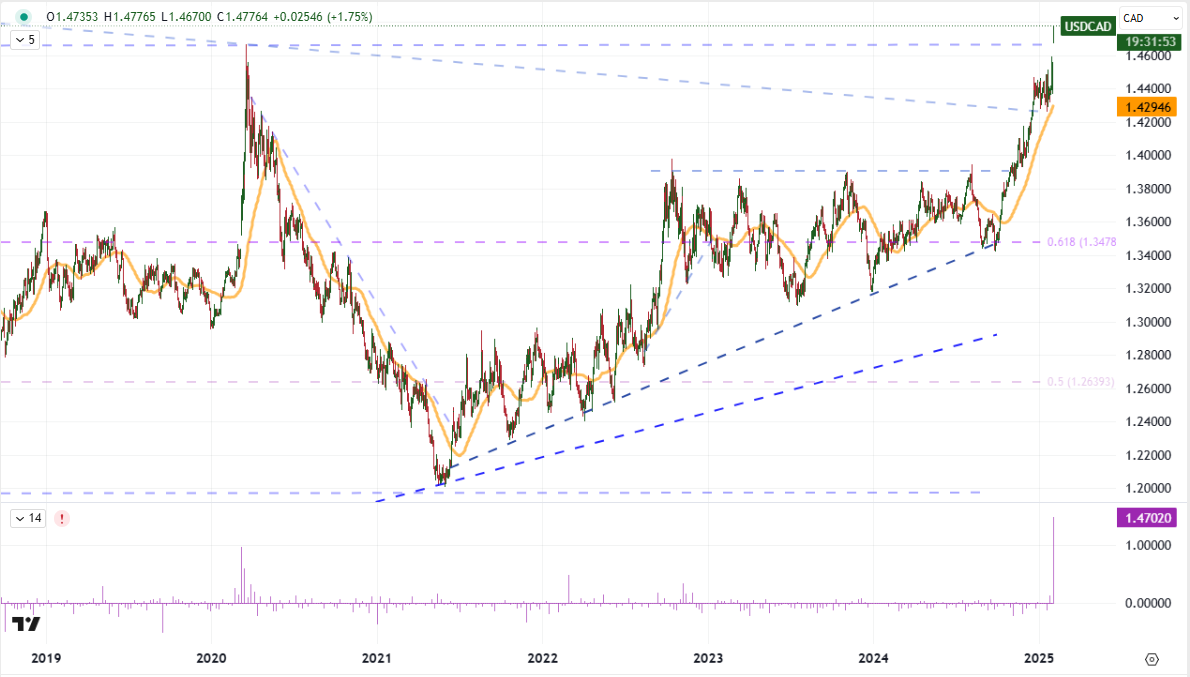
The market’s default confidence is facing another serious headwind: US President Donald Trump. Just a few weeks into his second term, the controversial leader has announced a new round of tariffs and a second trade war. After much back and forth in the headlines this past week, the President announced a new round of tariffs: 25 percent on all Mexican imports, 25 percent on most Canadian imports and 10 percent on Chinese goods. What level of impact will these import taxes will have remains to be seen; but we have opened to sharp gaps for the likes of the USDCAD – largest bullish gap since November 1976 – and the S&P 500 futures market (biggest gap down since February 2022).
USDCAD with Daily Gap (Daily)
Source: John Kicklighter, TradingView
While there is plenty in the way of scheduled event risk this week, it would be negligent not to issue a PSA warning to traders and investors around the risks of unexpected headlines. President Trump’s second week in office has been marked by substantive policy decrees and the announcement of a revived trade war with Canada, Mexico and China as the first salvo demonstrates just how disruptive the environment has grown. This throws another complication into an already busy dynamic for competing themes and their catalysts.
Headline-prone trade wars adds a significant level of uncertainty to what is driving the news cycle and investor decisions, far more than the emergent uncertainties around AI, a tentative waver in earnings, the leveling out of interest rate cuts and questions over the future course of growth. A closer monitoring of sentiment is warranted –and, even for the dubious, watching Bitcoin over the weekend to gauge any weekend sentiment tidal waves that can hit exchanges on Monday opens.
S&P 500 Overlaid with Bitcoin and 10-Day Correlation (Daily)

Source: John Kicklighter, TradingView
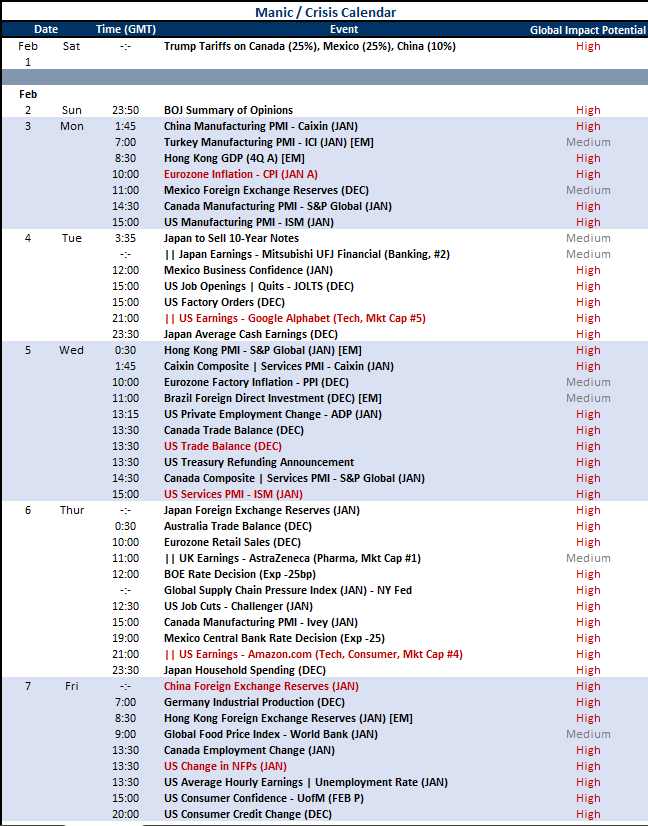
While the tariff news is its own fundamental force, it will also add a significant skew to the top scheduled event risk that we have on tap this week. While there are a host of events through the opening days of the week that may find a significant boost due to the new tariffs – and any retaliations that come in the aftermath – the top standalone listings hit in the latter half. Monetary policy will continue to stir fundamental interests following notable recent updates from the Federal Reserve, Bank of Japan and European Central Bank.
While there are a number of central banks that are due to report, it is worth focusing on the Bank of England and Mexican Central Bank. The former is facing an uncertain economic backdrop amid the political shift while the latter is now having to account for the heavy toll US tariffs will have. The BOC noted its future policy course will depend on US trade relations, and their Mexican counterpart is almost certain to state the same. What is the (monetary) policy strategy to adjust for this?
Calendar of Major Global Macro Events Scheduled for Week
Source: John Kicklighter, StoneX
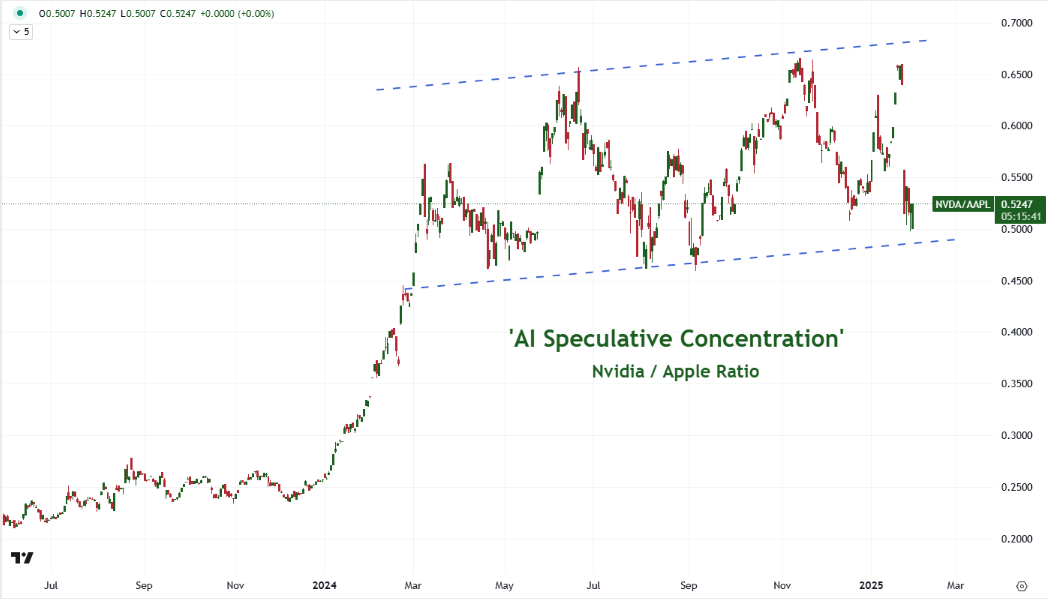
Earnings will be another prominent theme over the coming week. We are in the back half of the season with the major banks and many of the top tech companies already out of the way. Last week, the run of Microsoft, Meta, Tesla and Apple covered four of the so called ‘Magnificent Seven’. Technically, only Tesla fell short of top line estimates, but the stock would ultimately end the week higher. Microsoft and Apple both beat analyst forecasts set out for them, and yet both MSFT and AAPL took a notable dive. When the market can’t spin ‘bad news’ into ‘good news’, we aren’t in a default risk on environment.
When ‘good news’ can’t lift a market, there is a more serious shift in conviction at hand. That is the backdrop for which we should evaluate market sentiment heading into the release of Google and Amazon earnings on Tuesday and Thursday (after the close) respectively. If the struggle for traction continues – perhaps overridden by other macro themes – a faltering guiding light in the top market cap US stock performance can represent a serious change in general market sentiment.
Ratio of Nvidia to Apple as Measure of ‘AI Concentration’ (Daily)
Source: John Kicklighter, TradingView
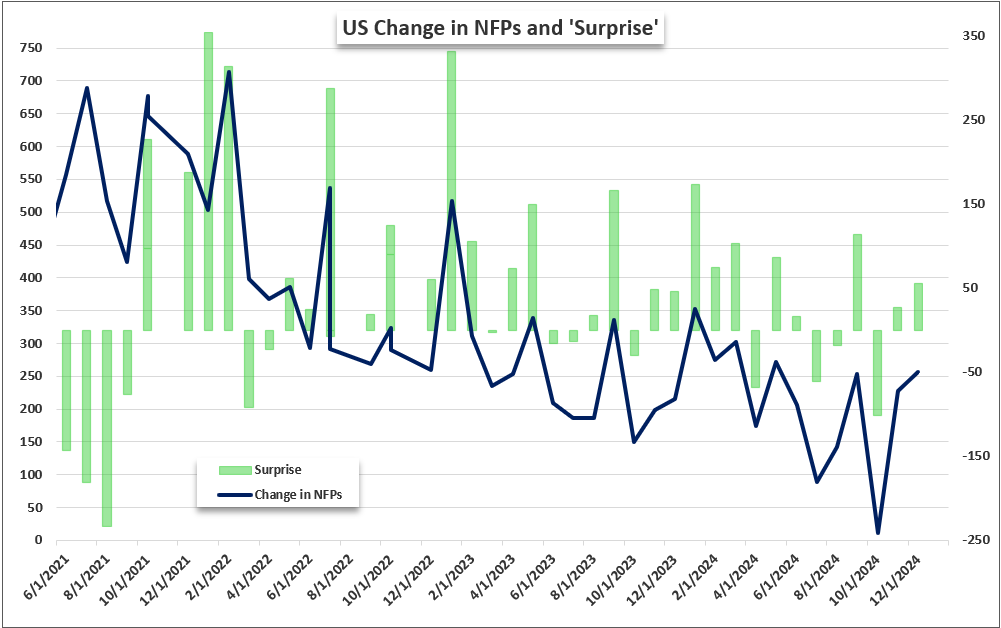
The final, top global macro event risk for the coming week, is the change in January nonfarm payrolls (NFPs) for the United States. This is a renowned indicator in and of itself, but it is also tapping into a trifecta of crucial themes: economic benchmarking, monetary policy priorities and political milestones. If the data comes out robust, it can help soothe concerns of imminent economic cooling, but the implications for monetary policy will be a hold off on further rate cuts and in turn greater pressure – and executive branch policy response – from the Trump administration.
Alternatively, weak data can raise concerns about the current economic (and investment) environment which may urge the Fed to another rate cut in March, but the White House will likely retain its criticism. We should also take into consideration its Friday release time. Anticipation will build through the active trading week up until its release. The response after it hits the wires will struggle to turn volatility into trend given the weekend liquidity drain – a period for which political headlines are likely to take over investors’ focus.
Chart of Monthly Change in US NFPs and the Level of ‘Surprise’ (Monthly)
Source: John Kicklighter, TradingView
-- Written by John Kicklighter, Global Head of Content