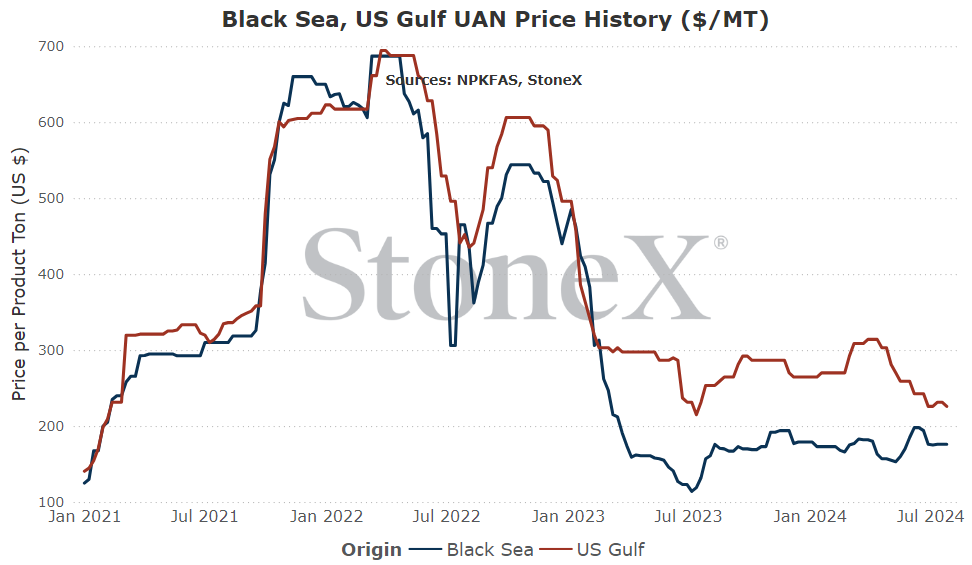
The intention of the below graphs are not to use to say "my price should be X based on this graph". These prices are derived from an FOB price point average. The intent is to show major global price movement trends. Your values will likely have significant basis difference (similar to your local grain price being different than the traded market price).
This graph is labeled as MT in USD currency.
GLOBAL
The urea markets do not look overly exciting to the upper or lower side. Nor does the NH3 market. There has been some supply lost due to Trinidad gas issues cutting into production. As has been the case, always some curiosity regarding who will take Russian produced product. If EU groups got their way and a 100 - 150 Euro tariff against Russian fertilizers, that would make it harder for Russia to find homes and push global values lower...for all except EU farmers. However, I do not see that ultimately happening.
I mostly continue to see the global UAN market flat. If I HAD to pick a side, it would be to the bullish side only because I think global urea supply issues are going to build and start pushing that higher but it will take a bit of time.
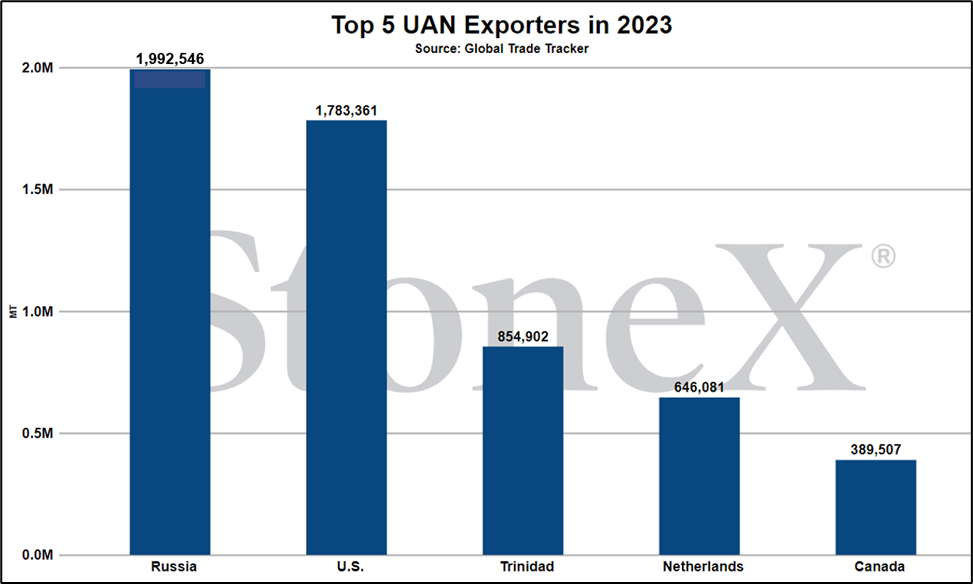
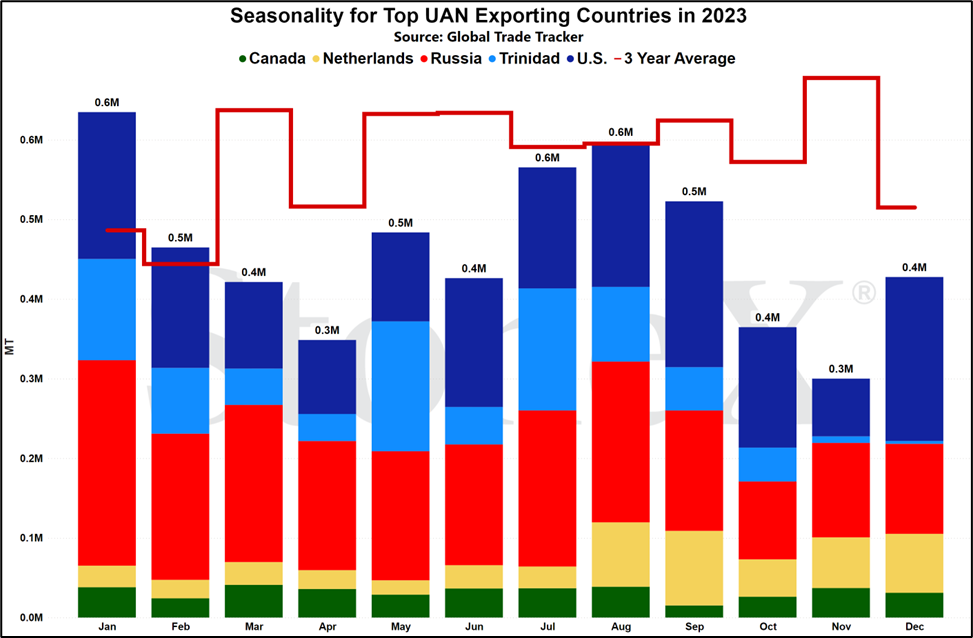
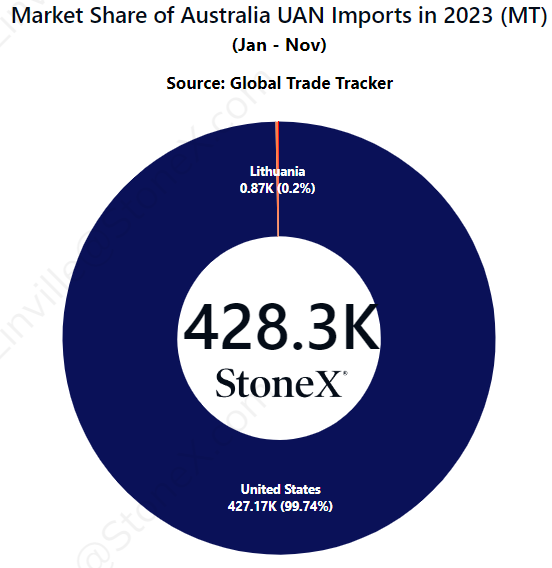
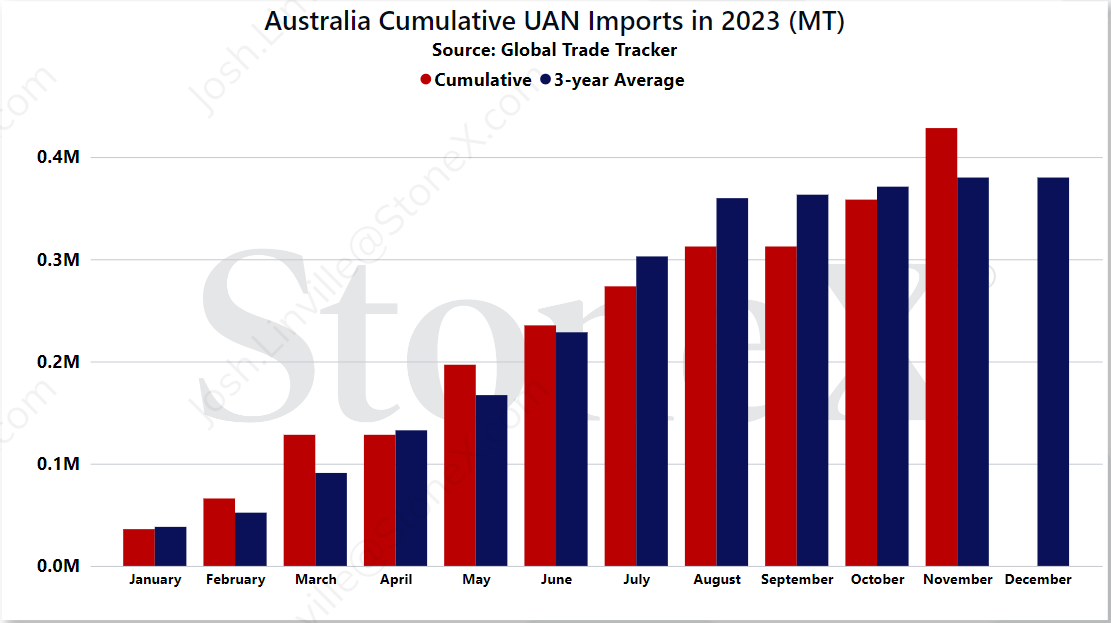
Trinidad production issues tighten global S&D
It doesn't seem long ago that production around the world happened with little to no impact to production rates. Plants ran well. Gas supplies were sufficient. You could count on the supply outlook. Now, it seems everyone needs to have a turn on having gas issues.
If that is true, the last month saw Trinidad start to take their turn.
Gas supply availability has been a bit of an issue in Trinidad for a while now. This is why we have seen in recent years a push to develop and extract gas from new deep sea fields. While these new builds are exciting from the perspective of having more normal flows, it unfortunately takes time.
Today, the world has to deal gas flows that can ebb and flow and the UAN market has been taking a pretty good punch in the process.
Manufacturers based there have had to slow production rates to meet new gas availability. The hope/pseudo expectation is that rates will return, that is highly dependent on gas availability.
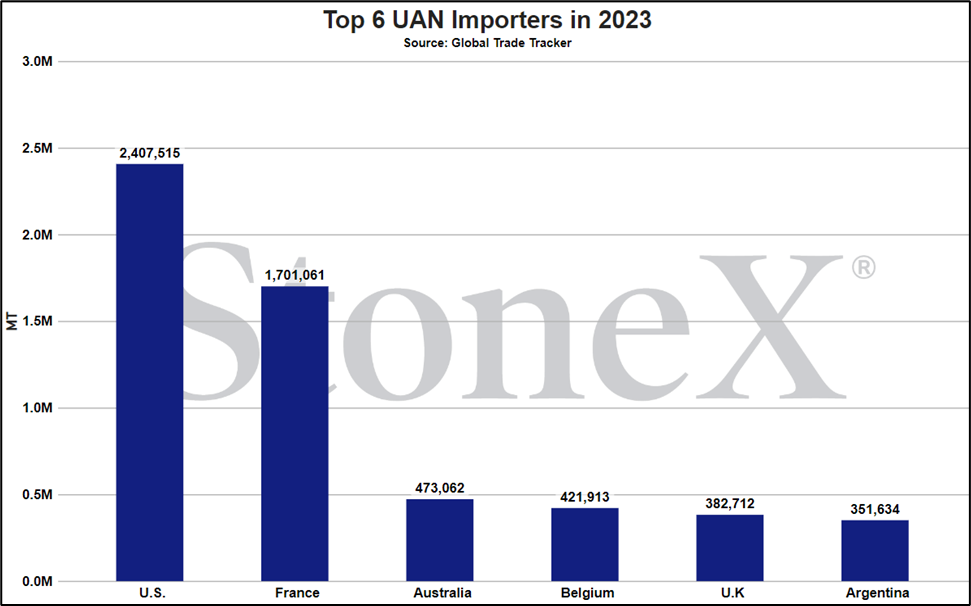
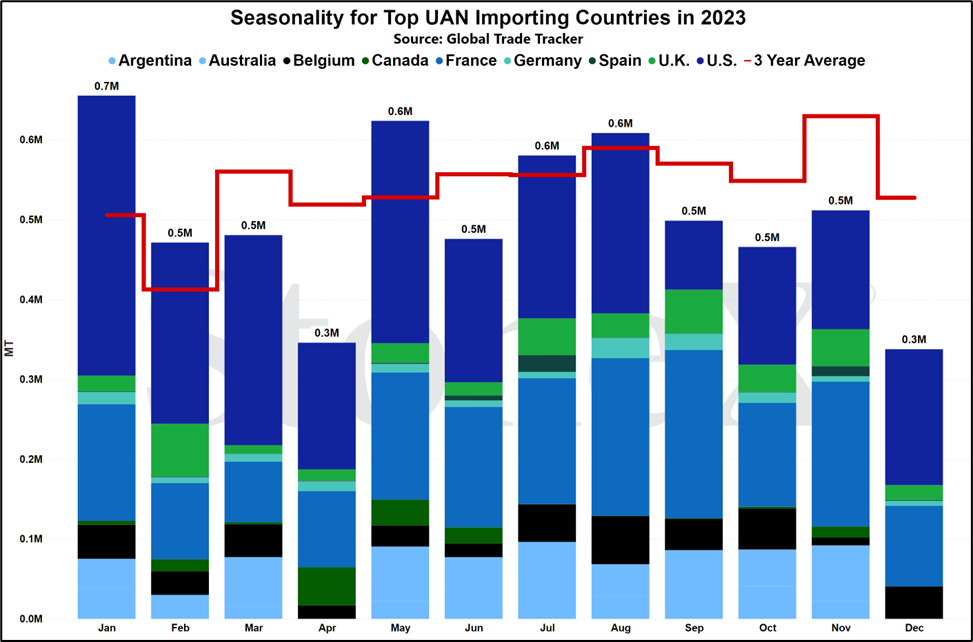
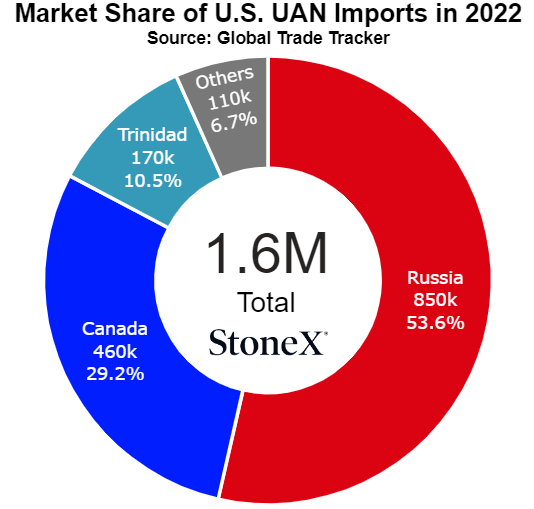
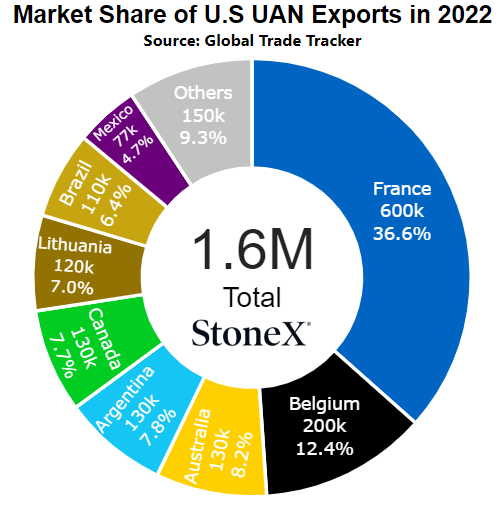
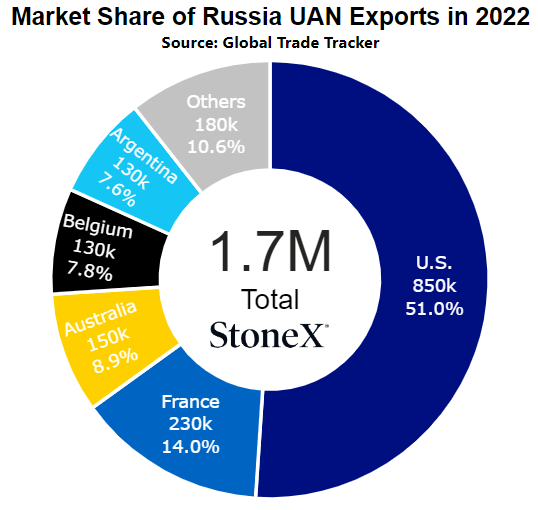
UAN is already a product that is already short of manufacturers. Russia continues to struggle with finding homes for its product with tariff's/restrictions due to their ongoing Ukraine invasion. The U.S. continues to enjoy having 25% of European production offline as they have been able to backfill that supply void. There is a steep drop off of exports going from the U.S. to Trinidad. It continues to fall from there.
Essentially, any impact to any of the top 3 manufacturing/exporting countries have global impacts...
Why does this matter for Australian farmers?
If one of the few producing/exporting UAN nations of the world has a production issue, it is felt around the globe. There just isn't enough manufacturers out there to make up the difference.
Tighter supplies and level demand typically says higher prices for everyone.
Proposed EU tariff on Russian fertilizer could have huge UAN impacts
In the last month, an EU based group proposed a 100 - 150 Euro tariff to be implemented on Russian fertilizer. No doubt part of the proposal was based on punishing Russia for its ongoing invasion of Ukraine. Another part of the proposal is likely based to help support EU based nitrogen manufacturing plants that remain offline due to higher than historical normal natural gas values. If you remember, Russia used to be the main supplier of natural gas to Europe thru the Nordstream pipeline. After disagreements, those flows were stopped and eventually an attack on the pipeline rendered it useless. Now, Europe must rely on vessel based logistics to receive supplies. It is not impossible to do so and it has become common, but it does come with a higher cost.
On the surface, this is a great plan. With the tariff you punish Russia by stopping imports and you also help local companies restart production to supply nitrogen fertilizers to local farmers to produce crops.
Unfortunately, these types of situations never play out as expected and this would likely cause European farmers nitrogen prices to jump as a result.
If they were successful in restarting offline EU nitrogen production plants, they are effectively restarting some of the highest cost plants in the world. These plants will not restart unless financially motivated. In theory, that would mean farmers would bear the brunt of these proposed tariff's unless EU governments intervene to subsidize production plants high gas costs.
For North American farmers, this would be a huge win. The U.S. continues to export heavy volumes of UAN to help backfill offline production. At the same time, Russian product continues to flow in at nearly the same amount. If the EU were to restart their production, that would mean U.S. exporters losing their destination. Those tons would have to stay "home" and compete with Russian which "should" mean lower values.
At this point, the tariff against Russia was merely a proposal. I have not seen anything that shows any progress being made on it but it does give a sense of how politically driven these markets can become and remain a story farmers need to watch.
Why does this matter for Australian farmers?
This has the potential to completely disrupt global trade flows.
If the EU puts tariffs in place and it restarts all their domestic production, the U.S. has to keep all those tons that had been flowing to Europe at "home" to compete against the Russians. Values there should fall and with the U.S. being the provider of UAN for Australia, hopefully that means lower prices here as well.
However, if the EU and the U.S. put tariffs on Russia, then the U.S. no longer has to compete with Russia. Much easier for prices to rally which should mean higher prices for Australian farmers.
Things halfway around the world matter here at home.
How will poor farmer economics impact the UAN market?
The 2025 spring season is still nearly a year away, yet today we are seeing some healthy UAN values holding in the face of falling grain values. Many folks have been wondering what this will mean as we move ahead. How will struggling farmers affect the UAN marketplace?
On the surface...it shouldn't. Now, I make that statement from the POV that 2025 will see 90+ million acres of corn and all other crops filling in as normal. If that is right, nitrogen demand is going to be largely unchanged. Sure, we can reduce/change our phosphate and potash application programs but we have to have nitrogen to grow most crops. In fact, when we recently reran our demand models for fertilizer year 2025, nitrogen demand grew a little over 1% from fertilizer year 2024. So, from an extremely fundamental POV, the S&D of the UAN market has not changed significantly so values should stay high and the UAN market will not care what you are selling the grain for.
If you are still reading, that is good. That means you haven't thrown your computer thru the wall!!!!!
Now, what about in practical views?
1. Will next years acreage mix change? Today, it is too early to tell. I've been focused on the falling corn price because I am a corn guy. However, I know other grains are not healthy. If all grains fall at the same rate, it is not a good situation but the nitrogen demand will be there for the most part.
2. More important is timing. Over the last few years, fertilizer prices have been higher than where we are today, but there was enough income that farmers/retailers could justify pulling the trigger on purchases much earlier in the cycle. It gets really easy to fall into the trap of thinking that is the new normal. Today, that is not normal. Farmers are struggling with 2024 cash flows as grains fall by the day. 2025 outlook does not get much better. As a result, farmers are not rushing into retailers offices to buy spring needs. Retailers, also not as healthy as they have been, are unwilling to take all of the price risk and are dragging their feet. That creates a market that has a short term oversupply problem...but also sets up a market that will have a logistical problem later in the calendar.
This is what the market is struggling with today. Urea and NH3 are both showing strength in the last few weeks and the outlook. Normally, that would mean a surge in UAN pricing (it may still happen) as buyers come in droves. However, with spring so far away and buyers few and far between, it puts pressure back on the manufacturer/supplier to try and find buyers.
Eventually, the market will have to step forward for needs...but today doesn't seem to be that day and the market is going to have to accept this new reality.
Why does this matter for Australian farmers?
I stole this from the North American version. Because Australia is so dependent on the U.S. for its UAN supplies, what happens to farmers there affects the price of UAN which eventually affects the price here. American farmers are in a tough spot financially. Purchases are going to be severely delayed vs the last few years. That could impact pricing which matters here.
NOLA/New Orleans, Louisiana
Number 2 global importer in 2022
Number 1 global exporter in 2022
Price Comparisons
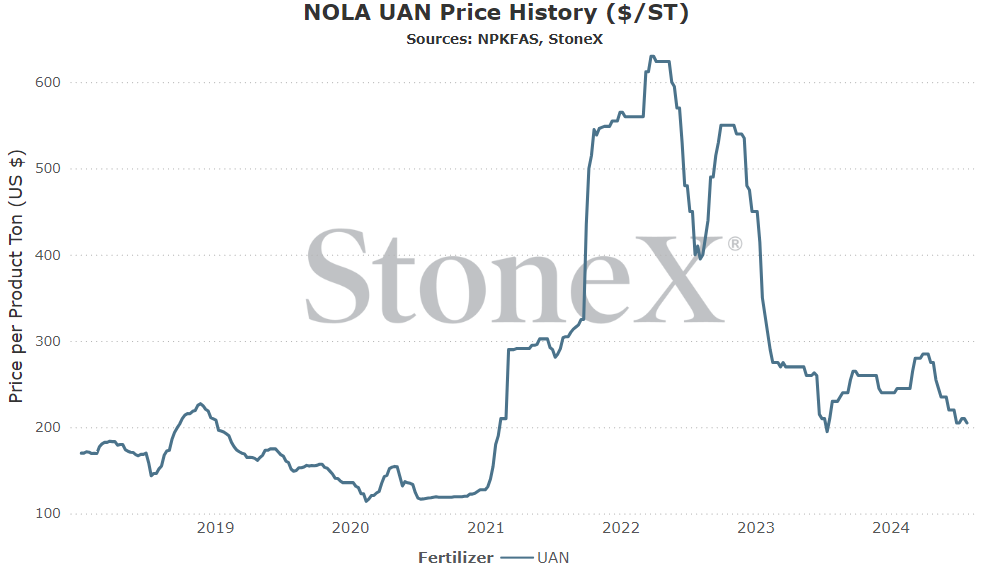
Vs 30 days ago - unchanged vs 30 days earlier
Vs 90 days ago - -25% or approximately $70 lower
Vs 6 months ago - -16% or approximately $40 lower
Vs 1 year ago - -11% or approximately $25 lower
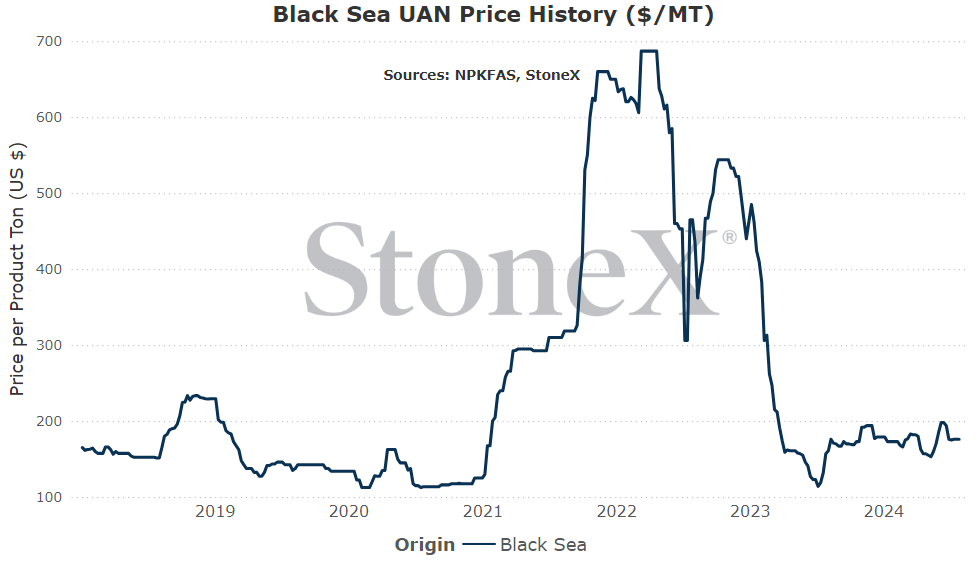
Black Sea (Russia)
Number 2 global exporter in 2022
Price comparisons
Vs 30 days ago - unchanged vs 30 days earlier
Vs 90 days ago - 12% or approximately $19 higher
Vs 6 months ago - 2% or approximately $3 higher
Vs 1 year ago - 12% or approximately $20 higher
- If EU proceeds with a tariff on Russian fertilizers – this would be bullish for EU farmers. If those tons are completely blocked, it would likely mean that European farmers must get European nitrogen production back online. Unfortunately, European nitrogen production is some of the highest in the world...and those cost will be taken by the farmers. Yes, it always flows downhill.
- If U.S. moves toward a tariff on Russian fertilizer – if the U.S. decided enough was enough regarding Russian and moved to block imports, then U.S. based manufacturers will have a heyday. Russian imports have been one of the biggest competitors that have helped keep prices in line. Without that competition, who is going to keep values in check?
- Urea strength could quickly pull UAN price ideas higher – if urea values start to climb as I am expecting later this year, no doubt the UAN market will look to do similar. Why let a good bull run go without taking advantage?
- If EU places tariffs on Russian fertilizer, but U.S. remains unchanged (U.S. values fall) – this will take some explanation. If the EU blocks anything/everything Russian, that "should" be another step toward European nitrogen production resuming. If those plants were to resume, that will work to push back some of the U.S. tonnages that had been flowing over. If that happens AND the U.S. changes nothing, then the U.S. is swimming in U.S. and Russian UAN which would help values fall due to competition.
- Summer fill programs in N.A. were not as successful as expected – in the recent fertilizer conference in Nashville, it sure felt as though the market wasn't as confident in manufacturer sales books as they were originally. Not overly surprising given that retailers/farmers are not in a good place given grain values. If demand stays away and the sales book is not great, then we could see a situation where manufacturers have to get aggressive to bring those buyers back.
- Unexpected swing in 2025 acres – the fertilizer story for 2024 is already told. We know the acres and the demand. We have to look forward to 2025 and we are expected another 90+M acre corn year for the U.S. All other grains are expected to remain "normal". That should mean more than adequate nitrogen demand. However, with the way grain values are going, it is not out of line to see where farmers may surprise us and drop nitrogen craving acres in lieu of cheaper input crops. This happens in a big way and the market is in for a struggle.
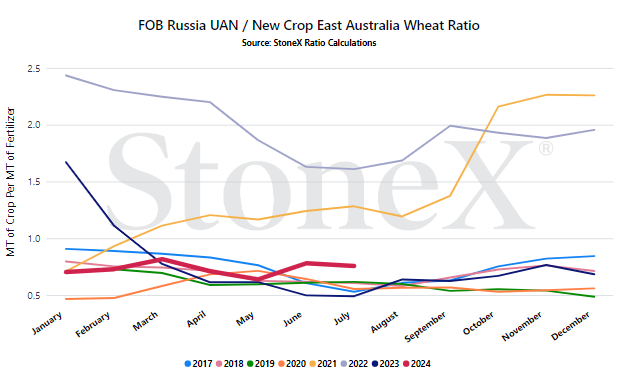
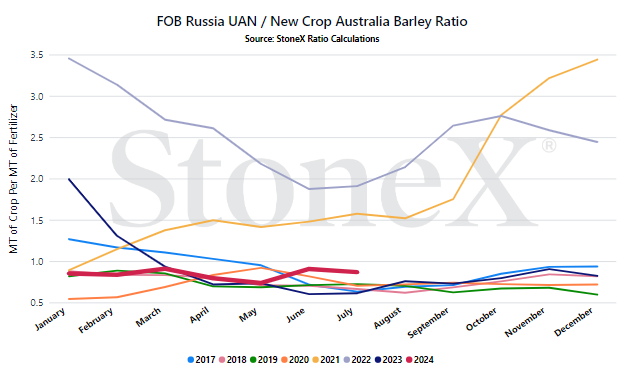
We believe that only looking at the flat price of either grains or fertilizer can be misleading:
-
Only selling grain can hurt you if fertilizer prices rise substantially
-
Only buying fertilizer can hurt you if grain prices fall
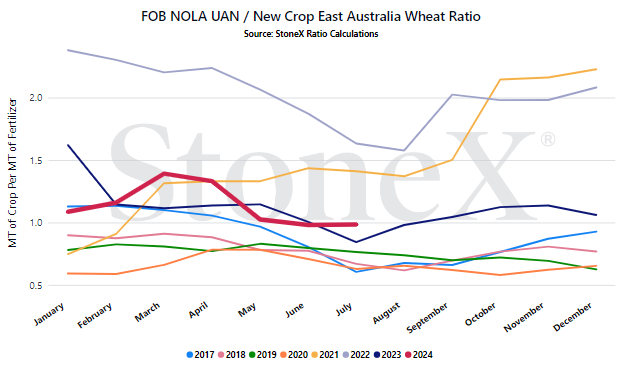
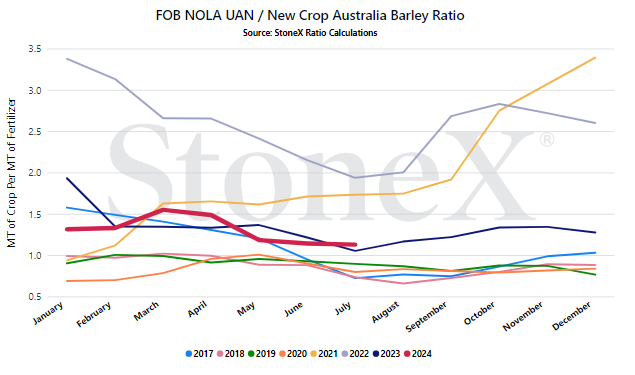
We look at the ratio "value" to get a better indication of where we are or how many bushels of X does it take to pay for 1 ton of fertilizer.
Would you rather:
-
Spend 100 bushels to pay for 1 ton of UAN
-
Spend 60 bushels to pay for 1 ton of UAN
When we compare the current ratio value against recent years, we start to see if we are high or low.
YOUR VALUES MAY LOOK DIFFERENT
This graph looks at the NOLA UAN price vs the flat grain price. There are no logistics on either product. Your location will look different due to fertilizer logistical costs, grain basis, etc.
- Trinidad production - gas cuts continue to dig into Trinidad nitrogen production. The more that happens, the less UAN that is produced and available to the world. The lower the supply, the higher the price (in theory).
- EU/U.S. politics - an EU group has proposed a 100 - 150 Euro tariff on Russian fertilizers. A U.S. based nitrogen manufacturer has eluded to purchasing Russian fertilizer is like supporting their war against Ukraine. There are a lot of politics that surround anything Russia today. If any of these become real stories (in terms of tariff's starting to be implemented), it will fundamentally change global trade routes and as a result, available supplies. Normally, these mean higher prices...
StoneX Ratio Calculation
The ratio calculation is derived from Bloomberg historical grains values as well as fertilizer values from StoneX, NPKFAS, and Argus.
The calculation is simply dividing the fertilizer price by each grain price.
All data was sourced from StoneX unless otherwise noted.