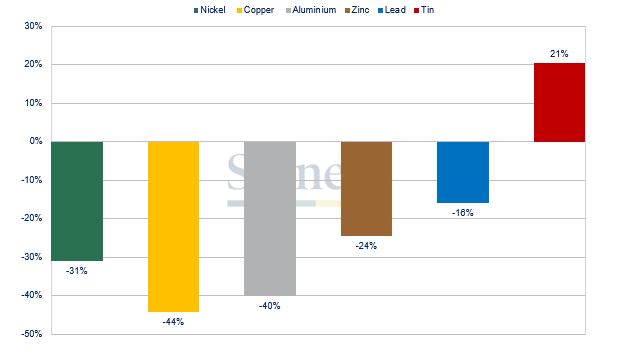
The base metal suite is on track to record a healthy gain of ~5% this week, opposing the negative price performance since mid-November, with this week marking arguably, the most significant shift in sentiment towards downward pressure stemming from leading macro headwinds. Here we allude to comments made by Federal Reserve Chairman Jerome Powell with respect to forward guidance on monetary policy (which has been one of the key drivers behind the U.S. dollar moving above a 20-year high), in addition to a language change from officials in China on its zero-tolerance stance towards COVID-19. However, given a backdrop in which economic readings within China itself remain lacklustre, in addition to forecast slowing global GDP growth next year, is this improved market sentiment temporary and have we seen the bottom for base metal prices in the near-term?
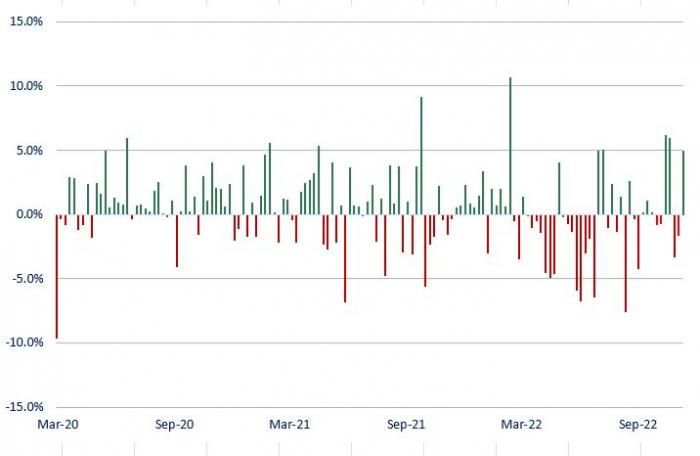
BASE METAL WEEKLY PERFORMANCE
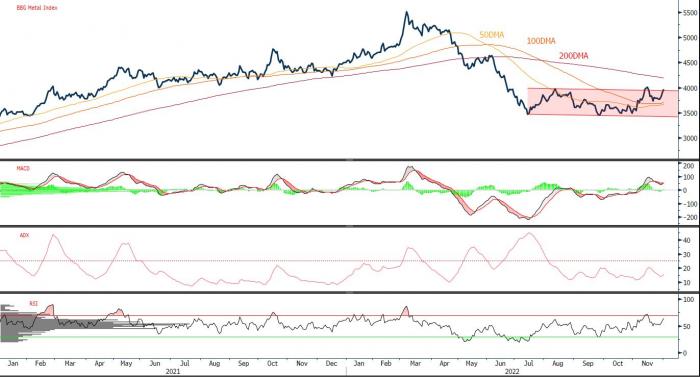
BASE METAL - TECHNICAL ANALYSIS - ARE WE ON THE VERGE OF BREAKING OUT OF THE SIDEWAYS CHANNEL?
China’s Path to Recovery Has Been a World Wind – What Do We Expect Ahead?
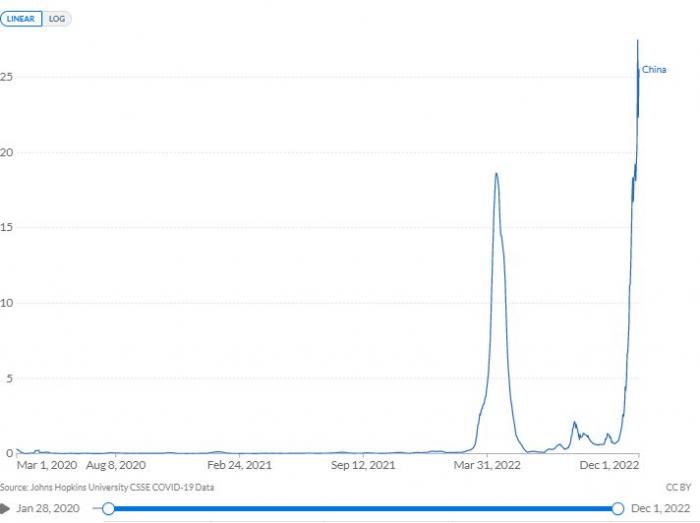
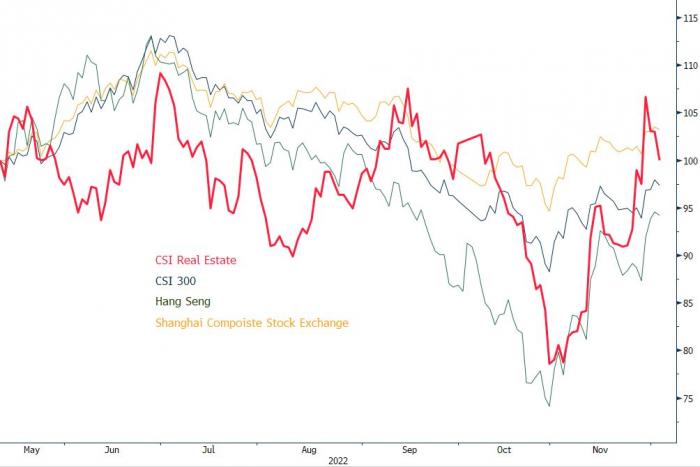
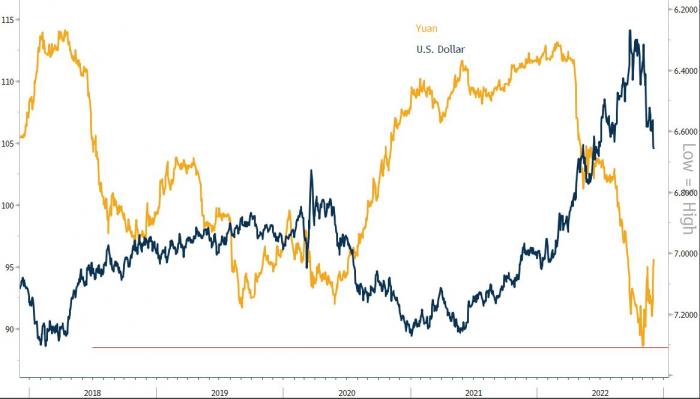
Over the month of November, sentiment towards a recovery within China has been mixed, given a backdrop of weak economic readings, battling against noteworthy changes in policy (from the PBoC and Government) to encourage growth. Indeed, on 11th November, the Government announced its first official alteration to its zero-tolerance stance on COVID-19, outlining a 20-point plan in order to reduce some of the strict prior legislation (i.e., reducing quarantine times), while policy to help support the ailing property sector (over the last two months), has been stepped up. For the majority of November, markets were focused on the optimism that these policy shifts could bring to a recovery in the country, with domestic equities benefiting, in addition to a pull back in the depreciating yuan (which fell to its lowest level on 3rd November in 14 years). However, the rise of new daily cases of the virus in the country (which hit a record level on 28th November), resulted in the return of strict local lockdowns and building frustration from civilians, with protests breaking out across major cities (as well as at industry plants). It is important to note here, that protests which took place (largely over 25th-28th November), are the most significant in recent history, with protesters even calling for President Jinping to step down (BBC reports protesters chanting “down with the CCP, down with Xi Jinping”).
RECORD COVID-19 DAILY CASES
As it stands now however, risk-off sentiment is easing, following firstly an announcement from the Chinese Health Commission on 30th November, in which it was highlighted that excessive restrictions should be avoided (even if the virus continues to spread), that personal requests about the virus should be addressed and that vaccination rates will be boosted. While this was then followed up by a statement from Vice Premier Sun Chunlan, at a meeting with the National Health Commission (on 1st December), in which she said ““as the omicron variant becomes less pathogenic, more people get vaccinated and our experience in COVID prevention accumulates, our fight against the pandemic is at a new stage and it comes with new tasks”. Please note, Vice Premier Sun Chunlan has been the heart of policy decisions regarding lockdowns, even gaining the nickname on Chinese social media platforms of “old lady of lockdown”, and therefore this latest development (which saw Ms Chunlan drop the term “dynamic covid zero” used in previous briefing), indicated a potential new approach to how China will handle virus outbreaks. In addition, on 2nd December, further positive sentiment was created in the market by comments from PBoC Governor Yi Gang, in which he stated that the central bank’s focus is now on growth, with “pretty accommodative” monetary policy to be maintained.
Looking ahead, market attention will follow the outcome from the upcoming Politburo (China’s top decision-making body for the Communist Party) meeting, which is usually held in early December, for any guidelines over economic policy for the next year. Following this, attention will then shift to the outcome of the Central Economic Work Conference (which is usually held a week after). Please note however, policy objectives (including a GDP forecast for 2023), will not be published until March at the annual legislative meeting.
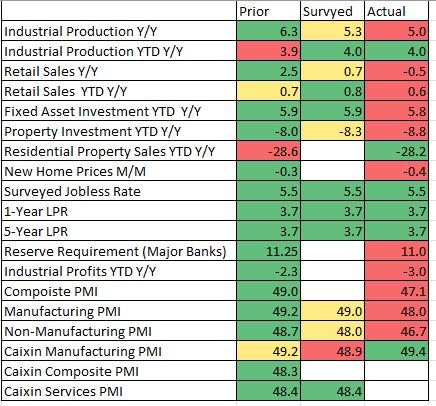
CHINESE ECONOMIC READING STILL DISAPPOINT
In our view, the developments over the last week are favourable towards a Chinese economic recovery, with the zero-tolerance stance of COVID-19 having been a key driver behind the weaker than expected performance of the country this year. However, we remain cautious in our optimism, given that current underlying economic readings (while improving), remain weak. In addition, the steps taken to ease restrictions for COVID-19 will not prevent lockdown measures being taken completely, and although they should help improve low confidence in the country, a complete move away from zero-tolerance is unlikely to occur in the near-term. Meanwhile, with further actions being taken to help the property market, we do forecast that we could see a bottoming out in the underlying readings over the next several months, although we expect pain in this industry to last over the next year at least. Finally, with exports in 2023 set to remain at a lower level than we have recorded over most of 2022, focus will remain on the timing of domestic demand recovery, with trade figures, import premia, domestic inventory and production being key indicators to watch. Furthermore, the unpredictable nature of geopolitical developments over 2022 means we cannot rule out hidden risks from any de/escalation in tensions between major trading partners (i.e., Taiwan, the United States, Russia etc).
CHINESE YUAN
Something to Keep an Eye On
Over the last three weeks, we have been tracking a pull down across the suite (bar tin) of SHFE inventory in China, and this is set against a backdrop of rising domestic production and increasing imports of material. We forecast that this is an important area to watch in order to track the pace of a pickup in domestic demand, which is often overridden by headline economic readings, such as the latest state produced PMI numbers (which came in below market expectations across the board).
CHINESE METAL PRODUCTION NUMBERS
October production of copper, zinc and lead hit their highest level of output since December 2020 and December 2021 respectively, with the summation of production for 10-nonferrous metals recording it highest month of output on record. Meanwhile, Aluminium production in October reversed September’s slow down and jumped by a moderate 0.8% M/M, moving YTD production to 33.9Mt, an increase of 4.5% compared to the same period a year ago. As it stands, aluminium output is set to post a new record in 2022, despite negative impacts stemming from reduced hydropower issues over the last several months. If we continue to see production at this level (in addition to what we have already recorded YTD), then output could hit a new record of 40.8Mt in 2022.
This is an central development to watch, with China taking significant steps to boost domestic growth in the last several weeks. If we continue to see robust output to year-end, it may signal the beginning of recovery in the country (especially if we continue to see SHFE inventory stocks decline).
SHFE BASE METAL STOCKS HAVE BEEN FALLING CONSISTENTLY SINCE 18th NOVEMBER
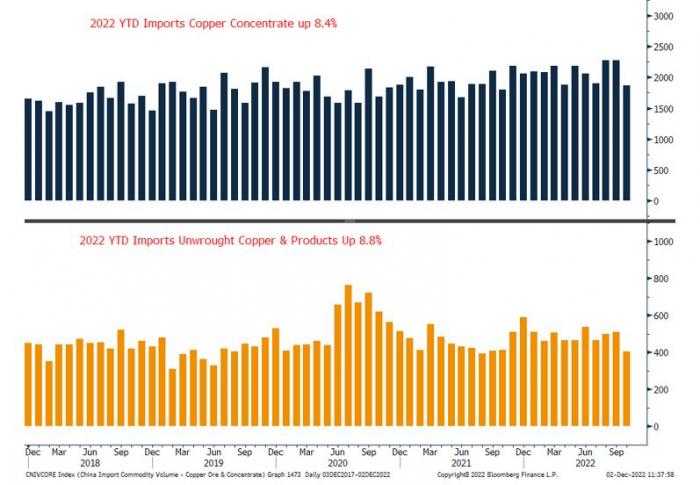
CHINESE IMPORTS OF COPPER
Meanwhile, please note that copper imports for both concentrate and unwrought products are in positive territory on a YTD Y/Y basis, with imports of concentrate on track to post a record high, while imports of unwrought copper and products are on track to record their second highest annual level (since 2019).
Expectations Over U.S. Federal Reserve Monetary Policy Actions Move U.S. Dollar
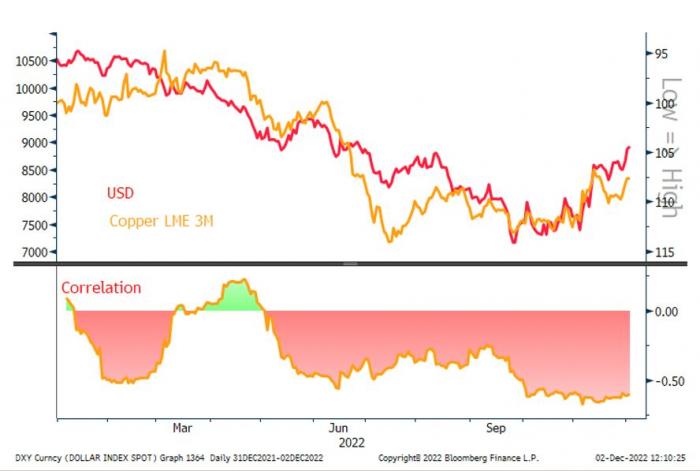
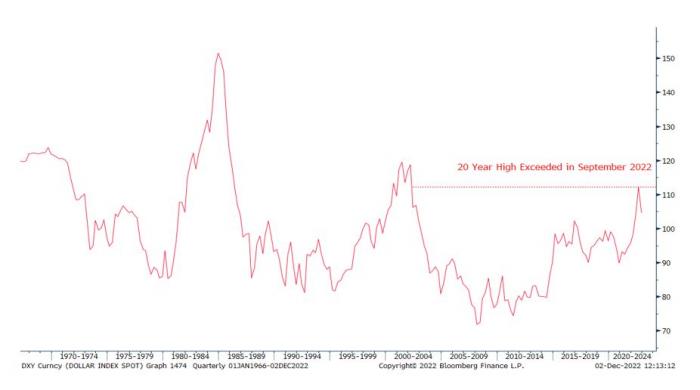
The U.S. dollar has been one the most influential price drivers for our base metal suite since May 2022, with a building negative correlation over the year, placing downward pressure on the suite as the dollar rose above a 20 year-high (on the expectations for higher interest rates from the Federal Reserve to cool inflation). However, following the release of recent economic data, in addition to comments from Federal Reserve Chairman Jerome Powell, and the outcome of the FOMC minutes, the market has started to price in a higher chance of slower rate hikes by December (and months ahead), after four consecutive meetings concluded with lifting rates by 75 basis points each time.
More on FOMC Minutes: Please click here to read Rhona O’Connell (Head of Market Intelligence EMEA & Asia) report “‘Precious Metal Talking Points: The Fed November Minutes; now you see it, now you don’t. Dovish pressure building”.
“Despite some promising developments, we have a long way to go in restoring price stability”. “Thus, it makes sense to moderate the pace of our rate increases as we approach the level of restraint that will be sufficient to bring inflation down”. “The time for moderating the pace of rate increases may come as soon as the December meeting” - Jerome Powell at a speech at the Brooking Institution on 30th November.
U.S. DOLLAR VERSUS LME 3M COPPER PRICE
U.S. DOLLAR ROSE ABOVE 20-YEAR HIGH IN SEPTEMBER 2022