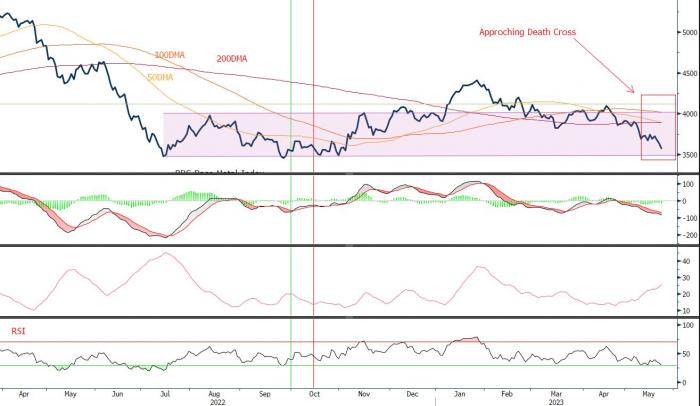
Following the conclusion of LME Asia Week (held in Hong Kong as of 16th May), market sentiment towards the outlook for a rebound in economic growth within China has weakened, with the release of economic numbers unable to sooth concerns. However, in our view, the reopening of China from zero tolerance on COVID-19 was never going to be a ‘one solution solves all’, with the timeframe for recovery spread over the entire year. As it stands, with macro, micro and the technical outlook for base metals bearish, it is not surprising that that the index has fallen to six months lows; nevertheless, we are starting to see signs of a pickup in physical demand within China. In this article we highlight the current realities for the base metal market, both technical, micro and macro.
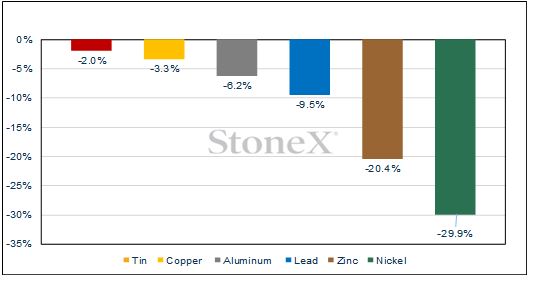
LME Base Metals M/M
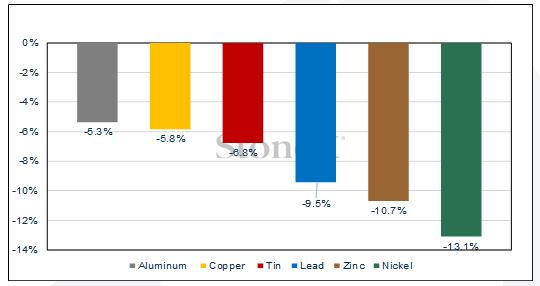
Macroeconomic factors have been front and centre when it comes to base metal price direction over the last 18 months, with the near-term outlook creating headwinds for the industrial metals:
• Chinese economic readings over April disappointed the market (to read more on this, please see our article ‘Prospects for Chinese Demand Recovery Weaken on April Data – Base Metals Struggle to Find a Near-Term Supportive Narrative’ - link HERE
• A strengthening U.S. dollar has placed downward pressure on prices (given growing uncertainty over a solution to ongoing debt ceiling talks)
• Weakening sentiment for ex-China growth in H2 (on a lagged impact from rising interest rates, with a view that the worst is yet to come)
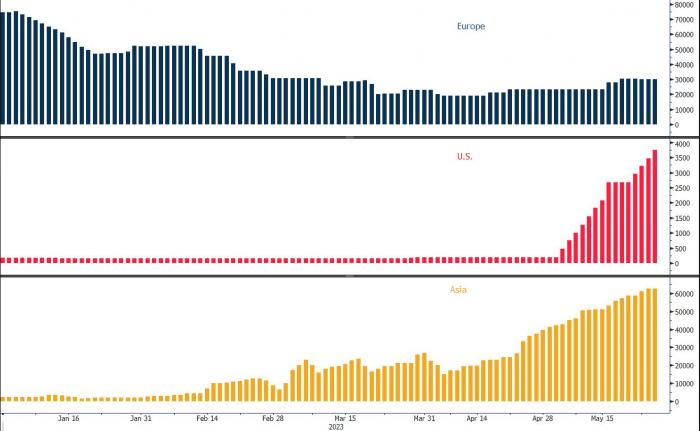
Over the last several weeks, market focus has turned to the micro (not just macro) picture for the base metal suite, with a sharp inflow of material into LME warehouses, causing concerns over global demand. This week in particular, it has been copper that has been in the headlines, with on-warrant LME inventories jumping 180% in just over a month (reversing a 55% decline in stocks prior to this period since the start of the year). As a result, the sheer pace of inflows caused the LME Cash-3M spread to rise to its largest contango on record, of $66/t by 23rd May. This development has highlighted a lack of demand appetite in the market, with inflows occurring into Asian and more recently, U.S. based warehouses.
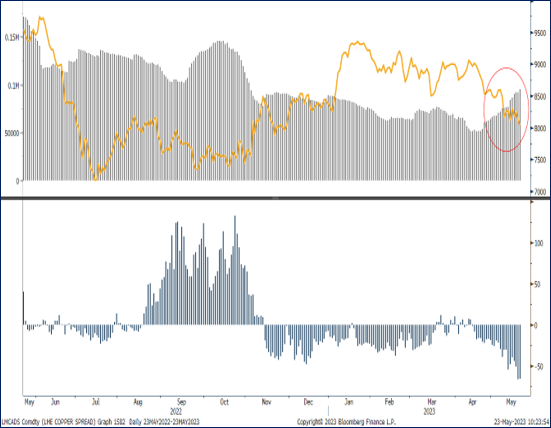
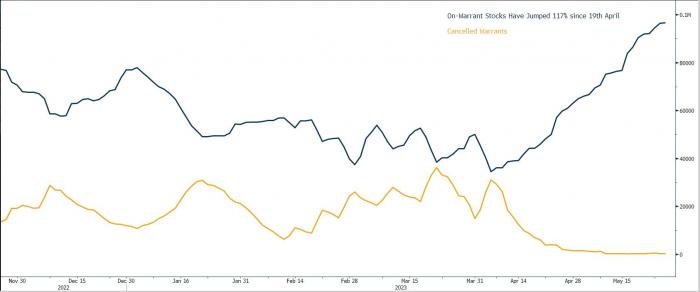
LME Copper On-Warrant Stocks By Region
Meanwhile, the ADX reading is moving towards the important 25 level (which is suggestive that the index is starting to develop a trend); in this case, to the downside. Additionally, the RSI indicator has bounced off its oversold levels, signifying that there could be a further dip lower in prices.
The increase in inflows of on-warrant stocks on the LME isn’t confined to copper alone, with lead having recorded a similar pace of inflows to copper since mid-April. However, it is zinc that is the spotlight this morning (25th May), with a jump of 41% in on-warrant stocks overnight.
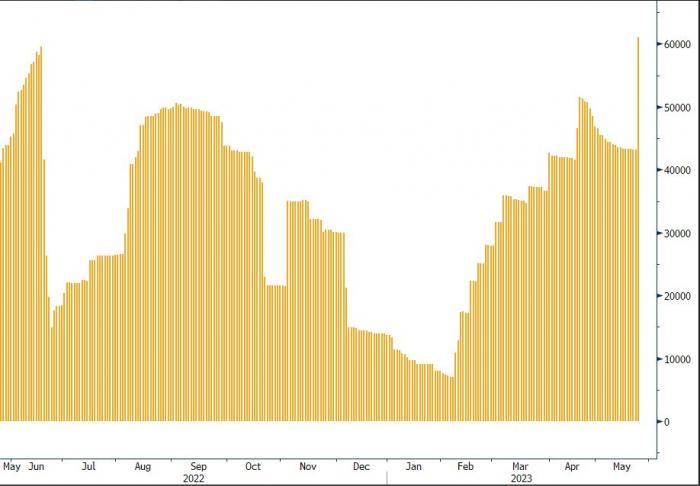
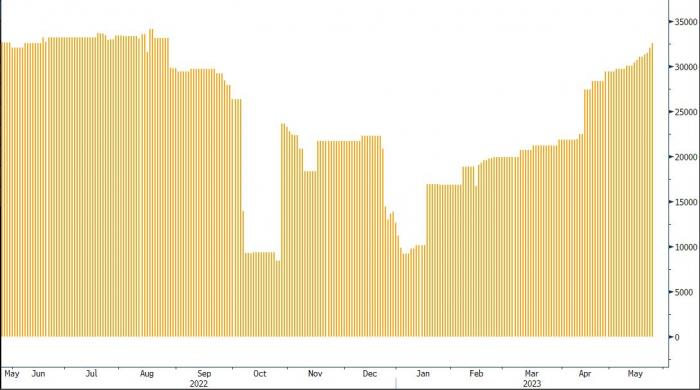
What is This Showing Us?
It is reflecting that demand (certainly in Asia) is weak, particularly given Q2 is historically a period of peak construction within China. The inflow of metal can be identified as material that is not in use and therefore is coming back into warehouses, rather than in the hands of downstream players.
However, Are We Starting to See Signs of Physical Demand Weakness Bottoming Out in China?
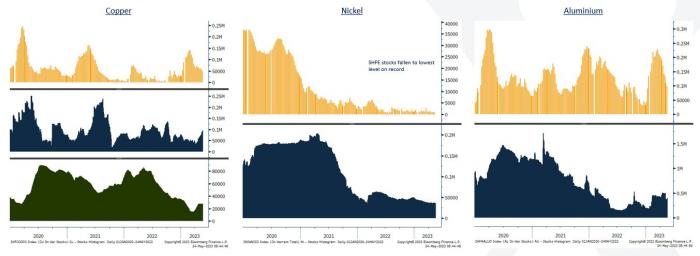
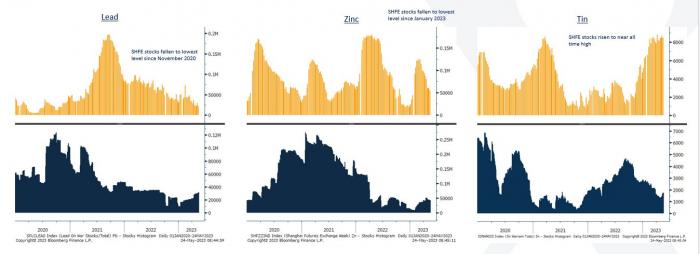
If we do the same exercise as we have done for LME stocks, but instead focus on domestic SHFE stocks alone, the picture is the reverse, with SHFE stocks for the base metals gathering pace in outflows over the last month. Indeed, over the month of May, every metal in the suite has recorded outflows, although to varying degrees. Please note, tin is the exception to this, with current SHFE stocks near all-time record highs.
Lead, Zinc & Tin SHFE On-Warrant Stocks
If we focus on copper, we have started to see signs of a pickup in the physical import premium for the first time in six weeks, while record levels of domestic production, set against reducing on-warrant inventory, is highlighting that demand weakness could be bottoming out in the world’s largest producer and consumer of base metals. However, we do remain cautious that any recovery will not be instant, especially given ongoing issues with the property market and forecast slowdown in export demand, with recovery a marathon and not a sprint.