StoneX logo

Coffee Weekly Report

By: StoneX Intelligence Brazil, StoneX Intelligence Brazil

Arabica prices increased by almost 80% in 2021, while Robusta by over 70%
 
Fernando Maximiliano


Several factors, ranging from the effects of the pandemic to the occurrence of weather events, contributed to promoting the strong appreciation of coffee prices in 2021
HIGHLIGHTS 

•    Arabica prices increased by 79.2% in NY in 2021, ending at US₵ 226.1/lb.
•    Cepea indicator advanced by 132% in the year, going from BRL 606/bag at the end of 2020 to BRL 1431/bag.
•    Robusta prices appreciated by 72.7% in London to USD 2370/ton last Friday.
•    The domestic Robusta market increased by 103% last year, with the CEPEA indicator going from BRL 410/bag at the end of 2020 to 2021 at BRL 828/bag.
•    Export difficulties boost Robusta coffee in the week  
•    November and December rainfall fell below the historical average in most of Brazil’s coffee belt  
•    La Niña is expected to continue affecting producing countries in the first months of 2022  
•     Below-average rainfall at the beginning of the year could affect the filling stage
•    Disclosure of country exports in December should dictate price trends in January 
•    Dollar closes the week down but ends 2021 high by 5.2%
•    Election year, inflation, political instability and economic difficulties should bring high volatility to the Brazilian exchange rate this year

   Bearish Factors       Bullish Factors


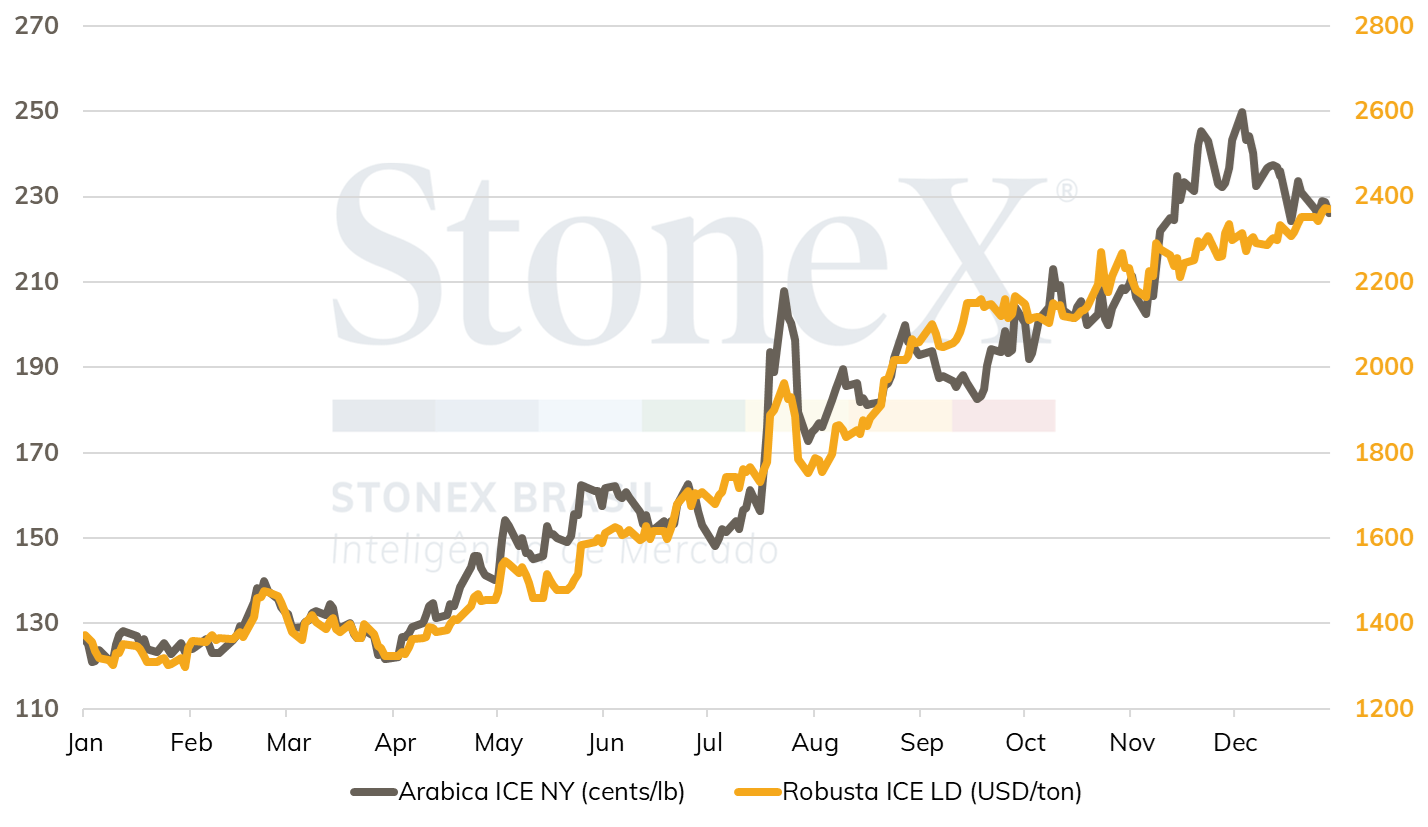
As a result of a sequence of events, from the problems caused by the pandemic to logistical problems, the reduction in Brazilian production and adverse weather events, coffee prices have shown an impressive increase in 2021. For the Arabica market, there was an increase of more than 79.2% in New York, where prices showed an appreciation of US₵ 99.95/lb. In London, the Robusta market increased by 72.7% or USD 998/ton, in 2021. 

In the Brazilian spot market, the observed increase in coffee prices was even sharper, as the CEPEA indicator for the Arabica variety showed that coffee prices had an increase of 132.5%, closing the year quoted at BRL1,431.58/bag. The Robusta coffee prices, on the other hand, increased by 103.3% in 2021, closing at BRL 828.35/bag. The major increase in Brazilian prices was due to the strong devaluation of the Brazilian currency, which showed a decrease of 5.2% from the US currency – it is important to note that at the closing of the last session of the year (30/12/2021), there was a selling pressure that contributed to weighing on the dollar in the Brazilian market, but if we consider the 29/12/2021 close, the Brazilian real will account for an annual devaluation of 7.7%.

EVOLUTION OF ARABICA AND ROBUSTA COFFEE prices IN 2021
image 25441
Source: CommodityNetwork Traders’ Pro. Design: StoneX.

In the last two weeks, the Arabica market has fallen sharply, particularly during the week ending December 23, mainly due to the release of USDA estimates for global coffee supply and demand, which pointed to a surplus of 2.6 million bags in the 2021/22 crop year. However, the Department estimates ran counter to the market's expectations, betting on a substantially negative balance in 2021/22. Moreover, due to the end of the year festivities, the coffee market activity remained calm, with speculative agents predominating and under the effect of macroeconomic factors since there was no major news from the fundamentals side. 

The Robusta market in London showed an important appreciation in recent weeks, mainly reflecting the difficulty the country has been facing to export its production due to high freight costs and the unavailability of containers. According to the Vietnam General Statistics Office (GSO), the country's exports dropped by 6.5% in December to 130,000 tonnes or 2.17 million bags, while exports in 2021 dropped by 2.7% to 1.52 million tonnes or 25.33 million bags. 

In the coming weeks, the coffee market will keep an eye on export data from producing countries, mainly Brazil, Vietnam and Colombia, which should be released over this and next week – export data has been an important thermometer of global logistical problems in coffee exports. Brazil has been one of the countries that have faced major challenges in exports due to high costs and lack of containers. As for Colombia and Vietnam, they are still harvesting, and exports are crucial for these countries’ production flow. Moreover, it is worth remembering that we are still under the La Niña effect, which is associated with excessive rainfall in Colombia, Central America and Asia. 

The coffee market should monitor the Brazilian 2022/23 production on the fundamentals side. From now on, several estimates should be released, which will dictate the market pace, as it is still waiting to understand the real impact of the frost and dry weather on Brazilian production. StoneX will release its estimates for the Brazilian coffee production in February.

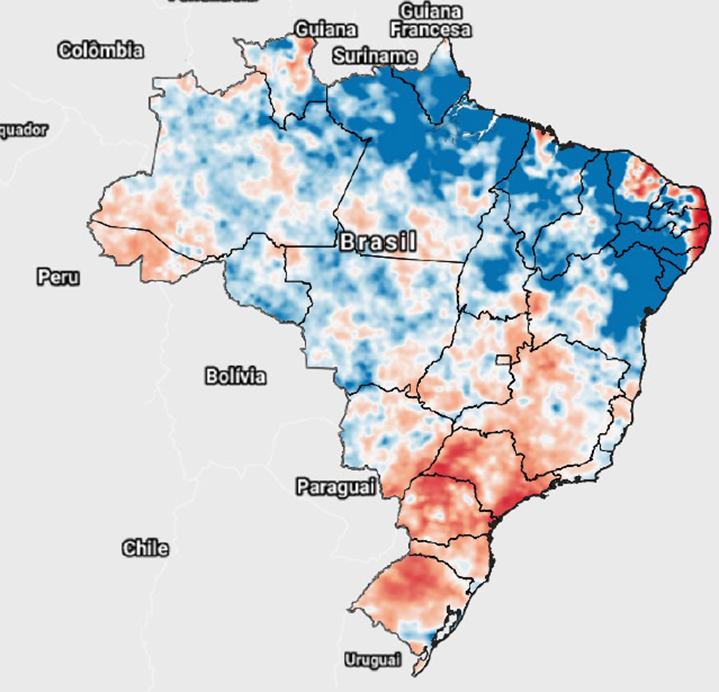
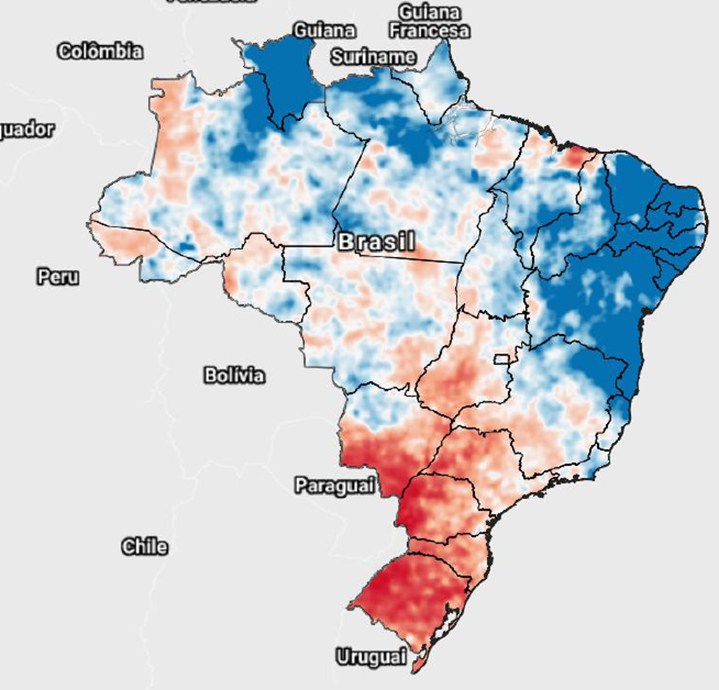
Accordingly, the rainfall regime in the first months of the year should be closely monitored. Like what happened in 2020, below-average rainfall can inhibit the development and filling of cherries in places with a good post-flowering period or inhibit the recovery of potential in locations where flowering did not occur optimally. Looking at the last few months, the good rainfall volumes during October, generally close to or above the historical average in most of the coffee belt, helped to eliminate or reduce the water deficits in the most affected areas of Southern Minas Gerais, Cerrado and Mogiana. However, November and December, already under greater influence from the La Niña effects, again registered levels below the historical average in the main Arabica coffee-producing regions, as shown by the maps below.

PRECIPITATION COMPARED TO THE LAST 20 YEAR-average
image 25431
Fonte: StoneX, com dados fornecidos pela NASA (Global Precipitation Measurement / GPM), 2021.
image 25432
 

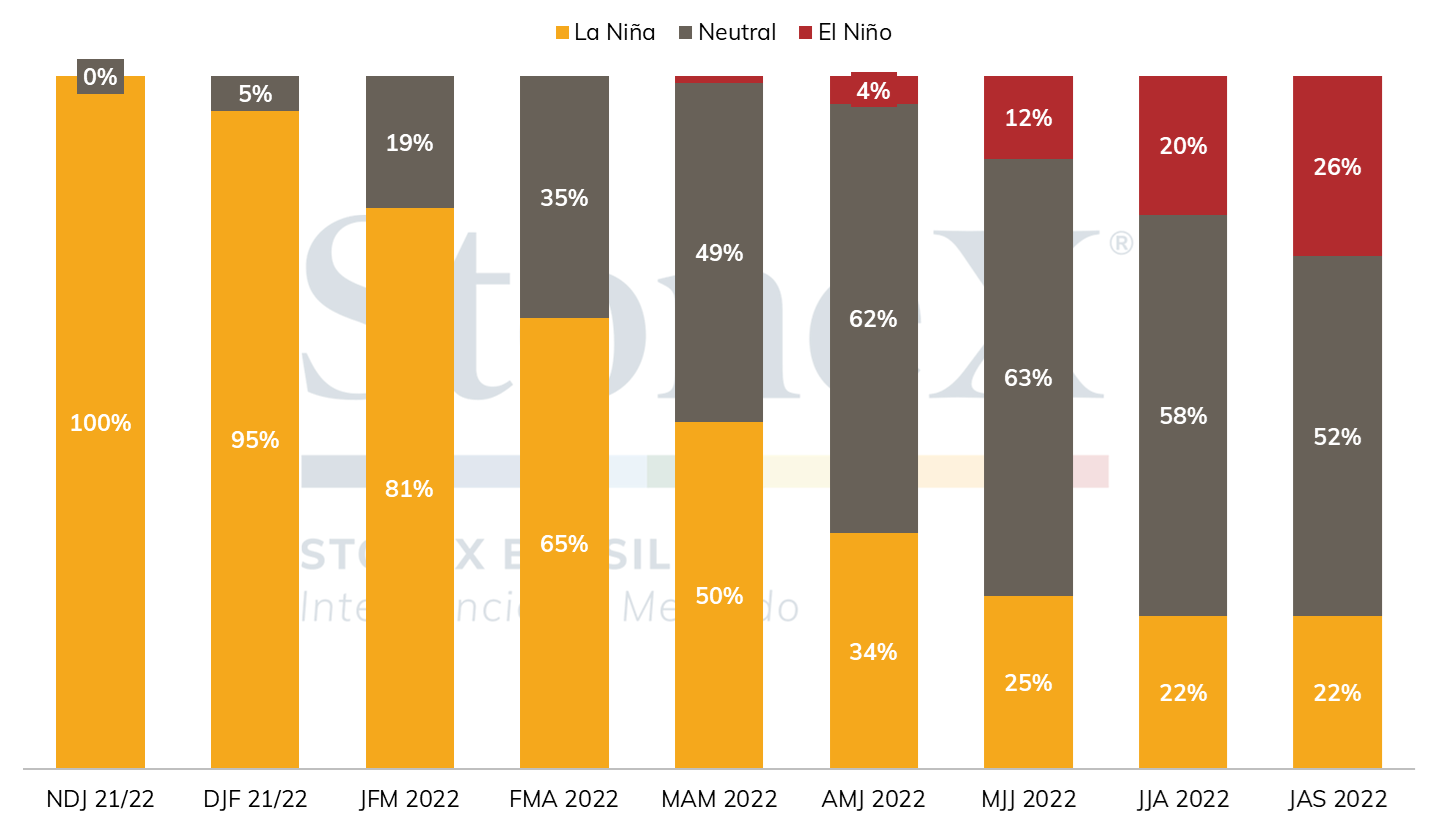
The record keeps the warning signal for the possible impacts of continued below-average rainfall. Data from the National Oceanic and Atmospheric Administration (NOAA) in the United States report a high probability that the La Niña effects will remain at least until mid-March or April, with an intensity that can vary from weak to moderate. In Brazil, the weather phenomenon may continue to promote the reduction of rainfall to some extent, although less intensely than in the second half of 2021. On the other hand, the La Niña occurrence at this time of year is also associated with milder weather in most areas where coffee production is concentrated in the country, limiting the impact of the lack of rainfall in building an environment that is too dry and harmful to coffee trees.

EL NIÑO/LANIÑA PROBABILITY FORECAST

image 25442
Source: IRI/CPC.

La Niña may also continue to affect other important producing countries through the effects of excessive rainfall. For example, Colombia and Vietnam are heading towards the final harvest stage, while Indonesia and Central American countries should continue until February and March. The torrential rainfall volumes have already brought remarkable detrimental effects on the quality of the Colombian crop, which is expected to produce less than 14 million bags in 2021/22 for the first time in 7 years, according to the National Federation of Coffee Growers. Thus, it will be important to monitor rainfall indicators for other producers since their harvest could be affected somehow, making the flow of this coffee to major consumer centers even more difficult.


USDBRL drops by 1.8% in the last week of 2021, ending the year with an appreciation of 5.2%.

In a week marked by high volatility, the USDBRL closed last Thursday (30) with a weekly depreciation of 1.8%, with the real/dollar pair quoted at BRL 5.573. Sharper variations are characteristic of the last trading sessions of the year due to the reduced volume of trade with the absence of part of the market participants because of the Christmas and New Year holidays. 

Until the beginning of the week's last session, the exchange rate was heading to end the period near the BRL 5.70 level. Then, however, the American currency showed a sharp drop to end the day with a strong daily drop of 2.1% in a few hours. As explained in the Foreign Exchange report, a large part of this movement occurred between the times used by the Central Bank of Brazil for the PTAX rate formation, i.e., between the 10:00 am and 1:10 pm bulletins. The PTAX rate is a reference published daily by the Central Bank, and its end-of-month value is widely used in foreign exchange contracts and derivatives.

Therefore, in the last business day, traders intensified their transactions by competing for the formation.
Thus, the real/dollar pair closed with a retraction of 0.7% from November's close, ending 2021 with an appreciation of 5.2% compared to the end of 2020. The dollar also appreciated against currencies of other emerging economies, such as the Indian rupee (2.0%), the Russian ruble (1.0%), the South African rand (8.9%), and the Turkish lira (79.2%).

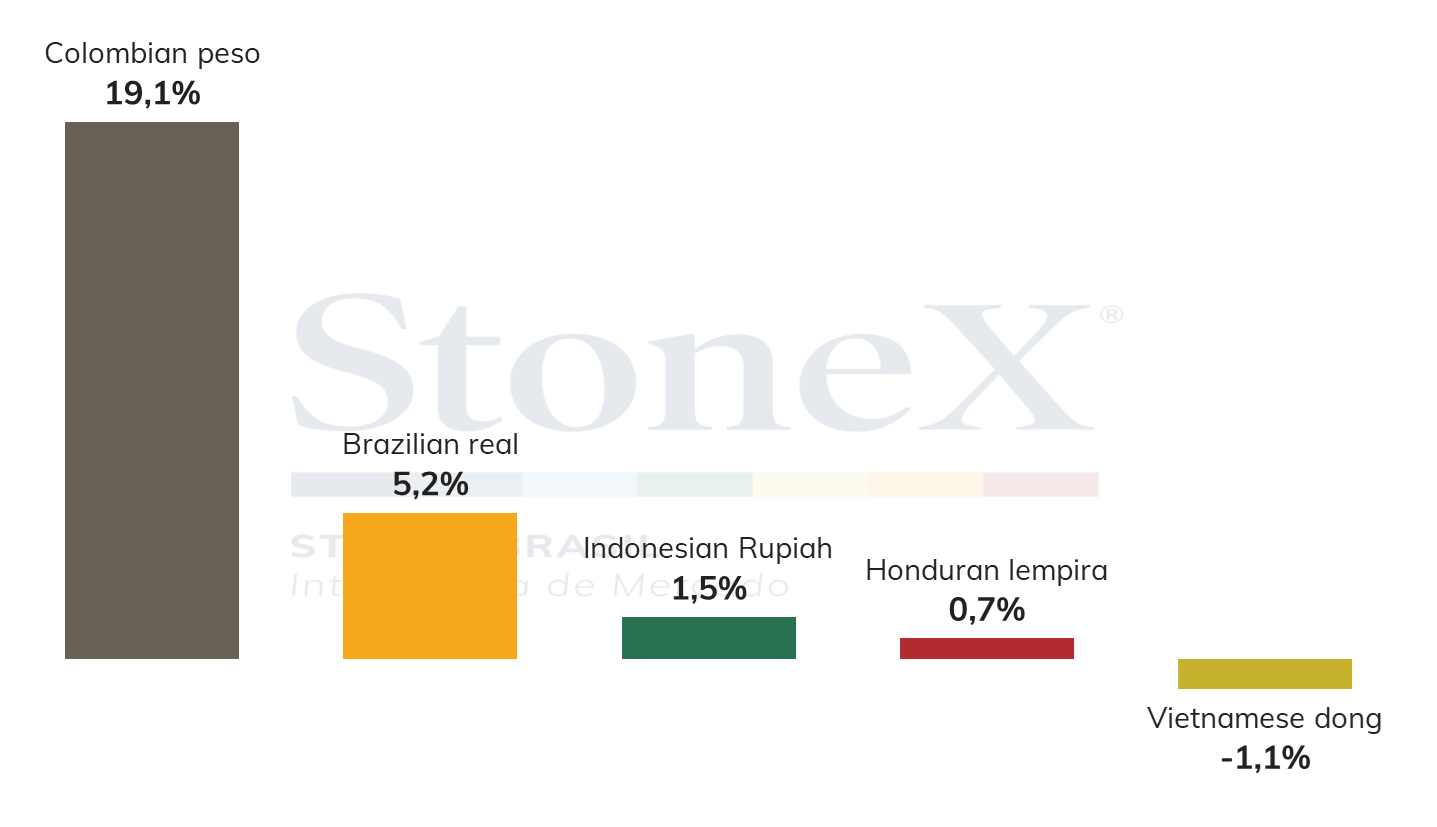
Among the main currencies in the coffee market, the Colombian peso registered a significant advance during the year (19.0%), which led, like that observed in Brazil, to an increase in prices in the country's domestic market. The American currency also advanced against the Indonesian rupiah (1.5%) and the Honduran lemur (0.7%), falling only against the Vietnamese dong (-1.1%).

VARIATION OF THE MAIN CURRENCIES for THE COFFEE MARKET IN 2021

image 25443
Source: Reuters. Design: StoneX.
 
2022 tends to show accentuated volatility in the Brazilian exchange market, which will have very uncertain presidential elections as a backdrop, an unstable political scenario, and an economy with difficulties in controlling inflation and maintaining the pace of recovery in the level of income and jobs. According to the Central Bank's Focus Bulletin released on Monday (3), market projections for the IPCA index in 2022 stand at 5.03%, slightly above the maximum tolerance limit of 5.0%, indicating that the lack of inflation control should continue to be the main challenge for the monetary authority. The projections for the economic growth started lower, with the agents pointing to a slight increase of 0.36% in the Gross Domestic Product (GDP) this year, a drop from expectations for 2022 a week ago (0.42%) and a month ago (0.51%). As for the exchange rate, the market believes it will remain close to the current levels, around BRL 5.60, with the basic interest rate (Selic) increasing to 11.50% per year.
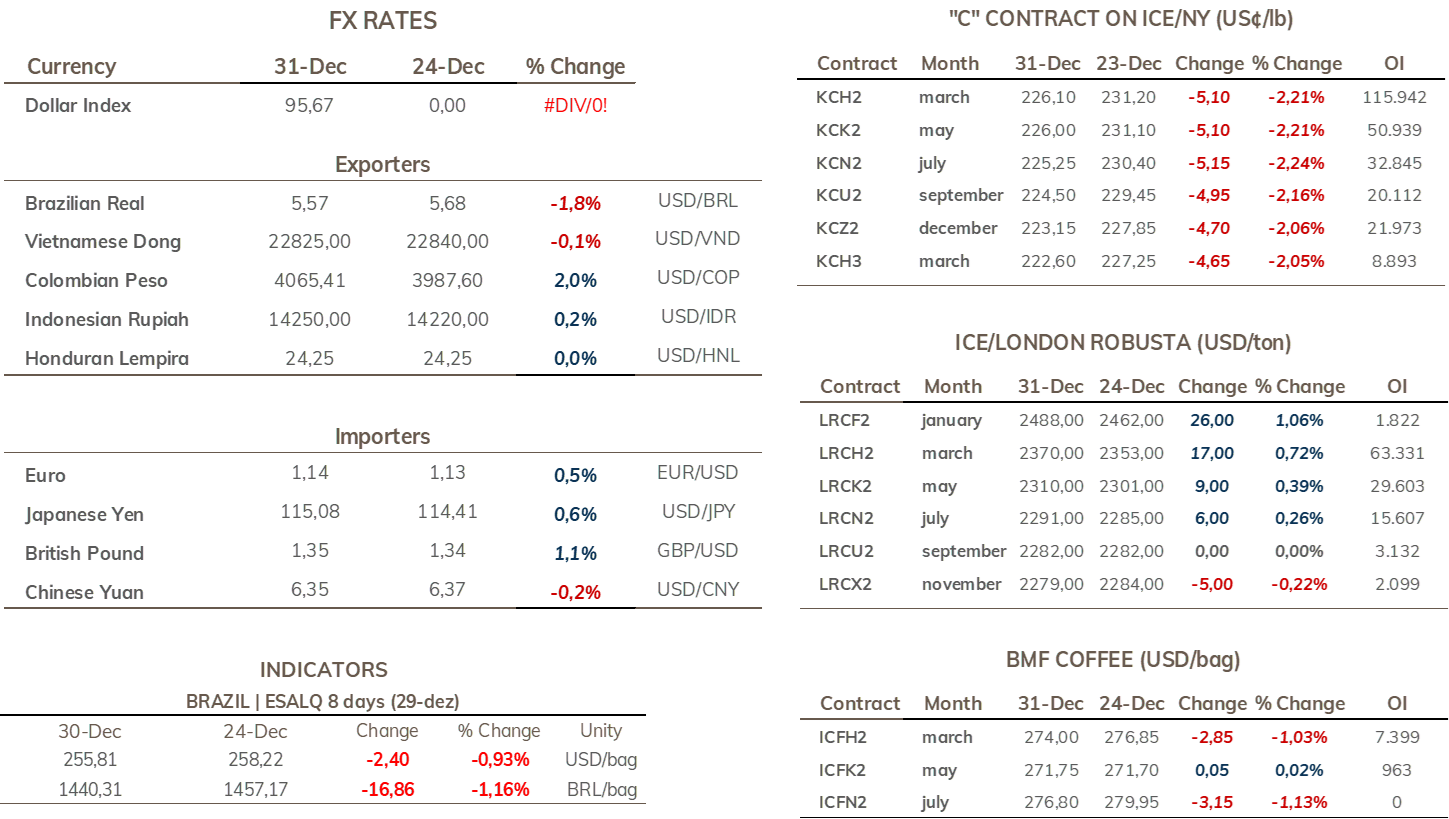
ECONOMIC INDICATORS
image 25444
Sources: ICE/NY; ICE/EU; B3; Commodity Network Trader’s Pro.
 
 
  • Coffee

The StoneX Group Inc. group of companies provides financial services worldwide through its subsidiaries, including physical commodities, securities, exchange-traded and over-the-counter derivatives, risk management, global payments and foreign exchange products in accordance with applicable law in the jurisdictions where services are provided. References to over-the-counter (“OTC”) products or swaps are made on behalf of StoneX Markets LLC (“SXM”), a member of the National Futures Association (“NFA”) and provisionally registered with the U.S. Commodity Futures Trading Commission (“CFTC”) as a swap dealer. SXM’s products are designed only for individuals or firms who qualify under CFTC rules as an ‘Eligible Contract Participant’ (“ECP”) and who have been accepted as customers of SXM. StoneX Financial Inc. (“SFI”) is a member of FINRA/NFA/SIPC and registered with the MSRB. SFI is registered with the U.S. Securities and Exchange Commission (“SEC”) as a Broker-Dealer and with the CFTC as a Futures Commission Merchant and Commodity Trading Adviser. References to securities trading are made on behalf of the BD Division of SFI and are intended only for an audience of institutional clients as defined by FINRA Rule 4512(c). References to exchange-traded futures and options are made on behalf of the FCM Division of SFI . StoneX is a trading name of StoneX Financial Ltd (“SFL”). SFL is registered in England and Wales, Company No. 5616586. SFL is authorized and regulated by the Financial Conduct Authority [FRN 446717] to provide to professional and eligible customers including: arrangement, execution and, where required, clearing derivative transactions in exchange traded futures and options. SFL is also authorised to engage in the arrangement and execution of transactions in certain OTC products, certain securities trading, precious metals trading and payment services to eligible customers. SFL is authorised & regulated by the Financial Conduct Authority under the Payment Services Regulations 2017 for the provision of payment services. SFL is a category 1 ring-dealing member of the London Metal Exchange. In addition SFL also engages in other physically delivered commodities business and other general business activities which are unregulated and not required to be authorised by the Financial Conduct Authority. StoneX Group Inc. acts as agent for SFL in New York with respect to its payments services business. StoneX APAC Pte. Ltd. acts as agent for SFL in Singapore with respect to its payments services business. ‘StoneX’ is the trade name used by StoneX Group Inc. and all its associated entities and subsidiaries.
 
Trading swaps and over-the-counter derivatives, exchange-traded derivatives and options and securities involves substantial risk and is not suitable for all investors. Past performance of any futures or option is not indicative of future success. Indicators are not a trading system and are not published as a specific trade recommendation. The information herein is not a recommendation to trade nor investment research or an offer to buy or sell any derivative or security. It does not take into account your particular investment objectives, financial situation or needs and does not create a binding obligation on any of the StoneX group of companies to enter into any transaction with you. You are advised to perform an independent investigation of any transaction to determine whether any transaction is suitable for you. No part of this material may be copied, photocopied or duplicated in any form by any means or redistributed without the prior written consent of StoneX Group Inc.
 
© 2026 StoneX Group Inc. All Rights Reserved.

Satellite view of Earth at night showing illuminated cities across Asia and the Middle East

Discover more insights

Our subscribers have access to comprehensive market analysis from StoneX spanning commodities, equities, currencies and more.

StoneX: We open markets

Our market expertise, advanced platforms, global reach, culture of full transparency and commitment to our clients’ success all set us apart in the financial marketplace.

Reach

With access to 40+ derivatives exchanges, 180+ foreign exchange markets, nearly every global securities marketplace and numerous bilateral liquidity venues, StoneX’s digital network and deep relationships can take clients anywhere they want to go.

Transparency

As a publicly traded company meeting the highest standards of regulatory compliance in the markets we serve, our financials and track record are matters of public record. StoneX’s commitment to “doing the right thing over the easy thing” sets us apart in the industry and helps us build respect, client trust and new partnerships.

Expertise

From our proprietary Market Intelligence platform to “boots-on-the-ground” expertise from award-winning traders and professionals, we connect our clients directly to actionable insights they can use to make more informed decisions and achieve their goals in the global markets.