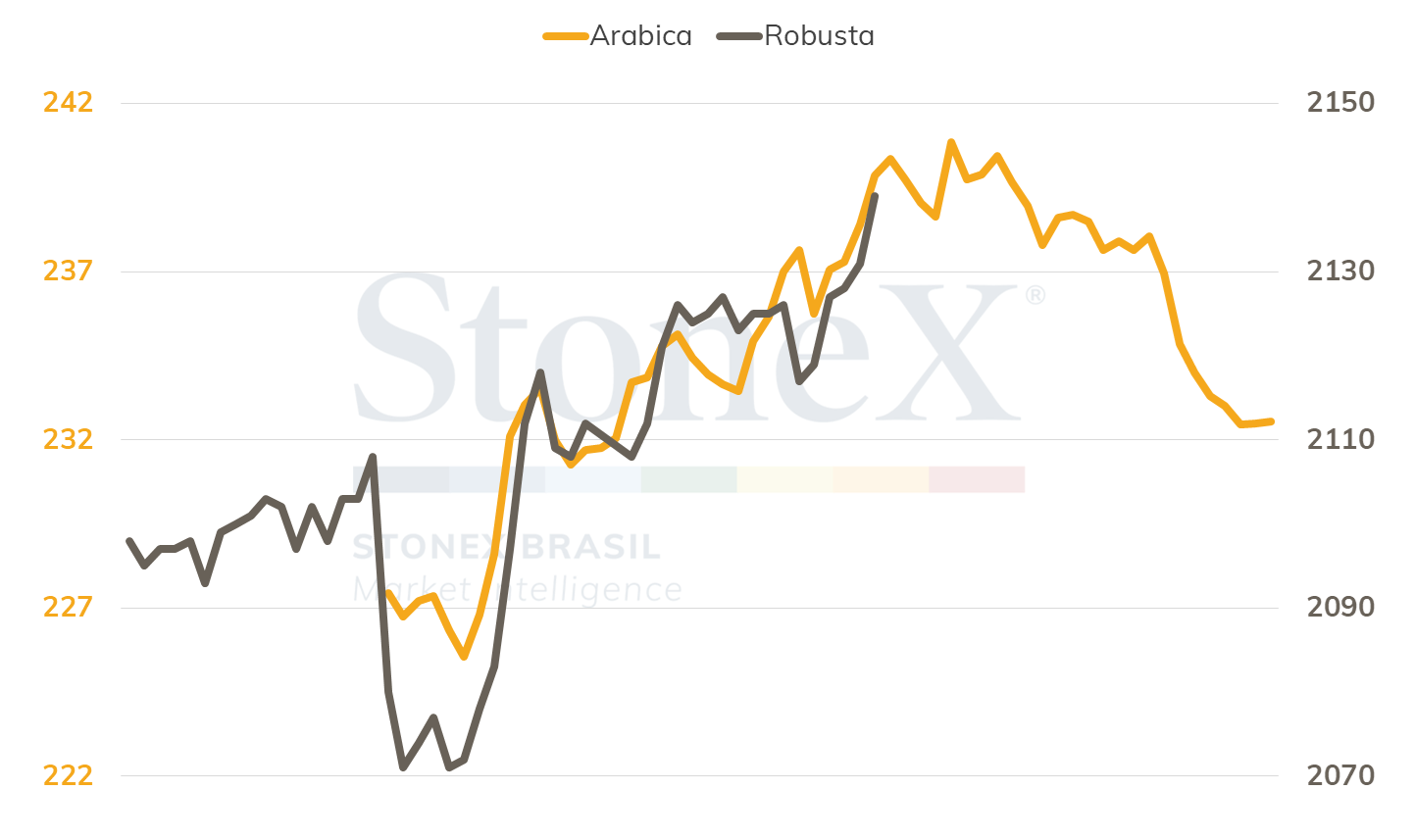
Drops in certified stocks are generally associated with differential levels at origin (the difference between the FOB price at origin and the exchange price), which at certain times, when strengthened, encourage the drawdown of certified stocks held in exchange-certified warehouses in the US and Europe, to ensure short-term availability of coffee at lower costs. This year, such a movement was observed between October 2021 and February, when stocks retreated to 20-year lows while differentials strengthened amid fears of a global supply and demand deficit balance in 2021/22, which pushed prices on the exchange to their highest levels in 10 years at that time.
After showing relative stability since mid-February, the 55,288-bag drop over the last week to 1.02 million bags caused concern among market participants. However, despite the maintenance of high differentials between origins, which in itself discourages certification and contributes to the withdrawal of coffee from certified stocks, at least to date, there have been no major changes in the coffee market fundamentals that would justify a general withdrawal of certified stocks.
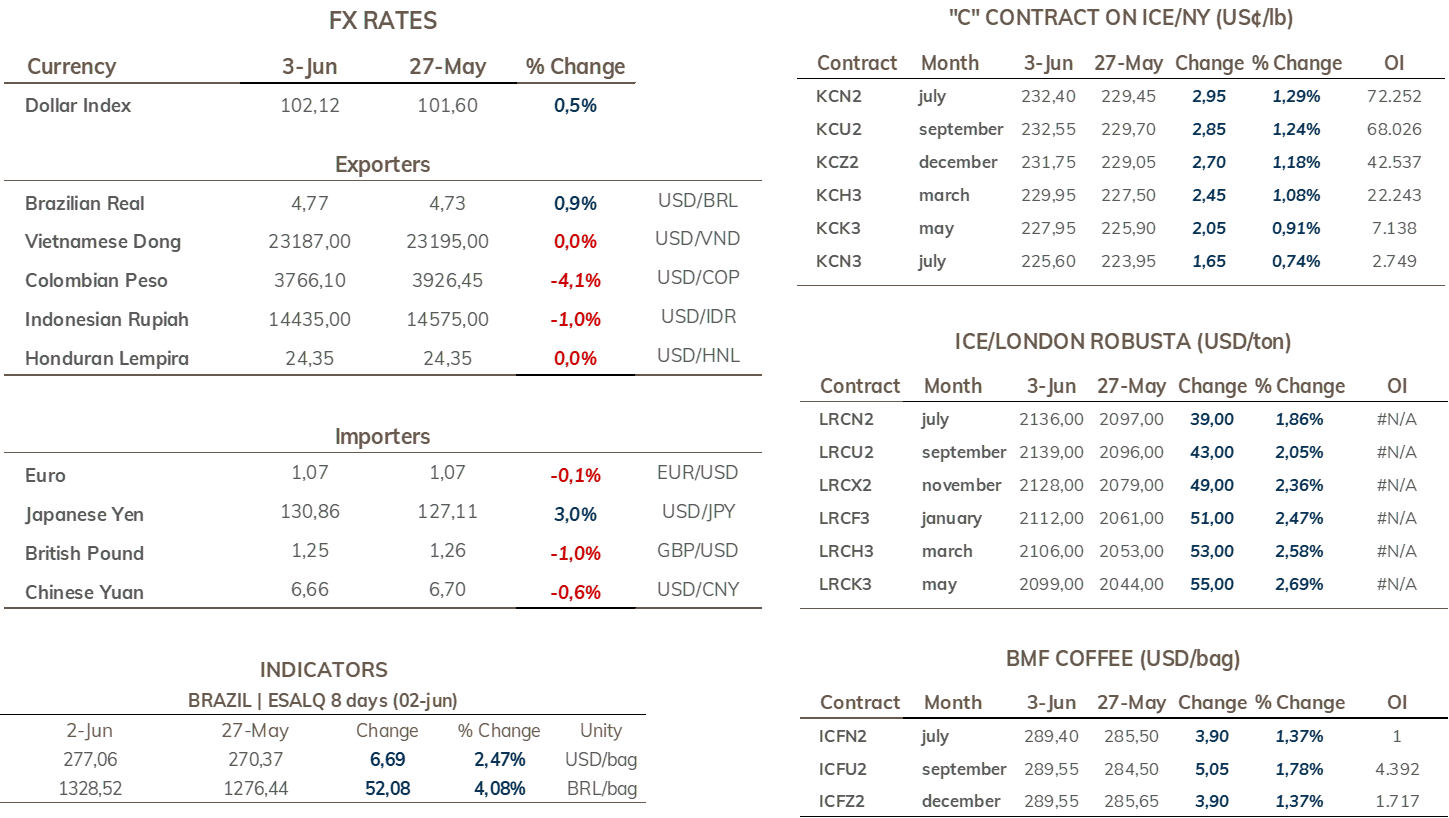
In Brazil, Arabica coffee prices to the producer have followed the upward trend in the international market, despite the falling dollar in the Brazilian exchange market. As a result, the Cepea's Arabica indicator ended the week quoted at BRL 1293.37/bag, high by 5.8%.
The Cepea’s Robusta indicator showed a significant drop of 4.2% to bring the variety below the BRL 700 level since August last year, closing at BRL 693.72/bag. The drop in Robusta coffee prices in the domestic market is linked to increased availability amid the more advanced harvest stage in the variety's producing states.
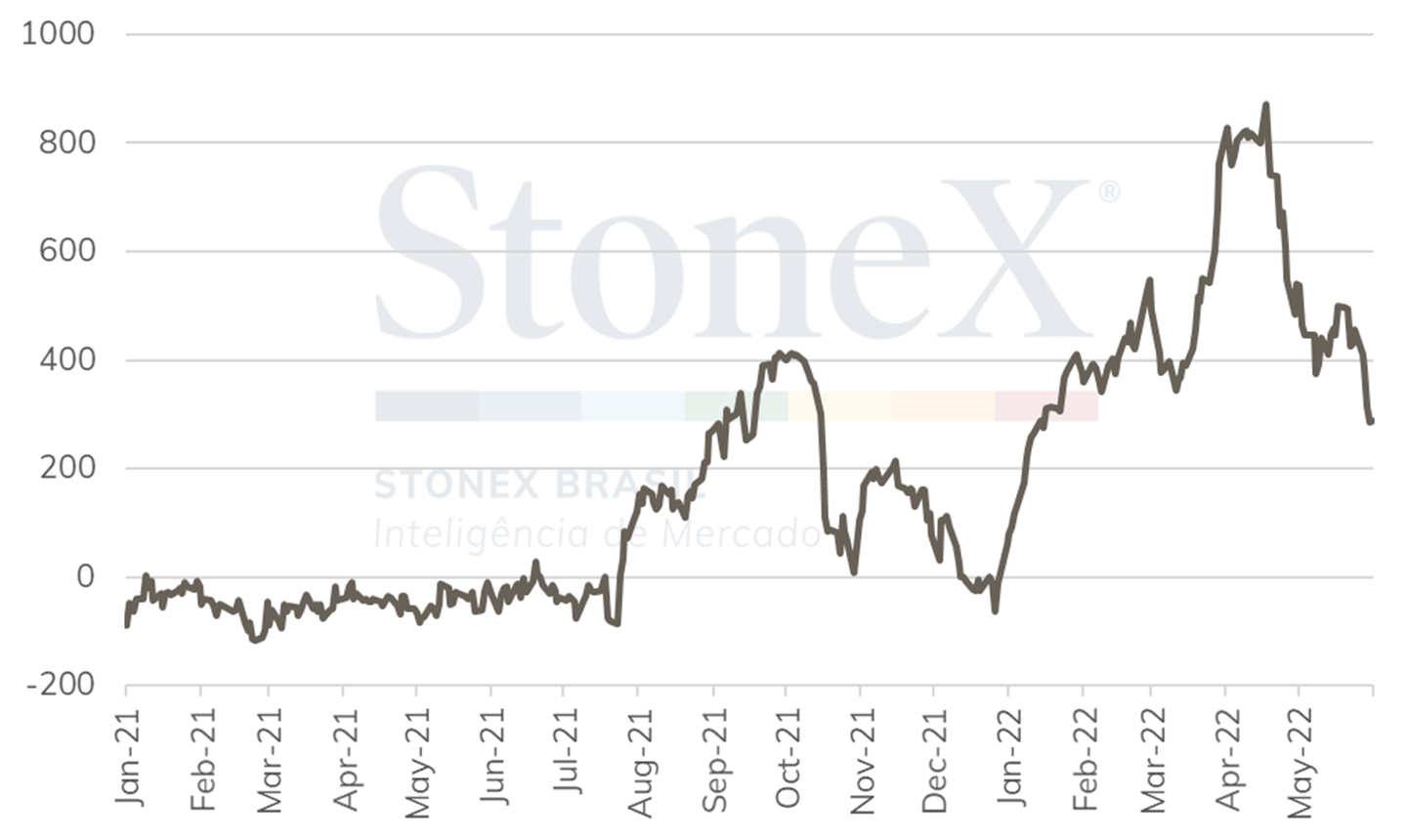
For Robusta, the disparity in trends in the international and domestic markets has also contributed to reducing differentials occurring since the beginning of the harvest. A drop in differentials at this time of year is expected behavior due to the seasonality of the harvest, as can be seen in the differentials chart. However, the differentials, which remain positive at around USD 270/ton (the lowest level since mid-January), remain strong, requiring further declines to reach negative levels and stimulate exports by traders of the variety.
ROBUSTA COFFEE DIFFERENTIALS IN BRAZIL (USD/TON)
Source: ICE, CEPEA. Design: StoneX.
US imports should provide insight into the current global S&D scenario
The recent release of falling exports from Central American producers adds a bullish element to the current market scenario. According to the Honduran Coffee Institute (IHCAFE), the world's fifth-largest coffee producer recorded a decline of 23% in its exports in May, which stood at 641,000 bags, compared to 833,000 bags in the same month in 2021. According to the Institute, the drop is linked to the country's lower production, mainly due to the rust fungus, which impacted part of the crops because of the high moisture in the region.
The Coffee Institute of Costa Rica (ICAFE), on the other hand, reported a 35.4% decrease in coffee shipments in May to103,000 bags, compared to 159,000 in the same month last year. According to the Institute, the drop is explained by the country's lower production this year, which should decline by almost 9.0%, but also by the anticipation of purchases by agents to try to circumvent the lack of containers and longer transportation times, citing the higher exports in the first months of the year, such as the 73% increase in shipments in January.
Furthermore, the International Coffee Organization (ICO) reported global Arabica coffee exports at 6.808 million bags in April, a drop of 7.3% compared to the same month last year. On Tuesday (7), the USDA will release figures for US imports in April. The data, analyzed in conjunction with the stocks at US ports by Green Coffee Association (GCA) and exports from producing countries, should shed some light on the current global market scenario and coffee consumption. Given the sharp decline in exports from producing countries and possibly lower imports into the USA, depending on USDA import data, potential increases in GCA stocks could indicate problems in consumption and act in a bearish manner.
USDA: New Attaché reports have been released
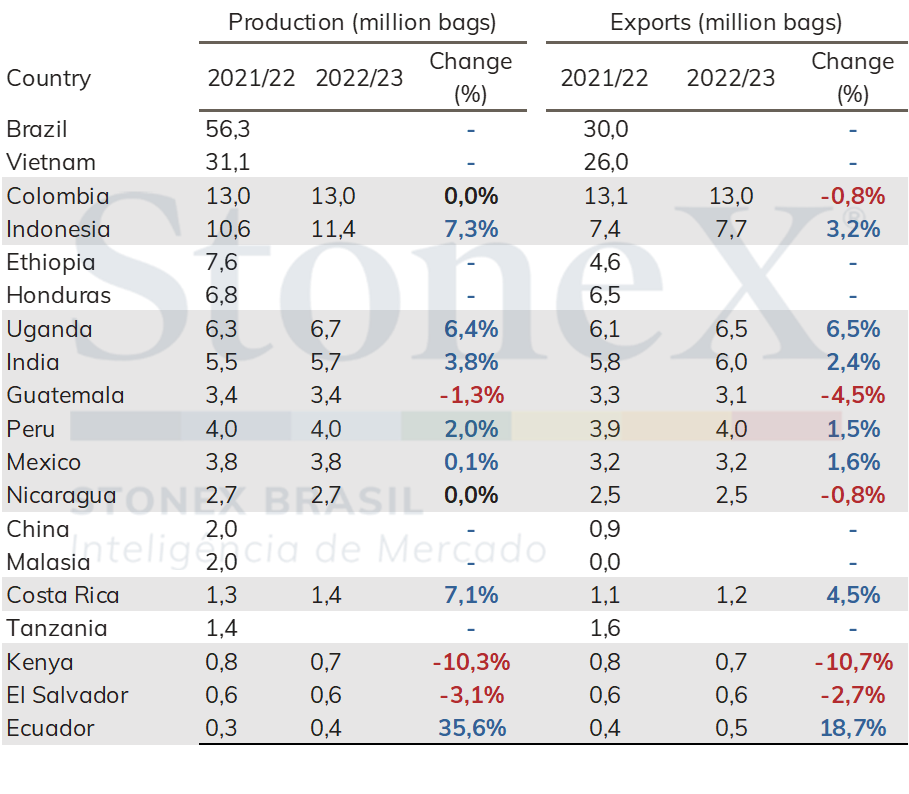
Last week, the USDA released Attaché's reports for four more countries, Colombia, India, Guatemala, and Mexico, completing the release for twelve countries. However, reports are still pending for another seven countries, including the two largest producers, Brazil and Vietnam.
For Colombia, the USDA has revised its 2021/22 production estimate downward from 13.8 million bags to 13 million bags, representing a decrease of 5.8%, mainly attributed to unfavorable weather, with excessive rainfall caused by the La Niña phenomenon. For 2022/23, the country's production should remain steady at 13 million bags.
India's production for 2022/23 is expected to be 3.8% higher at 5.7 million bags, reflecting the weather in its producing regions, which has favored the development of crops. On the other hand, the USDA reduced its estimate for Guatemala's production in 2021/22 by almost 15% to 3.4 million bags, while production in 2022/23 is expected to fall by 1.3%. According to the report, the 32% increase in production costs, including fertilizers, was the main reason behind the losses. Regarding Mexico, the agency indicates an almost steady production in 2022/23, estimated at 3.8 million bags.
Considering all the data released so far, production in these countries should increase by 2.9% in 2022/23, while exports should increase by 1.4%. However, as previously mentioned, these are still partial data. In addition, the USDA has not released its production estimate for important countries such as Brazil and Vietnam.
Summary of estimates from USDA Attaché reports
Source: USDA. Design: StoneX.
USDBRL closes higher, in line with foreign performance
Following the bullish scenario for the American currency abroad and affected by the perception of greater fiscal risk in the country, the real/dollar closed slightly higher. The real/dollar pair ended the week high by 0.8%, quoted at BRL 4.778. The dollar index advanced by 0.5% during the same period to end Friday's session (3), quoted at 102.2 points.