StoneX logo

Coffee Weekly Report

By: StoneX Intelligence Brazil, StoneX Intelligence Brazil

Macroeconomic scenario continued to weigh on coffee prices
 
Fernando Maximiliano
 
Leonardo Rossetti
 
Without much fundamental change in the week, coffee prices were pressured by the risk aversion sentiment
HIGHLIGHTS 

•    Arabica prices dropped by 2065 points (9.4%) in NY, closing the week quoted at US₵ 199.80/lb. 
•    Cepea’s Arabica indicator dropped by 7.97% in the week, quoted at BRL 1,241.31/bag.
•    Robusta prices dropped by 2.9% in London to USD 1923/t.
•    Cepea’s Robusta indicator increased by 0.7% to close at BRL 711.76/bag.
•    Risk aversion sentiment puts pressure on coffee prices.
•    Arabica’s certified stocks dropped by almost 50 thousand bags in the week.
•    Agents are worried about Brazil's harvest and development of the next crop.
•    GCA stocks advanced by 46,000 bags in June.
•    NOAA increases the probability of La Niña persistence until the end of the year.
•    Brazil ends the crop year with 39.6 million bags exported.
•    Worries about Fed's contractionary stance boosted the USDBRL last week.
•    Indicators of strong inflation in the United States in June raise expectations of interest rate hikes of at least 75 basis points by the Fed later this month.
•    After China's weak growth in Q2, new Covid-19 cases in the country are to be monitored.
•    Trade awaits interest rate decision by the European Central Bank this week.

   Bearish Factors       Bullish Factors

For the second week, coffee prices were under pressure from macroeconomic and currency factors. The week's movements were dominated by risk aversion sentiment, reflecting inflation data in the US, which increases concerns about a contractionary Fed and heightens market worries about a possible economic recession. 

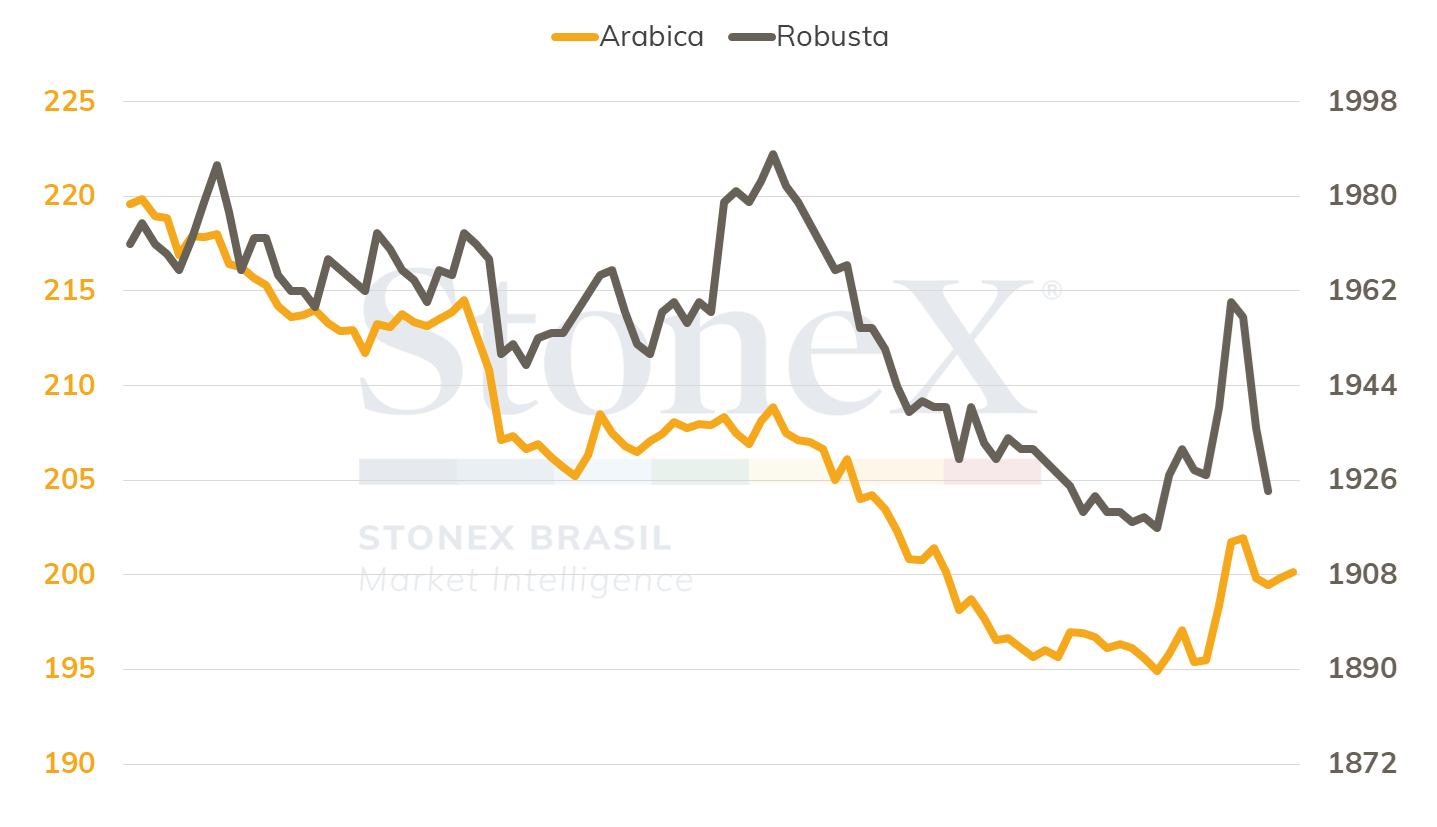
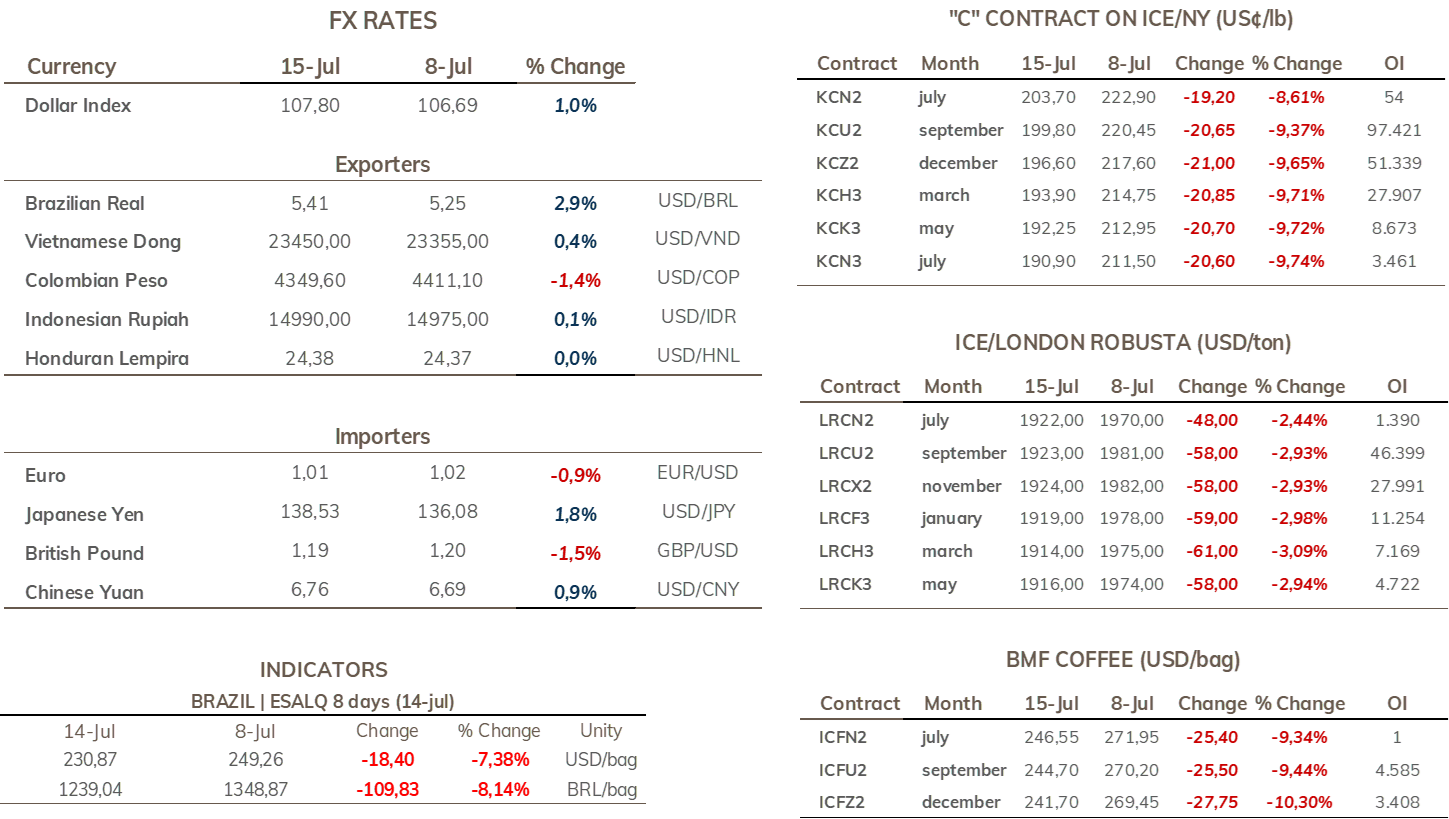
As a reflection of this movement, the Arabica coffee prices ended the week with a drop of 2065 points (9.4%) for the most active contract (Sept/22), which ended the week quoted at US₵ 199.80/lb. Robusta futures contracts ended the week lower following the moves in New York but less intensely. In London (ICE Europe), the September contract closed Friday’s session quoted at USD 1923/t, down by 2.9%.
 

WEEKLY INTRADAY (MOST ACTIVE CONTRACT) – JULY 11 TO 15

image 43936
Source: Commodity Network Trader’s Pro. Design: StoneX.

Following the movement in the international market, the Arabica coffee prices in the Brazilian domestic market ended the week lower. Cepea’s Arabica indicator ended the week quoted at BRL 1241.31/bag, a decrease of 7.97%. On the other hand, Cepea’s Robusta indicator ended high by 0.7% to close at BRL 711.76/bag. 

In addition to the continued decline in certified stocks of Arabica coffee, which ended another week with a large drop of almost 50 thousand bags (-6.3%) to just over 740 thousand bags, the agents’ attention is on monitoring Brazil’s harvest and the development of the next crop. 

Regarding the Brazilian production in 2022/23, several reports of harvesting delays were seen in some Arabica producing regions. However, there are concerns that the crop could be lower than expected in addition to the delay. For a better assessment, conducting a new production survey this year is necessary, so this is a point that should be monitored. In addition, as will be discussed later, La Niña may continue until the end of the year, which could directly affect coffee flowering in Brazil. 

GCA: coffee stocks at US ports increased in June

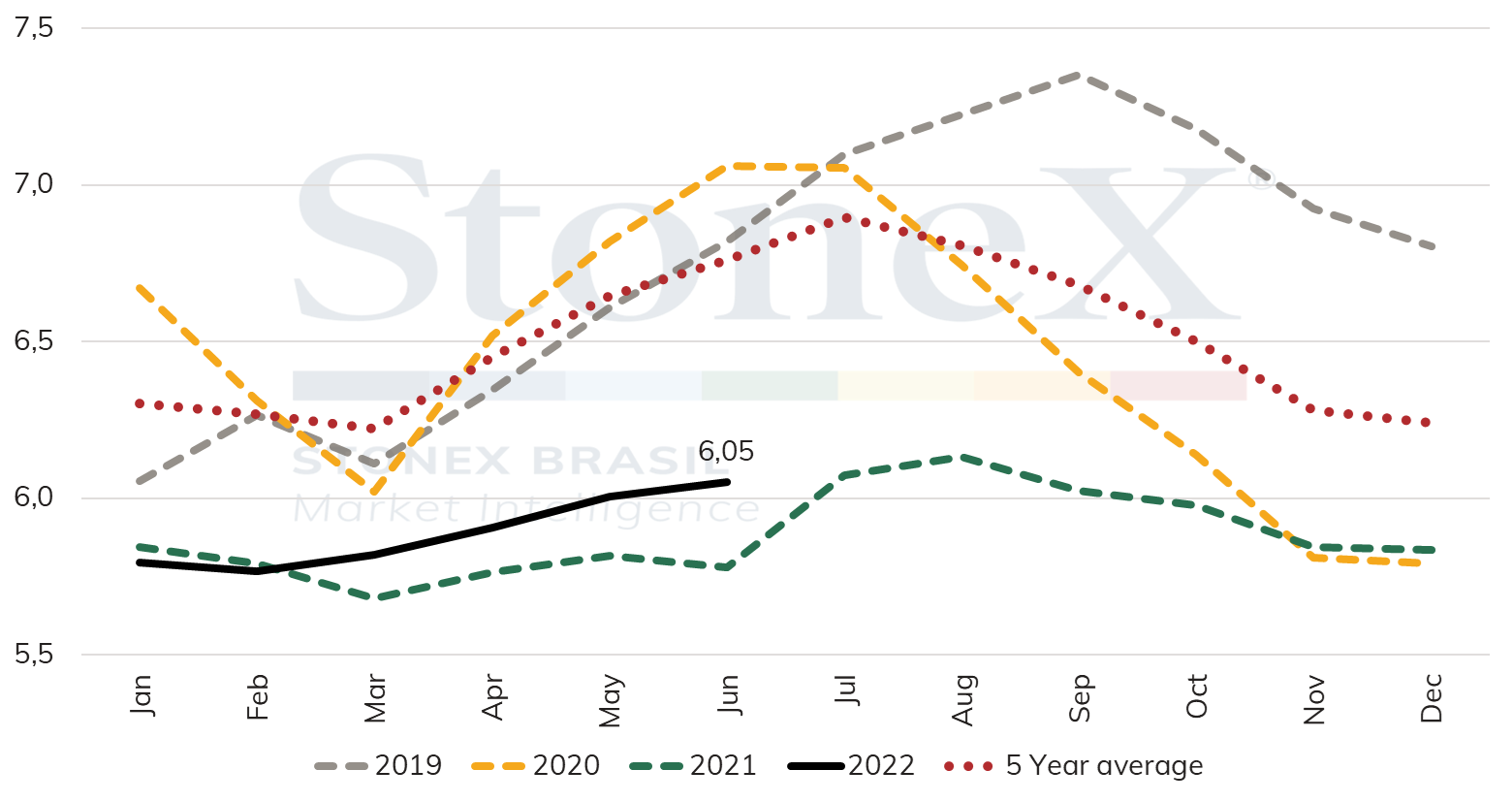
According to the latest Green Coffee Association (GCA) report, coffee stocks at US ports totaled 6,050,084 bags in June, representing an increase of 46,353 bags (0.7%) compared to May and 270,623 bags (4.7%) compared to June 2021. In the last five years, coffee stocks have increased by 88,000 bags on average in June.

Seasonality of stocks at US ports (million bags)

image 43937
Source: GCA. Design: StoneX.  

Although the increase in stocks is not as significant, the increases raise concerns about coffee trends in the US domestic market, mainly due to the weak import numbers from the country in May. It is still too early to analyze the two factors together since the import data for June have not yet been released. 

However, the 23% drop in US imports in May, the 97,000-bag increase that month, and the recent increase, raise concerns about the pace of consumption in the country. As mentioned, it is still too early to conclude without imports data, but this situation should be monitored and analyzed. The USDA will release US import data on 08/04/2022.  

NOAA increases the probability of La Niña persistence until the end of the year.

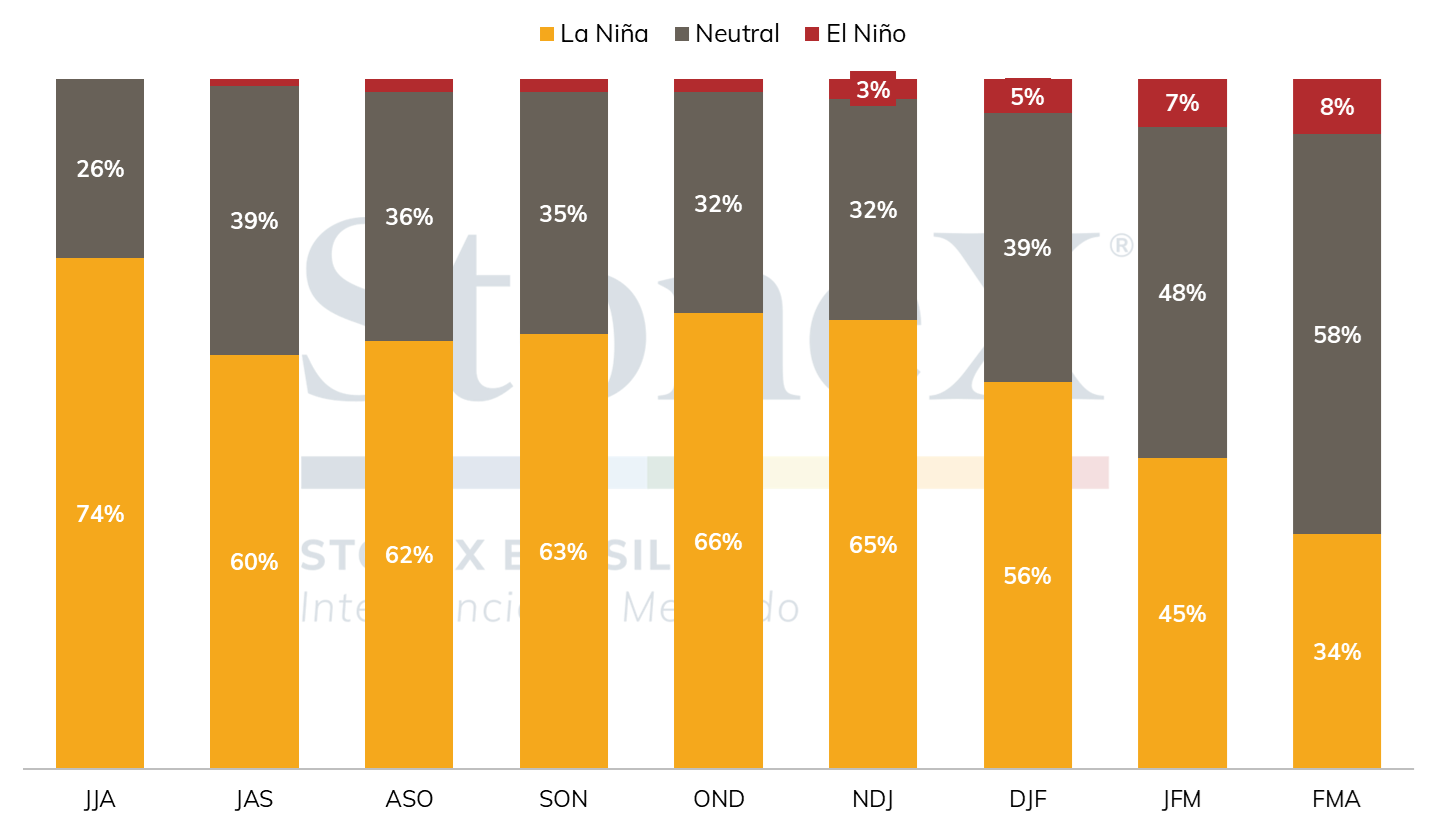
Last Thursday (14), the latest El Niño/La Niña probability forecast was released by the CPC/IRI/NOAA, increasing the probability of La Niña to above 60% for all months until the end of the year. If this scenario is confirmed, possible impacts on Brazil include dry weather in the country's southern region and delayed rainfall in the second half of the year in the main Arabica producing regions.  

EL NIÑO/LA NIÑA PROBABILITY FORECAST

image 43938
Source: CPC/IRI/NOAA. Design: StoneX.
According to an update from the Australian agency BOM, the ENSO region is currently in a neutral condition. Still, some models suggest that La Niña may return in the southern hemisphere's spring. As a result, the agency has changed the status of the ENSO Outlook to La Niña Watch, which means there is a 50% chance that La Niña will return in the second half of the year. 
Brazil ends the crop year with 39.6 million bags exported.
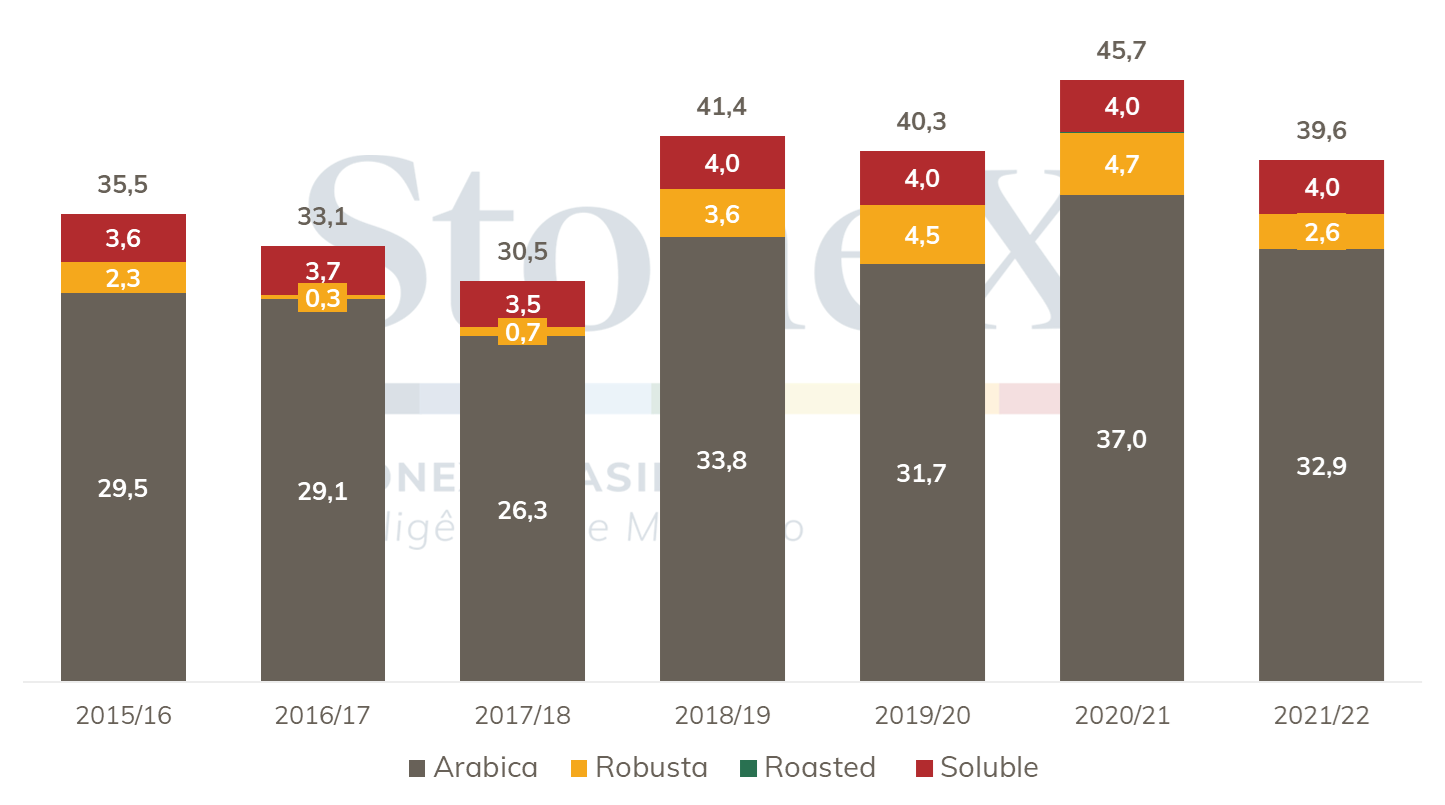
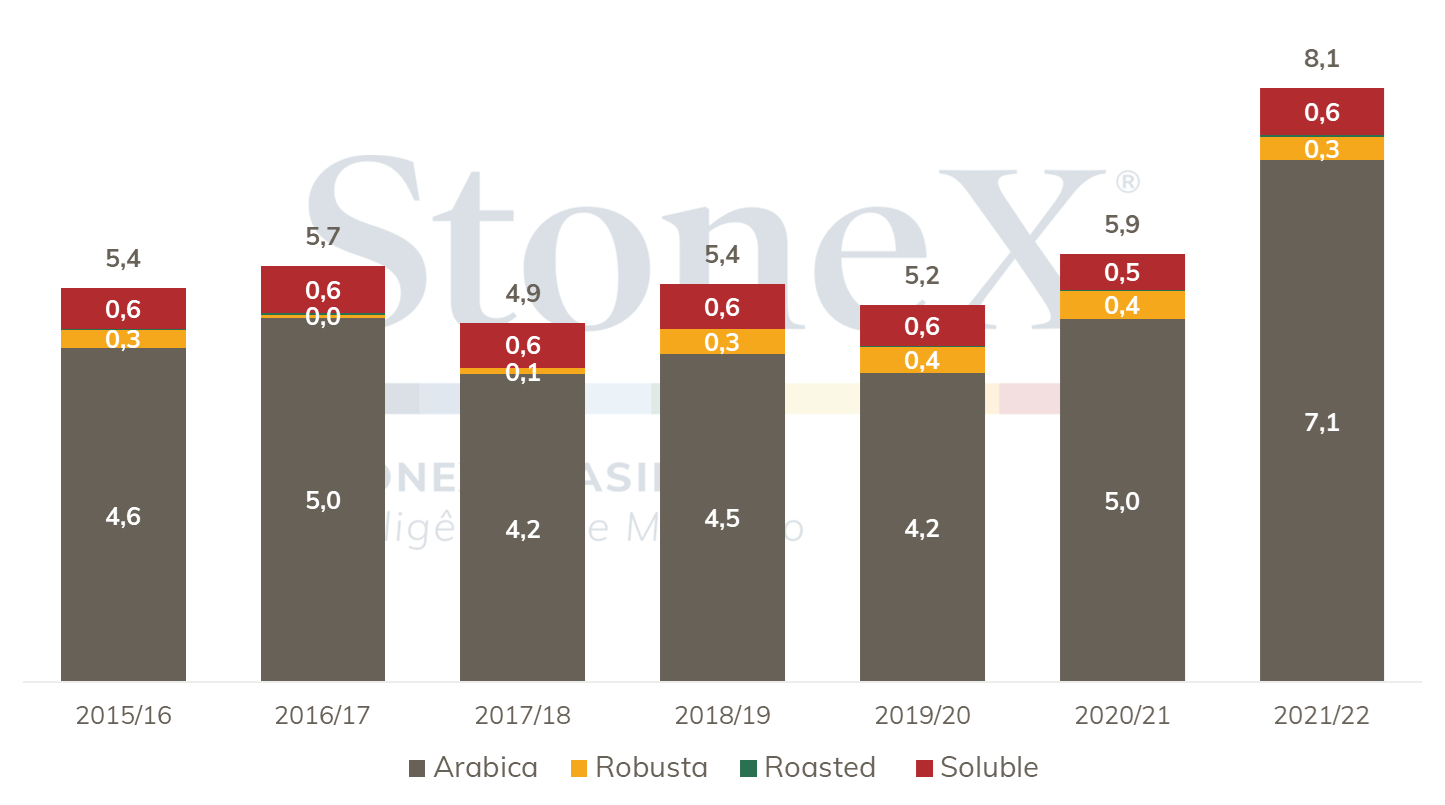
Last week Cecafé reported that Brazil exported 3.144 million bags of coffee in June, a performance 2.1% better than the same month last year when 3.078 million bags were exported. The result also led to a conclusion of the crop year (Jul/21 - Jun/22) with 39.588 million bags of coffee exported. The result was 13.3% below the 2020/21 season when 45.67 million bags were shipped and the worst performance of the country's coffee shipments since 2017/18.
Evolution of Brazilian coffee exports by crop year (million bags)
image 43939
Source: Cecafé. Design: StoneX.

However, considering the turbulent scenario of logistical bottlenecks caused by the pandemic, the postponement of shipments, a significant increase in freight costs and a reduction in production caused by the drought, the final assessment is that the season's performance was quite satisfactory.

Among the main types of coffee, Arabica coffee totaled 32.9 million bags, 11.0% below the 36.9 registered the previous year, while Robusta coffee fell by 45.0%, with 2.6 million bags exported against 4.7 the previous year. The sharp decline in Robusta coffee, unlike the drop in Arabica, is not related to impacts on production but to the significant increase in the differentials between prices in the physical market and on the stock exchange, which made it more attractive for producers to sell the bean in the domestic market. Instant coffee, on the other hand, showed an increase of 2.4%, from 3.9 million last season to 4.0 million this year.

Among the main destinations, the United States continued as the main importer, with 7.9 million bags imported, a 4.8% drop compared to the 8.3 million imported the previous year. Germany, in second place, imported 6.4 million bags, down 18.7% from 7.9 million bags in 2020/21, followed by Belgium with 3.2 million (-17%), Italy with 3.1 million (+12.9%), and Japan with 2.2 million (-17.3%).

On the other hand, even with a lower volume, the significantly higher prices, which went from an average of USD 128.12/bag to US$ 205.04/bag, provided a record income of USD 8.1 billion, an increase of 38.7% compared to the USD 5.9 billion that paid to producers for the record exports of the previous crop. The great result indicates that, despite the strong increase in general costs, the revenue obtained by the producer reaffirms the trend that investments in treatment and fertilization, in general, should occur adequately for the 2023/24 crop development.

Evolution of foreign exchange revenue from Brazilian coffee exports by crop year (USD billion)

image 43940
Source: Cecafé. Design: StoneX.
Worries about Fed's contractionary stance boosted the USDBRL last week.

Amid the strong feeling of global risk aversion observed last week, which pressured coffee prices to levels below US¢ 200.00/lb, the dollar posted an increase of 2.6% against the Brazilian real last week, with the real/dollar pair ending at BRL 5.406. This was the sixth appreciation in the exchange rate in the last seven weeks. The dollar index ended last Friday (15), quoted at 107.9 points, high by 1.0% and remaining close to its 20-year highs reached throughout the week.

The foreign scenario continued with fears that accelerating inflation and the contractionary measures taken by central banks would lead the global economy into recession. This sentiment was heightened after the release of the Consumer Price Index (CPI) and the Producer Price Index (PPI) results for June, both higher than expected by the market. According to the Bureau of Labor Statistics (BLS), the CPI rose by 1.3% in June, with the 12-month accumulated CPI rising to 9.1% versus the 8.8% projected by analysts and renewing its highest levels since 1981. The PPI was 1.1%, with the accumulated figure advancing to 11.3% and renewing its highs for the historical series, while the market was projecting a 10.7% high for the accumulated indicator.

The indication that the level of consumer prices in the United States continues to accelerate and spread throughout the economy has contributed to agents raising the possibility that the Federal Reserve may increase the country's benchmark interest rate by 100 basis points, an adjustment that is higher than the 75 basis points in June, and of a magnitude that was hardly considered before. The possibility of an even more contractionary Fed stance boosted the agents' search for the American currency, leading the dollar index, which measures the dollar's variation against a basket of currencies from advanced economies, to reach above 109 points during Wednesday's intraday (13), the highest level in the last 20 years.

This scenario has been reflected in the movement of speculative funds in recent weeks. According to the latest Commitment of Traders (COT) report from the CFTC, spec funds reduced 3,159 long positions in Arabica coffee funds and options in New York between July 5 and 12 while raising their short positions by 3,546 lots. Thus, the net balance went from 23,648 long positions to 16,943. In London, specs showed a similar movement, with the net balance going from 4,753 long positions to 708 short positions.

During the same period, the most active contract in New York showed a decrease of 1570 points (7.6%) to US¢ 205.35/lb, while the most active contract of Robusta in London dropped by 0.4% to USD 1,954/t.

This Monday (18th), global markets started resuming some risk appetite, correcting last week's sharp drops and calmed by the statements of two Fed members reinforcing their preferences for a 0.75 p.p. readjustment at this moment, causing the bets on a hike of 1.00 p.p. to lose strength. According to the CME FedWatch tool at the time of writing of this report, 69.1% of market participants are betting on a 75-point hike taking the interest rate to between 2.25% and 2.50% p.a., while 30.9% believe in a 100-point rise, with the rate between 2.50% and 2.75% p.a. The return of risk appetite has boosted the commodities complex, with coffee futures in New York ending the session with strong corrections after the big drop seen last week.

The weak performance of the Chinese economy has also contributed to concerns about a slowdown in the global economy. China's National Bureau of Statistics (NBS) reported that the world economy shrank by 2.6% in the quarter between April and June from the immediately previous quarter, a stronger drop than projected by analysts, who, the second largest -1.5% change. The drop is linked to the government's zero covid policy, which intensified mainly in April and May, when rigid lockdowns of a significant part of the population in important industrial and financial centers such as Shanghai were promoted, drastically reducing the circulation of people and sacrificing the activity level in industry and services sectors. The growth in the number of new daily cases, which last week reached its highest level in 7 weeks, and the discovery of a new and more contagious subvariant of the Omicron variant in a district in Shanghai, should continue to be monitored by the market and continue as a potential risk-aversion factor for the week.

This week's highlight is the monetary policy decision of the European Central Bank (ECB), which will take place on Thursday (21). The monetary authority signaled in its last meeting that it would only raise 0.25 p.p. in the July meeting; however, there is the possibility that the ECB will promote a higher increase to control the price level, as its peers do. A stronger hike could support the European currency, which has been losing ground since the start of the Russian-Ukrainian war.
 

ECONOMIC INDICATOrS
image 43941
Sources: ICE/NY; ICE/EU; B3; Commodity Network Trader’s Pro.

 

image 35317


  • Coffee

The StoneX Group Inc. group of companies provides financial services worldwide through its subsidiaries, including physical commodities, securities, exchange-traded and over-the-counter derivatives, risk management, global payments and foreign exchange products in accordance with applicable law in the jurisdictions where services are provided. References to over-the-counter (“OTC”) products or swaps are made on behalf of StoneX Markets LLC (“SXM”), a member of the National Futures Association (“NFA”) and provisionally registered with the U.S. Commodity Futures Trading Commission (“CFTC”) as a swap dealer. SXM’s products are designed only for individuals or firms who qualify under CFTC rules as an ‘Eligible Contract Participant’ (“ECP”) and who have been accepted as customers of SXM. StoneX Financial Inc. (“SFI”) is a member of FINRA/NFA/SIPC and registered with the MSRB. SFI is registered with the U.S. Securities and Exchange Commission (“SEC”) as a Broker-Dealer and with the CFTC as a Futures Commission Merchant and Commodity Trading Adviser. References to securities trading are made on behalf of the BD Division of SFI and are intended only for an audience of institutional clients as defined by FINRA Rule 4512(c). References to exchange-traded futures and options are made on behalf of the FCM Division of SFI . StoneX is a trading name of StoneX Financial Ltd (“SFL”). SFL is registered in England and Wales, Company No. 5616586. SFL is authorized and regulated by the Financial Conduct Authority [FRN 446717] to provide to professional and eligible customers including: arrangement, execution and, where required, clearing derivative transactions in exchange traded futures and options. SFL is also authorised to engage in the arrangement and execution of transactions in certain OTC products, certain securities trading, precious metals trading and payment services to eligible customers. SFL is authorised & regulated by the Financial Conduct Authority under the Payment Services Regulations 2017 for the provision of payment services. SFL is a category 1 ring-dealing member of the London Metal Exchange. In addition SFL also engages in other physically delivered commodities business and other general business activities which are unregulated and not required to be authorised by the Financial Conduct Authority. StoneX Group Inc. acts as agent for SFL in New York with respect to its payments services business. StoneX APAC Pte. Ltd. acts as agent for SFL in Singapore with respect to its payments services business. ‘StoneX’ is the trade name used by StoneX Group Inc. and all its associated entities and subsidiaries.
 
Trading swaps and over-the-counter derivatives, exchange-traded derivatives and options and securities involves substantial risk and is not suitable for all investors. Past performance of any futures or option is not indicative of future success. Indicators are not a trading system and are not published as a specific trade recommendation. The information herein is not a recommendation to trade nor investment research or an offer to buy or sell any derivative or security. It does not take into account your particular investment objectives, financial situation or needs and does not create a binding obligation on any of the StoneX group of companies to enter into any transaction with you. You are advised to perform an independent investigation of any transaction to determine whether any transaction is suitable for you. No part of this material may be copied, photocopied or duplicated in any form by any means or redistributed without the prior written consent of StoneX Group Inc.
 
© 2026 StoneX Group Inc. All Rights Reserved.

Satellite view of Earth at night showing illuminated cities across Asia and the Middle East

Discover more insights

Our subscribers have access to comprehensive market analysis from StoneX spanning commodities, equities, currencies and more.

Related articles for Coffee

Perspective: Morning Commentary for August 7

August 7 – The U.S. economy unexpectedly lost 23k jobs in July, dramatically below market expectations of an 80k increase and marking the worst Non-Farm Payrolls print since February. Furthermore, May and June were both revised sharply downward, with combined revisions showing 103k fewer jobs than previously reported. Outside of the healthcare sector, which added 22k jobs in July, the losses were very broad-based. Government payrolls saw the largest decline, shedding 53k jobs in July, the largest seen since October 2025, while June was revised down to show a loss of 10k jobs as well. The private sector at least saw growth, adding 30k jobs in July, now matching the month prior after it was revised down from the 49k initially reported, and substantially missing forecasts of 78k jobs being added. This is a sharp reversal in course from the largely better than expected U.S. labor data seen earlier this week.

Mike Castle
Mike Castle
  • Grains & Oilseeds
  • Energy
  • Dairy
  • Renewable Fuels
  • Cocoa
  • Coffee
  • Cotton
  • Sugar
  • Meats & Livestock
  • Forest Products

Daily Coffee Report 8/6/26

Daily coffee report

StoneX Coffee Team
StoneX Coffee Team
  • Coffee

Perspective: Morning Commentary for August 6

August 6 – This morning’s stronger-than-expected U.S. labor data offered markets some relief, reinforcing confidence in the economy while giving the Fed greater flexibility to raise rates should inflationary pressures reaccelerate in next week’s July data. Stock futures are pointing to a mixed open to start the day, with the tech-heavy Nasdaq showing the most weakness. The VIX has fallen notably from yesterday’s spike above 18.4 as it starts the day hovering just below the 16-mark. The dollar is quietly higher as it trades just above 99.8, holding in the tight range seen thus far this week as traders continue to digest data to shape expectations for the Fed’s next move, which we’ll dive into in more depth below. Long-term treasury yields have relaxed slightly from their recent spike, with 30-year yields starting the day trading just above 5.19%, while 10-year yields trade above 4.64%, and 2-year yields sit below 4.22%. Crude oil is modestly higher to start the session after sharp declines earlier in the week, with nearby WTI up 1.8% to trade at $76.40 and nearby Brent up 2.4% to trade at $81.40. Meanwhile, the ags are quietly mixed to start the day.

Mike Castle
Mike Castle
  • Grains & Oilseeds
  • Energy
  • Dairy
  • Renewable Fuels
  • Cocoa
  • Coffee
  • Cotton
  • Sugar
  • Meats & Livestock
  • Forest Products
StoneX: We open markets

Our market expertise, advanced platforms, global reach, culture of full transparency and commitment to our clients’ success all set us apart in the financial marketplace.

Reach

With access to 40+ derivatives exchanges, 180+ foreign exchange markets, nearly every global securities marketplace and numerous bilateral liquidity venues, StoneX’s digital network and deep relationships can take clients anywhere they want to go.

Transparency

As a publicly traded company meeting the highest standards of regulatory compliance in the markets we serve, our financials and track record are matters of public record. StoneX’s commitment to “doing the right thing over the easy thing” sets us apart in the industry and helps us build respect, client trust and new partnerships.

Expertise

From our proprietary Market Intelligence platform to “boots-on-the-ground” expertise from award-winning traders and professionals, we connect our clients directly to actionable insights they can use to make more informed decisions and achieve their goals in the global markets.