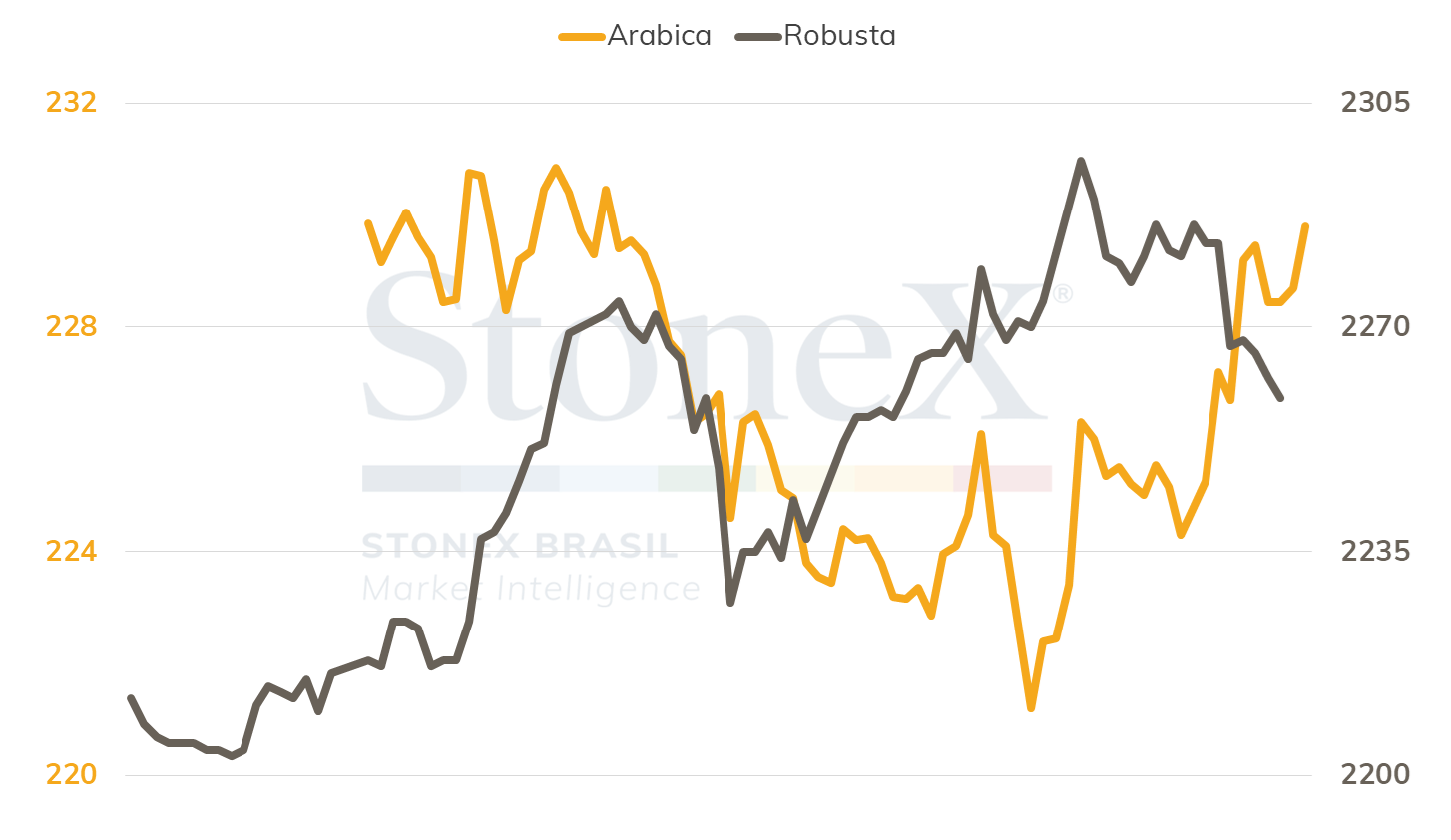
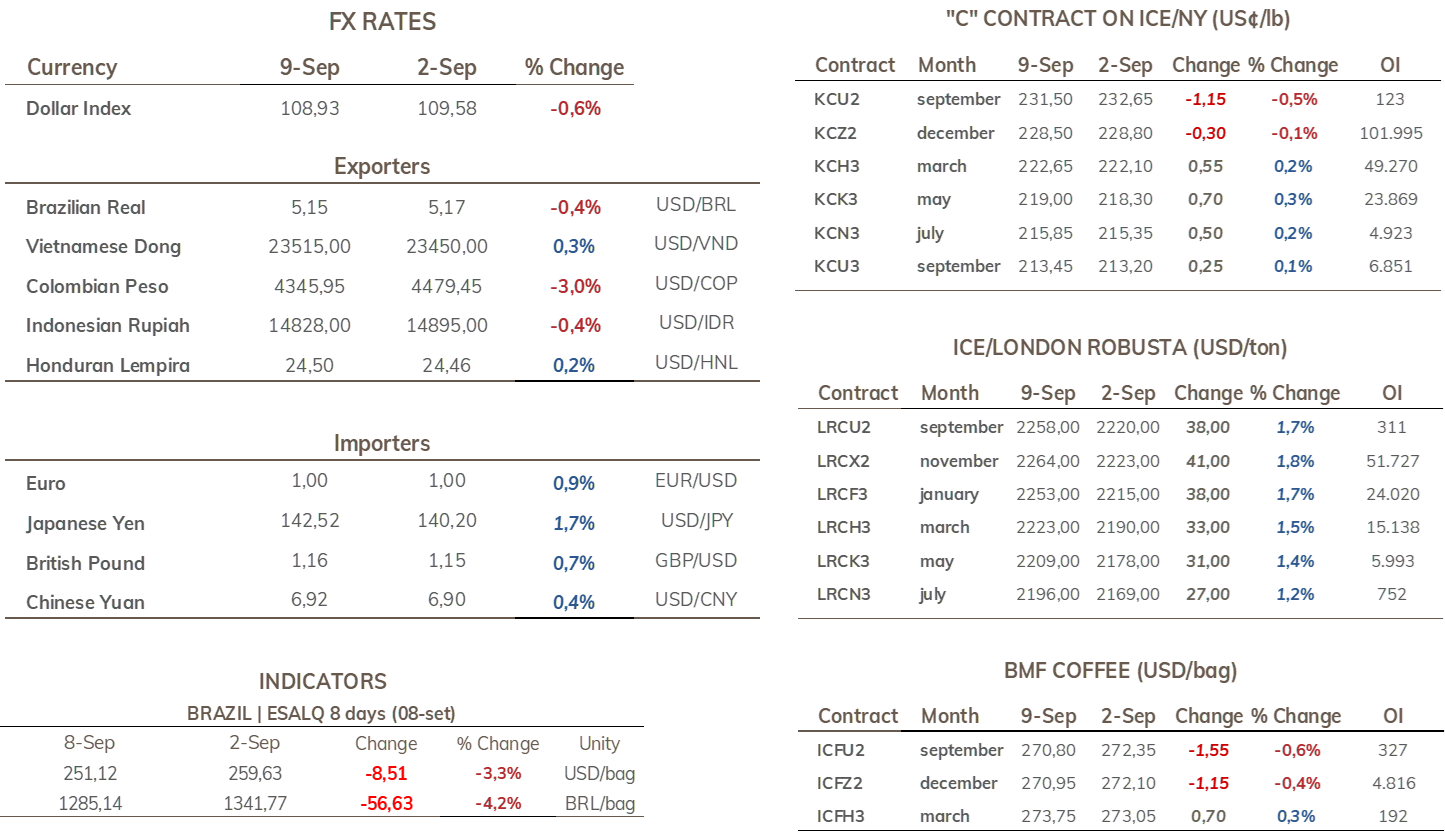
In New York, the most active contract (Dec/22) did not show a defined direction, ending the week quoted at US₵ 228.50/lb, practically stable in relation to the previous Friday (2). Without great fundamentals, Arabica prices started the week higher on Tuesday (6), correcting part of the fall recorded in the previous week. In the two following sessions, the market experienced downward pressures caused by occasional rainfall in producing areas in Minas Gerais and a greater aversion to risk in global markets amidst the contractionary measures adopted by the American and European central banks. By Thursday's session close (8), Arabica coffee had accumulated a weekly drop of 2.4%, which ended the day quoted at US₵ 223.40/lb. However, on Friday (9), coffee resumed a bullish trend, supported by a significant daily drop of the dollar in the Brazilian exchange market and a recovery of commodities in international markets after a week marked by greater caution.
In London, Robusta’s most active contract (Nov/22) appreciated by USD 41 (1.8%), closing the period at USD 2264/t. The Robusta market, in general, has been supported by the industry's higher demand for the variety to adjust to the high prices and lower availability of Arabica in the market. It is worth remembering that, although below the highs reached at the end of August, Robusta prices are at their highest since the end of February, when the Russian-Ukrainian war broke out.
In Brazil, the Cepea indicator showed a drop in Arabica prices of 1.1% for the week, closing at BRL 1316.06/bag. On the other hand, the Robusta coffee ended practically stable, quoted at BRL 750.22/bag.
As mentioned above, occasional rainfall in coffee-producing areas contributed to some market relief regarding Brazilian production, causing the price drops until last Thursday. However, a more significant volume is still needed to trigger most Brazilian flowering. Currently, the StoneX forecast model, based on the GFS model and NOAA data, points to the arrival of new rainfall at the end of the week, with the possibility of more intense volumes starting on September 23rd, especially in the Sul de Minas region. It will be necessary to follow up if the precipitations will materialize, which, in case they do, can generate some optimism about the crop performance.
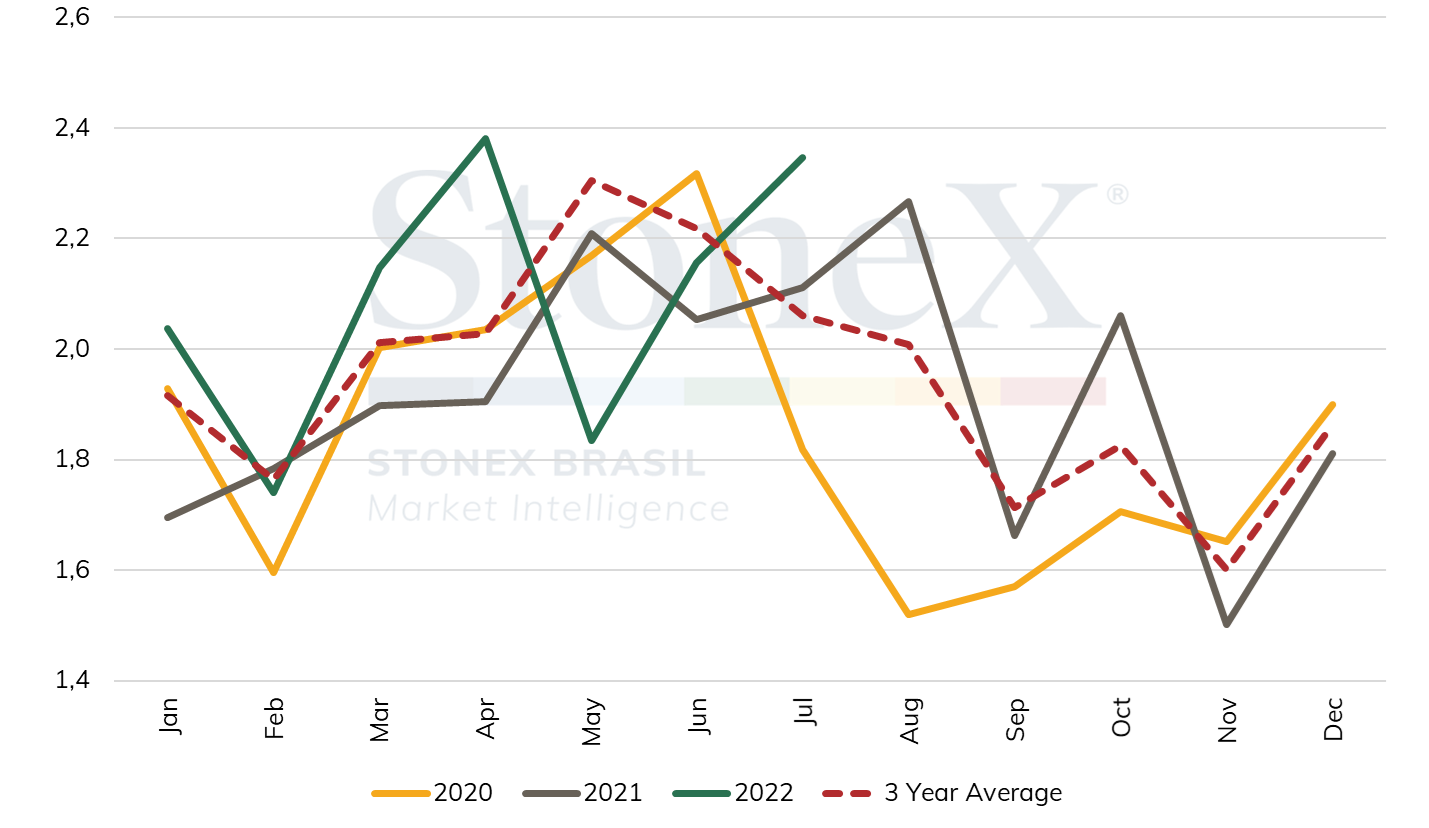
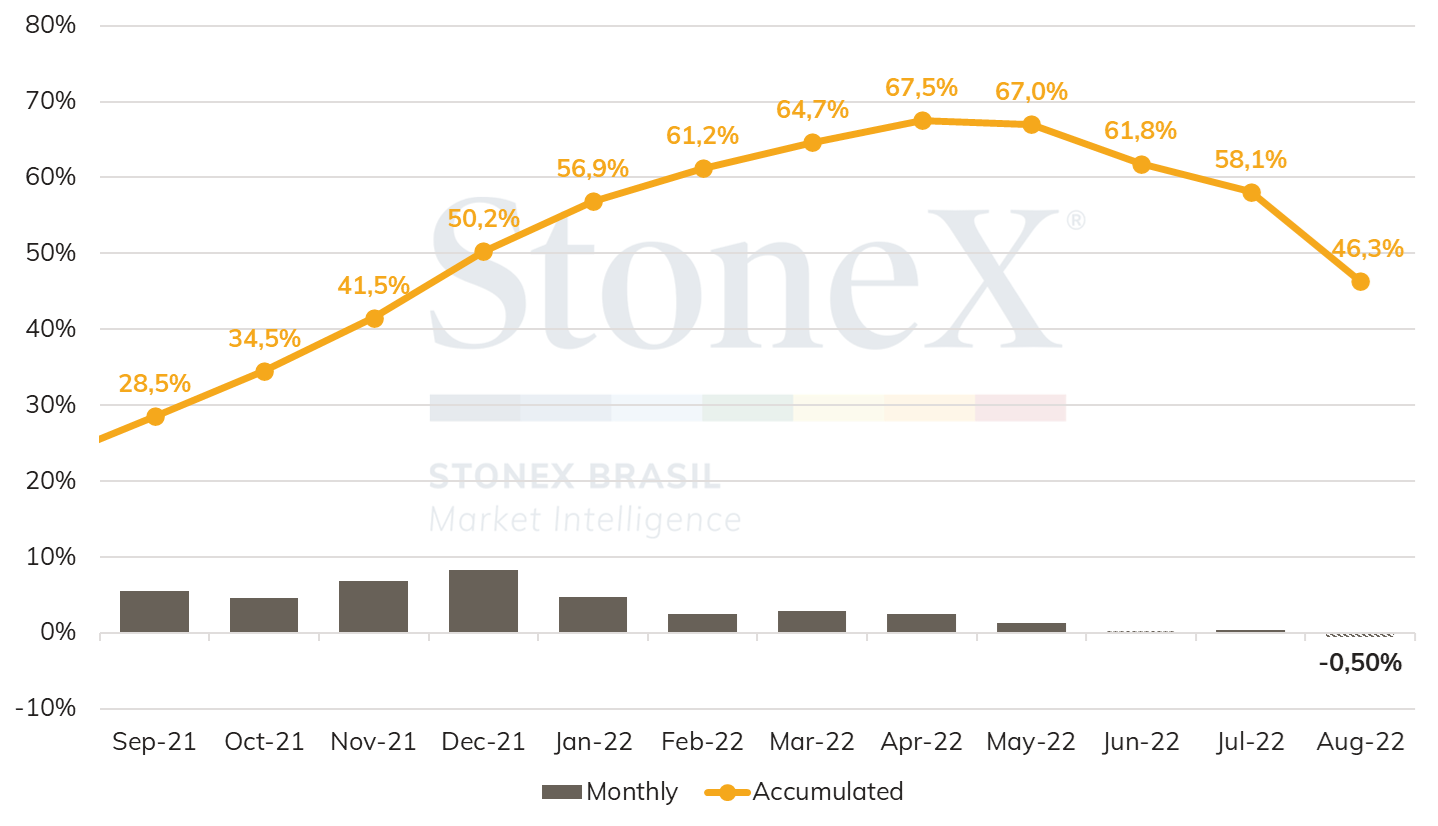
On the demand side, the USDA updated the US import data for July, indicating that the demand for the largest global coffee consumer remains strong. According to the data, the country imported 2.346 million bags of green coffee in the month, an increase of 8.9% compared to last year, when 2.110 million bags were unloaded at American ports and 16.2% above the average of the last five years. In the first seven months, the United States imported 14.6 million bags, 7.2% more than last year, when it reached 13.6 million. Brazilian coffee also continues to make its mark as the largest global consumer, accumulating 4.4 million bags this year. The volume is 1.0% below the same period last year but 17.5% above the average for the last five years.
US coffee monthly imports (million bags)
Source: USDA. Design: StoneX.
This week, market participants should reflect on the release of Brazilian export figures for August by Cecafé and stocks at American ports by the Green Coffee Association (GCA). It is worth remembering that the data of the Secretariat of Foreign Trade (Secex) indicated a decrease of 19.0% in the volume of coffee shipped by Brazil. As mentioned last week, if confirmed, the information could add more insecurity in relation to the difficulties of the Brazilian market to sell the coffee of the current crop to the international markets, remaining the indications of a harvest performance below the expected, which could act in a bullish way to the quotations.
NOAA Updates La Niña Forecast
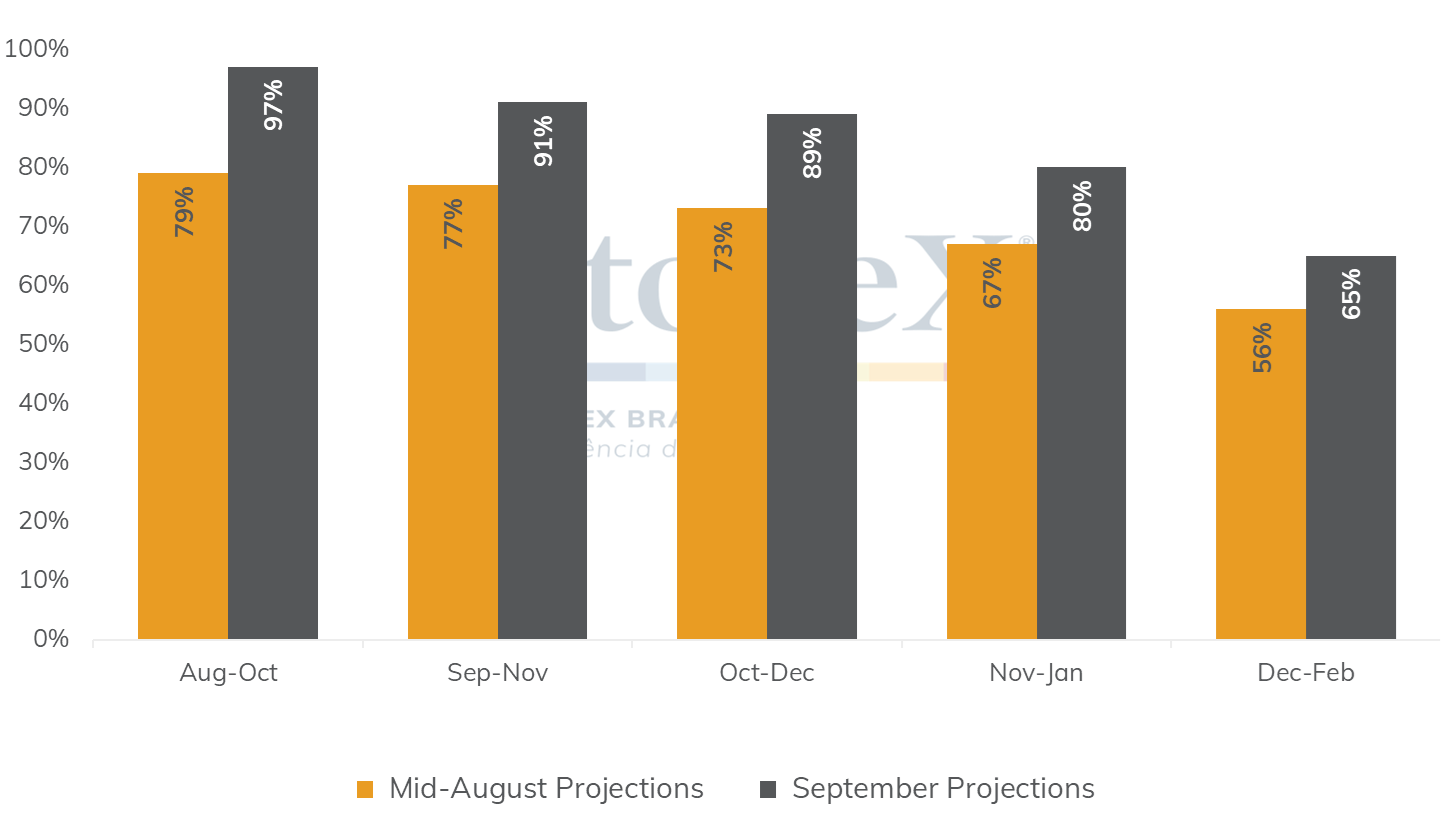
The weather in Brazil continues to be the center of attention, given the market's expectation about the flowering stage in the country, which will define the potential of the 2023/24 crop. Last Thursday (8), NOAA updated its projections for the La Niña occurrence, increasing the probability that the weather phenomenon will remain until the end of the year.
La Niña probability forecast
Source: NOAA, IRI/CPC. Design: StoneX.
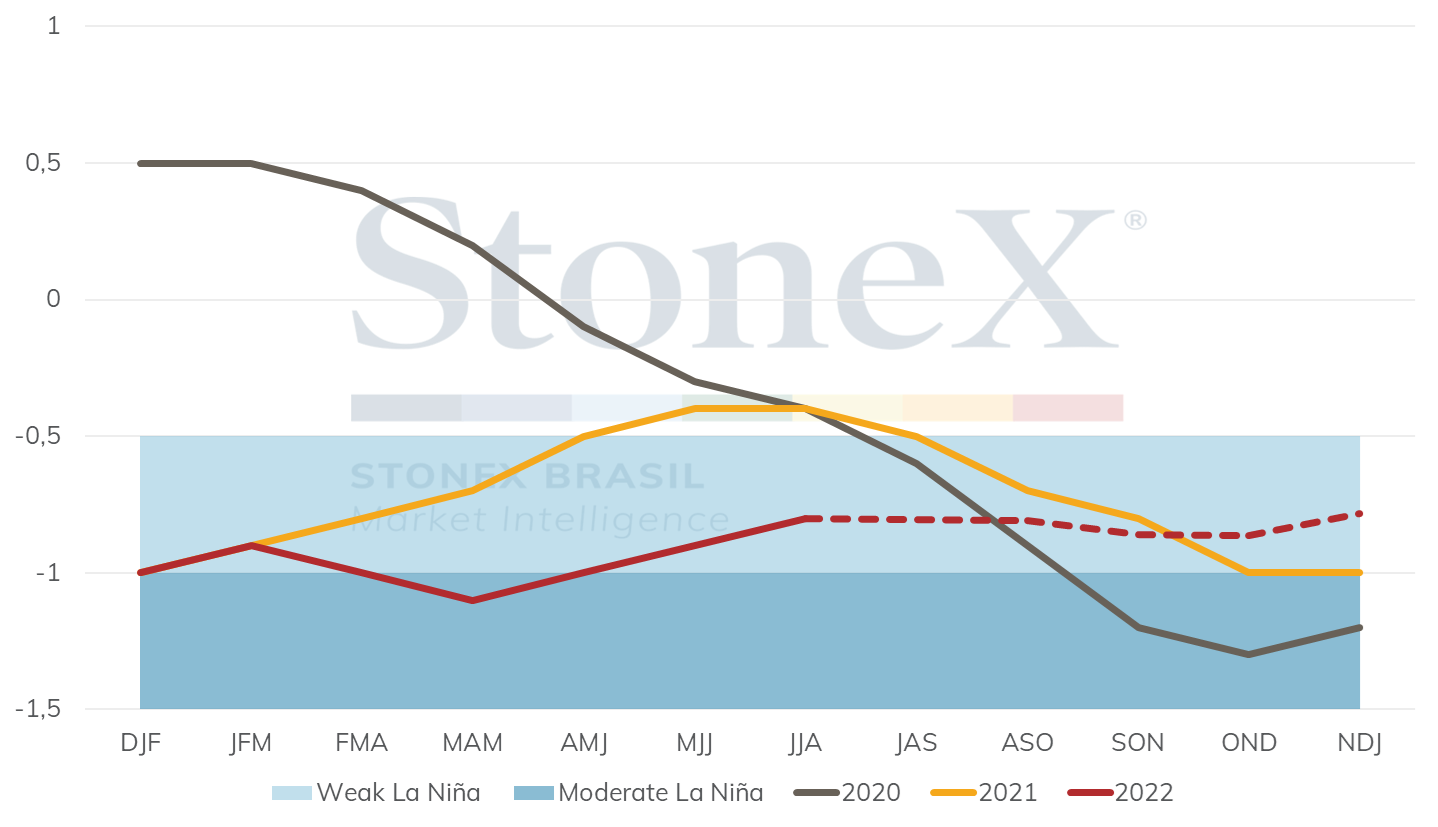
In this regard, it is worth looking at the level of intensity that the NOAA has pointed to. Observing the history available until the quarter JJA (Jun to Aug), it is noted that on average, for the three months, the ENSO presented a variation in temperatures of -0.8 °C, which characterizes a weak La Niña. It is worth remembering that the greater the intensity of the phenomenon, the greater its propensity to alter the weather pattern in the affected regions, and that its occurrence is associated with the delay in the arrival of rainfall to the coffee belt in the flowering period, a crucial period.
History and forecasts of changes in Pacific Ocean temperatures (°C)
Source: NOAA, IRI/CPC. Design: StoneX. *Dashed line: average of the forecast models for the coming months.
The history also shows that, compared to the last two years in which Brazil was affected by La Niña, 2022 registered greater intensity throughout the first semester, which helps explain the dry period and the water crisis of the first semester. According to the projection models used by the Climate Prediction Center (CPC) of the Columbia International Research Institute for Climate and Society (IRI), which uses the data provided by NOAA, the average of the projection models used so far points to the maintenance in the range of weak intensity, close to what occurred in 2021. In a special analysis published last Friday, we analyzed the current conditions, what may occur in the flowering process and the possible scenarios for the coming months.
After a volatile week, USDBRL ends the week lower
The real/dollar pair ended the week down by 0.8%, quoted at BRL 5.146. The dollar index closed the period lower at 109.0 points, down by 0.5%. Despite the strengthening compared to the previous Friday (2), much of the week was marked by expectations of rising interest rates in major global economies, concerns about a recession and greater investor apprehension. On Friday, stock indices, commodities and currencies of emerging countries went through corrections. But on the other hand, they showed appreciation, while the euro and the Japanese yen recovered from recent losses against the American currency.