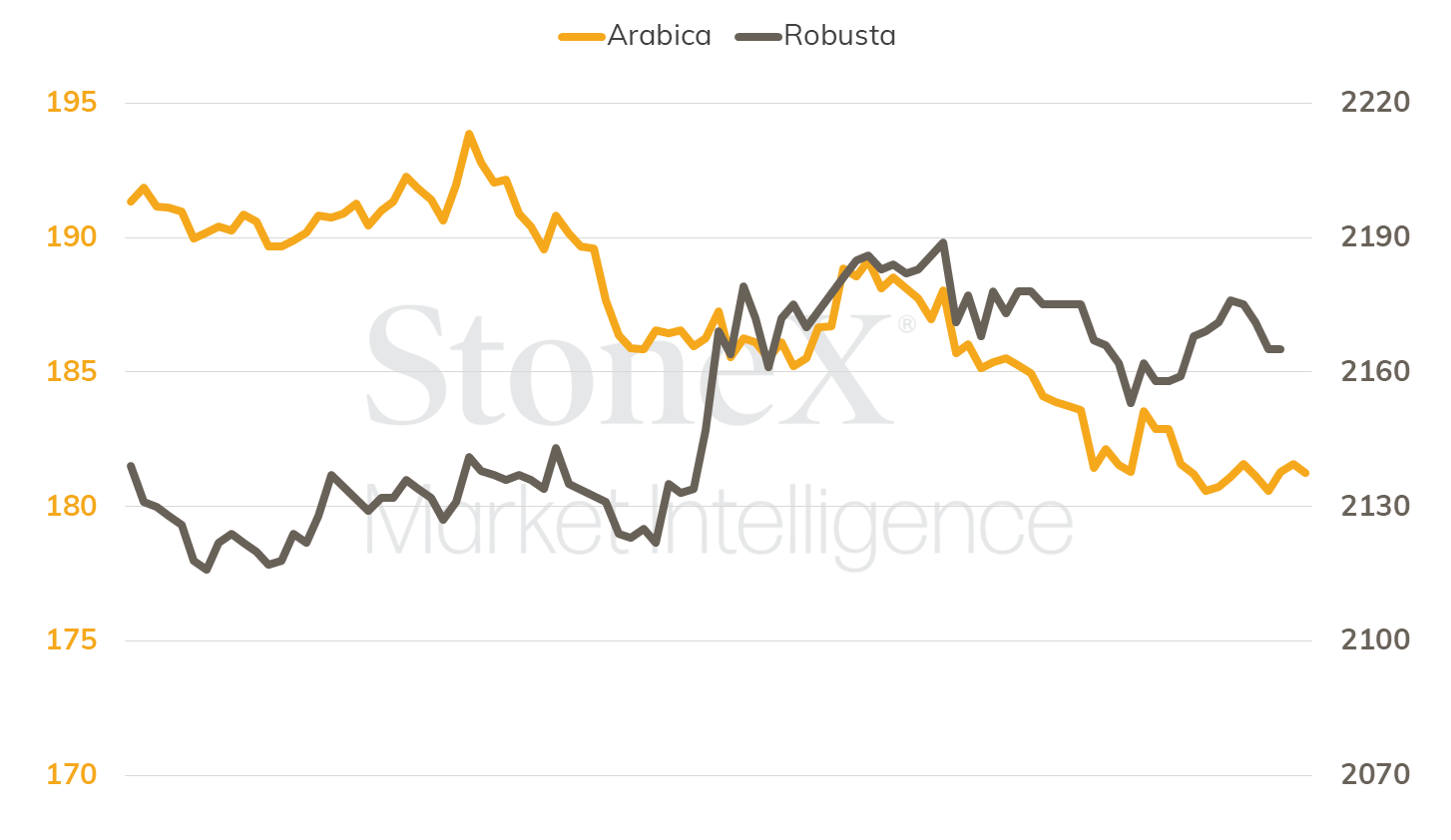
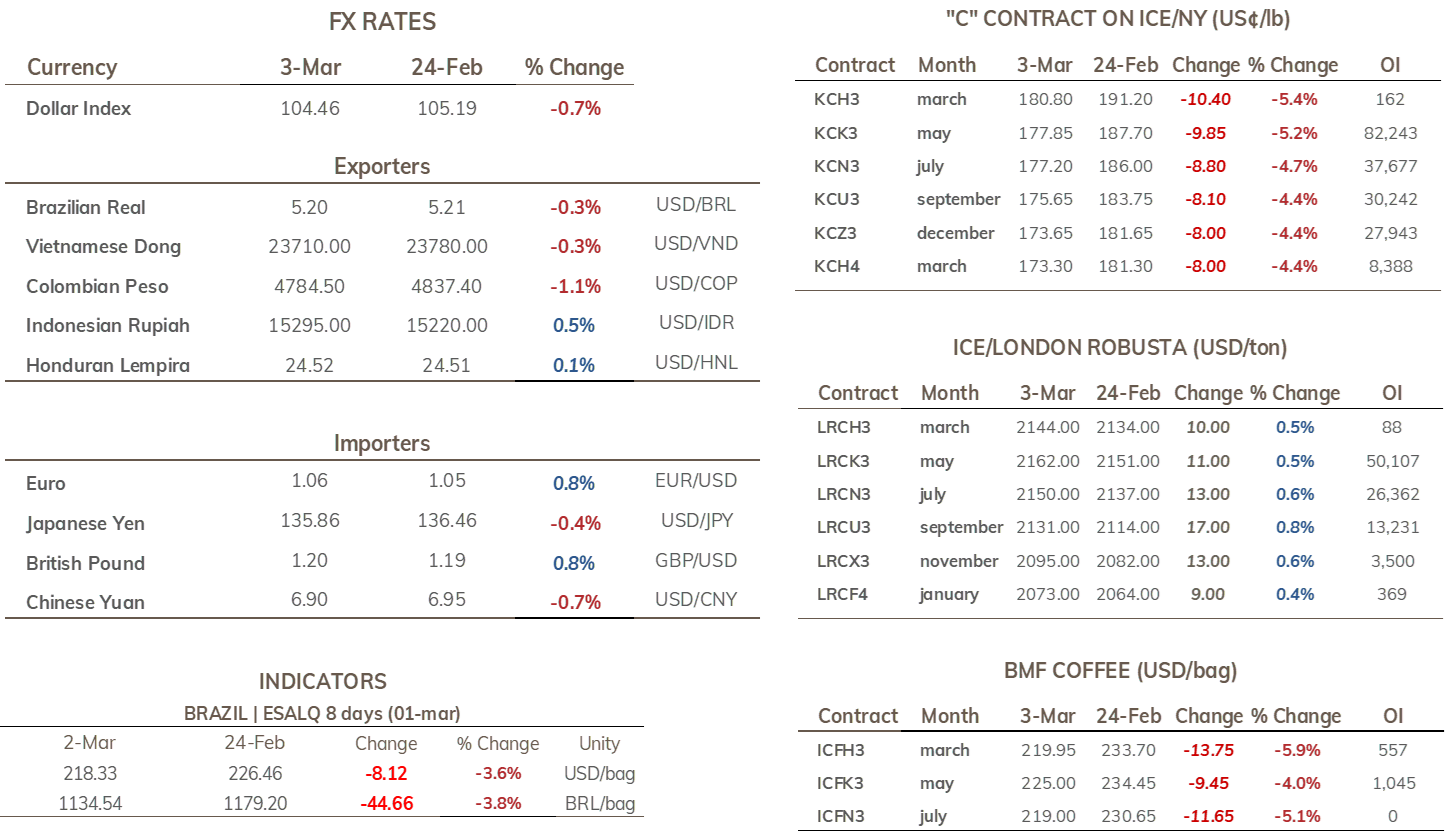
In the wake of the moves in New York, Arabica and Robusta coffee prices ended the week lower in Brazil. The CEPEA indicator for Arabica coffee ended the week down by 2.4%, quoted at BRL 1.114,38/bag. Robusta prices ended the week down by 1.0%, with the CEPEA indicator closing Friday's session (03) at BRL 691.40/bag.
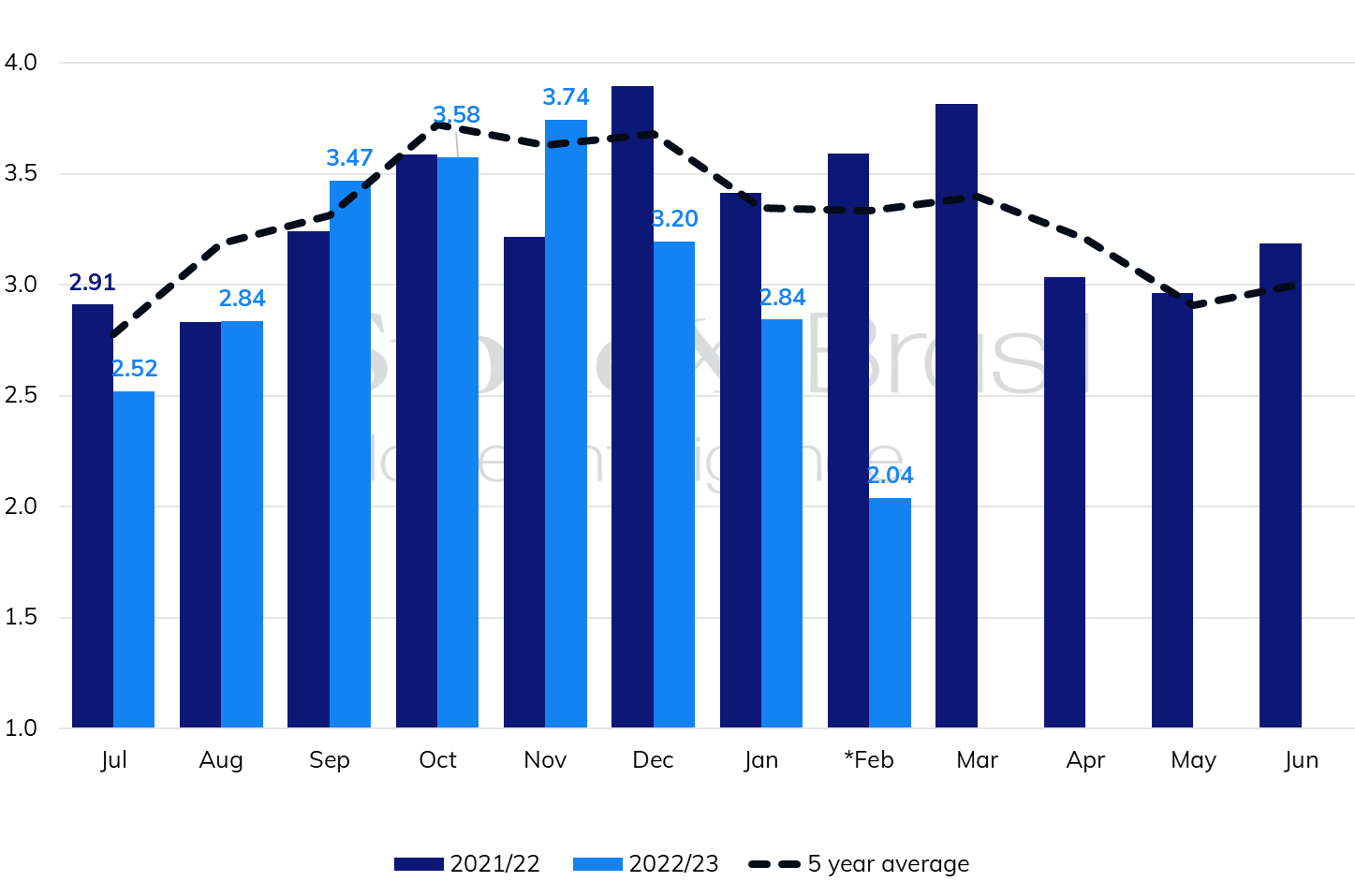
As anticipated, one of the reasons for the drop in Arabica coffee prices was concern about coffee demand in 2023. The week's main news was the release of preliminary export data by Secex, which pointed to a volume of coffee exported in February around 2,04 million bags, representing a drop of more than 40%. Although this is not yet the official Cecafé's, the data raise doubts about the world demand for Brazilian coffee, given that exports in January fell by more than 18%. These data align with what has been released by the International Coffee Organization (ICO), which pointed to a drop of 14% in exports in January to 9.7 million bags.
Monthly coffee exports from Brazil (million bags)
Source: Cecafé, Secex. Design: StoneX.
Coffee demand is a central theme, as several indicators have pointed to potentially weakened or below-potential consumption. The US import data, for example, shows a 3.2% advance in imports in 2022 but is still 4.3% below that observed in 2019 – lower than the time before the Covid-19 pandemic impacts. Moreover, when we analyze the situation of the estimated demand at ports, an index that considers the volume of imported coffee and stocks at ports, we observe that this indicator had an increase of 1% in 2022. However, it is still 4% below 2019.
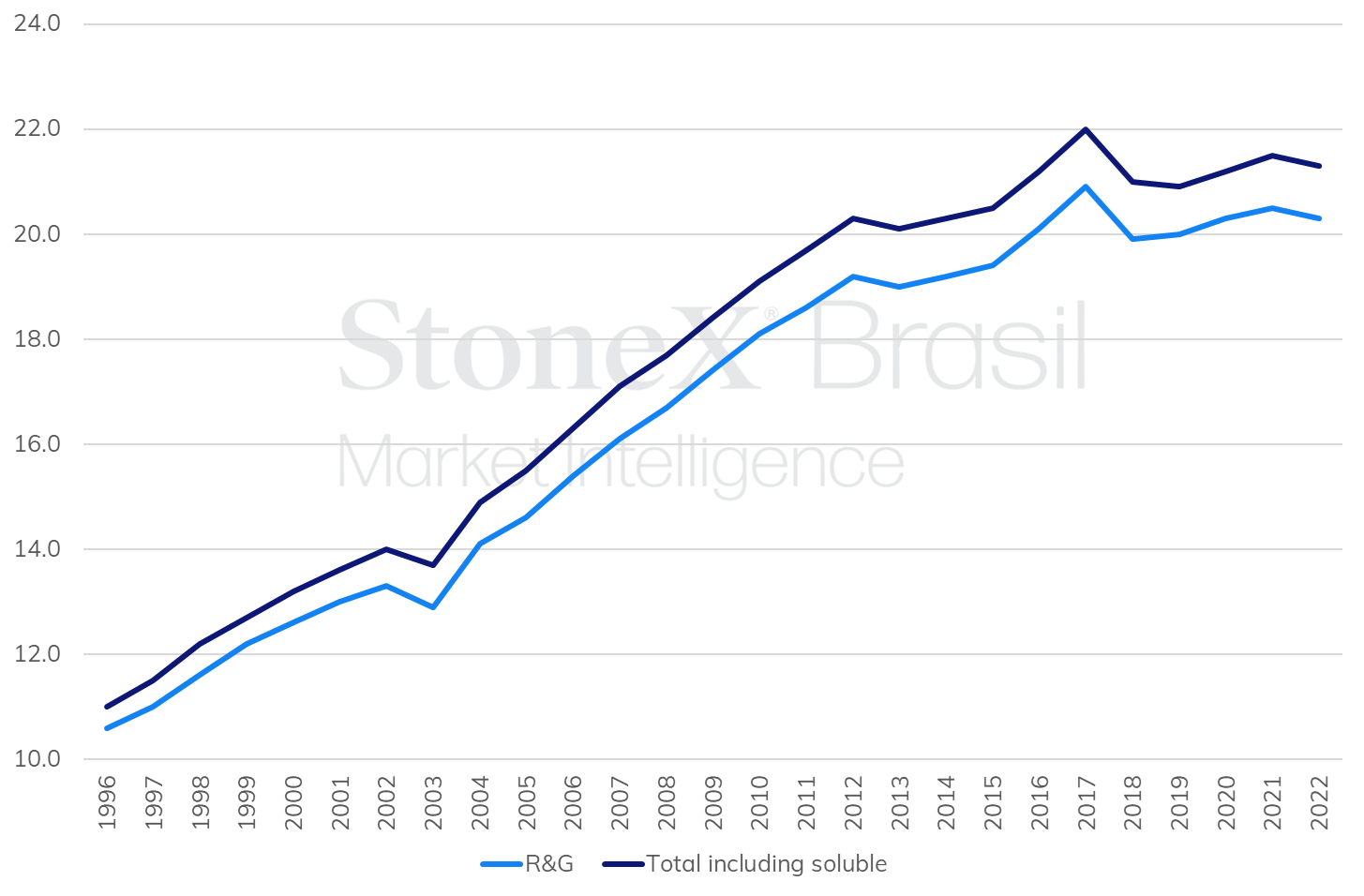
Coffee consumption trend in Brazil (million bags)
Source: ABIC. Design: StoneX.
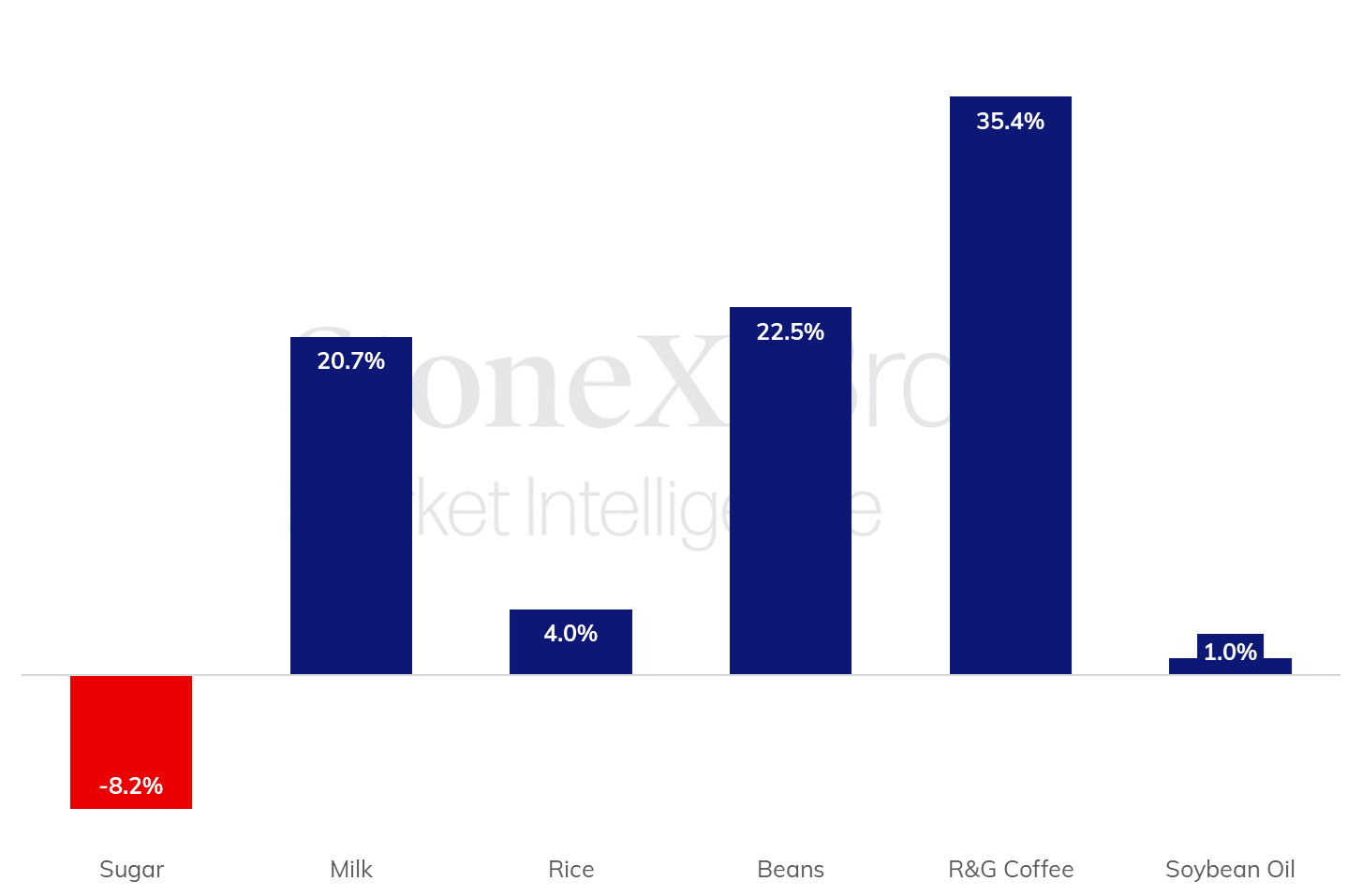
Still, regarding consumption, ABIC released coffee consumption data in 2022 in Brazil last week, which is the producer's second largest consumer worldwide. ABIC data show a 1.12% decline in roasted and ground coffee consumption but a 1.36% advance for instant coffee, resulting in a drop in total coffee consumption of 1.01% in 2022 to 21.3 million bags. The main reason behind the reduction in consumption of the drink was strong price inflation; in 2022, while sugar prices fell by 8%, milk, rice and bean prices had inflation of 20.7%, 4% and 22.5%, respectively, with coffee prices registering inflation of 35.4%. Asked about the prospects for 2023 during the data release event, the president of ABIC stressed that, despite the scenario of uncertainties, there were no prospects for a reduction in coffee prices.
Variation in prices of products from the basic food basket to the consumer
Source: ABIC. Design: StoneX.
Additionally, in the last two weeks, several coffee companies have released the latest results of their operations. The companies generally showed satisfactory results amid the economic adversities presented in the last year. However, the significant price increases carried out by all companies, as a result of the acceleration of operating costs and inputs, stood out.
CFTC/COT report update: as noted by the CFTC itself, the release of the report with the commitment of traders has been postponed due to a cyber incident. Data on the robusta coffee market in London has been restored. However, information regarding the Arabica coffee market in New York is still delayed, with the latest update available only for 02/07/2023. Access the latest data on the CFTC/COT interactive report.