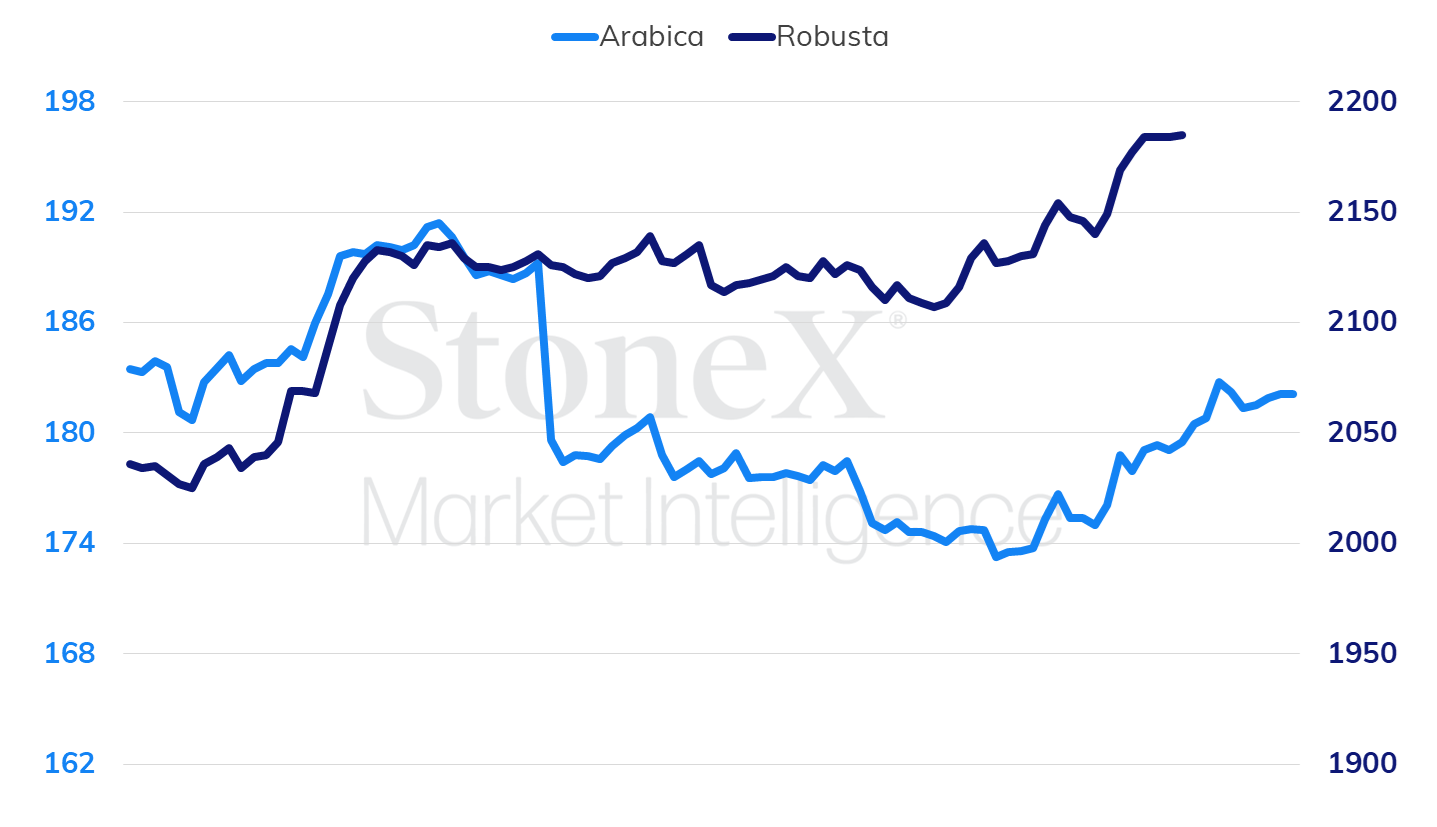
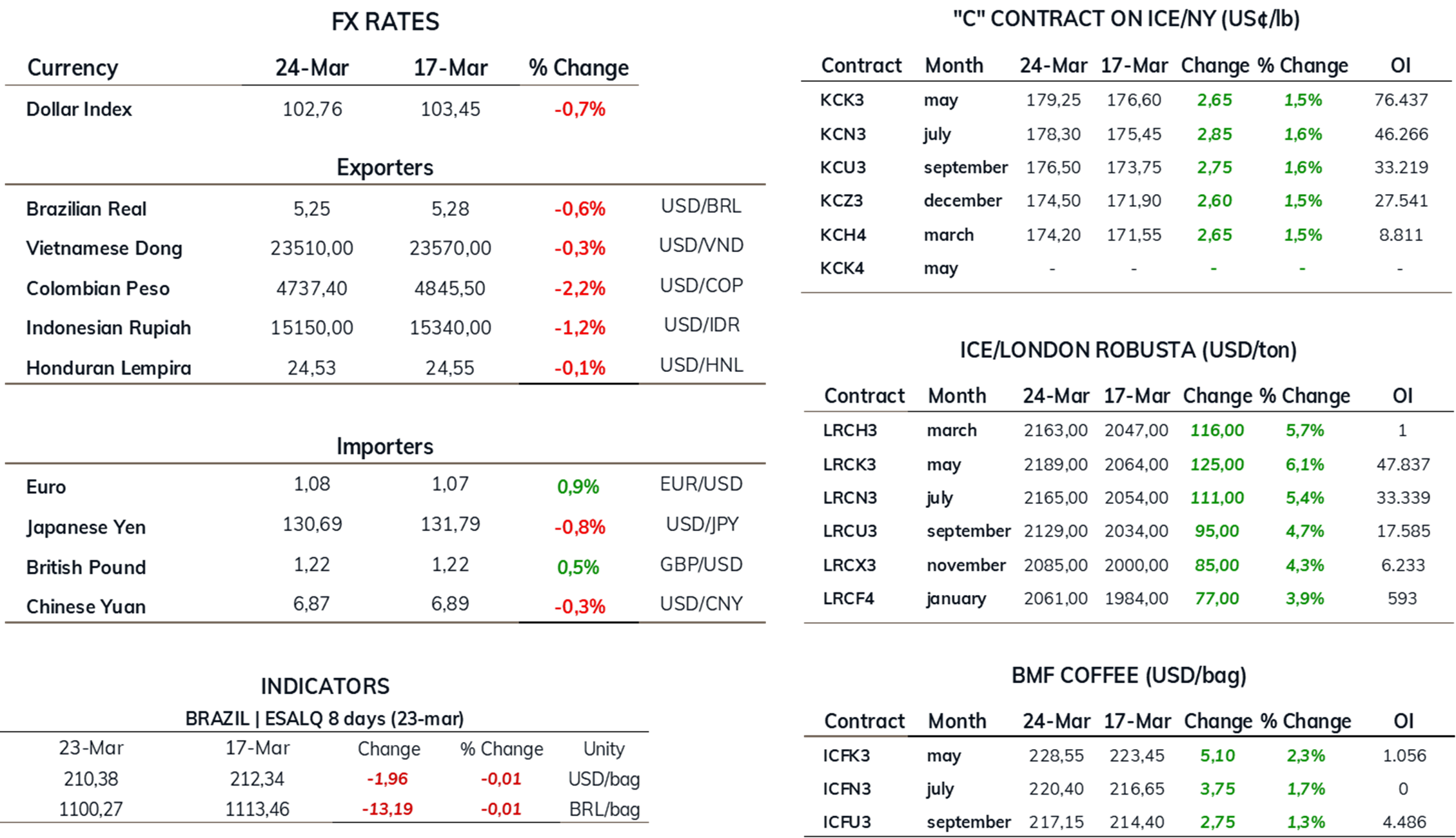
Arabica prices ended the week higher in the Brazilian domestic market following the international market. The Cepea indicator for Arabica ended the week with an appreciation of 0.8%, quoted at BRL 1,122.44/bag. Robusta prices ended the week with significant gains, with the Cepea indicator advancing 4.9% and closing Friday's session (24) quoted at BRL 640.25/bag.
On the fundamentals side, concerns about coffee demand are still a central theme among agents. In the short term, export, import and stock data in the countries will be closely monitored - next week, export data for coffee in Colombia and Vietnam, among other countries, will be released. In the medium term, agents await the USDA report with its outlook for 2023/24. Usually, in the second half of May, but without a defined date, the USDA releases its reports from the attachés in producing countries. Then, in June, it will release its first estimate for coffee's global supply and demand balance.
Regarding demand, it is worth mentioning the interview granted by Paul Rooke, Executive Director of the British Coffee Association (BCA), to CoffeeNetwork, who commented on continued growth in coffee demand in the UK and stocks at a comfortable level. According to Paul, during the pandemic, there was a change in how coffee is consumed, with consumption at home gaining more ground.
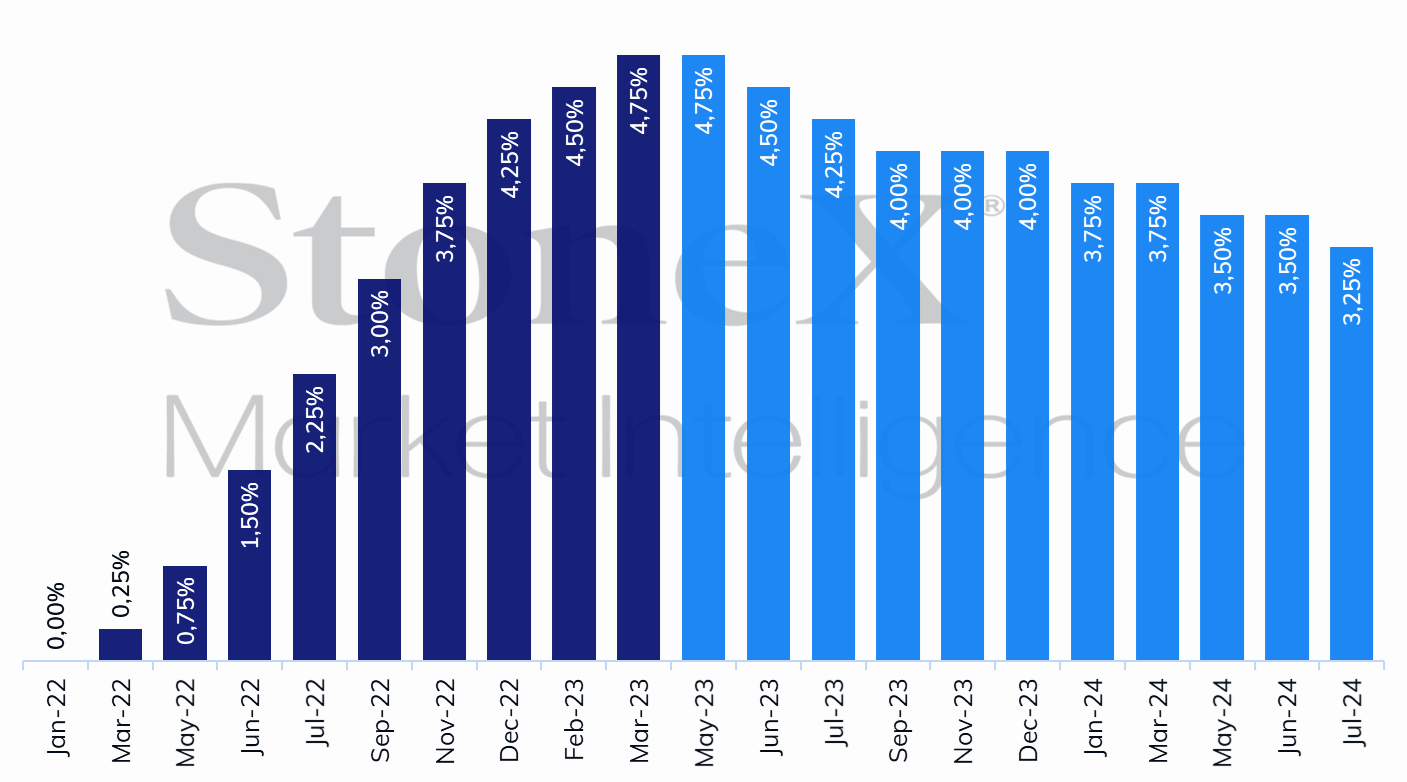
With the small changes in fundamentals, the coffee market will continue to react to technical and macroeconomic factors. Despite the cooling of concerns about the health of the global financial system, especially after the purchase of Credit Suisse by UBS, this topic continues to be a point of attention, mainly from the point of view of risk aversion and investors' perspective on the world economy. In Brazil, the friction between government members and the central bank, and the disclosure of the new fiscal framework, will continue as the center of discussions. To follow the main indicators released this week, go to Economic Calendar.
The latest Commitment of Traders (COT) report released by the CFTC showed that spec funds entered liquidly bought territory on the New York Stock Exchange for the first time since mid-October last year. According to the latest update, the specs increased 3,152 lots long in futures and coffee options while reducing their short positions by 3,398, with the balance going from -2,527 to 4,023.
The result materializes a deconstruction movement of bearish bets by the funds, which left a position in January of almost 63,000 lots short and a net short balance of 44,000 lots. Moreover, during the period, there was a significant upturn in quotations, which advanced from US¢ 150.90/lb to end March 21 at US¢ 180.30/lb, as the market internalized the majority perspective that the 2023/24 coffee crop in Brazil should not come close to the records seen in 2020/21.
The current position of the funds reflects the market has become closer to an equilibrium in recent weeks, with prices trading more sideways in March, signaling the break of a strong trend, a dynamic that, once we have a better conception of production, should remain while the market searches for more concrete information about the performance of world coffee consumption.
Sources: ICE/NY; ICE/EU; B3; Commodity Network Trader’s Pro.