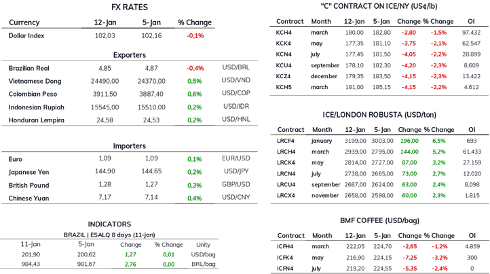
• Arabica coffee down 1.5% on the week in New York, closing at 180.00 c/lb
• Robusta coffee rises 5.2% on the London exchange to USD 2939/t
• Cepea indicator for Arabica coffee falls 1.1% to BRL 971.32/bag
• Cepea indicator for Robusta coffee up 4.8% to BRL 792.01
• Robusta coffee trades at highest levels since April 2022 on the Brazilian physical market
• Weather in Brazil remains in the spotlight
• Cecafé's December Brazilian exports and Conab's estimates should move the market in the week
• IBGE updates Brazilian production estimates for 2023/24
• NOAA update continues to suggest possibility of La Ninã in the second half of the year
• Falling production and logistical problems boost Robusta coffee prices
• Conflict in the Red Sea continues to raise logistical costs and limit the flow of Robusta coffee
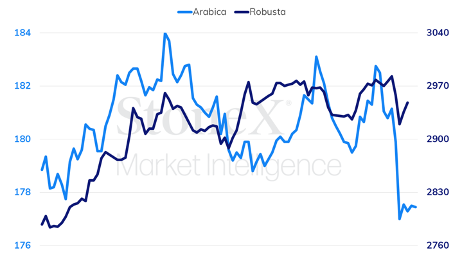
Arabica coffee prices ended last week down on the New York exchange, influenced by favorable weather, with rainfall recorded in major Arabica areas of the coffee belt, which has kept expectations generally positive for production in 2024. After more intense movements at the end of last year, coffee has sought to operate at a point of greater equilibrium, while waiting for news. However, any release of estimates that reinforce expectations of production growth could bring additional downward pressure to what has already been seen in the first 15 days of the year. The March contract was down 280 points (1.5%) on the week, closing at 180.00 c/lb.
Robusta coffee, on the other hand, strengthened both due to concerns about supply from the largest Asian producers of the type, which are expected to show a significant decline in production this year, and due to the logistical problems that have increased on an important route connecting these markets to Europe. The Mar/24 Robusta coffee contract ended at USD 2939/t, a significant increase of USD 144 (5.2%) compared to the previous Friday.
Weekly intraday (most active contract) - 08/01 to 12/01
In Brazil, the Cepea indicator for Arabica coffee fell by 1.1% on a weekly basis to close at BRL 981.67/bag, while the indicator for Robusta coffee rose by 4.8% to BRL 792.01/bag, operating at its highest levels since April 2022. This week, agents are waiting for Cecafé's data on Brazilian exports in December, as well as Conab's first estimate for the 2024 crop, which will be released on Thursday (18).
The weather should continue to be the focus of attention in Brazil. The StoneX forecast model shows little rainfall in most producing areas over the next few days, with the exception of the south of Minas Gerais, which should receive better volumes. However, from the 19th onwards, rainfall should return, which, if confirmed, is likely to favor production. The latest NOAA update continues to point to the presence of an El Niño at least until March or April, which should remain a point of attention. After this period, the model indicates a conversion to a neutral condition and begins to suggest the possibility of a change to La Niña. Although it is too early to say, if the next updates continue to confirm this trend, the market tends to start pricing out the risks for next year's Brazilian Arabica production, which could act as a support factor for the long term.
Estimates for the 2024/25 Brazilian crop continue to be a major factor monitored by the market. The IBGE released its third revision for the 2023/24 estimates, projecting 47 million bags, an adjustment of +1.2% compared to the previous revision and an increase of 8.9% compared to the previous crop. Arabica coffee was adjusted by +1.4% to 39.5 million bags, while Robusta coffee was adjusted by +0.6% to 17.5 million bags, but fell by 4.8% compared to the previous season, making it the most contrasting figure in relation to the largest market, which projects Robusta production of over 20 million bags. This month, StoneX's coffee team is conducting the crop tour for the official production estimates for 2024/25, where the main producing regions for both Arabica and Robusta coffee are being visited. The report with the official StoneX figures will be released at the beginning of February.
For Robusta coffee, in addition to the limited supply of coffee due to the falls in production in Vietnam and Indonesia, the first and third largest producers of the type, respectively, the market has seen a slower pace of sales due to the conflict in the Red Sea. New airstrikes by the United States and the United Kingdom on military targets of the Houthis armed group in Yemen last week, in response to attacks by the group on vessels in the sea passage, have raised the risk of tensions escalating. Statements by the Houthis vowing retaliation for the event indicate that hostilities on the strategic route are far from over, which continues to act as a major bullish factor for London exchange prices. The interruption of transportation in the Red Sea has led coffee producers to hold back part of their sales, limiting the availability of Vietnamese and Indonesian coffee in the short term.
In addition, the sharp rise in freight prices has made imports of Robusta coffee more expensive. It is worth remembering that the Red Sea is the main route for coffee exports from Asia to Europe. To avoid this route, many ships are opting to go around the African continent, making the transportation of goods much more costly, which should inflate the price of various commodities. In this sense, the continuation and possible escalation of the conflict in the region tends to continue acting as a support factor for prices on the London exchange. On the other hand, the situation tends to continue to favor the competitiveness of Brazilian coffees, generating prospects for maintaining higher export volumes.