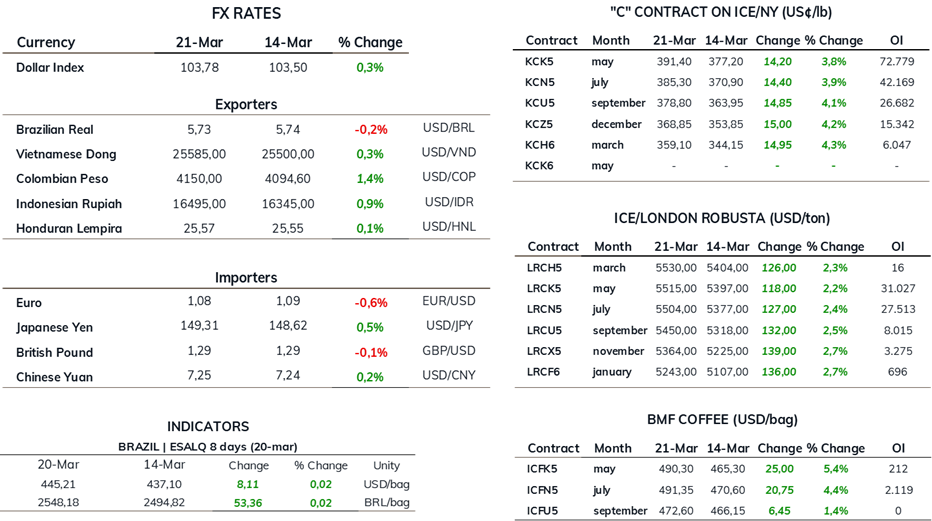
• Arabica coffee closed at US¢ 391.40/lb on ICE, up 3.8% for the week
• Robusta coffee rose 2.2%, closing at USD 5,515/t on the London exchange
• The dollar fell 0.2% over the week to USDBRL 5.73
• Reduced supply continues to support coffee futures prices
• Logistical bottlenecks remain a challenge for companies in the sector
• Weather models point to ample rainfall across the coffee belt
• StoneX to release report on Ethiopian coffee estimates on March 28
Arabica and robusta coffee futures ended last week on a positive note. With no major changes in fundamentals, the market continues to find support amid a tight supply outlook and concerns over Brazil’s 2025/26 crop.
Another factor that contributed to price appreciation - especially by the close on Wednesday, March 19 - was the depreciation of the US dollar. Starting from the previous week, the Brazilian real began strengthening against the dollar, with the currency falling steadily during the first three sessions of the week.
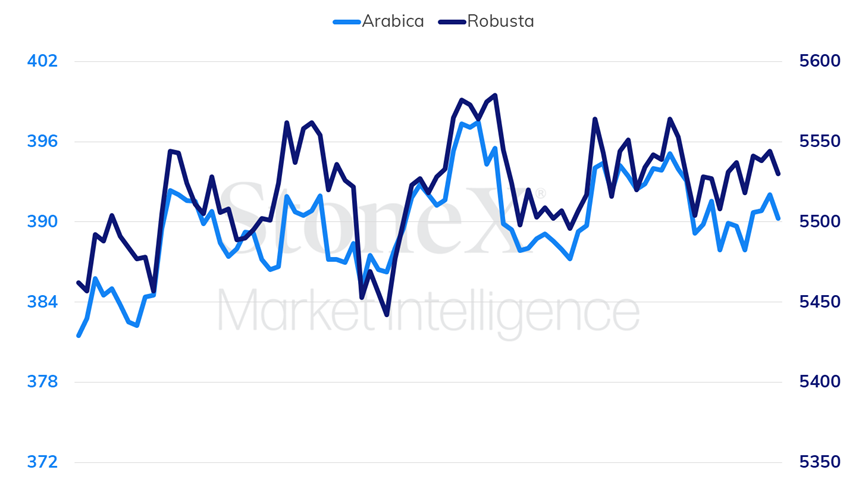
On Friday the 14th (of the previous week), the dollar closed at BRL 5.74. After initial declines, it hit BRL 5.64 on March 19, before rebounding and ending the week slightly down by 0.2% at USDBRL 5.73. In New York, arabica futures rose 3.8%, reaching US¢ 391.40/lb. In London, robusta prices increased by 2.2%, closing at USD 5,515/ton.
Weekly Intraday (most active contract) – March 17 to March 21
In Brazil's physical market, coffee prices also rose. The CEPEA indicator registered a 2.36% increase for arabica coffee, reaching BRL 2,553.66 per 60-kg bag, and a 0.3% increase for robusta coffee, reaching BRL 2,017.04 per bag.
The current scenario has been challenging for companies in the coffee sector. The high volume of exports in 2024, during a year in which Brazilian production was not particularly strong, has led to a significant decline in domestic inventories, reducing the availability of coffee in the country. At the same time, many industries have adopted a just-in-time management model, operating with minimal stock levels. In this context of tight supply and elevated prices, these companies are being forced to purchase coffee at the current high price levels.
This challenge is also being felt by companies in importing countries. Just like in Brazil, industries abroad have also been operating with reduced inventory levels. One factor that has exacerbated this situation is the logistical bottlenecks faced by the coffee supply chain. The Brazilian Coffee Exporters Council (Cecafé) itself has reported several logistical challenges that have hindered Brazilian exports. Similar issues are occurring in other producing countries. Given that the industry operates with minimal inventories, any delay or logistical problem can compromise the supply of raw material, pushing companies to seek coffee on the spot market - which also contributes to upward pressure on prices.
Regarding Brazil’s production, weather remains a concern. In February, some coffee-producing regions recorded below-average rainfall. However, in the last 15 days, most of the coffee belt received around 50 mm of rain, with the exception of the extreme north of Espírito Santo and the south of Bahia. Looking ahead, despite some divergence between climate models, both the American and European models forecast significant rainfall across nearly the entire coffee belt. Rainfall anomaly maps, which compare the forecast to historical averages, indicate above-average rainfall for the next 15 days.
15-Day Rainfall Forecast for Brazil (mm)
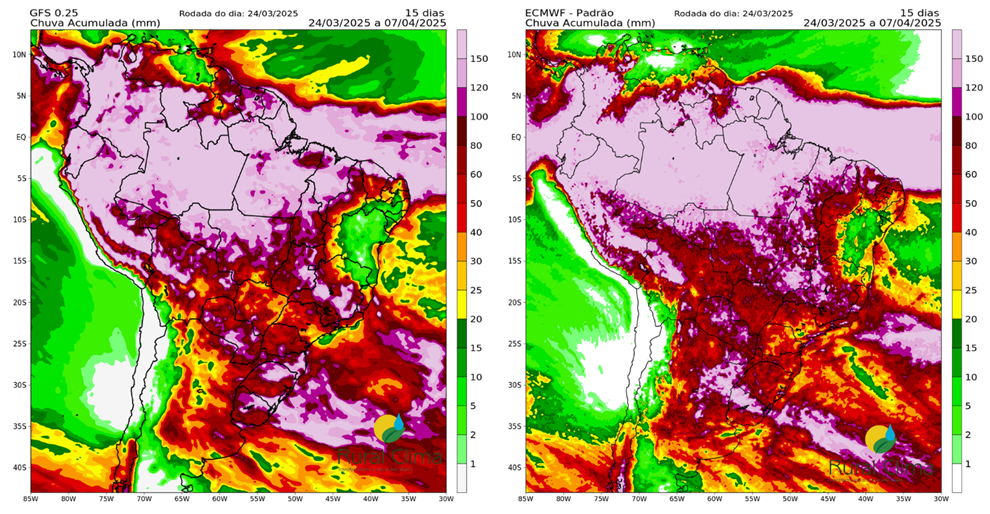
Source: RuralClima
In the coming weeks, the market is expected to continue reacting to the tight supply outlook, which remains a bullish factor for prices. Additionally, market participants will keep a close watch on logistics issues, weather conditions, and the start of the harvest in Brazil. The robusta harvest is expected to begin slowly in some regions by the end of April, with a more pronounced pace picking up around mid-May.
After completing its crop survey in Ethiopia, StoneX will release its report on Friday, March 28, providing details on the country's coffee production and estimates for the upcoming season.
INDICATORS