BEARISH DRIVERS
- Slower-than-expected recovery of Chinese economy;
- Fear about a global recession.
Bullish DRIVERS
- Restricted grains supply due to conflict in the Black Sea;
- Drier weather in east US belt.
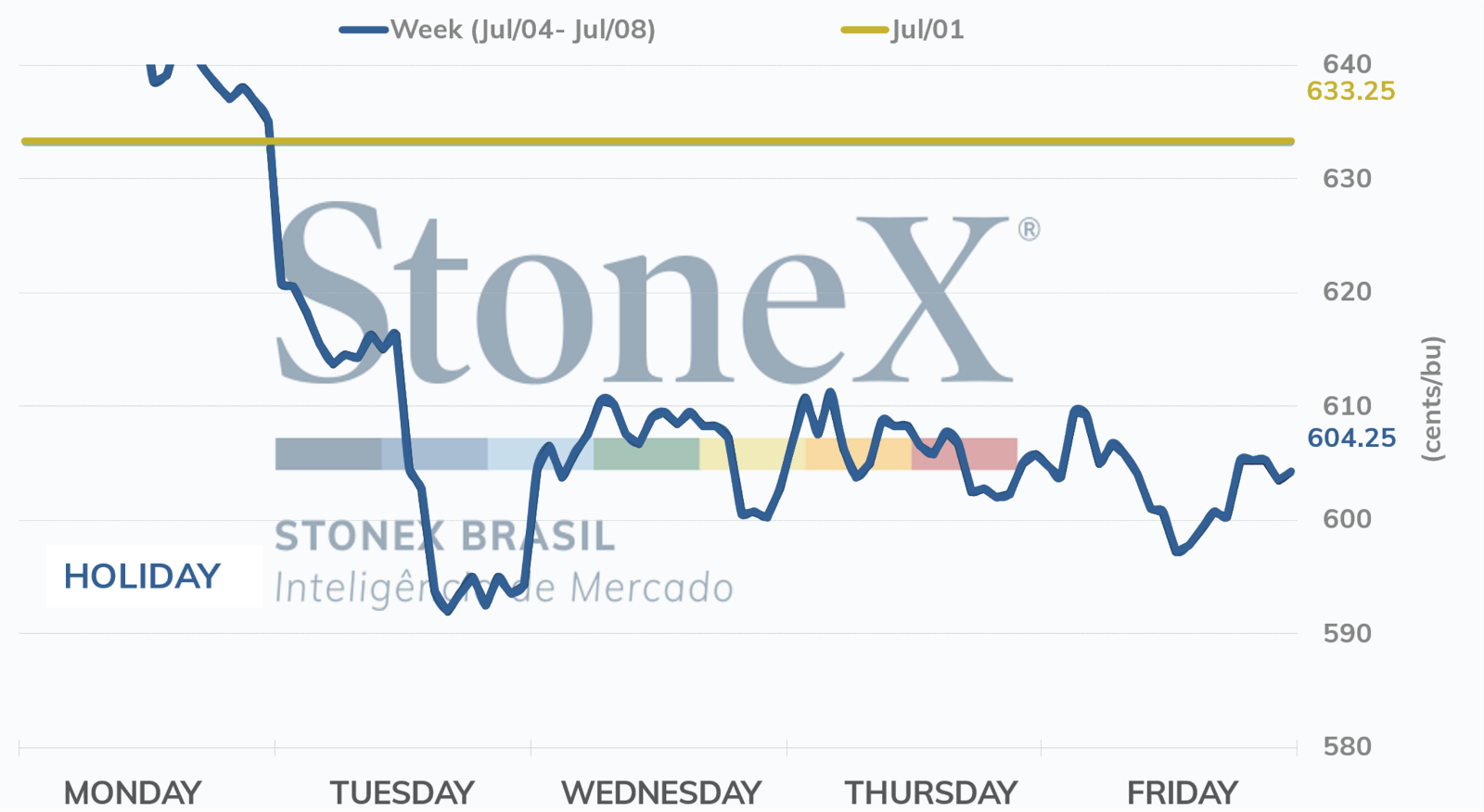
In last week’s first session in Chicago, corn futures posted slight gains, with September/22 rising by 3.75 cents from the previous close. As previously mentioned, the weather in the US has been a major driver in the grain market, and that was no different in Monday’s session. The timid rallies seen in the day were mainly motivated by concerns about the US crop caused by weather forecasts pointing to a dry and warm pattern in the third week of this month.
As released in the USDA’s weekly inspection report, the US shipped 933,700 tonnes of corn in the week ending July 7, which was 57,300 above the volume exported one week earlier, but 68,600 less than the same period of 2021. Accumulated exports are currently at 49.2 million tonnes, 10.1 million less than in the same week of the previous season.
After the end of Monday’s session, the USDA released its crop progress report. By July 10, 64% of corn crops were rated good/excellent, the same as July 3 and 1 point below last year. Agents expected an increase in GE conditions by 1 point.
Intraday (15 min) - September/22 (CBOT)
On Tuesday, corn futures melted on the CBOT. As a bearish factor, we can highlight the significant devaluations observed in crude oil futures, motivated by talks about recession, as the market expects China to participate in the process, affecting the energy sector.
In addition, we also had more favorable weather forecasts for the performance of corn crops in the US and the release of the USDA S&D report, which did not provide grounds for sustained prices at higher levels, with positive revisions in production and stocks of US corn. September/22 retreated 43 cents/bu on the intraday.
In its July WASDE report, the USDA reduced feed consumption for the 2021/22 crop by 635,000 tonnes, which resulted in a similar drop in ending stocks for the cycle in question. The Department has not changed its estimated export number for the current crop, but there is room for revision.
As mentioned, as of July 7, the US had shipped 49.2 million tonnes of corn, a volume 13 million tonnes below the Department's estimate for the current crop. Thus, to reach the USDA's projection of 62.2 million, the US would need to ship about 1.6 million tonnes of corn per week until the end of August, about 20% above the average of the last 10 weeks (1.3 million tonnes).
On Wednesday, after the significant devaluations recorded the previous day, the corn market in Chicago showed a typical movement of technical purchases. Additionally, potentially hot and dry weather in the US Midwest through the third quarter of July also contributed to the day's rally. Changes in oil prices also affected corn prices on the day. September/22 ended the session with an increase of 6 cents/bu on the intraday.
The Energy Information Administration (EIA) reported that US ethanol production declined to 1,005,000 barrels per day (mbpd) for the week ended July 8, 39 mbpd lower than a week earlier. Stocks, on the other hand, advanced to 23.6 million barrels, against 22.5 million in the previous week.
In the US, the consumer price index (CPI) for June was released showing an advance of 1.3%, above market expectations, which pointed to an increase of 1.1%. Inflation over 12 months reached 9.1%, the highest level since 1981. The Fed has been under pressure to raise interest rates and some banks only see a way out of this inflationary spiral through a recession.
On Thursday, futures had another day of slight increases, with September/22 accumulating an appreciation of 5 cents/bu compared to the previous close. Futures on the CBOT were supported by weather models, which pointed to a warm, dry pattern in the US corn belt.
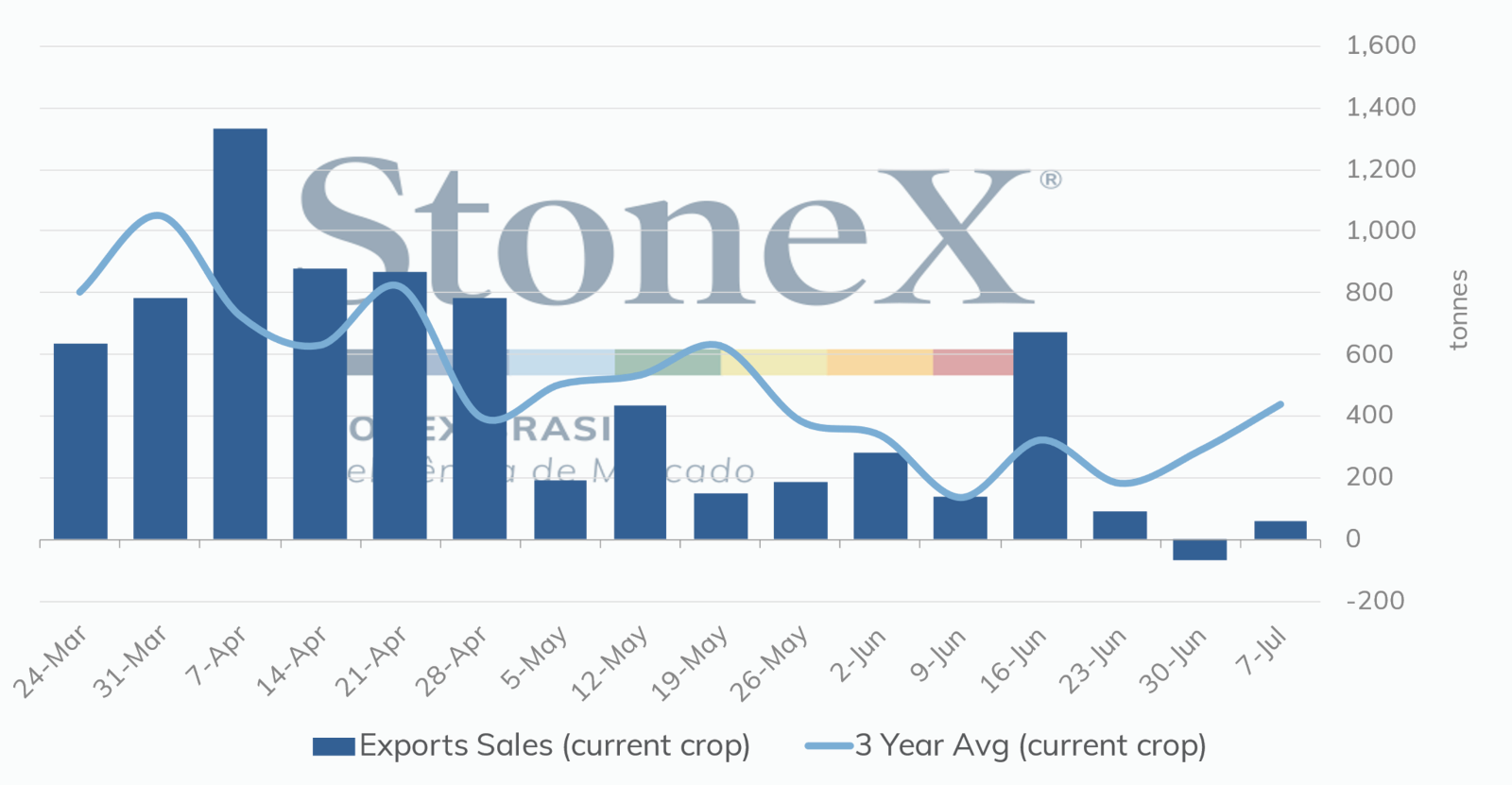
The USDA reported that net sales for the 2021/22 crop totaled 59,000 tonnes in the week ended July 7, against -66,600 tonnes in the previous week (the number of cancellations was higher than the number of sales). In the equivalent week of 2021, US net sales stood at 138,800 tonnes. The volume was within the range expected by the market, which varied between -100,000 and 300,000 tonnes. Commitments from all destinations advanced to 60.4 million tonnes, against 69.9 million in the same period last year.
Weekly US export sales - 2021/22