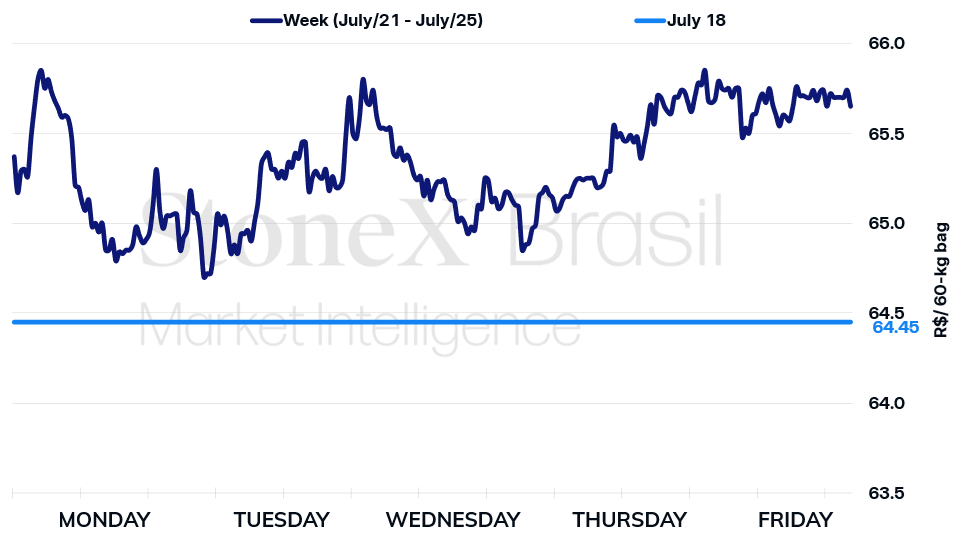
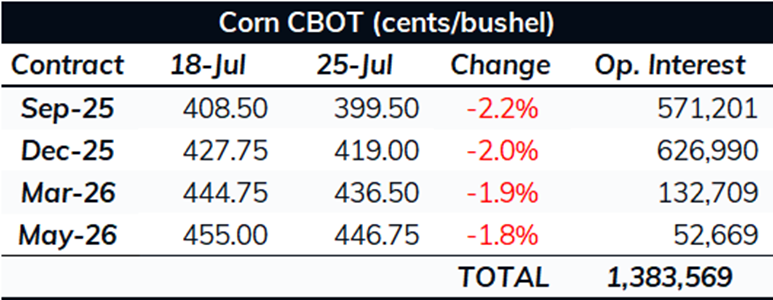
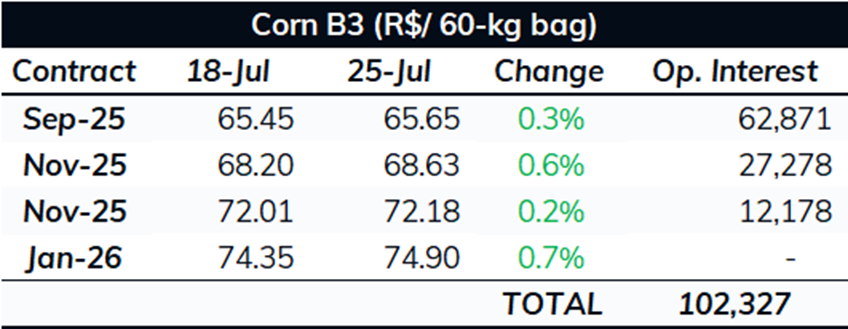
Weekly summary | The December/25 contract ended the week trading at US¢419/bu (-2.0%). The corn in the United States is tasseling and the weather continues to favor the healthy development of the crop. The market also keeps an eye on trade negotiations between the US and other countries around the world. Agreements with Japan and the European Union were reported, but with marginal effects on the quotes. On B3, corn futures have shown greater resistance to bearish pressures, having traded higher throughout the week, contrary to Chicago.
Intraday (15 min) Dec/25 contract - CBOT
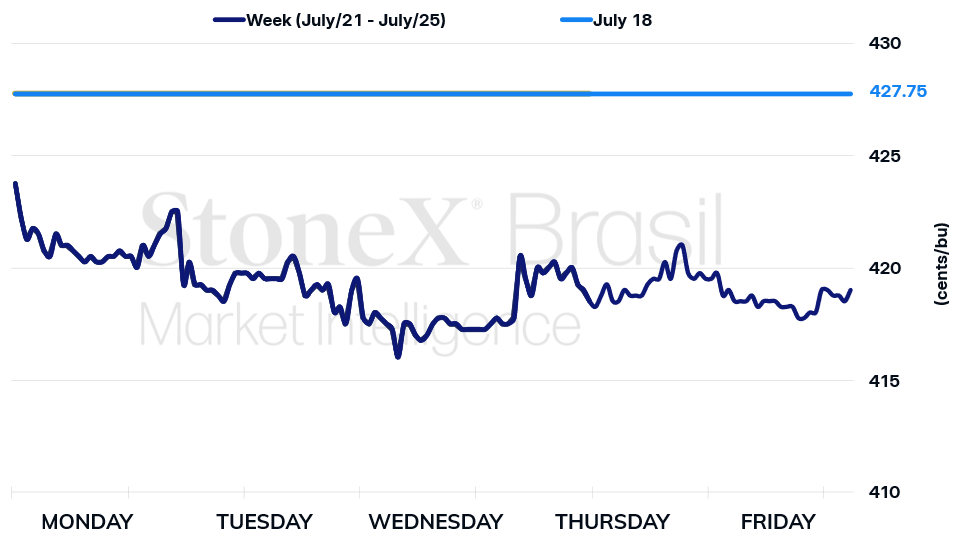
Source: CBOT. Design: StoneX.
US crop | Last week, 74% of corn fields were in good or excellent condition, the highest value for this indicator since 2016 for this same reference week. The fact helped to reinforce the record crop thesis. Even with fears of warmer weather this July, conditions remained favorable throughout the month and, as the tasseling stage progresses, the good prospects for the supply are strengthened. This week, conditions should remain favorable, although slightly drier weather is expected.
Export sales and tariffs | Last week, after the report of US export sales, the market was encouraged by the announcement of a sale made to China. The excitement came from the prospect of a return of the Asian giant to the American corn market, which could provide supports similar to what was observed in 2022 to the futures in Chicago. However, everything was just a mistake, since these sales were actually destined for South Korea, causing the market to forfeit some of its enthusiasm.
Still, export sales were strong last week, with a net of 1.38 mmt sold, adding up both the new crop and the old crop. The shipments posted a decline, as is expected within the seasonality. So far, export sales remain resilient to the highly uncertain tariff context in the United States, which explains a certain resistance of corn futures to the tariff headlines.
Last week, the United States struck a trade deal with Japan, which is the country's second-largest export corn destination. The agreement provides for a greater opening of the Japanese market to American rice, which was well-received by the American agricultural sector. Still, on the corn side, the deal went more unnoticed. In general, the market seems to understand, for now, that the trade agreements that have been signed by the United States are more in the direction of maintaining already consolidated channels for exporting American corn than opening new ones.
Agreements with the Philippines and Indonesia should also not go unnoticed, but the main highlight goes to the European Union, which agreed with the US this weekend on 15% tariffs, with zero rates for products considered strategic. Also this weekend, the USA and China agreed to the length of the tariff truce for another 90 days, as it is expected that the presidents of both nations will meet in the coming months to discuss the topic, which is central in the discussions of practically all markets lately. The mood between the countries seems to have improved in recent days, but it is far from favorable compared to the pre-Trump context. In this way, any prospect of an agreement will be well received by the market, but it should only come in a few months.