
Corn undergoes correction as market awaits fresh perspectives on the U.S. crop
- Bullish
- Strong global consumption;
- USDA estimates lower stocks for the 2025/26 global harvest;
- Strengthened U.S. exports;
- Boosted ethanol production in the U.S.;
- Improvement in U.S.-China relations.
- Bearish
- Expanded planting area for the 2025/26 crop in Brazil;
- Potential record harvest in the U.S.;
- Higher stocks in the U.S.
CBOT
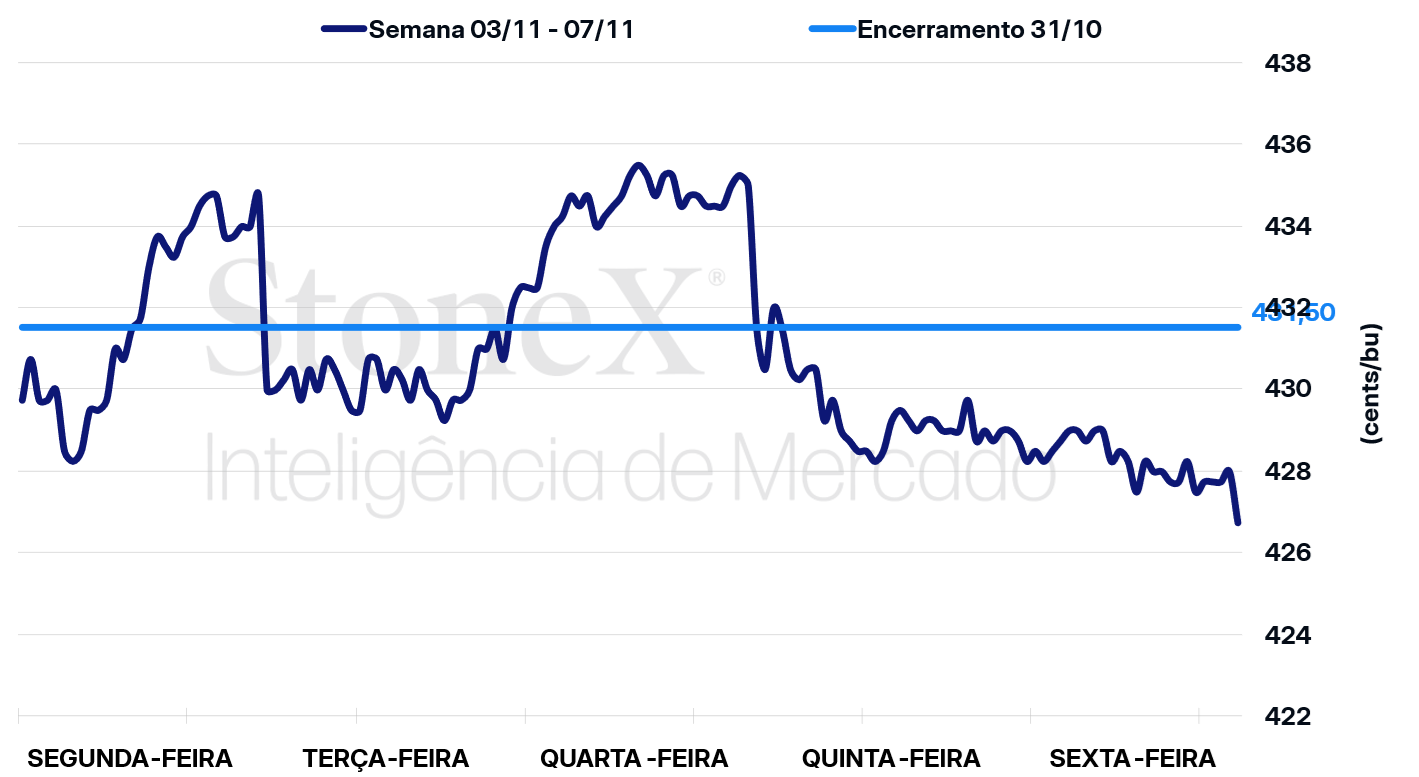
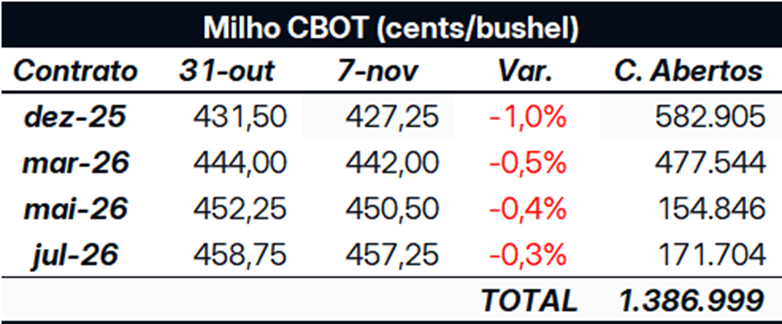
Corn futures on the CBOT ended the week lower, reflecting a correction after sustained gains since early last month. December/25 contracts closed Friday at US¢427.25/bu (-1.0%).
Market speculation regarding the size of the U.S. crop remains in focus. An update to the World Agricultural Supply and Demand Estimates (WASDE) will be released this Friday (Nov. 14) by the USDA, despite the ongoing U.S. government shutdown, which at the time of this report has reached its 41st day. Expectations suggest the USDA might revise its figures downward for U.S. productivity. On the demand side, fundamentals indicate another positive revision for corn exports, which should help offset a likely reduction in domestic feed consumption.
Intraday (15 min) December/25 Contract - CBOT
Source: CBOT. Design: StoneX.
Last week, StoneX updated its U.S. crop productivity estimate, maintaining the projection for a national average yield of 11.67 tonnes/ha. This figure, which is higher than other private estimates, has the potential to deliver a total production of 425.42 million tonnes. If a similar production scenario is confirmed by the USDA on Friday, the market might react negatively, as it would indicate a fairly ample supply balance in the U.S.
Weekly ethanol production figures from the EIA showed the highest weekly volume on record, averaging 1.123 million barrels/day. This helped support some gains last week, as ethanol production is currently running at a brisk pace, aided by favorable margins in the U.S. However, ethanol stocks remain high, which limits some of the optimism.
China appears to have returned to the U.S. soybean market. There are still doubts about whether the Asian country will follow through on the volumes announced in the media—reportedly 12 million tonnes over the next 2 months. Regardless, this development has been a significant boost for soybean prices, which in turn has lent some support to corn. However, the impact on corn is more indirect, as China has been increasingly absent from the international market due to robust domestic production and subdued domestic consumption.
Brazil
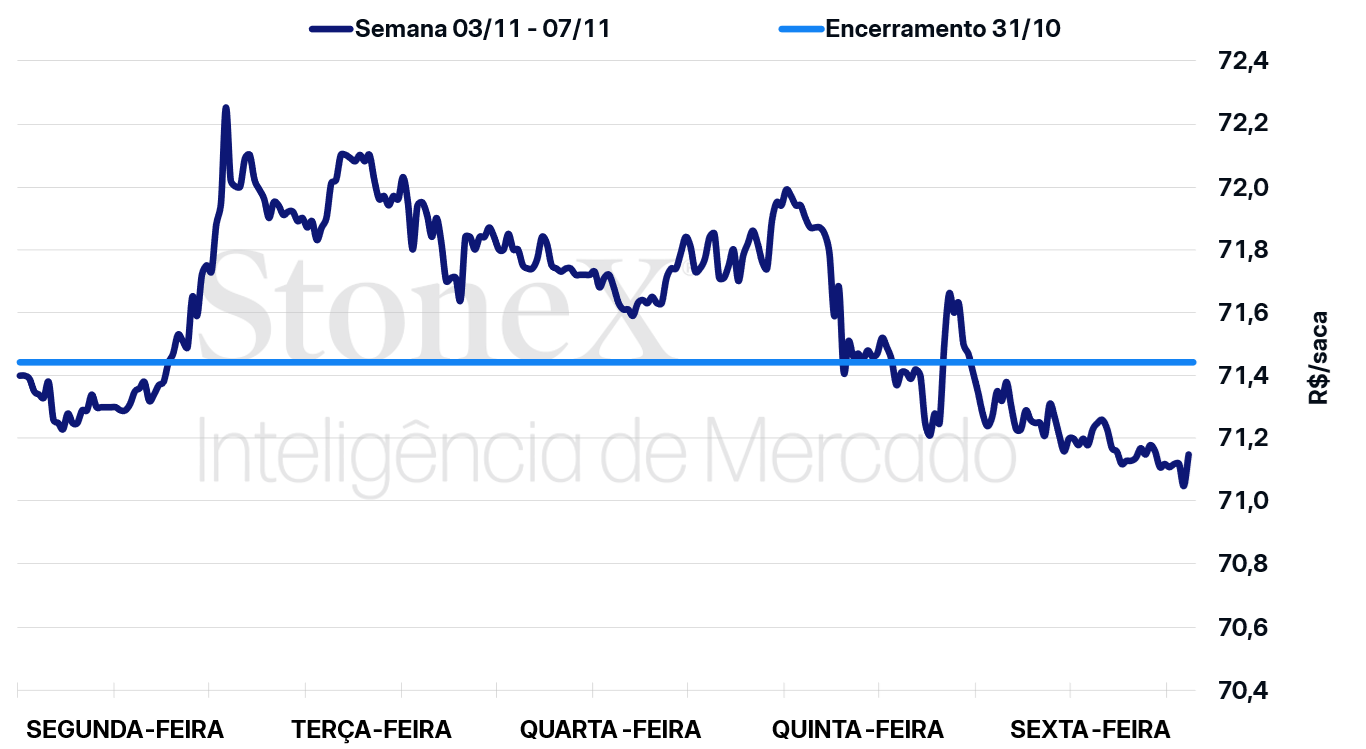
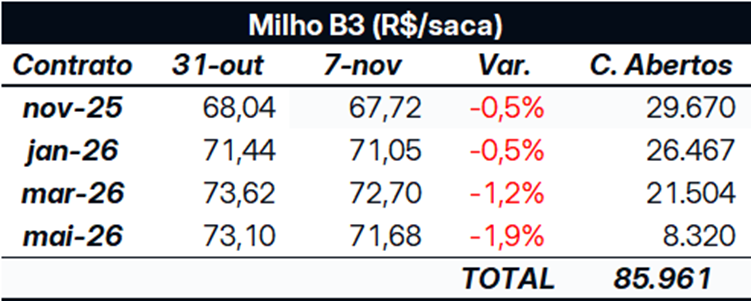
Corn futures prices in Brazil also declined last week. In addition to clear influence from Chicago, the Brazilian real appreciated again against the dollar. Nonetheless, stronger physical prices—as typically expected during the inter-crop—offered some support for contracts. January/26 contracts on B3 closed Friday at R$71.05 per bag (-0.5%).
The first harvest continues at a good planting pace, despite a slight delay compared to last year. However, over the weekend, a subtropical cyclone swept through the southern region, causing not only a tragic humanitarian impact but also potentially negative effects on agricultural production in the affected areas. The damage is still being assessed, but there is a significant risk to first-crop corn fields. Additionally, soybean replanting is expected in some areas, which could impact the planting area for second-crop corn, particularly in Paraná.
Last week, StoneX released its first numbers for the 2025/26 second harvest and corn balance. A production of 107 million tonnes is expected for next year's second harvest, contributing to a total crop of 135.2 million tonnes. Domestic consumption is projected to reach 97 million tonnes, 6 million more than in 2024/25, likely resulting in tighter stocks next year.
Access the full report here.
Intraday (15 min) November/25 Contract - B3
Source: B3. Design: StoneX.
Exchange Rate
Last week, the Monetary Policy Committee (Copom) kept interest rates unchanged at 15%, as expected by the market. This continues to maintain a significant interest rate differential between Brazil and the U.S., supporting a stronger Brazilian real.
Looking ahead, however, softer inflation data in Brazil and escalating inflation concerns in the U.S. may reverse this scenario by 2026, which will be a key factor for the market to monitor.
Futures Contracts Traded on CBOT (US¢/bu)
Source: CME. Design: StoneX.
Futures Contracts Traded on B3 (R$/bag)

Source: B3. Design: StoneX.
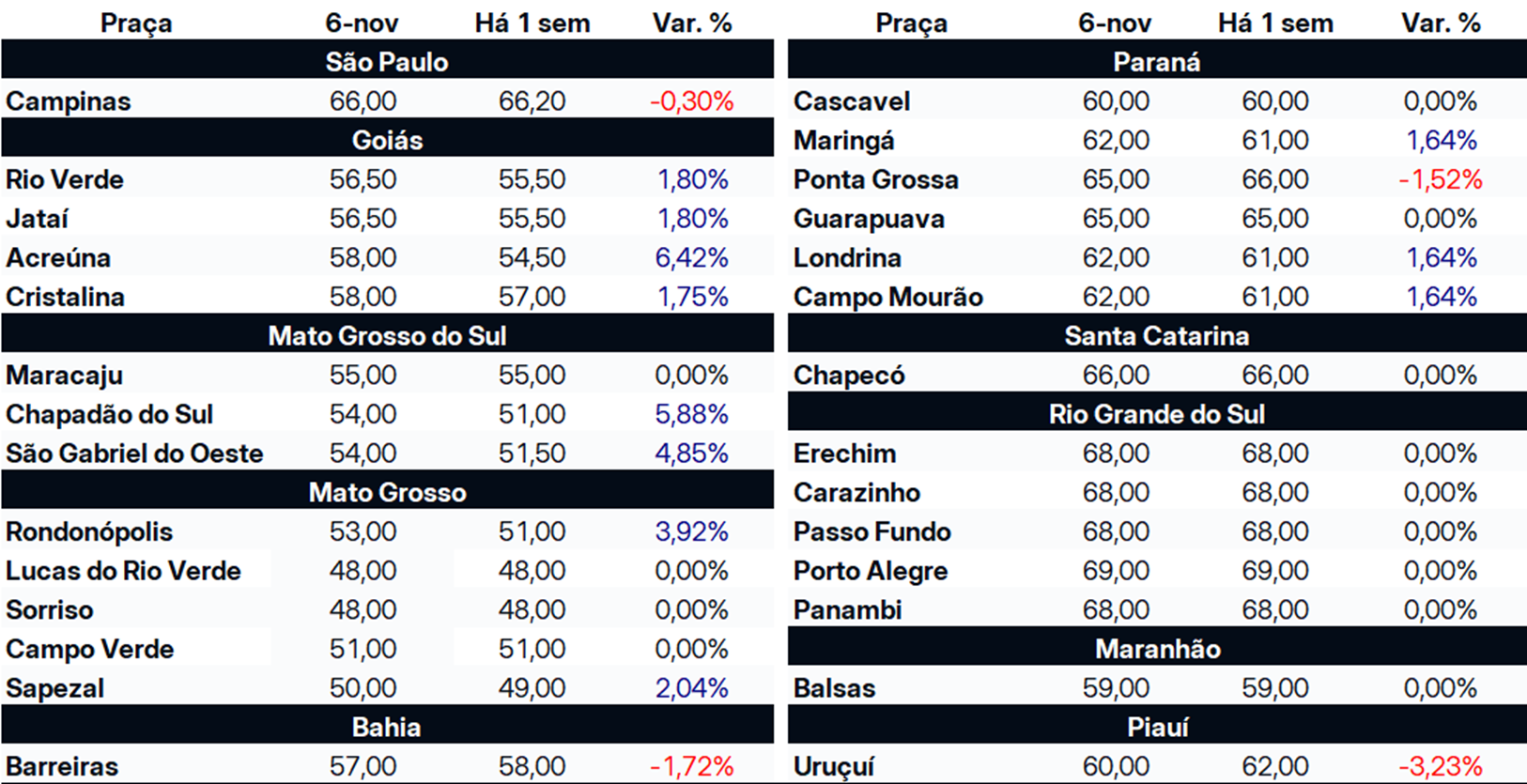
Spot Prices in Brazil (USD/60kg bag)

Source: StoneX.




