
WASDE Report is Bearish for Corn, but Chicago Ends the Week Slightly Higher
- Bullish
- Strong global consumption;
- USDA forecasts lower ending stocks for the 2025/26 global crop;
- Strengthened U.S. exports;
- Boost in ethanol production in the U.S.;
- Improved U.S.-China relations.
- Bearish
- Increase in planted area for the 2025/26 crop in Brazil;
- Potentially record-breaking crop in the U.S.;
- Higher ending stocks in the U.S.
CBOT
Corn futures ended the week slightly higher, with December/25 trading at US¢430.25/bu (+0.7%). The primary driver behind the price increases was a general optimism across globally traded assets, fueled by the end of the U.S. government shutdown, which lasted 43 days—the longest in history.
However, a highly bearish WASDE report, released on Friday, weighed on prices, pushing December/25 down to the support level of US¢430/bu. In the U.S., a positive adjustment to the planted area for the 2024/25 crop raised production to 378.4 million tonnes (600,000 tonnes higher than the September estimate). Additionally, as anticipated due to the quarterly stocks report published at the end of September, domestic consumption was revised downward by nearly 5 million tonnes. These positive revisions for production and negative adjustments for consumption increased ending stocks to 38.9 million tonnes. All of this was somewhat expected and, therefore, not the primary driver of market pressure.
Market participants were particularly anxious about the 2025/26 yield projections. Many had anticipated a natural downward revision, but the extent of the cut remained uncertain. Following the report’s release, the reduction in the U.S. average national yield was considered mild, landing at 11.67 tonnes/ha (versus 11.72 tons/ha in September). This figure, which matches StoneX’s latest estimate, still delivers exceptional production, reinforcing a scenario of ample supply.
On the demand side, U.S. exports were revised upward to 78.1 million tonnes, reflecting robust volumes. Nonetheless, domestic consumption figures remained unchanged, raising questions for the future. One key factor driving the heated U.S. export market is the closure of the Mexican border for livestock, meaning animals south of the border must now be fed locally instead of in U.S. feedlots. This development is bearish for domestic feed corn consumption. As such, it’s surprising that the USDA has not yet revised this domestic demand figure downward.
Globally, there was a positive revision in consumption for several countries, including Brazil, Argentina, and Ukraine. This adjustment was significant as it pushed the stock-to-use ratio down to 21.7%, the lowest level in the past decade. Strong global consumption remains a key point to watch, potentially acting as a bullish factor for 2026.
Intraday (15 min) December/25 Contract - CBOT
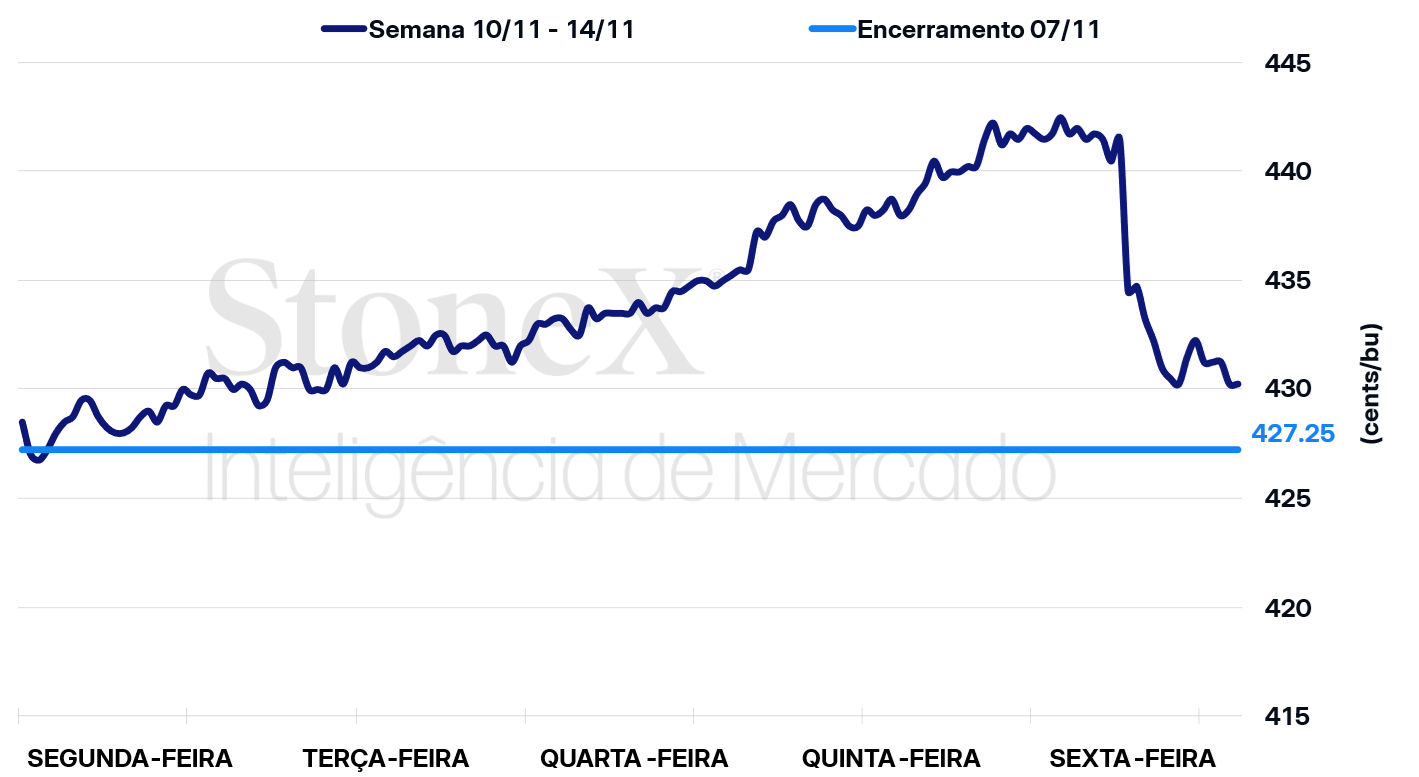
Source: CBOT. Prepared by StoneX.
Brazil
Domestic corn prices in Brazil remained stable after a week of little volatility. January/26 ended Friday trading at R$70.95 per sack (-0.1%). The first Brazilian crop is developing relatively well in the southern part of the country, although excessive rainfall over the past few weeks has impacted crop development in certain regions.
Beyond this, there were few new developments in market fundamentals. The Brazilian real continued to strengthen, while export activity remained slow at the start of November.
Intraday (15 min) January/26 Contract - B3
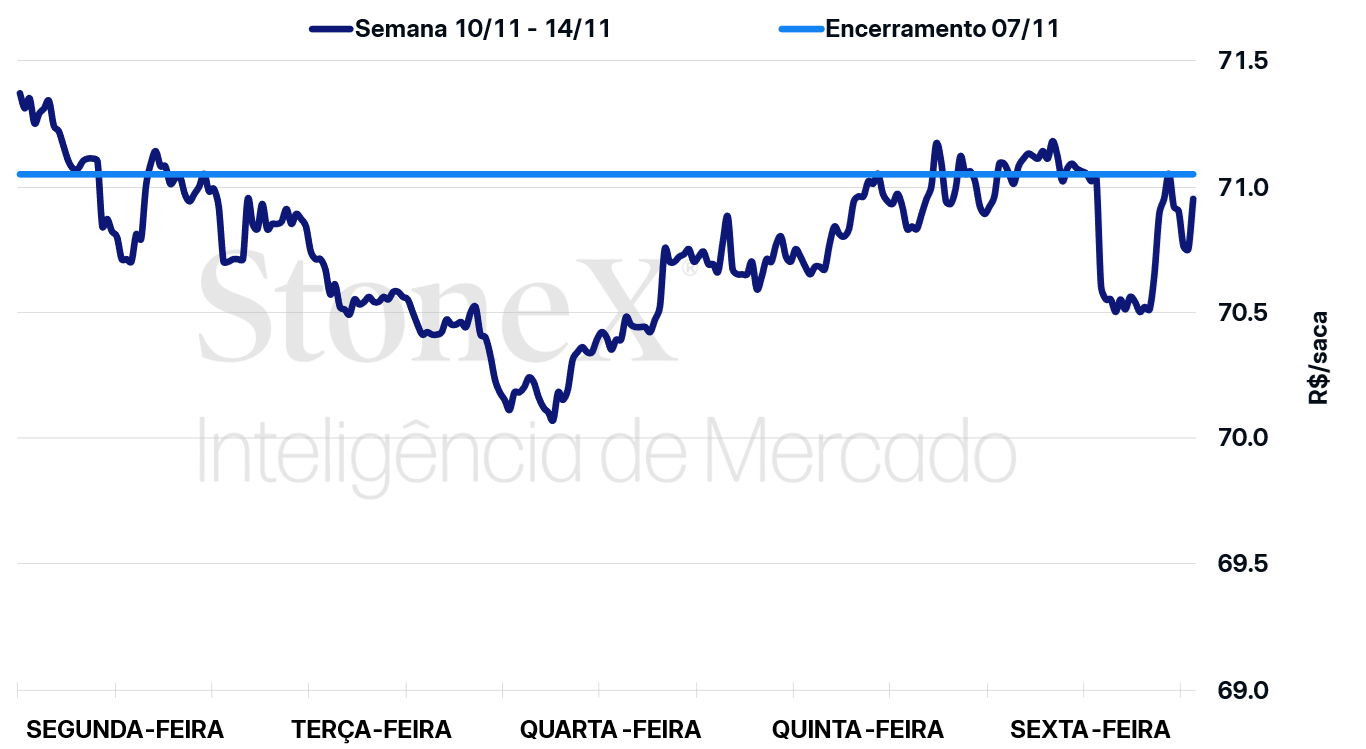
Source: B3. Design: StoneX.
Futures Contracts Traded on CBOT (US¢/bu)
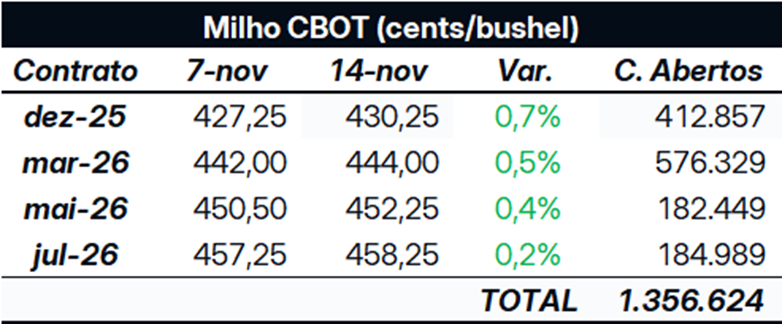
Source: CME. Design: StoneX.
Futures Contracts Traded on B3 (R$/sc)
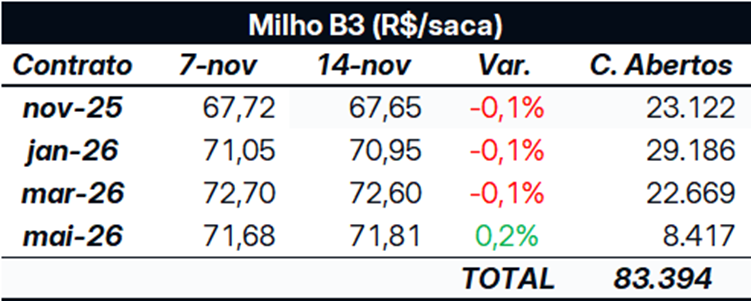

Source: B3. Design: StoneX.
Spot Prices in Brazil (USD/60kg bag)
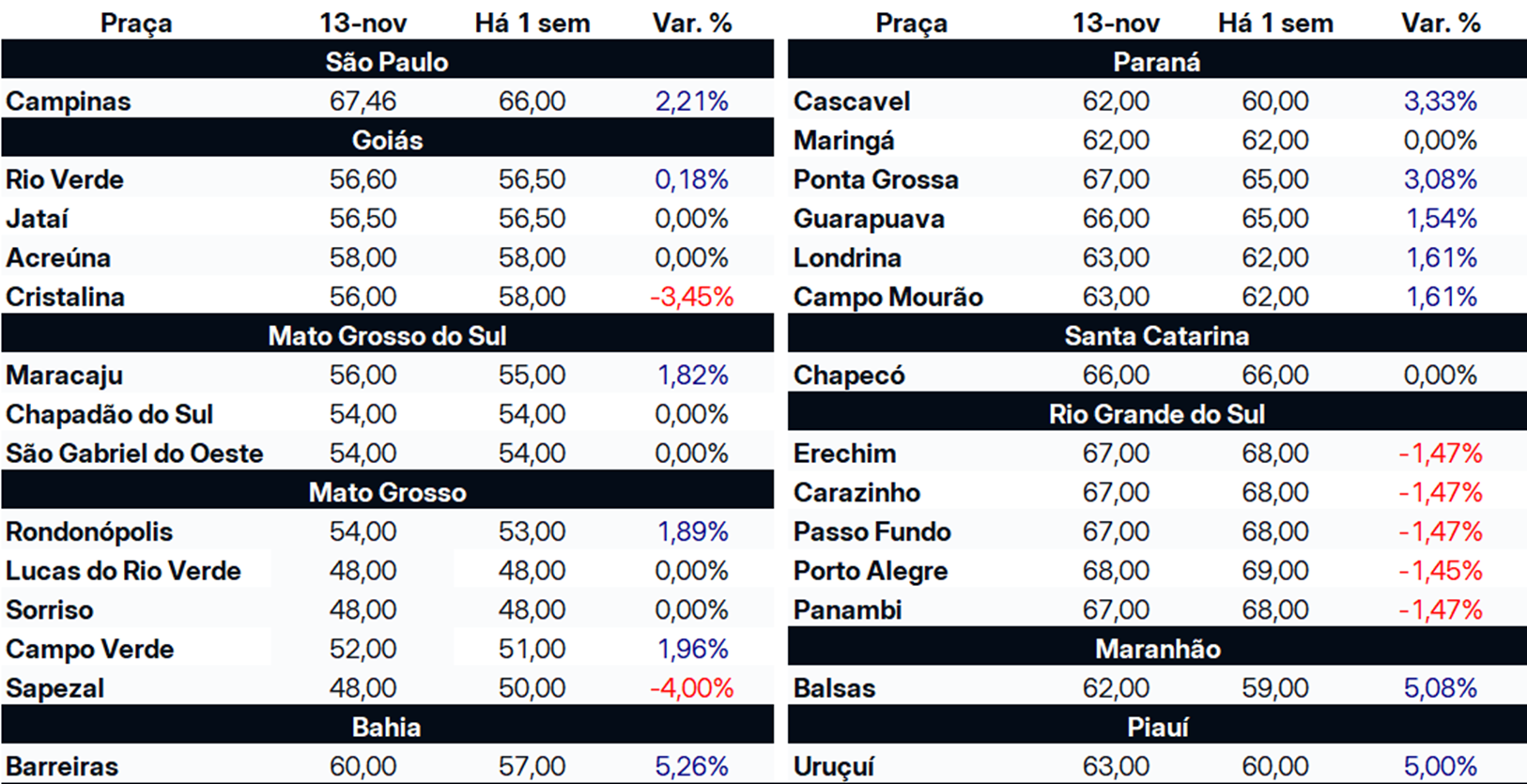

Source: StoneX.
INDICATORS



