
Corn rallies in Chicago; Argentine crop downgraded; nearly one-fifth of Brazil’s second crop has been planted
- Bullish
- Weak U.S. exports
- New soybean market incentives spill over into corn
- Argentine crop downgraded
- Strong global consumption
- Bearish
- Global corn market is well-supplied
- South American crop could hit record highs despite ongoing risks
- Geopolitical conflicts heighten risks for the market
CBOT
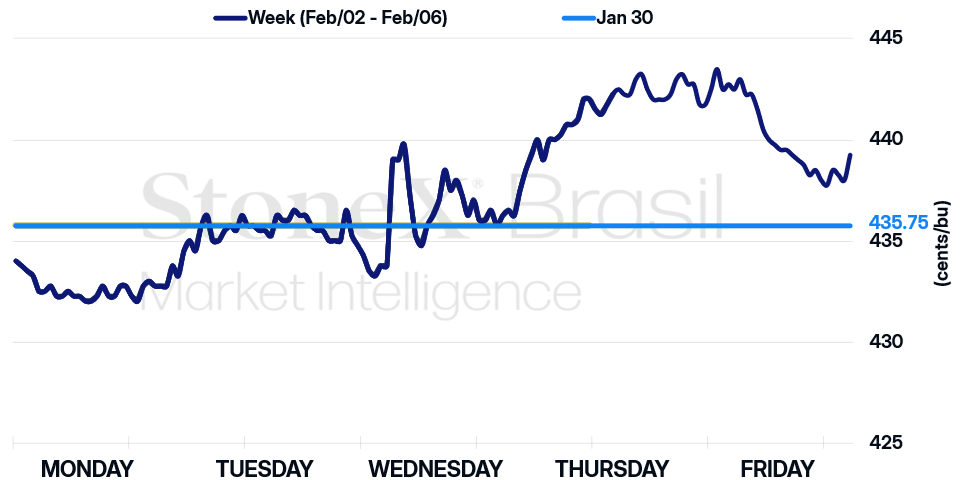
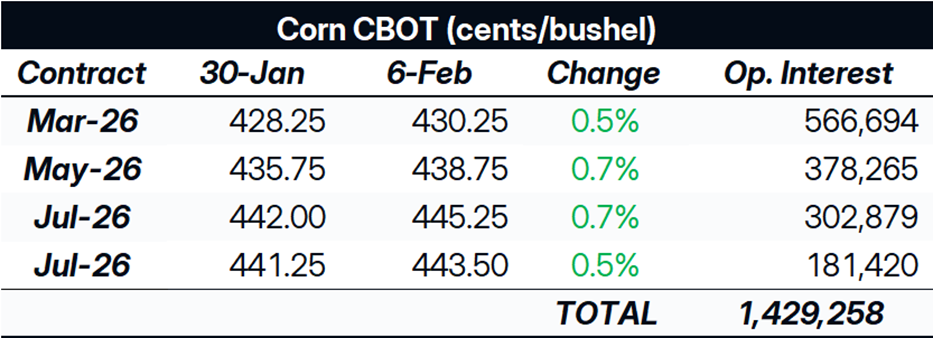
Corn futures extended gains on CBOT over the past week. The May/26 contract closed Friday with a cumulative increase of 0.7%, trading at US¢438.75/bu.
Intraday (15 min) May/26 Contract - CBOT
Source: CBOT. Design: StoneX.
The corn market benefited from the strong performance in the soybean market, which has been supported by several factors since the start of this month. First and foremost, new biofuel policy directives in the United States increased confidence in a growing trajectory of domestic oilseed consumption, boosting soybean oil and grain prices.
The highlight of the week, however, was U.S. President Donald Trump’s announcement that China could buy an additional 8 million tonnes of American soybeans this marketing year (Sep-Aug). This statement was warmly received by the market, given its potential impact on the U.S. soybean balance sheet as exports strengthen, especially during a period when Brazil typically gains competitiveness.
Corn found support in this bullish context for agricultural commodities in Chicago. Amid planting decisions in the Northern Hemisphere, the stronger soybean prices could encourage some acreage transitions for the 2026/27 crop, potentially leading to tighter corn production this year. Additionally, expectations of easing U.S.-China trade relations are inherently bullish for the markets.
Regarding demand, U.S. exports were sluggish, with the country selling just over 1 million tonnes in the last week of January. Ethanol production also remained subdued. However, none of these signals were interpreted as a weakening of demand in these sectors. As a result, ethanol and exports continue to underpin U.S. corn usage in this marketing year.
The market will also be watching tomorrow’s (Tuesday, Feb. 10) update on the USDA’s World Agricultural Supply and Demand Estimates (WASDE). While attention will be focused on potential upward revisions to South American supply, we should also be alert to possible adjustments to the U.S. balance sheet.
Argentina
Last week, the Buenos Aires Grain Exchange updated its estimates for Argentina’s corn crop to 58 million tonnes, a reduction of 1 million tonnes from previous projections. Nonetheless, this remains a robust crop, significantly higher than last year’s harvest.
While Brazilian supply is expected to decline (pending developments in weather during the second crop), the growth in Argentina’s harvest should ensure stability in South American supply.
With consumption rising in Brazil, however, South American exports may face increased pressure, a scenario already anticipated, with Argentina likely gaining export market share. Notably, Argentina continues to offer highly competitive FOB prices for deliveries in the coming months, which could keep its export sector dynamic, especially if the crop ultimately meets current volume estimates.
However, adverse weather conditions persist in Argentina, potentially leading to further downward revisions to its corn harvest.
Brazil
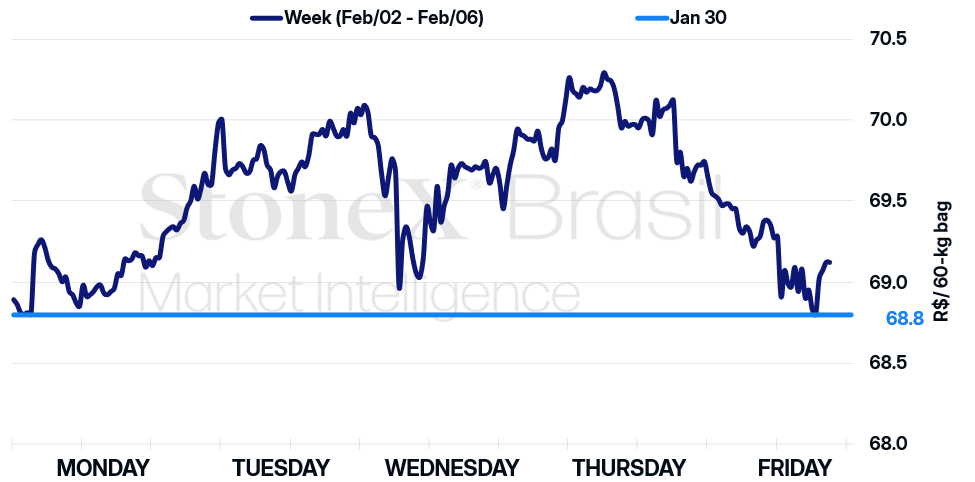
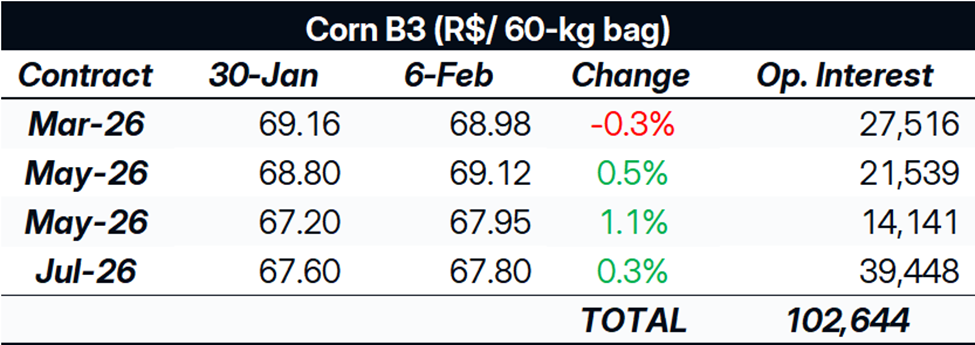
Corn prices closed the week higher, with the May/26 contract trading at R$69.12/sack (+0.5%) on Friday.
The Brazilian crop continues to show satisfactory progress. Exports ended January down, totaling approximately 3.6 million tonnes—around 650,000 tonnes less than in January last year. This trend is natural given Brazil’s reduced competitiveness amid the prolonged price pressure on U.S. corn.
Intraday (15 min) May/26 Contract - B3
Source: B3. Design: StoneX.
Futures Contracts Traded on CBOT (US¢/bu)
Source: CME. Design: StoneX.
Futures Contracts Traded on B3 (USD/60kg bag)

Source: B3. Analysis: StoneX.
Spot Prices in Brazil (R$/bag)
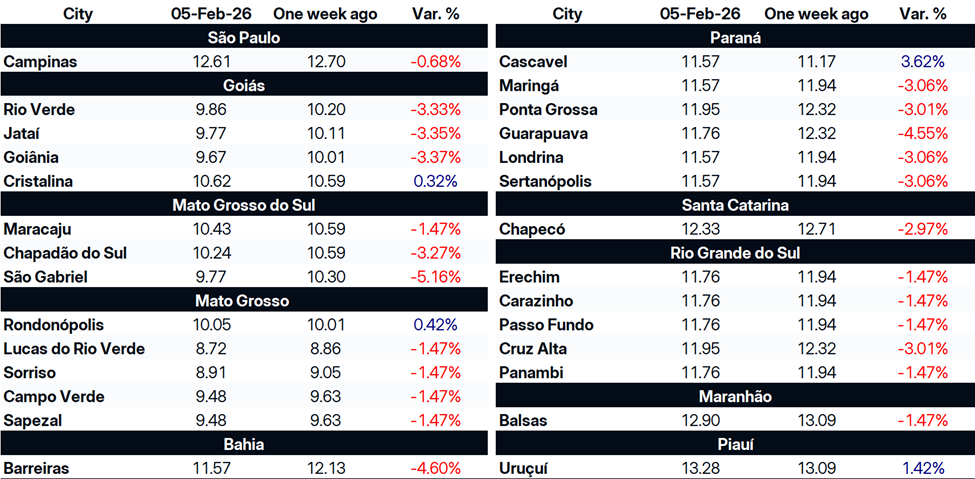

Source: StoneX.
INDICATORS





