Yesterday (07), the most active Brent contract closed down 0.5%, quoted at USD 109.3/bbl. WTI futures moved in the opposite direction, ending the day at USD 112.9/bbl, up 0.5%.
Mixed statements made by Trump throughout the previous session and rising uncertainty regarding the geopolitical situation in the Middle East led to broad volatility in oil prices, with the main benchmarks moving in opposite directions.
This morning (08), the Brent contract for June 2026 delivery is trading down 14.7%, quoted at USD 93.3/bbl as of 08:30. The sharp drop in prices reflects the temporary ceasefire agreement reached between the U.S. and Iran last night, with investors expecting a resumption of oil and refined product flows through the Persian Gulf.
Iran and the U.S. announce ceasefire agreement
After a series of mixed statements throughout the previous session, the U.S. and Iranian governments confirmed late last night (07) a ceasefire agreement with a two‑week duration. The decision is directly conditional on the immediate reopening of the Strait of Hormuz.
Why this matters: The first ceasefire between Washington and Tehran since the start of the war brought down the risk premiums associated with oil supply in the Persian Gulf, with investors pricing in a gradual resumption of crude exports from the region in the very short term.
- The most active NY Harbor ULSD contract – the main financial benchmark for diesel – fell 16.2%, highlighting expectations of increased fuel flows through the strait and reduced stress on the global balance.
- So far, there is no concrete information on the recirculation of vessels through the waterway. The reopening of the Strait of Hormuz is expected to take place under a toll and traffic fee policy implemented by Iran in partnership with Oman.
- It is worth noting that around 800 vessels remain stuck in the Persian Gulf. As such, the ceasefire should ease logistical pressure in the region and, while the agreement lasts, allow the resumption of energy and agricultural commodity transport at the intersection between the Persian Gulf and the Indian Ocean.
What to expect: In the very short term, market attention should focus entirely on vessel traffic in the region, which should help keep prices below levels seen in recent days.
- Over the coming weeks, however, investors are also expected to closely monitor discussions between the U.S. and Iran. Despite the ceasefire, there remain significant disagreements over several key demands required to end the war, which may hinder a definitive peace agreement.
- If such an agreement is not reached in the coming days, the market may return to an upward price trajectory. On the other hand, a consolidated peace resolution would likely extend the decline in oil and refined fossil fuel contracts, with logistical risks associated with Persian Gulf flows fading.
Ship traffic through the Strait of Hormuz this morning
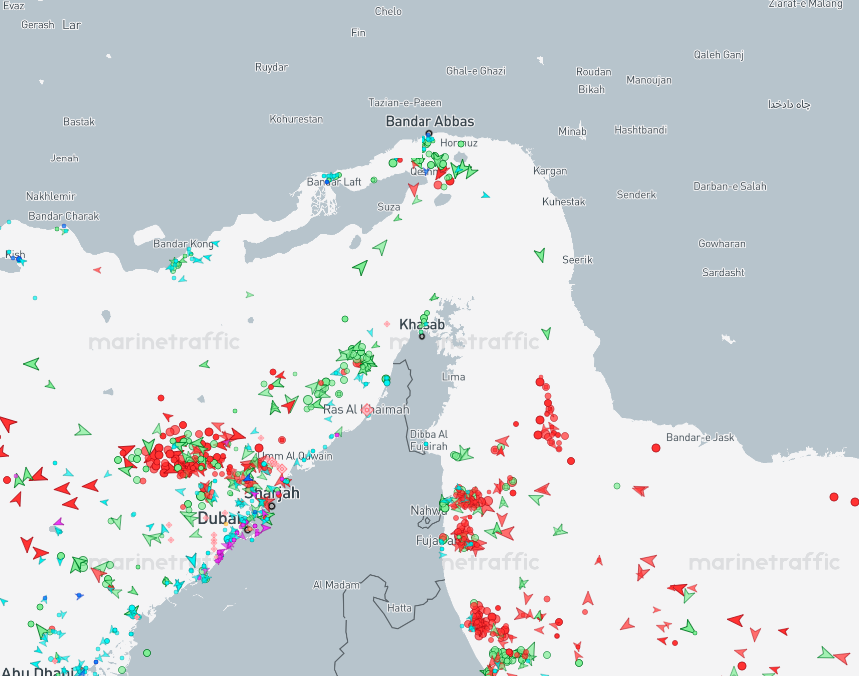
Source: MarineTraffic.
SPECIAL – Diesel imports by Brazil
According to data released by the Ministry of Development, Industry and Foreign Trade (MDIC), Brazilian diesel imports in March fell 25% compared to February, totaling 1.05 million m³. The sharp reduction in shipments to Brazil reflects both heightened competition for the product in the international market and the increase in imported diesel prices arriving at Brazilian ports.
The reduction in volumes occurred mainly in shipments originating from the U.S., whose share dropped to less than 1%, compared to 8.3% recorded in the previous month. The decline in the U.S. share likely reflects a redirection of U.S. diesel exports to other regions paying higher premiums, particularly Asia – the region most affected by the suspension of refined product flows through the Strait of Hormuz.
Monthly imports of diesel A by Brazil – Million m³
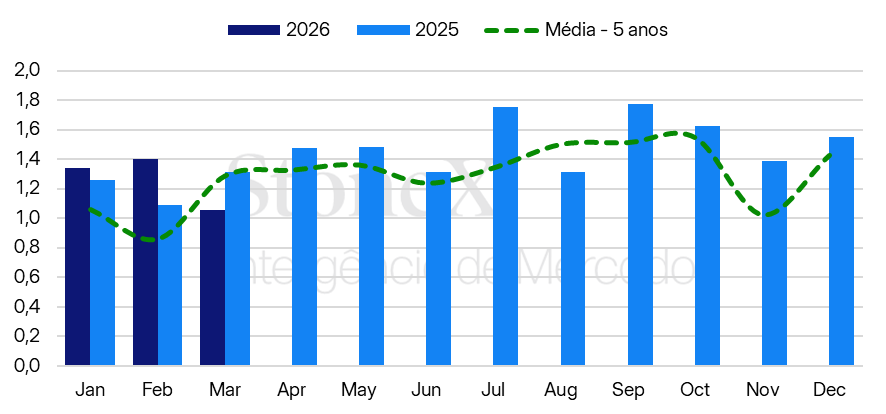
Source: MDIC. Prepared by: StoneX.
Amid this context of reduced supply from the U.S., Russia increased its share from 58% to 75%, with the country maintaining export volumes similar to those observed in February. Despite Ukrainian attacks on key western Russian ports in mid‑March and a temporary reduction in fuel exports, the impacts of this lower supply are expected to be felt in shipments scheduled for April.
Another noteworthy point was the maintenance of Saudi Arabia’s and the United Arab Emirates’ participation, each accounting for around 130 thousand m³ shipped to Brazil. This scenario reflects either stronger impacts from the closure of the Strait of Hormuz on cargoes scheduled for April or the ability to ship these products via the Red Sea.
Daily table – Price variation in the previous session
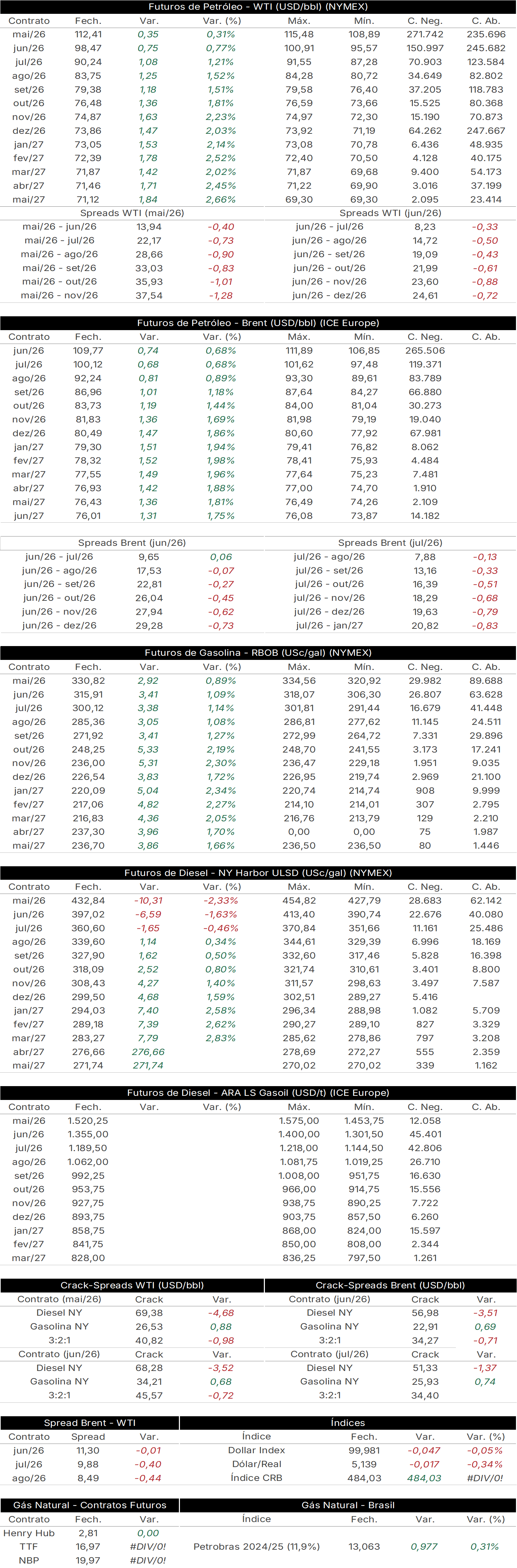
Source: ICE, NYMEX. Prepared by: StoneX.