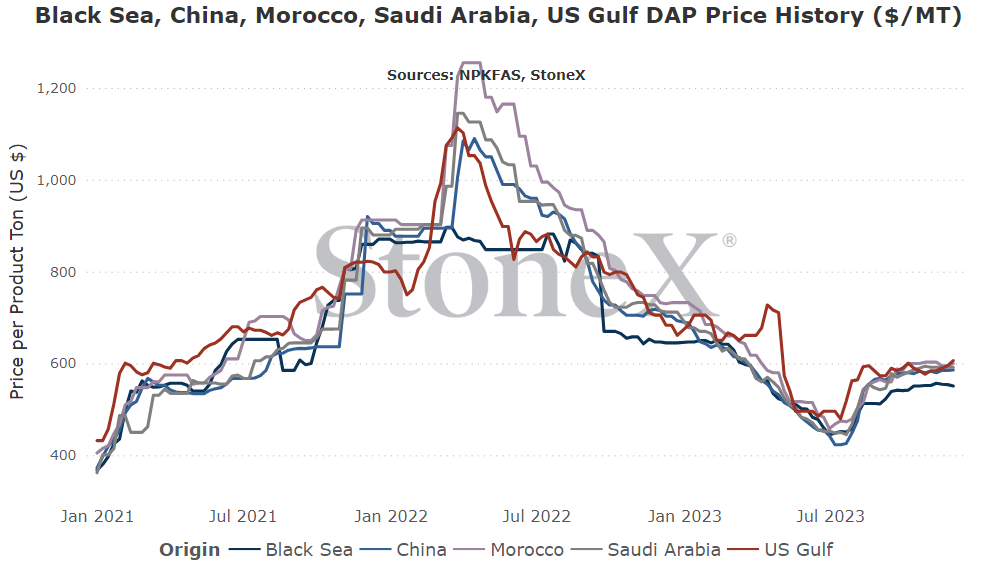
I try to not do this very often but...it depends.
If we see the Chinese government leave phosphate exports alone and allow them to heal back to normal rates, I could see the global phosphate market start to drop. There is a lot of margin for manufacturers so it isn't as though a slight drop will cause them to shut down production. India demand could be in question following their ahead of average import pace for the last year plus and their government cutting phosphate subsidy rates. We could quickly see the scales tip bearish.
On the flip side, if restrictions by the government start being imposed, the S&D remains tight. There is a lot of demand coming that needs to prepare. Removing or reducing China would tighten the global S&D and put manufacturers in charge of price negotiations.
Given how high global values are right now, I still lean on the bearish side but it seems a toss up. Nothing like leaving a lot of the market direction in the hands of a government.
Chinese government taking hands on approach to fertilizers
This, so far, is much more of a urea story than it is a phosphate story...but that doesn't mean phosphate shouldn't be worried.
The Chinese government has started to step in and ultimately regulate the number of tons of urea that can be exported. Rather than letting free markets find equilibrium, they have decided to control the export pace in an attempt to maintain big supplies available to Chinese farmers at a discounted price. My interpretation is that they hope by stopping exports, they will flood Chinese urea stockpiles and force prices lower.
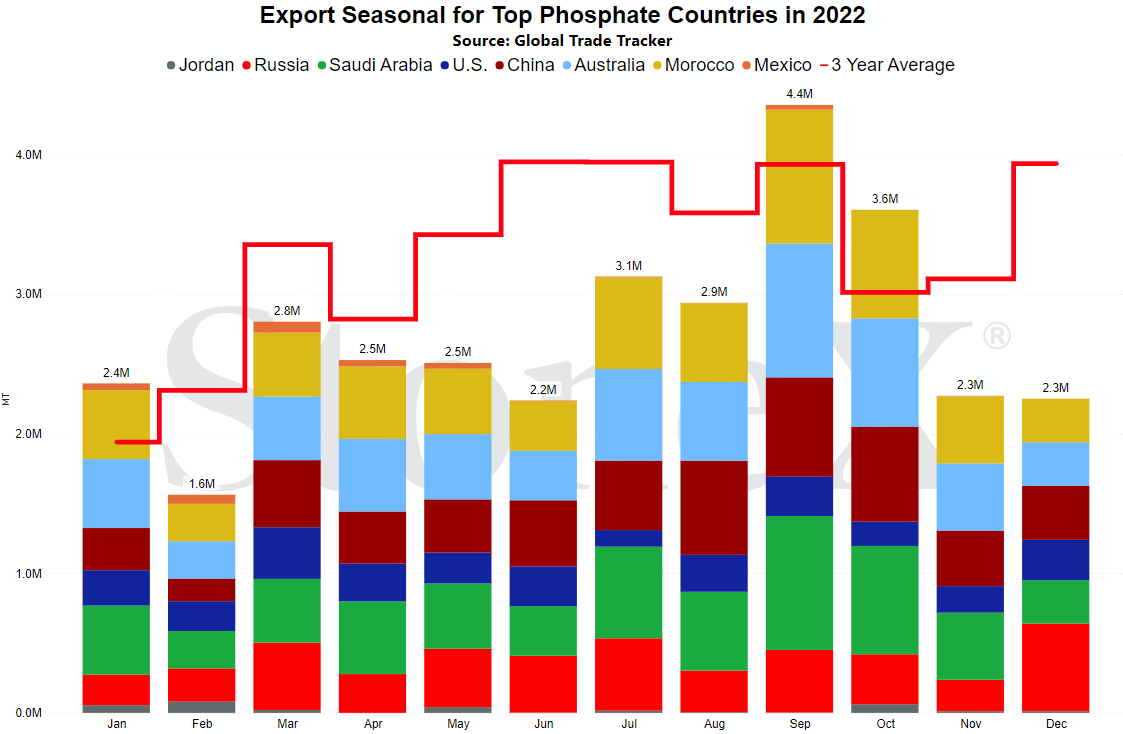
As mentioned, this has only been announced for urea but you do not have to make a lot of argument/points to say that phosphate could be next. Global phosphate values have done the least amount of work (especially when compared against urea) in terms of resetting from 2022 high's. If they can justify meddling in the urea export market, who is to say they will not do the same on phosphate and as the typical world's leader in DAP/MAP production and exports, that makes a difference.
I'll end with this. There HAS NOT been an announcement that they are restricting phosphate exports. This is merely a high priority watch point.
U.S. import duties change...import outlook worsened (more tons for globe)
The U.S. countervailing duty saga continues to drag on for North America.
A very long story short:
- Summer of 2020, NOLA phosphate values dipped below cost of production for some N.A. manufacturers.
- In response, a U.S. based phosphate manufacturer applied for countervailing duty rates to be applied against Moroccan and Russian produced phosphate.
- They eventually won that case
- Morocco stopped coming
- All but one Russian company stopped comping
There has been a fight ever since by the industry to remove these duties. Some have incorrectly argued that phosphate values skyrocketed directly as a result (global values rose as well). Others argued that production was not keeping up with demand but poor demand due to poor weather and high prices kept the S&D balanced.
Last spring and this fall, inventories got very tight and the call to drop has continued to grow. To a point, some of those hoping for change were rewarded with an annual review:
- Phosagro went from 9% to 26.5% which should effectively cut Russian supply routes
- Morocco went from 19.97% to a shocking 2.12% which many believed would "turn them on" again.
So if we are getting Moroccan flows back, why did the outlook worsen? This is due to our belief that Morocco will continue holding out for a 0% duty rate.
In the last 3-years, Morocco has developed demand relationships around the world after "losing" North America. Because the U.S. duty dropped to 2.12% does not mean those relationships were lost. Morocco has been arguing that the rate should be 0% and maintain that view. If the rate dropped and they suddenly start importing 500K in the next 4-months, how does that look? Not very good. The review bodies could say "well, they are bringing in a lot of stuff so the 2.12% rate works.". However, if they remain near zero, it continues the argument for nothing.
This could change. Keep in mind that my belief that they will not come is just that...my belief. Unfortunately, I'm not the only one in this camp.
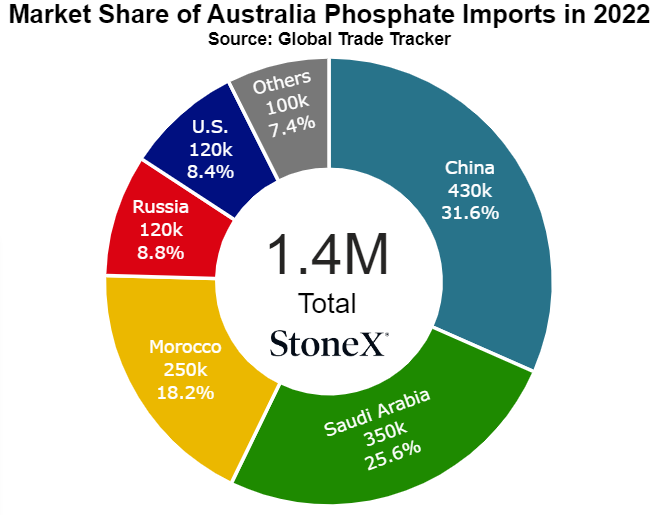
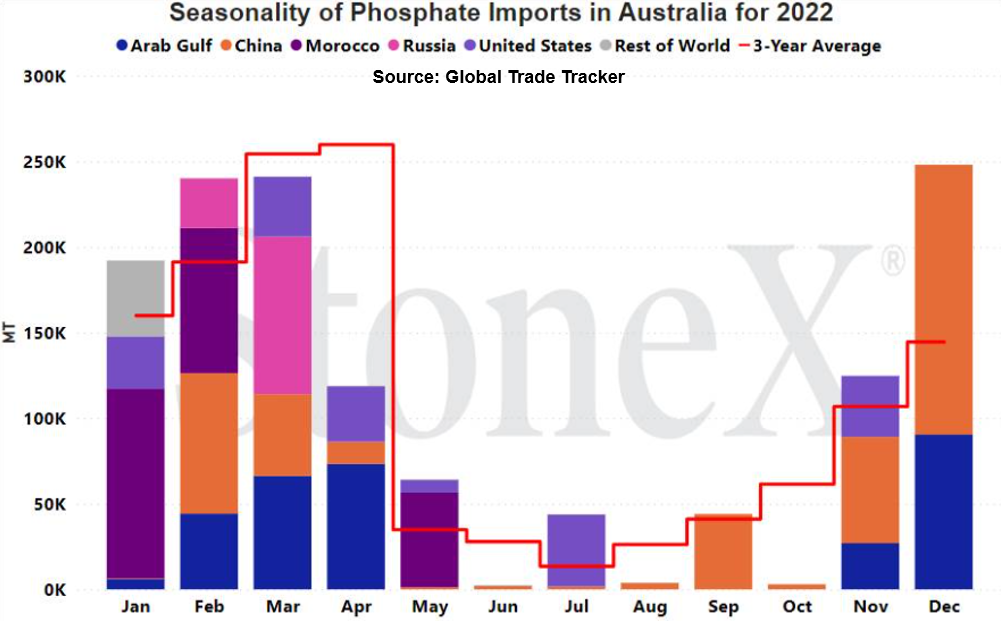
From the Australian perspective, this free's more global tonnage to target Aussie demand. If the U.S. is actively pushing away imports, that leaves more for the rest of the world. U.S. farmers are ultimately paying the price of inefficient trade flows and tight S&D's while other demand points are enjoying a little surge in available supply.
It doesn't mean that prices are falling thru the floor. It just improves the outlook a bit.
North American fall season coming to close...indications of solid demand
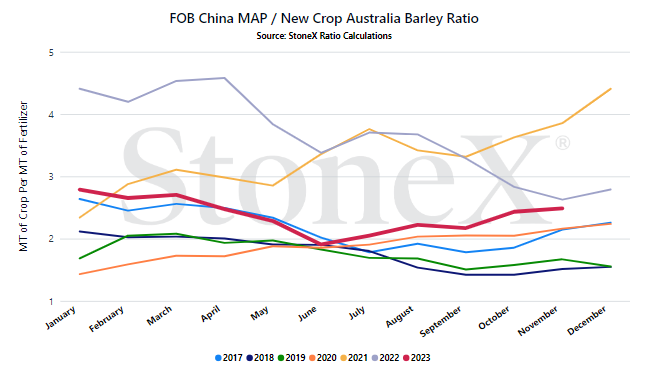
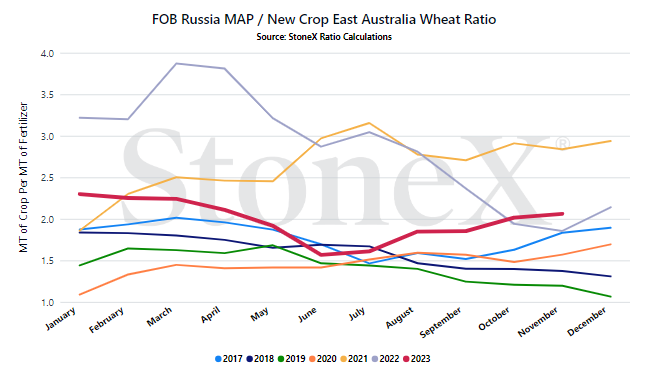
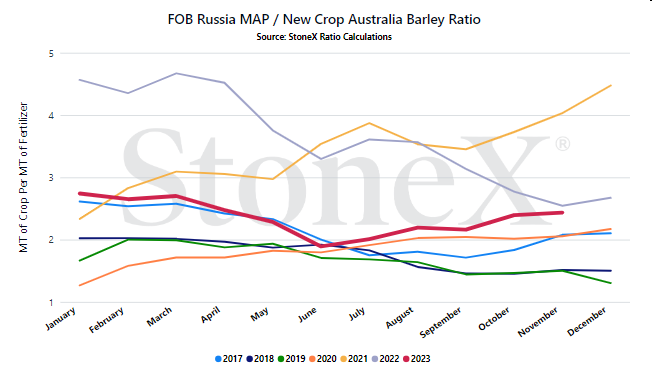
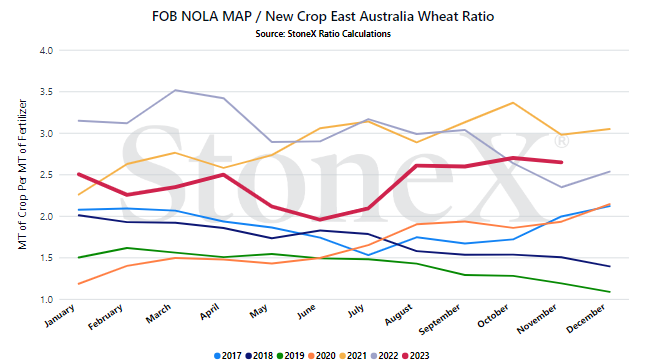
While it is far too soon to start calling the finishing touches on fall season, there are a lot of indications pointing to a really good run. That runs in the face of a phosphate market that is overpriced vs grains but we think potash had a lot to do with that. Phosphate on its own would likely have met a lot more resistance. Look below at all the ratio charts. They are in the middle to high end of the ranges. Perfect territory for demand to push back. However, a lot of farmers put on their phosphate along with their potash. Everyone is different but several that I know are not going to pay to apply potash now...and then pay to put another application of phosphate later! Potash values have remained attractive thru the fall. When looked at together, it was so so. Not too high for demand to push back. As a result of that and decent weather, it got done.
So now we have to look forward. If we emptied the system, we have to think about spring...and there isn't a lot of time between now and March. Only 3 months. Plenty of time for me to whine about the cold/snow/ice, but not much time to refill the phosphate system. The big fall run certainly helped to alleviate some of the stress of spring, there is still plenty of demand to come as we continue to expect 92M acres of corn.
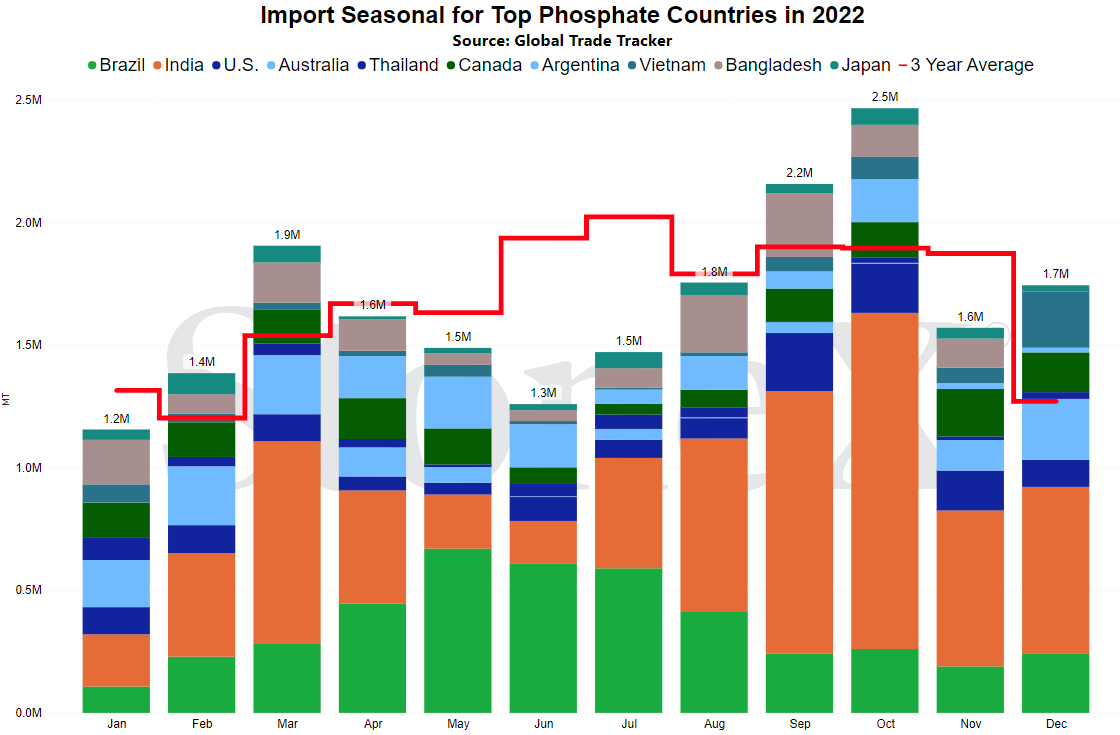
Hopefully we will see things loosen in the next month or two. Production in North America is doing better (reportedly) than it was this summer. Imports thru July/August/September were ahead of the 3-year average while exports were about 250K less (typically 750K) during the same period. This is far from solving the issue, but it doesn't help soften the blow.
This was a story that was written for the "original" newsletter. I almost took it out for this version, but decided to keep it as it does point to a possible point for Australia (keep in mind it completely goes against the previous piece!).
If N.A. fall demand is as good as we believe, that means their demand to refill for their spring season is now higher. The expectation is that China/Morocco/Russia will not be flowing tons there directly and should instead target areas like Australia. That is a win for Aussie farmers. On the flip side, there are other exporters in the world that could be called upon to fill the gap in supply for N.A. That would put Aussie demand in direct competition with N.A. demand.
Until the U.S. figures out what is happening with Morocco, it should free more tons for Australia.
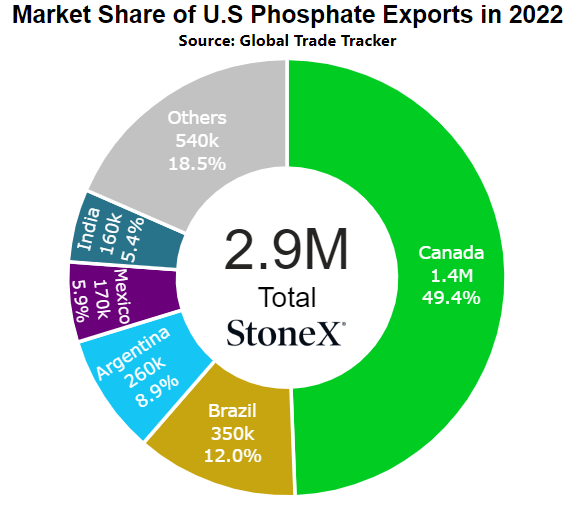
Price comparisons
Vs 30 days ago - +4% or approximately $20 higher
Vs 90 days ago - +6% or approximately $30 higher
Vs 6 months ago - +22% or approximately $100 higher
Vs 1 year ago - -14% or approximately $90 lower
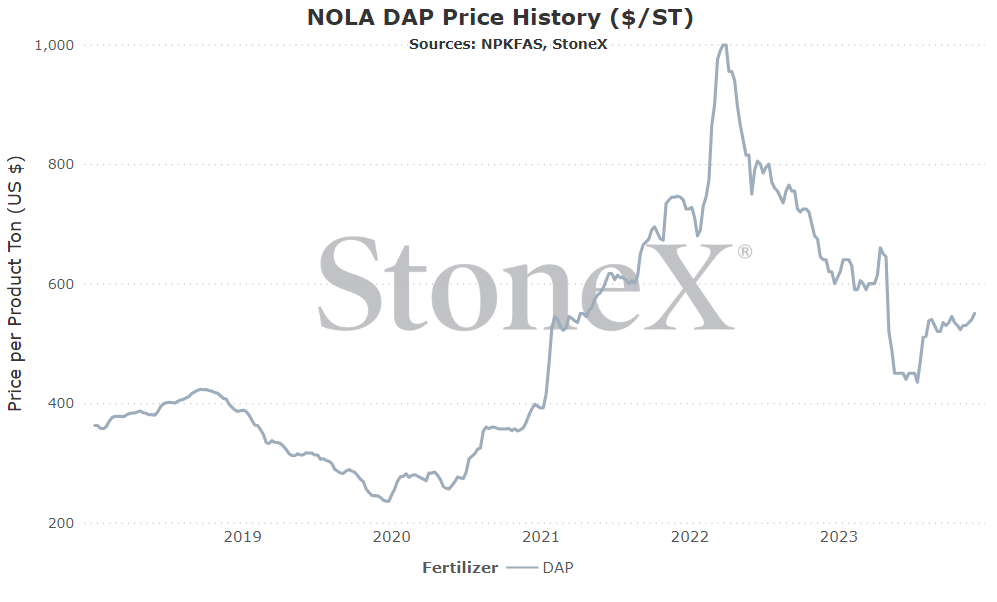
Morocco DAP price comparison
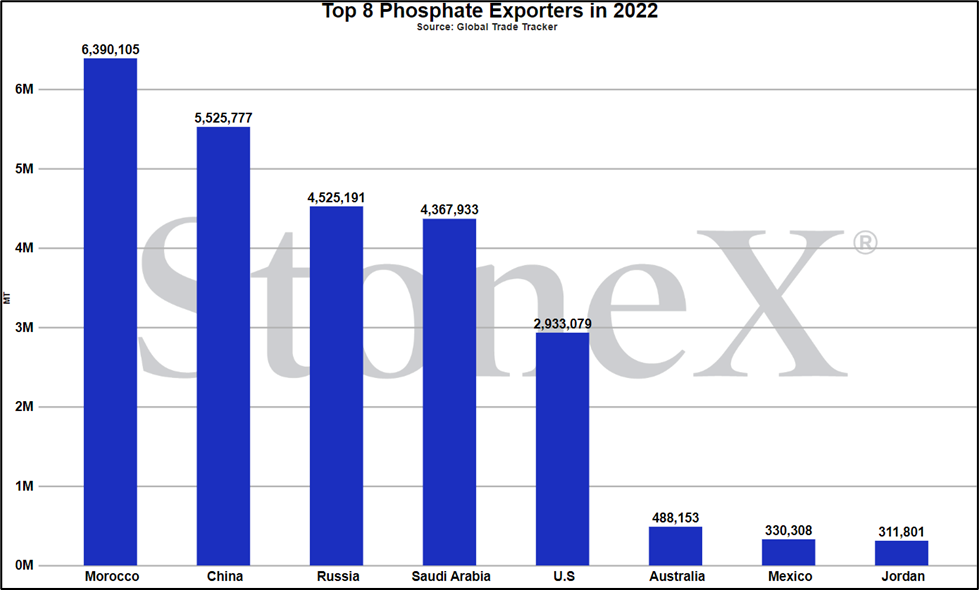
Number 1 global exporter in 2022
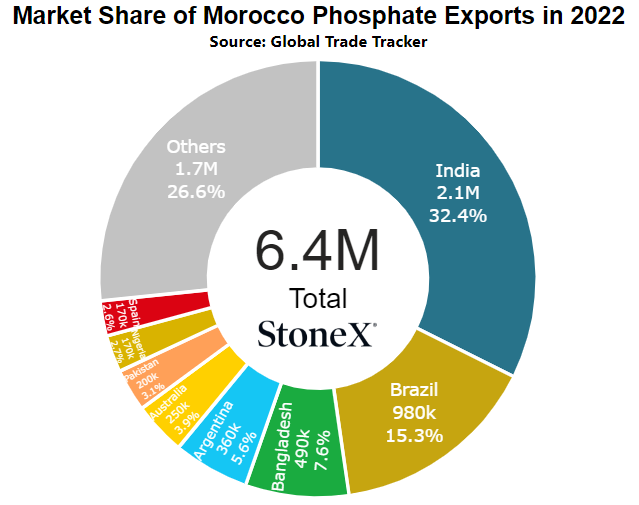
Price comparisons:
Vs 30 days ago - unchanged
Vs 90 days ago - +6% or approximately $35 higher
Vs 6 months ago - +17% or approximately $85 higher
Vs 1 year ago - -18% or approximately $133 lower
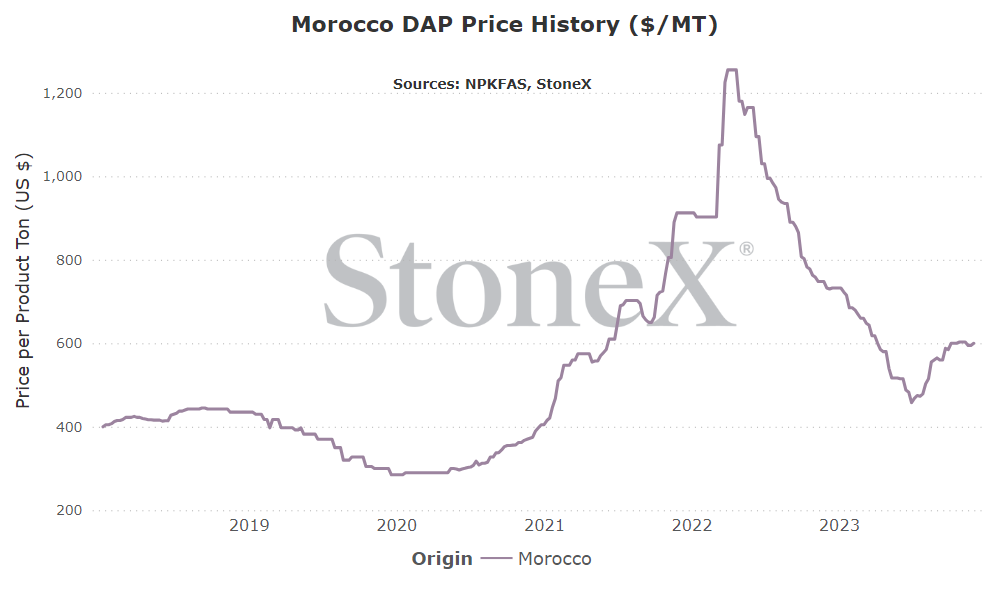
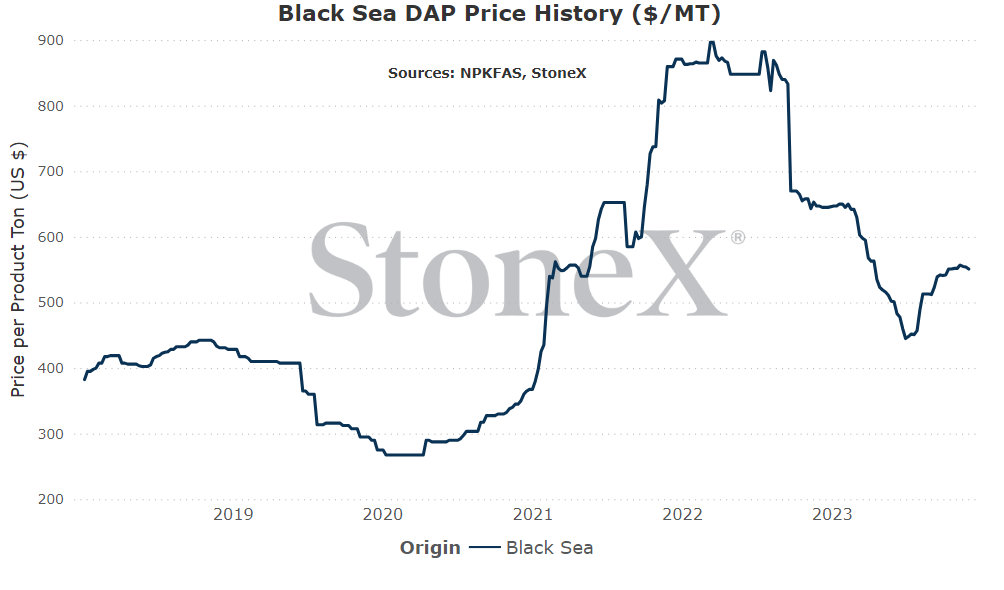
Black Sea DAP price comparison
Number 3 exporter of DAP/MAP in 2022
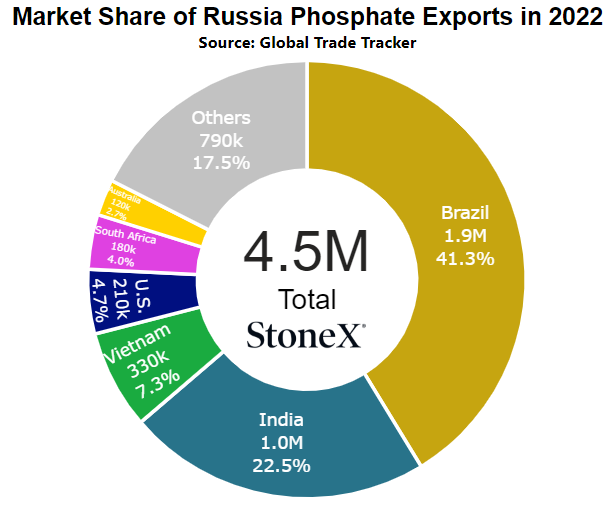
Price comparisons
Vs 30 days ago - unchanged
Vs 90 days ago - +8% or approximately $39 higher
Vs 6 months ago - +10% or approximately $50 higher
Vs 1 year ago - -15% or approximately $96 lower
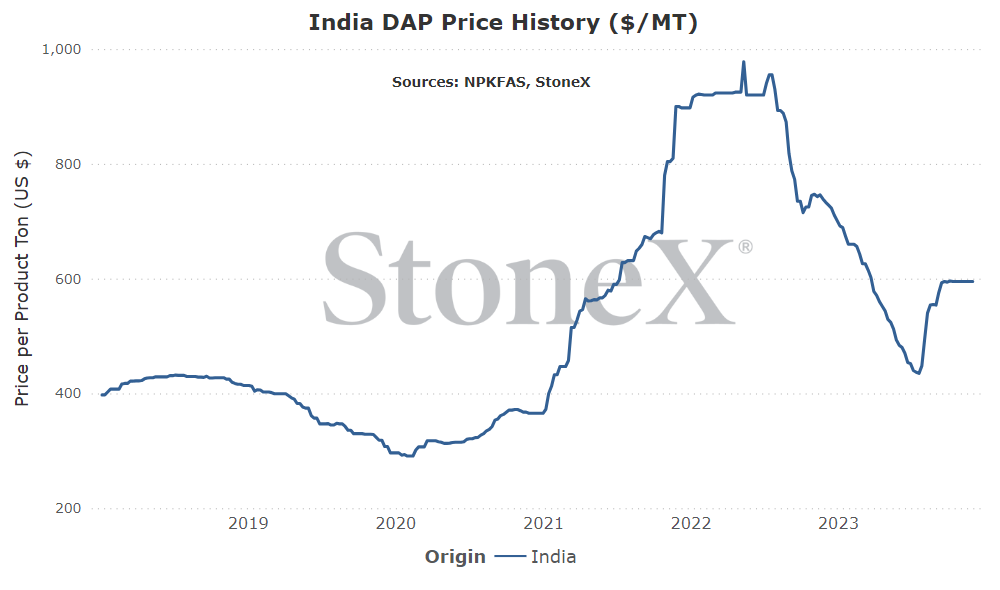
India DAP price comparison
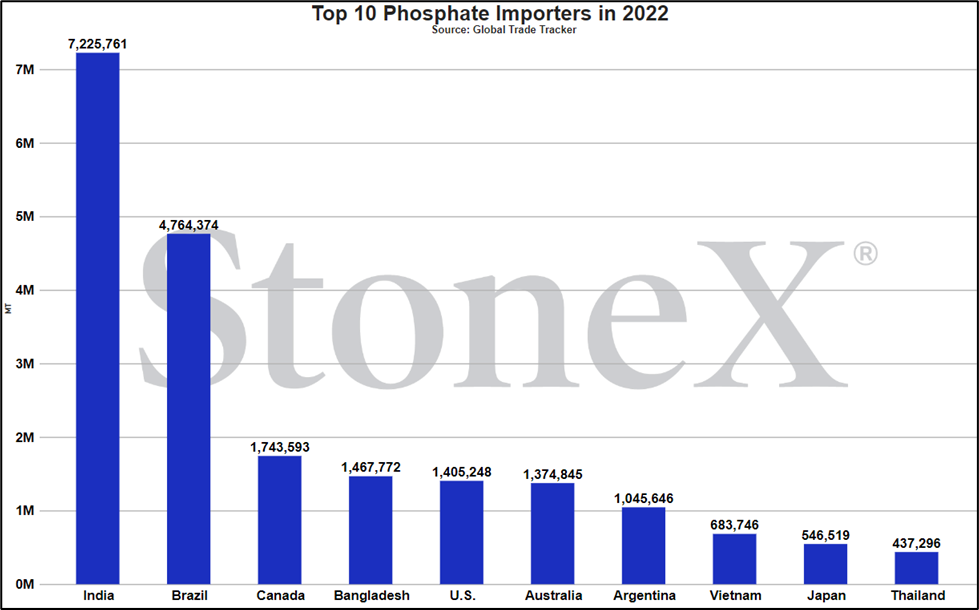
Number 1 global importer in 2022
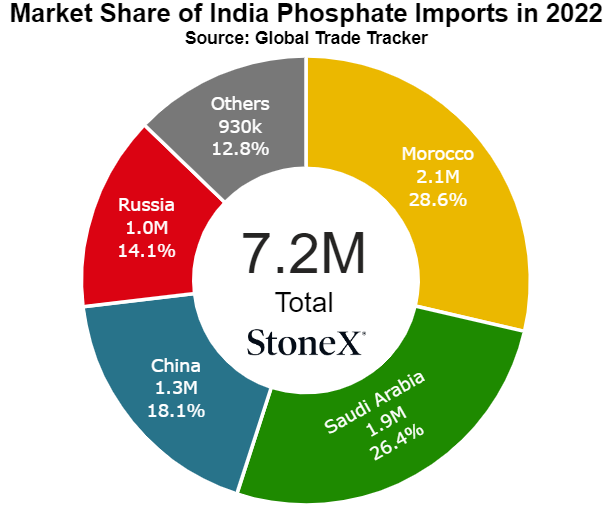
Price comparisons
Vs 30 days ago - unchanged
Vs 90 days ago - +7% or approximately $41 higher
Vs 6 months ago - +23% or approximately $111 higher
Vs 1 year ago - -19% or approximately $138 lower
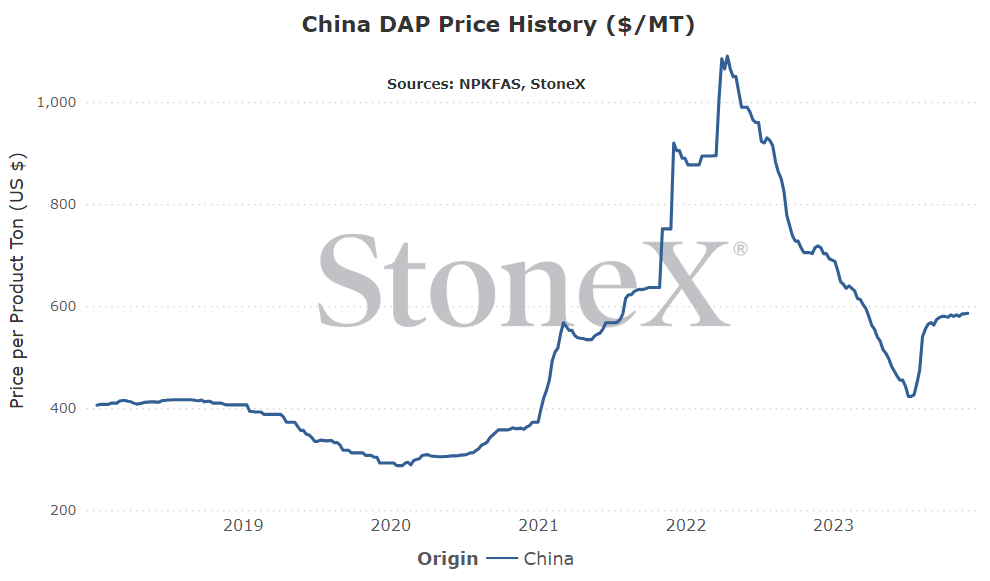
China DAP price comparison
Number 2 global exporter in 2022
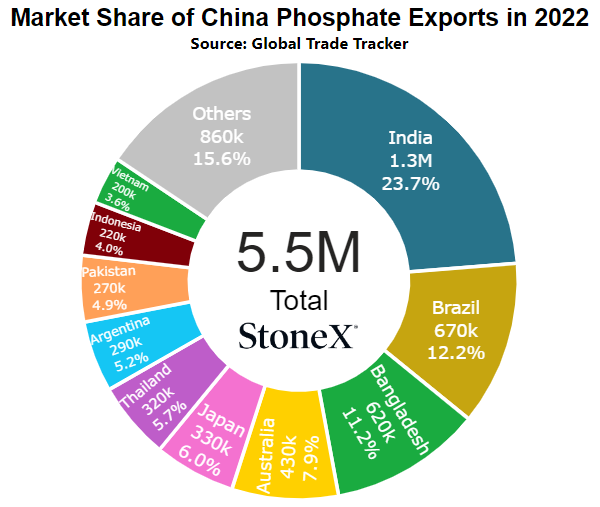
Price comparisons
Vs 30 days ago - +1% or approximately $4 higher
Vs 90 days ago - +3% or approximately $19 higher
Vs 6 months ago - +24% or approximately $114 higher
Vs 1 year ago - -18% or approximately $129 lower
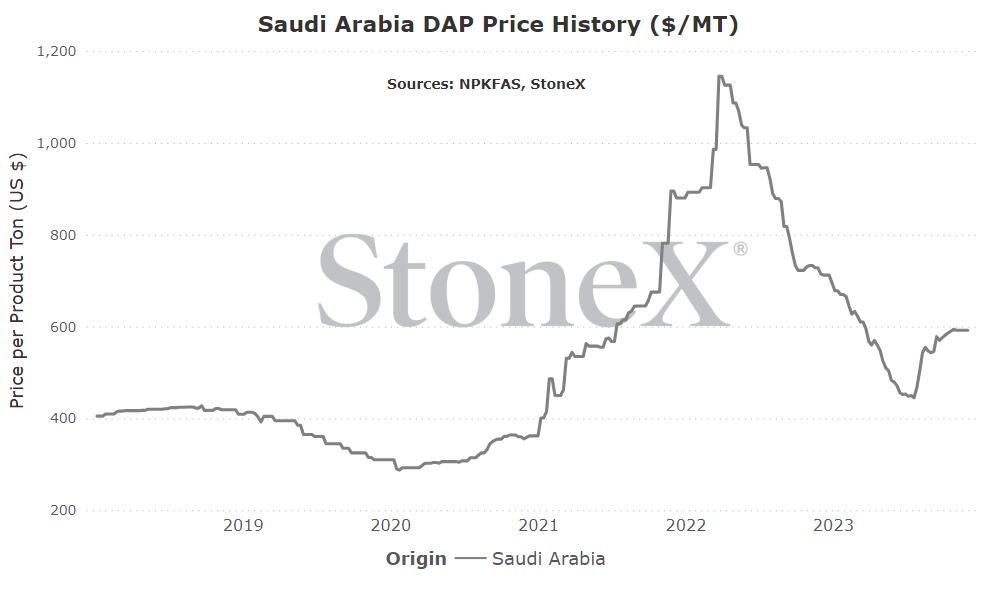
Saudi Arabia DAP price comparison
Number 4 global exporter in 2022
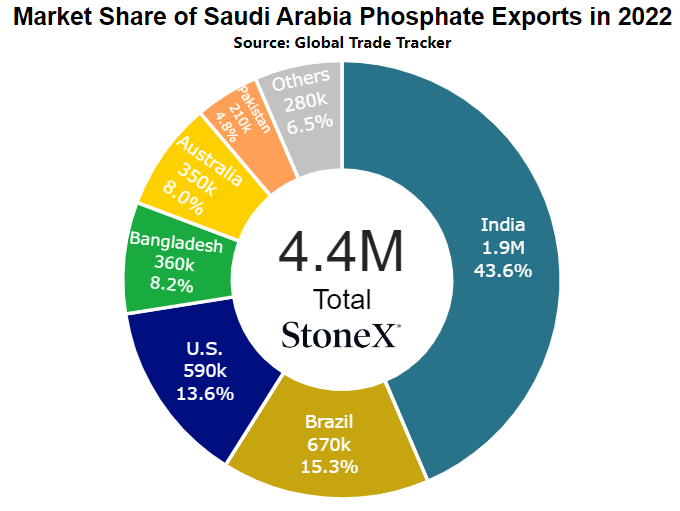
Price comparisons
Vs 30 days ago - unchanged
Vs 90 days ago - +9% or approximately $49 higher
Vs 6 months ago - +24% or approximately $113 higher
Vs 1 year ago - -17% or approximately $123 lower
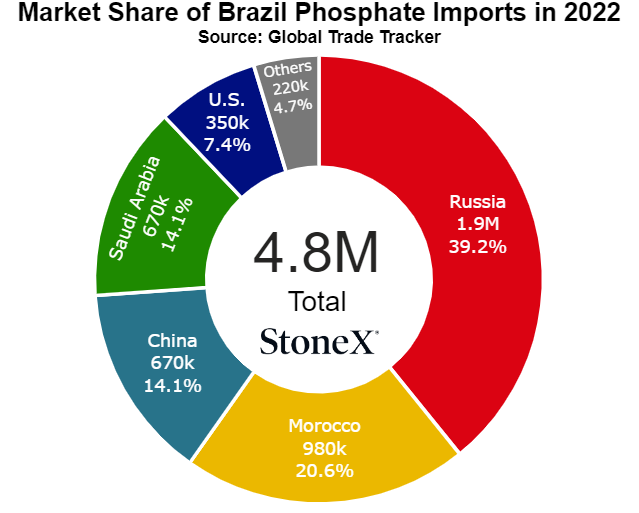
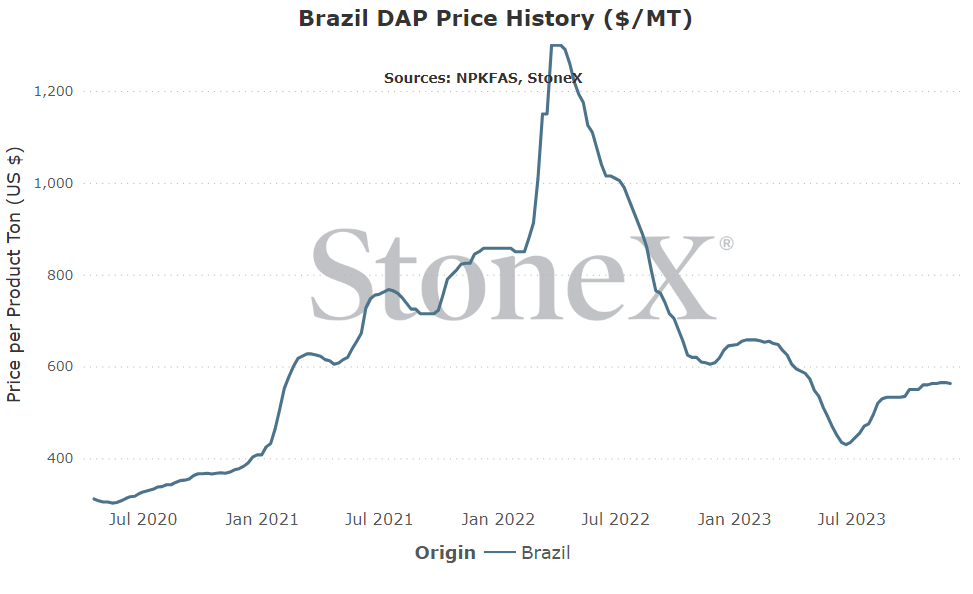
Brazil DAP price comparison
Number 2 global importer in 2022
Price comparisons
Vs 30 days ago - unchanged
Vs 90 days ago - +6% or approximately $30 higher
Vs 6 months ago - +20% or approximately $95 higher
Vs 1 year ago - -7% or approximately $45 lower
- Chinese government intervention – let's face it, most times any government in the world steps in to help...it rarely helps. When it steps in to "help" the world's largest phosphate exporter...you get the gist. If we see the central government impose restrictions like they are on urea, the world is going to get much tighter than it already is. I'm hoping this isn't the case but there is a reason I listed this one first.
- Big North American fall run – while not done, it does look like the fall was very good for North America. That should mean that warehouses are empty...and spring is just around the corner. The system will only have 3 months to get refilled in anticipation for that spring run. Not much need for suppliers/manufacturers to drop their prices.
- Morocco may surprise us and target the U.S. – right now, my POV is that Morocco will ignore the U.S. in terms of phosphate shipments which would be a "win" for Australia...but I've been wrong before. If Morocco does start going to the U.S., it will tighten global supplies for the rest of the world.
- Current phosphate values are high vs grains – buyers/applicators of phosphate have to be thinking twice about phosphate at current values. At best, the grain ratios are middle of the road but most are on the very high side. At what point do farmers say enough is enough and push back by not spending money?
- Fears of next summer resets could have long positions nervous – of all the fertilizer products, phosphate has done the least to reset following March/April 2022 high's...and it looks like it is trying to push higher. I can tell you first hand that participants have a little voice in the back of their heads telling them do not wait to sell too long. Many were a part of the markets that fell apart in 2008 and again in the early 2010's. If one starts to break, others could follow.
- Revised U.S. import duties help more tons stay on global market – I know it might be hard to believe that the decision by a country halfway around the world can impact Aussie phosphate values, but it is the truth. If the U.S. continues to take steps that keep imports from coming, that makes a lot more tonnage available to the rest of the world. It looks like further revisions will not come until February, March or later for the U.S. By that point, Australia will be well on its way to having what it needs for its season. The more the U.S. struggles, the better Aussie values should be.
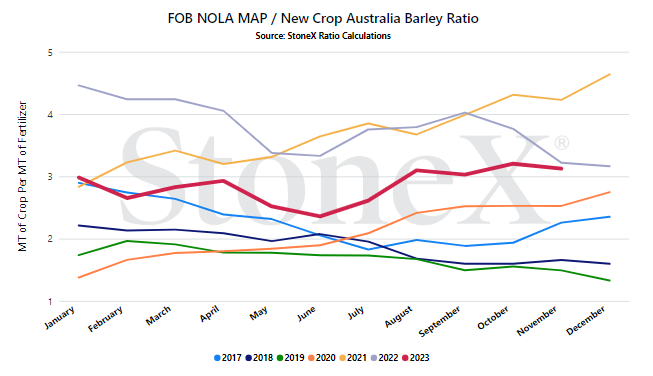
We believe that only looking at the flat price of either grains or fertilizer can be misleading:
-
Only selling grain can hurt you if fertilizer prices rise substantially
-
Only buying fertilizer can hurt you if grain prices fall
We look at the ratio "value" to get a better indication of where we are or how many bushels of X does it take to pay for 1 ton of fertilizer.
Would you rather:
-
Spend 150 bushels to pay for 1 ton of DAP
-
Spend 80 bushels to pay for 1 ton of DAP
When we compare the current ratio value against recent years, we start to see if we are high or low.
YOUR VALUES WILL LOOK DIFFERENT
This graph looks at the NOLA DAP price vs the flat grain price. There are no logistics on either product. Your location will look different due to fertilizer logistical costs, grain basis, etc.
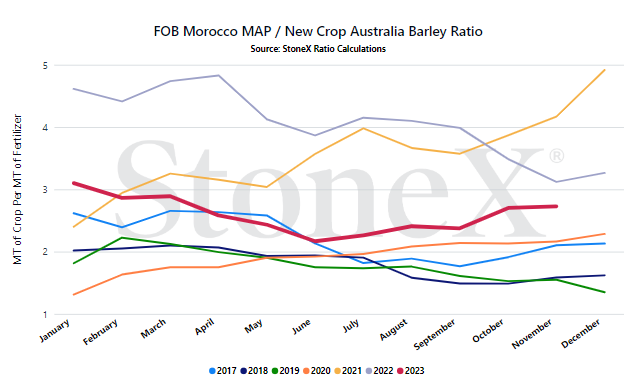
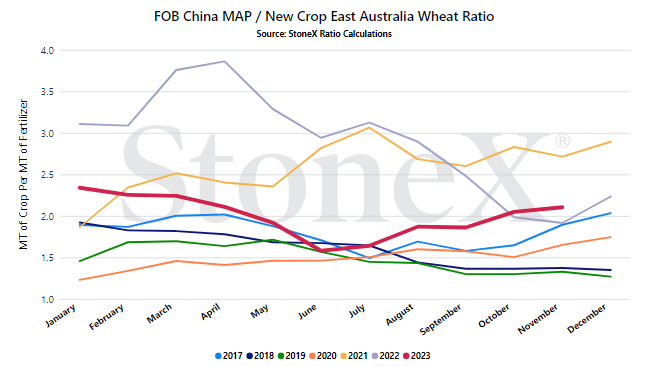
- Chinese government possible intervention- as we have seen in the urea sector, the Chinese government can quickly swoop in and fundamentally change a fertilizer market...and can make changes when they see fit. While we haven't seen a definitive announcement regarding phosphate exports, it doesn't take much work to think one could be in the cards. If they start mandating lower export volumes, the world could remain tightly supplied.
- High phosphate price vs grains = possible demand destruction? - overall demand needs to continue to be discussed/watched. At least for North America, the price was not high enough to back off demand. However, that might have had more to do with the fact that potash values were solid and helped to offset phosphates high price. Other points around the world may not have the potash luxury. I'm not saying demand is going to get hurt...but it needs to be considered.
- Indian demand going forward - India has been ahead of their average for a while now in an attempt to rebuild domestic warehouses. We have been a believer that they would get full...eventually. Quickly found out that demand was staying ahead of the game as well. Could this be coming to an end? It sounds like the Indian government phosphate subsidy rate is getting cut, making it harder for farmers there to justify the price. If we see their demand cut back, it will have global effects.
StoneX Ratio Calculation
The ratio calculation is derived from Bloomberg historical grains values as well as fertilizer values from StoneX, NPKFAS, and Argus.
The calculation is simply dividing the fertilizer price by each grain price.
All data was sourced from StoneX unless otherwise noted.
This material should be construed as market commentary, merely observing economic, political and/or market conditions, and not intended to refer to any particular trading strategy, promotional element or quality of service provided by the FCM Division of StoneX Financial Inc. (“SFI”), StoneX Financial (Canada) Inc. (“SFFC”) or StoneX Markets LLC (“SXM”). SFI, SFFC and SXM are not responsible for any redistribution of this material by third parties, or any trading decisions taken by persons not intended to view this material. Information contained herein was obtained from sources believed to be reliable, but is not guaranteed as to its accuracy. Contact designated personnel from SFI, SFFC or SXM for specific trading advice to meet your trading preferences. These materials represent the opinions and viewpoints of the author, and do not necessarily reflect the viewpoints and trading strategies employed by SFI, SFFC or SXM. The FCM Division of StoneX Financial Inc., a subsidiary of StoneX Group Inc., is a member of the National Futures Association (“NFA”) and registered with the U.S. Commodity Futures Trading Commission (“CFTC”) as a futures commission merchant and commodity trading advisor. StoneX Financial (Canada) Inc. is currently registered as a Futures Commission Merchant or equivalent in all provinces of Canada and is a member of the Investment Industry Regulatory Organization of Canada.