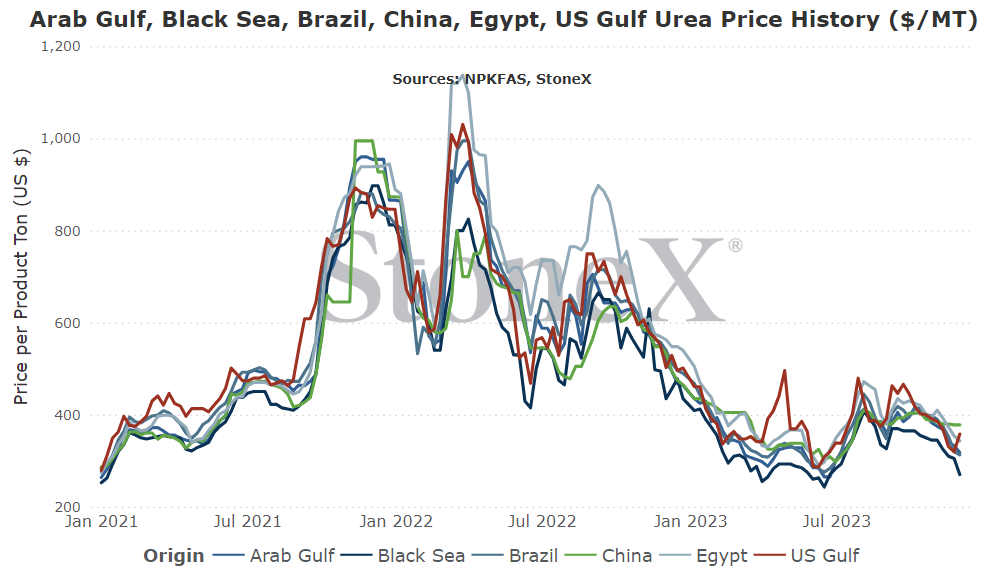
I'm going to play both sides on this.
Short term (next couple weeks), I think the markets are going to remain bearish/weak in the absence of demand. Manufacturers/traders/long positions are desperate for demand that isn't stepping forward. Until that happens, values will flounder.
Longer term (2nd half of December perhaps), I think India will announce and that will entice some other buyers to step forward as well. That, combined with some tax spending in areas like North America could help buoy values as we head into 2024.
It is certainly possible that India might drag their feet a little longer than I expect but I do believe that once they step forward, the market will take advantage. Just a matter of getting that timing right.
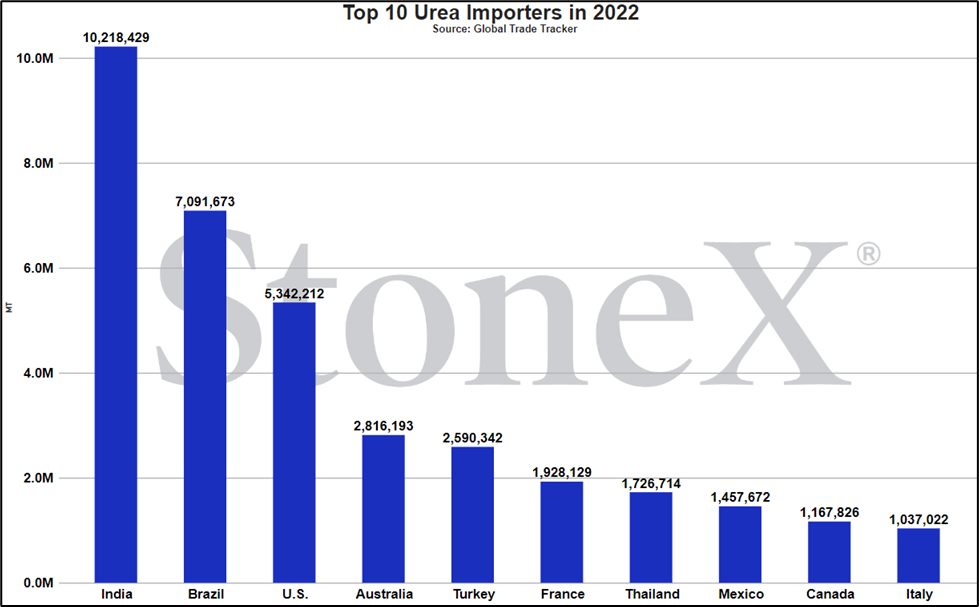
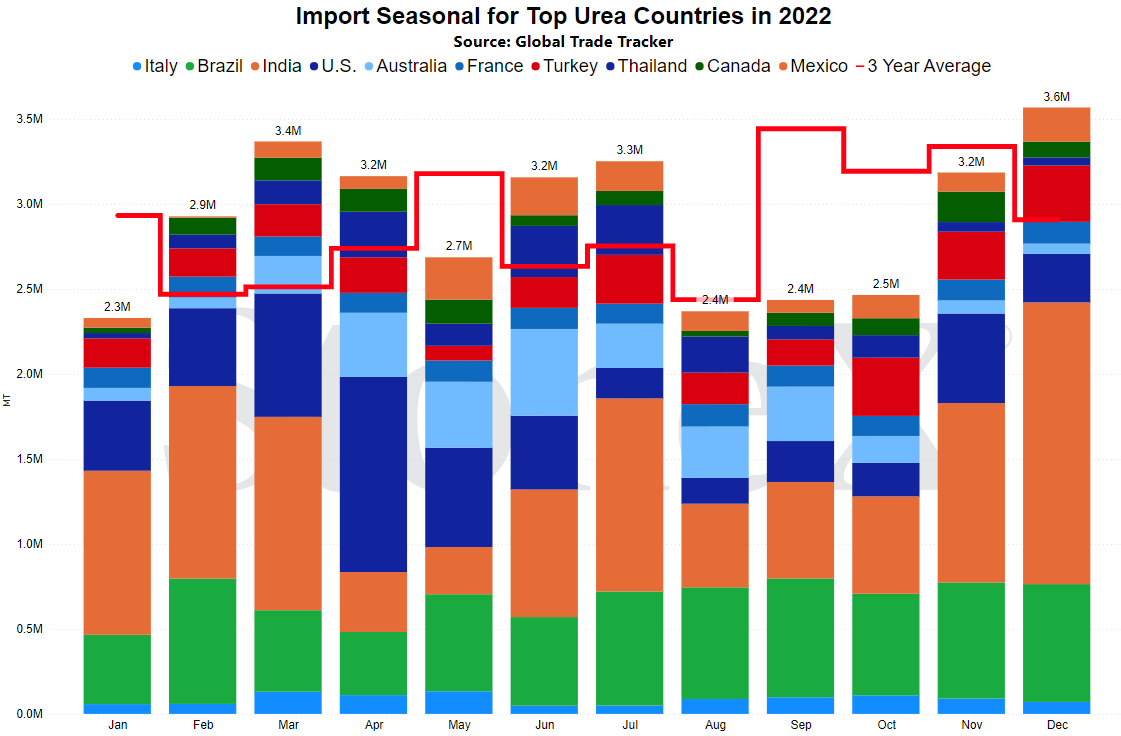
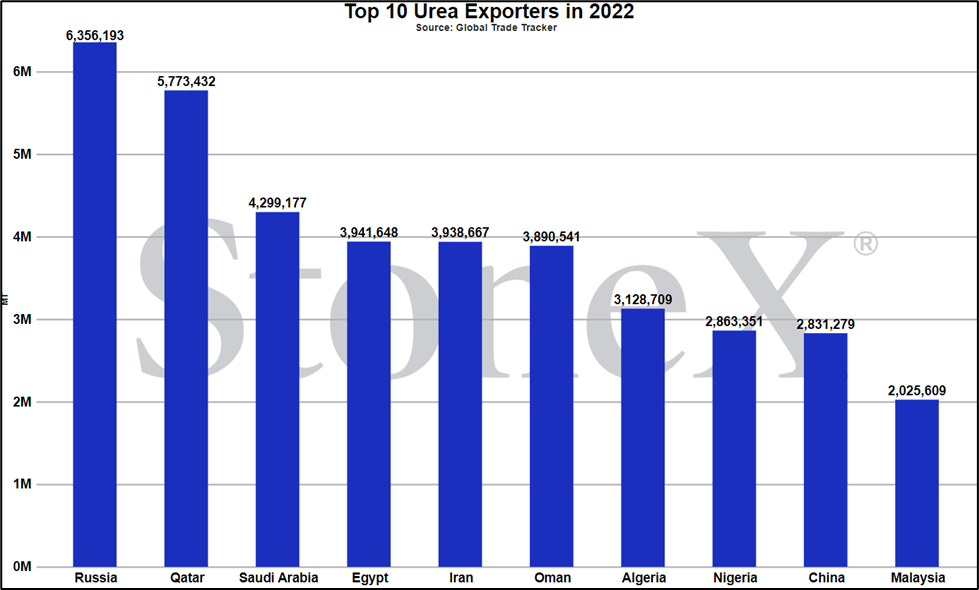
Israel/Hamas war continues to keep North Africa/Middle East region on edge
For a more in depth story of what has been happening and how it affects urea, check the last month or two of the urea newsletters. A brief recap:
- There is no nitrogen production in Israel/Palestine so no direct influence.
- However, there is a tremendous number of tons produced in the North Africa/Middle East region.
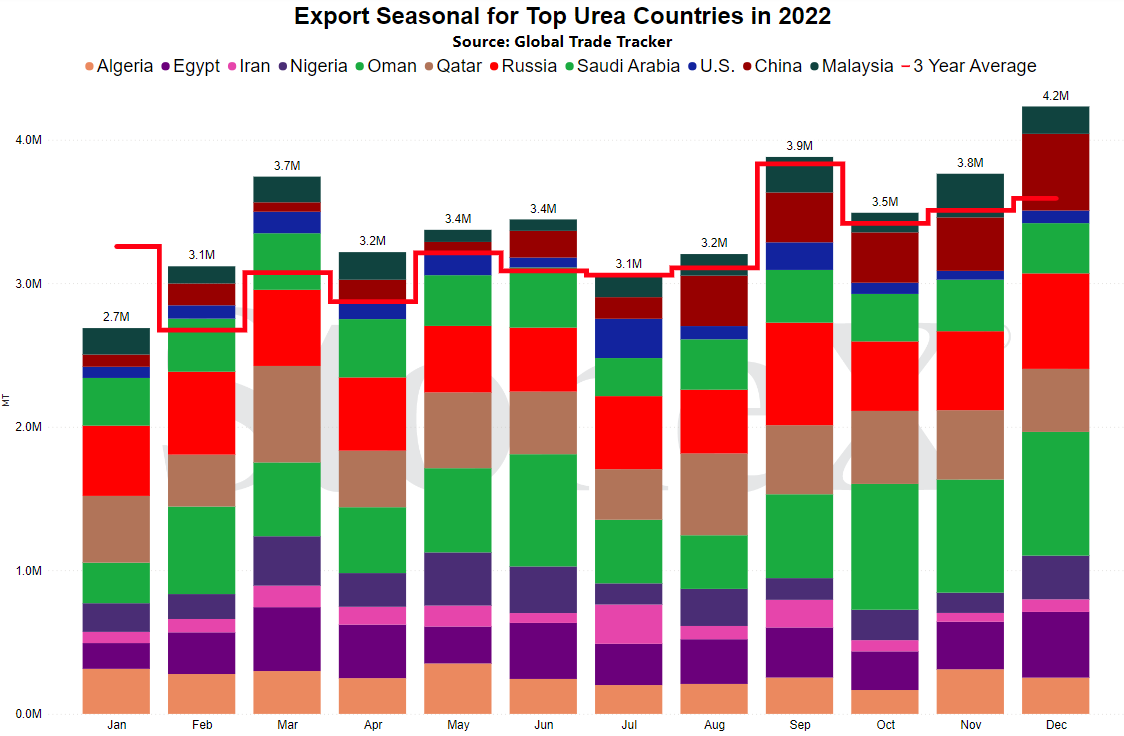
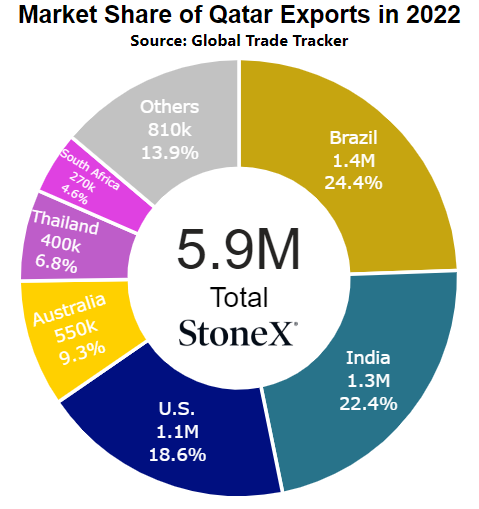
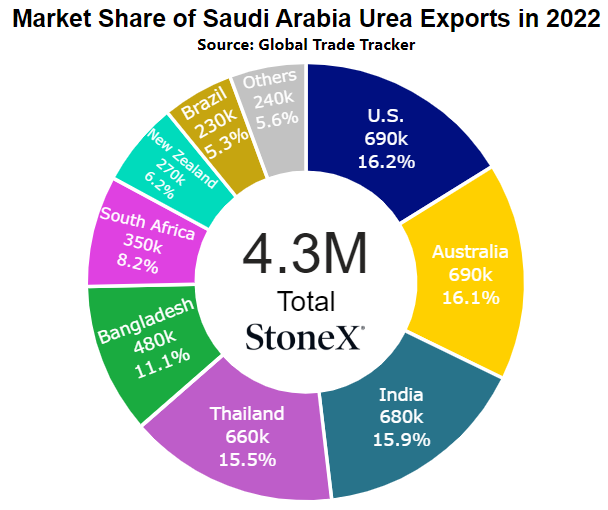
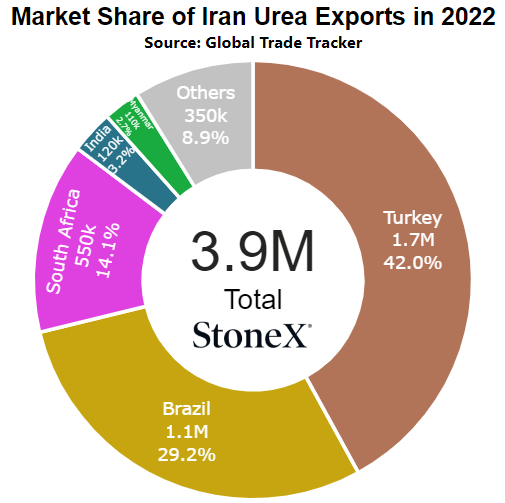
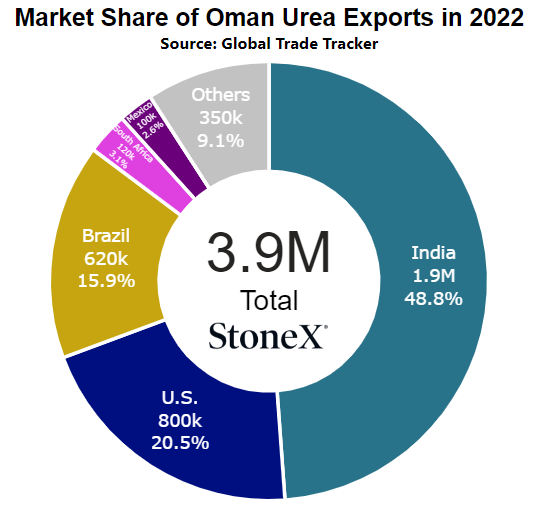
- Approximately 50% of global urea exports come from these two regions.
- If the war were to spread and shipments come to a halt, the main story will be on oil but there could/would be a huge impact on urea shipments.
Fortunately, the fighting has remained compartmentalized. There have been some instances of outside parties stepping in but that has been relatively small and hasn't plunged the area into war.
Unfortunately, this story is far from being completely told. All it would take is one attack, one rocket, heck one misunderstanding could do it. Hopefully that will not be the case...but hope isn't a strategy. Be aware of what is happening as it can change the entire outlook for urea.
Dutch TTF values falling back to $13 - $14MMbtu range...is it enough?
The European nitrogen production story continues with twists and turns.
In the last month, the worst case scenario for those hoping for lower values came true. Yara announced that they were going to shut down their nitrogen facility located in Ferrarra, Italy. Now, on its own, it isn't a big deal. I believe that plant produces around 600K tons of NH3 and 600K tons of urea per year. Relatively small on the global scale (major for that area, though). While the size of the facility wasn't really enough to sway the global S&D, it did spook some in the industry. The fear was that this was just the first boot to drop. If other plants/companies started to announce closures due to lower global urea values and higher Dutch TTF input values, it could start a trend that did affect the S&D.
Fortunately for buyers, this announcement was on its own and in fact, the outlook has improved with Dutch TTF values falling in recent days/weeks.
In the last few trading days, we have seen winter month values drop into the $13MMbtu range. It is still likely far from restarting any offline facilities, but hopefully it will help stop the bleeding.
Given how much volatility we have seen in that market and its influence on the urea markets, we need to keep a keen eye on it going forward.
Lack of demand following last India purchase tender pressures price ideas
Amazing how quickly things can change.
The last round of major purchasing was done by India when they locked up 1.6MMT of urea. Many offers declined to drop their price to participate, likely in hopes that other global demand would step forward. That has not been the case.
Since that purchase, demand has been hard to come by. Buyers around the world have stepped aside with the result being that all global urea values have dropped.
Now, the question is how long will buyers stay out of the market? This turns into a high-stakes game of chicken. The longer everyone stays out of the market, the further price drops and the better off global buyers are. However, it could only take one buyer stepping in to change the entire outlook. If India were to buckle, for example, and announce a purchase tender, the question will be who else follows? As you will read in the next section, Brazil demand should be lower but they still have needs. North America needs a lot of product for spring. The list continues. So if India steps in, will these other buyers scramble to step in as well? If that happens, the world goes from no sales options to plenty of sales options. Trust me when I say that if that plays out, values will reflect it.
Unfortunately, I do not know for sure what will happen. We expect to see India announce second half December. North America will have a lot of year end/beginning money flowing. This entire market could look different by the time I write the January edition.
Then again, it may not. Aren't markets fun...
Brazil drought putting nitrogen demand in question
Like farmers around the world, Brazilian farmers are not immune to droughts...and they are living that reality today.
Due to poor moisture, corn forecasts are being cut. Our own group has recently dropped their forecast by approximately 750K acres...and that was a conservative drop from what I understand. As it was explained, they believe the number will fall further but want to wait to see if rain returns. If it does not, further cuts will be made. Better to be conservative and build into it rather than being sensational for headline sake.
This will put Brazil's nitrogen demand into question. If they are losing corn acres like this, then nitrogen demand is surely dropping. Importers will be less willing to blindly bring in vessels for anticipated demand. That could mean that other areas (central/North America) could see more uncalled for imports due to a lack of destination options.
This will need to be a story that is tracked going forward as it will have grain price and urea price implications.
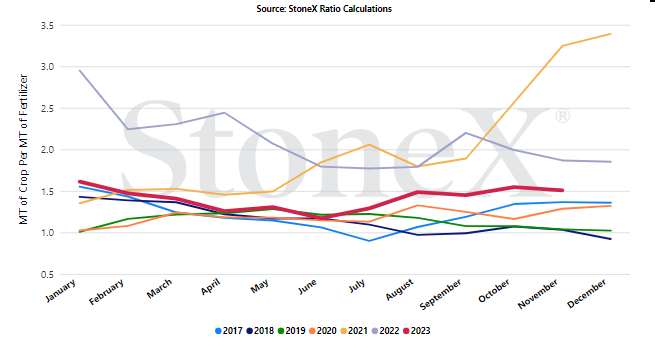
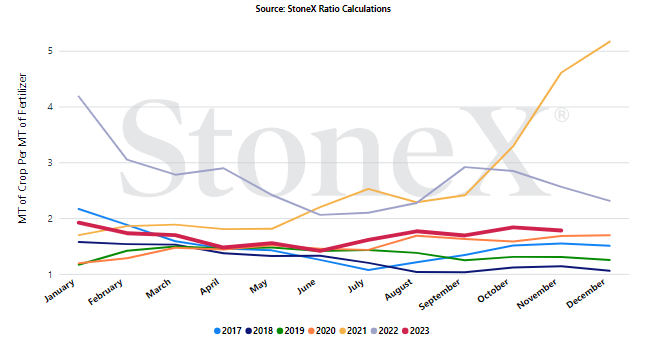
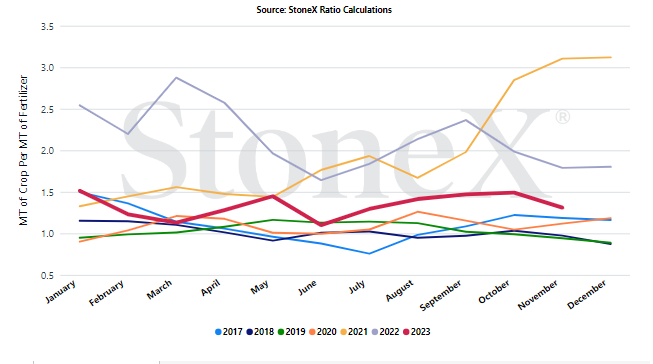
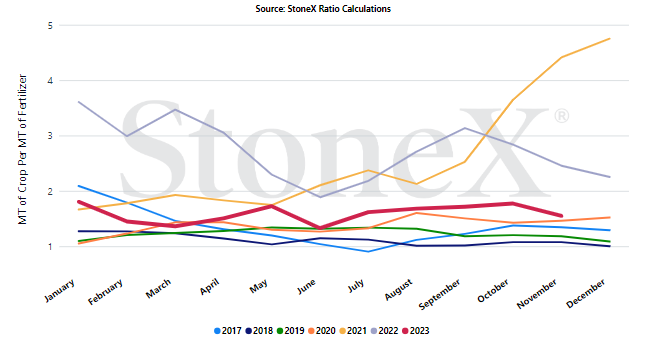
Urea values looking good vs several grains
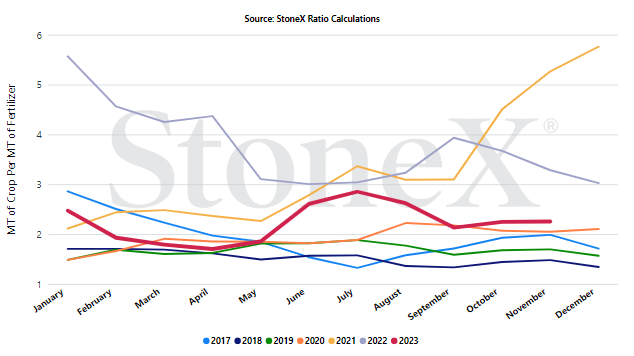
If you go down and look at all the ratio graphs, you should notice that the line has entered some pretty attractive territories. This has been accomplished largely due to urea values falling. Grain values have been holding. The net result is less bushels/tons being spent for fertilizer.
Could the current ratios improve from where they are? Absolutely. Please do not take this as my saying "you will never get this chance again. Do 100% of your stuff.". I am merely pointing out that this is a heck of a spot to start next years programs.
Now, could the current ratios worsen? Absolutely. We could start to see grain values fall. We could start to see urea values rise for any number of reasons. Worse, we could see both of those at the same time.
I fully realize that there are risk to securing things for 2024. You probably couldn't come up with anything that my family hasn't pushed back on me!!! Still, if you are willing to look ahead, today is a great opportunity/value.
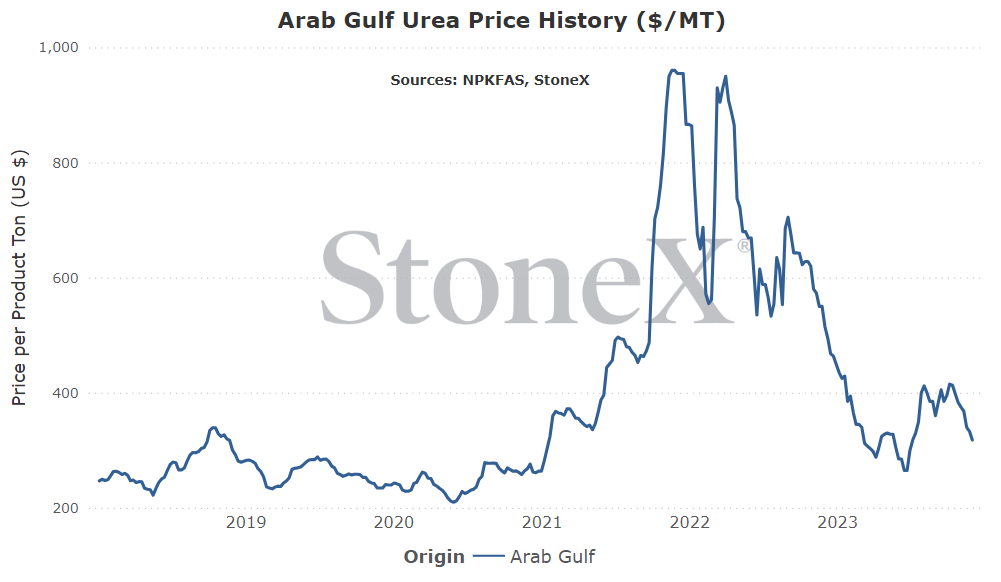
Number 1 exporter (as a region, not as individual nations)
Vs 30 days ago - -15% or approximately $58 lower
Vs 90 days ago - -12% or approximately $43 lower
Vs 6 months ago - +11% or approximately $33 higher
Vs 1 year ago - -38% or approximately $198 lower
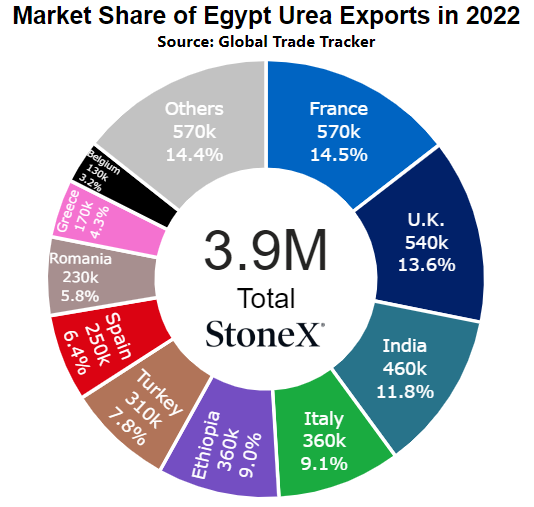
Egypt
Number 4 global exporter in 2022
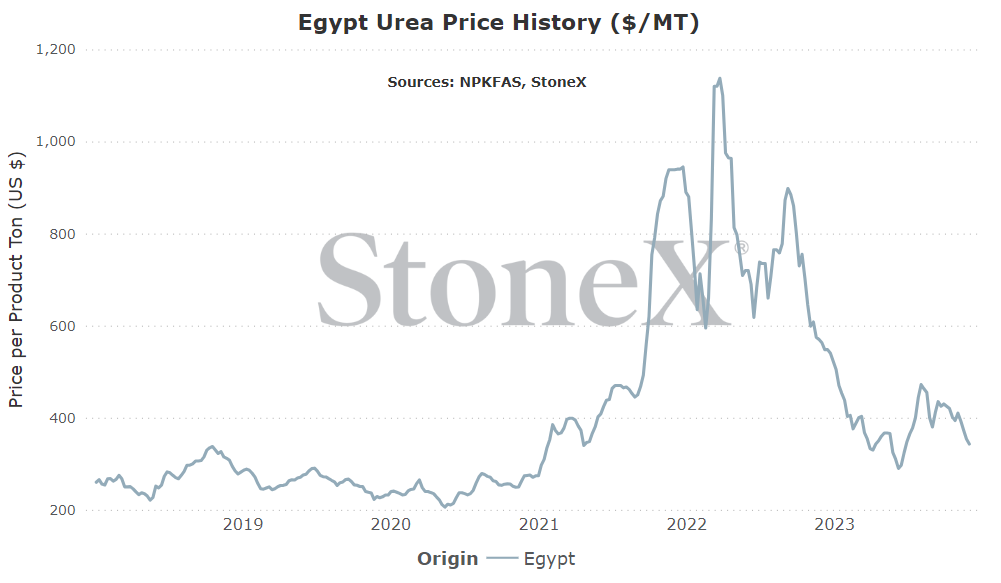
Price comparisons
Vs 30 days ago - -16% or approximately $68 lower
Vs 90 days ago - -10% or approximately $38 lower
Vs 6 months ago - +10% or approximately $33 higher
Vs 1 year ago - -39% or approximately $20 lower
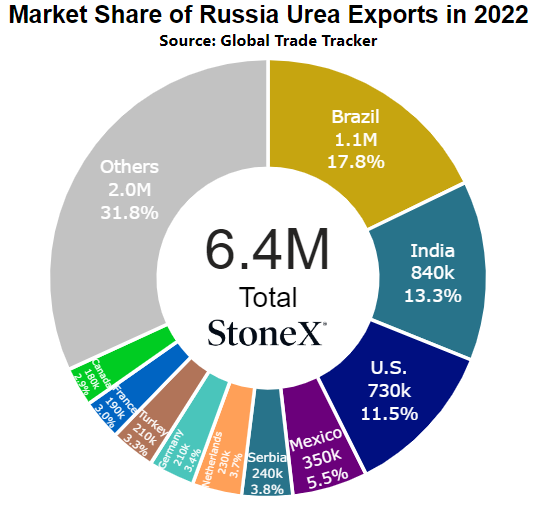
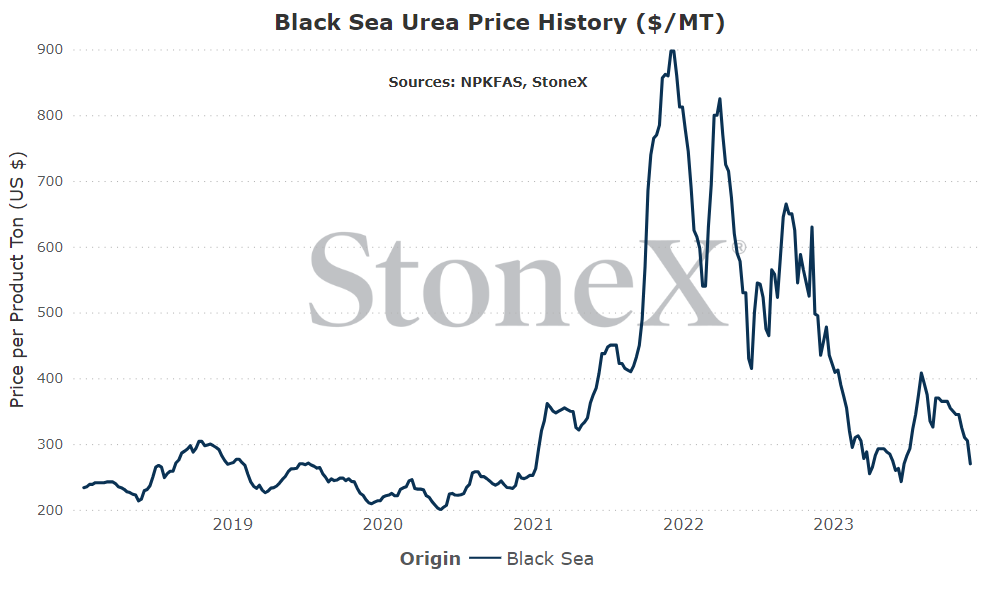
Black Sea
Number 1 global exporter in 2022
Price comparisons
Vs 30 days ago - -22% or approximately $75 lower
Vs 90 days ago - -17% or approximately $56 lower
Vs 6 months ago - +4% or approximately $10 higher
Vs 1 year ago - -38% or approximately $165 lower
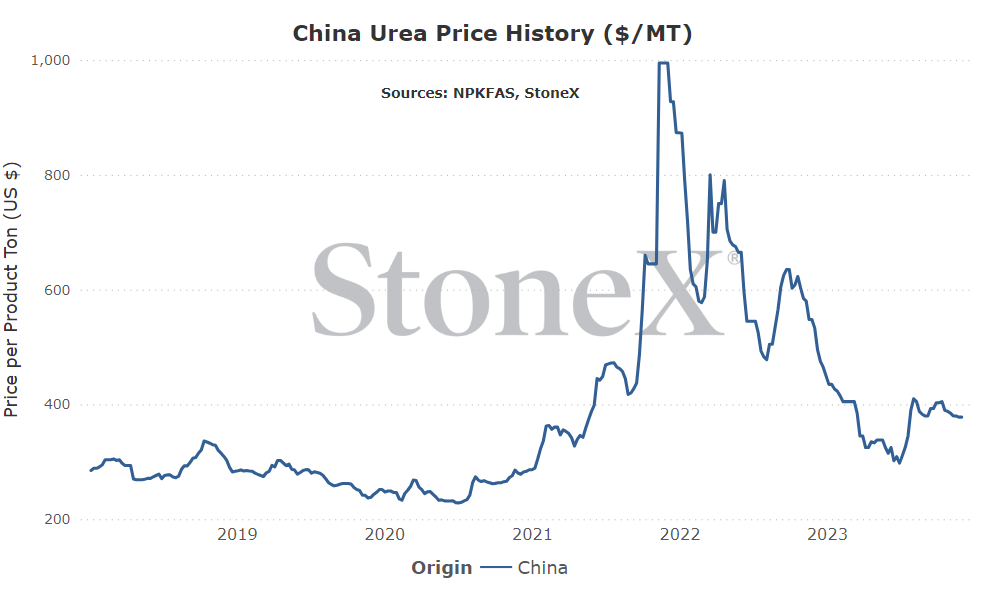
China
Number 9 global exporter in 2022
Price comparisons
Vs 30 days ago - -2% or approximately $8 lower
Vs 90 days ago - -1% or approximately $3 lower
Vs 6 months ago - +20% or approximately $63 higher
Vs 1 year ago - -29% or approximately $155 lower
- Middle East regional tensions rise - with 50% of the world's urea exports coming from the Middle East/North African regions, what is happening in that area today matters. So far, fighting has remained largely between Israel/Hamas...but it only takes one action for it to spiral out of control.
- Dutch TTF values start to rise with winter - so far, Dutch TTF values have been falling as we approach December and the widespread start of winter. However, if the market is surprised with colder temps/higher demand for natural gas, Dutch values can jump quickly and in the process start shutting off nitrogen production.
- Global demand comes back in a big wave - that last India purchase tender seems like forever ago. Values have come off fairly hard since that time. Eventually, demand has to step forward to make spring preparations. Heck, with values where they are, demand may step forward to take advantage of the pricing. If one buyer steps forward, will all the others do the same? That wave could easily press prices up.
- Dutch TTF values continue to fall, allowing plants to restart - it seems like the market is really going to struggle to go much lower than it already is based on recent history, but anything is possible. If we continue to see natural gas markets drop (and it wouldn't hurt if urea prices rallied a bit to boost profitability), we could see more plants restart, adding to global supplies.
- Global buyers continue to wait - right now, urea buyers around the world are in a game of chicken. No one has been willing to step out of line and start calling on tonnages. The longer this game goes on, the more pressure urea values will see. It cannot last forever as spring will come sooner than we think, but it has time on its side.
- Grain values struggle to hold - let's face it, if grain values were to suddenly start dropping, urea is going to struggle to hold its pricing. Yes, urea has its own S&D and doesn't necessarily have to move along with grain values...but they are connected. You and I both know that is the case.
We believe that only looking at the flat price of either grains or fertilizer can be misleading:
-
Only selling grain can hurt you if fertilizer prices rise substantially
-
Only buying fertilizer can hurt you if grain prices fall
We look at the ratio "value" to get a better indication of where we are or how many bushels of X does it take to pay for 1 ton of fertilizer.
Would you rather:
-
Spend 135 bushels to pay for 1 ton of urea
-
Spend 55 bushels to pay for 1 ton of urea
When we compare the current ratio value against recent years, we start to see if we are high or low.
YOUR VALUES WILL LOOK DIFFERENT
This is a work in progress section! We plan on looking at the relationship between Aussie grains and global price points (and hopefully Aussie specific locations, though that data is hard to secure, very protected). Big reason why we are still in the "trial" stage of this newsletter!!!!
- Middle Eastern tension - I sure wish this wasn't something we had to track...but it is. This morning, I woke up to the report of some attacks on a U.S. warships and vessels in the Red Sea. Whether it escalates or not, it shows just how close to a broader conflict the world is today. If the region fell into war, journalist will of course focus on oil and energy as that is the sexy topic. However, there is a lot of urea produced and exported from the area.
- European Dutch TTF markets - as has been the case since 2022, Europe has done more to drive global urea values than most any other area in the world. Fortunately, Dutch TTF values have fallen once again. Not to the point that we expect further plant restarts but enough to it lowers our fears of more plants being stopped (like Ferrara, Italy). If the last few years are any indication, where Dutch TTF goes, global urea is likely to follow.
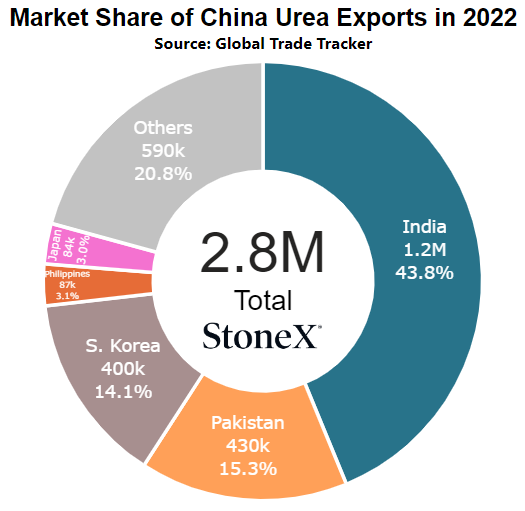
- Chinese government - Ronald Regan famously said "some of the most terrifying words in the English language are I'm from the government and I'm here to help". I'm not sure he took into account that same statement being made by a communist government. The Chinese government has stepped into say that they will only allow 4MMT of urea to be exported January 2024 thru March 2025. Typically, China exports 5 - 5.5MMT each calendar year. To make matters worse, they can change their minds at the drop of a hat. A large chunk of global exports are now being controlled by government decisions. Markets are hard enough to figure out when controlled by free market fundamentals.
- What happens when demand returns - since the last big India purchase tender, global urea values have fallen fairly hard due to a lack of demand. Buyers around the world are holding out in hopes that prices drop further...but they cannot wait forever. Eventually, buyers will return. Will manufacturers get proud once again and rally values? Will they be content with current values? How the world responds will tell the story.
StoneX Ratio Calculation
The ratio calculation is derived from Bloomberg historical grains values as well as fertilizer values from StoneX, NPKFAS, and Argus.
The calculation is simply dividing the fertilizer price by each grain price.
All data was sourced from StoneX unless otherwise noted.
This material should be construed as market commentary, merely observing economic, political and/or market conditions, and not intended to refer to any particular trading strategy, promotional element or quality of service provided by the FCM Division of StoneX Financial Inc. (“SFI”), StoneX Financial (Canada) Inc. (“SFFC”) or StoneX Markets LLC (“SXM”). SFI, SFFC and SXM are not responsible for any redistribution of this material by third parties, or any trading decisions taken by persons not intended to view this material. Information contained herein was obtained from sources believed to be reliable, but is not guaranteed as to its accuracy. Contact designated personnel from SFI, SFFC or SXM for specific trading advice to meet your trading preferences. These materials represent the opinions and viewpoints of the author, and do not necessarily reflect the viewpoints and trading strategies employed by SFI, SFFC or SXM. The FCM Division of StoneX Financial Inc., a subsidiary of StoneX Group Inc., is a member of the National Futures Association (“NFA”) and registered with the U.S. Commodity Futures Trading Commission (“CFTC”) as a futures commission merchant and commodity trading advisor. StoneX Financial (Canada) Inc. is currently registered as a Futures Commission Merchant or equivalent in all provinces of Canada and is a member of the Investment Industry Regulatory Organization of Canada.