Brazilian coffee plantations are currently undergoing a crucial stage—flowering—which is essential for the productive potential of the 2025/26 crop. In recent months, due to adverse weather conditions, the Arabica coffee park has shown signs of defoliation. The intensity of vegetative damage can vary depending on factors such as plant age, variety, region, due to the unique characteristics of climate and soil, and the vegetative vigor of the plants. Some plantations that already have a medium productive potential for the next harvest, due to the biennial cycle, may see further reductions in potential if the rate of leaf loss intensifies. In such cases, producers may prune these crops due to economic unfeasibility, should low productivity occur, leading to an above-normal pruning rate in some regions.
The potential of the crops has been gradually declining due to the intense drought observed over the past three months; however, it is difficult to quantify this damage at the moment. In the Arabica areas, only after a larger percentage of flowering opens and the fruiting process begins—which is expected to happen between September and November—will it be possible to more accurately assess the level of damage.
The fact is that the long dry period, combined with the high temperatures in June and July, has exacerbated stress, contributing to the onset of defoliation and, consequently, a loss of productive potential. Additionally, in August, cold fronts swept through some coffee areas in Southern Minas Gerais, São Paulo, and the region known as Cerrado. This intense cold may have also caused damage to the flowering. Extreme temperature conditions, below 10°C or above 32°C for extended periods, can cause abortion and the dropping of young coffee cherries.
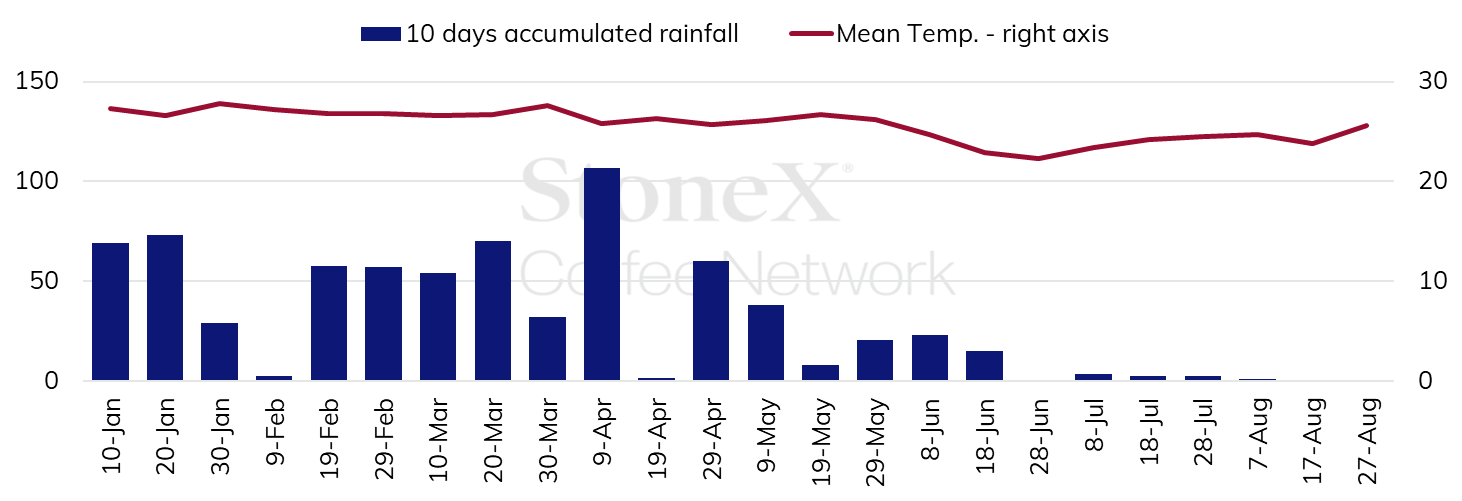
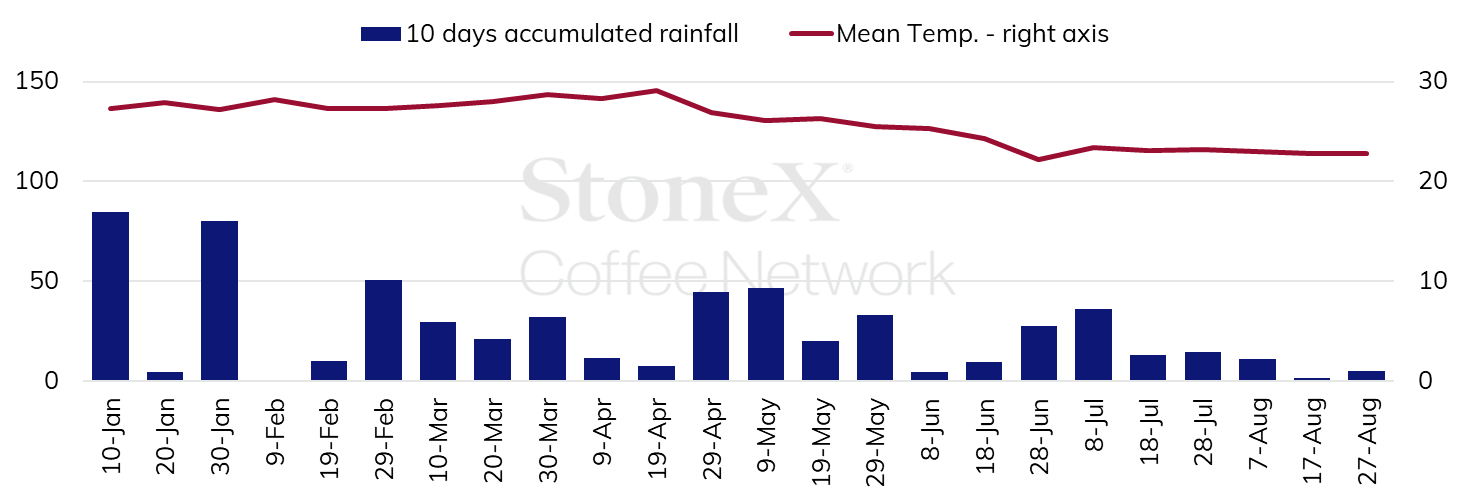
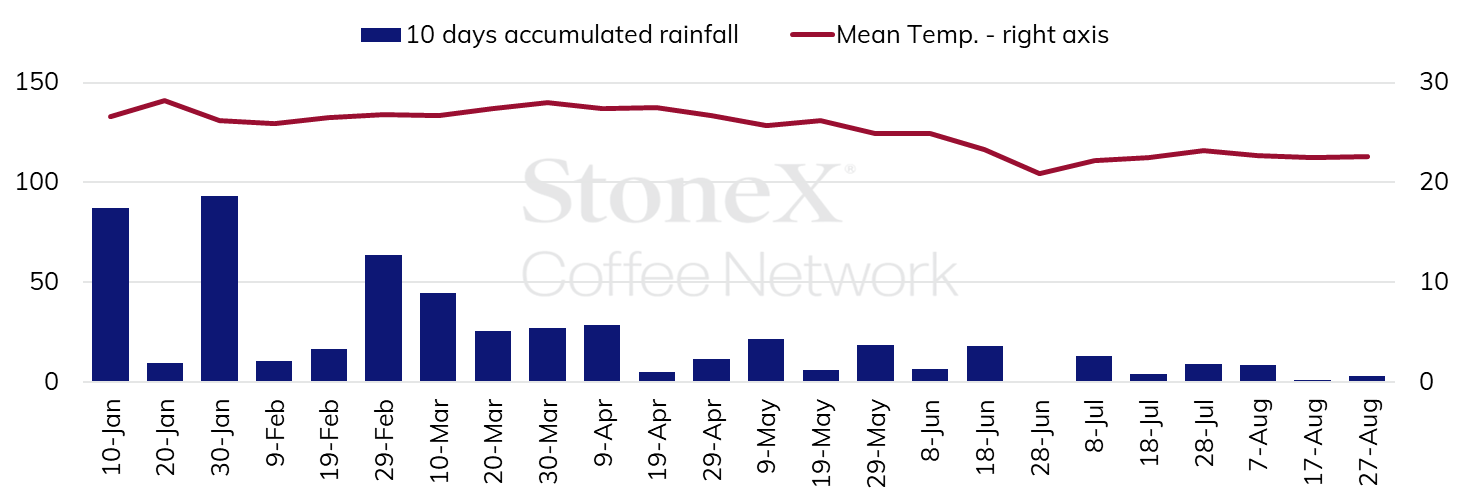
For Robusta, weather conditions are more favorable in the Northern regions of Espírito Santo and Southern Bahia. Despite the good vegetative condition of the crops, these regions received small volumes of rain between June and August, but temperatures were not as high by the standards of these regions, except for Rondônia, which has been facing a prolonged period without rain. Furthermore, these regions have a high percentage of irrigated areas.
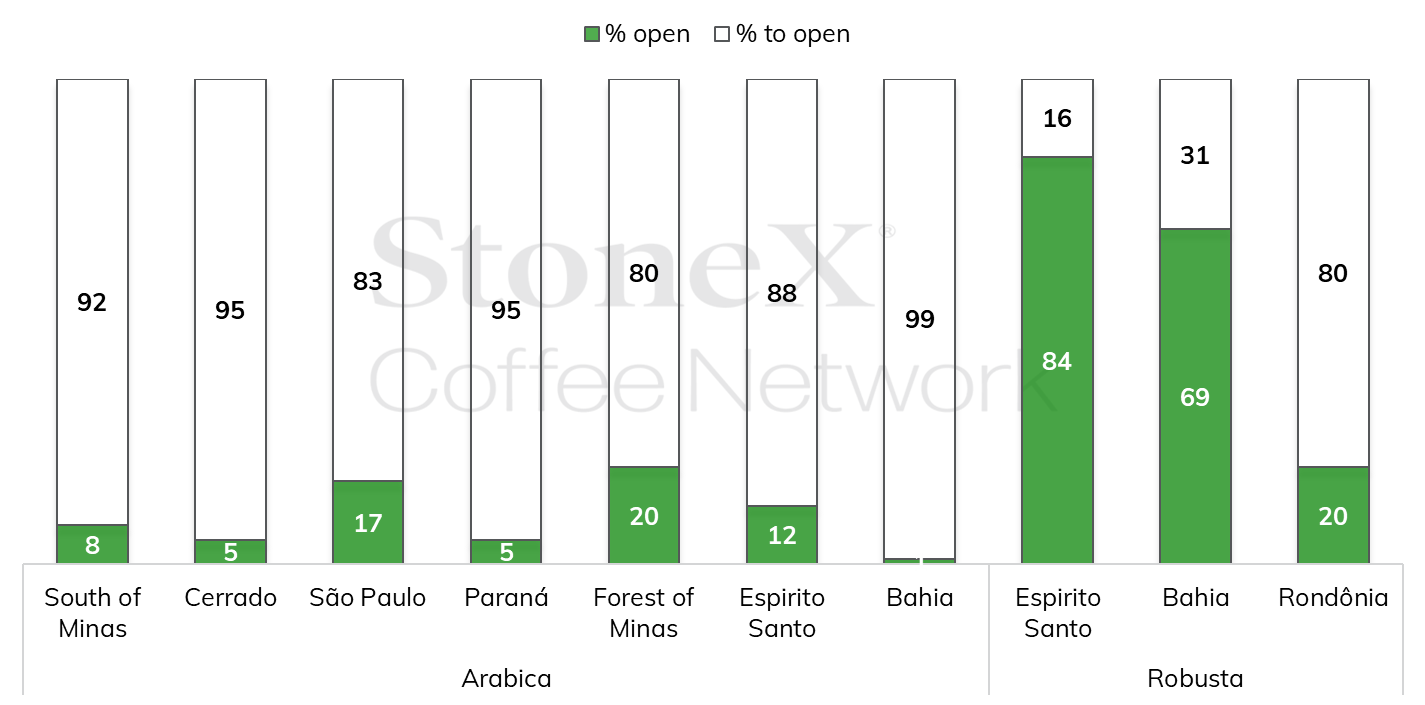
This is a sensitive period for coffee production. Flowering has already begun in almost all regions, and rainfall and temperatures will have direct and significant impacts on the coffee's phenological stages. Vegetative growth, uniformity, and good flowering, as well as the maintenance and proper development of the young coffee cherries, will be determined by the climatic conditions of the next three months. Below are the estimated percentages of flowering that have opened in the coffee regions so far.
Pace of coffee flowering in Brazil (%)
Source: StoneX.
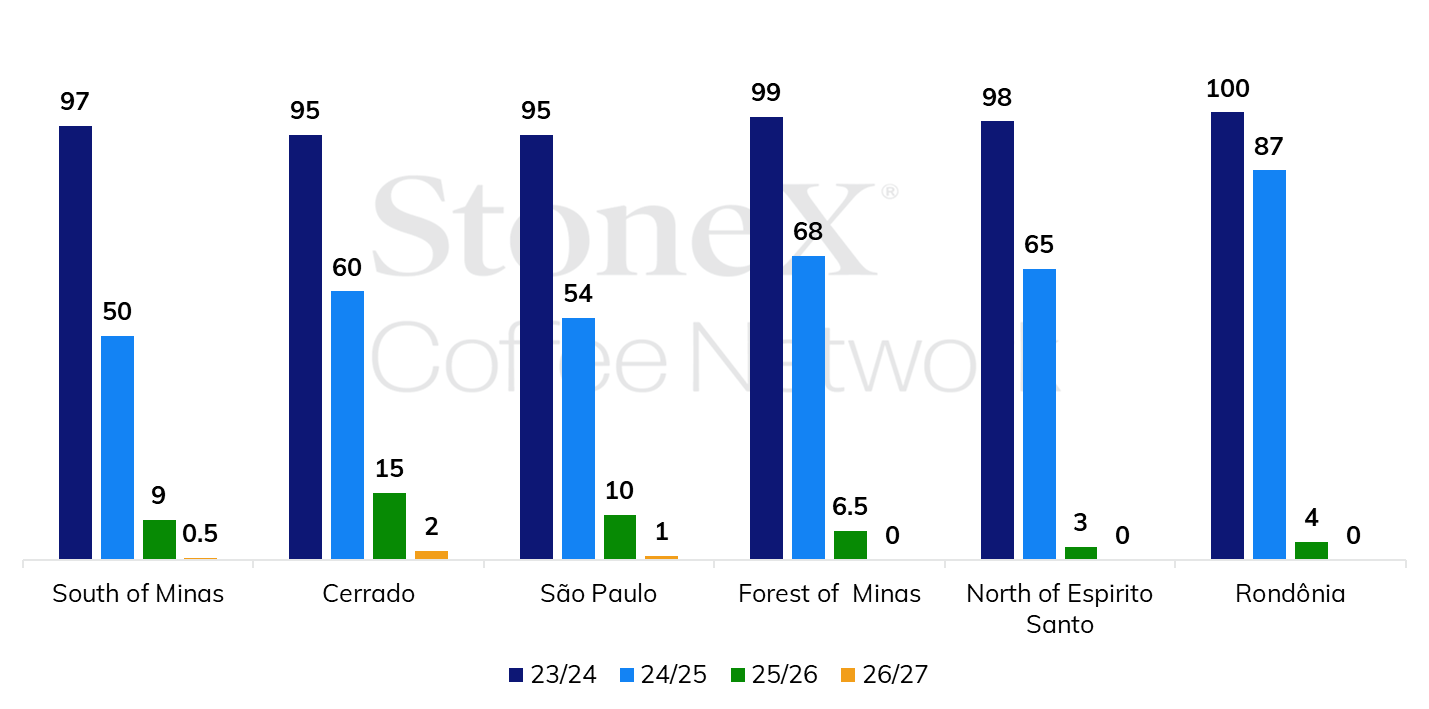
Regarding sales, the coffee market maintains its complexity due to uncertainties caused by weather conditions and the current market situation. Buyers are struggling to position their price bases, and sellers are asking above the bases, resulting in lower market liquidity. Despite good prices, producers remain cautious about sales, particularly regarding long-term future sales.
Pace of coffee sales by producers in Brazil (%)
Source: StoneX.
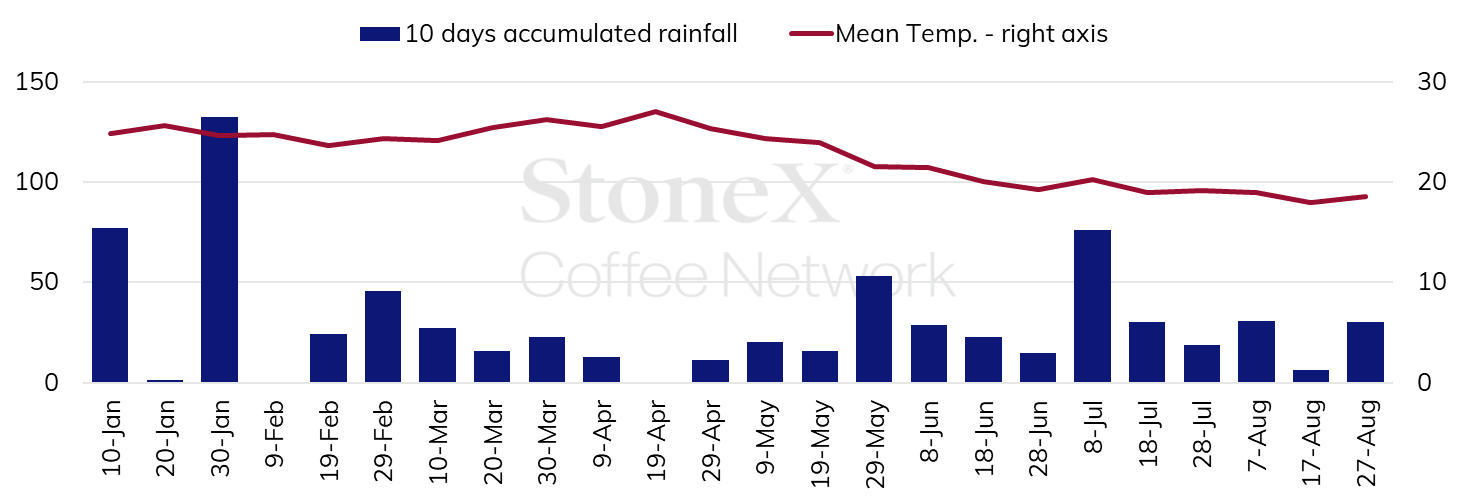
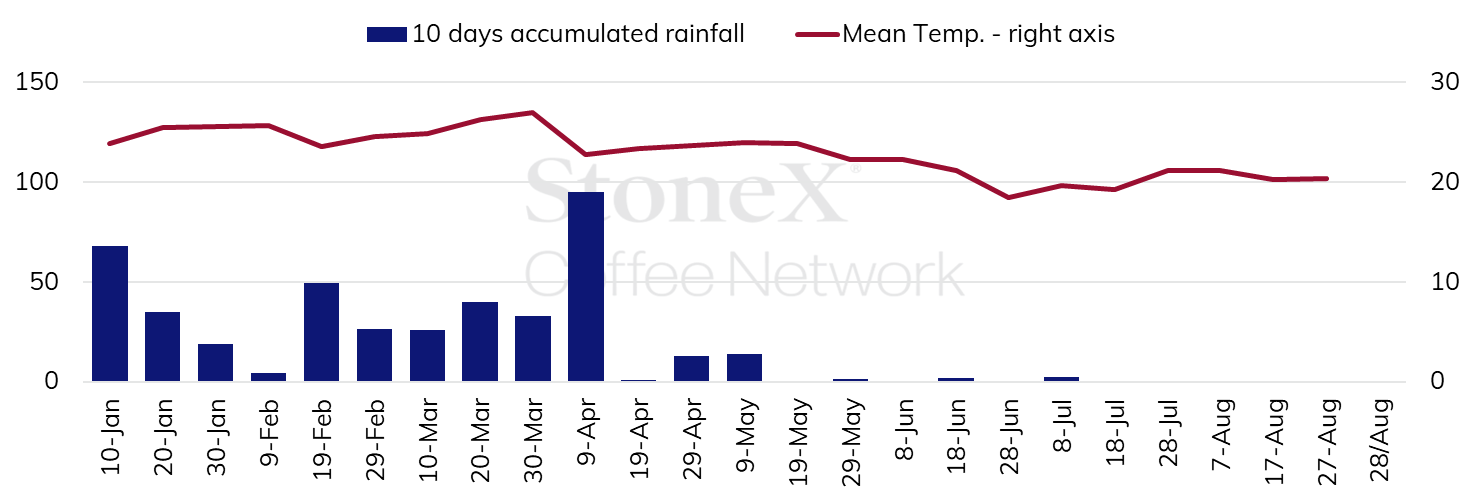
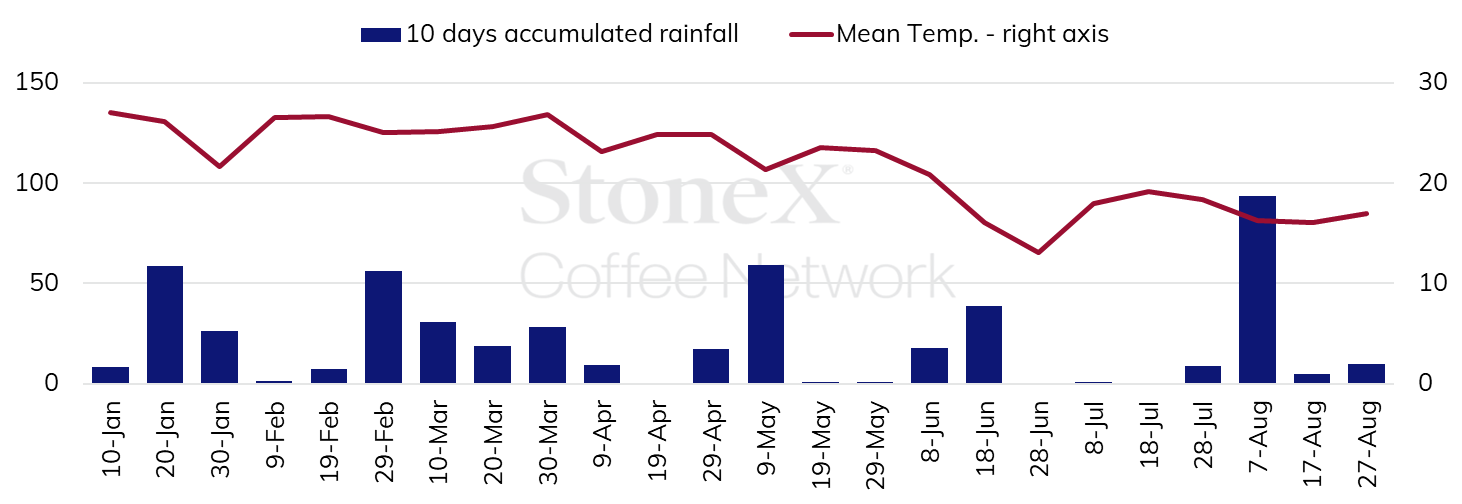
Average temperature (°C) and average accumulated precipitation over 10 days (mm) throughout 2024 in the producing municipalities that make up each of the following regions:
Arabica:
Bahia:
Source: StoneX
Cerrado Mineiro
Source: StoneX
Matas de Minas
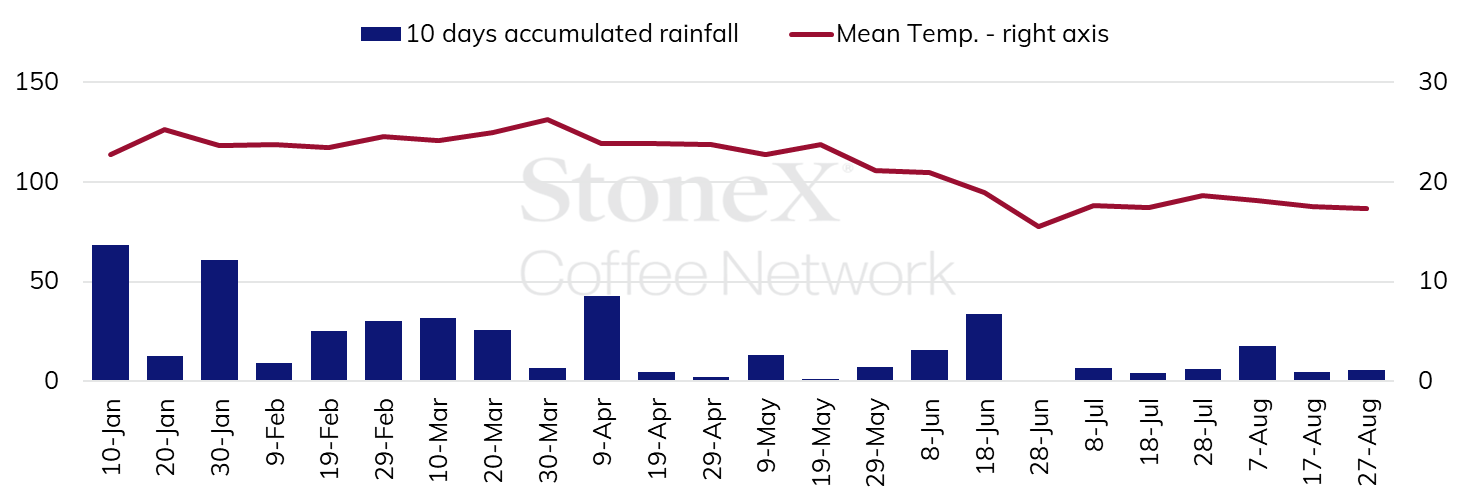
Source: StoneX
Southern Minas Gerais
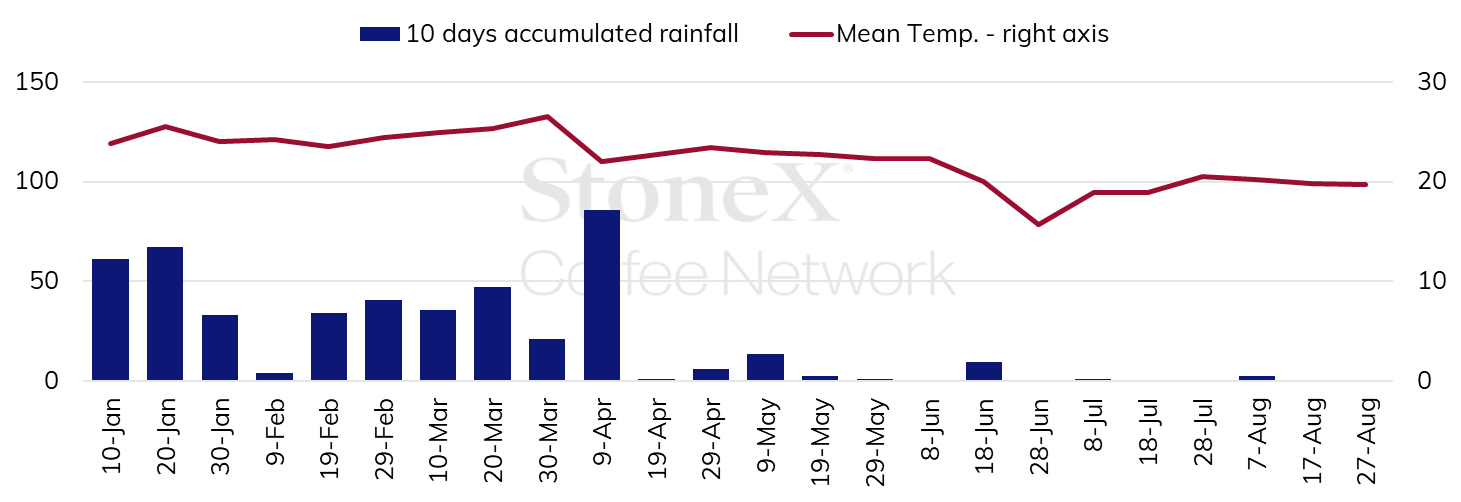
Source: StoneX
Mogiana
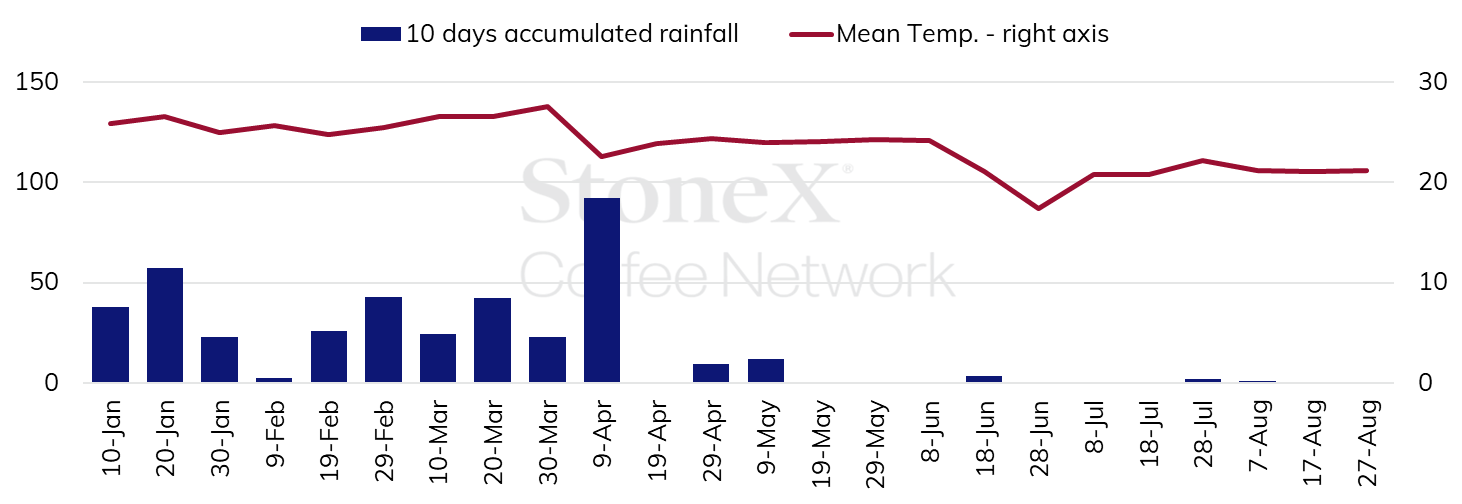
Source: StoneX
Rosp
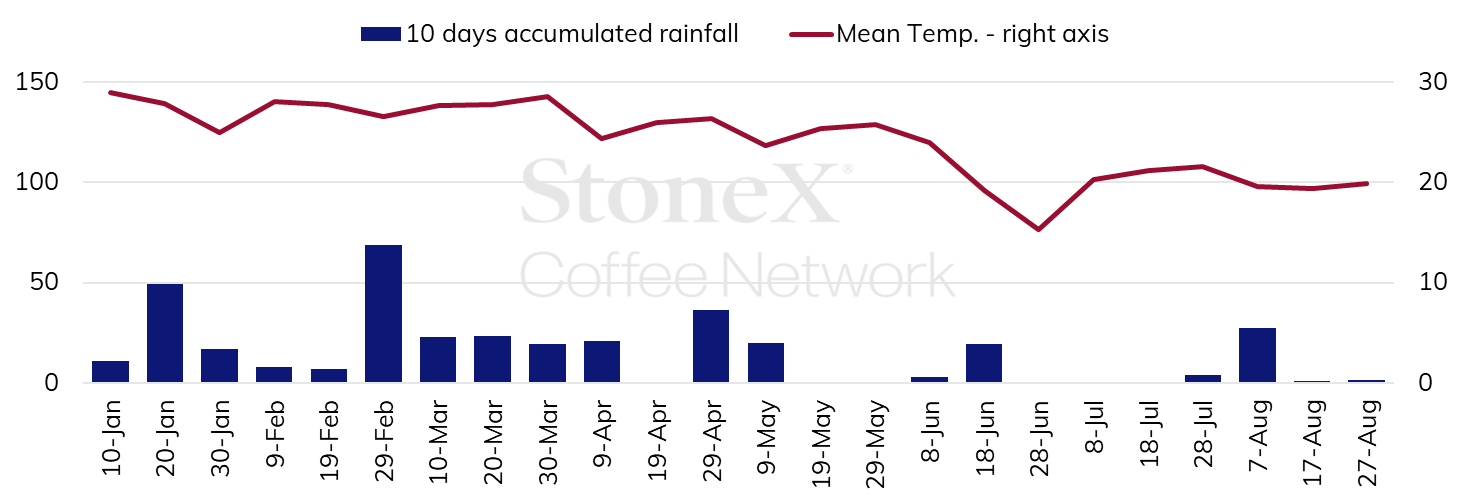
Source: StoneX
Paraná
Source: StoneX
Robusta:
Rondônia
Source: StoneX
Southern Bahia
Source: StoneX
Espírito Santo
Source: StoneX