What everyone wants to know first, what do we think will happen going forward
There are a few things that continue to support pricing in the short term. Supplies are tight and demand isn't currently showing any signs of backing off. As long as demand dominates supply, prices should hold or push higher. We are also seeing seeing the cost of production go up around the world. Don't worry, producers are still doing just fine (please read in sarcasm!!!). Sulfur and NH3 values have skyrocketed and the cost to produce a ton of phosphate has gone up 200% since the summer of '20. Both of these are solid reasons for producers to keep their foot on the gas.
On the flip side, there is a lot of talk of demand destruction. Many farmers around the world are balking at current values. Even if they are not, many more are saying that they are struggling to obtain the financing needed to go with full rates. If we find out that demand has dropped significantly, then this can start weighing on values.
The long answer short is that is appears that phosphate values will continue to hold for the short term. Demand continues to be believed high. Supplies are tight. Cost of production has risen considerably. Russian and Chinese exports continue to largely be blocked. Until the narrative starts to change, there are a lot of factors supporting current prices.
Should you buy your fall '22/spring '23 phosphate needs?
Today, I wouldn't advise it.
There are a lot of things that are pushing prices up today. The Chinese government continues to restrict exports. The Russian invasion of Ukraine continues which means the world is closing their business doors to them. Spring demand for the northern hemisphere remains solid.
However, if you lock in your fall/spring needs today, you will be locking in a price that is almost as high as it has ever been 7 - 11 months in advance.
That is why I'm not a fan of pulling the trigger for fall '22/spring '23 needs. Look at how quickly things change in the fertilizer market. Sometimes it only takes weeks. Imagine what can change in 7 - 11 months. We could see the Chinese government drop the export ban and return 32% of the global exports. We could see Russia step away from the invasion or see Russia finds friends to sell to around the world. We could find out that spring demand was crap and inventories finished higher than normal.
I'm not writing this saying I am certain that prices will drop. I'm just not a fan of locking in almost record high values this far in advance. There are a lot of things that are supporting the market today. We could see this turn around very quickly.
What has happened in the last 30 days?
Chinese government phosphate export ban continues
When this ban was put into place, it was to be in effect thru June '22. Many believed that they would reverse that decision and allow exports sooner than June. The belief was that higher prices would change their minds. The problem with this approach was that cash flow was never the reason for it. The government put the ban into place because global inventories were incredibly tight and global values incredibly high. The reason I think we could see the ban extended is that both of those factors are worse today than they were last fall...
This means that as long as they are removed from the world, the world is losing 32% of the export total. It doesn't matter what market you are in. If you lose 1/3rd of the export trade, it is going to make things VERY tight.
If we luck out and if the government loosens the ban, I would not expect it to be business as usual. Given how the global phosphate market is in turmoil, I would expect them to govern exports moving forward. That means they go to company x and allow them to export 100K. They go to company y and allow them to export 150K.
At this point, any change in their export program would help prices decrease.
Russian exports continue to be largely blocked
The Russian invasion of Ukraine continues which means that approximately 12% of the global phosphate export total is removed.
We have seen the world largely come together as one and condemn Russia's actions both politically and economically. As long as most of the world remains unwilling to buying Russian produced product, those tons are removed which further tightens an already tightly supplied global market.
However, we are starting to see some countries stepping breaking ranks and being willing to buy from them...at a discount. India has been buying discounted Russian oil in Rubles. Brazil and Mexico have both shown a willingness to buy. If enough countries step forward to buy their tons, this will improve the global S&D. Russia being completely cut out from the world means supplies drop. Russia being able to only sell to a few countries might mean that those unwilling to do business will see higher prices but ultimately, global supplies improve which could mean lower prices overall.
This is something that will need to be watched very closely. Russia and China combine for approximately 44% of the global export total. That is a very big number of tons that could remain missing.
North American values rally as spring draws near
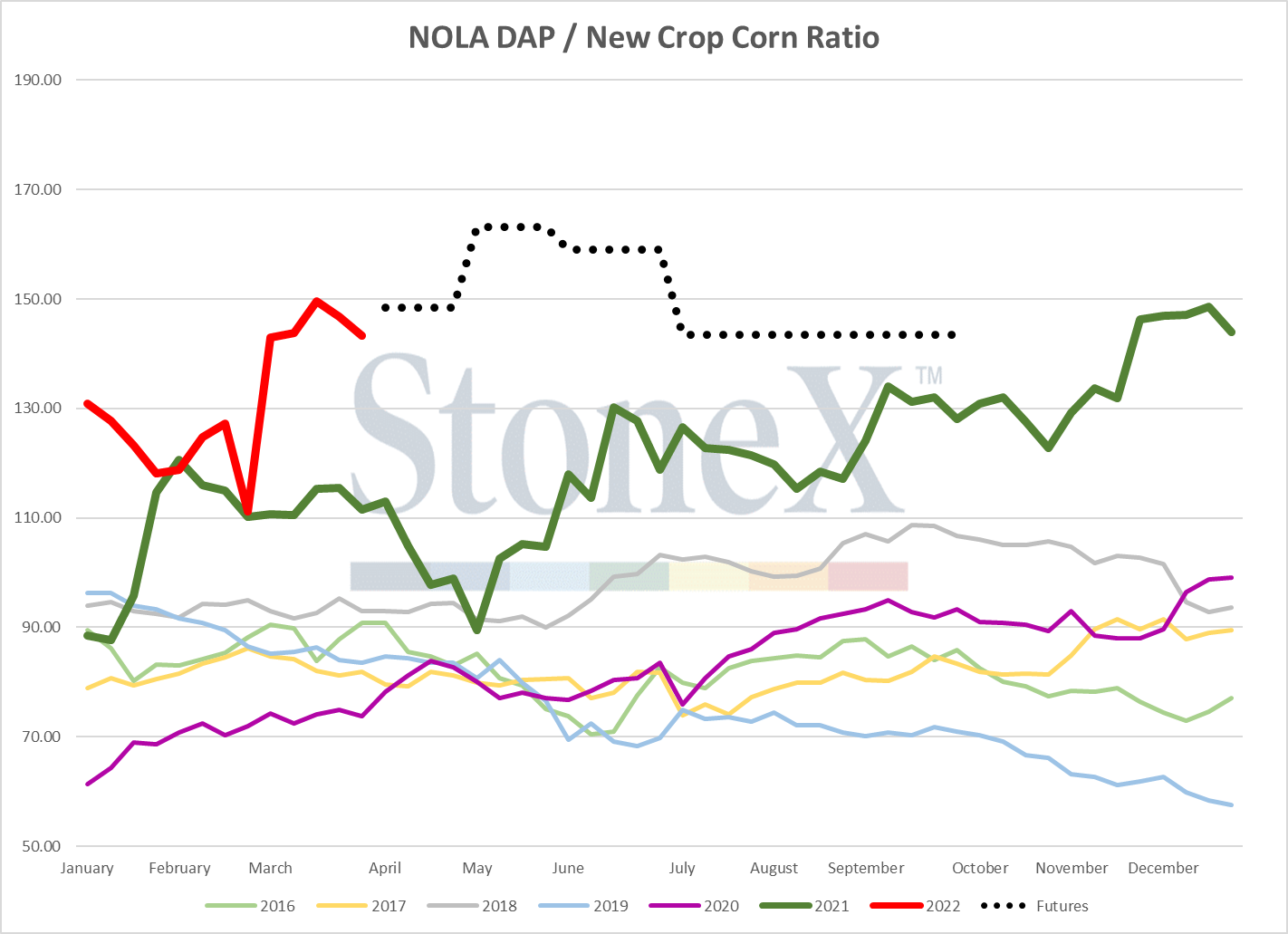
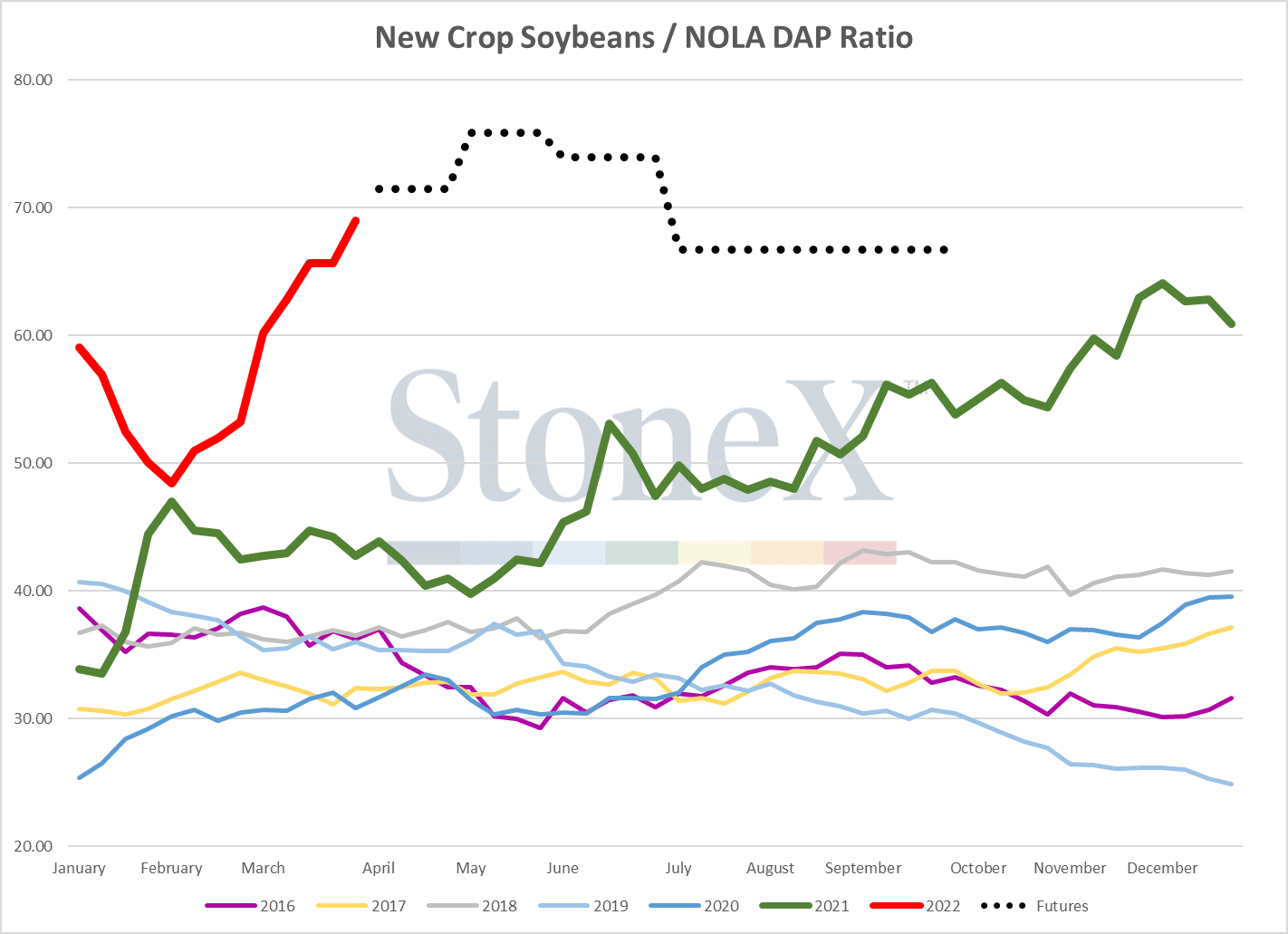
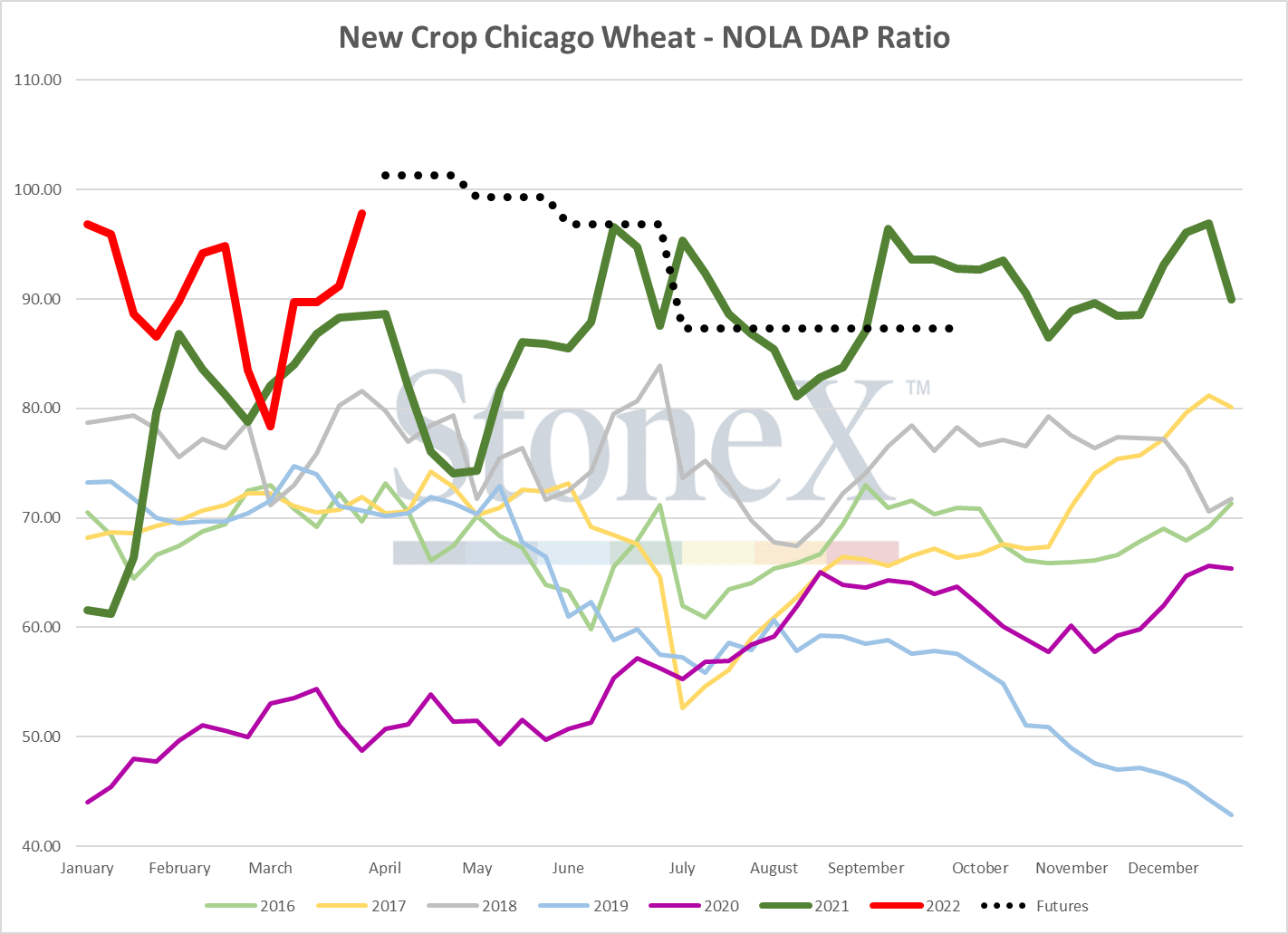
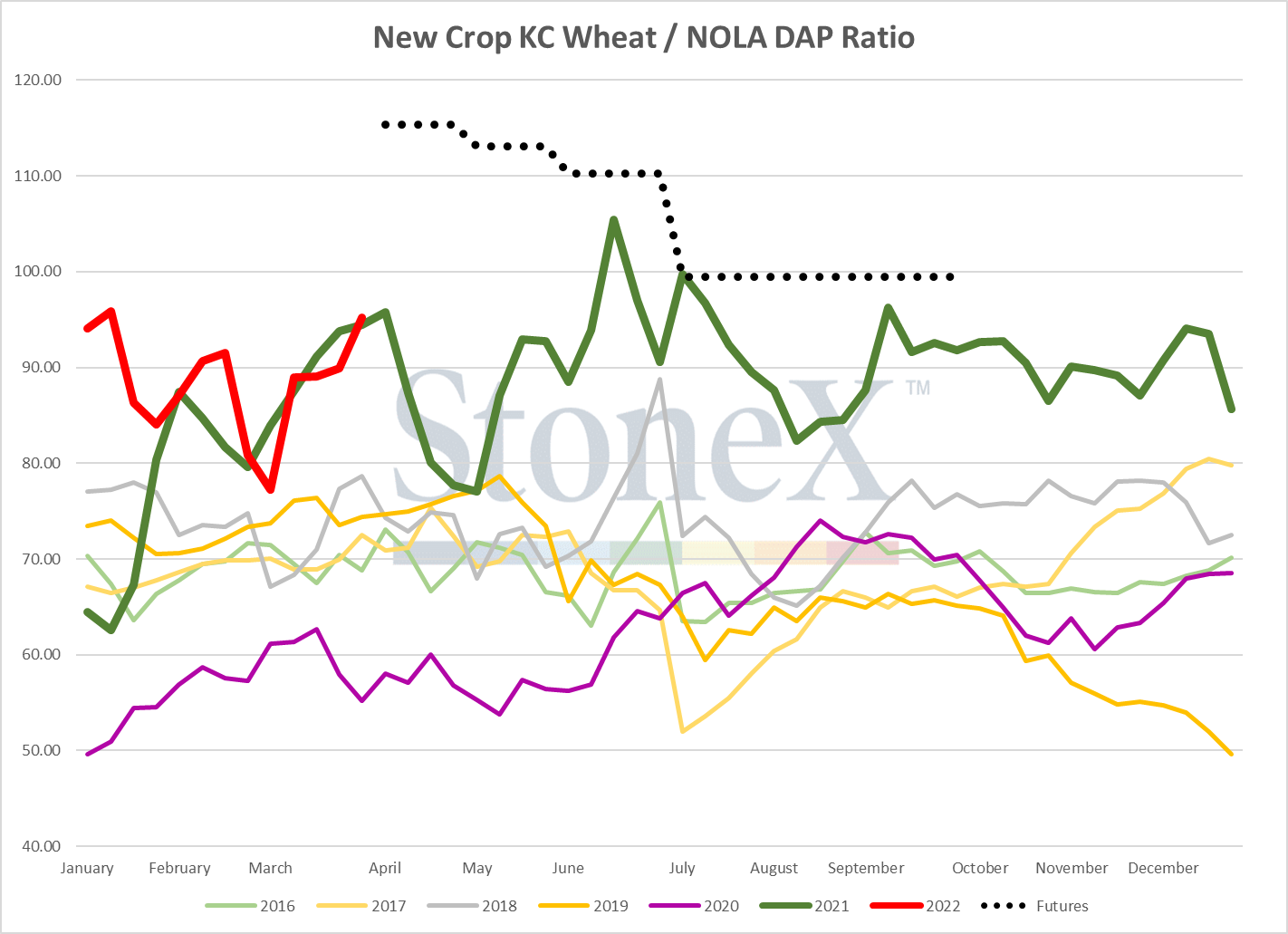
Well, we bridged the gap with global phosphate values...and in a hurry!
As mentioned above, we have moved into that period of winter that always sneaks up on us when it is too late to call upon more imports. When you work thru the 30 days of vessel sail time, 2 - 4 weeks of river transit, transferring product to barge/terminal/rail, then truck or rail transit, by the time added product arrive it would be mid-May.
That means the market knows what we have is all we have. Supplies should remain largely unchanged.
On the flip side, grain values continue to rally. That means the market believes demand will grow as farmers who were on the edge of profitability move firmly into the profitable camp and look to maximize yields.
Equal supplies + growing demand = higher prices
Russia invades the Ukraine
The nightmare scenario has been unleashed. Russia is no longer toying around with the idea of entering Ukraine territory. As I write this, Russian military equipment and troops are closing in on Kiev.
While I do not want anyone thinking that I am not thinking about the human impact (it bothers me), this is a fertilizer newsletter so we need to look at it from a fertilizer POV.
How the world reacts/retaliates will be extremely important. If the world reacts from a tepid approach that does not shut Russia out from the world, not much will change. Russian product will continue to flow throughout the world and from a strict S&D POV, nothing changes.
However, if the sanctions are heavy handed or the world decides to take a physical approach, Russian exports will cease and the global S&D will tighten. During 2020, Russia exported approximately 3.5MMT of DAP/MAP which accounted for around 11% of the global export total. That in itself would not be a huge impact but when we couple it with China continuing their export ban, the world can feel much tighter much quicker.
U.S. phosphate demand continues to fight against Mosaic's CVD against Morocco
We have seen many organizations across the U.S. stepping up their fight against Mosaic's counter vailing duty case against Moroccan produced phosphate imports. We have seen retail organizations, farm organizations, corn organizations, etc. start being much more vocal about the case. Enough has been made of it that a few politicians in D.C. have started to take notice and make statements about it...not surprising during a mid-term year....
At this time, it is unsure what the effect could be. These cases are supposed to be determined by the facts with no political influence. For that, it doesn't not look likely that the case will be overturned.
However, a case could be made that food is a national security risk and without adequate phosphate supplies, there might not be enough food. For that, we have heard that some groups are asking for a 6 month stay of the duty. Even if this happens, I'm not sure we should get too excited.
Put yourself in the shoes of Moroccan producers. Mosaic and the ITC/DOC have shut you out. Now, with global prices sky high, demand huge and supplies tight, the U.S. is saying we are willing to take your product...for now. However, in 6 months time, the duty may be reenacted.
If I am Morocco, I wouldn't come here. If it looks like the duty will be put back into place, what is the point? I have plenty of demand around the world at just as good netbacks. I would be better off continuing to strengthen and grow those relationships since I do not expect them to be cut off after 6 months.
There is a lot of hope that we will see a short term reversal and if it happens, we very well may see prices down. However, I wouldn't get my hopes up that we see prices down to 2020 levels. The U.S. is already some of the cheaper phosphate in the world. Producers have options on where to ship product and there is no need to ship it to a place like the U.S. that has...issues.