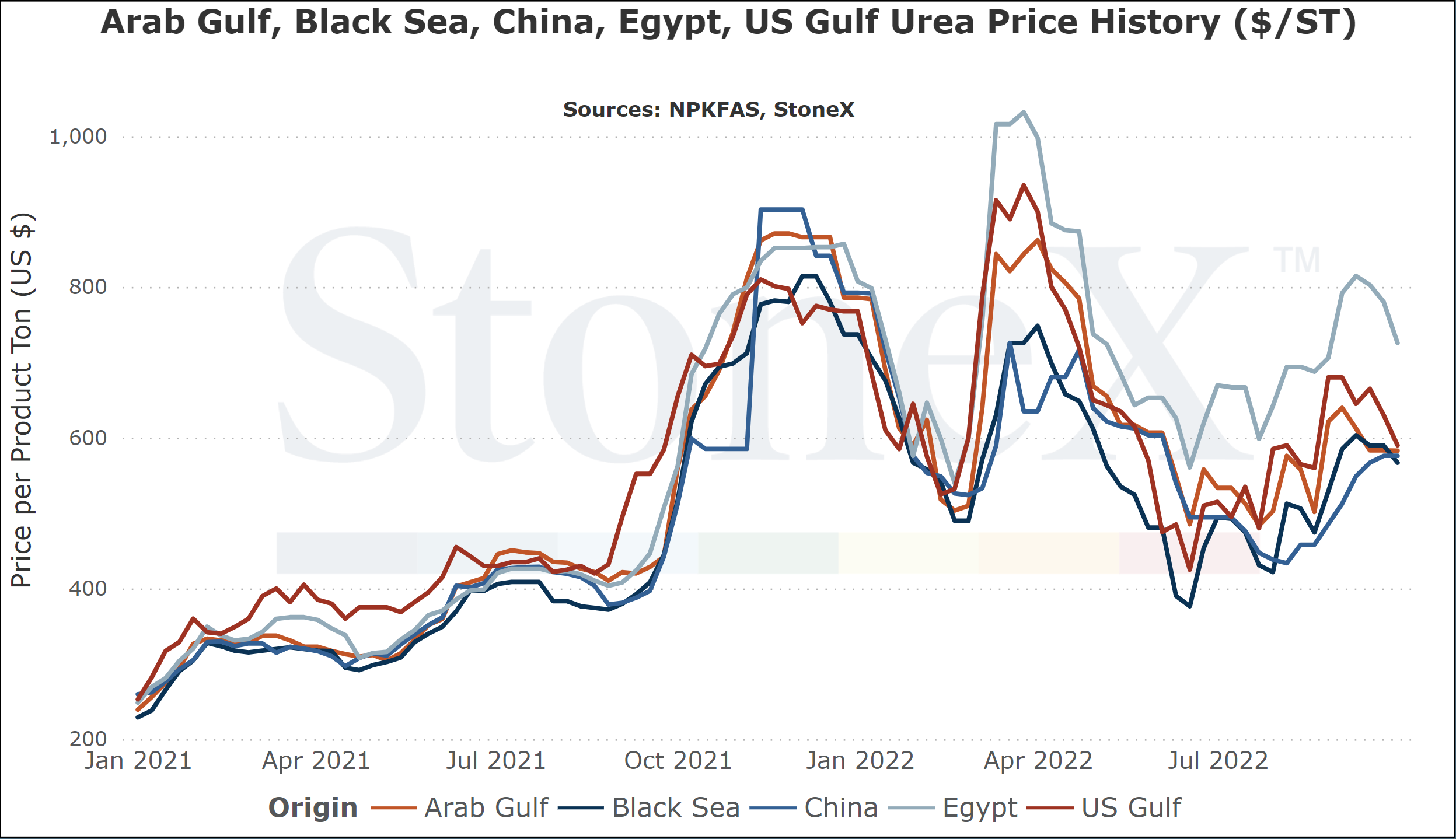
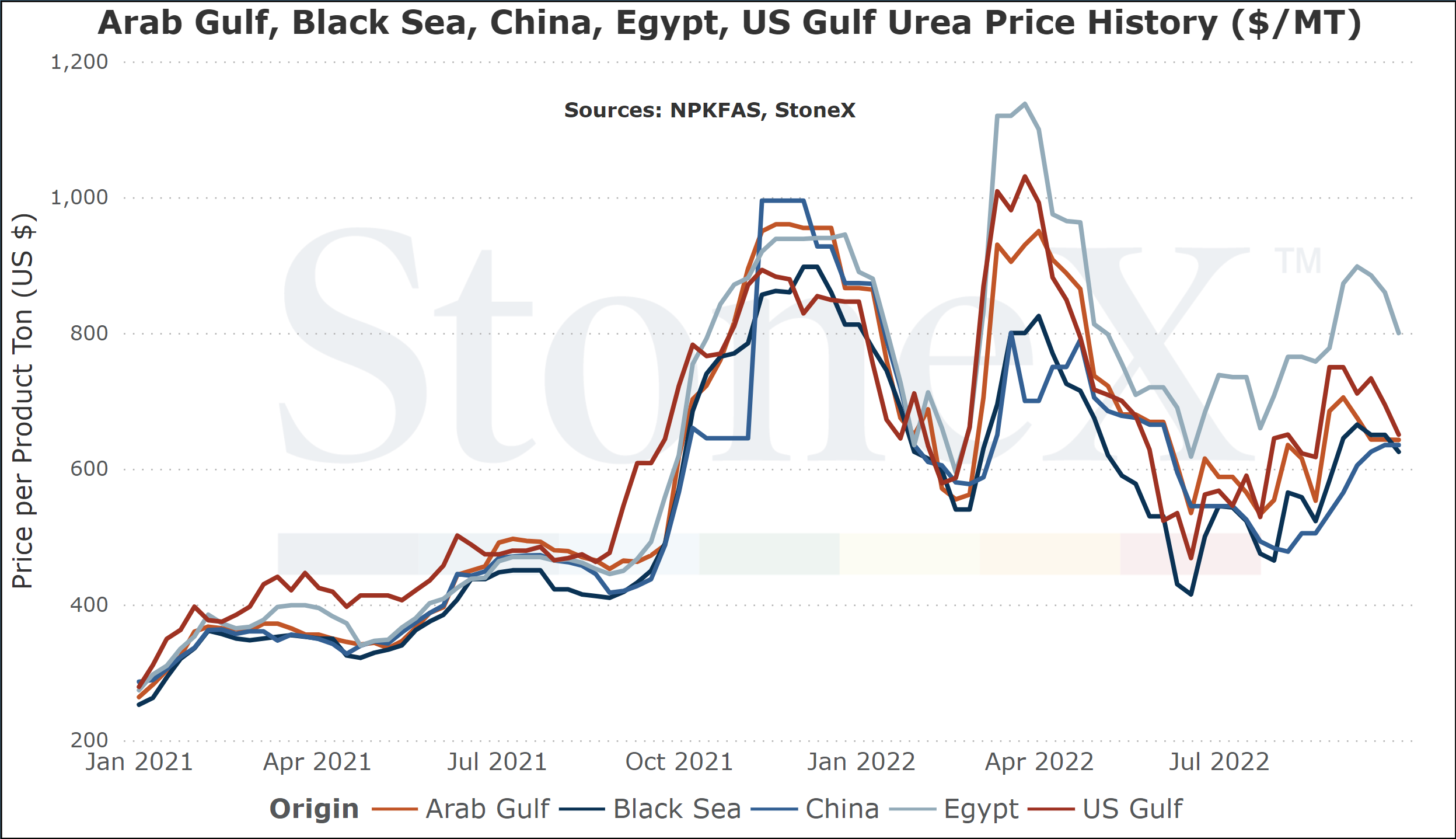
major global urea export location price graphs
The intention of the below graphs are not to use to say "my price should be X based on this graph". These prices are indicated from an FOB price point average. The intent is to show major global price movement trends. I have opted to include US Gulf/NOLA in these graphs due sometimes on/sometimes off again export capability. Also to show N.A. values in relation to the rest of the world.
The first graph shows these prices reflected in metric ton. The second graph in short ton. Both are listed using USD as the currency.
What everyone wants to know first, what do we think will happen going forward
Urea is well priced (i.e. cheap) when compared again UAN and NH3 (neither looks to give up their price short term). European production remains offline and they are 5% of global urea production. 2023 global N demand continues to look solid. Getting real hard to look at current prices and think they are dropping.
Could they drop, of course they could. 30 days ago, I had said I expected values to push higher. Look below at the 30 day price difference. Market certainly proved me wrong!!
There are still events which could pull the rug from this market...but it would have to be one hell of a pull. It will take something like China exports returning to full volumes (unlikely). European production fully restarting (unlikely). Grain prices completely falling apart (unlikely).
The last 2 years have taught us to never say never...but its getting hard to keep that from our vocabulary.
Should you buy your spring '23 urea needs today
I would start leaning more heavily into it
I would NOT be ok if you read that statement, went out, bought all of your yearly urea needs and then did nothing on grains. That still scares the crap out of me. If you are going to lock up your urea needs, consider selling a piece of grain to offset the purchase as a hedge.
However, with all the global demand coming, worth taking a real hard look at your needs for next year. Getting harder and harder to see a path where prices tumble.
What has happened in the last 30 days?
Europe remains offline
Another month, another focal point on the European theater. Not sure why I continue to call it "theater". May have watched too many WW2 movies. I like the sound of it. Leave me alone!!!!
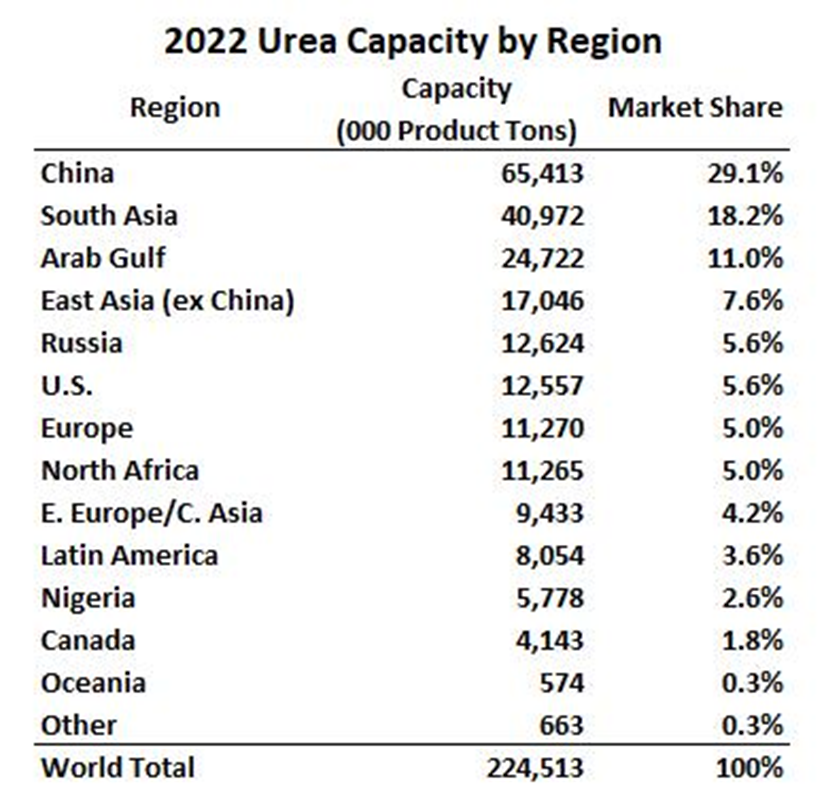
Our main focus remains on Europe for the urea marketplace. As the numbers below show, Europe (west and central) accounts for approximately 5% of global production or roughly 11M tons per year. Many put current European production rates at 30% of normal. That is an enormous shortfall of supply.
The bigger problem is that this is a double sided sword. If production is at 30% of normal, that means there is around 8M tons not being produced. That is a loss of supply. Only, it isn't just lost on supply. Those farmers still need to farm which means they are going to look to replace those tons. They need to find 8M tons of product to replace production lost. It isn't always that cut and dry, but hopefully you get the point.
While the outlook is dire, there is still a glimmer of hope. Natural gas prices have plummeted from their high's. This is raising the chance that production turns on. It isn't a huge chance but the past 2 years have taught us to never say never. If the restart announcements were to begin, it would be a game changer for the world.
We do not know how this will play out but we do know the ramifications will be huge however it ends. That is why we watch.
Nordstream pipeline is sabotaged
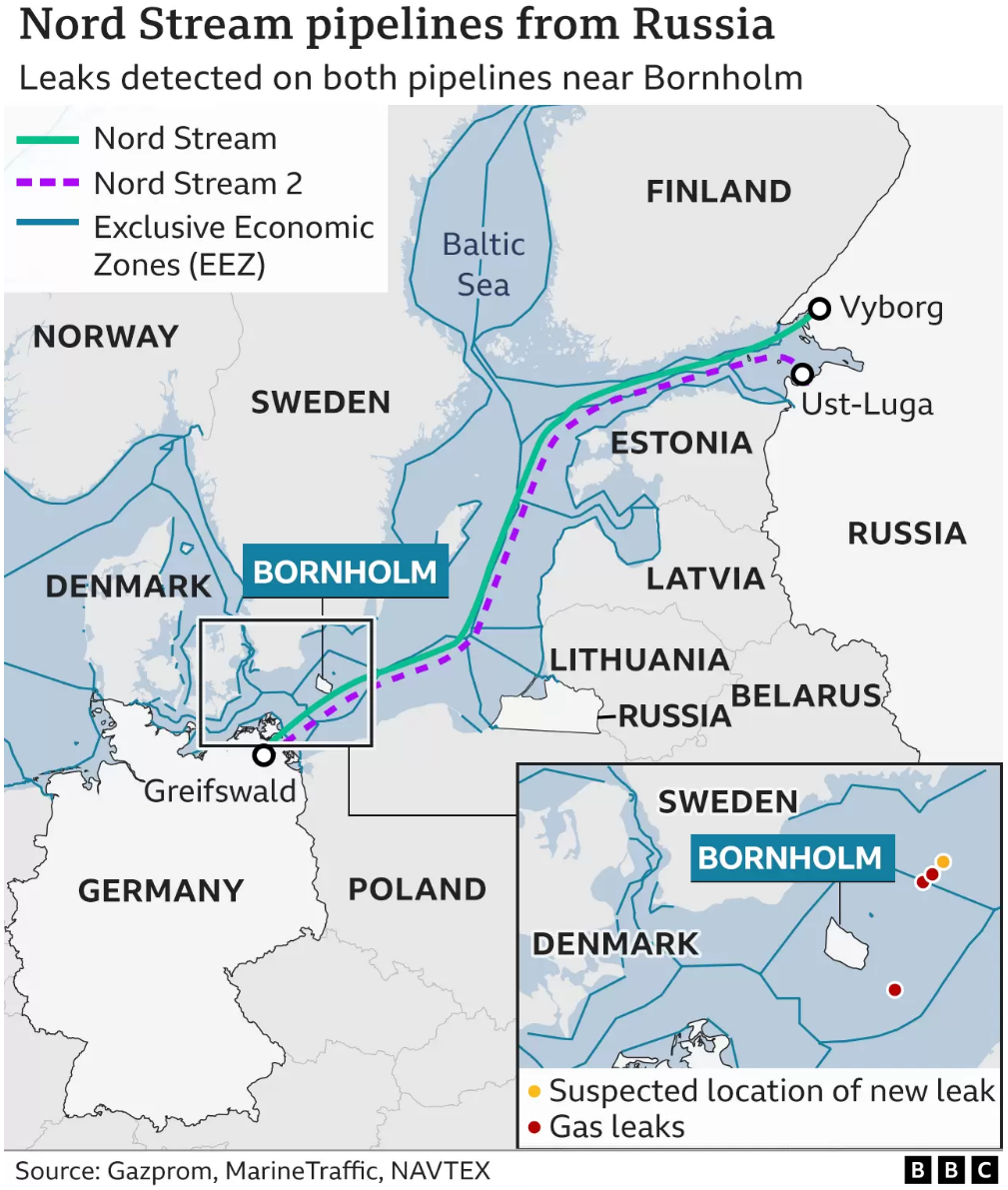
Last week, it was announced that the Nordstream pipeline, which normally moves natural gas from Russia to Europe, had sprung a leak. President Putin, as a retaliatory measure, had stopped the flow in order to pressure Europe from helping Ukraine. The leak mostly consisted of product that remained in the pipe.
However, the story quickly morphed to multiple leaks over a large area. It quickly moved from accident to sabotage, and fingers quickly pointed to Putin. Russia has been losing major ground in its invasion and speculation was that Putin was adopting a scorched earth approach. If Europe wasn't going to remove its support of Ukraine and embarrass him on a global scale, then Europe will go without natural gas as it moves into the winter months. Whether this story is correct or not remains to be seen. It is certainly one that seems to add up to me.
Regardless of who or what, the damage is done. Repairs are incredibly difficult as the pipeline runs hundreds of feet under water. Some reports are that repairs could take upwards of 6 months.
This has dashed some hopes that European nitrogen production would resume. While natural gas values have been falling, the common belief is without Russian flows, any restart would result in a demand spike which would cause prices to quickly rally...and production stop once again.
It seems like this is the story that will not keep giving...even though we do not want anymore from it.
NOLA Urea is cheap vs alternatives
Cheap isn't exactly the term that a lot of buyers want to see, but when compared to UAN and NH3, it is just that.
Current NOLA urea - $625 or approximately $0.68/lb of actual N
Current NOLA UAN - $545 or approximately $0.85/lb of actual N
Current Midwest NH3 - $1,275 or approximately $0.778/lb of actual N
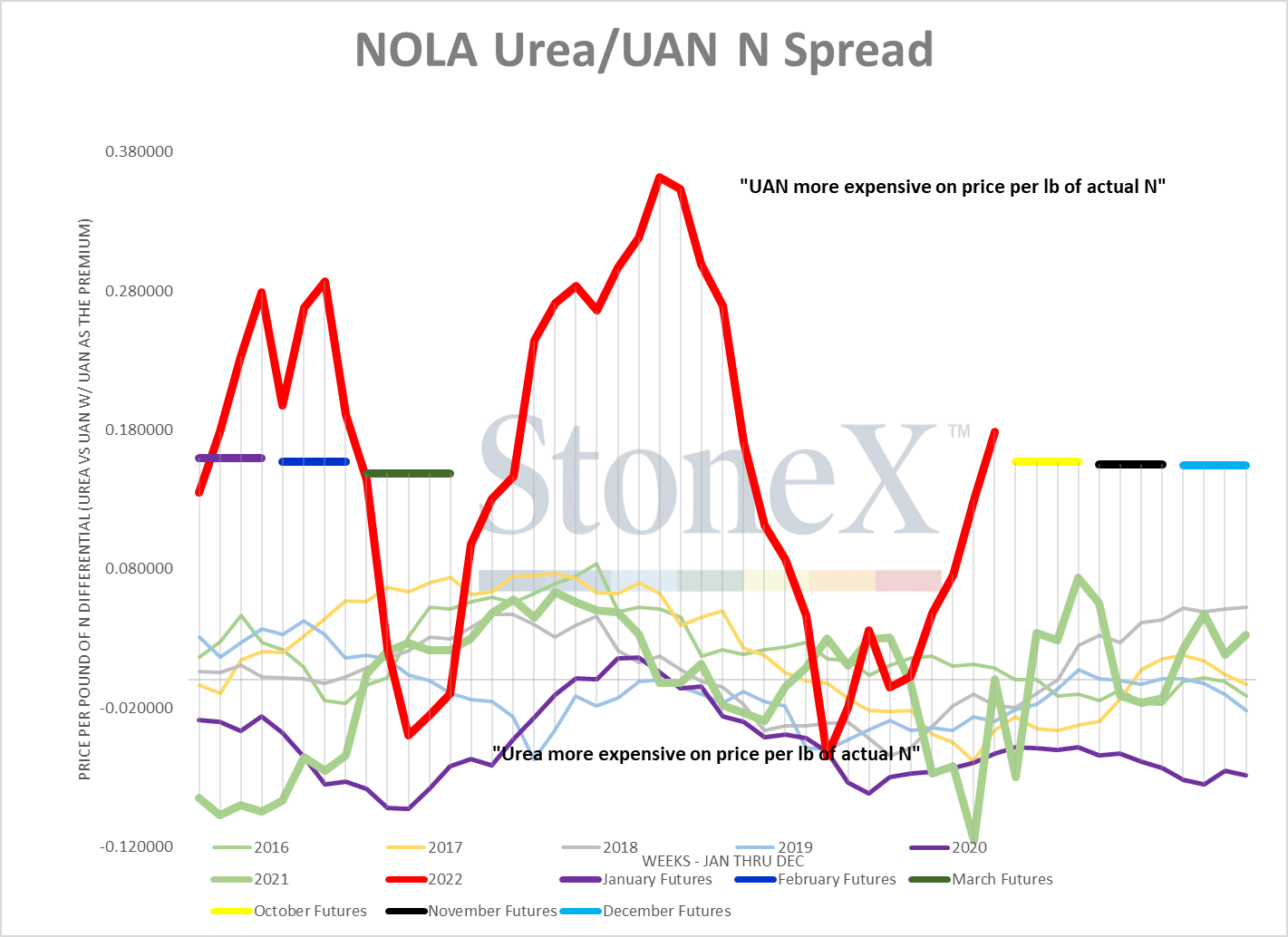
Looking at the current NOLA urea vs UAN differential puts UAN at a 17 cent premium. As the historical chart shows below, that is on the upper end of recent years. Maybe not as bad as some of the spikes in the last year, but certainly higher than normal.
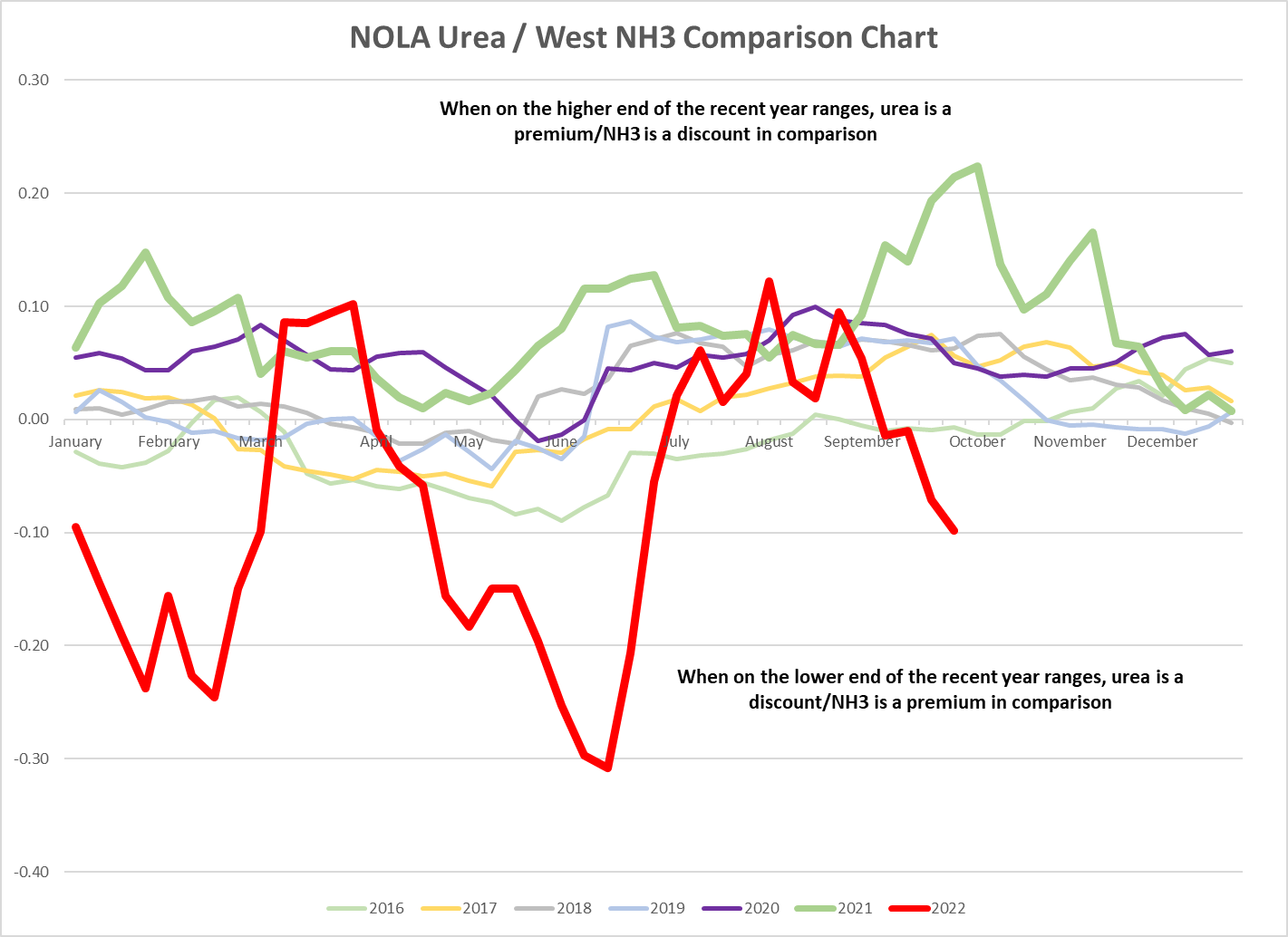
Even more surprising is the spread between NOLA urea and Midwest NH3. Today, we put that value at around 10 cents with NH3 the premium. While these 2 points are much different, a pattern emerges when you look over the last few years. There have been periods when the spread was wider to the downside, but not by much and not very often.
These are things we will need to continue to monitor going forward as they have a tremendous impact on demand.
Chinese exports surprised in August, but still well below normal
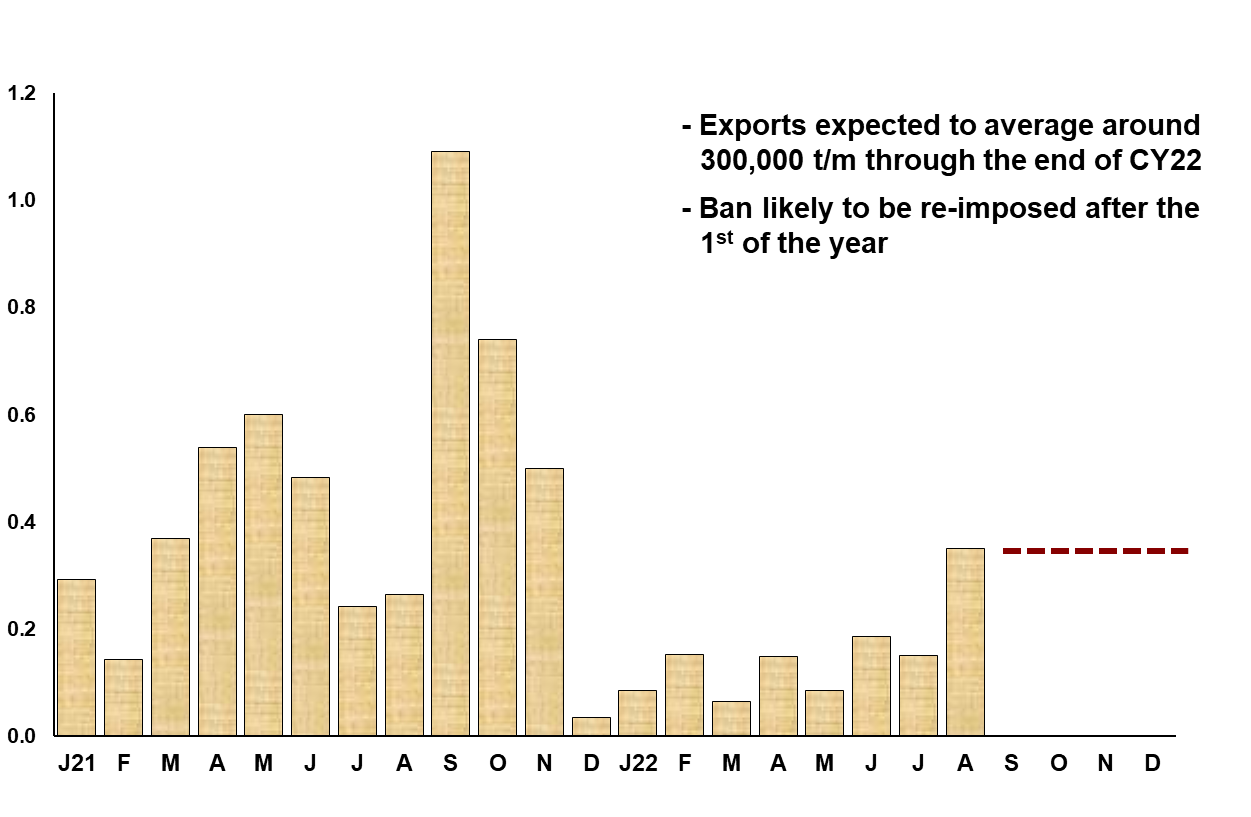
August came with a surprise in the form of Chinese news. The Chinese government, since last fall, have drastically restricted the export of urea. The government has quietly been dealing with an energy problem. It has also watched global supplies of urea become very tight and values very high. As a result, the government stepped in an banned exports which, when looking at the graph below, began in December!
While the volume is still low, we were surprised at the jump in August. Part likely has to do with neighboring countries still getting flows (China has to keep relations in the region). However, part has been tied to some exporting illegally. There have been reports that some of these exporters are being...reigned in we will say.
We will not be surprised to see similar volumes over the next few months but fully anticipate another blockade to be placed to start the new calendar year. This will keep global supplies tight once again.
Egypt becoming a major European supplier in its production absence
With European production down, they have become a much bigger buyer than normal and it appears that Egyptian producers are more than happy to fill that void.
Proximity/location has been key in this relationship. Many Europe locations can only take smaller sized vessels of product. 30,000 - 40,000 ton ships are simply too big for many ports. These smaller ships have one major issue: cost. It is very hard to move a small vessel long distances without rates getting out of hand. This is why Egypt has become so key. They have the ability to load smaller vessels and not break the logistics bank.
This relationship has become key to why Egypt values are such a premium to the rest of the world. It isn't that their product is any better than anyone else. It is simply due to their being closer than most other major world producers.
If you are a farmer in Europe and are looking for price guidance, keep an eye on the world but keep a closer eye on Egyptian values.