U.S. President Trump warned that the United States would respond very substantially if Canada proceeds with a trade agreement with China. He said the U.S. does not want China to “take over” Canada, arguing that the type of deal under discussion could lead to excessive Chinese influence. The comments highlight growing U.S. concern over China’s economic presence in North America and signal potential retaliation if Canada deepens trade ties with Beijing.
The U.S. cattle herd fell to 86.2 million head as of January 1, the smallest inventory since 1951, underscoring how prolonged drought, high costs, labor constraints, and capital discipline have driven years of liquidation at the cow-calf level, with beef cow numbers especially tight and meaningful rebuilding unlikely before 2027–28 even if heifer retention improves. While some of this supply tightness is being masked in the short term by longer days on feed and near-record carcass weights—supported by better genetics, nutrition, and a relatively mild winter—those factors only smooth near-term production and cannot offset a shrinking herd indefinitely. Biological limits eventually cap weights, and pushing cattle heavier today effectively pulls future supply forward. As a result, beef supplies remain structurally tight, supporting live and feeder cattle prices, keeping calf and replacement female values elevated, increasing sensitivity to demand shocks, and contributing to ongoing packer margin volatility.
China’s January PMI data highlight a clear divergence between official and private-sector readings. The official Manufacturing PMI fell to 49.3, below expectations and back into contraction, while the Non-Manufacturing PMI dropped to 49.4 and the Composite PMI declined to 49.8, indicating broad-based weakness across industry and services following year-end momentum. In contrast, the RatingDog Manufacturing PMI rose to 50.3, slightly above expectations and the prior month, signaling marginal expansion among private, smaller, and more export-oriented manufacturers. Taken together, the data suggest that while headline economic activity remains under pressure, particularly in state-heavy and domestic-facing sectors, there are tentative signs of stabilization at the margin within parts of the private manufacturing economy.
An EU industry association said China has proposed final anti-subsidy duties on EU dairy products at significantly lower levels than initially indicated. The final tariffs would rise to a maximum of 11.7%, sharply reduced from provisional duties that reached as high as 42.7%. The move suggests some de-escalation in trade tensions and a willingness by China to moderate its stance compared with earlier, more punitive proposals.
Eight OPEC+ members agreed on Sunday to maintain the pause in planned oil output increases for March, extending supply restraint amid ongoing uncertainty around global demand and price volatility. The decision reflects a continued preference for market stability over near-term volume gains as producers assess macroeconomic conditions, geopolitical risks, and recent swings in energy prices.
CME Group raised margin requirements for gold and silver futures on Friday following a historic selloff in precious metals. Comex gold futures margins will increase to 8% from 6% of the contract value for non-heightened risk accounts and to 8.8% from 6.6% for heightened risk profiles. Silver margins saw an even sharper move, rising to 15% from 11% for non-heightened risk profiles and to 16.5% from 12.1% for heightened risk accounts. The changes reflect CME’s response to elevated volatility and are likely to further curb speculative positioning in the near term by increasing capital requirements for traders.
U.S. officials have indicated that a meeting between the United States and Iran could take place in Turkey this week, with Ankara potentially serving as the host and mediator for talks aimed at de-escalating tensions and exploring a diplomatic path forward, particularly around Iran’s nuclear program. The reports come amid broader regional diplomatic efforts involving countries such as Turkey, Qatar, and Egypt, even as both sides maintain significant distrust and have backed up their rhetoric with military deployments and strategic warnings.
China’s president Xi Jinping has called for the renminbi to achieve global reserve currency status, highlighting Beijing’s ambition to expand the yuan’s role in international trade, investment, and financial markets while reducing reliance on the U.S. dollar. However, this aspiration runs headlong into structural constraints. China continues to self-classify as an “emerging market” at the WTO, and more importantly, its financial system lacks key reserve-currency prerequisites: full capital account openness, deep and freely accessible bond markets, strong rule of law, and consistent policy transparency. Until confidence improves around capital controls, institutional independence, and governance predictability, the renminbi’s use will remain largely transactional rather than a true store of global reserves. In that sense, China has a long road ahead before its currency can credibly function as a global reserve asset.
India’s latest annual budget signals a balancing act between growth and discipline. The government raised its infrastructure capital spending target by about 9% to INR 12.2 trillion, while also pushing to strengthen domestic manufacturing in strategic areas such as rare earths and semiconductors and offering a tax holiday through 2047 for foreign cloud companies investing in data centers. At the same time, the budget strongly emphasizes fiscal restraint, with a goal of reducing the debt-to-GDP ratio to around 50% from 56% by 2030/31 and trimming the fiscal deficit to 4.3% of GDP. To help support revenues and curb speculation, authorities also proposed an increase in the Securities Transaction Tax on futures and options trading. Overall, the budget aims to support long-term industrial and infrastructure growth without abandoning a clear path toward fiscal consolidation.
South Korea’s industry minister Kim said the government will accelerate the implementation of investment-related legislation after returning from talks with the United States, noting that the discussions helped clear up misunderstandings around tariffs. The comments suggest improved clarity in U.S.–South Korea trade relations and point to a push to move more quickly on investment measures now that policy uncertainty has eased.
Fed officials continued to emphasize patience on monetary policy. Musalem said further interest rate cuts are not advisable, arguing that policy is now neutral and the economy does not need additional stimulus, with risks broadly balanced and rate cuts only appropriate if the labor market weakens or inflation falls further. Separately, Bowman said she supports a pause as inflation remains elevated, noting that downside risks to the labor market have not diminished and policy is still modestly restrictive. She added the Fed should avoid signaling that the current stance will be held for an extended period and reiterated that she projected three rate cuts in 2026 in the December SEP.
U.S. President Trump said his Fed Chair nominee Kevin Warsh may receive support from Democrats and expressed hope that Warsh will lower interest rates. Trump added that Warsh did not commit to cutting rates but said he would likely discuss rate cuts with him, while also stating that Warsh would make any decision to cut rates independently and without White House pressure.
Disney and Tyson report earning today.
Japanese PM Sanae Takaichi said in a speech on Saturday that the yen’s recent depreciation has supported exporters and increased returns from the government’s foreign exchange fund, but she did not address concerns about the impact on consumer prices. On Sunday, she attempted to clarify that her comments were meant to stress the importance of building an economic structure that can withstand currency fluctuations, rather than to promote the advantages of a weaker yen.
Bitcoin briefly dipped to just under $75,000 before stabilizing and establishing a near-term floor.
| Outside Markets | Price | Change | % Change | | |
| Dow | 48,889 | (119.00) | -0.24 | | |
| Crude | 62.03 | (3.18) | -4.88 | | |
| US Dollar | 96.9350 | 0.076 | 0.08 | | |
| Gold | 4,723.59 | (170.640) | -3.49 | | |
| US 2/10 Swap | 69.7280 | (1.1690) | - | | |
| VIX | 19.08 | 1.64 | - | | |
| | | | | | |
| CBOT Ags Volume & Open Interest | | | | |
| | Previous Volume | Change in OI | Options Volume | Change in Options OI | |
| Corn | 397,019 | (3,824) | 35,216 | 6,729 | |
| SRW | 168,456 | (8,280) | 15,506 | 3,284 | |
| HRW | 84,713 | (1,333) | - | 2,116 | |
| Soybeans | 286,239 | 1,392 | 53,225 | 15,800 | |
| Meal | 149,164 | 1,535 | 14,943 | 3,732 | |
| Oil | 160,018 | 3,381 | 24,580 | 1,022 | |
| Feeders | 28,405 | 391 | 4,439 | (41,115) | |
| Live Cattle | 86,980 | (243) | 39,113 | 4,414 | |
| Hogs | 58,142 | 2,647 | 18,549 | 2,794 | |
| | | | | | |
Overnight options activity
Corn
S 300 h 420 straddles 12 3/8 vs 426 1/2
B 500 h4 20 p 3 ¼ to 3 3/8
Beans
S 200 n 1080 c 40
S 200 h 1050 c 19
S 200 k 1080 c 28
B 200 h 1040 p 5 ½ to 5 7/8
S 750 k 1070/1050 ps 9 to 8 5/8
B 750 k 1050/1070 cs 10 7/8 to 11 1/4
B 100 k 1100 c 16 1/8
B 300 k 1080/1060 ps 10 1/2
S 300 k 1060/1080 cs 9 3/8
Bean oil
S 500 h 57/60 cs .150 to .145 vs 5300
S 100 j 57/60 cs .540
B 250 h 52 p .850
Kc wheat
B 150 h 520 p 5 1/4
Open interest changes
Corn
March 430 call buy was new....march 420 put sale was closing.
Beans
March 1040 put sale, march 1050 put buy and march 1060 put buys were new
Soymeal
March 300 call sale was closing
Bean oil
March 56 call sale was closing
Wheat
April 500 put buy was new
Lean hogs
Oct 88 call buy was closing
Live cattle
April 225 put sale and feb 240 call buys were closing
Cvol
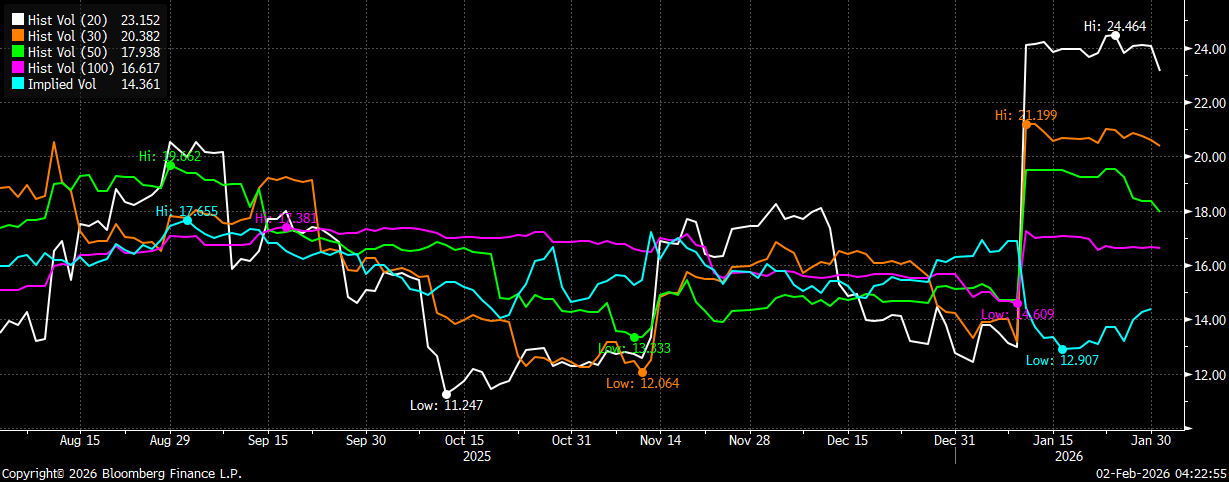
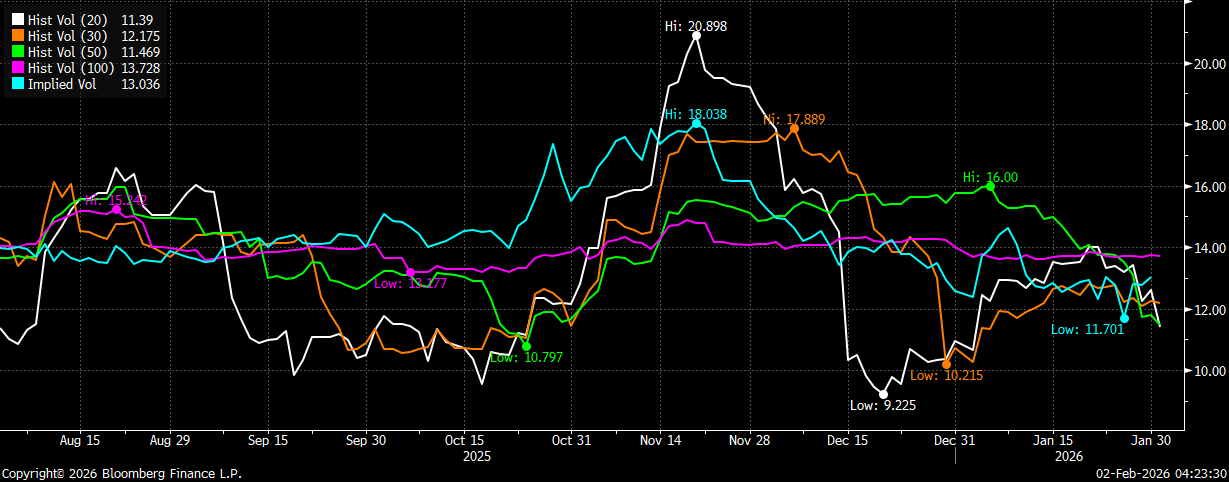
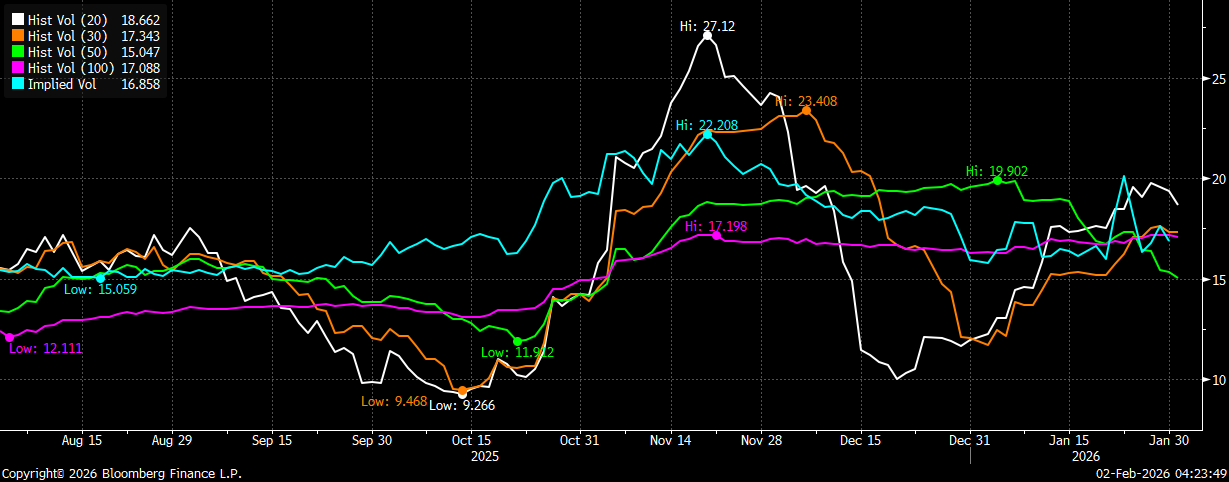
Ags 17.93% up .67%
Corn 15.53% up .07%
Beans 13.67% up .08%
Soymeal 19.33% down 1.09%
Bean oil 26.90% down .07%
Wheat 24.68% down .03%
Feeder cattle 19.25% up 2.02%
Live cattle 17.12% up 1.71%
Lean hogs 20.45% up .21%
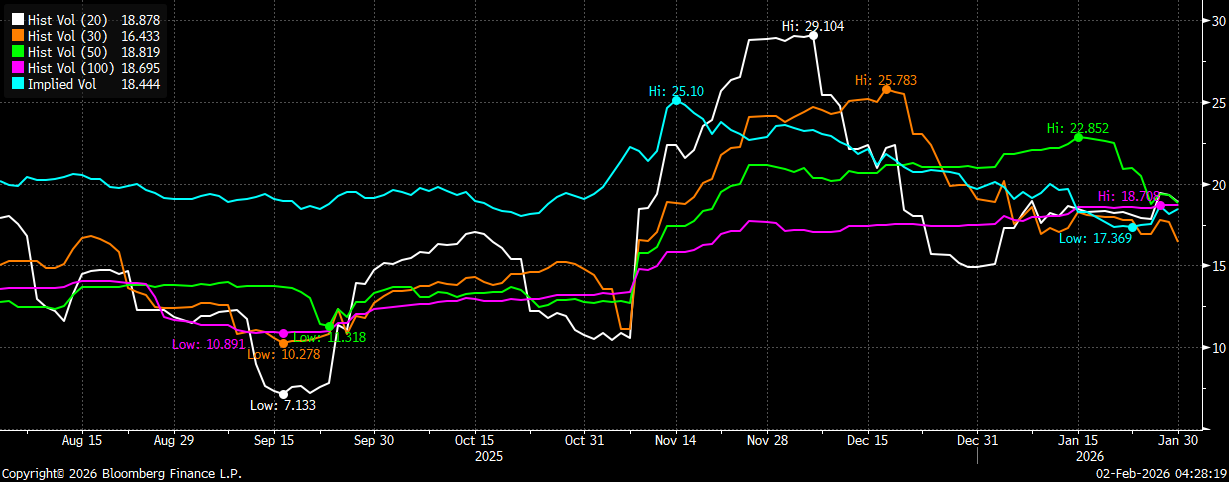
Class 3 milk 22.96% up 3.09% (6 month high)
corn
beans
soymeal
bean oil
wheat
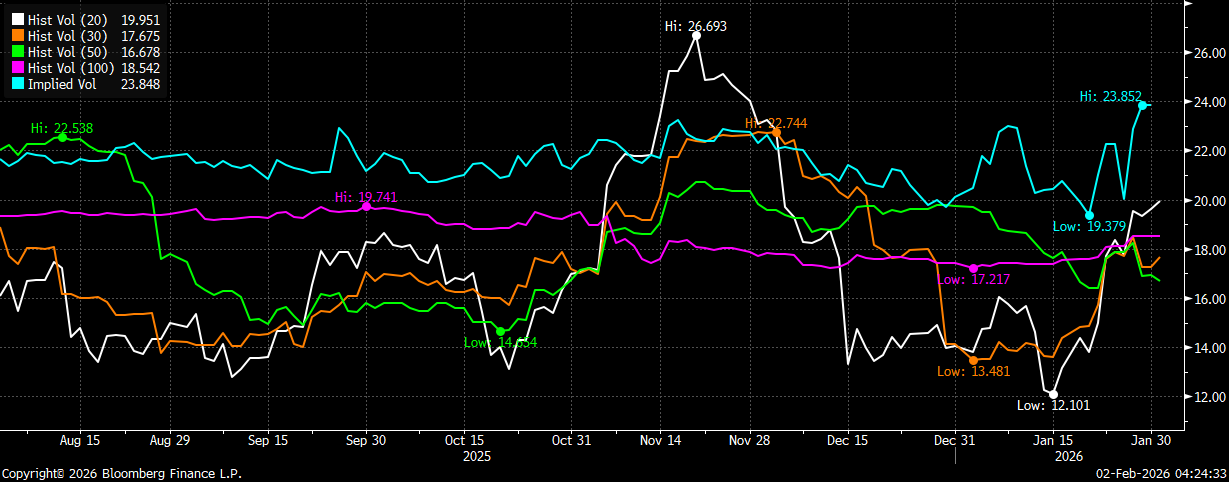
kc wheat
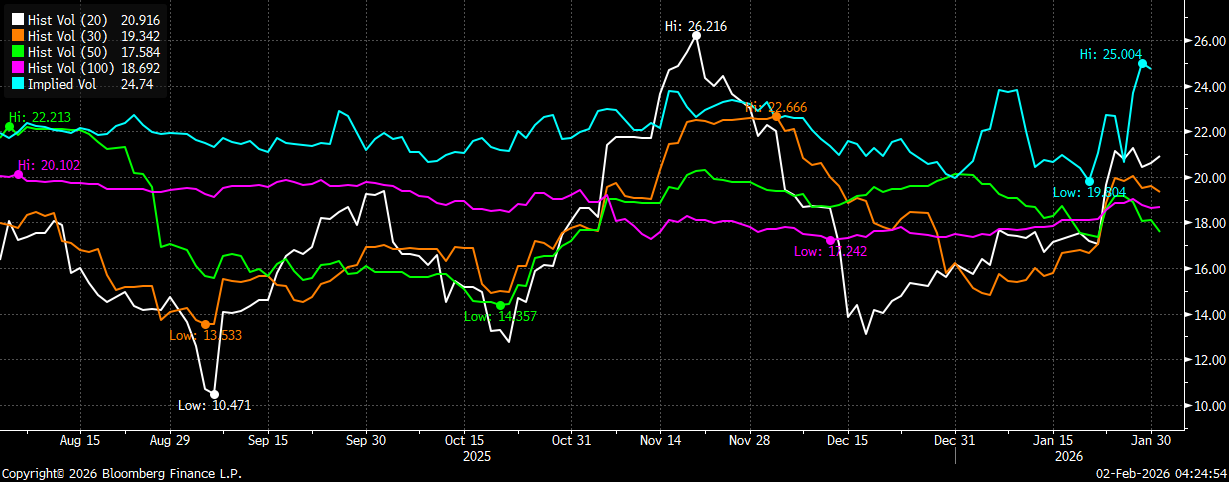
miax wheat
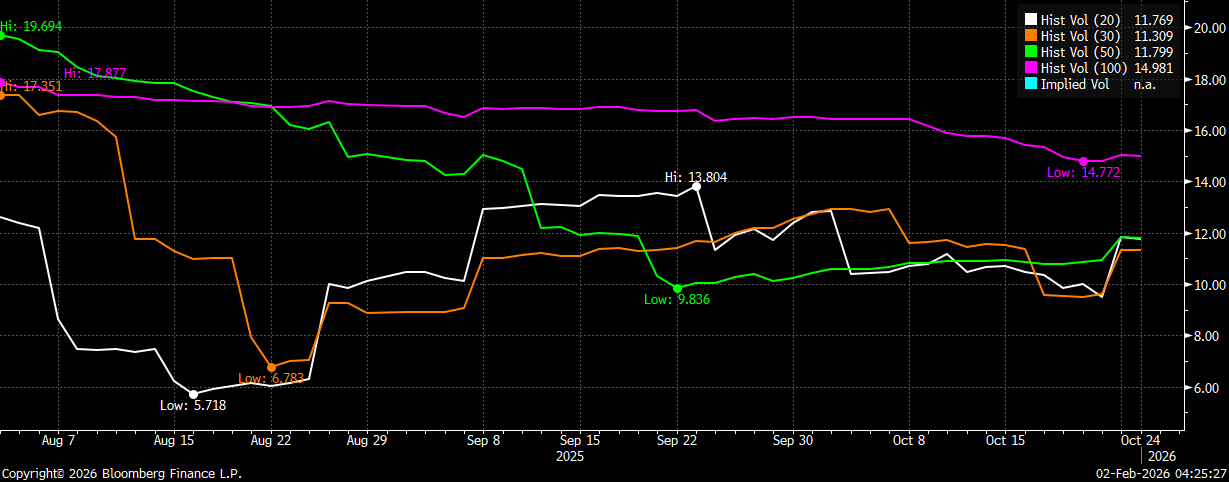
oats
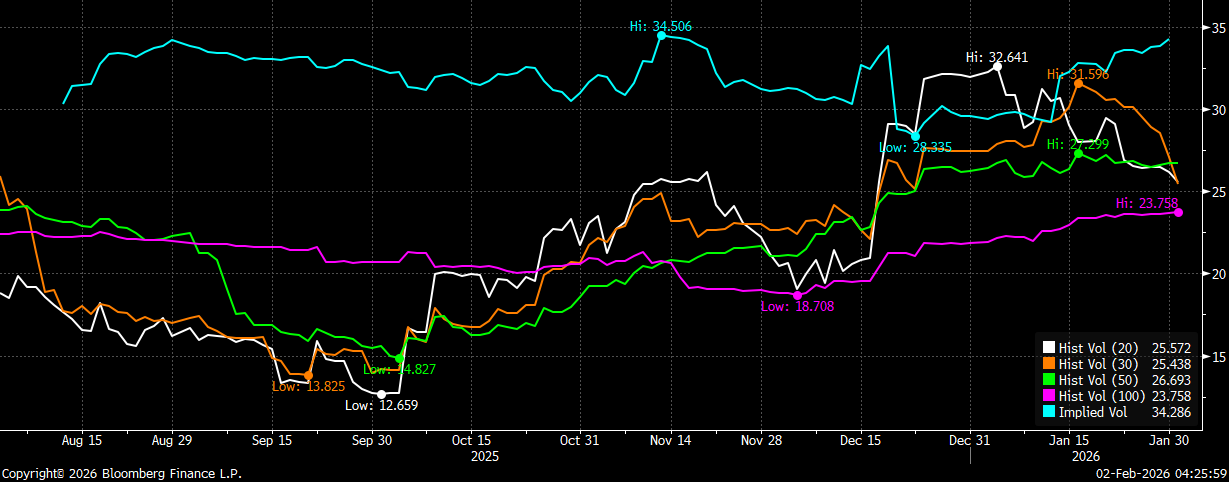
rough rice
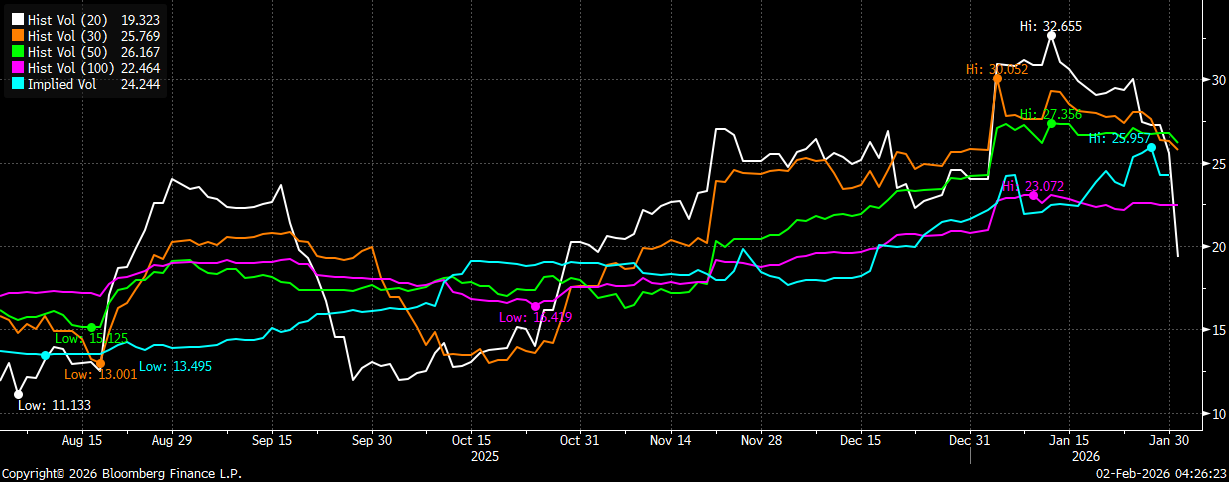
crush
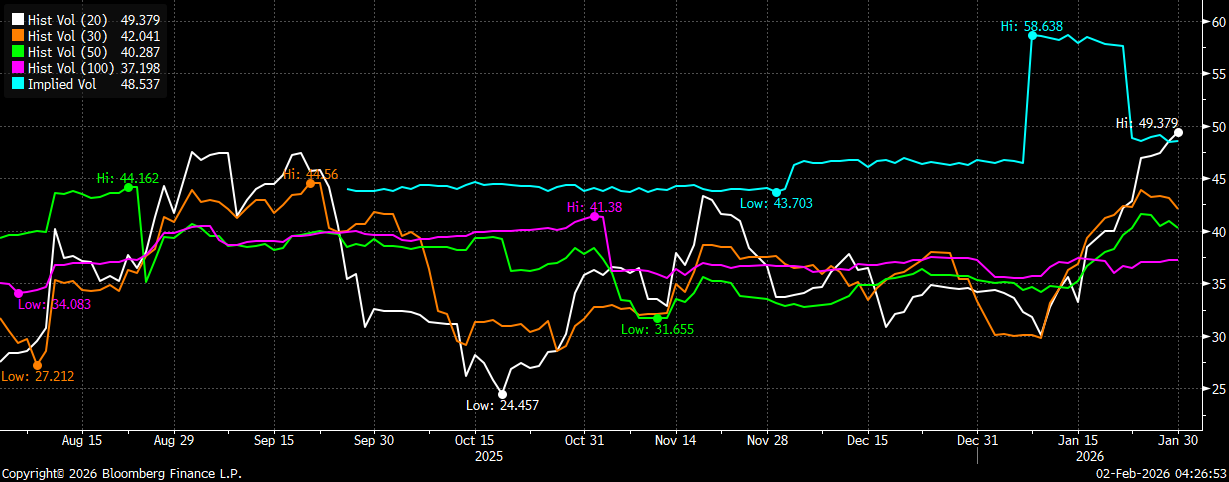
feeder cattle
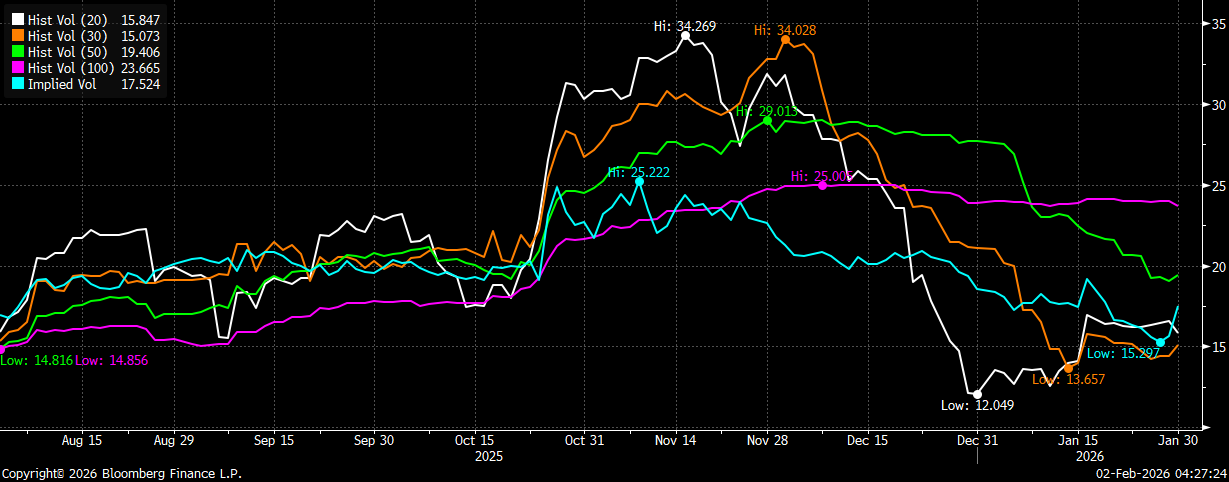
live cattle
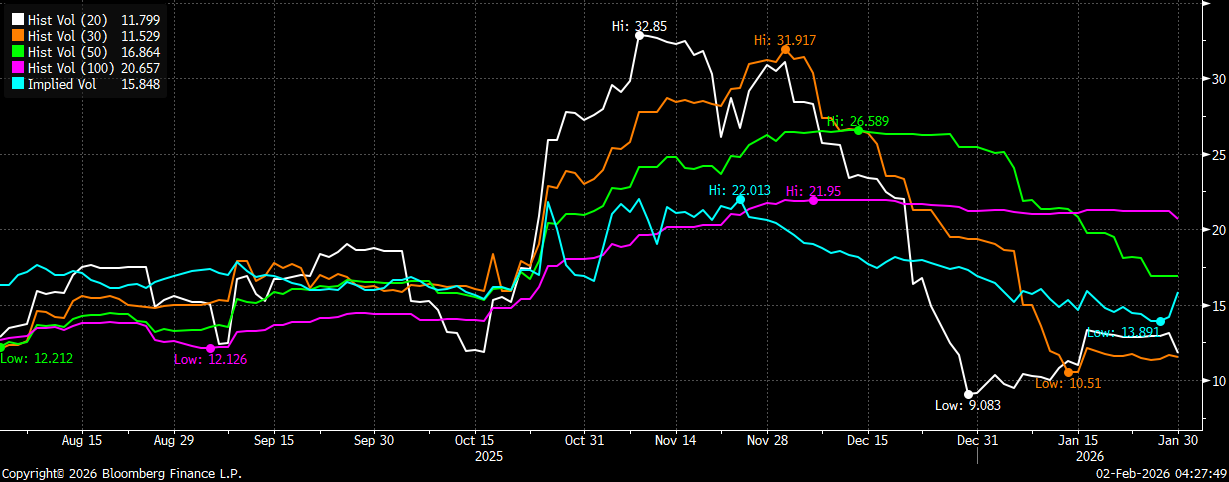
lean hogs
sources:
news bloomberg
options data globex
charts bloomberg
This material should be construed as the solicitation of an account, order, and/or services and represents the opinions and viewpoints of the individual authors or presenters. It does not constitute an individualized recommendation or take into account the particular trading objectives, financial situations, or needs of individual customers.
The views are current only through the date stated and are subject to change at any time based upon market or other conditions, and StoneX Group Inc. (“SGI”) disclaims any responsibility to update such views. Actual results, performance, or achievements may differ materially from those expressed or implied. Information is based on data gathered from what we believe are reliable sources. Past performance does not guarantee future results.
The StoneX Group Inc. group of companies provides financial services worldwide through its subsidiaries, including physical commodities, securities, exchange-traded and over-the-counter derivatives, risk management, global payments and foreign exchange products in accordance with applicable law in the jurisdictions where services are provided.
References to certain OTC products or swaps are made on behalf of StoneX Markets, LLC (SXM), a member of the National Futures Association (NFA) and provisionally registered with the U.S. Commodity Futures Trading Commission (CFTC) as a swap dealer. SXM’s products are designed only for individuals or firms who qualify under CFTC rules as an ‘Eligible Contract Participant’ and who have been accepted as customers of SXM.
StoneX Financial Inc. (SFI) is a member of FINRA/NFA/SIPC and registered with the MSRB. SFI is registered with the U.S. Securities and Exchange Commission (SEC) as a Broker-Dealer and with the CFTC as a Futures Commission Merchant and Commodity Trading Advisor. StoneX Financial (Canada) Inc. (SFCI) is registered in Canada and is a member of CIRO and CIPF. References to certain securities trading are made on behalf of the BD Division of SFI and are intended only for an audience of institutional clients as defined by FINRA Rule 4512(c). References to certain exchange-traded futures and options are made on behalf of the FCM Division of SFI. Wealth Management is offered through SA Stone Wealth Management Inc., member FINRA/SIPC, and SA Stone Investment Advisors Inc., an SEC-registered investment advisor, both wholly owned subsidiaries of SGI.
R.J. O’Brien & Associates, LLC (RJO) is registered with the CFTC as a Futures Commission Merchant and is a member of NFA.
StoneX Financial Ltd (SFL) is registered in England and Wales, company no. 5616586. SFL is authorized and regulated by the Financial Conduct Authority (FCA) (registration number FRN:446717) to provide services to professional and eligible customers including: arrangement, execution and, where required, clearing derivative transactions in exchange traded futures and options. SFL is also authorized to engage in the arrangement and execution of transactions in certain OTC products, certain securities trading, precious metals trading and payment services to eligible customers. SFL is authorized and regulated by the FCA under the Payment Services Regulations 2017 for the provision of payment services. SFL is a category 1 ring-dealing member of the London Metal Exchange. In addition SFL also engages in other physically delivered commodities business and other general business activities which are unregulated and not required to be authorized by the FCA.
This communication is issued in the European Economic Area by StoneX Financial Europe GmbH (SFEG). StoneX is the trade name used by STONEX GROUP INC. and all its associated entities and subsidiaries. StoneX Financial Europe GmbH (“SFEG”) is a securities trading firm registered in Germany under Company No. HRB 80844.
StoneX Financial Pte Ltd (Co. Reg. No 201130598R) (“SFP”) is regulated by the Monetary Authority of Singapore and is a Capital Markets Service Licence holder (for dealing in capital market products), an Exempt Financial Adviser (for advising on investment products and issuing or promulgating analyses/ reports on investment products) and a Major Payment Institution (for domestic and cross-border money transfer services).
SFP may distribute analysis/report produced by its respective foreign affiliates within the StoneX Group of companies pursuant to an arrangement under Regulation 32C of the Financial Advisers Regulations Recipients should contact SFP at (65) 6309 1000 for any matters arising from, or in connection with, this webinar.
StoneX APAC Pte. Ltd. (“SAP”) (Co. Reg. No 200616676W) is regulated as a Dealer (PS20190001002) under the Precious Stones and Precious Metals (Prevention of Money Laundering and Terrorism Financing) Act 2019 for purposes of anti-money laundering and countering the financing of terrorism.
StoneX Financial (HK) Limited (CE No.: BCQ152) (“SHK”) is regulated by the Hong Kong Securities and Futures Commission for Dealing in Securities and Dealing in Futures Contracts.
StoneX Financial Pty Ltd (ACN 141 774 727) holds an Australian Financial Service License (AFSL: 345646) for Dealing in Securities, Exchange-Traded Derivatives Contracts, OTC Derivatives Contracts and Foreign Exchange Contracts, and is regulated by the Australian Securities and Investments Commission.
StoneX Securities Co., Ltd. (“SSJ”) (Co. Reg. No 010401047199) is regulated by the Japanese Financial Services Agency as a Type-I Financial Instruments Business Operator (Kanto Local Finance Bureau (FIBO)No.291’), is a member of the Financial Futures Association of Japan for dealing and broking FX and FX Option transactions, and is a member of the Japan Securities Dealers Association for dealing and broking stock indices and option transactions.
Trading swaps and over-the-counter derivatives, exchange-traded derivatives and options and securities involves substantial risk and is not suitable for all investors. Past performance of any futures or option is not indicative of future success. Indicators are not a trading system and are not published as a specific trade recommendation. The information herein is not a recommendation to trade nor investment research or an offer to buy or sell any derivative or security. It does not take into account your particular investment objectives, financial situation or needs and does not create a binding obligation on any of the StoneX group of companies to enter into any transaction with you. You are advised to perform an independent investigation of any transaction to determine whether any transaction is suitable for you. No part of this material may be copied, photocopied or duplicated in any form by any means or redistributed without the prior written consent of StoneX Group Inc.
The report/analysis herein is not directed to, or intended for distribution to or use by, any person or entity who is a citizen or resident of or located in any locality, state, country or other jurisdiction where such distribution, publication, availability or use would be contrary to law or regulation.
© 2026 StoneX Group Inc. All Rights Reserved.


