- Data for Brazil may show a fiscal performance worse than estimated, increasing the perception of fiscal risks and inflation moderation, which could allow the Central Bank to maintain the pace of interest rate cuts for the SELIC. Both would harm the attractiveness of Brazilian assets to foreign investors, weakening the BRL.
- The economic agenda being processed in Congress could result in an increase in federal government expenses, worsening the rating of Brazilian public accounts and increasing the perception of fiscal risks of Brazilian assets, weakening the BRL.
- COPOM's interest rate decision should reinforce the perception that the SELIC rate will decrease less and more slowly, which would foster the Brazilian interest rate differential and contribute to building up the BRL.
The week in review
The week was marked by sharp fluctuations in expectations for the American interest rate, first with a strong pessimism after labor cost data in the first quarter was higher than expected, followed by a reversal and increased optimism after a less cautious press conference by Jerome Powell and weaker than anticipated employment data in April.
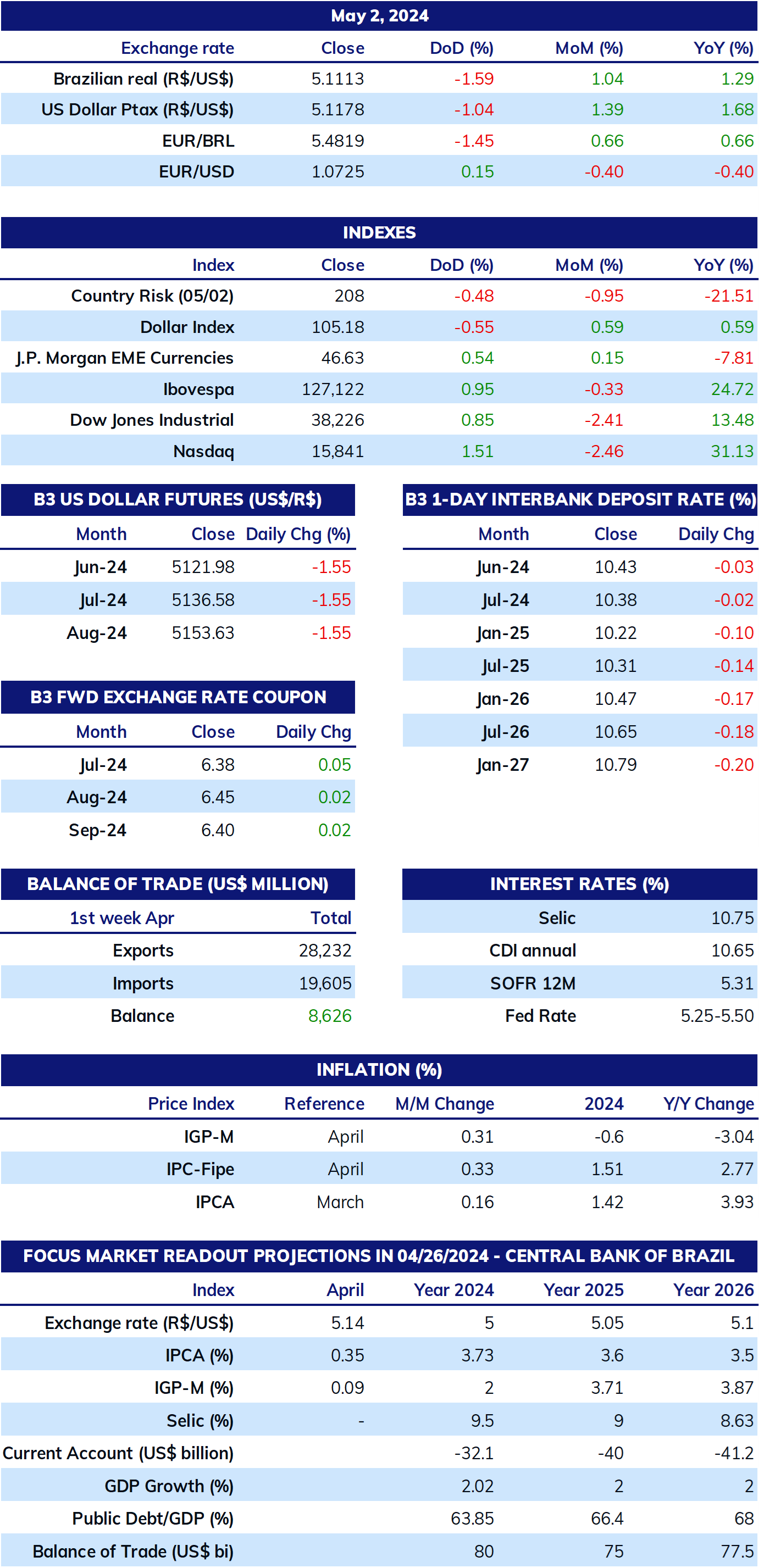
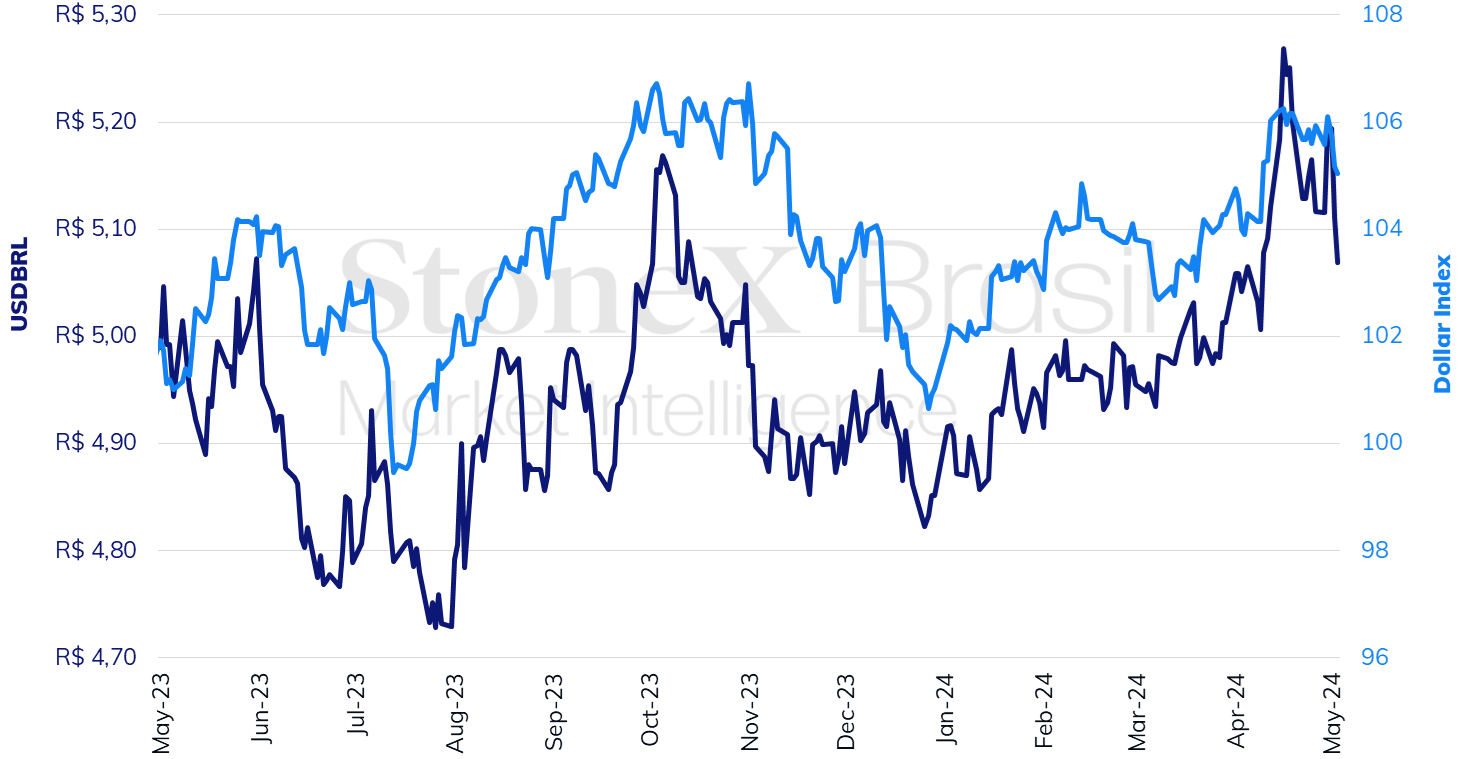
The USDBRL ended the week lower, closing Friday's session (03) at BRL 5.069, a weekly decline of 0.9% and a monthly decline of 2.4%, but an annual gain of 4.5%. The dollar index closed Friday's session at 105.0 points, a change of -0.9% for the week, -1.0% for the month, and +4.0% for the year.
THE MOST IMPORTANT EVENT: COPOM interest rate decision
Expected impact on USDBRL: bearish
The Central Bank of Brazil’s Monetary Policy Committee (COPOM) is expected to make its seventh consecutive cut in the basic interest rate (SELIC) next Wednesday (08). Still, there is some uncertainty about the magnitude of the cut. At the beginning of last week, the future interest rate curve almost pointed to a consensus of a reduction of only 0.25 p.p., but bets on another 0.50 p.p. cut (as suggested in the last Committee minutes) rose again during the week after milder signals from the Federal Reserve and weaker employment data in the US. Doubts about COPOM's stance arose after the federal government relaxed fiscal targets, leading to more cautious comments from BC's president, Roberto Campos Neto, who considered the possibility of a slower pace of cuts to the SELIC. In addition to the rate cut, the COPOM statement will be closely watched due to the possibility of changes in future guidance and the balance of inflation risks. These changes, if they occur, will reinforce the interpretation that the basic interest rate will fall less than anticipated in Brazil, which, in turn, improves the outlook for the Brazilian interest rate differential, contributing to attracting more foreign capital and building up the real.
Brazil: History and expectation for the interest rate - Focus April 26, 2024
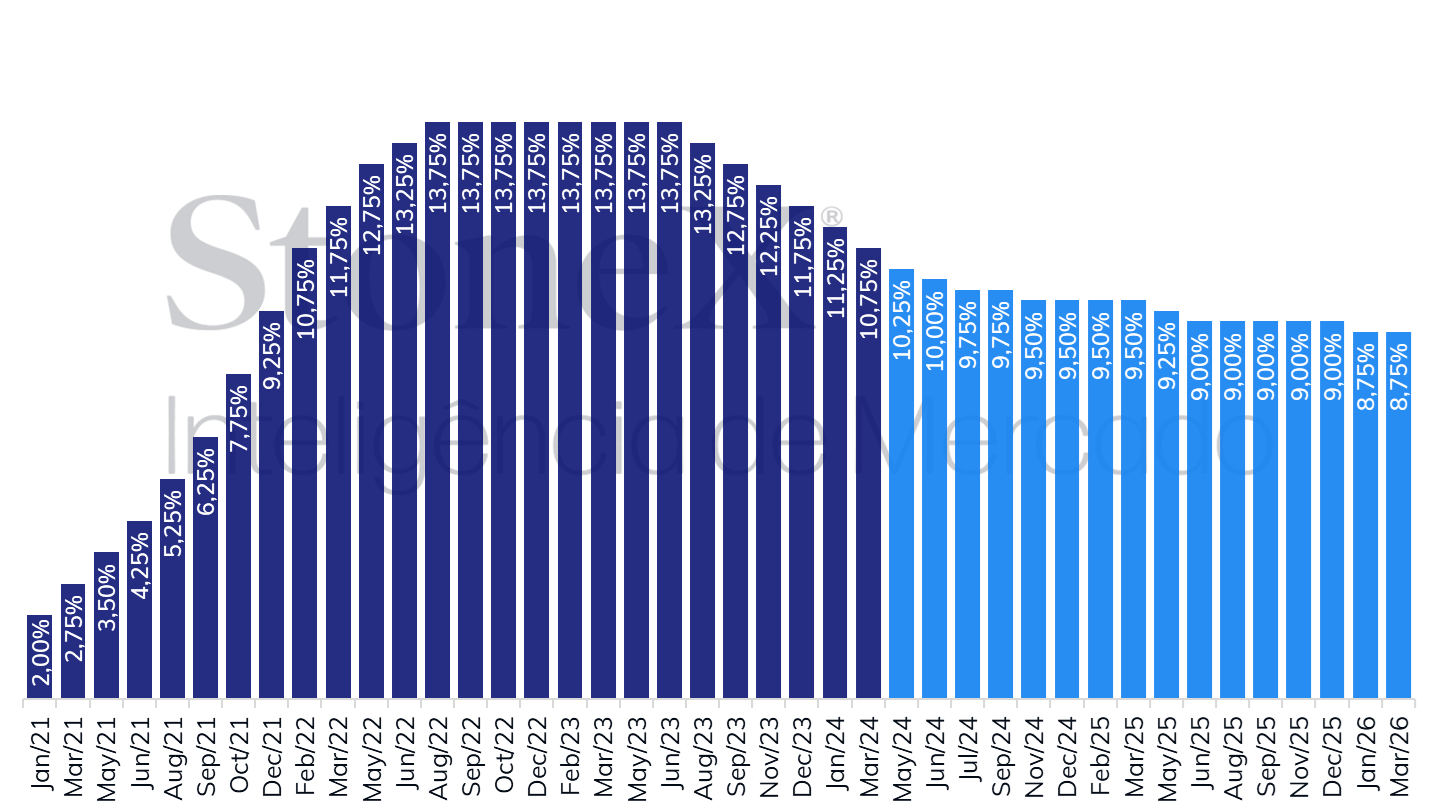
Source: Central Bank of Brazil (Focus 04/26/2024). Design: StoneX. Refers to the median of the Focus report's estimates indicated on the date.
IPCA and fiscal result in Brazil
Expected impact on USDBRL: bullish
The week should bring important data for the rating of the Brazilian economic situation. On Monday (06), the disclosure of the consolidated fiscal result for the public sector in March may show a deficit larger than expected and worsen the perception of fiscal risks associated with Brazilian assets, which would drive away investors and could contribute to a weakening of the real. On Friday (10), the National Consumer Price Index (IPCA) is expected to grow by around 0.35% in April compared to a benign reading in March due to price increases in food and medicine. Still, this increase should not be enough to raise concerns about inflation moderation in the country. It may contribute to the weakening of the real by showing that the Central Bank has room to continue cutting the basic interest rate (SELIC).
Economic policy in the Legislative branch
Expected impact on USDBRL: bullish
This week's agenda for the National Congress brings important topics for the evolution of Brazilian public finances. On Tuesday (07), the Senate Federal Constitution, Justice and Citizenship Committee (CCJ) will vote on the bill that creates a new mandatory vehicle insurance, similar to the old DPVAT and amends the fiscal framework law by advancing by two months the permission to open supplementary credit in case of fiscal surplus, which would allow an additional expense of R$ 15.7 billion by the Federal Government (+0.8%). On Thursday (09), the National Congress will have a deliberative session to analyze the president's vetoes, including the partial veto of the payout of parliamentary amendments. If the veto is overturned, the additional impact on public expenses would be R$ 5.6 billion.
Economic data in China
Expected impact on USDBRL: undefined
After disappointing results in March, the trade balance for April is expected to improve compared to March. Exports should increase from an annual decline of 7.5% in March to around 2.0% in April. Similarly, on an annual basis, imports should increase from -1.9% in March to +5.0% in April. Both can improve estimates of economic activity in the country, which would boost the performance of risky assets such as stocks, commodities, and currencies of countries that export primary products, like Brazil. On the other hand, the estimates for the Consumer Price Index (CPI) for April are not as positive. The indicator is expected to remain stable compared to the same month last year, which could decrease expectations for domestic demand in the country and act contrary, reducing the appetite for risky assets by investors.