FX Weekly Overview: The week's main events
- Bearish factors
- COPOM minutes can signal cohesion after a divided decision among its members and reinforce the interpretation that it will act with greater caution in the face of inflation expectations, contributing to attracting foreign investors and strengthening the BRL.
- The US CPI is expected to moderate slightly in April, which could reinforce the idea that prices may stabilize again and foster bets on the Fed's interest rate cuts.
- Economic data for China may indicate a better performance for the country in April, increasing appetite for risky assets and contributing to strengthening the BRL.
- Bullish factors
- The need for extraordinary spending to relieve the floods in Rio Grande do Sul could increase concerns about the Brazilian fiscal balance and weaken the BRL.
The week in review
The week was marked by the divided decision of the Central Bank of Brazil's Monetary Policy Committee (COPOM), which raised concerns about a softer fight against inflation from 2025 and reduced expectations of a decrease in the basic interest rate (SELIC).
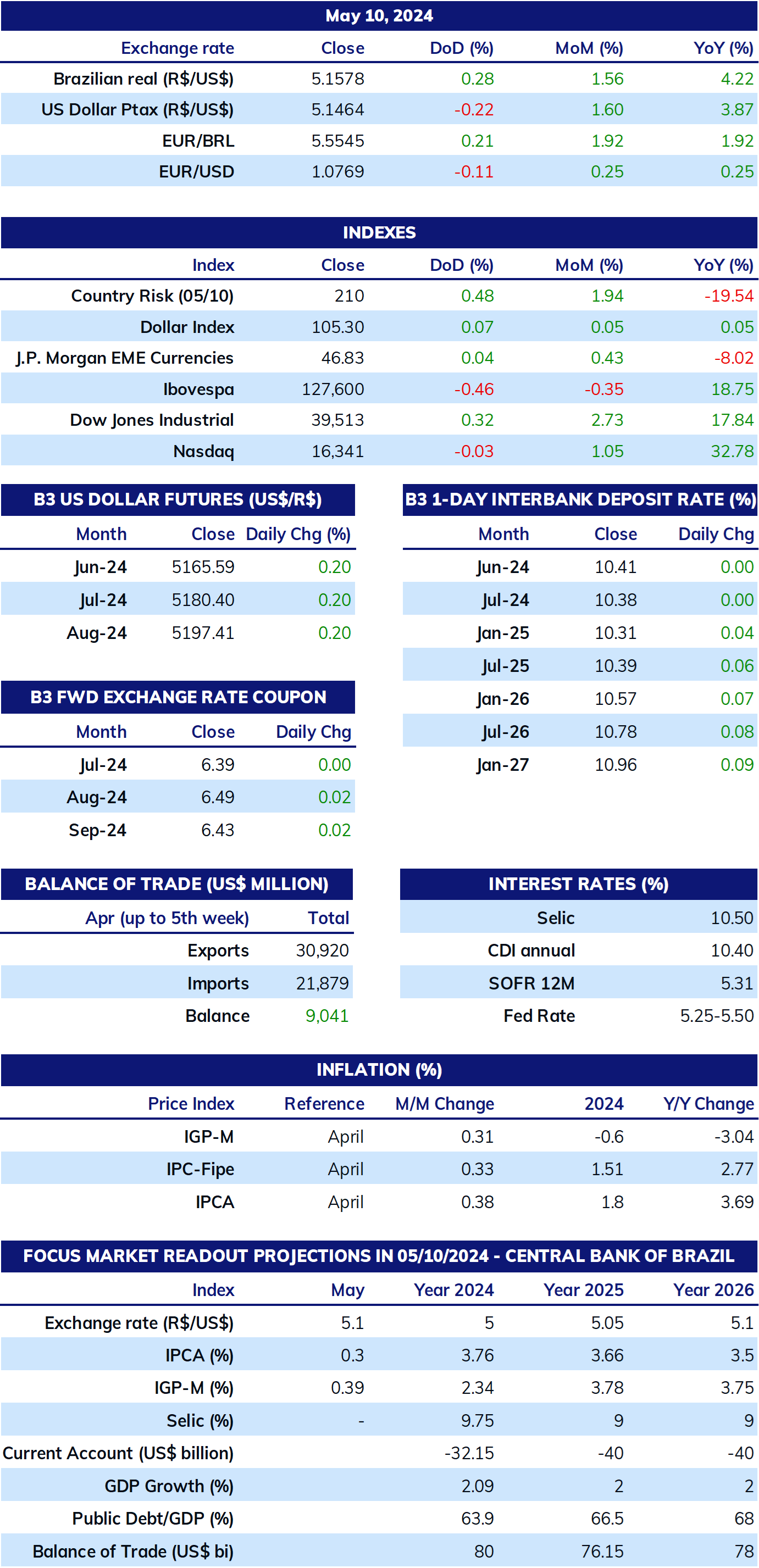
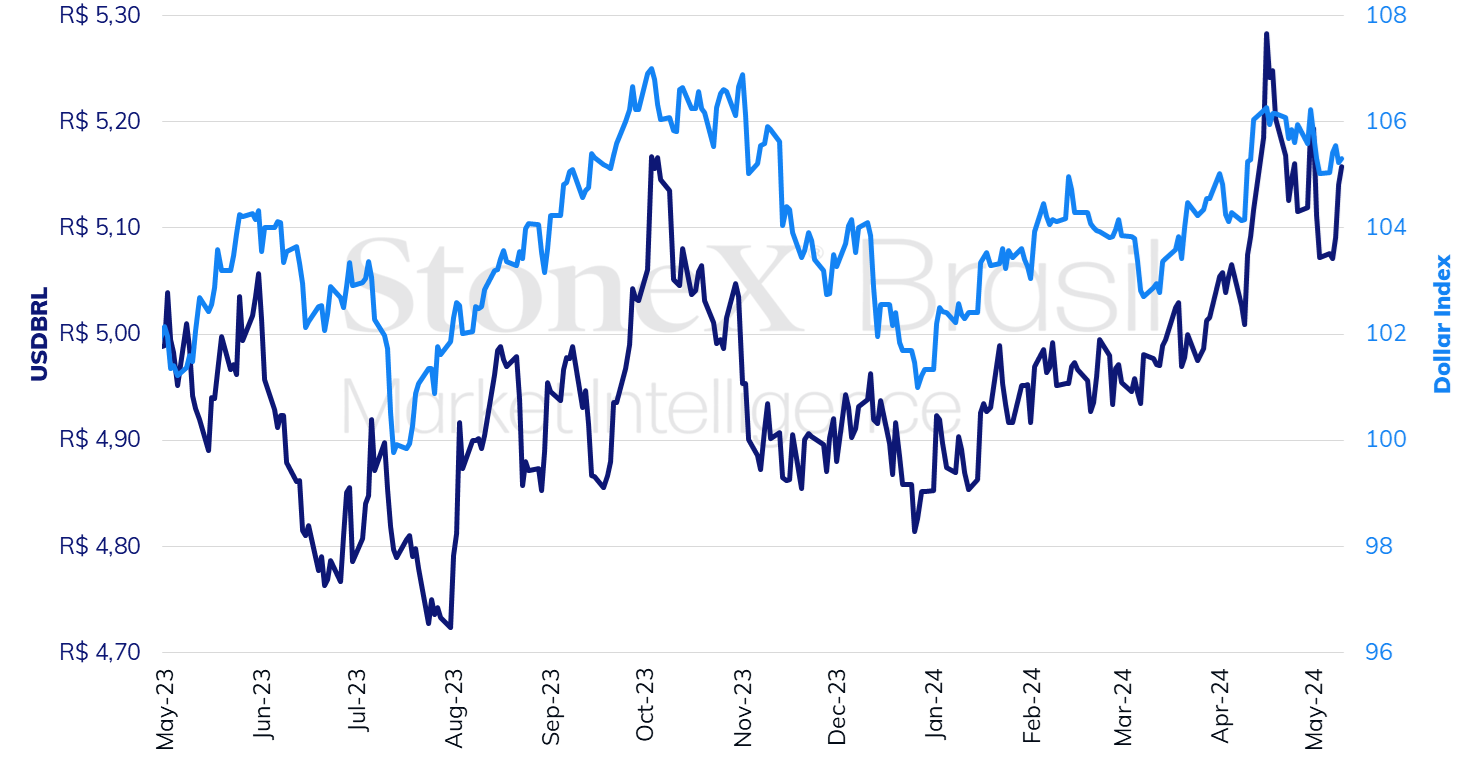
The USDBRL ended the week lower, closing Friday's session (10) at BRL 5.158, a weekly increase of 1.7%, a monthly decrease of 0.7%, and an annual gain of 6.3%. The dollar index closed Friday's session at 105.3 points, a change of +0.3% for the week, -0.9% for the month, and +3.9% for the year.
USDBRL and Dollar Index (points)
Source: StoneX cmdtyView. Design: StoneX
THE MOST IMPORTANT EVENT: Minutes of the COPOM decision
Expected impact on USDBRL: bearish
The decision of the Monetary Policy Committee (COPOM) last Wednesday (13) brought several significant changes. On the one hand, most analysts expected the decision to reduce the pace of cuts in the basic interest rate (SELIC) from 0.50 p.p. to 0.25 p.p., although it was not consensual. On the other hand, however, the statement kept its balance of inflationary risks unchanged for the fifth consecutive decision, choosing to address the impacts of higher fiscal risks in a separate paragraph. The decision was divided for the first time since August of last year, with five votes in favor of reducing the SELIC by 0.25 percentage points (directors appointed by former President Bolsonaro) against four votes in favor of reducing it by 0.50 percentage points (directors appointed by President Lula). In addition, the statement removed the forward guidance paragraphs, which had not happened since March 2021 and worsened the estimates for inflation at the end of 2024 (from 3.5% to 3.8%) and 2025 (from 3.2% to 3.3%). Finally, the tone of the statement was markedly firmer, with the Committee informing that, unanimously, "evaluates that the uncertain global scenario and the domestic scenario marked by resilience in activity and unanchored expectations demand greater caution [in the conduct of monetary policy]."
The clear division among Copom members, with those appointed by the previous Executive Administration adopting a stricter stance against inflation and those appointed by the current Administration advocating for a more lenient approach, raised concerns among investors about a possible change in stance and conduct at Copom after the next two directors appointed by the current government assume their positions in 2025. At the same time, the removal of the "guidance," the firmer tone of the statement, and the worsening of the Committee's estimates for inflation resulted in expectations of smaller and slower interest rate cuts for the SELIC, increasing the prospects for the value of the basic interest rate at the end of the easing process.
The decision minutes, which will be released on Tuesday (14), could signal cohesion among COPOM members, reduce fears of changes in conduct, and calibrate expectations for the SELIC trajectory amid the recognition of "greater caution." Both facts, if confirmed, can contribute to attracting external capital flows and strengthen the BRL.
Brazil: History and expectation for the interest rate - Focus May 10, 2024
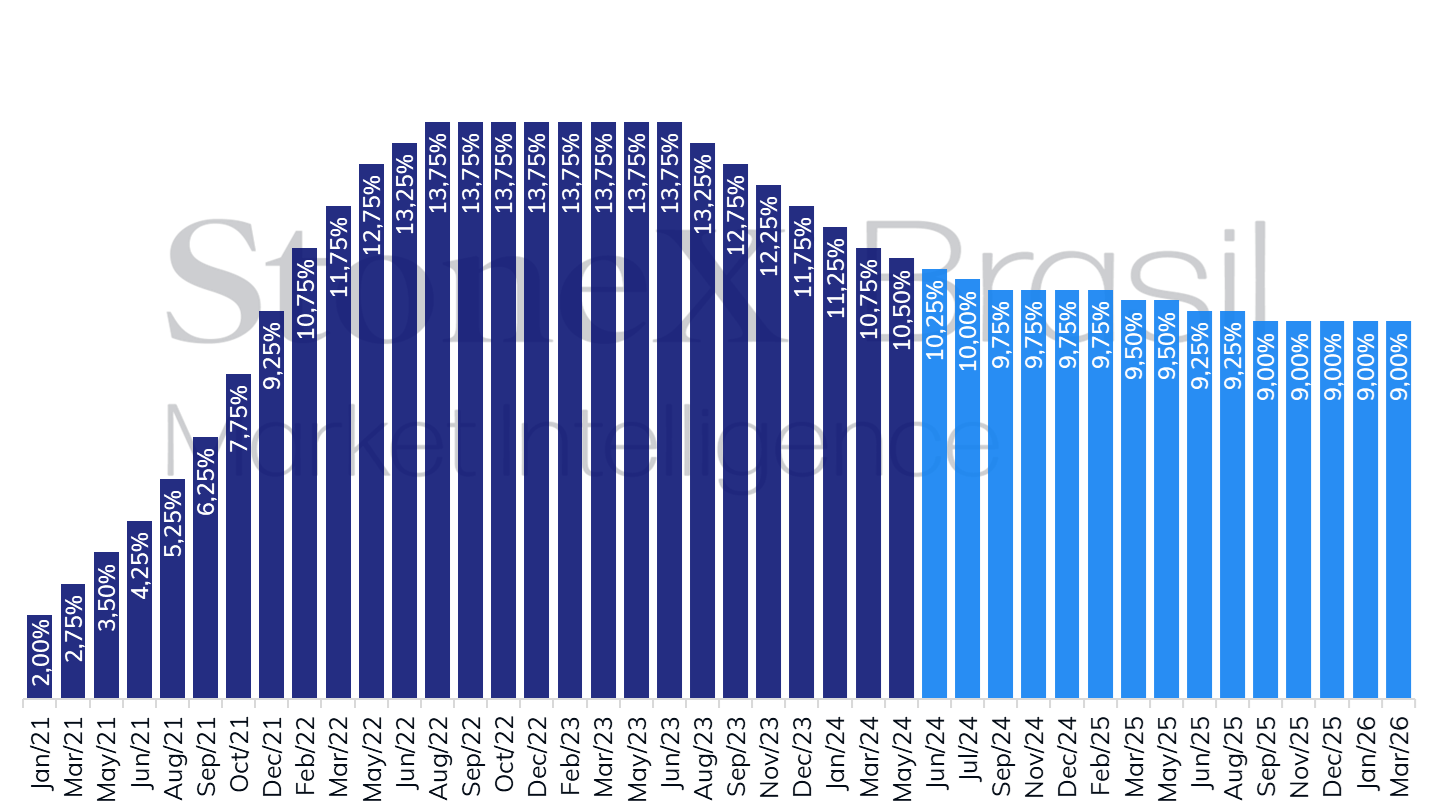
Source: Central Bank of Brazil (Focus 05/10/2024). Design: StoneX. Refers to the median of the estimates indicated by the Focus report on the specified date.
US CPI
Expected impact on USDBRL: bearish
In the last two weeks, weaker-than-expected data for the American job market helped to recover among investors the bets of interest rate cuts by the Federal Reserve (Fed) this year. However, the Fed has linked the institution's start of the interest rate cuts process for several months to a "higher level of confidence" that inflation is returning to the institution's target of 2% annually. Therefore, April's Consumer Price Index (CPI) is expected to influence investors' perception of the US macroeconomic situation. A higher reading may reinforce fears that interest rates will remain higher for longer. A lower reading may reinforce the perception that prices will stabilize and raise expectations for the Fed to cut interest rates. The median of estimates for the CPI points to a monthly increase of 0.3% in both the headline index and its core, which excludes volatile food and energy components. Such data, if confirmed, implies a slight moderation versus March and may contribute to weakening the USDBRL.
US: History and expectation for the interest rate - May 10, 2024
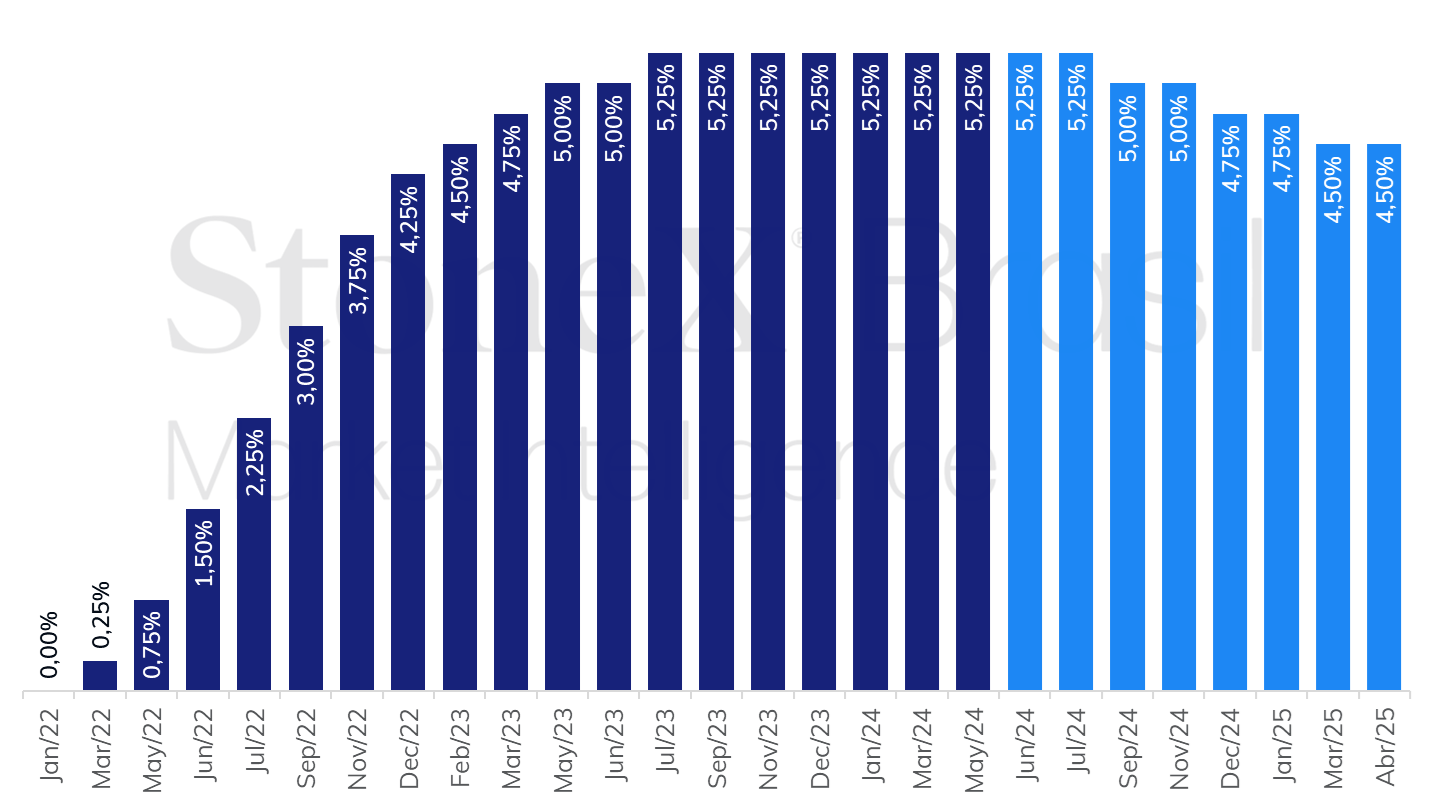
Source: CME FedWatch Tool. Design: StoneX. Refers to the bet with the highest likelihood in the future interest rate market on the indicated date.
Floods in the south of Brazil
Expected impact on USDBRL: bullish
The catastrophic floods in the Rio Grande do Sul require immediate action from the federal and state governments to mitigate their consequences for the local population and economy. In macroeconomic terms, investors follow news about the value and format of emergency spending to estimate their effects on public accounts and impacts on national inflation and Gross Domestic Product. In general, it is known that all these variables will worsen, which may reduce external investments in Brazil and weaken the BRL.
Economic data in China
Expected impact on USDBRL: bearish
Several important macroeconomic indicators for the Chinese economy in April will be released this week, such as the Consumer Price Index (CPI) and Producer Price Index (PPI), as well as manufacturing and retail sales. In general, better performance is expected compared to March, which can improve expectations for Chinese growth in 2024 and increase investors' appetite for risky assets, such as stocks, commodities, and currencies of countries that export primary products, like the Brazilian real.

INDICATORS