The most important: fiscal framework processing in Brazil's Congress
Expected impact on USDBRL: bearish
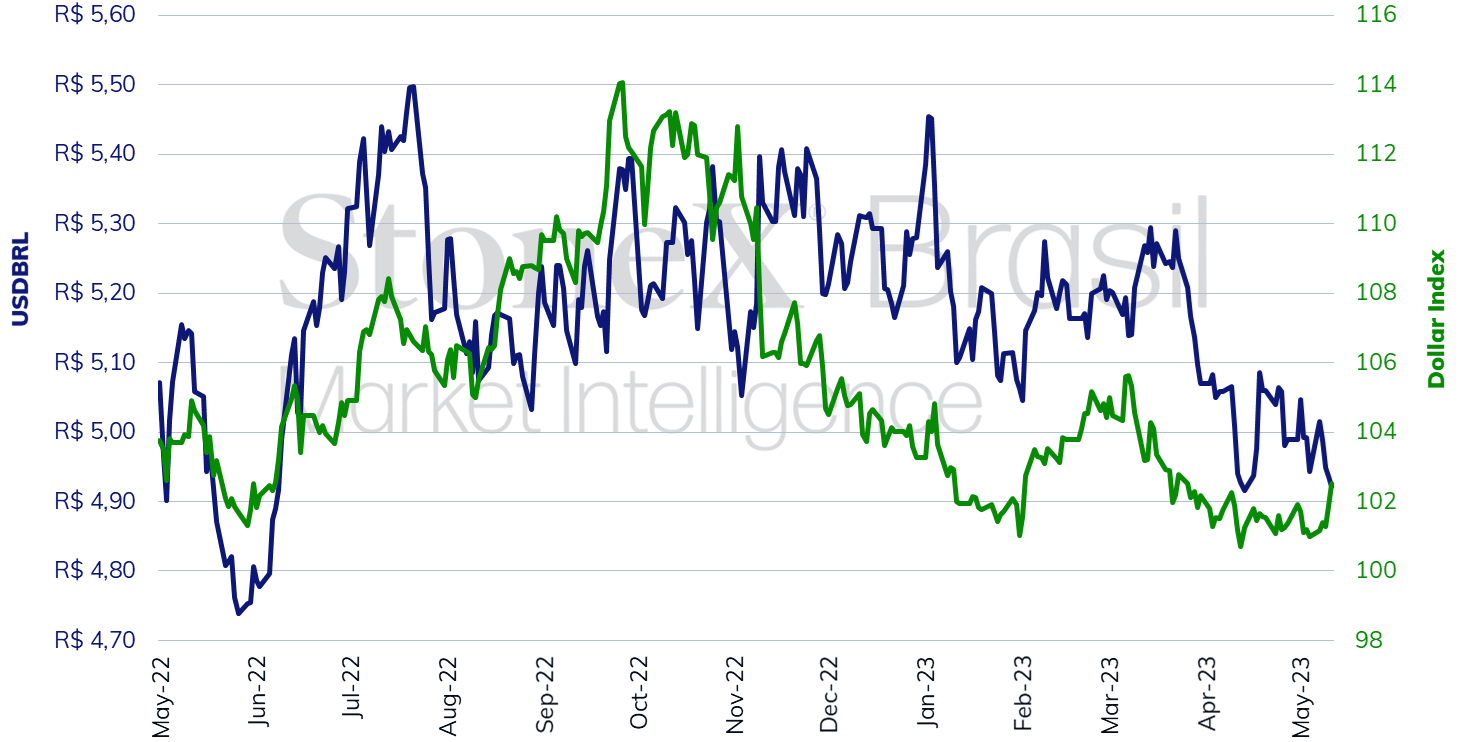
The investors should focus on the fiscal framework bill (PLP 93/23) in the Chamber of Deputies. Although promised last week, the rapporteur of the project in the Chamber, deputy Cláudio Cajado (PP-BA), postponed the presentation of his report until this week after negotiating with party leaders, representatives of the Administration and the president of the House, Arthur Lira (PP-AL), modifications to the legislative text, especially concerning measures to ensure compliance with the goals established by the fiscal framework. According to Cajado, there is a consensus that punitive measures in non-compliance with the goal should be "on top of management" and not on the manager. "I'm assessing the best way to address this specific trigger situation," he said. In comments to reporters, he said the vote should not be delayed and should take place this week, as the bill's text would already be "mature." If these changes to the text are confirmed and the project is approved, the perception of tax risks to Brazilian assets should be reduced and favor the BRL strengthening.
US debt default risk
Expected impact on USDBRL: bullish
Another point of attention that has provoked caution and risk aversion in global asset markets is the need to extend the public debt limit in the United States, the possibility of an unprecedented default on US Treasury bonds and the (slow) pace of progress in negotiations between Democrats and Republicans. Part of the difficulty in reaching an agreement is the uncertainty about when the US government would effectively run out of resources to pay its commitments. According to Treasury Secretary Janet Yellen, such an event could occur "as soon as June 1," and Yellen has repeatedly warned that there is no reasonable alternative to the problem other than suspending or raising the country's debt limit and that a default would be "an economic and financial catastrophe."
After the November legislative elections, the Democrats, the party of President Joe Biden, managed to maintain their majority in the Senate but lost control of the House to the Republicans. In a context of deepening political polarization in the country, both parties have remained in an impasse for weeks, as Republicans are seeking to extract political concessions from Democrats by conditioning strategic programs on the president's agenda to be abandoned for the House to approve the new public debt limit – something that Democrats consider unacceptable. Therefore, the spread of Credit Default Swap (CDS) contracts for US Treasury bonds – in theory, among the safest in the world – is at an all-time high. They reveal that those who agree to guarantee US Treasury bonds demand high premiums due to the increasing likelihood of default. Last Friday (12), a payment of 1.77% of the value of the security was required each year as a premium for the CDS.
The 1917 debt limit law establishes the maximum debit the US Treasury Department can issue to pay its expenses. Since 1960, Congress has authorized raising or temporarily suspending the debt limit on 80 occasions. The last debt limit increase came in December 2021, extending the US borrowing limit until January 2023.
Spread of 1-year US Credit Default Swap (CDS) contracts (basis points):
US economic data
Expected impact on USDBRL: bullish
After the moderate reading for the US Consumer Price Index (CPI) in April, the week will bring indicators to measure economic activity in the country, such as April retail sales, April industrial production and some local activity indices for May, calculated by regional Federal Reserve agencies. The overall trend for the US economy has been weakening, especially for industrial activity. On the other hand, high-frequency data for credit card sales suggest that retail sales may have picked up slightly, but not enough to offset the more pessimistic outlook for the year. Given the broader context of risk aversion, due to the impasse related to the US debt ceiling, these weaker data should favor the US currency strengthening by suggesting the possibility of an economic recession in the country in the short term.