- Persistent high core inflation in the United States may reinforce interpretations that the Federal Reserve needs to keep interest rates higher for longer, strengthening the dollar
- A rise in interest rates by the European Central Bank should strengthen the euro against other currencies and, by contrast, hurt the currency performance of emerging countries.
- An environment of frank optimism about the Brazilian macroeconomic scenario favors the appreciation of Brazilian assets and the strengthening of the Real.
- Bets that the Federal Reserve should keep interest rates unchanged for the first time in 15 months could reinforce interpretations that the monetary tightening cycle is nearing its end, weakening the dollar.
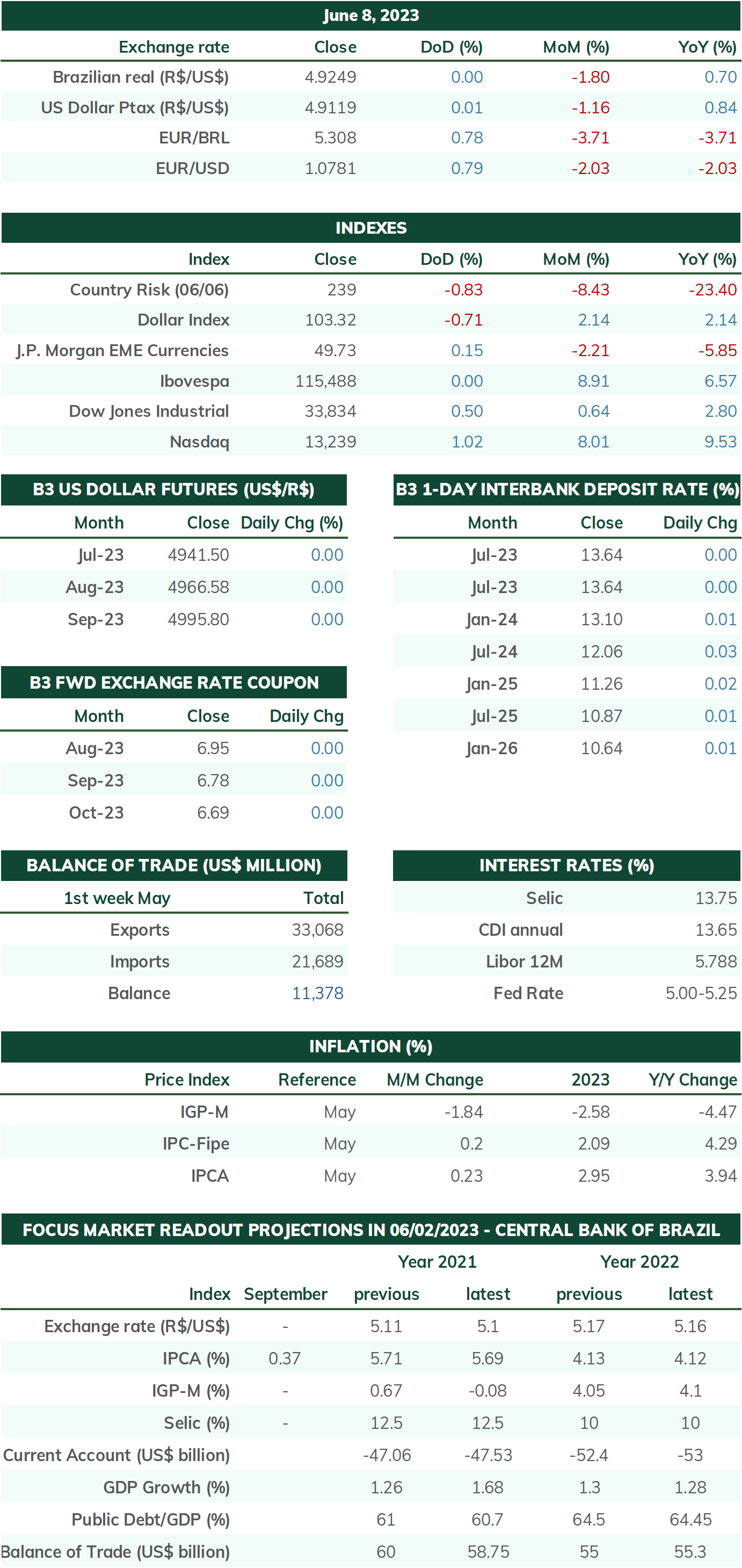
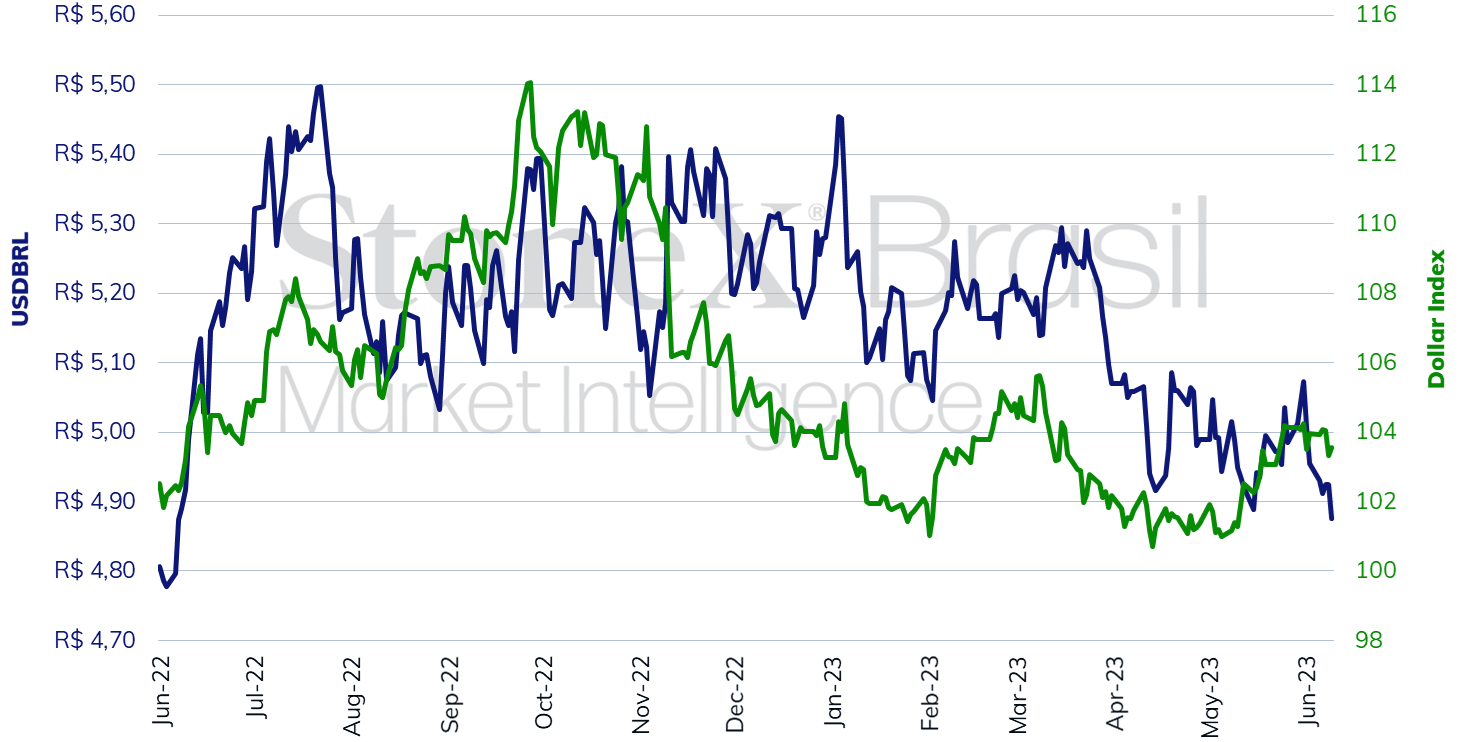
The USDBRL ended Friday's session (09) at BRL 4.876, a weekly decline of 1.6%, monthly of 3.9% and annual of 7.6%. The dollar index closed this Friday's session at 103.6 points, a variation of -0.4% in the week, -0.7% in the month and +0.3% in the year. The foreign exchange market reflected the release of the National Broad Consumer Price Index (IPCA) below expectations for Brazil and weaker than anticipated US data for the United States, reinforcing expectations that the Federal Reserve will keep interest rates stable in its next monetary policy decision.
Expected impact on USDBRL: bullish
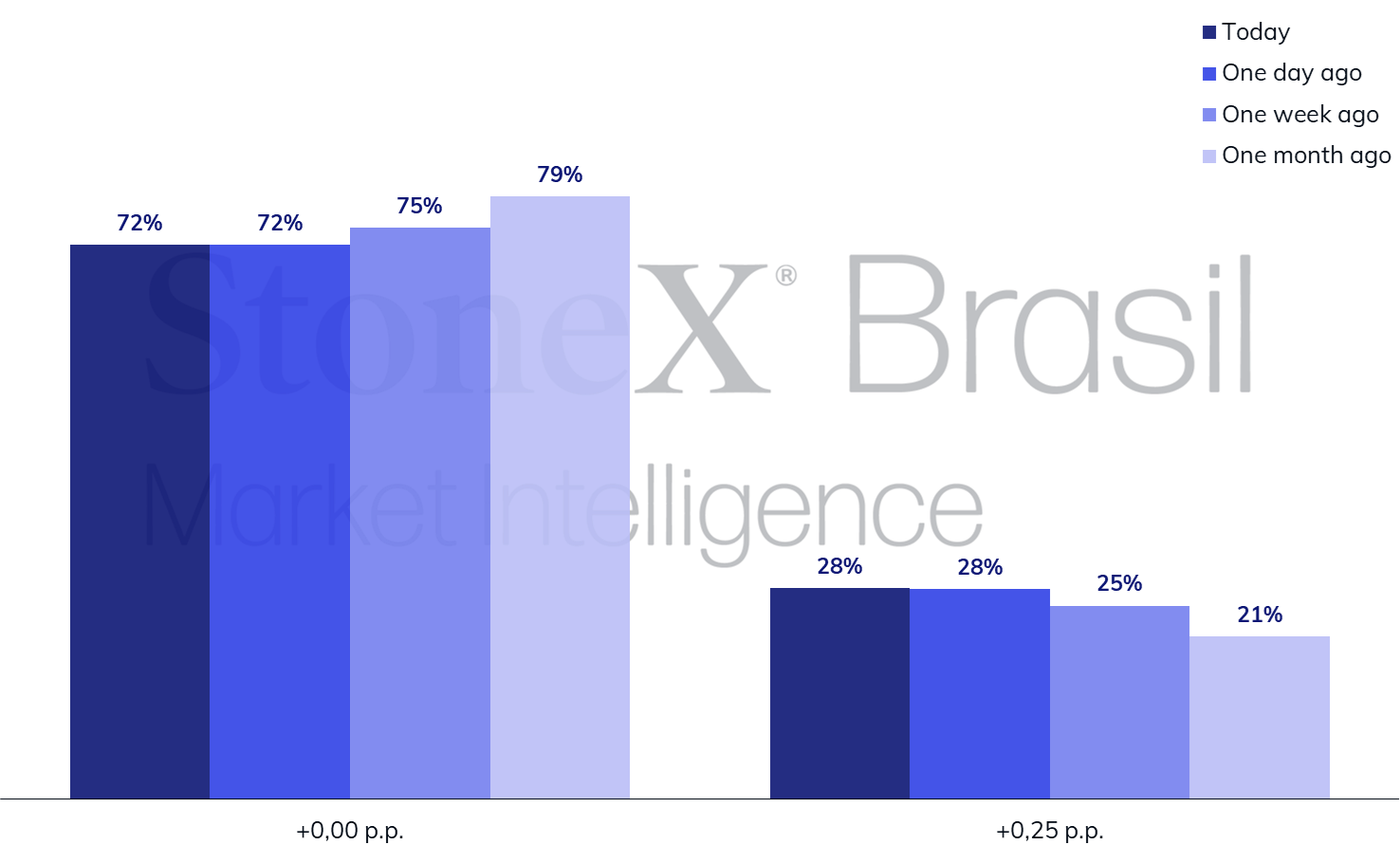
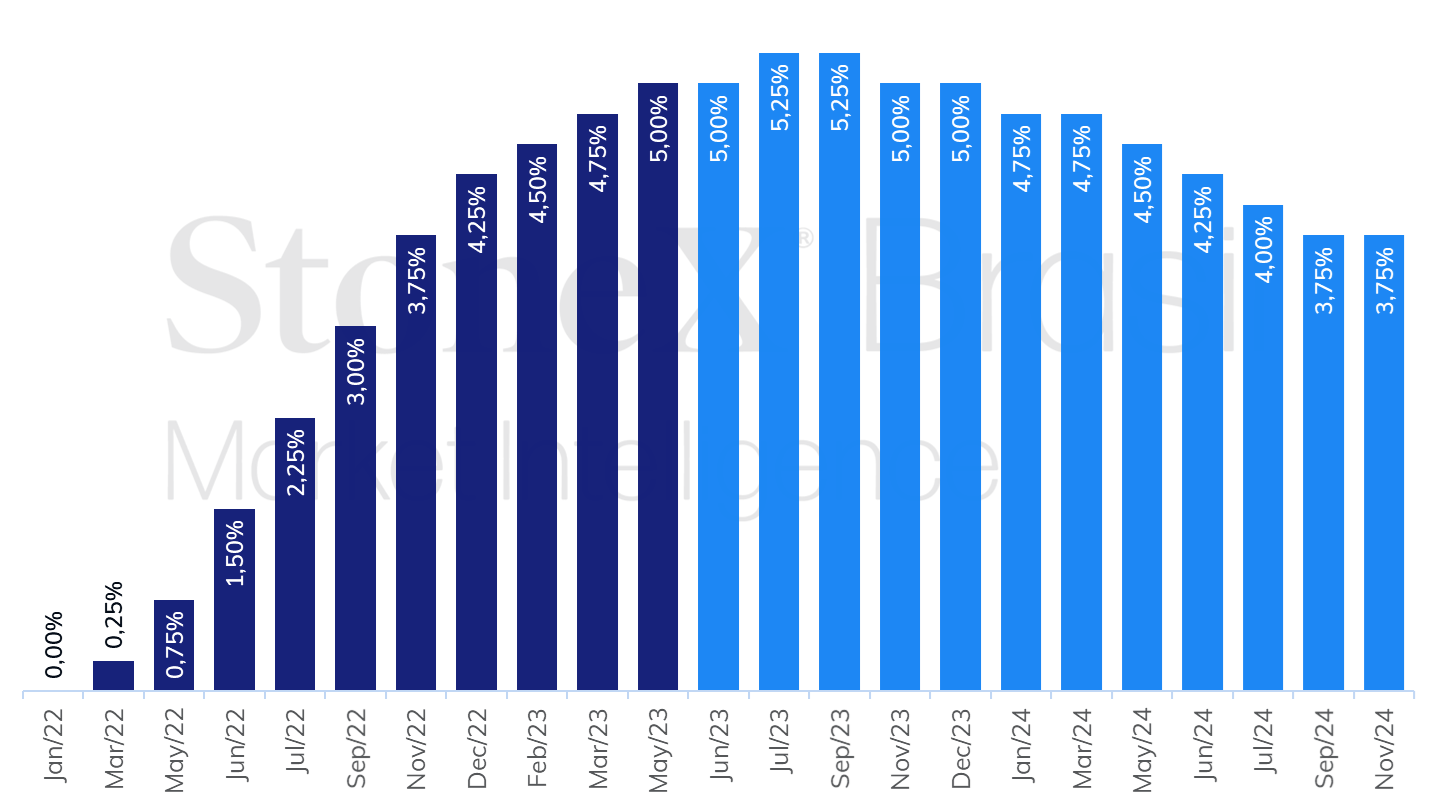
The week brings two events usually accompanied by high volatility in asset markets. First, on Tuesday (13), the Consumer Price Index (CPI) will be released, in which a significant reduction in the “full” index is expected, going from an annual high of 4.9% in April to 4.1% in May. Still, it is estimated that the core (when excluding food and energy from the calculation) will reduce only discreetly, from an annual increase of 5.5% in April to 5.3% in May. On Wednesday (14), the Federal Open Market Committee (FOMC) of the Federal Reserve (Fed) announces its monetary policy decision. The Fed's members have been divided between officials who believe it necessary to maintain an aggressive stance in monetary policy to recover price stability. These officials advocate observing for a longer time horizon how the macroeconomic environment will respond to the monetary tightening carried out so far and undecided authorities. However, the interest futures market shows that investors are betting on a hybrid position, called a “jump” or “pause,” in which the committee will keep the interest rate stable for the first time in 15 months, in the range between 5.00% and 5.25% p.a., at the same time that it is expected to carry out a last readjustment of 0.25 p.p. in the decision of July 26.
Expected impact on USDBRL: bearish
The release of the National Broad Consumer Price Index (IPCA) for May, lower than estimated last week, as well as that of the Gross Domestic Product (GDP) for the first quarter of 2023, higher than expected the previous week, generated strong optimism among domestic investors regarding expectations for key macroeconomic variables such as inflation, growth, foreign exchange and interest rates. Added to this positive perception is the prospect of approval of the new fiscal framework in the National Congress in June, which would stabilize public spending and debt. Thus , future interest rates fell significantly in the past week while the exchange broke the BRL 4.90 threshold.
This week, the release of indicators on the pace of economic activity, with trade, on Wednesday (14), services, on Thursday (15), and the Central Bank's Economic Activity Index (IBC-Br), on Friday (16), may reinforce or deflate investors' optimism. There are reasons for pessimism, as the performance of agriculture strongly influenced GDP growth, while industry and services showed results that suggest a slowdown in productive activity.
Expected impact on USDBRL: bullish
This week, the European Central Bank (ECB) is expected to raise its key interest rate for the eighth consecutive time from 3.25% p.a. to 3.50% p.a. Having started its monetary tightening process later than the Federal Reserve and still facing a complex inflationary scenario in some countries of the bloc, the ECB authorities have been united in defending the continuity of the interest rate hike cycle for another period. Additionally, better-than-anticipated recent economic data gives the institution greater freedom to continue tightening financial conditions.