- FOMC minutes should reinforce the perception of cautious behavior from the Federal Reserve in 2024, consolidating bets for interest rate cuts starting in June and strengthening the dollar.
- Activity and inflation data for Europe are expected to reinforce the perception of economic slowdown on the continent, strengthening the American currency by comparison.
- IBC-Br's increase in December may boost investors' confidence and attract investments to Brazilian assets, strengthening the BRL.
The week in review
The week was marked by the release of mixed data for the American economy, with the Consumer Price Index (CPI) and Producer Price Index (PPI) exceeding analysts' estimates but retail sales falling short of expectations, reinforcing the perspective that the Federal Reserve's interest rate cut cycle will start later, in June of this year.
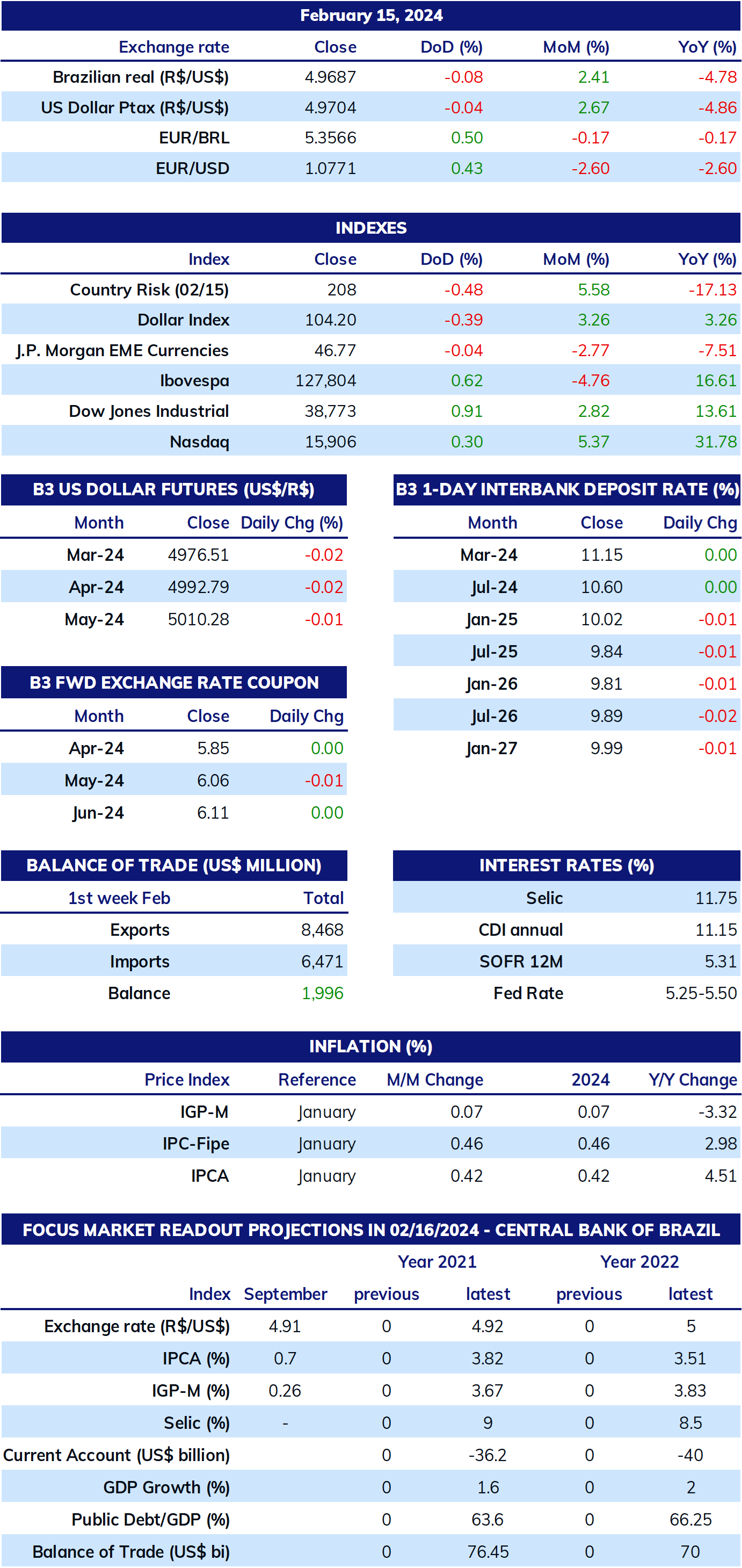
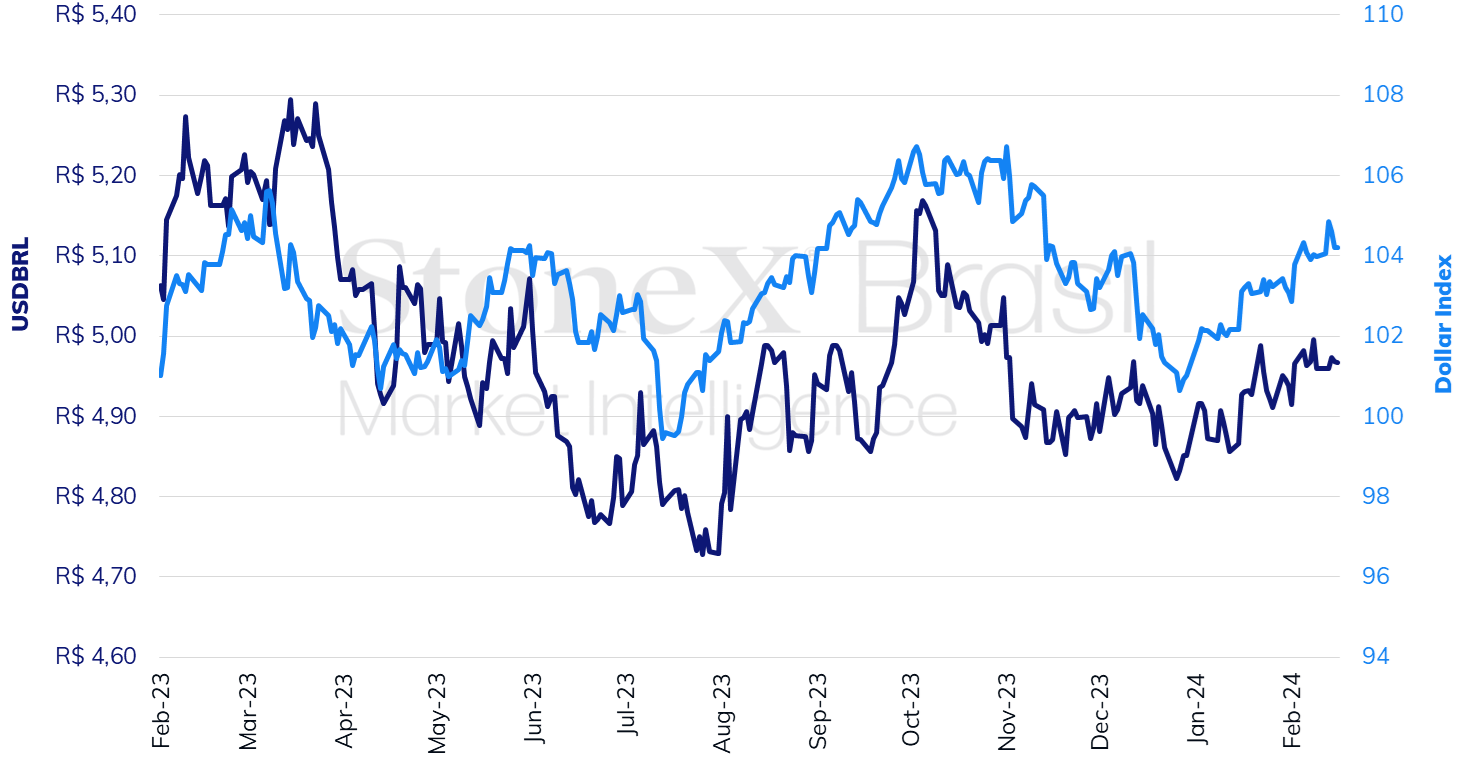
The USDBRL ended the week slightly lower, closing this Friday's session (16) at BRL 4.968, a weekly gain of 0.2%, a monthly gain of 0.6%, and an annual gain of 2.4%. The dollar index closed Friday's session higher for the seventh consecutive week, at 104.2 points, a change of +0.2% for the week, +1.1% for the month, and +3.1% for the year.
THE MOST IMPORTANT EVENT: FOMC decision minutes
Expected impact on USDBRL: bullish
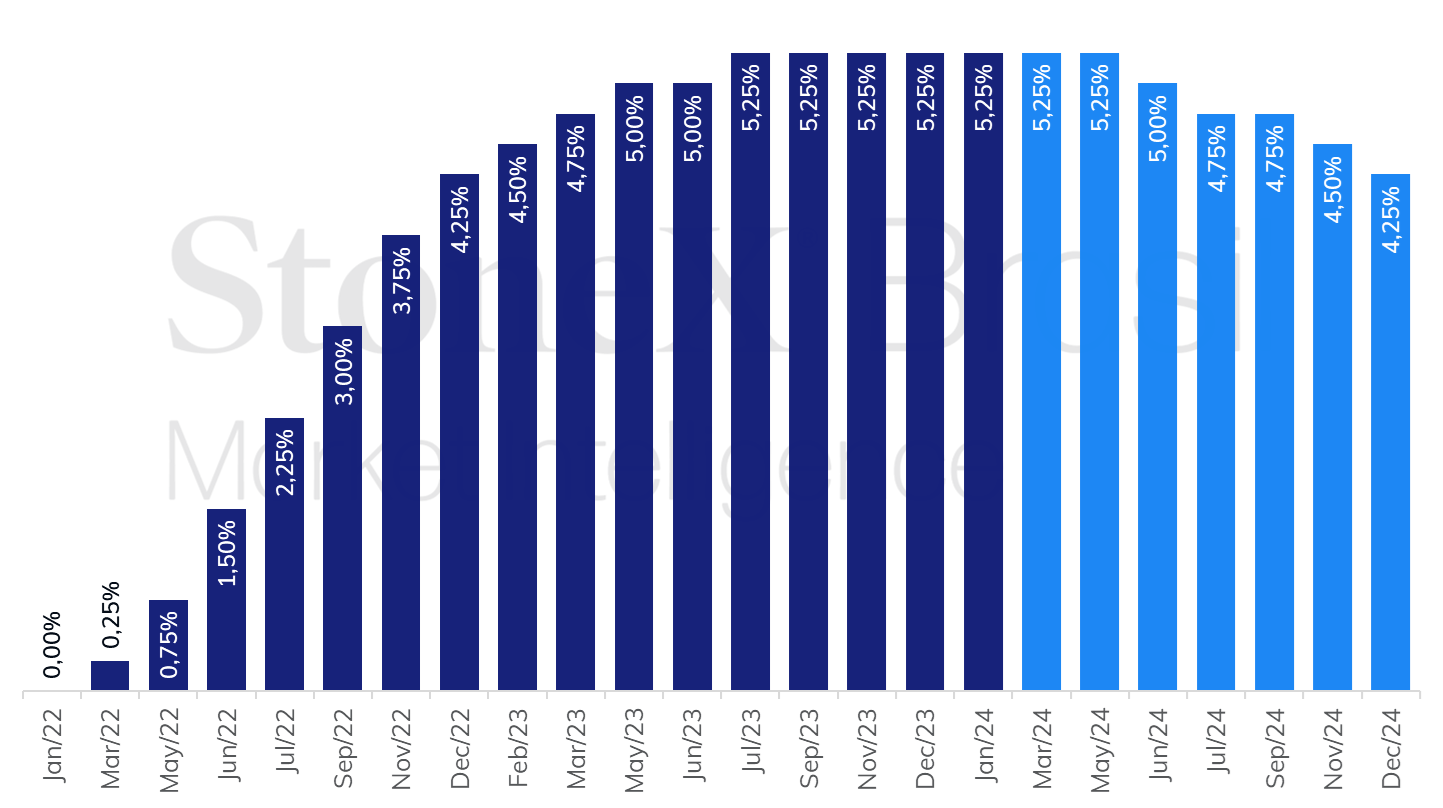
In a week shortened by a holiday in the US, investors' attention is expected to turn to the release of the minutes from the last decision of the Federal Open Market Committee (FOMC). Although the FOMC meeting took place before the release of employment, services, and inflation data above expectations for January, the document may still provide important details for investors about the discussions among its members regarding the criteria required for the start of monetary easing by the Fed, as well as comments on the economic situation and inflation dynamics in the country.
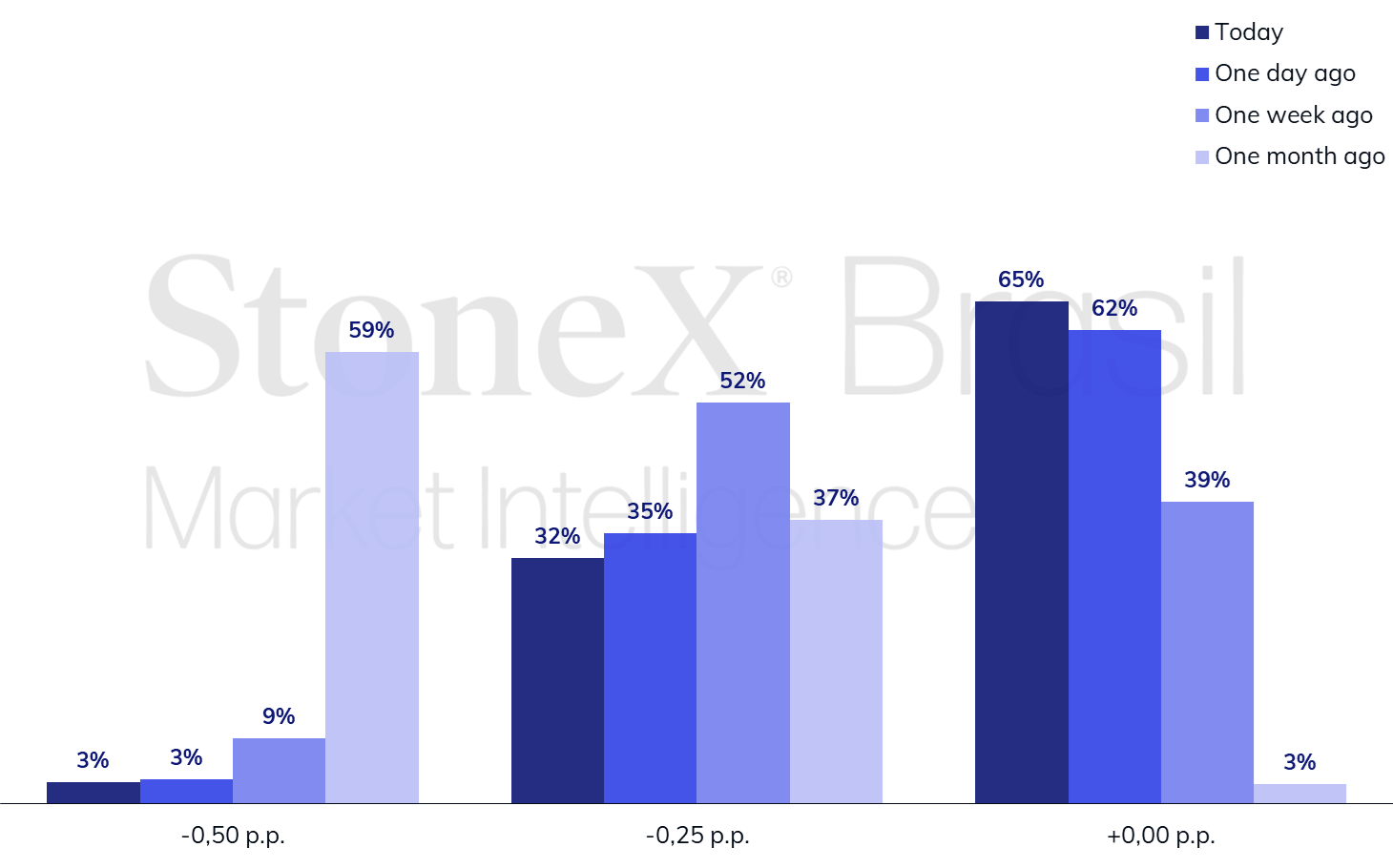
It is worth noting that, in the decision statement and in the press conference that followed, the Committee emphasized the need for price moderation to continue evolving sustainably over the next few months so that there would be the "greater confidence" necessary to start the interest rate cutting cycle. Nonetheless, readings above expectations for job creation and consumer inflation in January led investors to anticipate a more cautious behavior by the FOMC to ensure that price stabilization is still evolving satisfactorily. Thus, investors' bets on the start of an interest rate cut cycle by the Fed have moved even further away, pointing to June as the most likely date.
IBC-Br in Brazil
Expected impact on USDBRL: bearish
After remaining flat in November, the Central Bank's Economic Activity Index (IBC-Br) is expected to have expanded by around 0.4% in December. While manufacturing and the volume of services expanded, retail trade fell short of expectations and declined in the last month of the year. If Brazilian productive activity is expected to show solid growth in 2023, estimated at around 3%, the loss of dynamism in its last quarter is noteworthy.
European economic data
Expected impact on USDBRL: bullish
The United States economy surprised the market by showing resilience in the face of the sharp monetary tightening since 2022. The European economy is suffering the predicted consequences of a set of recessionary policies, with price moderation accompanied by a significant economic slowdown. This week, the preliminary Purchasing Managers' Index (PMI) for the eurozone in February is expected to rebound from January but remain in contraction territory, with a reading below 50 points, for the industrial, services, and composite indices. At the same time, the Consumer Price Index (CPI) is expected to continue its gradual slowdown, dropping from 2.9% in December to 2.8% in January on a 12-month basis, while the core of the indicator is expected to decrease from 3.4% to 3.3% in the same period, also on an annual comparison. In this context, the European Central Bank may be compelled to be the first monetary authority to start a cycle of interest rate cuts among the major economies.