Markets to React to US-Iran Talks, Federal Reserve Chair Hearing, and US Economic Data
-
Notice: The Economic Indicators Calendar is now available in an interactive report format.
-
This new model allows users to dynamically track both historical release dates and upcoming announcements scheduled through the end of the year.
-
To access, click here.
- Bullish
- Persistent inflationary pressures in the United States, as confirmed by upcoming economic indicators, are likely to reduce the probability of near-term interest rate cuts, supporting the dollar globally.
- Bearish
- Potential diplomatic progress between the US and Iran could boost global risk appetite, benefiting emerging market currencies like the Brazilian real.
- The Senate hearing of the likely next Federal Reserve Chair may reignite concerns about the institution's independence and future monetary policy direction, adding pressure to the dollar.
Last Week’s Recap
- Despite a lack of concrete progress in the latest meeting between US and Iranian delegations, global sentiment remained optimistic and risk-on throughout the week, albeit with clear signs of caution. This backdrop supported the Brazilian real, keeping the dollar below BRL 5.00 during the period.
- The ceasefire announced between Israel and Lebanon—a condition previously set by Iran for negotiations to advance—helped sustain improved investor sentiment toward the end of the week. On Friday (17), Iran’s announcement of the full reopening of the Strait of Hormuz reinforced perceptions of reduced geopolitical risks in the short term.
- Internationally, the US March PPI came in lower than expected, despite recent changes in tariff policies and the shock to oil prices. The reading helped ease concerns about inflationary pass-through to consumers, providing additional support for risk assets.
- In Brazil, the better-than-expected IBC-Br results pointed to economic resilience, a factor that could prompt the Brazilian central bank to adopt a more cautious approach, particularly regarding the pace and scope of monetary policy easing.
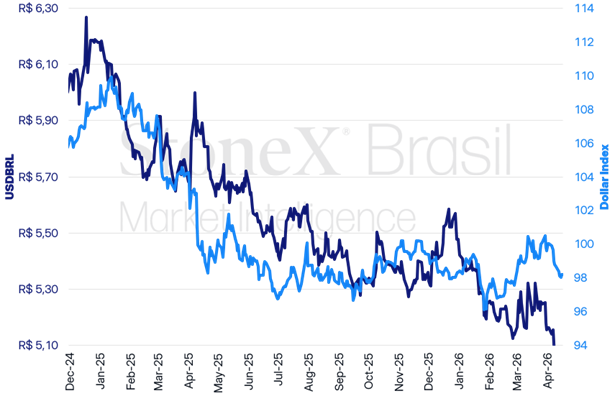
Commercial Dollar (USD/BRL) and Dollar Index (points)
Source: StoneX cmdtyView. Design: StoneX.
Commercial Dollar Changes
Daily: -0.24% | Weekly: -0.54% | Monthly: -3.86% | Year-to-Date: -9.05% | Last 12 Months: -14.22%
Dollar Index Changes
Daily: +0.02% | Weekly: -0.46% | Monthly: -1.59% | Year-to-Date: -0.10% | Last 12 Months: -1.17%
KEY TAKEAWAY: Reopening of Hormuz Strait and US-Iran Talks
Expected USDBRL Impact: Bearish
Next week, financial markets will remain focused on diplomatic developments between the US and Iran.
- According to President Donald Trump, a second meeting between representatives of the two nations is expected over the weekend, keeping investors alert to potential signals of negotiation progress.
- On Friday (17), Iran’s reopening of the Strait of Hormuz, combined with the 10-day ceasefire agreement between Israel and Lebanon announced the day before, contributed to renewed investor optimism regarding the possibility of a more lasting accord.
- Nonetheless, the situation remains fragile. Ceasefire agreements are inherently temporary, and no definitive resolution to the regional conflict has been reached, leaving the environment vulnerable to further deterioration.
- As a result, any negative signals or unexpected escalation in tensions could quickly erode market sentiment and reverse recent gains.
Why This Matters: Positive signals and progress in US-Iran negotiations are likely to sustain global risk appetite, benefiting assets more sensitive to international capital flows, such as the Brazilian real.
- This more constructive environment has helped explain the recent performance of Brazil’s currency, with the dollar staying below the BRL 5.00 level in most sessions. Conversely, the absence of a definitive accord or signs of resumed conflict could increase risk aversion and reverse these trends.
Strait of Hormuz: The reopening of the strait provides relief by enabling the resumption of flows along the world’s primary oil export route, easing pressure on commodity prices.
- However, the US Navy’s blockade of Iranian vessels in the region is expected to remain in place until negotiations between the two countries conclude.
- In response, Iran has threatened to reimpose restrictions on passage if the US fails to lift the blockade, keeping the Strait of Hormuz as a key flashpoint for geopolitical tensions.
Oil Supply: Despite temporary relief in tensions and expectations of gradual flow normalization, significant supply concerns remain. Damage to production infrastructure in the region and a month-long disruption of regular shipments continue to limit output.
- According to the International Energy Agency (EIA), full recovery of production capacity impacted by the conflict could take up to two years—a factor the agency believes the market has underestimated. In this context, structural supply constraints are expected to keep oil prices elevated in the near term, which remains a key concern for monetary authorities.
- In the last week of the month, central banks in Brazil and key global economies will convene to decide on their benchmark interest rates. Even in a scenario of diplomatic progress, assessing the potential inflationary impacts from oil and geopolitical tensions will be central to monetary policy decisions.
Kevin Warsh Faces Senate Confirmation Hearing for Federal Reserve Chair
Expected USDBRL Impact: Bearish
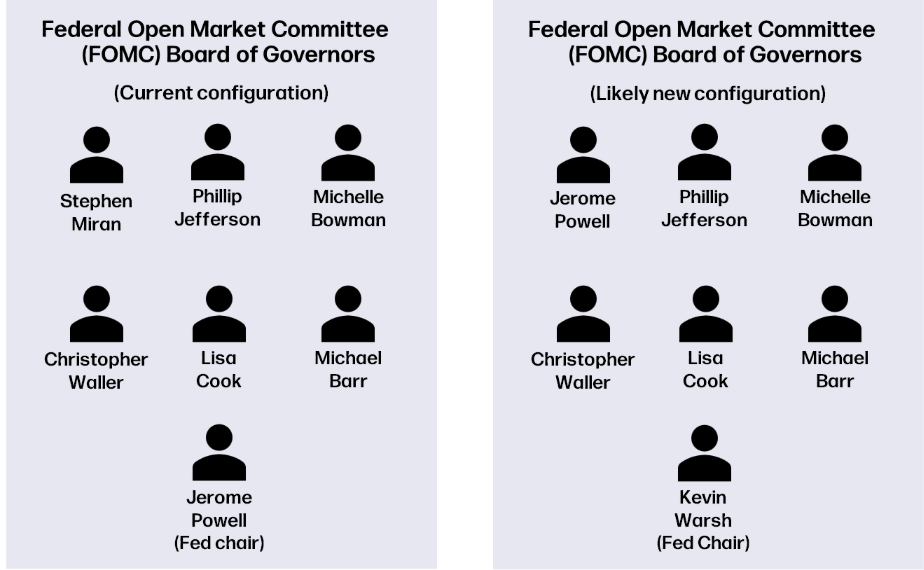
Markets are also focused on the confirmation process for Kevin Warsh as the next Federal Reserve Chair, nominated by Donald Trump to replace Jerome Powell.
- The long-awaited Senate confirmation hearing has been scheduled for Tuesday, April 21, following the submission of mandatory documents regarding potential conflicts of interest.
- Despite formal progress, uncertainty surrounds the process. Approval of the nomination hinges on full support from Senate Banking Committee Republicans, where the majority is slim.
- Republican Senator Thom Tillis has threatened to block the nomination until the Department of Justice completes its investigation into Jerome Powell, creating a tangible risk of political deadlock.
- With just weeks remaining before Powell’s term ends, delays or stalling in the process add a new layer of uncertainty for markets.
Why This Matters: Leadership uncertainty at the Federal Reserve arises in an already sensitive context, marked by recurring pressures from Donald Trump on the central bank.
- The combination of institutional uncertainty and questions about the Fed’s independence could weaken perceptions of predictability and credibility in US monetary policy.
- This environment may reduce the attractiveness of US Treasury securities, pressuring the dollar and amplifying volatility in global markets, especially in assets sensitive to international capital flows.
University of Michigan Consumer Confidence Index (UMich)
Expected USDBRL Impact: Bullish
Next week, the University of Michigan Consumer Confidence Index in the US for April will serve as a key indicator for investors to adjust their expectations regarding the country’s economic outlook.
- The index is significant as it measures consumers’ future expectations, aiding in forecasting economic trends.
- In addition to the overall index, attention will also focus on its inflation expectations component for the year ahead.
Why This Matters: Signs of rising inflation expectations could reinforce concerns about unanchored inflation, suggesting prolonged monetary tightening may be required.
- This scenario could, in turn, increase yields on public debt and strengthen the dollar globally.
Recent Data: In the preliminary April release, the overall index fell from 53.3 in March to 47.6.
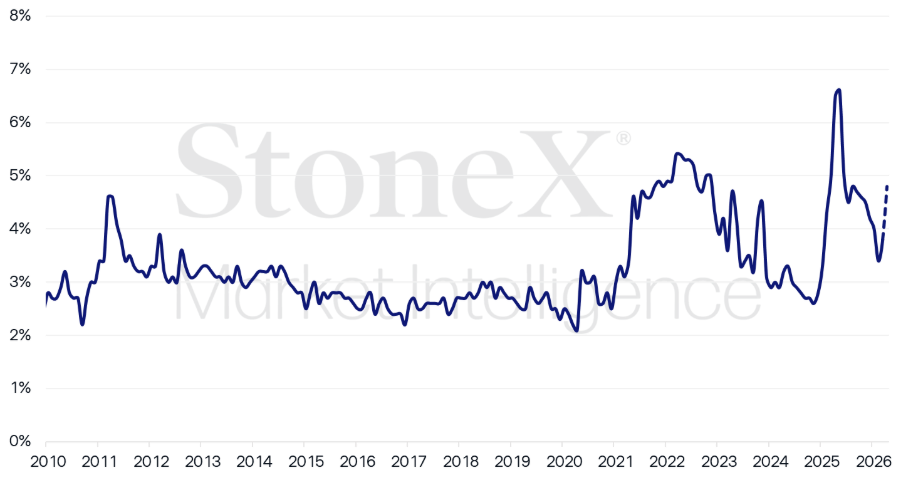
- Meanwhile, inflation expectations for the next 12 months accelerated from 3.8% to 4.8%.
- These figures point to worsening economic activity and inflation control in the US, potentially exacerbated by the Middle East conflict and rising energy commodity prices.
Inflation Expected in the Next 12 Months in the United States (%)
Source: University of Michigan (UMich). Design: StoneX.

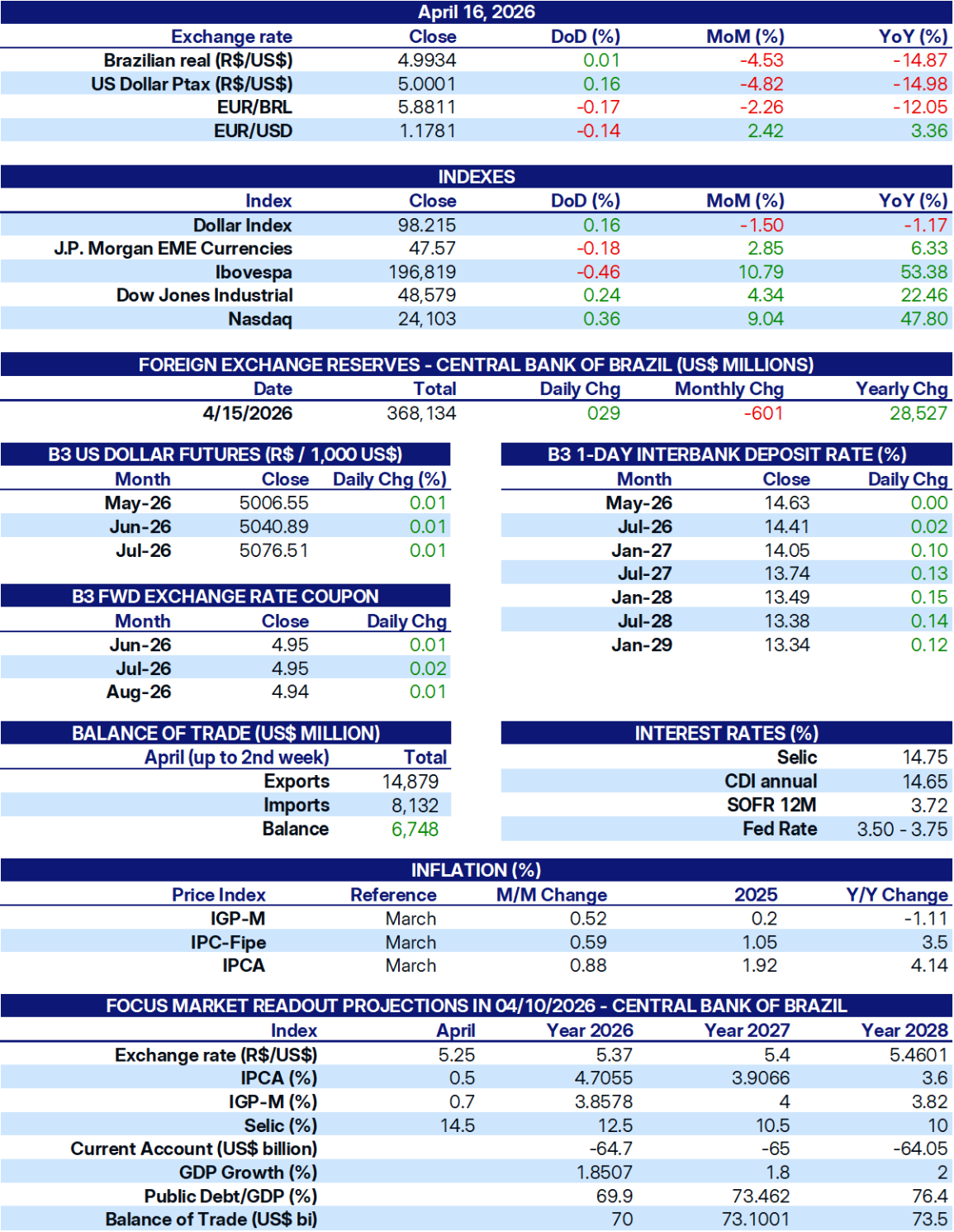
INDICATORS
Sources: Central Bank of Brazil; B3; IBGE; Fipe; FGV; MDIC; IPEA, and StoneX cmdtyView.
The StoneX Group Inc. group of companies provides financial services worldwide through its subsidiaries, including physical commodities, securities, exchange-traded and over-the-counter derivatives, risk management, global payments and foreign exchange products in accordance with applicable law in the jurisdictions where services are provided. References to over-the-counter (“OTC”) products or swaps are made on behalf of StoneX Markets LLC (“SXM”), a member of the National Futures Association (“NFA”) and provisionally registered with the U.S. Commodity Futures Trading Commission (“CFTC”) as a swap dealer. SXM’s products are designed only for individuals or firms who qualify under CFTC rules as an ‘Eligible Contract Participant’ (“ECP”) and who have been accepted as customers of SXM. StoneX Financial Inc. (“SFI”) is a member of FINRA/NFA/SIPC and registered with the MSRB. SFI is registered with the U.S. Securities and Exchange Commission (“SEC”) as a Broker-Dealer and with the CFTC as a Futures Commission Merchant and Commodity Trading Adviser. References to securities trading are made on behalf of the BD Division of SFI and are intended only for an audience of institutional clients as defined by FINRA Rule 4512(c). References to exchange-traded futures and options are made on behalf of the FCM Division of SFI . StoneX is a trading name of StoneX Financial Ltd (“SFL”). SFL is registered in England and Wales, Company No. 5616586. SFL is authorized and regulated by the Financial Conduct Authority [FRN 446717] to provide to professional and eligible customers including: arrangement, execution and, where required, clearing derivative transactions in exchange traded futures and options. SFL is also authorised to engage in the arrangement and execution of transactions in certain OTC products, certain securities trading, precious metals trading and payment services to eligible customers. SFL is authorised & regulated by the Financial Conduct Authority under the Payment Services Regulations 2017 for the provision of payment services. SFL is a category 1 ring-dealing member of the London Metal Exchange. In addition SFL also engages in other physically delivered commodities business and other general business activities which are unregulated and not required to be authorised by the Financial Conduct Authority. StoneX Group Inc. acts as agent for SFL in New York with respect to its payments services business. StoneX APAC Pte. Ltd. acts as agent for SFL in Singapore with respect to its payments services business. ‘StoneX’ is the trade name used by StoneX Group Inc. and all its associated entities and subsidiaries.
Trading swaps and over-the-counter derivatives, exchange-traded derivatives and options and securities involves substantial risk and is not suitable for all investors. Past performance of any futures or option is not indicative of future success. Indicators are not a trading system and are not published as a specific trade recommendation. The information herein is not a recommendation to trade nor investment research or an offer to buy or sell any derivative or security. It does not take into account your particular investment objectives, financial situation or needs and does not create a binding obligation on any of the StoneX group of companies to enter into any transaction with you. You are advised to perform an independent investigation of any transaction to determine whether any transaction is suitable for you. No part of this material may be copied, photocopied or duplicated in any form by any means or redistributed without the prior written consent of StoneX Group Inc.
© 2026 StoneX Group Inc. All Rights Reserved.