USDBRL Likely to Reflect FOMC and Copom Interest Rate Decisions and Geopolitical Tensions in the Middle East
- Bullish
- The FOMC is expected to keep interest rates steady, supporting U.S. Treasury yields and attracting foreign capital to the U.S., strengthening the dollar globally.
- The Copom is expected to cut Brazil's benchmark interest rate (Selic) by 0.25 percentage points, reducing the appeal of domestic bonds and making it harder to attract foreign investment, weakening the real.
- Bearish
- Expectations of progress in negotiations between the U.S. and Iran to resolve the conflict could boost global risk appetite, benefiting currencies of emerging economies like the Brazilian real.
The week in review
- With a light calendar of major economic indicators, investors focused on developments in Middle Eastern tensions.
- Midweek news of ship seizures in the Strait of Hormuz by both the U.S. and Iran dampened hopes for a diplomatic resolution between the two nations.
- The U.S. Department of Justice concluded its investigations involving Federal Reserve Chairman Jerome Powell, paving the way for Kevin Warsh’s Senate confirmation.
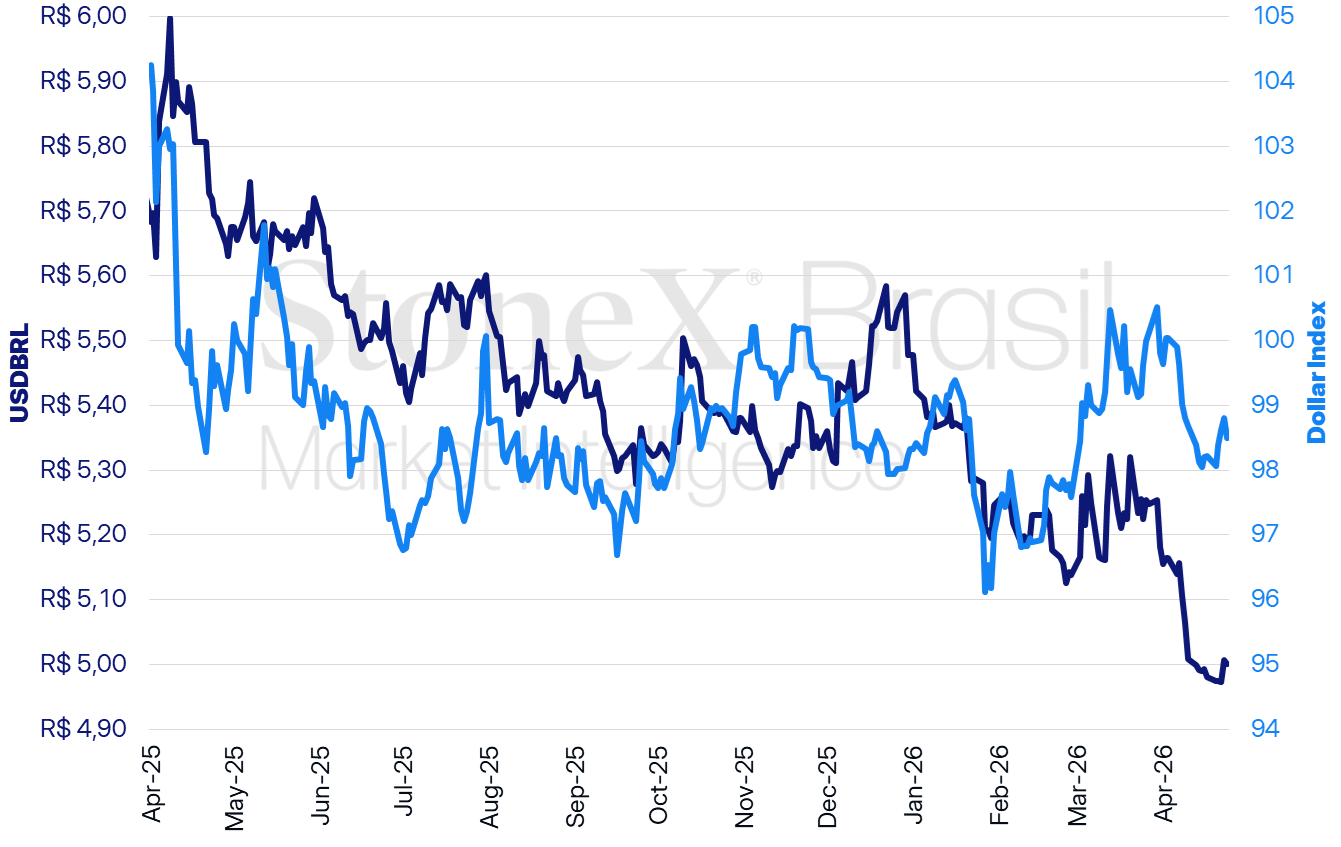
USDBRL and Dollar Index (points)
Source: StoneX cmdtyView. Design: StoneX.
USDBL Variations | Daily: -0.13% | Weekly: +0.40% | Monthly: -3.47% | Annual: -8.69% | 12-month: -12.16%
Dollar Index Variations | Daily: -0.30% | Weekly: +0.28% | Monthly: -1.32% | Annual: +0.18% | 12-month: -0.80%
KEY EVENT: Diplomatic Standoff in the Middle East
Expected Impact on USDBRL: Bearish
Investors will continue monitoring news on the conflict between the U.S., Israel, and Iran in the Middle East amidst cautious optimism for a diplomatic resolution and the reopening of the Strait of Hormuz.
- Last Friday (24th), it was reported that Iran’s Foreign Minister Abbas Araghchi would travel to Pakistan to resume negotiations with the U.S.
- Though it’s too early to predict a diplomatic resolution, both sides’ willingness to engage in dialogue has been enough to improve investor sentiment.
- However, the situation remains fragile, and any shift in investor sentiment could lead to a reversal of this trend.
Why it matters: Anticipation of a diplomatic solution to the conflict is likely to boost global risk appetite and positively impact riskier assets like the Brazilian real.
- Conversely, disappointment in these expectations could have the opposite effect.
Strait of Hormuz: Despite efforts by the U.S. and Iran to resume diplomatic talks, the passage through the strait remains blocked by both nations.
- The disruption of oil flows in the region has raised concerns about a global supply shortage and potential inflationary impacts.
- Even if the passage is unblocked swiftly, it will take time to restore global oil production and logistics due to damage to infrastructure and shipping delays, keeping oil prices elevated in the short term.
FOMC Interest Rate Decision
Expected Impact on USDBRL: Bullish
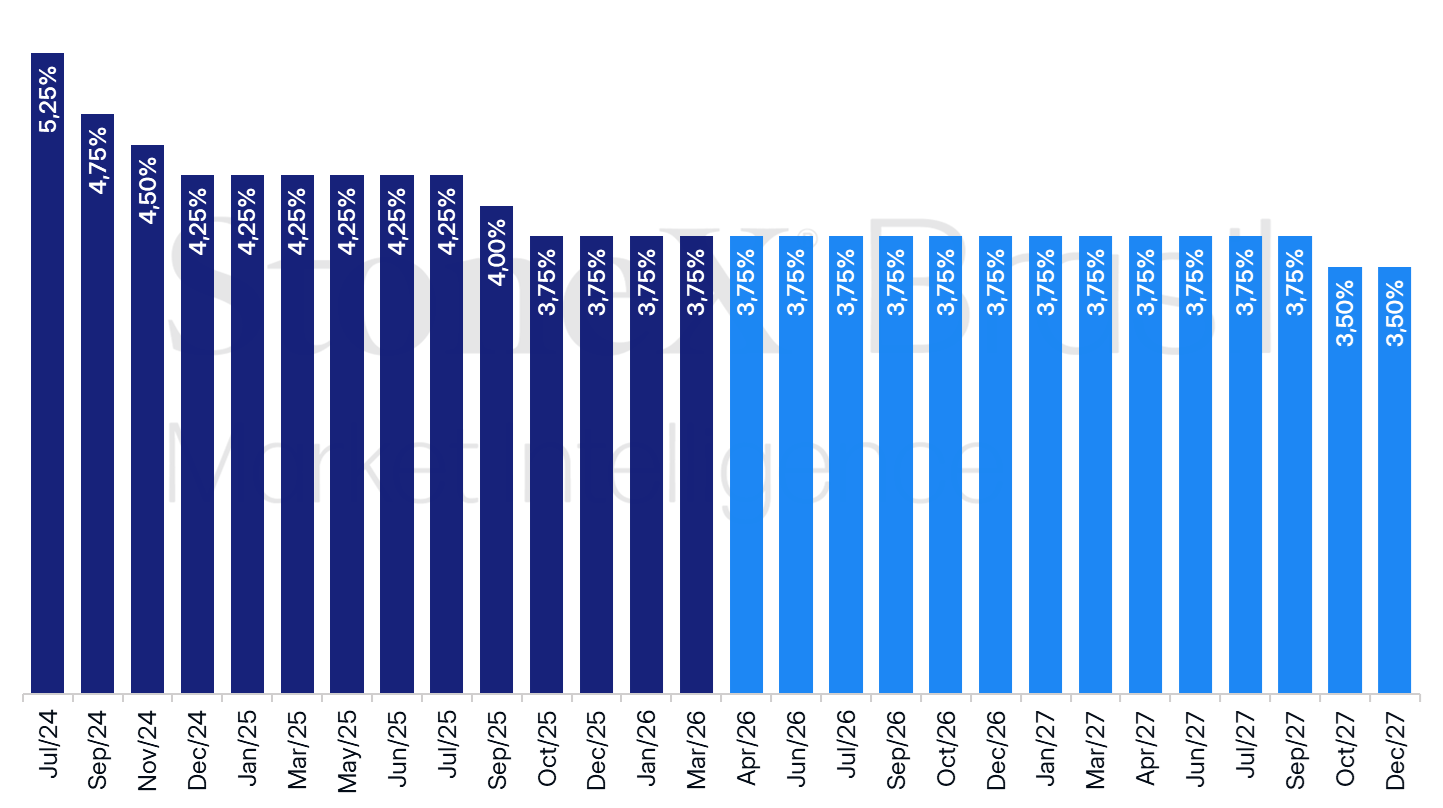
U.S.: Historical and Expected Interest Rates – updated as of April 24, 2026
Source: CME FedWatch Tool. Design: StoneX. Refers to the futures market’s most probable bet as of the indicated date.
Global financial markets are expected to react to Wednesday’s (29th) Federal Open Market Committee (FOMC) interest rate decision, where rates are likely to be maintained between 3.50% and 3.75% annually.
Why it matters: The Fed’s decision to keep rates stable supports U.S. Treasury yields and facilitates foreign capital inflows into the U.S., strengthening the dollar globally.
Waiting game: Investors broadly agree that the FOMC will leave interest rates unchanged, awaiting greater clarity on geopolitical tensions in the Middle East and their global economic impacts.
- Given the lack of suspense on the decision itself, investor focus will likely shift to Federal Reserve Chair Jerome Powell’s press conference.
- Recent statements by FOMC members indicate comfort with a cautious approach amid uncertainty regarding the impact of Strait of Hormuz restrictions on global commodity prices, particularly energy.
End of investigations: Last Friday (24th), the U.S. Department of Justice unexpectedly closed its investigation into Powell over alleged irregularities in Federal Reserve headquarters renovations.
- The investigation occurred amid a prolonged White House campaign criticizing the Fed and Powell for dissatisfaction with current U.S. interest rates.
- President Donald Trump attempted to dismiss Federal Reserve Board Governor Lisa Cook, but the Supreme Court temporarily blocked the decision pending Cook’s appeal.
- Trump also threatened to fire Powell on multiple occasions, most recently on April 16th.
Paving the way for Warsh: The closure of the investigation is seen as a White House move to facilitate Senate approval of Kevin Warsh as the next Federal Reserve Chair.
- Republican Senator Thom Tillis had stated he wouldn’t vote for Warsh in the Senate Banking Committee until the investigation was concluded.
- Powell’s current term as Fed Chair ends on May 15th but can be temporarily extended until the Senate confirms his successor.
- Analysts believe Warsh might be more inclined to support the White House’s desire for future rate cuts.
What’s next? Powell’s term as a Federal Reserve Board member, however, lasts until January 2028.
- While it was customary for Fed Chairs to resign their Board positions upon completing their chairmanships, Powell has stated he would remain at least until the investigation formally concluded.
- It’s unclear whether the investigation’s closure will prompt Powell to resign from the Board after Warsh takes office.
Copom Interest Rate Decision
Expected Impact on USDBRL: Bullish
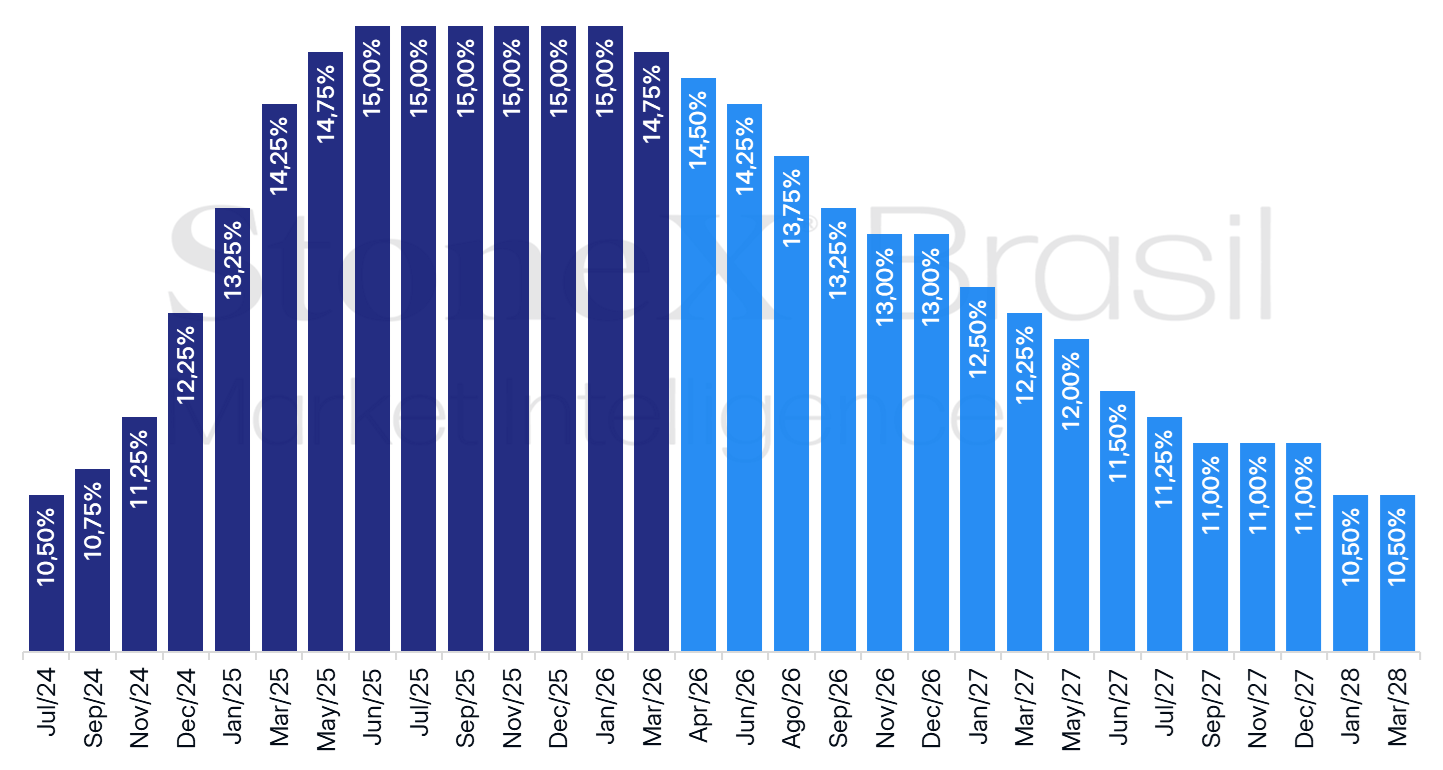
Brazil: Historical and Expected Interest Rates – Focus Bulletin as of April 17, 2026
Source: Central Bank of Brazil. Design: StoneX.
The Central Bank’s Monetary Policy Committee (Copom) is expected to cut Brazil’s benchmark interest rate (Selic) by 0.25 percentage points, from 14.75% to 14.50% annually.
Why it matters: Lowering Brazil’s benchmark interest rate tends to reduce the appeal of domestic bonds and discourage foreign investment, weakening the real.
Shifting expectations: The latest Focus Bulletin from the Central Bank showed that the median forecast for the Selic rate at the end of 2026 rose to 13.00% annually after three weeks at 12.50% annually.
- Additionally, since the conflict began, projections for Brazil's year-end IPCA inflation rose from 3.91% to 4.71%, exceeding the upper limit of the inflation target.
- This suggests investors anticipate inflationary pressures in Brazil driven by higher fuel and energy prices, potentially limiting Copom’s ability to enact further Selic rate cuts.
IPCA-15: In this context, the release of April’s IPCA-15 inflation index next Tuesday (28th) gains importance.
- The most recent reading showed March’s IPCA-15 accelerating from 0.70% to 0.88%, surpassing expectations. The annualized 12-month rate climbed to 4.14%.
- The core index, which excludes volatile food and energy components, decelerated from 0.91% to 0.46%.
- This indicates inflationary pressure stemmed mainly from rising energy commodity prices, highlighting the Middle East conflict’s impact on domestic prices.

INDICATORS
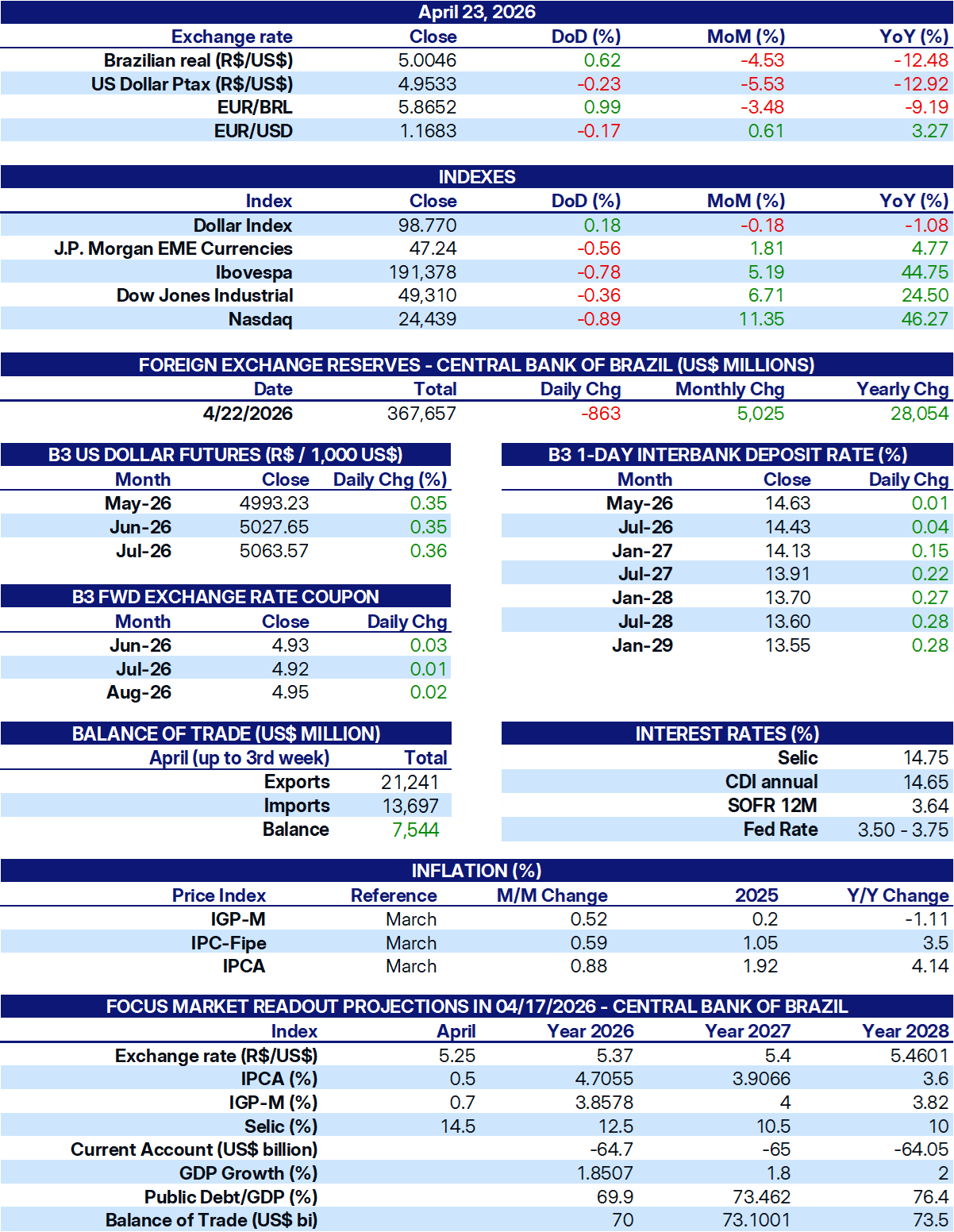
Sources: Central Bank of Brazil; B3; IBGE; Fipe; FGV; MDIC; IPEA and StoneX cmdtyView.