Brazilian Real will Reflect Middle East Negotiations, U.S. Inflation, and Trump-Xi Meeting
- Bullish
- Consumer inflation in the United States may reinforce the perception of persistent inflationary pressures, reducing expectations of Federal Reserve rate cuts and supporting the dollar's global strength.
- Bearish
- Potential diplomatic progress between the U.S. and Iran could reduce geopolitical risk perception and ease oil prices, favoring riskier assets such as the Brazilian real.
- The meeting between Donald Trump and Xi Jinping may pave the way for reduced trade and geopolitical tensions between the U.S. and China, boosting global risk appetite and benefiting emerging market currencies.
Last Week's Summary
- Despite new reports of clashes between U.S. and Iranian forces in the Gulf, President Donald Trump stated that the ceasefire agreement remains in effect. Although recent tensions have dampened expectations of swift diplomatic resolution, markets seem to interpret that there’s room for negotiation progress, potentially leading to a gradual normalization of traffic through the Strait of Hormuz in the coming weeks.
- In Brazil, the meeting between Donald Trump and Luiz Inácio Lula da Silva also drew investors’ attention. The discussions, described as “very good” by the U.S. president, may have helped limit the depreciation of the real, which performed relatively better than other global currencies. According to Trump, the conversation covered various topics, including trade and tariffs.
- Investors also reacted to the release of key U.S. economic indicators, particularly April's Employment Situation Report. The U.S. economy added 115,000 jobs during the month, above the median forecast of 73,000 but below March's results. The data reinforced the perception of resilience in the U.S. labor market, likely reducing the scope for Federal Reserve rate cuts in the short term.
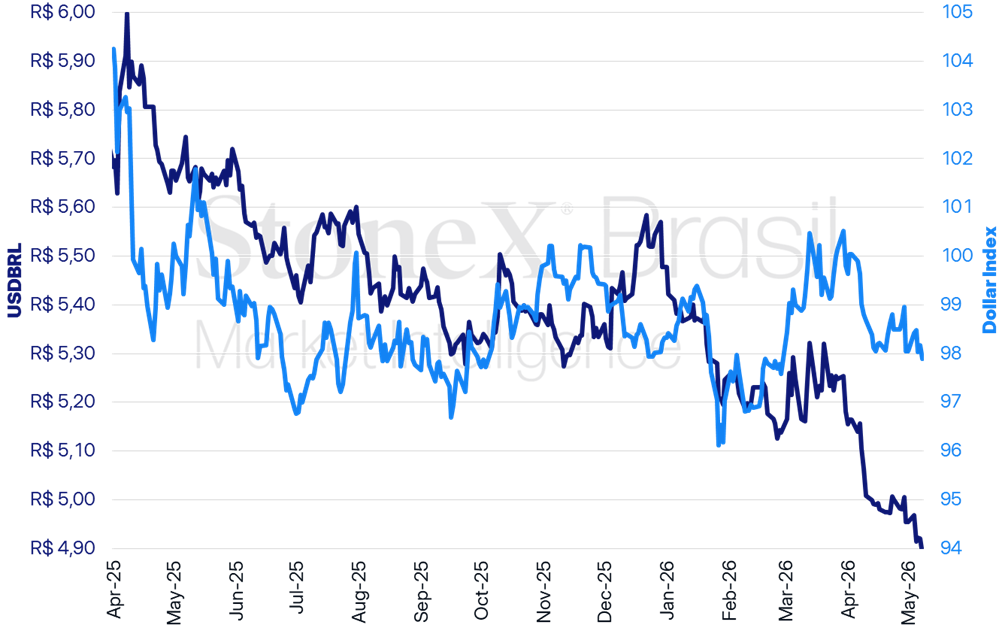
Commercial Dollar (US$/BRL) and Dollar Index (points)
Source: StoneX cmdtyView. Prepared by: StoneX.
Commercial Dollar Variations
Daily: -0.62% | Weekly: -1.30% | Monthly: -1.30% | Year-to-Date: -10.72% | 12-Month: -13.63%
Dollar Index Variations
Daily: -0.28% | Weekly: -0.17% | Monthly: -0.17% | Year-to-Date: -0.44% | 12-Month: -2.73%
KEY TAKEAWAY: Potential Diplomatic Progress Between U.S. and Iran
Expected Impact on the Brazilian Real Exchange Rate: Bearish
Despite new reports of clashes between U.S. and Iranian forces in the Gulf this week, President Donald Trump stated on Thursday (May 7) that the ceasefire agreement remains in effect, although recent tensions have dampened expectations of swift diplomatic resolution.
- The latest escalation occurred as Washington awaits Tehran’s response to an American proposal to end the conflict, which began on February 28 with attacks carried out by the U.S. and Israel.
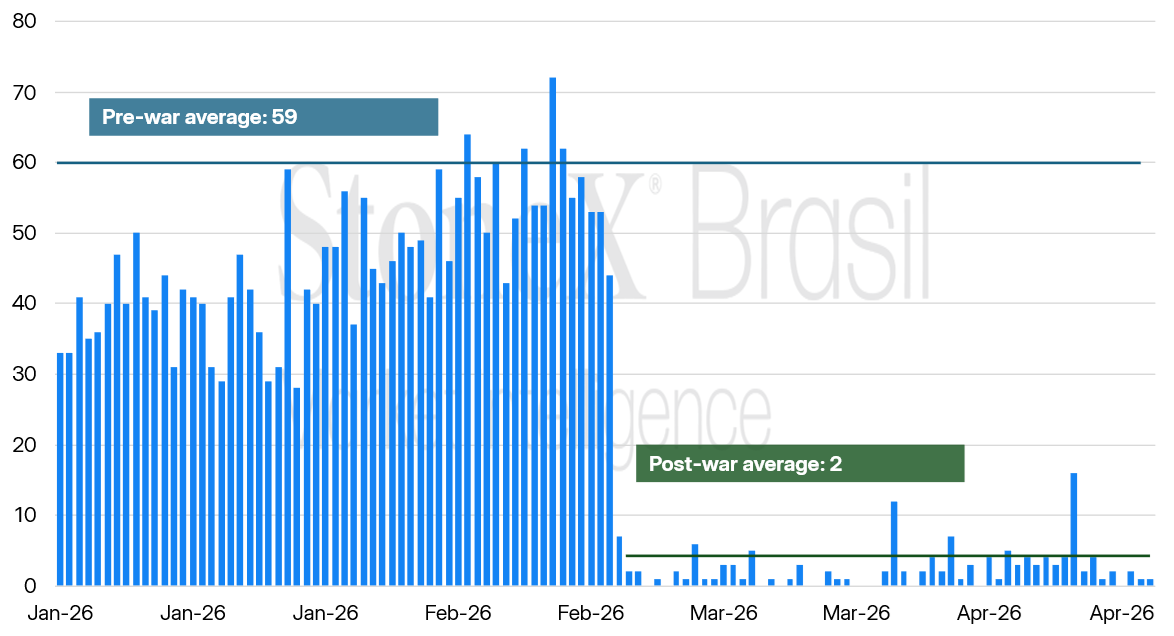
- Trump stated that three U.S. Navy destroyers were targeted while crossing the Strait of Hormuz, a strategic route through which about one-fifth of the global oil and liquefied natural gas flow passes, currently under significantly restricted circulation.
- Later, the president downplayed the incidents, reiterating that the ceasefire remains in effect.
- The Iranian government, meanwhile, accused the U.S. of violating the agreement, which has seen recurring instability since its announcement on April 7.
- On Friday, U.S. Secretary of State Marco Rubio stated that the U.S. was awaiting Iran’s response to the proposal to end the conflict, expressing hope for a “serious” counterproposal.
- In this context, diplomatic negotiations are expected to remain a key driver of investor sentiment throughout the next week.
Why This Matters: Markets seem to interpret that the ceasefire still holds and that there’s room for diplomatic progress, potentially leading to a gradual normalization of traffic through the Strait of Hormuz.
- This scenario pressured future oil prices and the dollar in the last session of the week, while favoring riskier assets. If negotiations progress, this could create a more favorable environment for the Brazilian real next week.
- On the other hand, it’s worth noting that the situation remains fragile. New clashes, a negative response from Tehran, or signs of deteriorating negotiations could quickly reintroduce risk premiums, push oil prices higher, and prompt renewed demand for dollar protection.
Ships Crossing the Strait of Hormuz in 2026
Source: PortWatch, IEA, MarineTraffic. Prepared by: StoneX.
U.S. Consumer Inflation
Expected Impact on the Brazilian Real Exchange Rate: Bullish
Next week, investors will react to the release of U.S. consumer inflation data for April. Expectations point to another strong reading, reflecting the recent rise in energy prices and the resilience of the U.S. labor market.
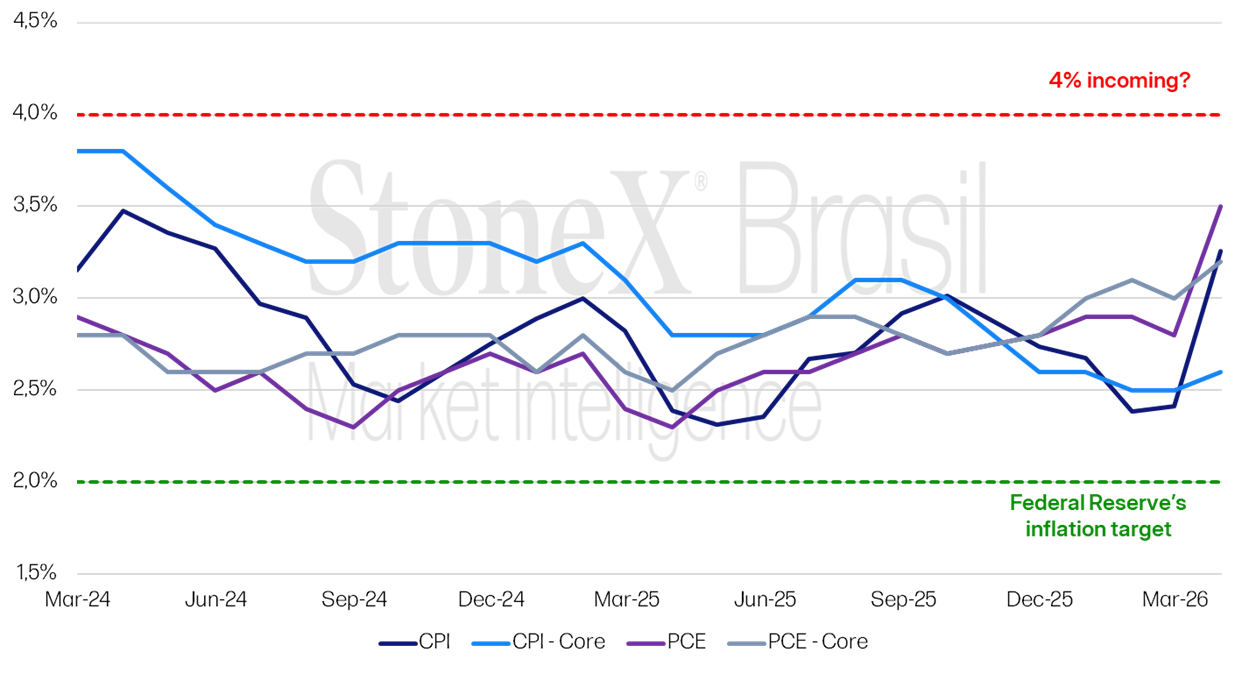
- Median forecasts project a 0.45% increase in headline CPI for April, while the core CPI is expected to rise by 0.21%. On an annual basis, estimates suggest headline inflation at 3.56% and core inflation at 2.56%, indicating that price pressures remain significant, especially in the headline figure, which is more sensitive to energy.
Why This Matters: Higher inflation in the U.S. reduces the likelihood of short-term rate cuts by the Federal Reserve.
- This scenario supports yields on U.S. Treasury bonds and enhances the relative attractiveness of dollar-denominated assets.
- In this context, signs of persistent inflationary pressure may strengthen the U.S. dollar globally and weigh on emerging market currencies like the Brazilian real.
- The reading is particularly significant given the U.S. labor market’s continued resilience, reducing urgency for monetary easing in an inflationary environment still above target.
Fed’s Focus: In its latest Federal Open Market Committee (FOMC) decision, the Federal Reserve kept rates unchanged but signaled heightened concern over inflation.
- The adjustment from describing inflation as “a bit elevated” to the more direct “elevated” was interpreted as a more cautious stance by the central bank.
- Thus, a stronger-than-expected CPI reading could reinforce the view that the Fed will maintain restrictive rates for an extended period.
- Conversely, a more benign reading could ease pressure on Treasuries and limit the dollar’s global strengthening.
U.S. Inflation Indexes - 12-Month Accumulated (%)
Source: StoneX CmdtyView. Prepared by: StoneX.
Xi Jinping-Trump Meeting
Expected Impact on the Brazilian Real Exchange Rate: Bearish
Markets are also closely watching the meeting between Donald Trump and Xi Jinping, scheduled for May 14-15 in Beijing.
- The talks are expected to cover topics such as the Middle East conflict, trade relations, Taiwan, artificial intelligence, agriculture, and Chinese oil purchases, amidst heightened geopolitical and commercial sensitivity.
- The agenda is particularly significant as both the U.S. and China have indicated interest in reducing uncertainties ahead of the meeting, especially concerning the U.S.-Iran conflict.
- Nonetheless, the situation remains complex, with Washington pressuring Beijing over Iranian oil purchases and adherence to U.S. sanctions.
Why This Matters: The possibility of progress in U.S.-China relations may boost global risk appetite.
- Notably, any indication of reduced trade tensions, improved diplomatic coordination in the Middle East, or decreased escalation risks between the world’s two largest economies could favor emerging market assets.
- For the Brazilian real, this environment tends to be positive, as it enhances conditions for capital flows into higher-risk markets and reduces global demand for dollar protection.
- Moreover, potential collaboration between Washington and Beijing on the Iranian issue could help lower risk perceptions surrounding oil, reinforcing the bearish channel for USDBRL.
What to Watch: The meeting is likely to be monitored across three key areas. The first relates to the Middle East conflict, particularly the possibility of China exerting pressure on Iran.
- The second involves U.S.-China trade relations, focusing on potential commitments related to agriculture, technology, and sanctions.
- The third concerns the political tone of the meeting, which could signal whether bilateral relations are heading toward stabilization or renewed tensions.
- While the expectation for dialogue is positive for market sentiment, concrete progress is not guaranteed. If the meeting results in vague signals or reveals additional divergences, the positive effect on emerging market currencies may be limited.
ECONOMIC INDICATORS TABLE
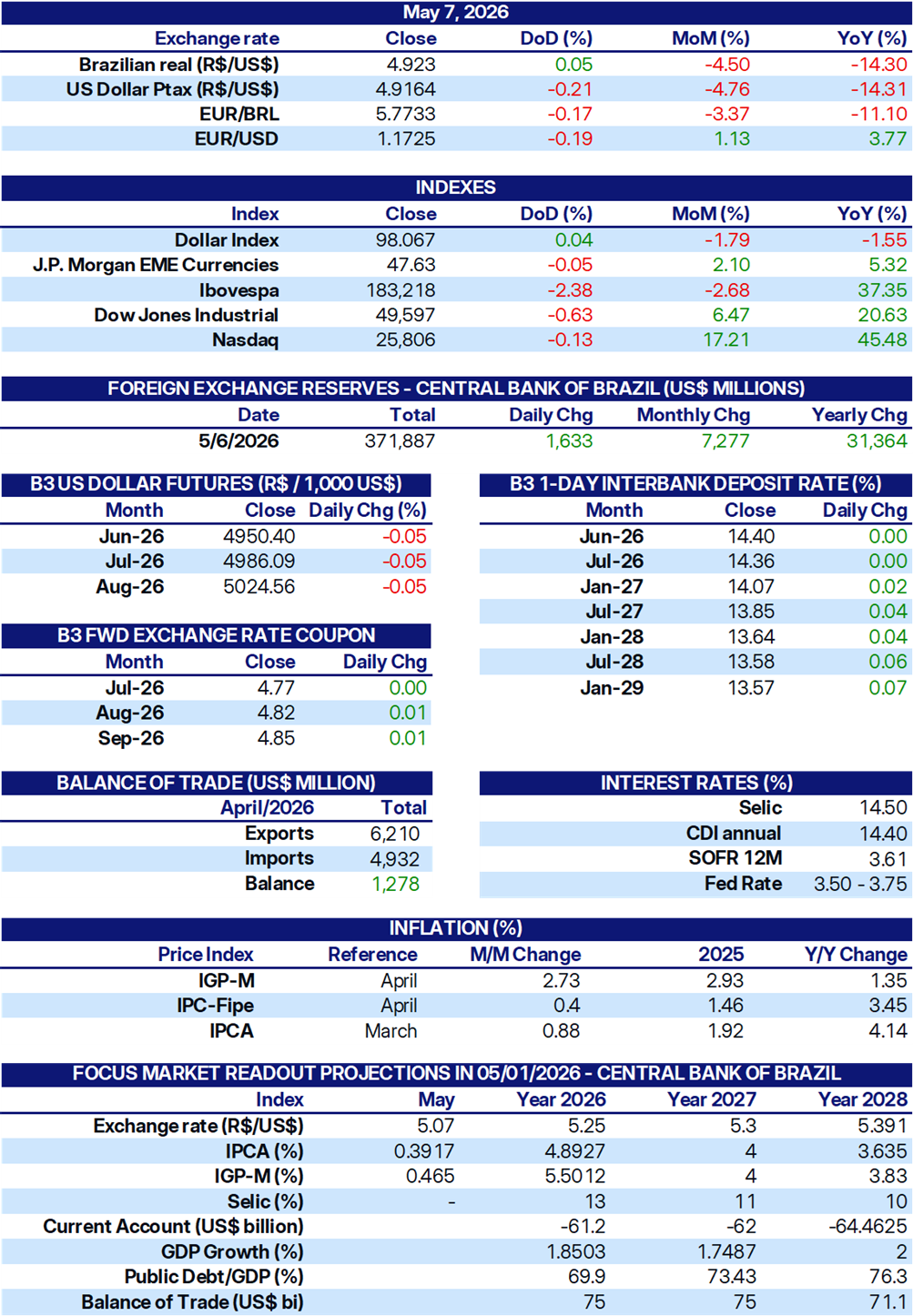
Sources: Brazilian Central Bank; B3; IBGE; Fipe; FGV; MDIC; IPEA; and StoneX cmdtyView.