Foreign Scenario
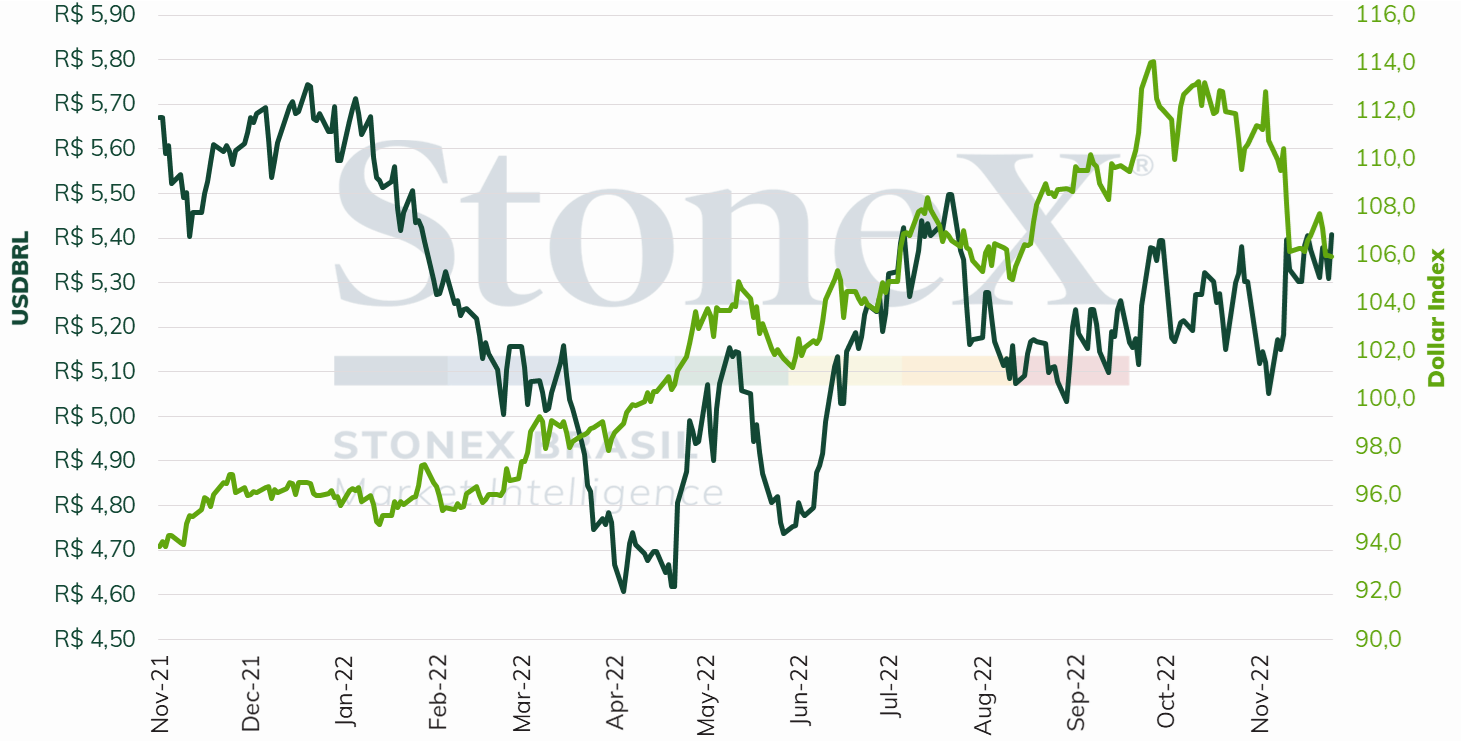
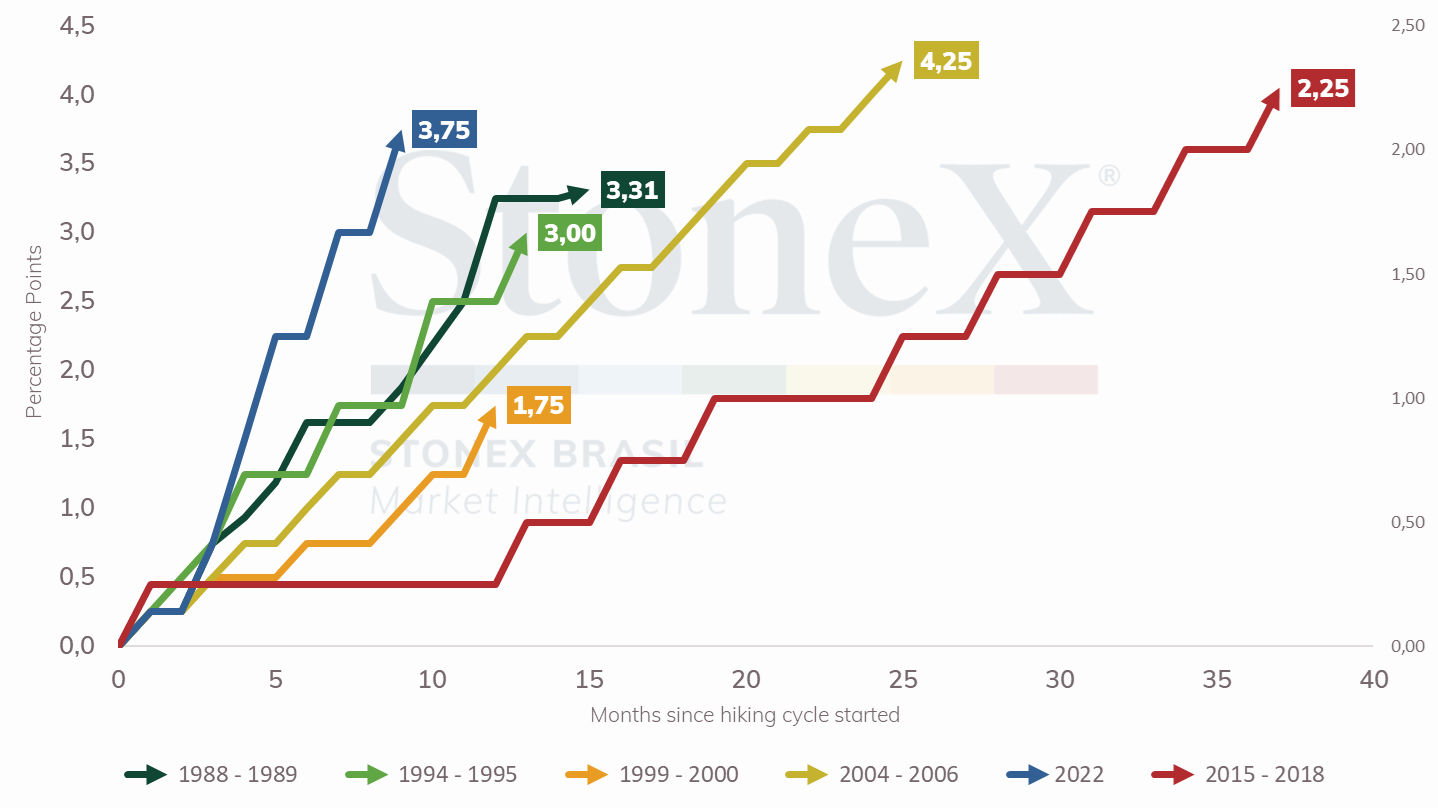
This week, attention should remain on monetary policy in the United States. The American currency depreciated this November after the inflation indices for October showed a lower-than-estimated increase, and the Federal Reserve (Fed) started to signal that it will decrease the pace of increases in its interest rate from the current 0.75 p.p. to 0.50 p.p. In their public speeches, the members of the autarchy have reinforced that the fight against inflation is still the institution's "singular focus" and that, for the moment, it is more important to pay attention to the level of interest rates at the end of the monetary tightening than to the magnitude of the hikes. Even so, financial market agents interpreted this change in posture as a moderation on the part of the Fed and an implicit recognition of the risks that an aggressive sequence of interest rate hikes presents to economic activity and the country's financial system - the fastest in the last four decades.
Effective change in the US federal funds rate
Source: Bank for International Settlements (BIS). Design: StoneX.
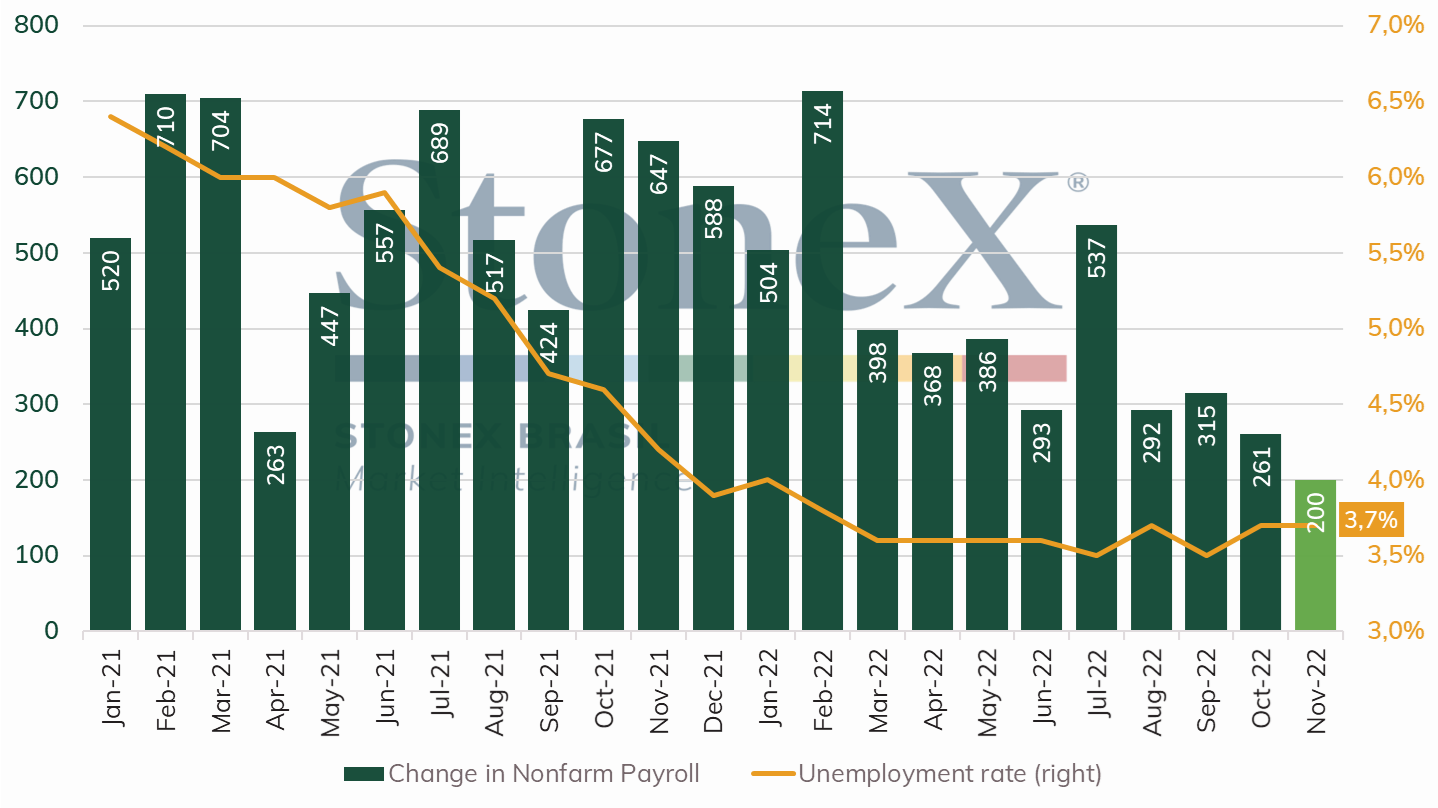
This week, Federal Reserve Chairman Jerome Powell will give his last speech before the mandatory quiet period required for the monetary policy decision on December 14. Besides reinforcing the other authorities' views on the slower pace and the final level of interest rates (higher) in the US, Powell will explore the economic outlook, inflation and the labor market, commenting on the resilience of the sector, the rebound in wage gains and a potential price transmission of labor costs into consumer prices. Coincidentally, statistics about the labor market in the United States will be released during the week, with the November Employment Situation Report and the October Job Openings and Turnovers Survey. As with the other indicators, investors' reading should be made through the prism of inflation and possible repercussions on the interest rate in the country. The projections indicate that job creation should maintain the deceleration pace but continue with a positive balance compared to the previous month.
Estimate OF the balance of urban job creation in November in the United States (thousand people)
Source: Federal Reserve Bank of St. Louis. Design: StoneX.
Additionally, next week will see the release of the Personal Consumption Expenditures (PCE) price index and the ISM Purchasing Managers' Index (PMI). The PCE is the Fed's most widely used measure to track consumer prices in the country, and it should moderate its rise as observed in its peers, the Consumer Price Index (CPI) and the Producer Price Index (PPI). The November manufacturing PMI should cross the 50-point threshold and officially enter contraction, in line with an interpretation of a stagnant economy but not yet in recession.
Finally, it is worth noting that Covid-19 cases in China continue to rise rapidly and undermine the global appetite for risky assets. The daily average of cases has reached 30,444, a record since the start of the pandemic and breaking the psychological threshold of 30,000 for the first time. The "fine-tuning" measures - neighborhood and district-based restrictions - have little effect in curbing infections, and there are fears that new lockdowns of large scale and duration will be implemented. According to an estimate by Nomura Bank, as of November 21, 49 Chinese cities were implementing measures to restrict mobility to some degree, representing 407 million inhabitants.
Domestic Scenario
In Brazil, the week should once again be marked by the trajectory of fiscal policy under the leadership of Luiz Inácio Lula da Silva. The final text of the proposed constitutional amendment (PEC) was postponed successively last week due to strong resistance from members of Congress to accept the terms suggested by the transition team of the future government, namely several expenditures above the spending cap that would be able to finance the entire Bolsa Família income transfers program (estimated at BRL 175 billion) for the four years of the next mandate. Allies of the president-elect recognize that the negotiations in the National Congress are disjointed, with an excess of unrepresentative voices and an absence of representatives with a legitimate voice. While the president of the Workers' Party (PT), Gleisi Hoffmann, admits that "there is a lack of political articulation in the Senate," the experienced senator Jaques Wagner (PT-BA) points out that "for the time being, there is no Minister of Finance," because it would facilitate the centralization of economic demands with the parliamentarians. Still, the transition team expects a consensus to be reached during the weekend.
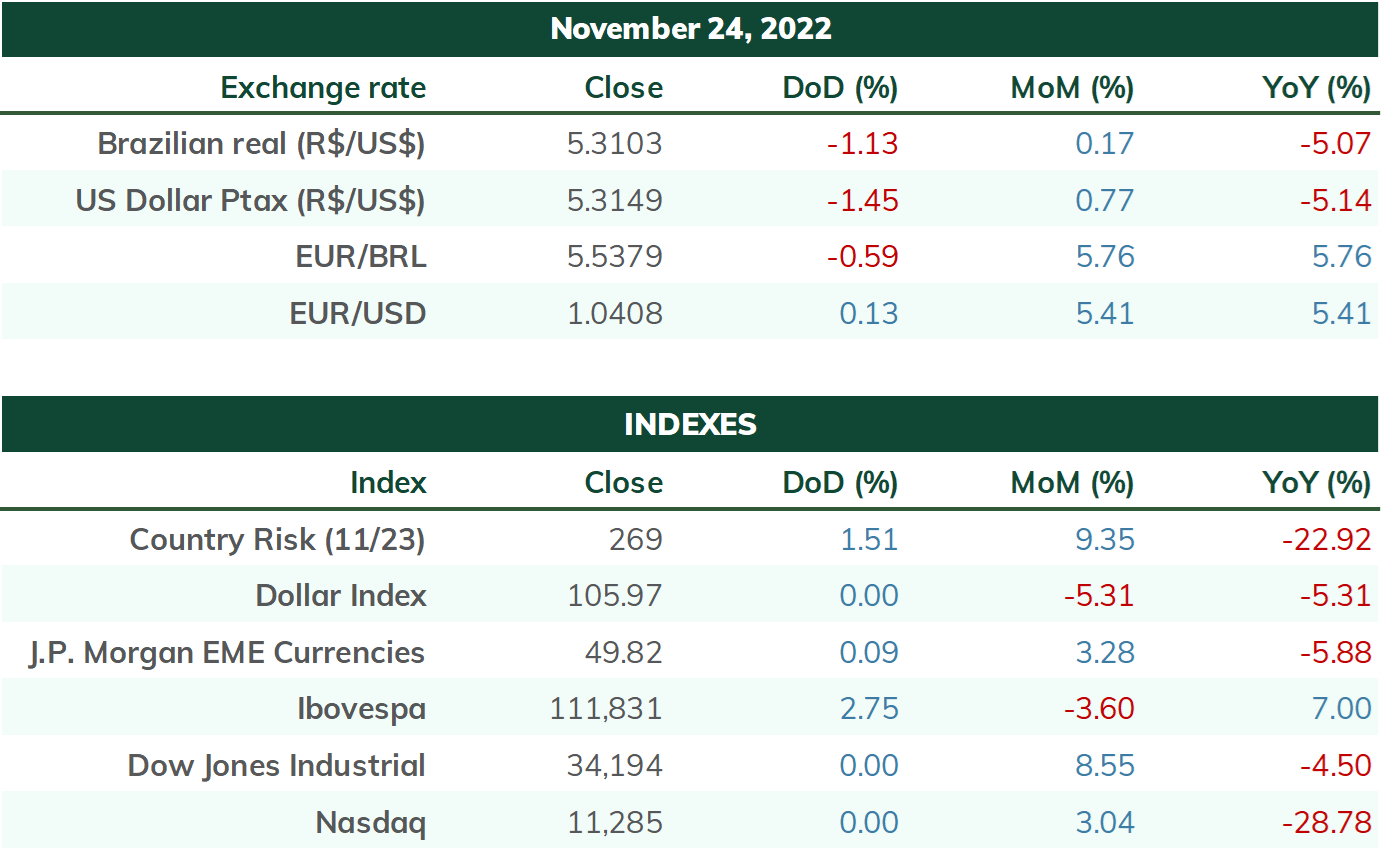
The long uncertainty about the PEC and the absence of indications for the future leadership cadres for the economic area amplifies analysts' fears about the new government's commitment to fiscal responsibility and provokes excessive volatility on Brazilian assets. Investors continue to be cautious and may raise their risk premium requirements, which, in turn, would reduce the volume of foreign investments in Brazil and contribute to the BRL weakening.
This week, the third quarter's Gross Domestic Product (GDP) will also be released, with a forecasted quarterly growth of 0.7%. The Brazilian GDP exceeded expectations during the year's first half, with a higher expansion of the services sector and personal consumption. However, the rise in imports may limit this increase. Additionally, labor market data for October will be released, another indicator of a strong recovery in 2022, the fiscal statistics for the same month, and the General Price Index - Market (IGP-M) for November.