Foreign scenario
This week's focus will be on economic indicators for the US economy, which, in turn, will be interpreted from the perspective of its relations with the Federal Reserve's monetary policy. On Tuesday, S&P Global will report the country's preliminary industrial, services, and composite Purchasing Managers' Indexes (PMI), and they are expected to remain in negative territory, namely at 45.0 points for services and 46.2 points for manufacturing (a reading below 50 points indicates contraction from the previous month). Such a performance would reinforce the interpretation that economic growth is slowing both in the United States and globally and that the risks of an economic recession in 2023 are significant.
In this regard, on Thursday, the Gross Domestic Product for the United States in the 4th quarter will be published, and average estimates point to a growth of 2,6% in the period. While growth should ward off fears of a recession, analysts point out that much of the boost is likely to come from stock buybacks, a temporary boost. In addition, the indicator refers to the quarter ending in December, while high-frequency indicators (monthly) have pointed to a more pessimistic reading of the current situation. The Personal Consumption Expenditures (PCE) Price Index, a benchmark metric by the Federal Reserve (Fed) for consumer prices and which should follow the softening trend of the Consumer Price Index (CPI), and durable goods orders for December, which is also expected to shrink, will also be released.
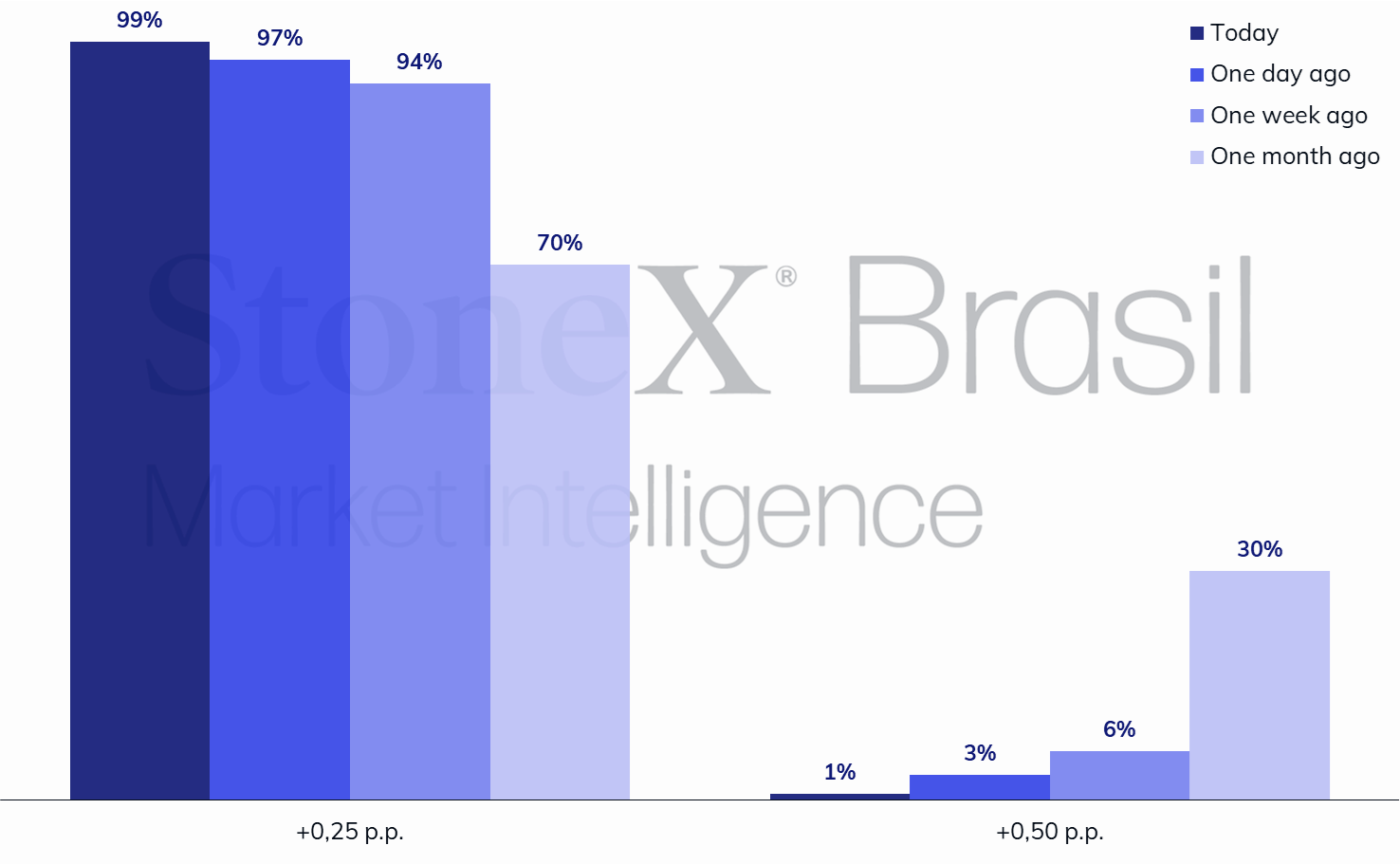
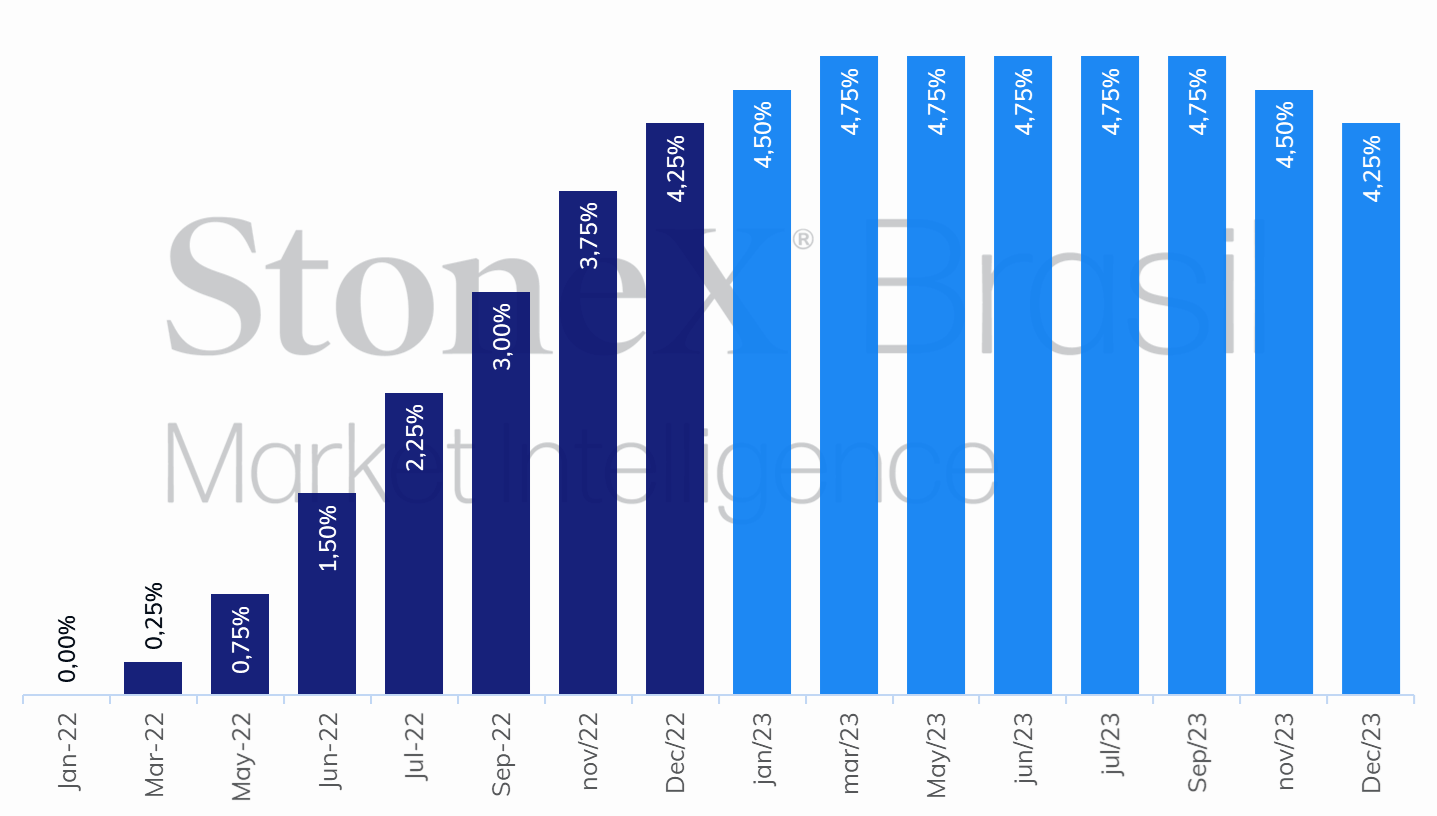
This week, there will be no speeches by officials of the Federal Open Market Committee (FOMC), as the mandatory period of silence for the monetary policy decision of February 01 will be in force. However, last week, the members of the monetary authority were unanimous in warning that, although the last few months have presented encouraging numbers, the risks of price acceleration persisting in a resilient and widespread manner into 2023 are relevant, requiring a sequence of increases in the country's interest rate to a final level above the 5.00% p.a. mark.
Bets on the Federal Reserve's February 1 interest rate decision
American interest rate history and most likely bet on the future interest market
Source: CME FedWatch Tool. Design: StoneX. Interest futures probabilities market regarding January 20, 2023
On the political front, the United States last week reached its $31.4 trillion public debt limit, and the country's Treasury has begun to adopt "extraordinary measures" to prevent the government from defaulting for the first time in history, such as suspending spending and investment for certain lines of government. Treasury Secretary Janet Yellen has estimated that these measures should extend government funding capacity until about mid-June. The US has already reached the debt limit on other occasions, and there are ways to prevent the government from defaulting on its obligations. However, the difficulty this time is that the new House of Representatives legislature has a majority of Republican lawmakers, opposed to President Joe Biden, a Democrat and quite a conservative configuration. During the Speaker of the House election, a bloc of resistant far-right lawmakers demanded changes to the house's operating rules to vote for the elected representative Kevin McCarthy, which empowered them. The willingness among these parliamentarians to cooperate with the White House is quite low. Therefore analysts fear that the next few months will be difficult discussions with a real risk that the country will default for the first time in its history, defaulting on its debt securities and surely causing a global economic crisis of high proportion.
Domestic scenario
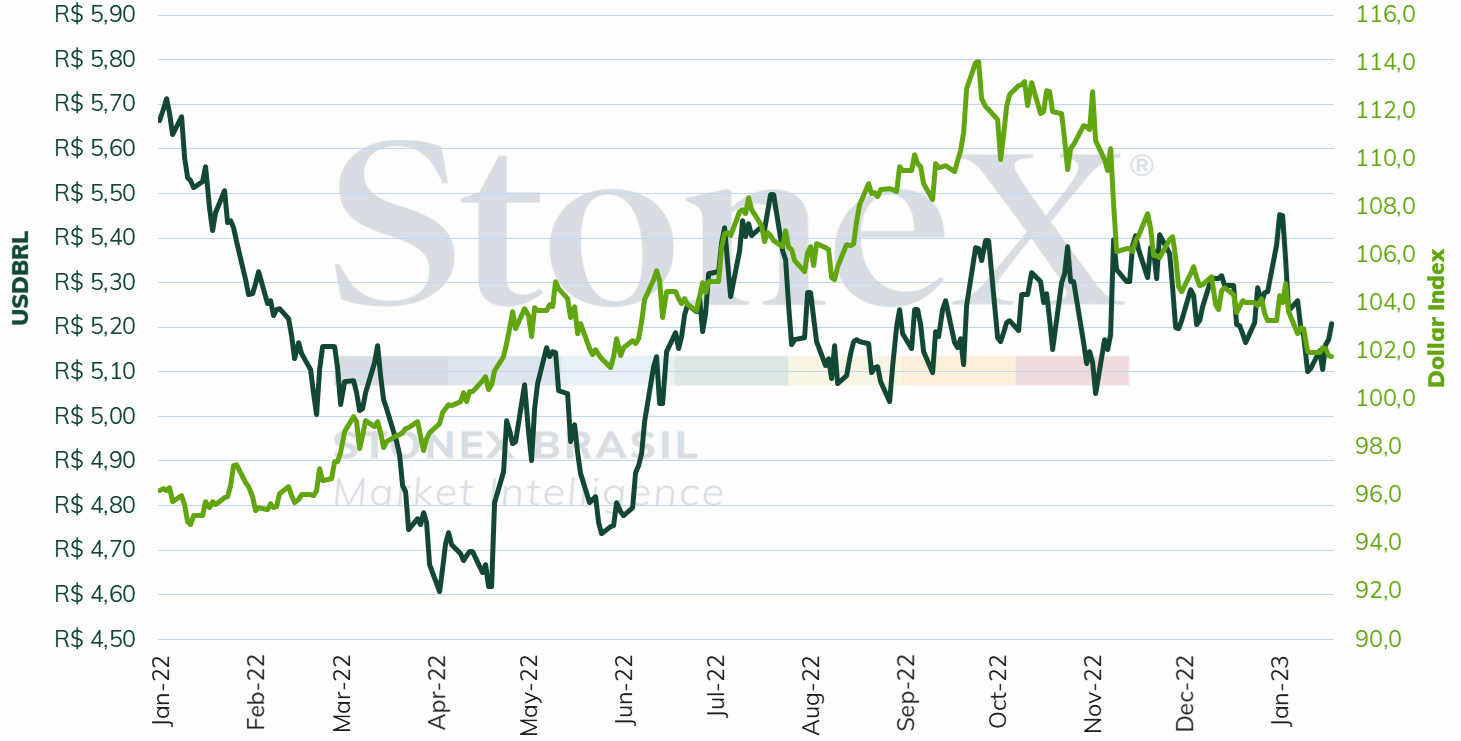
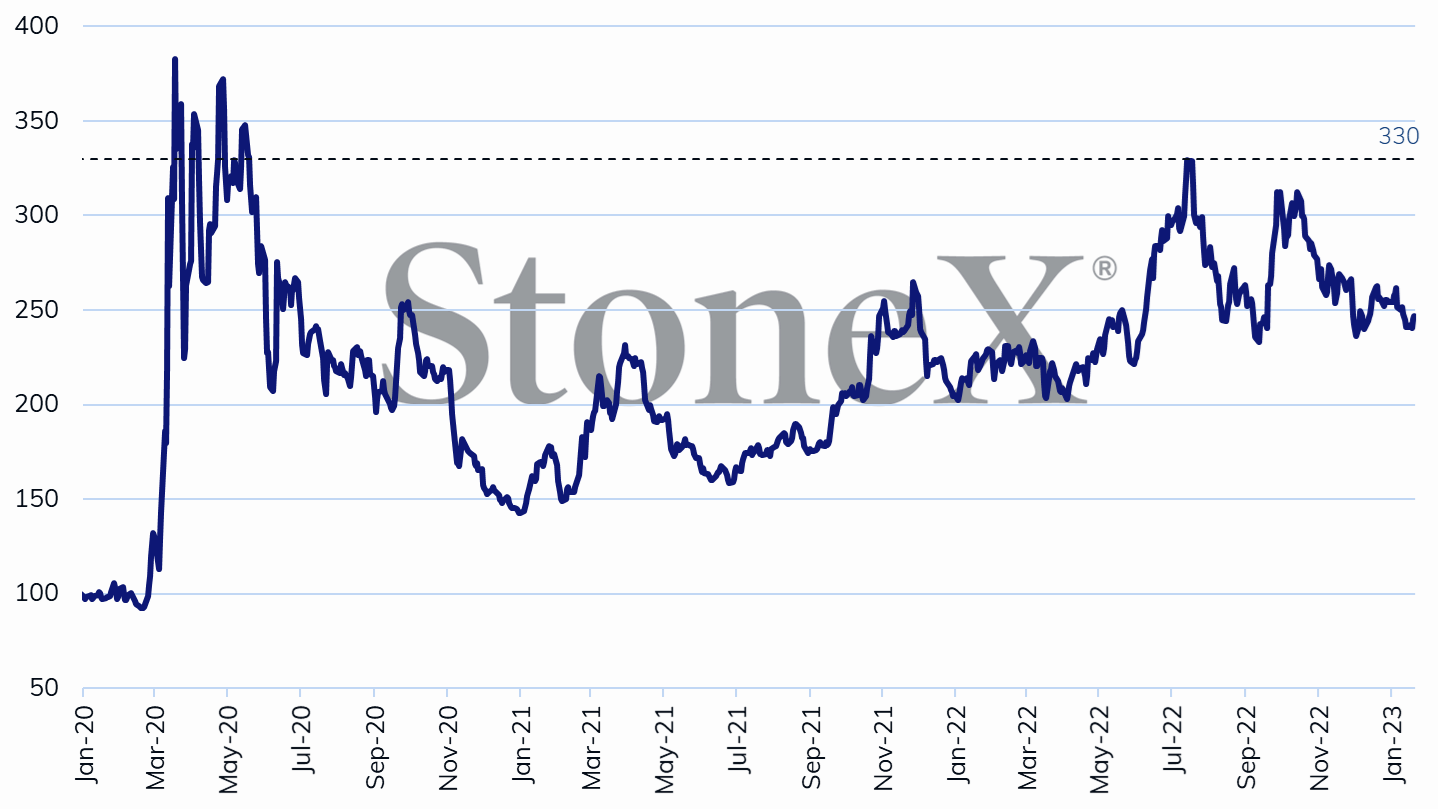
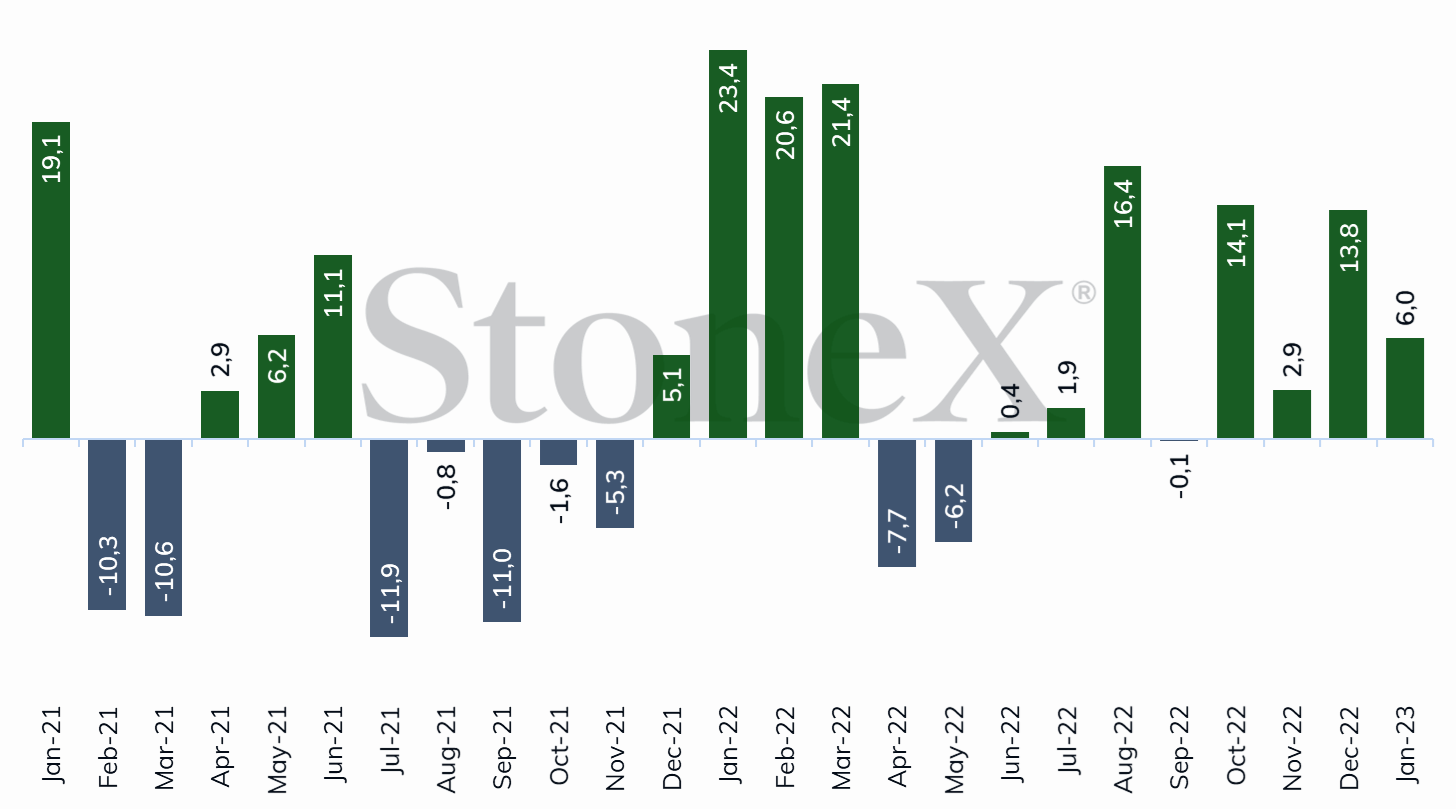
In Brazil, investors' attention should be kept on the possible signals and comments of the new government regarding economic agendas. In the past three weeks, the currency market has swung widely in the face of comments about possible changes in the minimum wage, fiscal stability, central bank independence and inflation targets, for example, especially when such talk comes from President Luis Inacio Lula da Silva. The volatility is especially aggravated by the lack of harmony between ministers, the vice president, and the president, causing misunderstandings and the need to deny misinterpreted speeches. Still, it is noteworthy that the main measures of risk perception, such as the spread of Brazil's 5-year Credit Default Swap contracts, remain virtually unchanged, and the Stock Exchange records excellent performance until January 18.
Spread of Brazil's 5-year Credit Default Swap (CDS) contracts (basis points)
Source: Bloomberg. Design: StoneX.
Balance of foreign capital flows on the B3 as of January 18, 2023 (BRL billion):
Source: B3. Design: StoneX.