MOST IMPORTANT: Inflation trend in the United States
Impact on USDBRL: bearish
This week, the focus will be on the release of the January Consumer Price Index (CPI), which is expected to determine the macroeconomic story for the month. The average estimate points to a moderate increase for the index (0.4%) and its core (0.4%), excluding volatile food and energy items. Still, such an expectation represents a drop in the CPI accumulated over 12 months, going from 6.5% in December to 6.2% in January in the full index and from 5.7% to 5.5% in its core.
In the last three months, the acceleration of consumer prices has grown less than expected in the United States, giving rise to an interpretation that the American economy has begun its disinflation process – a reading presented by the Federal Reserve (Fed) Chairman Jerome Powell. Suppose the CPI continues the trend of growing less than projected. In that case, there should be an intensification of bets on monetary tightening moderation by the Fed and, consequently, a weakening of the US currency. On the other hand, if the increase is higher than expected, it is possible that it will be read as just a point outside the curve and will not substantially alter the discourse of the members of the US central bank, and will raise expectations for February's data.
The breakdown of the indicator will also be noteworthy, as the recent upward softening of prices has been more related to industrial goods, while services maintain a more constant acceleration, particularly those correlated to wage gains. The January base date may result in contractual updates for consumer services and impact the CPI more intensely.
Tensions between the executive and the Central Bank of Brazil
Impact on USDBRL: bullish
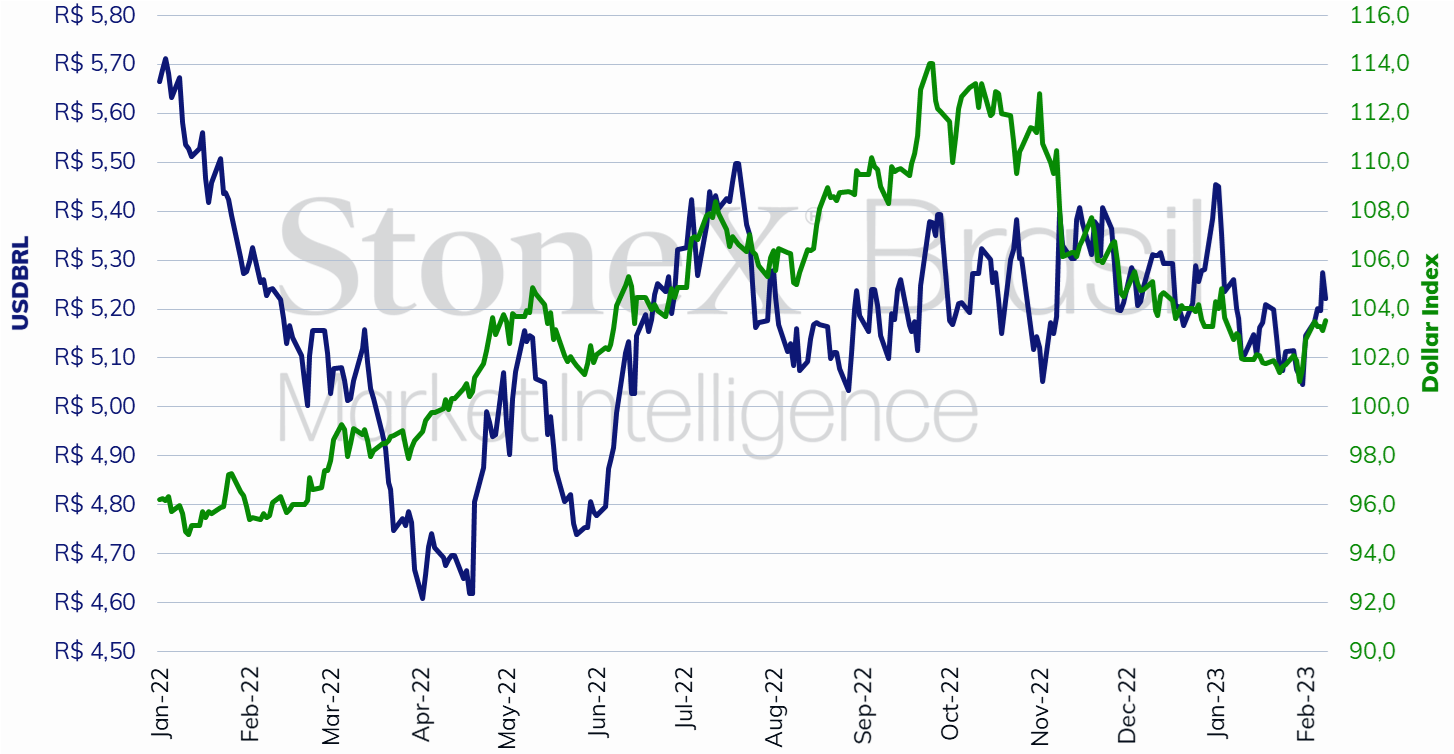
Contrary to expectations that the new government would bring a period of détente to political life and respect for institutions, the President of Brazil has continued his barrage of attacks on the country's monetary authority, bringing uneasiness, instability, and volatility to the financial markets. The rise in USDBRL last week can be attributed mainly to increased fears that the country's monetary policy will be contaminated by political issues, especially since the attacks have gained intensity and have been accompanied by parliamentarians from the allied base, who now defend the summoning of Roberto Campos Neto to Congress to "explain" about the interest rate. Press reports also stated that the Central Bank may give in to criticism and revise the 2023 inflation target, raising it from 3,25% to 3,50% at the meeting of the National Monetary Committee next Wednesday (16), and that, supposedly, Campos Neto would be in favor of a higher target. Amid this whirlwind, the president of Brazil's CB will give an interview to the Roda Viva program, on a national network, on Monday (13), and it is not known for sure if the spirits will be appeased or heated after his speeches.
It is unclear why Lula selected the Monetary Authority as a priority opponent nor what his objectives are. The situation recalls the constant criticism that former President Jair Bolsonaro made of Petrobras' pricing policy for being unable to change them when he wished. The benefits of these attacks are equally doubtful since any change made by the CB from this point on will have its criteria and arguments thoroughly analyzed and with reduced credibility, in addition to causing effects opposite to those stated by Lula, that is, an increase in inflationary expectations and future interest rates. In this sense, the next edition of the Focus bulletin, on Monday (13), will serve as a thermometer for market confidence in the Central Bank and the country's economic institutions.
Recovery of economic activity indicators for the US
Impact on USDBRL: bullish
This week, retail sales and industrial production data will also be released for January, allowing an updated reading of the vitality of the US economy, the resilience of consumer demand and manufacturing activity in the country. After disappointing figures in December, most projections point to a recovery in both retail sales and industrial production, but not enough to dispel the consensus that economic expansion is slowing. Still, the positive readings may support an interpretation that production, income, and consumption in the United States are overly resilient, which tends to support a level of inflationary acceleration and would require the Fed to continue the interest rate hikes, favoring the USDBRL strengthening.
Balanced speech by members of the Federal Reserve
Impact on USDBRL: bearish
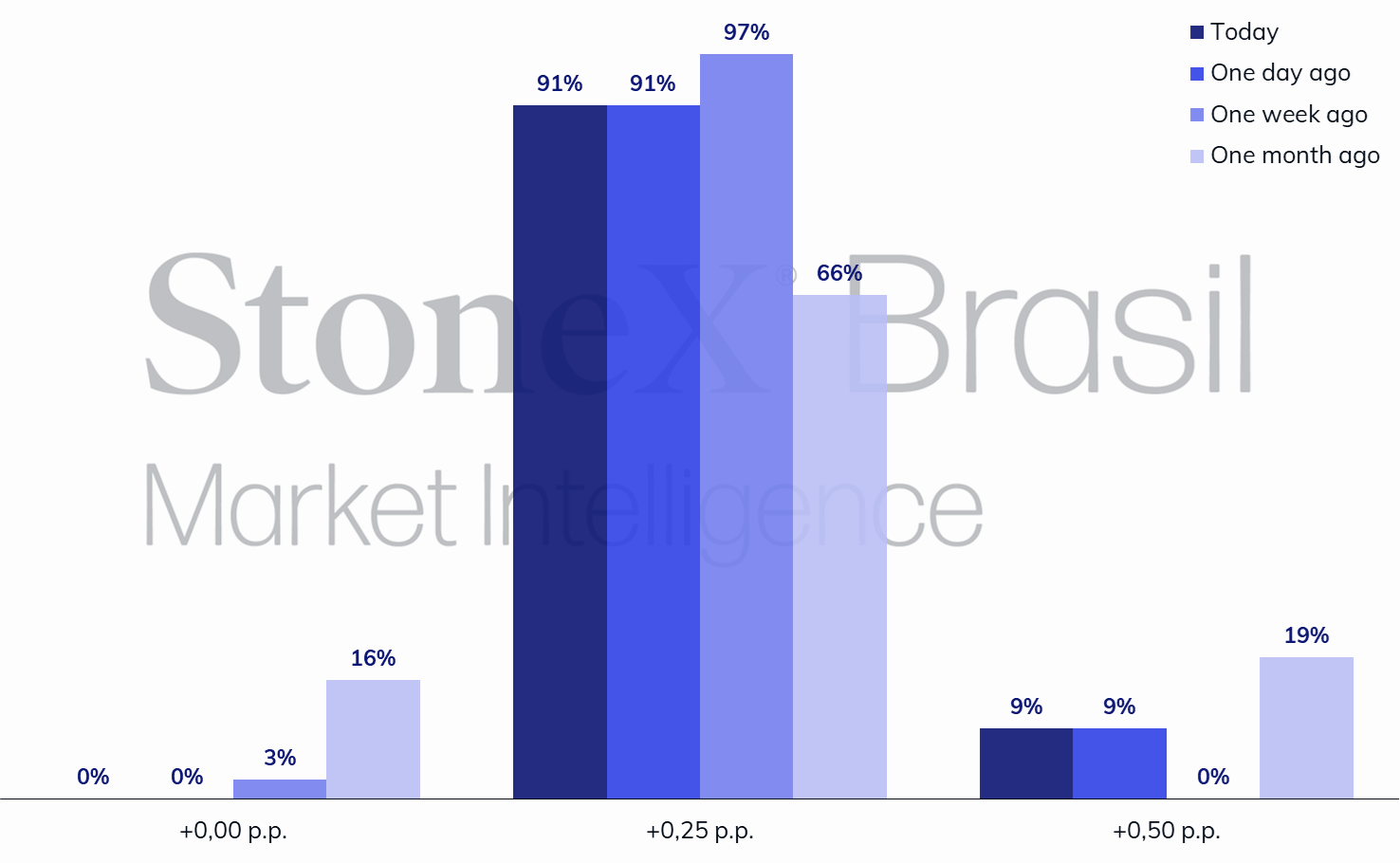
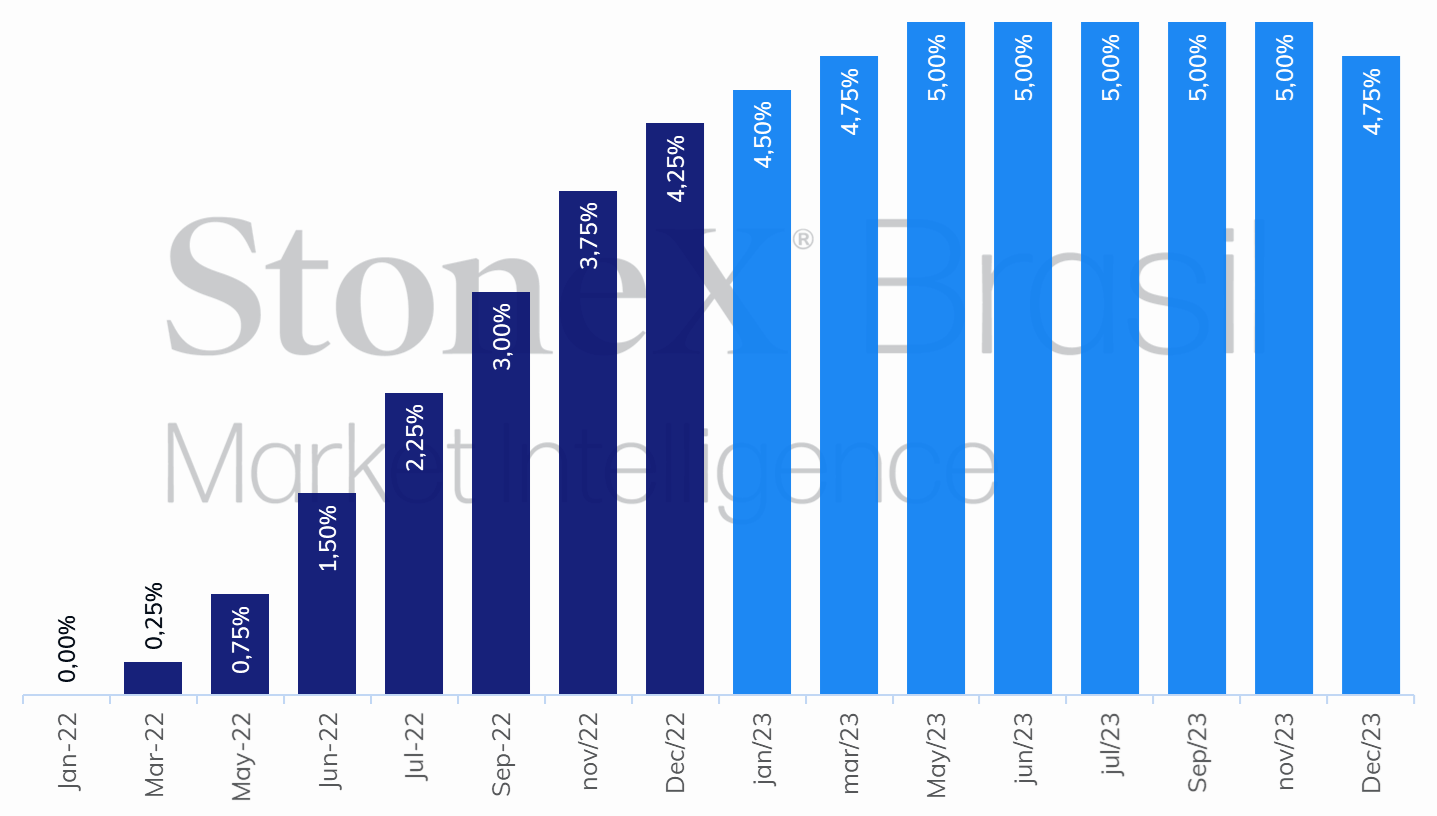
Last week, the first with comments from the Federal Reserve authorities after the decision to reduce the pace of interest rate hikes to 0.25 p.p. on February 1, the members of the institution sought to reinforce a more balanced message to investors, stating that the disinflationary process in the US has already begun, but reinforcing that this process will be long, will involve the deceleration of prices of services related to labor income and will require the continuation of interest rate hikes for a while longer. However, traders seem to be selective in what they interpret and bet on the future interest market that the monetary tightening will end soon. Fed Board of Governors member Michelle Bowman, Dallas Fed President Lorie Logan, New York Fed President John Williams, Cleveland Fed President Loretta Mester, St. Louis Fed President James Bullard, Board of Governors member Lisa Cook, and Richmond Fed President Tom Barkin are scheduled to speak next week.
Bets on the March 22 Federal Reserve interest rate decision
Source: CME FedWatch Tool. Design: StoneX. Interest futures market probabilities as of February 10, 2023
American interest rate history and most likely bet on the future interest market
Source: CME FedWatch Tool. Design: StoneX. Interest futures market probabilities as of February 10, 2023