MOST IMPORTANT: Text of the fiscal framework bill
Expected impact on USDBRL: bearish
The focus of investors' attention should be formalization of the proposal for the new fiscal framework, which will be submitted to the National Congress on Tuesday (11), as per the announcement by Minister of Planning and Budget, Simone Tebet. Although presented on March 29, the complementary bill's text remains unpublished, and there are differing points in economists' analyses, which could be studied upon its publication. According to Tebet, the framework's "frames and parameters" will be revealed, which is expected to positively impact the business environment. Moreover, this is a necessary step for the government to include its regulations in the proposed Budgetary Guidelines Law, due to be sent to the Legislative Power by April 15. The process for the new fiscal rules project will begin in the Chamber of Deputies and undergo scrutiny by committees and the Plenary before heading to the Senate if approved.
Consumer inflation in the United States
Expected impact on USDBRL: bullish
On Wednesday (12), the US will see the release of the Consumer Price Index (CPI) for March, amid uncertainty over the Federal Reserve's (Fed) interest rate strategy. Analysts' median estimates indicate a slowdown in the 12-month accumulated increase, from 6.0% in February to 5.2% in March. However, the core indicator, which excludes volatile food and energy components, is expected to remain stable with an accumulated high of 5.5% in 12 months. Over the last few months, the majority of inflationary growth has occurred in the service sector, specifically those directed at individuals and closely correlated with wage increases. Consequently, several Fed officials predict that the current price acceleration will persist and will only diminish after a decline in productive activity and labor market deterioration.
US economic data
Expected impact on USDBRL: bearish
The upcoming week will witness the release of important economic data related to retail sales and industrial production, both for the month of March. The official reports will be made public on Friday (14). The prevailing trend for these surveys indicates that industrial production is likely to continue its declining trajectory, which has been evident in recent months. Conversely, retail sales are expected to show a relatively stable result, hovering between slight growth and slight retraction. Analysts suggest that the consumers' disposable income is still on the rise, and the savings rate remains high. These factors should help to maintain the level of consumption. However, it is worth noting that consumers' preferences have been shifting towards the services sector instead of the goods sector, which is negatively impacting industrial production.
There is also a viewpoint that the recent financial instability may result in a decrease in the availability of credit to both individuals and companies in the US, which could potentially impact both productive activity and consumption. Nonetheless, it remains uncertain whether the indicators for March would already demonstrate a significant change, and it is more probable that such a hypothesis would be more apparent in the metrics collected in April.
Consumer inflation in Brazil
Expected impact on USDBRL: bullish
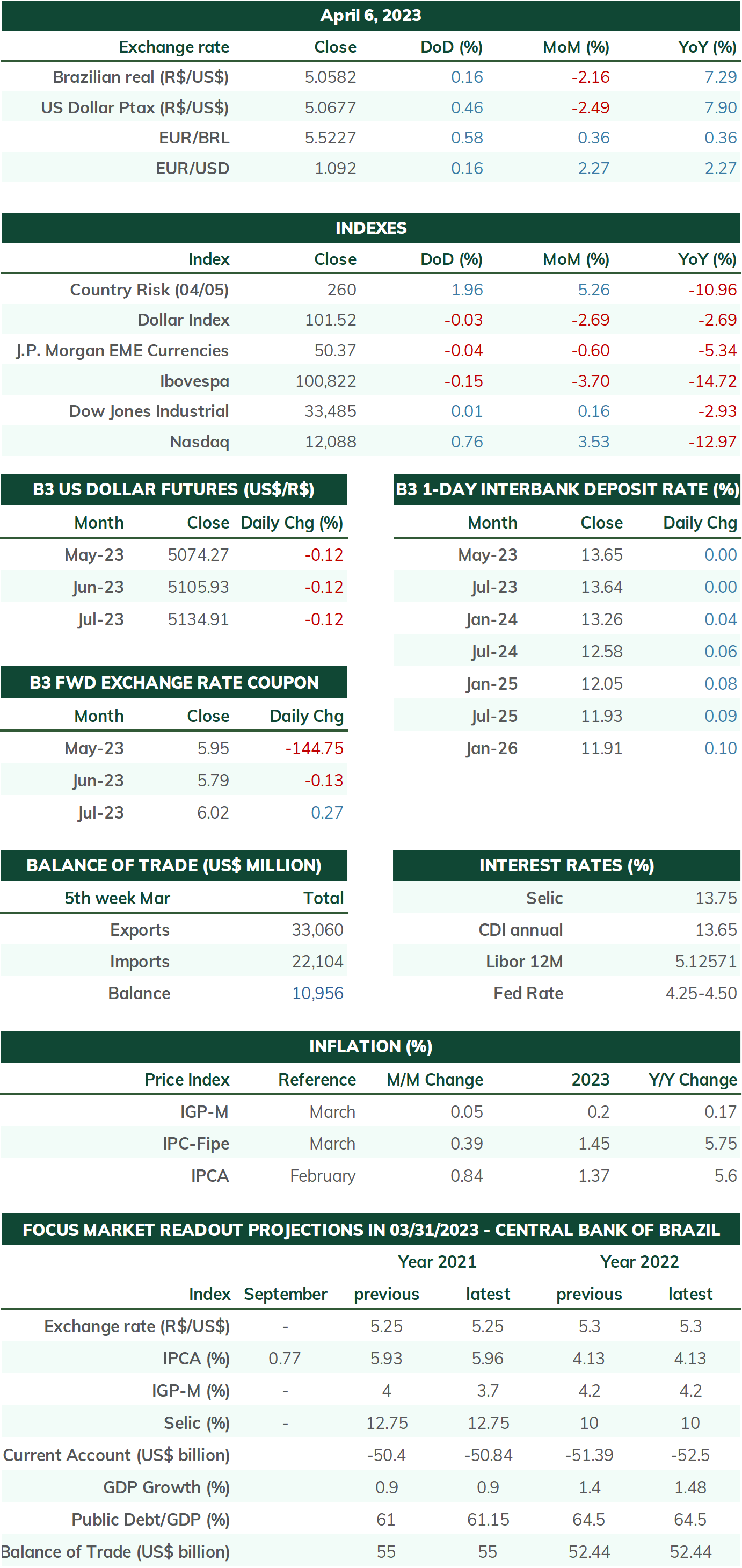
On Tuesday (11), the Broad National Consumer Price Index (IPCA) for March will be released, and the data is expected to support the Brazilian Central Bank's message regarding the need to maintain strict monetary tightening to restore price stability. According to the March 31 Focus Bulletin, the median of expectations is an increase of 0.77% due to the expected surge in transportation and electricity costs during the month. Although a broad interest rate differential can positively impact the short-term exchange rate movement, if inflation persists significantly above the Central Bank's tolerance limit, it may raise the perception of risks associated with Brazilian assets.