

Soybean oil exports are expected to decline while crushing is expected to continue growing
Since the implementation of mandatory biodiesel blending in diesel in Brazil, the biofuel chain has been constantly evolving. The most significant increase in blending mandate, which started at B3 (3% biodiesel blend) in 2008 and reached B12 by the end of 2023, has caused a significant increase in production. In the last ten years, biodiesel production has increased from 2.9 million m³ in 2024 to about 7.4 million m³, a growth of 156%.
After a reduction in mandates due to the economic slowdown caused by the pandemic and the sharp increase in vegetable oil prices and their inflationary impacts, the return of the blend evolution with a record performance in B diesel sales further hiked demand and production in 2023, a pattern that is expected to continue into 2024. According to StoneX estimates, the demand for biodiesel is expected to reach approximately 7.3 million m³ by the end of 2023, an annual growth of 18.3%. In 2024, with the new mandate for B14 starting in April and a probable new record in diesel B sales, a 20.3% annual growth in demand for biodiesel is expected, reaching 8.8 million m³.
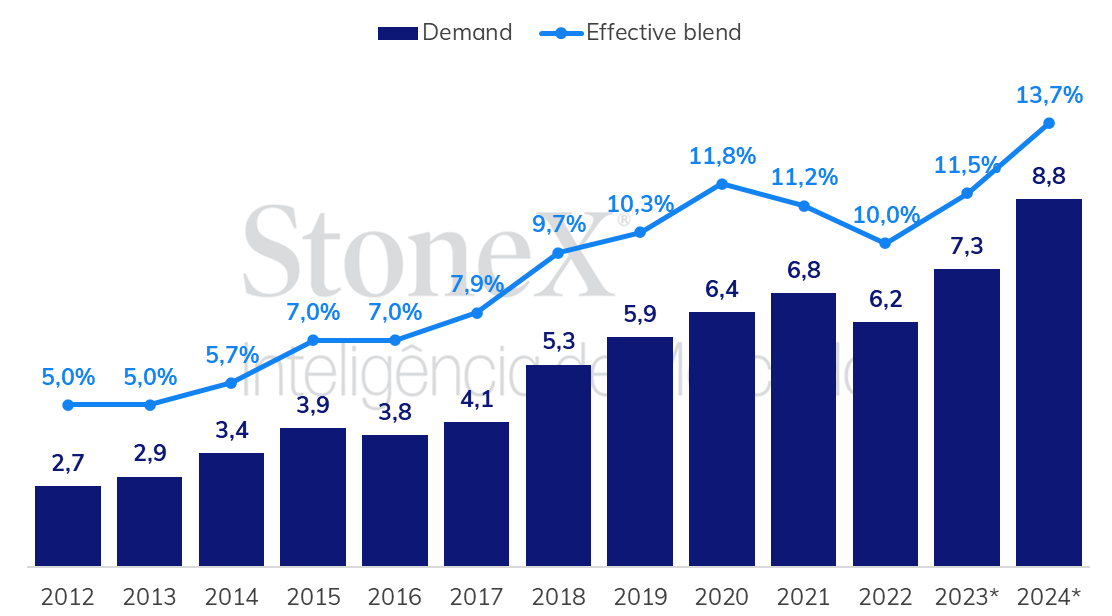
The growth of the use and production of biodiesel has demanded over the last decade the expansion of the availability of feedstocks for this purpose, and, in this context, soybean oil has increasingly gained space. Due to its wide availability, soybean oil went from being used for biodiesel of 880 tmt in 2012 to about 5.7 million tonnes last year. For the consumption of 8.8 million m³ of biodiesel that we estimate in 2024, the use of oil must increase by 28.9%, reaching 7.3 million tonnes in 2024. The use of soybean oil as feedstock for biodiesel went from 29% in 2012 to over 82% of all biofuel production in Brazil, potentially reaching up to 89% this year. Given the expected hike in biodiesel production, soybean oil is the feedstock that can most easily cope with this growth, increasing its share in the total.
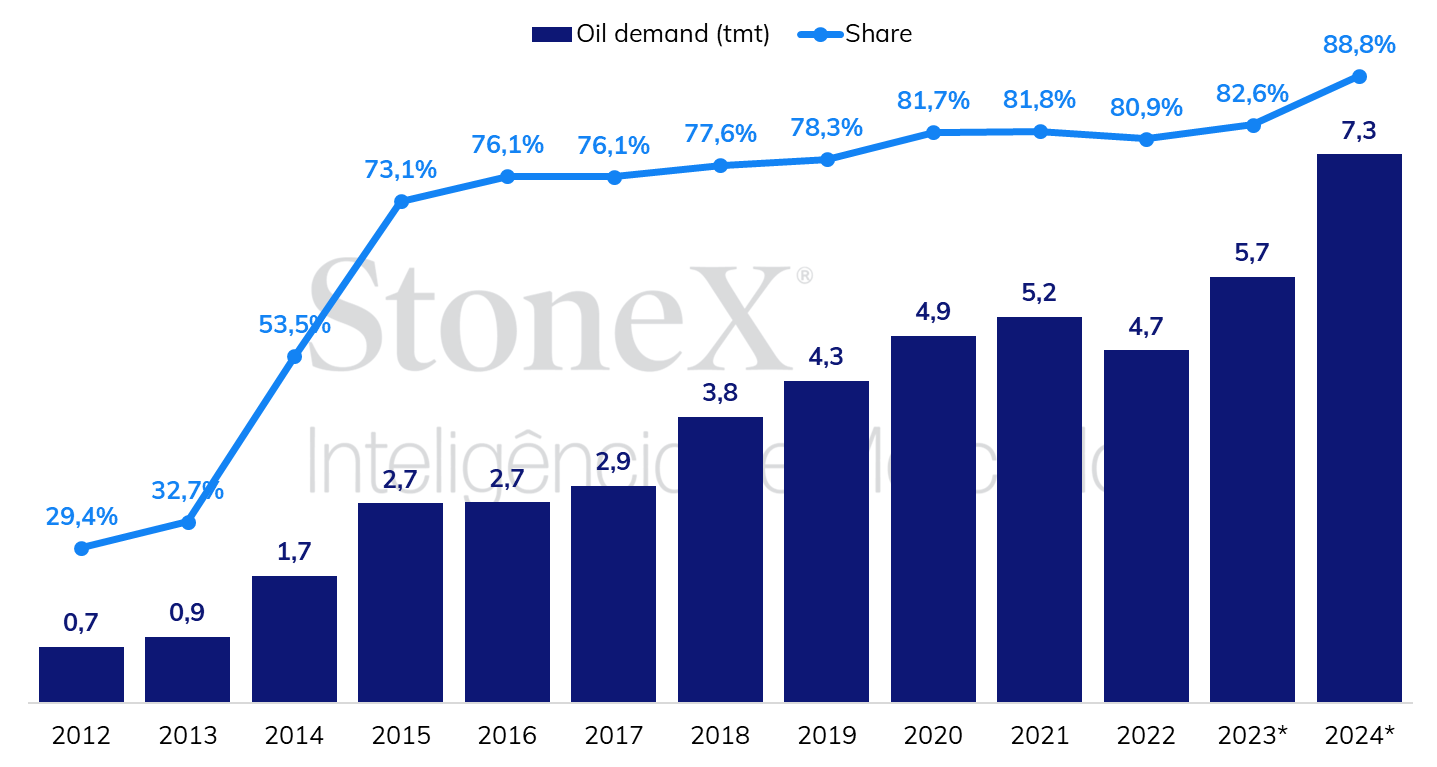
The hike in the use of oil for biodiesel has also contributed to boosting crushing, which results in meal and vegetable oil, with the mandatory blending increase always bringing banter about the impacts on the processing of the oilseed.
Considering that 7.3 million tonnes of soybean oil will be needed for biodiesel production in 2024, the crushing to meet the biofuel demand would amount to 36.6 million tonnes, or 67% of the expected soybean processing in Brazil in 2024, currently estimated by StoneX at 54.5 million tonnes.
Even so, it is important to highlight that the hike in the biodiesel blend does not have a linear impact on the crushing increase. It is expected that soybean oil consumption for biodiesel will ramp up by 28.9% from 2023 to 2024, with the mandatory blend increasing to 14%, but it does not mean that crushing will advance at the same proportion.
Other factors must be considered when considering the impacts of the hike in the biodiesel blend on soybean crushing.
Firstly, it is important to consider that Brazil has been exporting a lot of soybean oil in recent years, with shipments reaching a volume of 2.3 million tonnes in 2023, below the amount achieved in 2022, when it was 2.6 million. It should be noted that the country recorded soybean oil shipments of over 2 million tonnes per year before the mandatory blending of biodiesel was implemented in the 2000s. However, with the hike in biofuel production, vegetable oil exports have decreased, which is expected to repeat in 2024, with a larger proportion being directed to the domestic market. Considering that the oil consumption for biodiesel is expected to increase by 1.6 million tonnes in 2024 to meet the mandatory blend hike, the volume that the country exports would be more than enough to meet this increase in demand. Furthermore, Brazil will again face increased competition from Argentina in the soybean oil export market, with the rebound of the country's crop in the 2023/24 cycle.
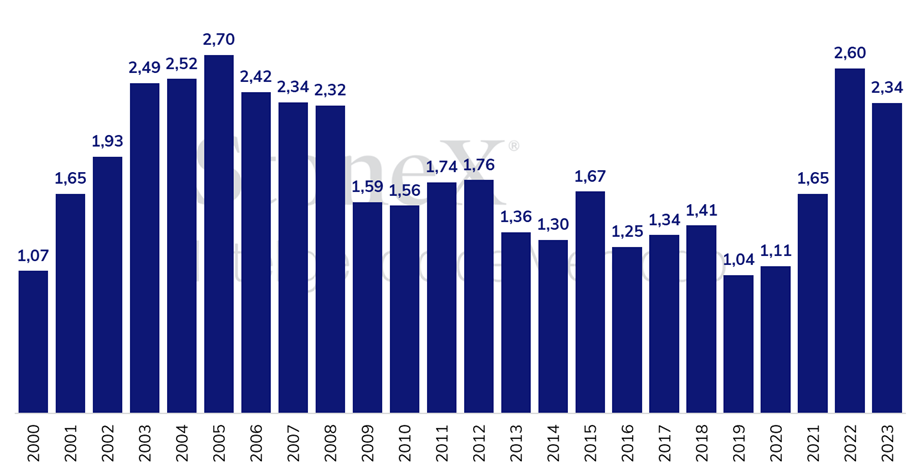
Anyway, this hike in the use of soybean oil is not expected to be fully met by the volumes that would go for export. The expectation is for growth in crushing, as it has been a trend in recent years, but not to the same extent as the hike in the use of oil in the biofuels sector. Furthermore, it is necessary to monitor the availability of soybeans this year, as production will be lower than expected due to climatic issues, leading to increased "competition" for the grain. Exports tend to be more directly affected amid lower availability, but a lower supply could also be a limiting factor for the progress of domestic consumption.
Regardless of the final crushing figure in 2024, the scenario of a hike in the blend is positive for domestic soybean consumption in a year when Brazil is expected to move towards a more pent-up supply and demand balance amid crop losses.



