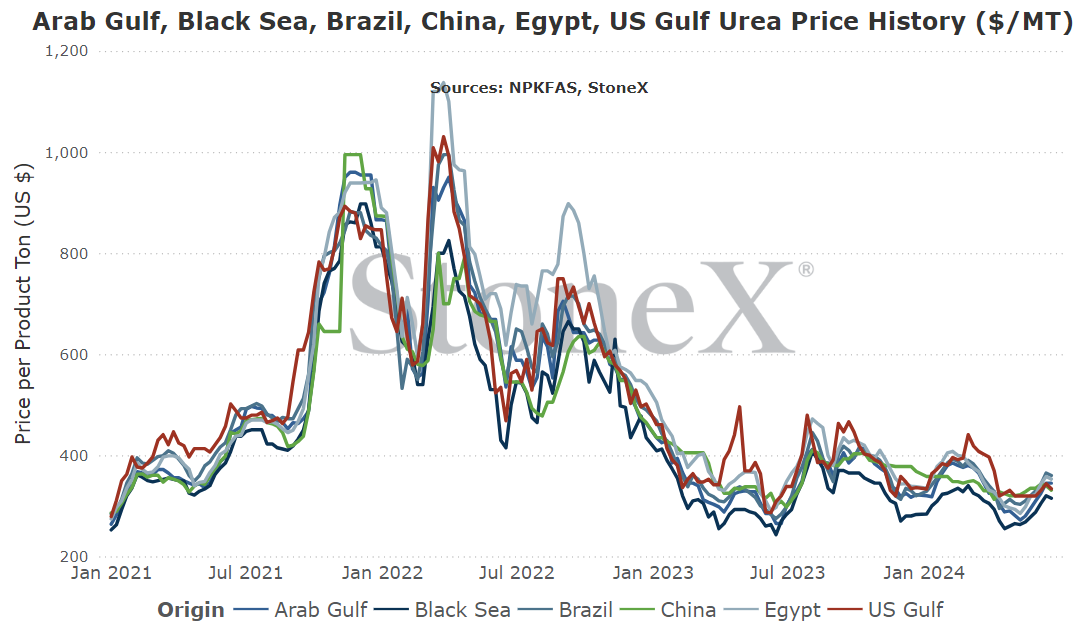
There is a lot of conflicting factors in the world right now. Production issues continue in Europe/Egypt/Brazil as well as export restrictions still in place for China. Add to this the recent announcement that India is looking to purchase tonnage (market expectation 1 - 1.5MMT) and that lends a pretty solid bull story.
However, on the flip side, Egyptian production issues should be short lived as they get their gas situation rectified. Europe and Brazil are longer term issues but that is unchanged. China? Well, who knows. It wouldn't surprise anyone to see them jump into the market, sell a bunch to India and then disappear again.
It makes for a hard call but here goes:
From current values, I'm leaning on values being bearish for the immediate future. I believe we will see Egyptian production return to normal. I think that India will shock the world not only in how the offers shape up but in how many tons they actually buy (i.e. I do not think as many as some think). Add to the list that it is only July. Lot of time before the next big demand wave.
Basically, it feels like the market did this rally a bit too quick and a bit too aggressively.
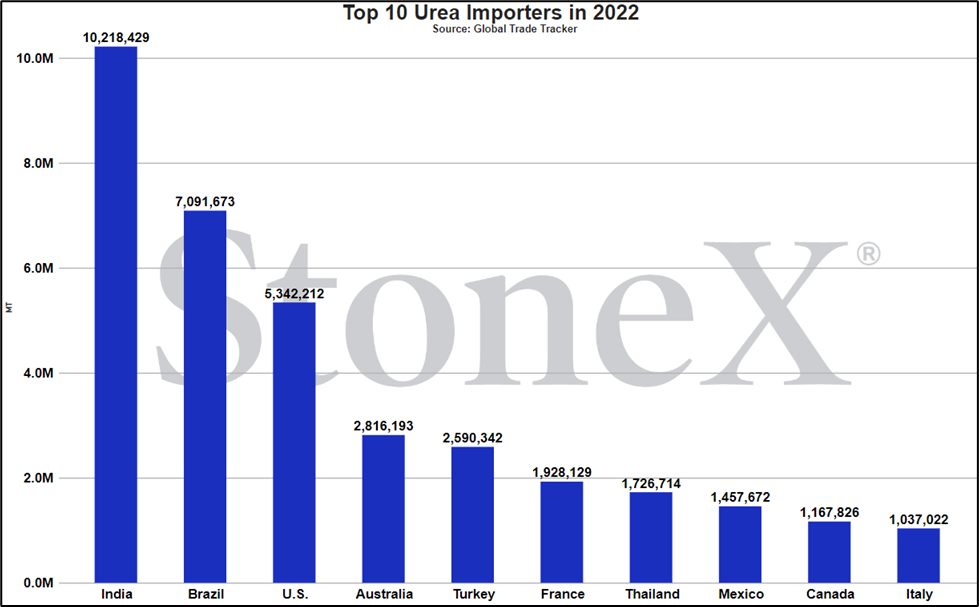
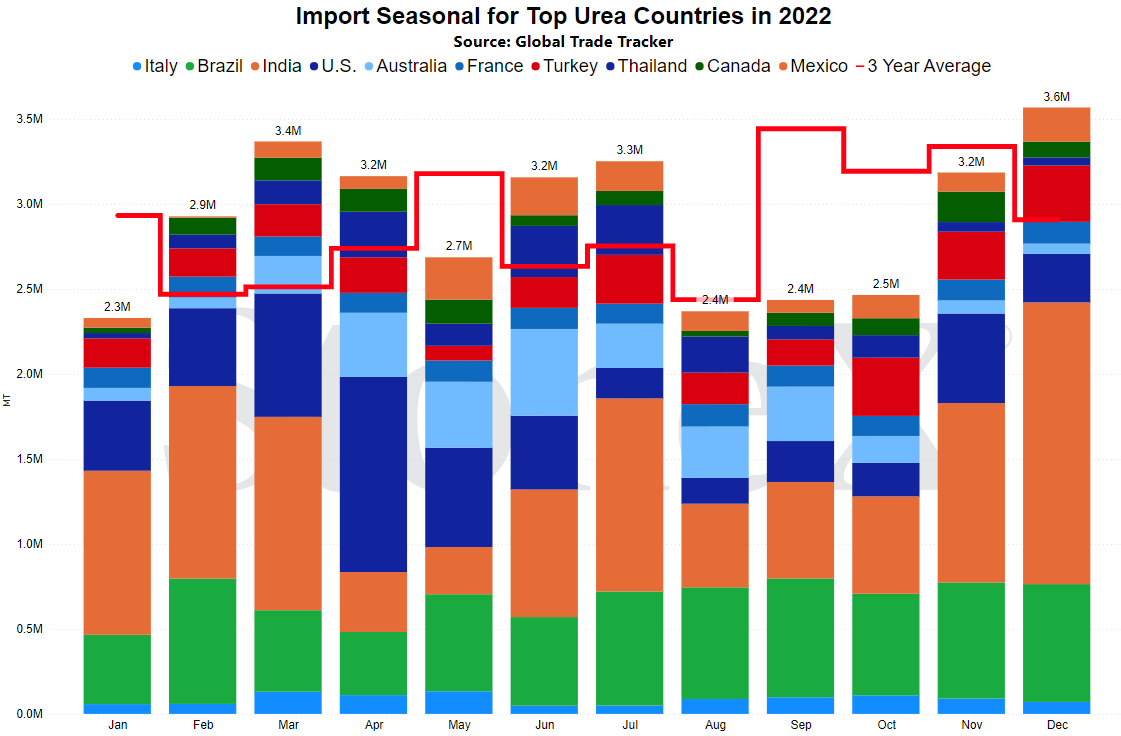
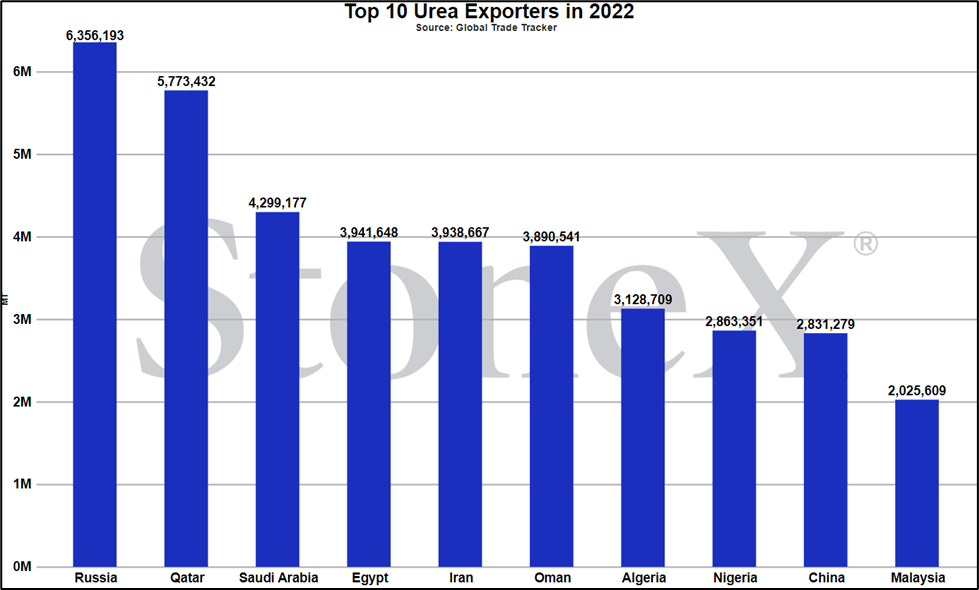
Egyptian gas cuts impact urea production
Egyptian urea manufacturers have been struggling in the last month as gas restrictions and then cuts have made their production rates extremely variable and unreliable.
When global urea values started to bounce off their bottom, it was Egyptian manufacturers that set the tone. Values had dipped to aggressively low values while grain values held at reasonably high prices. The result is that farmers saw an opportunity and started to lock it in. Shortly after, traders started to cover short positions as it was better to lock in the profit than put it at risk. It wasn't long before a pattern was set and the rest of the world started to get onboard. Several origin points saw their values climb $75 - $85MT from their low's.
Then, Egyptian production issues started. Temperatures started to climb which meant domestic demand started to spike. The result were tight gas inventories. As has happened in the past, the government stepped in and forced nitrogen manufacturers to restrict production by 20%. That allowed them to continue to produce but also ensure that enough gas was available for the public. An already healthy sales book was extended.
It wasn't long before gas shipments were cut altogether...but it wasn't expected to last long. In fact, gas supplies did resume and production was restarted. It appeared that everything was back on track, but it wasn't. Shortly after, manufacturers were told supplies would once again be cut which is where we sit today.
The Egyptian government is heard to be taking steps to bring in enough stock to allow restarts, but at least for the moment, market confidence has taken a hit and their sales books are extended even further which helps to tighten the regional and global S&D.
Hopefully, normal operations will begin as they always have in the past, but it needs to be watched.
What does this mean for Aussie farmers?
Egypt started the hot markets for global urea which eventually found their way to Australian shores. If production continues to suffer, it tightens global supplies and lends price support to buyer. However, if production comes back online, market fears of tightened supplies can start to dissolve and allow prices to correct lower. Either scenario would take time for it to find its way to Australian ports, but it would eventually finds its way.
Chinese exports remain restricted, trade data backs the story
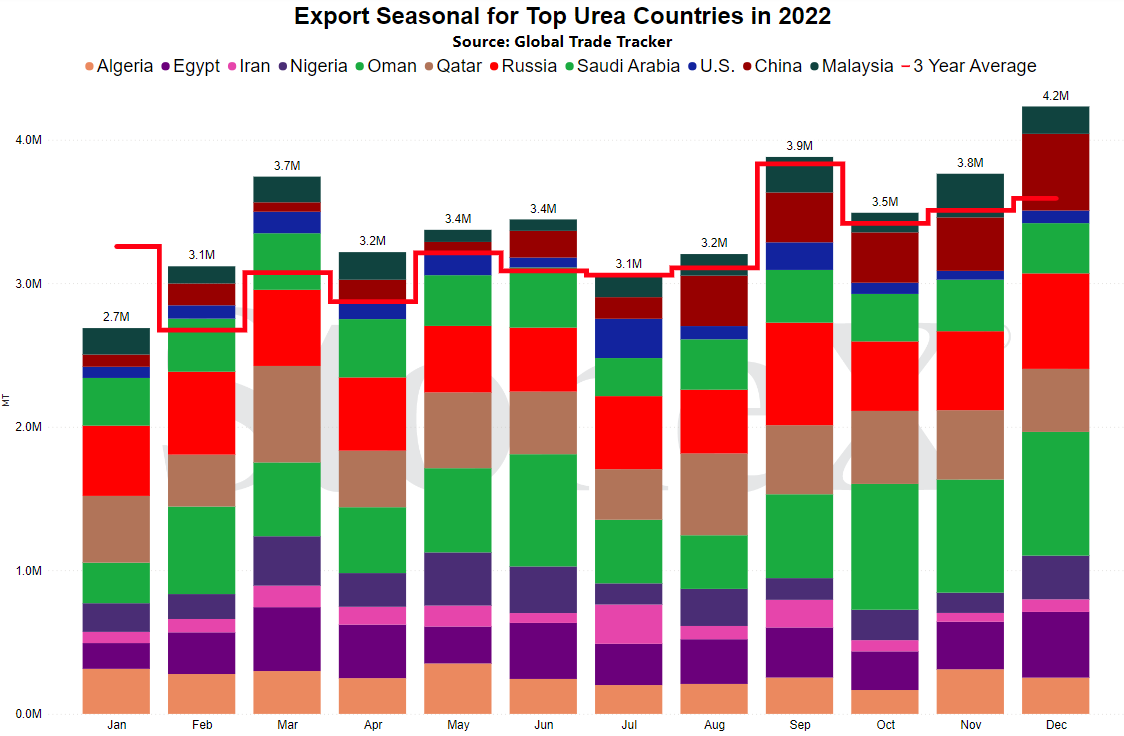
Historically, China represents around 10% of the global urea export marketplace which accounted for around 5 - 5.5MMT of a 50 - 55MMT marketplace. Recent years has reshaped that look.
As global values started to skyrocket and inventories become extremely tight with the outlook getting worse in late 2021/early 2022, the Chinese government intervened. It saw the possibility that a tightly supplied global market could rush in and purchase a lot of inventory that would normally be reserved for Chinese farmers. Also, that rush of demand would put Chinese farmers in a non-competitive spot as values would skyrocket.
Rather than allow that to happen, the government stepped in and largely blocked exports from happening. The idea was that the block would not only allow adequate supplies for Chinese farmers but the lack of export possibilities would keep domestic values lower than they would be. Unfortunately for the rest of the world, this plan worked.
Even today, as global values have fallen dramatically from their high's and inventories became more flush, the Chinese continue their approach of restrictions. We have seen waves of product become available, but as the trade data starts to show, the government steps in to slow it down. Even recently, when the promise of allowing exports to resume caused domestic values to start to climb, the government stepped back from that promise and kept restrictions in place.
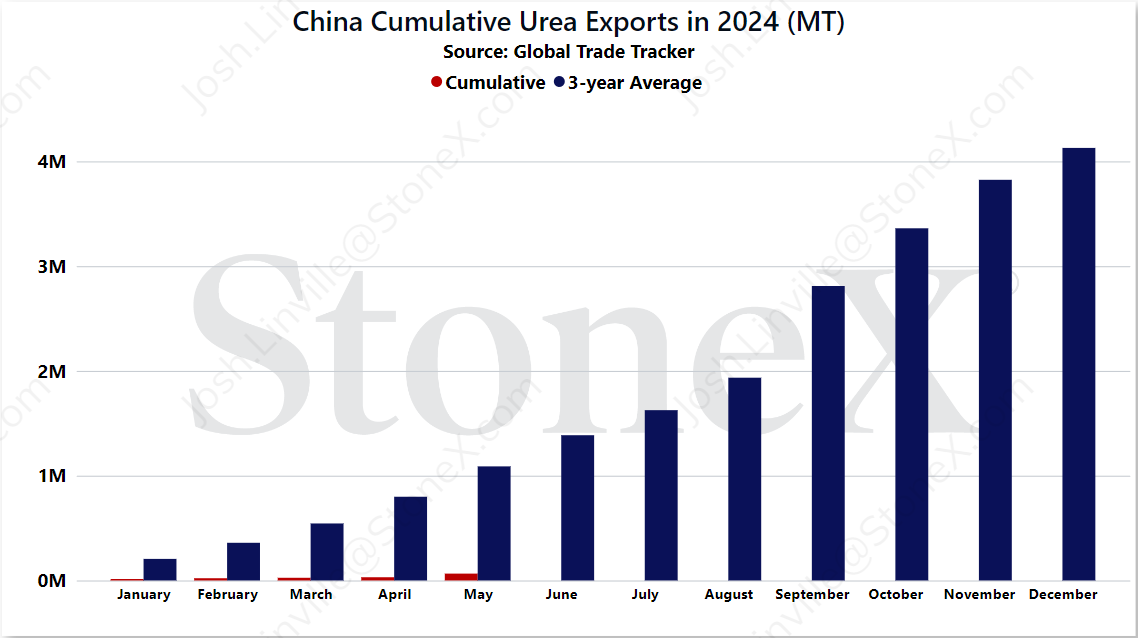
Again, as new trade data becomes available, these restrictions are showing themselves as calendar year exports are all but non-existent. I had believed that they would return well before now...but that has not been the case. So the world marches on without one of the larger exporters participating and with looming questions of if/when/how much they return.
What does this mean for Aussie farmers?
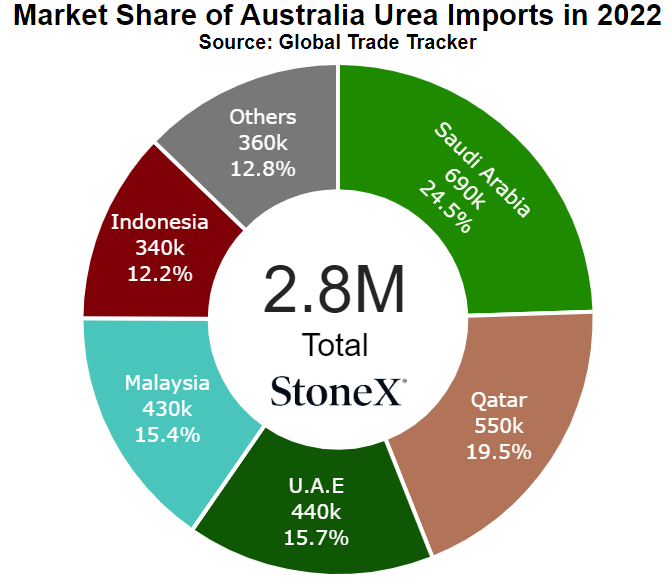
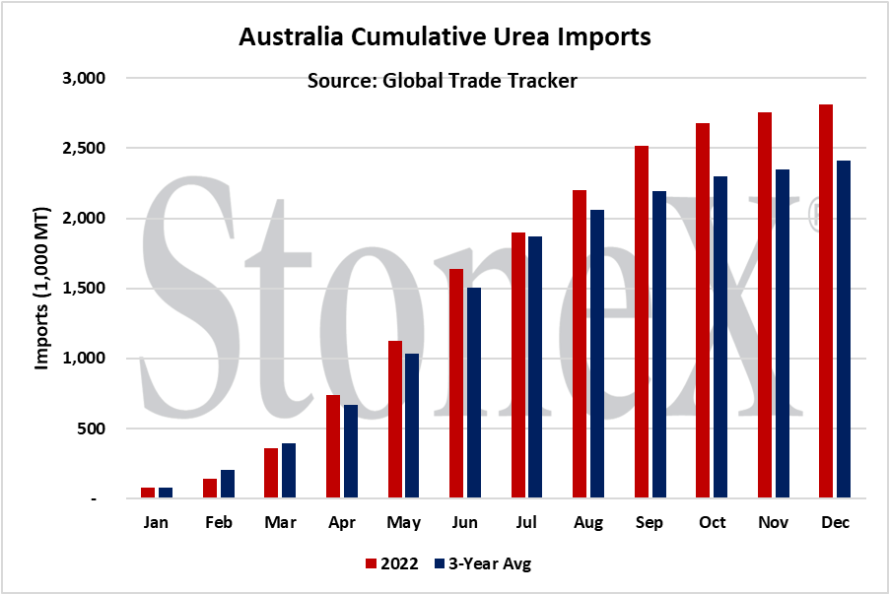
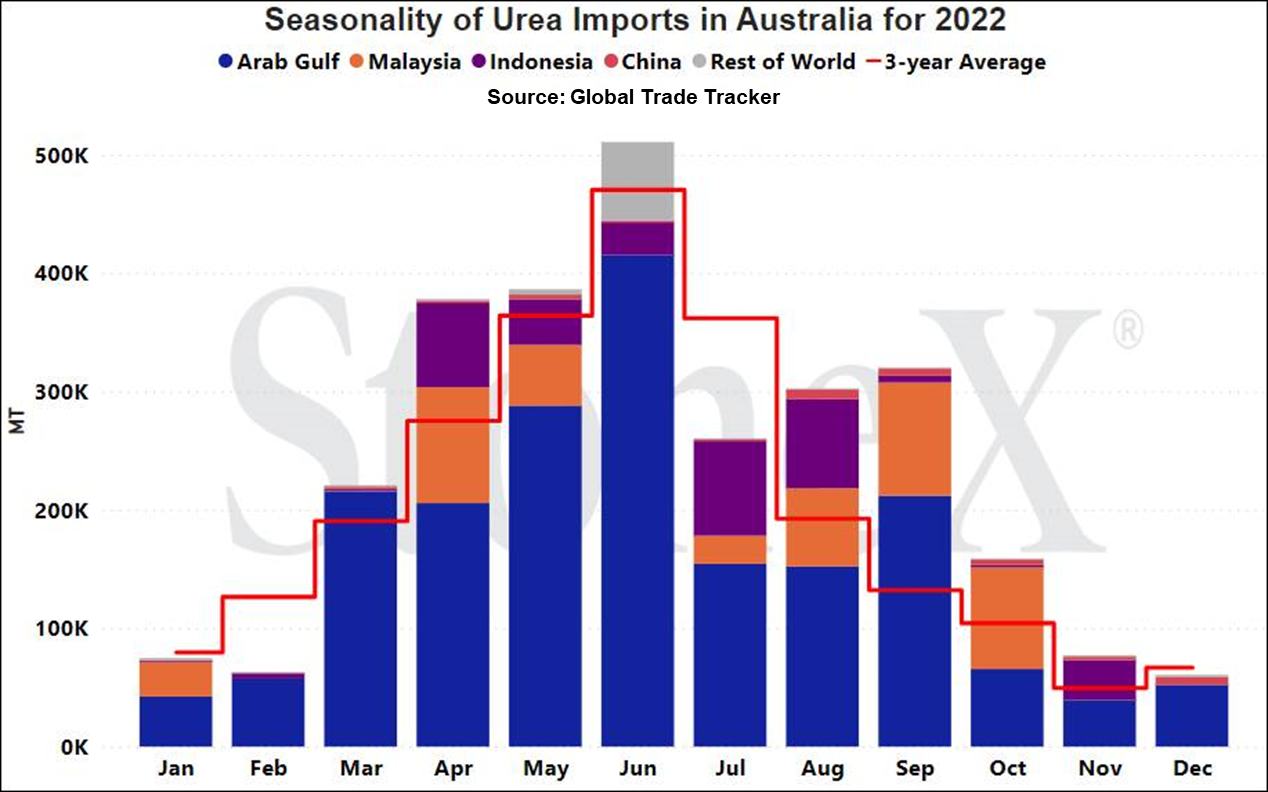
This is a much more direct hit when compared against Egypt. With Egypt, it takes a couple steps to link it to Australia (little Egyptian product finds its way to these shores). However, China is a very direct link to Australia with decent volumes being shipped here...when China is exporting, that is. As China has remained removed from the export marketplace, it has caused available tonnage to importers to significantly tighten. The 3-year average thru May is just over 1M tons...that is 1M tons that are not available this year and causes buyers/importers to scramble to find product elsewhere. That means longer shipment at a higher cost.
India finally announces their purchase tender
As expected, India returned to the urea purchase portal for another block of tons.
- Offers are due July 8
- Shipment period thru August 27
While no statement of tons being desired has been made by IPL (Indian group handling the purchase), some in the market have assumed between 1 - 1.5MMT. That would be a large block of tons that would help to mop up excess length in the world and perhaps help stabilize values from falling.
But I have my concerns.
For starters, it sounds as though domestic Indian urea stockpiles are healthy. If true, that likely means they do not have to buy. Sure, if values were to come in very aggressively, they could see it as a discount and lock up a lot to prepare for their next run. However, if the market is bold/high on their price offers, you could see them lower the volume or walk away.
Second, the global market has been strong which likely means traders/distributors are long. India presents a solid opportunity to clear long positions. If you have been holding tonnage for a while, you likely have a lot of profit in it. Easier to cut the price to make sure you get to sell in that scenario.
Third, that is a long shipment window. That kind of tells me they are not desperate for product right now. It heightens the chance that they walk away.
Fourth, and the biggest thing for me, is how they played the last tender. If you remember, they initially told the world they had secured over 700K tons. However, by Monday morning, they had slashed that total by almost half. It sent the global urea market reeling. I had put out a tweet about it and it blew up with folks from India praising the government for making another step to being self reliant on urea by 2025. It was a huge political movement. We could see that again.
Ultimately, we have to wait and see how the cards fall. We will not know the story until every detail has been figured out. We have learned the hard way that you do not celebrate too early. Just when it looks like it is done, something can come from right field.
Until then, we wait.
What does this mean for Aussie farmers?
What they do or do not do will go a long way in setting market expectations going forward. If the market ends up disappointed in the results, either in the prices offered or the tonnage secured, global values could slide following the purchase. However, if the market gets excited because values held better than expected or they purchase more which helps to tighten global supplies, we could end the India purchase tender with values rising. Both results will have impacts on local urea values eventually.
Number 1 exporter (as a region, not as individual nations)
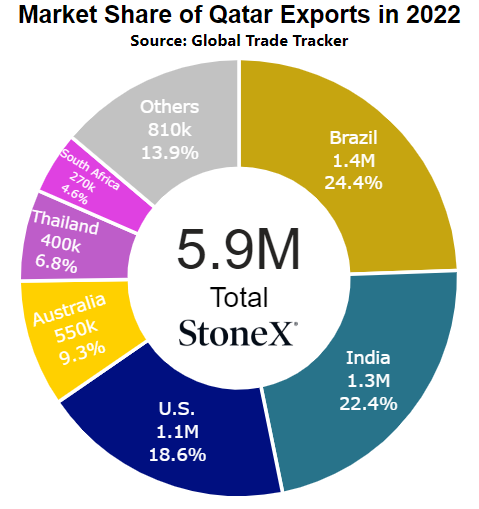
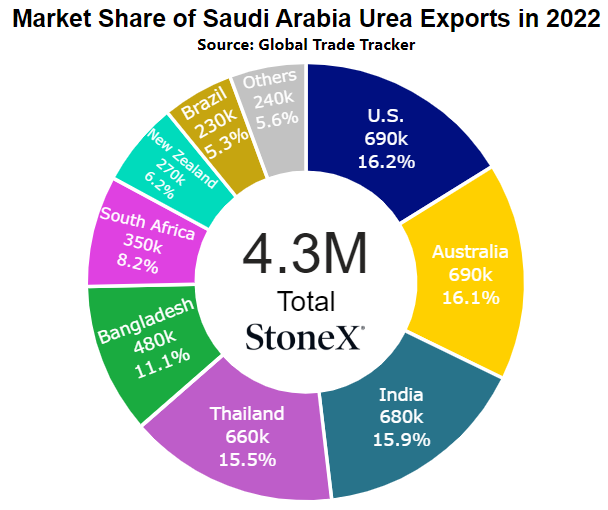
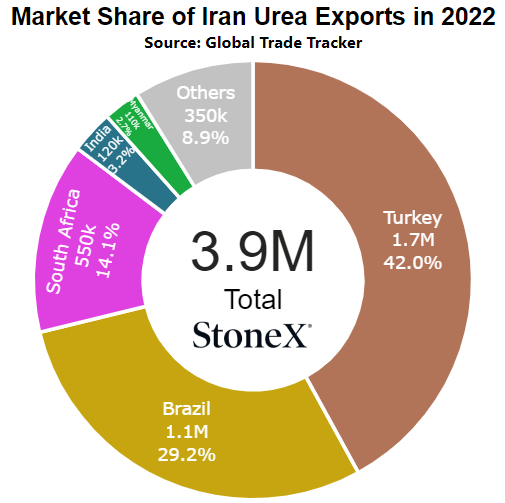
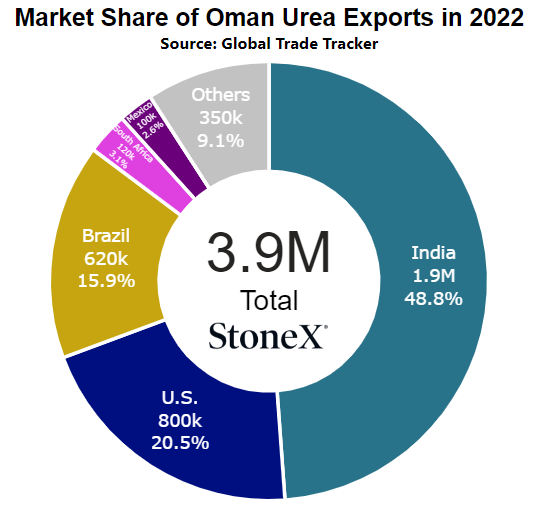
Vs 30 days ago - 15% or approximately $45 higher
Vs 90 days ago - -1% or approximately $5 lower
Vs 6 months ago - 6% or approximately $18 higher
Vs 1 year ago - 28% or approximately $75 higher
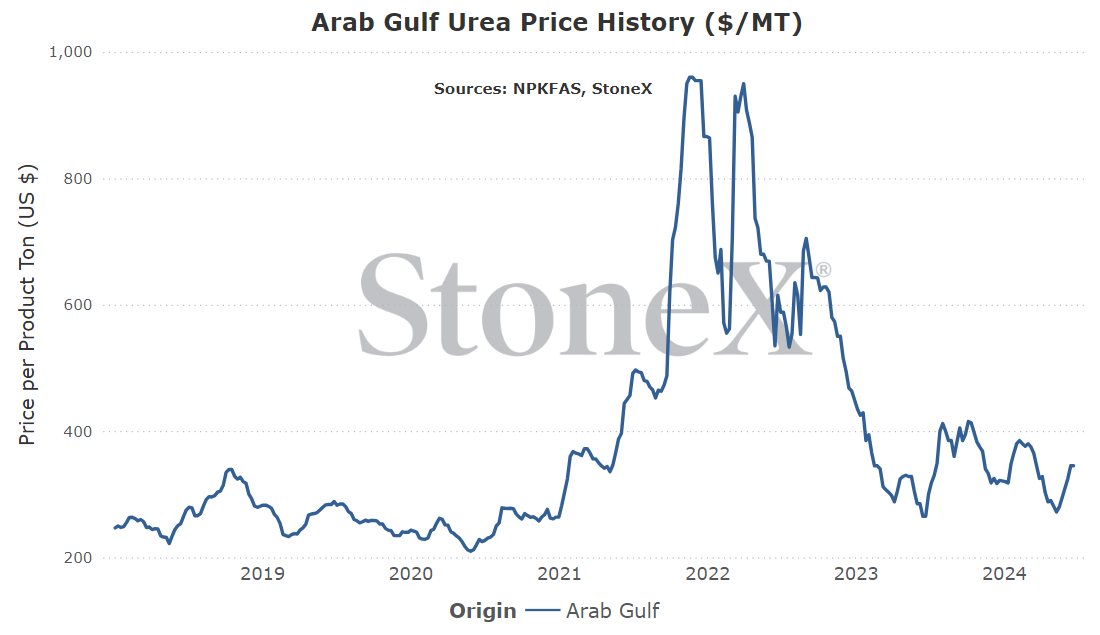
Egypt
Number 4 global exporter in 2022
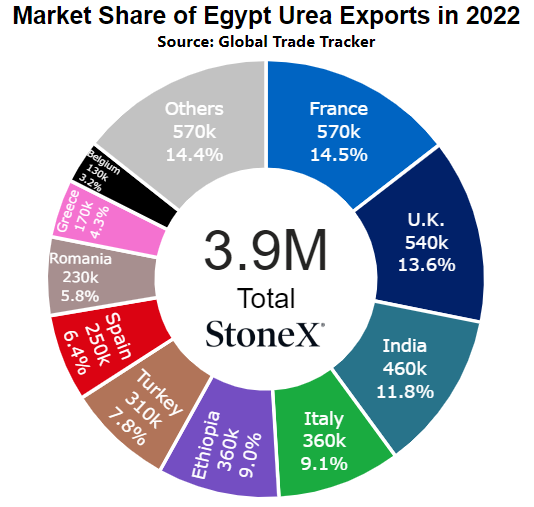
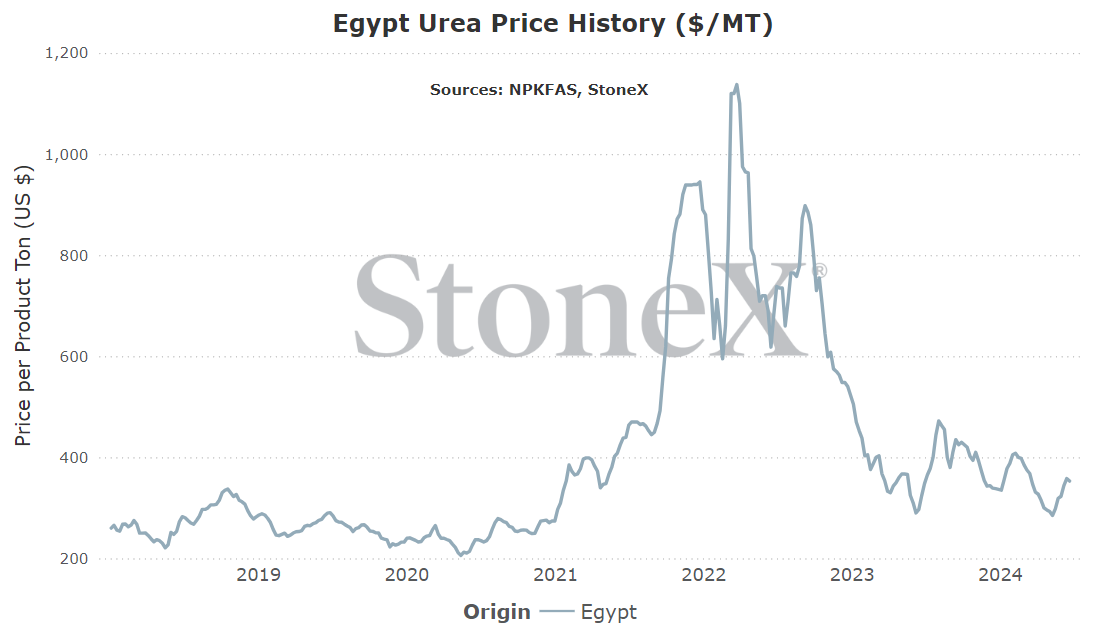
Price comparisons
Vs 30 days ago - 11% or approximately $34 higher
Vs 90 days ago - 2% or approximately $6 higher
Vs 6 months ago - 4% or approximately $15 higher
Vs 1 year ago - 9% or approximately $29 higher
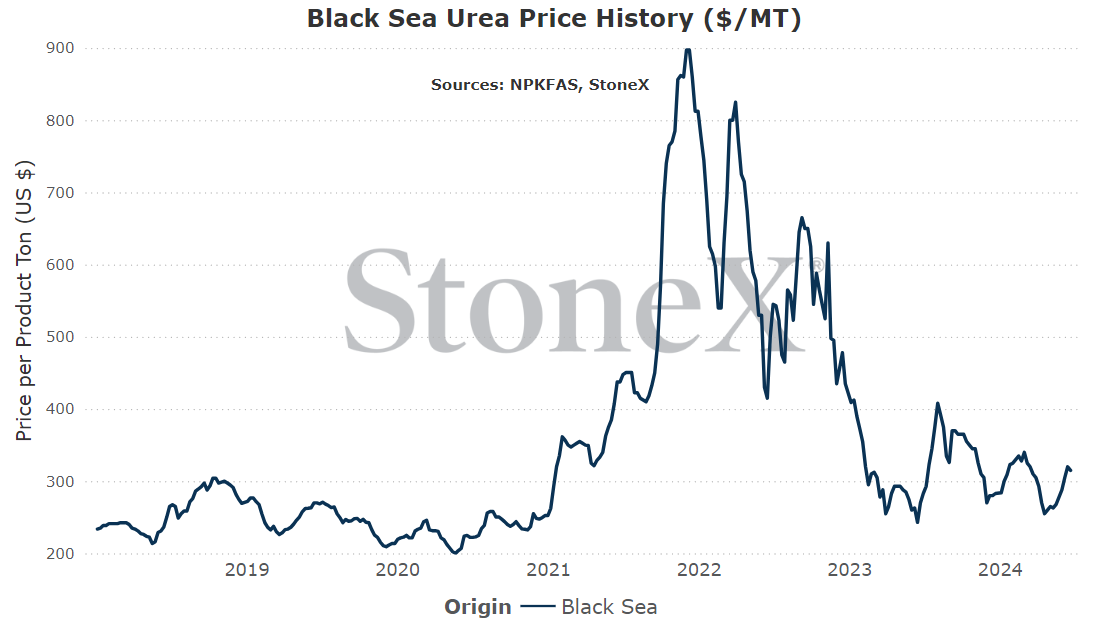
Black Sea
Number 1 global exporter in 2022
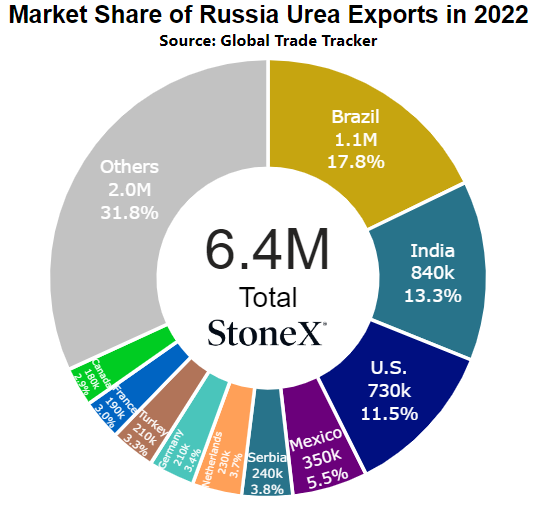
Price comparisons
Vs 30 days ago - 14% or approximately $38 higher
Vs 90 days ago - 2% or approximately $5 higher
Vs 6 months ago - 12% or approximately $33 higher
Vs 1 year ago - 17% or approximately $45 higher
China
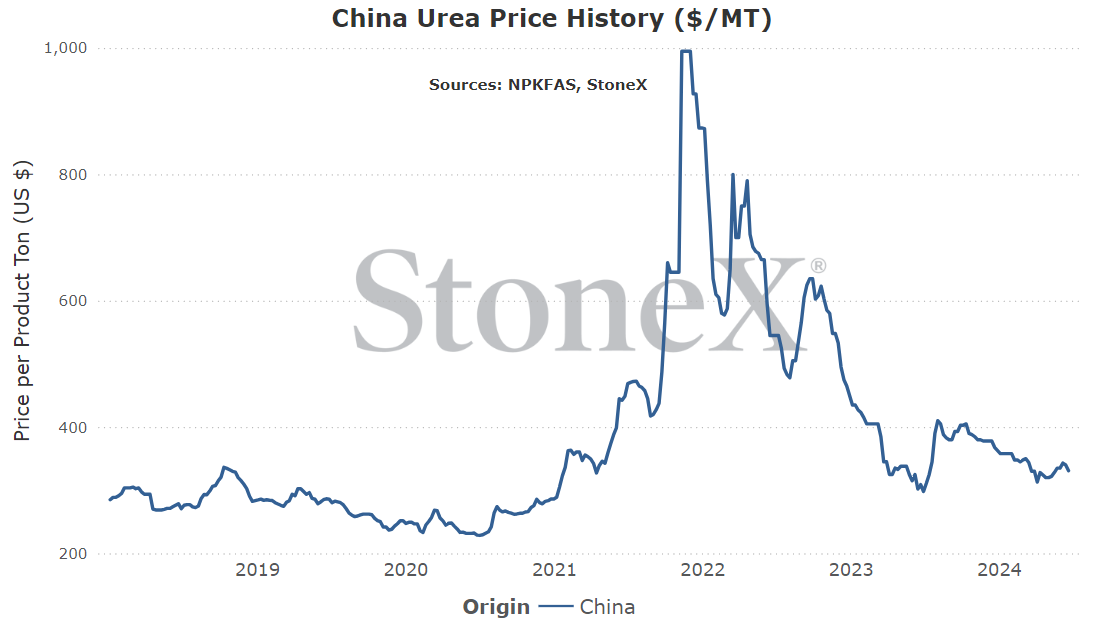
Number 9 global exporter in 2022
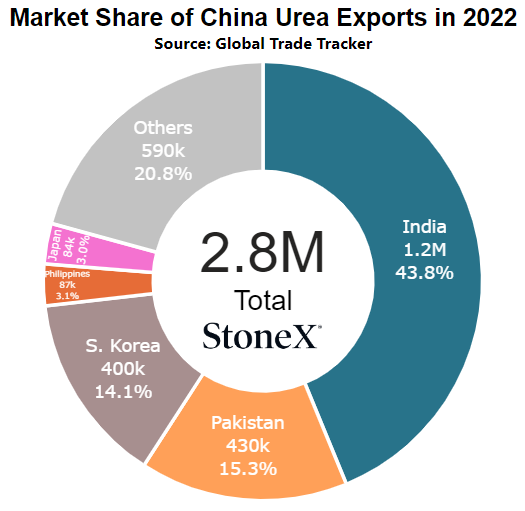
Price comparisons
Vs 30 days ago - -1% or approximately $4 lower
Vs 90 days ago - unchanged vs 3-months earlier
Vs 6 months ago - -10% or approximately $37 lower
Vs 1 year ago - 7% or approximately $22 higher
- Continued supply issues (export and/or production) - there are plenty of supply issues around the world. Egypt/Brazil/Europe/China all have either reduced or completely shut off production and/or exports. This doesn't take into account global production that needs to go offline for repairs. If the issue list continues to grow, it means the supply tonnage continues to shrink.
- India buys a lot more than expected - if the market surprises us and gets very aggressive on pricing and in turn, other offers relent and drop their price, then India could shock the market and buy more than expected. Maybe not a huge chance, but a chance.
- Ramp up in global tensions - Russia remains in Ukraine. China continues to ramp up tensions regarding Taiwan. Separate, each nation represents a decent portion of global urea. Combined, it is a very big number. Hopefully this is a story that doesn't need to be told, but it does need to be watched for.
- Values have gotten to high, runs off demand - demand started to step forward because the value was there. Since then, urea values have jumped and grain has fallen. Just as quick as buyers appeared, they disappeared again. If sellers want to sell, they know what needs done.
- Egypt/China return - Egypt continues to struggle with their gas supplies, but it looks like that should be fixed sooner than later and production resumes. China is a bit more murky on their approach but we continue to hope/believe they will return. If both return to the market, it should help lower price ideas.
- Return of Europe/Brazil production - notice I didn't lump Europe and Brazil with Egypt/China? I think there is a better chance of Egypt/China coming back. Europe and Brazil seem very low probability today. However, if either one or both shocks us and returns, it should cause the market to reel more than the other two returning.
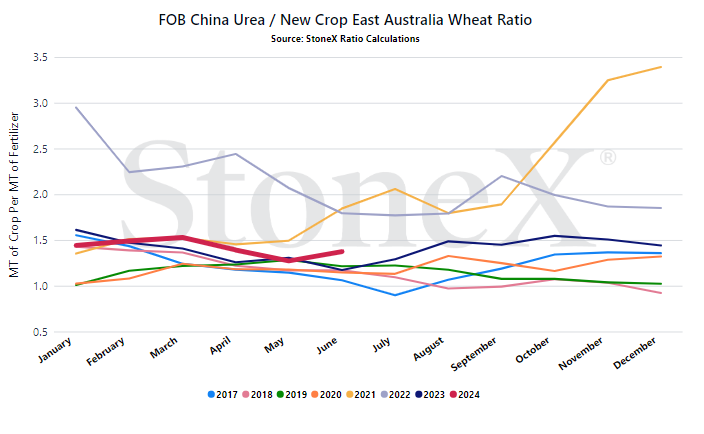
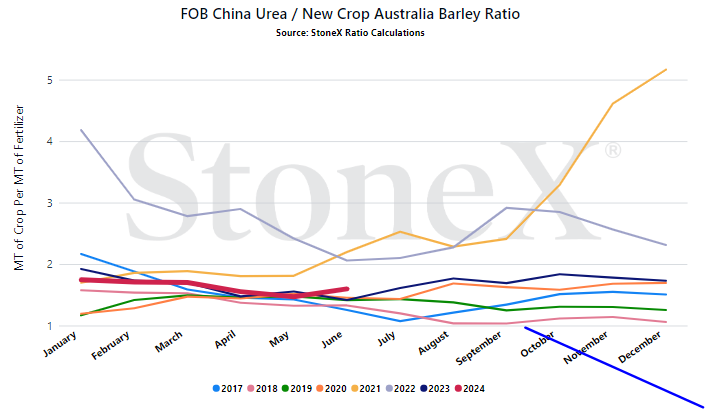
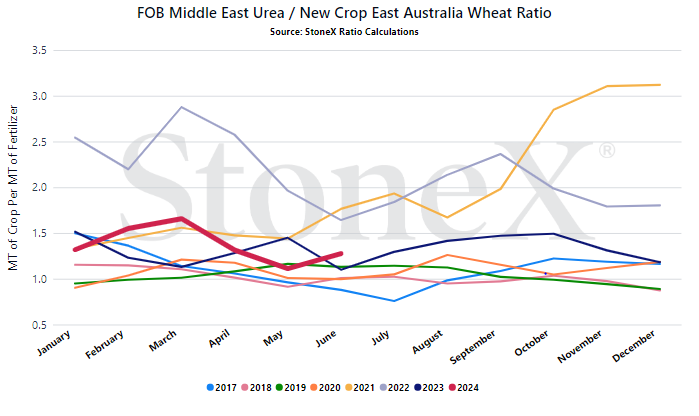
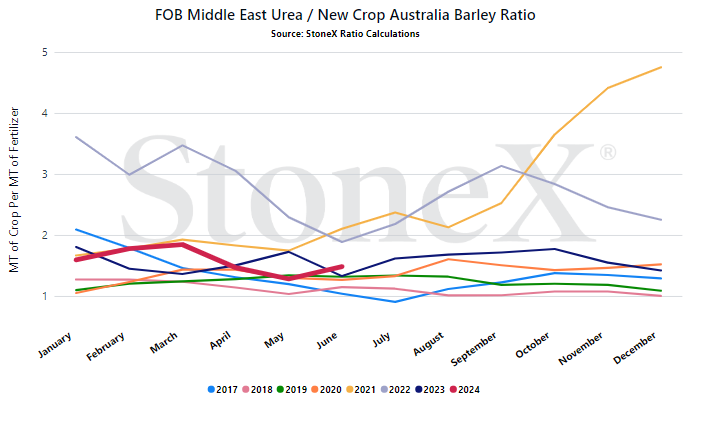
We believe that only looking at the flat price of either grains or fertilizer can be misleading:
-
Only selling grain can hurt you if fertilizer prices rise substantially
-
Only buying fertilizer can hurt you if grain prices fall
We look at the ratio "value" to get a better indication of where we are or how many bushels of X does it take to pay for 1 ton of fertilizer.
Would you rather:
-
Spend 135 bushels to pay for 1 ton of urea
-
Spend 55 bushels to pay for 1 ton of urea
When we compare the current ratio value against recent years, we start to see if we are high or low.
YOUR VALUES MAY LOOK DIFFERENT
This is a work in progress section! We plan on looking at the relationship between Aussie grains and global price points (and hopefully Aussie specific locations, though that data is hard to secure, very protected). Big reason why we are still in the "trial" stage of this newsletter!!!!
- Egyptian production and Chinese exports - these are my top two watch points...and I couldn't decide on one or the other, so I combined them. Egypt did a lot of the work in rallying global price ideas so how they proceed needs to be tracked. If production continues to suffer, will global values continue to rise? How about Chinese exports. If/when they return, it should be like a wet blanket on the fire that has been urea.
- India tender results - I continue to believe that India has a lot more chance to disappoint global bulls rather than bears (which means it will be the most bullish thing in history, but I digress...). Prices around the world have rallied a lot in recent weeks. If India disappoints, we could see a lot of those gains wiped out.
StoneX Ratio Calculation
The ratio calculation is derived from Bloomberg historical grains values as well as fertilizer values from StoneX, NPKFAS, and Argus.
The calculation is simply dividing the fertilizer price by each grain price.
All data was sourced from StoneX unless otherwise noted.