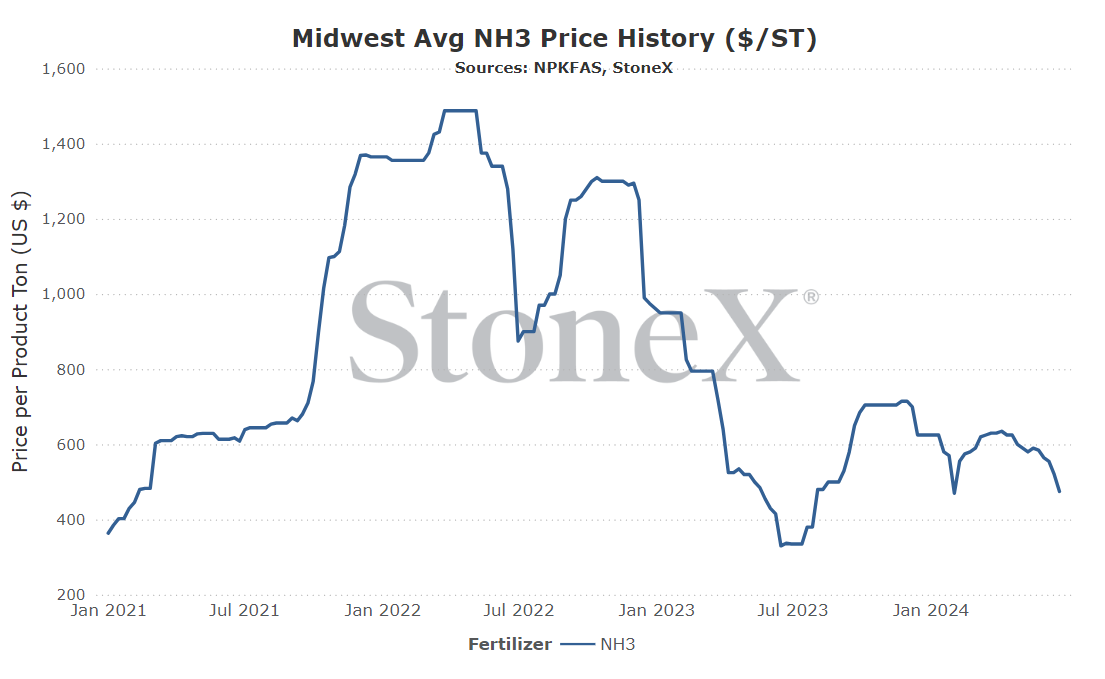
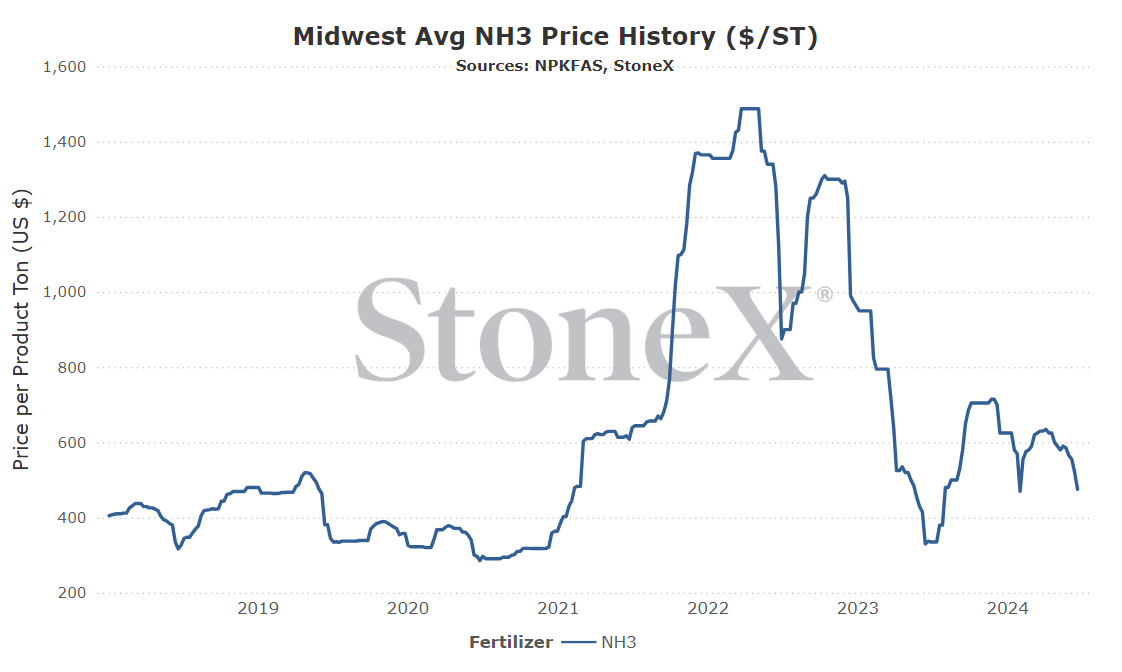
The first graph is the AVERAGE of the entire Midwest U.S. region. That means your local value WILL be different than what the graph reflects. Please do not take this into your retailer and say "why isn't my price the same as here". That is comparing apples to oranges. You might be on the cheaper or more expensive side of this graph. This doesn't take into account logistics/storage/interest/insurance/shrink/etc.
This graph looks at the price from a short ton and USD currency POV.
This second graph looks at the price set for Tampa NH3. This value does not have a high correlation to Midwest values. It is a talking point used when prices are rallying...yet somehow gets skipped on the way down. This price is more an indication of the global price. This price is set by two parties (purchaser - phosphate producer in Florida / seller - international producer providing NH3 to FL phosphate production).
This graph CAN be used as an indication of global market price direction/trends. This graph SHOULD NOT be used to determine a Midwest value. Tonnage is listed in short ton and currency in USD.
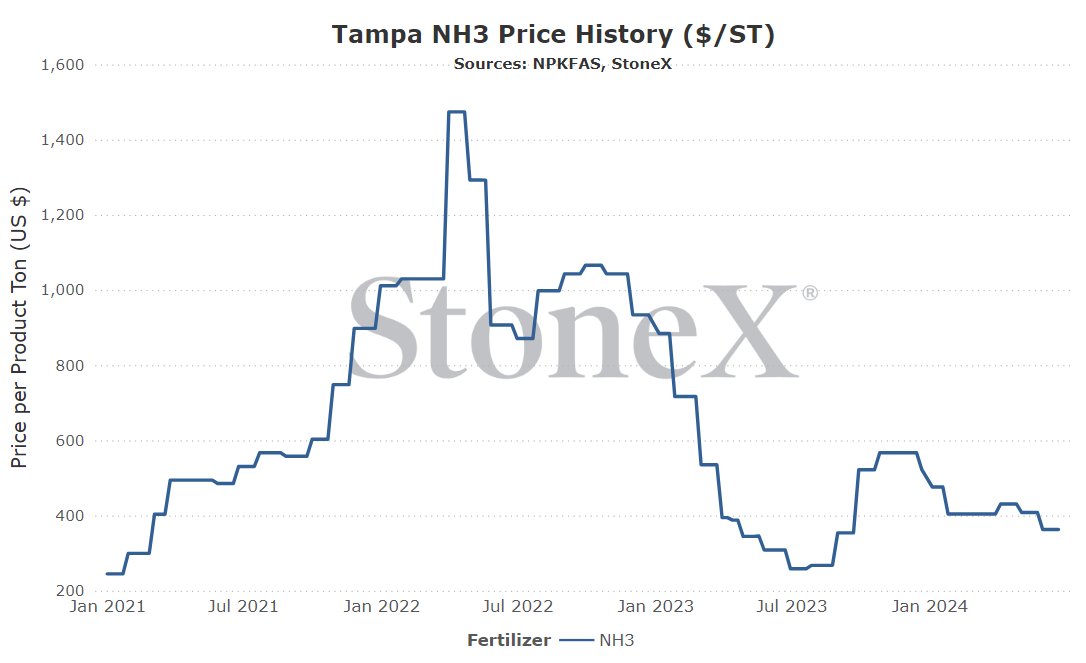
We just found out that the July Tampa NH3 price was agreed upon at $415 which is around $15 higher than June. Given some of the price moves we have seen in recent months/years in the NH3 space, $15 is not a big move. Personally, almost a non-event from my perspective, but it was higher on some production being offline.
Still, my outlook on global NH3 remains bearish on fears/expectations of Russian exports resuming and global production returning to normal.
North America
Several N.A. summer fill programs have been released in recent weeks. They appear to be slightly higher than last summers programs...and that shouldn't come as a shock. Last years programs were so shockingly cheap that it was going to be tough to match them, let alone beat them. Now, the market is waiting for the fall prepay programs which actually set the market (not nearly enough storage out there to make a big difference).
Personally, with grain prices down, I'm hopeful this years fall prepay programs match last years. Small chance they come in slightly lower but wouldn't count on it.
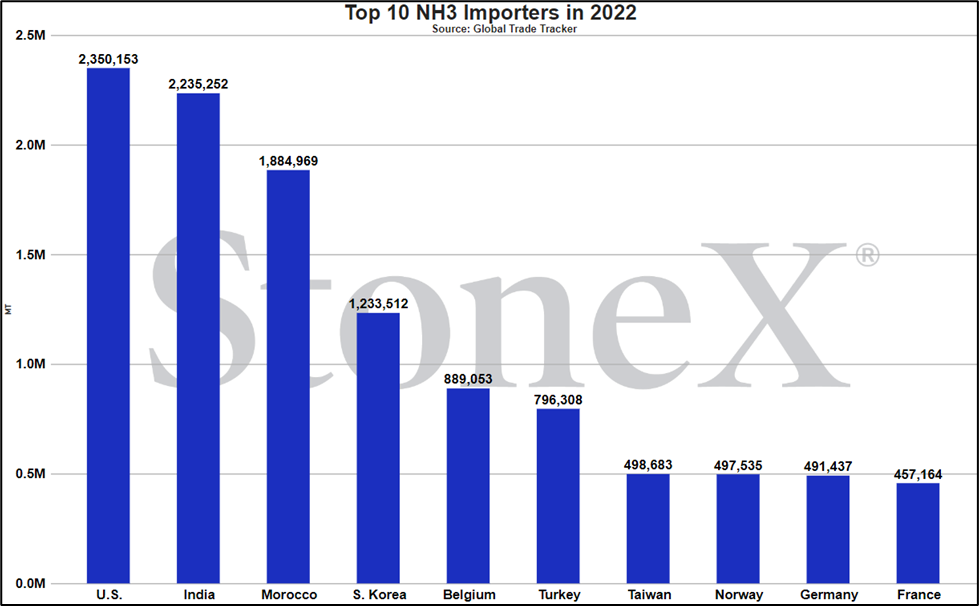
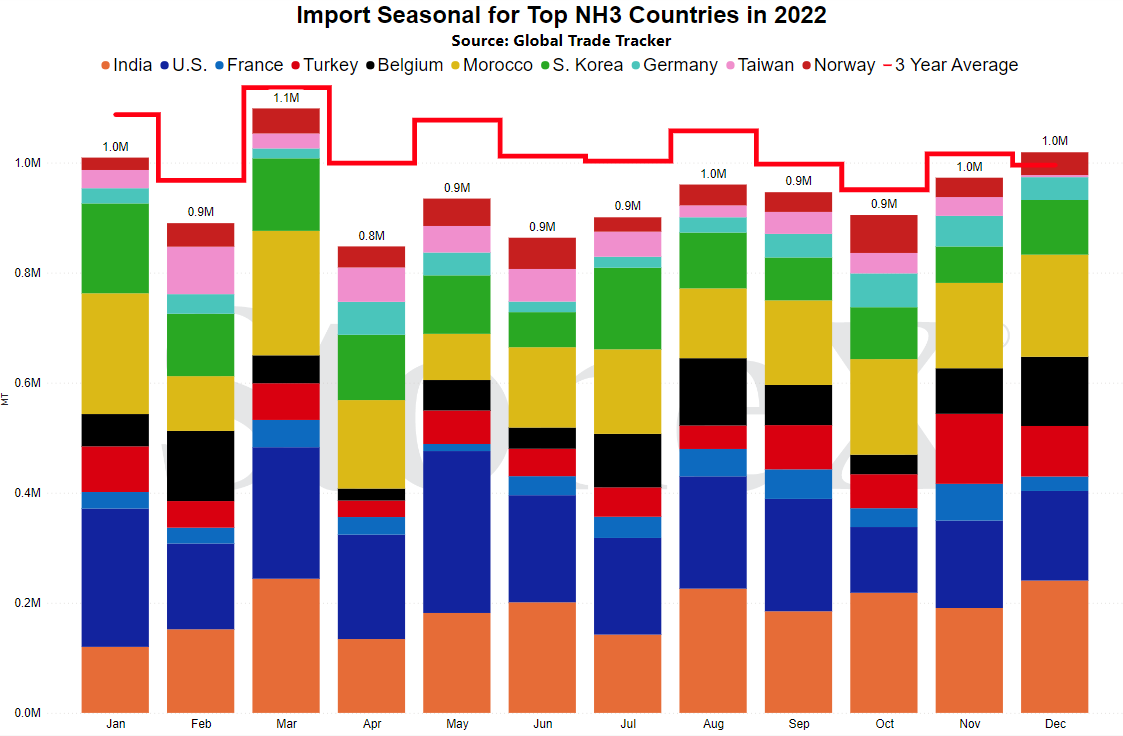
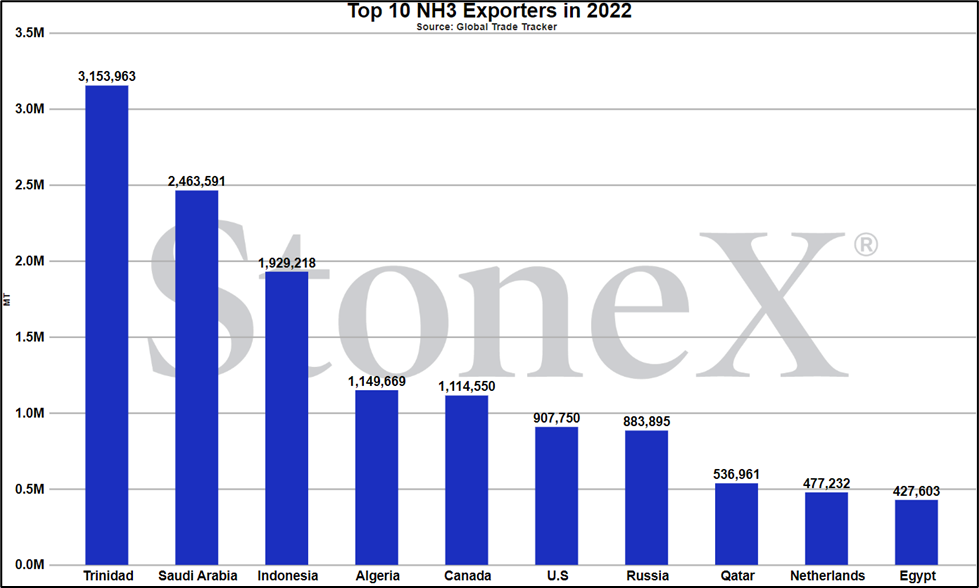
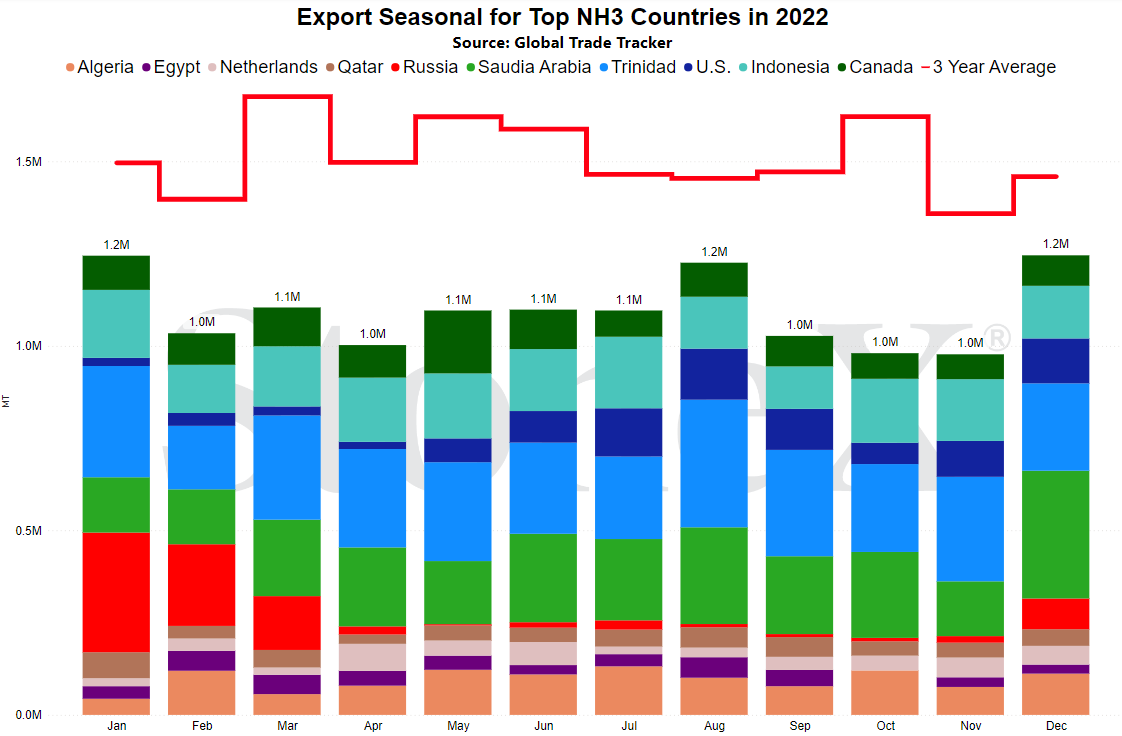
STILL nothing from Russia
HOW MANY TIMES AM I GOING TO HAVE TO WRITE ON THIS STORY!!!!!
For a more detailed storyline on this situation, look at last months NH3 article.
Long story short, Russia used to be the largest exporter of NH3 in the world...and it wasn't a close 2nd. However, their invasion of Ukraine meant the loss of their main export logistical route (pipeline thru Ukraine to load vessels near Odessa and out to the world). Since then, they have fallen off dramatically from their normal export paces and have left the world much tighter supplied because of it.
Not to be deterred, work began on new logistical routes within Russia to resume world shipments...but that takes time. The main facility that we have been expecting sooner than later is Taman. Early estimates had this facility starting to load vessels in 2024...obviously that deadline has not been met. Now, expectations are for sometime Q3/2nd half 2024. Like most things, hard to tell if this is a deadline that will be met. Even once the facility is operational, the NH3 world will need to watch Ukrainian actions. Taman is not far from Crimea and given Ukrainian abilities to attack targets even further inland Russia, Taman could present a heck of a target. Even a small attack would be devastating and set the facility back months or longer.
The expectation is that Russian exports will resume sooner than later and that should weigh on global price ideas...but there are no guarantees as to when that happens.
Trinidad gas cuts tighten global supplies, puts more demand on U.S.
Trinidad made news months ago that it was going to open gas exploration/drilling in some of its waters as it continued to struggle with sufficient gas availability. The news was seen as a win for a lot of markets, nitrogen production included. Additional supplies of gas means that nitrogen production facilities would be able to operate with lower fears of slowing/stopping as supplies became tight.
However, hope for the future does not solve today's issues.
Today, Trinidadian (I have no idea if that is the correct usage of grammar there!!!) nitrogen producers continue to see their production rates ebb and flow with gas availability ebbing and flowing. Recently, that production is in an ebb which is pushing more demand to other nearby manufacturers in the U.S. whose gas supplies are more reliable.
This production issue/demand shift does two things.
- Tightens the global supply
- Raises U.S. / N.A. demand
Both have a bullish effect on pricing.
Fortunately, the Trinidad production issue appears to be a shorter term situation. Hopefully they come back with little to no hiccups for the remainder of 2024.
Tampa July price rallies $15 as result of tighter inventories
Much of the commentary for the "why" of Tampa NH3 jumping from June to July can be read in the above piece regarding Trinidad.
That said, the price did firm slightly to close at $415. However, our expectation is that values should remain flat to somewhat bearish if Russia continues to look like they are going to reappear. But, that is a big "if". There is no word on how far along they are on their Taman facility. Even once operational, then we need to be concerned about Ukrainian attacks setting it back months or longer.
Nutrien formally backs out of Geismar green NH3 production facility
In the scope of the marketplace, this was a relative non-event, but it was worth discussing due to how it shapes the market.
Last month, production and retail powerhouse Nutrien announced that they were abandoning the green nitrogen production facility in Geismar, LA. This facility was on a long list of "green" nitrogen production facilities to be built around the world but because it was tied to a well known and well established company like Nutrien, it sat higher on the probability list.
However, every time we have looked into the economics of green facilities, the numbers did not work. Even with massive government subsidies, it appeared from the outside looking in that the facilities were being built either from the hope that a secondary/premium cost market would form or that government subsidies would grow to offset the high cost.
Nutrien represents the first "major" backing away of this type of production. With the fertilizer market somewhat returning to normal pricing/structures (still high priced but far from the early 2022 high's), they are taking the opportunity to focus on the fundamentals, and this facility did not meet that criteria.
So the rest of the market is likely going to see that and ponder their own path forward. No doubt some facilities will be built. Even if a profit loser, some companies are making so much money that just the optics of pursuing "green" is worth it. However, those who are not capable of mimicking Scrooge McDuck may follow Nutrien's footsteps.
What do I mean by Scrooge McDuck?
U.S. Midwest Wholesale price average
Vs 30 days ago - -19% or approximately $110 lower
Vs 90 days ago - -25% or approximately $155 lower
Vs 6 months ago - -24% or approximately $150 lower
Vs 1 year ago - 41% or approximately $138 higher
U.S. Southern Plains price average
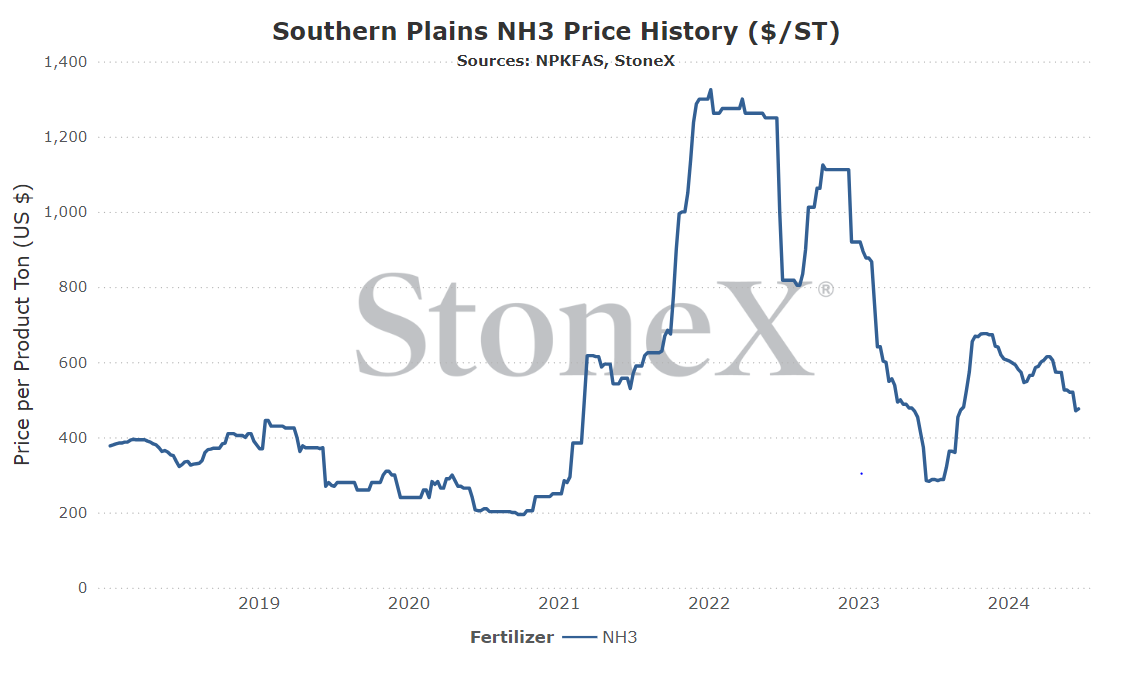
Vs 30 days ago - -10% or approximately $50 lower
Vs 90 days ago - -21% or approximately $125 lower
Vs 6 months ago - -22% or approximately $133 lower
Vs 1 year ago - 69% or approximately $194 higher
- We find out Russia is not coming back in 2025 - worse yet, what if we find out that they are not coming back to normal...at all. One of the biggest bear factors have been the feared return of Russian exports as the market would go from somewhat tightly supplied to well supplied very quickly. However, if the market suddenly finds out they are not returning short term, global bulls could run rampant.
- Continued global production issues - European production remains around 75% of normal on higher natural gas costs. Trinidad has production issues due to gas supply issues. If this list continues to grow, it tightens the global S&D allowing bulls more space to operate.
- Russia returns - the biggest bull factor could easily become the biggest bear factor. If the market suddenly finds that Russia is back to the market, no doubt any sellers in the world will be leaning into price offers for fear of missing out and having to sell lower later.
- Lower grain values spook manufacturers into lower fall pricing programs - the lower grain prices go, the harder it is going to be for retailers/farmers to step forward. Many are already reaching out stating that their 2024 economics on the farm are not looking good. 2025 is no better. It has been a while since the market has had to deal with this. Sure, fertilizer prices have been high but so to have grain values. Now, there is a real threat that farmers are looking locally at corn that starts with a 3...and that does not put anyone in a spending mood.
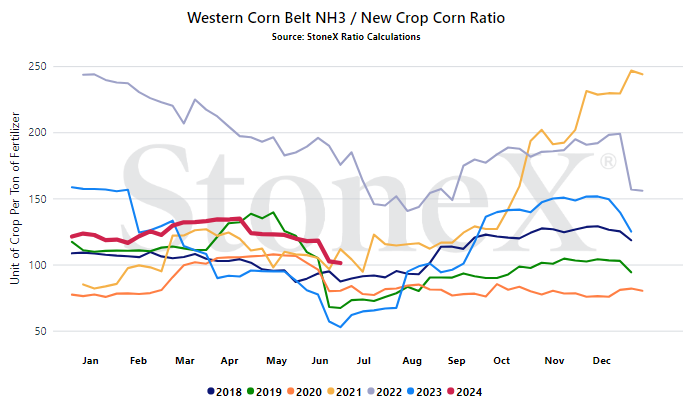
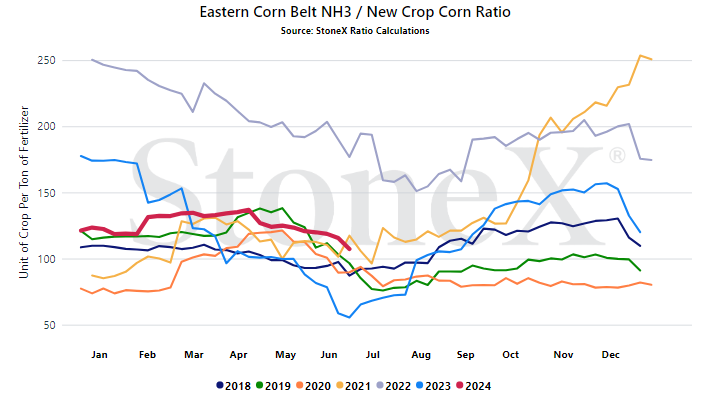
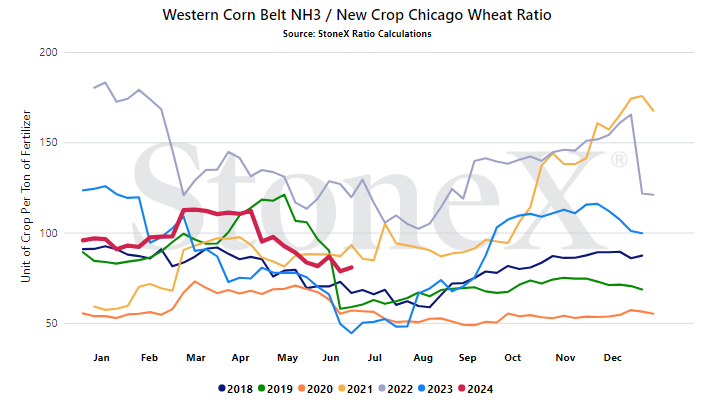
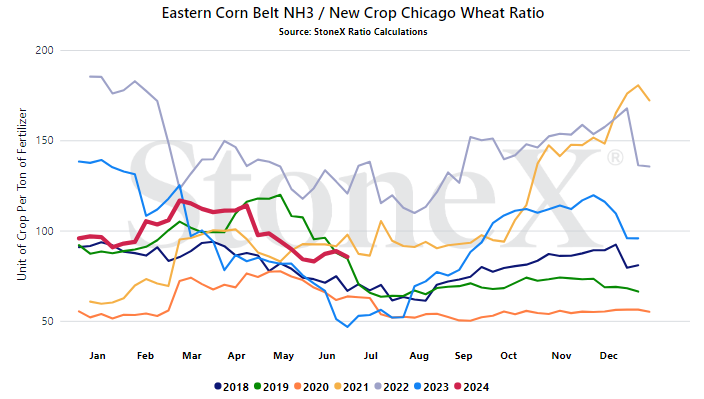
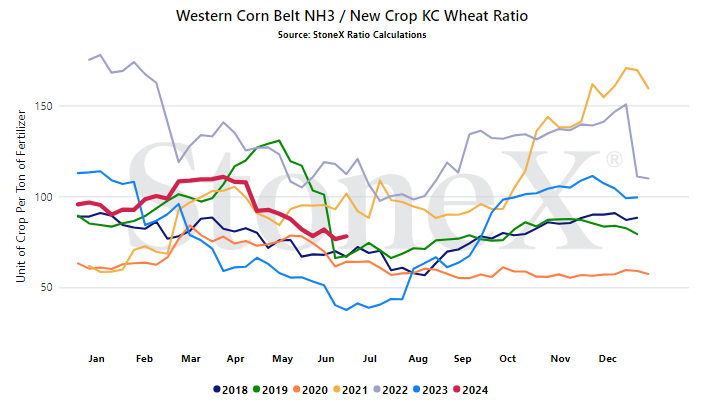
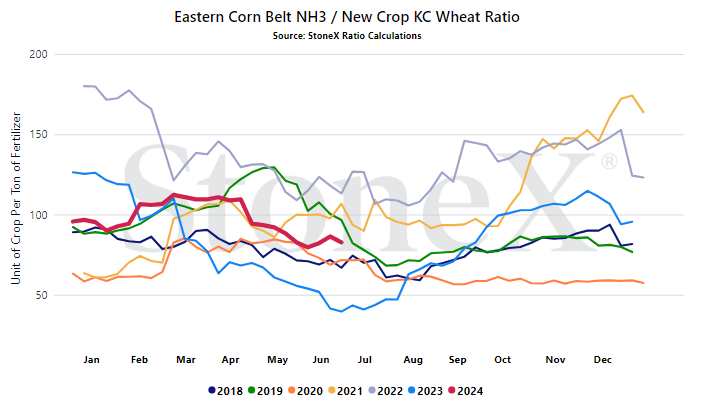
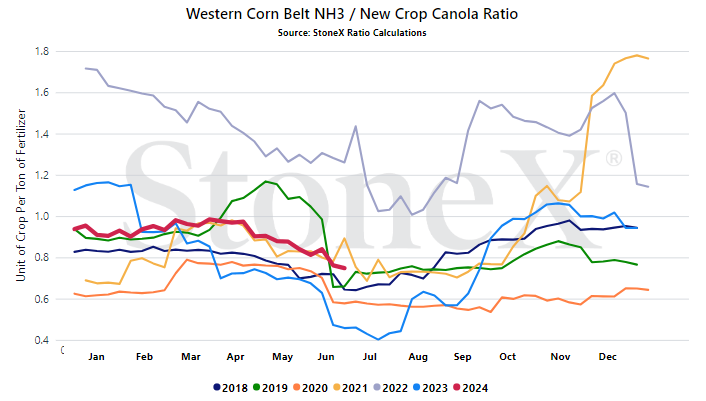
Where are the current NH3/grain ratio values today
We believe that only looking at the flat price of either grains or fertilizer can be misleading:
-
Only selling grain can hurt you if fertilizer prices rise substantially
-
Only buying fertilizer can hurt you if grain prices fall
We look at the ratio "value" to get a better indication of where we are or how many bushels of X does it take to pay for 1 ton of fertilizer.
Would you rather:
-
Spend 150 bushels to pay for 1 ton of potash
-
Spend 100 bushels to pay for 1 ton of NH3
When we compare the current ratio value against recent years, we start to see if we are high or low.
YOUR VALUES MAY LOOK DIFFERENT
This graph looks at the NOLA NH3 price vs the flat grain price. There are no logistics on either product. Your location will look different due to fertilizer logistical costs, grain basis, etc.
- Russia...plain and simple - will they or won't they. That is the question. They remain removed mostly from the global export market and prices remain supported. They return to normal exports and it should provide pretty decent bear pressure to global prices. Russia should remain number 1 on this list for a while...
- How do N.A. manufacturers approach fall prepay programs with grain prices falling? - it has been a while since manufacturers have had to approach a market where the farmer is struggling. No one enjoyed where prices were in early 2022 (for example), but when push come to shove, the purchase was made because there was good income. That is no longer the case. Farmers are struggling and retailers will be cautious on their approach. Will manufacturers consider this when they publish the fall numbers or will they approach it as though the farmer will be regardless?
StoneX Ratio Calculation
The ratio calculation is derived from Bloomberg historical grains values as well as fertilizer values from StoneX, NPKFAS, and Argus.
The calculation is simply dividing the fertilizer price by each grain price.
All data was sourced from StoneX unless otherwise noted.