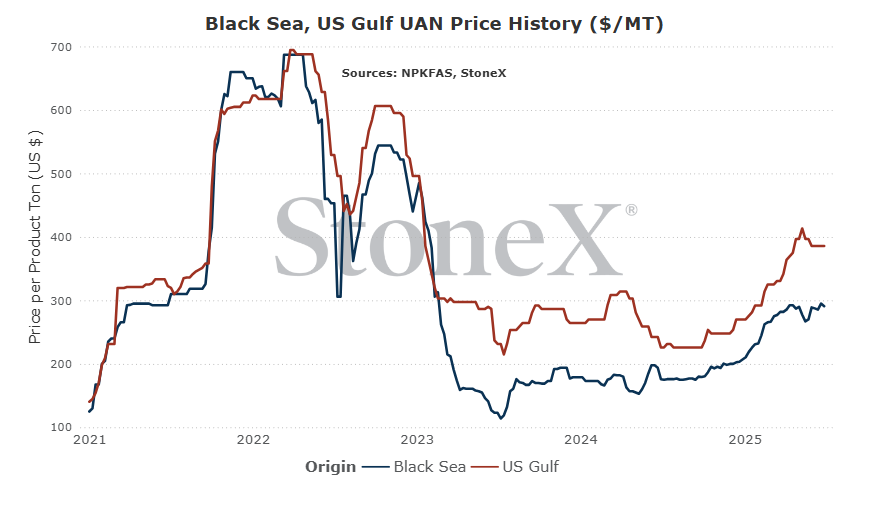
The intention of the below graphs are not to use to say "my price should be X based on this graph". These prices are derived from an FOB price point average. The intent is to show major global price movement trends. Your values will likely have significant basis difference (similar to your local grain price being different than the traded market price).
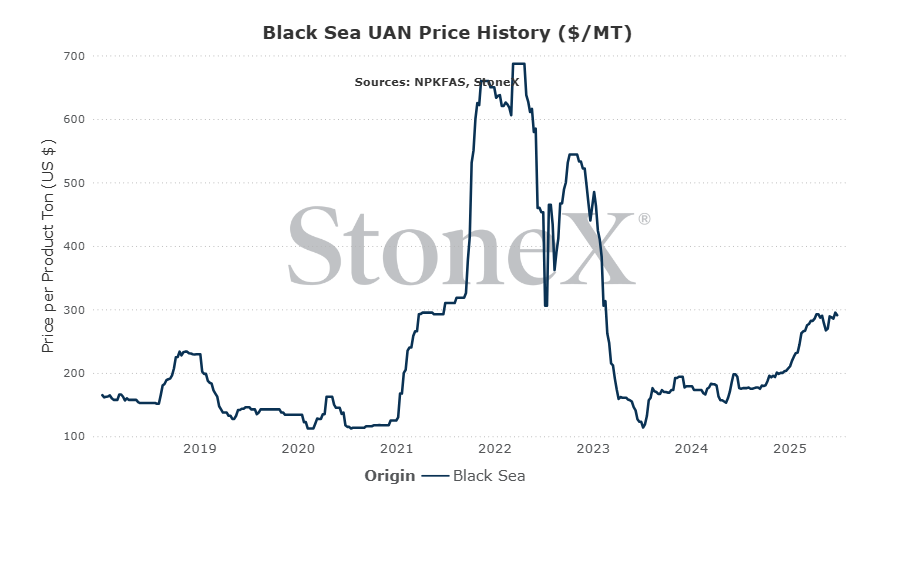
This graph is labeled as MT in USD currency.
- Starting inventories will likely be extremely low
- Crop mix 2026 is already pointing heavy corn - big nitrogen demand
- Exports could be bigger - EU blocking Russian tons will turn them more to the U.S.
- Imports could be smaller - if Russia/Ukraine peace isn't found, President Trump could shut those flows quickly
- Market will be jumpy after struggling to find product
Now, does all of this mean that we will have another inventory failure next spring? No. Absolutely not. Just because something happens one time does not make it a regular event. However, we are starting MUCH closer to that scenario than we ever have.
There has been no summer fill programs so I still believe we will see values lower than where they sit today. However, I think those initial summer fill programs will be substantially higher than last summers lows. The manufacturer/supplier side simply has too many factors leaning their way.
EU moves to block Russian fertilizers, life gets harder for EU farmers
All efforts by world governments/leaders have failed to find peace between Russia and Ukraine. It looks like the EU is sick and tired of it.
In the last month, they pushed ahead with plans to put further import penalties in place against Russian fertilizers. These penalties will increase in severity over the next few years unless peace agreements are signed. No doubt the EU is tired of sending money to Russia for its fertilizer which is then likely being used to fund its invasion of Ukraine. With EU countries being hard supporters of Ukraine, it makes little sense to do business with the enemy.
Now, I still hold out hope that after success in finding peace between Israel and Iran, leaders might finally be able to break the war between Russia and Ukraine. However, we need to consider what it means for UAN if that doesn't happen.
The long story short is that it makes life even harder for European farmers. Blocking Russian fertilizers means blocking some of the most efficient and cost effective trade routes to supply farmers. If those flows are blocked, it forces the market to look elsewhere around the world to find its supplies. Those new points cost more money in transit as well as forcing farmers/importers to make decisions earlier to make up the time difference.
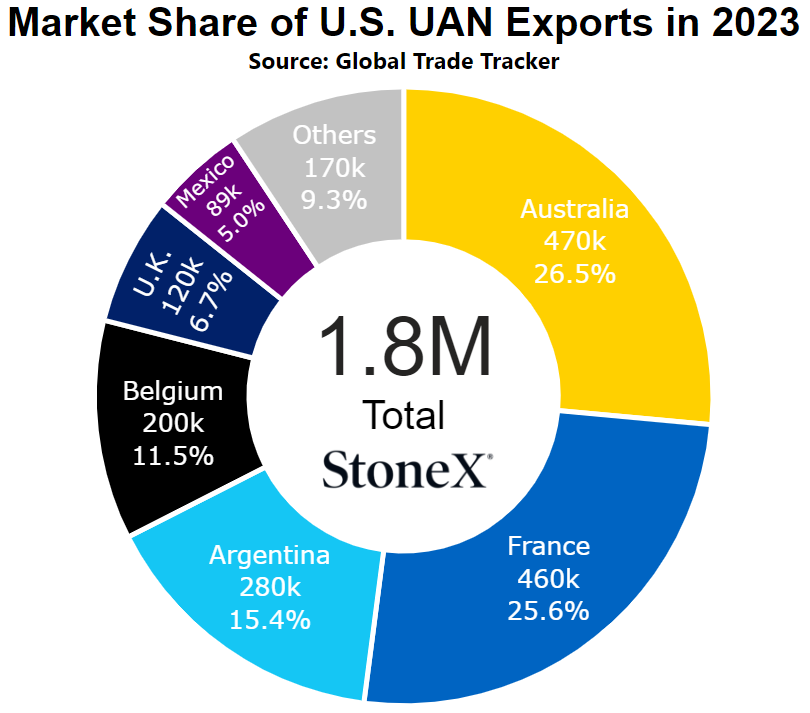
However, it doesn't stop there. The most likely spot that EU farmers will target is the U.S. as that has been the case for the last few years. If more supply chains are lost from Russia, that pushes even more demand to the U.S. If manufacturers there have more export opportunities, they can raise their price.
THEN, that has a direct impact on Australian and Canadian farmers. Canadian farmers see their prices ebb and flow with the U.S. as their government fully blocked Russian goods. The Australian government has done the same in blocking Russia, and as a result has become solely dependent on the U.S. for its UAN needs.
All of this can correct relatively quickly if Russia and Ukraine can find a peace agreement but until that day, the UAN market continues to see a lot of stress around the world.
If no Russia/Ukraine peace, Russia may lose all major UAN destinations
The world is really getting tired of Russia's war/invasion of Ukraine and politics are starting to show it.
Countries such as Australia and Canada have had blocks in place against Russian fertilizers nearly since the start of the invasion. While other countries threatened, those nations stepped up and followed thru with the threats.
Now, after years of fighting, Europe as a whole has had enough. The EU has put further blocks in place that get rapidly worse in the coming years. This has all but guaranteed that Russian products will not find their way very far west.
Then, we have to think about the next steps. President Trump is no doubt feeling pretty good about being able to secure a ceasefire between Israel and Iran. No doubt he will want to continue this path of success and start to target the Russia/Ukraine war. This has been a high priority for him since the campaign trail.
But what if that doesn't happen.
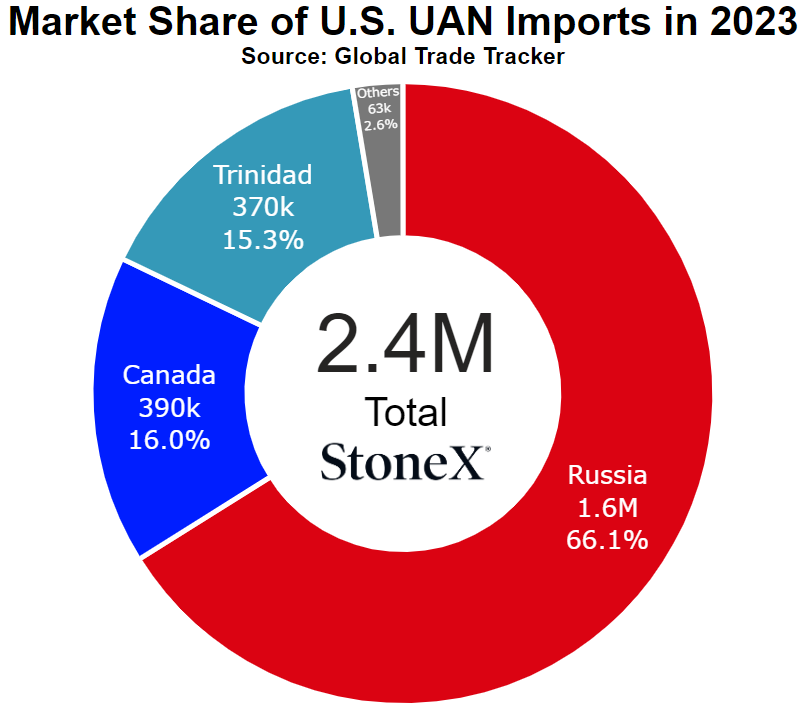
If President Trump's efforts are rebuked by Putin once again, we know how Trump responds. It is very likely that we will start to see tariffs and other economic sanctions be placed on Russia. For U.S. farmers, this would hurt significantly as Russian UAN imports have been one of the few flows that compete against domestic producers. Then, that will hurt Canadian farmers. No, Canada does not import from Russia, but the tons from Russia flowing into the U.S. do help to lower the overall N.A. price.
For Russia, it culd be a horrible situation that causes further production changes.
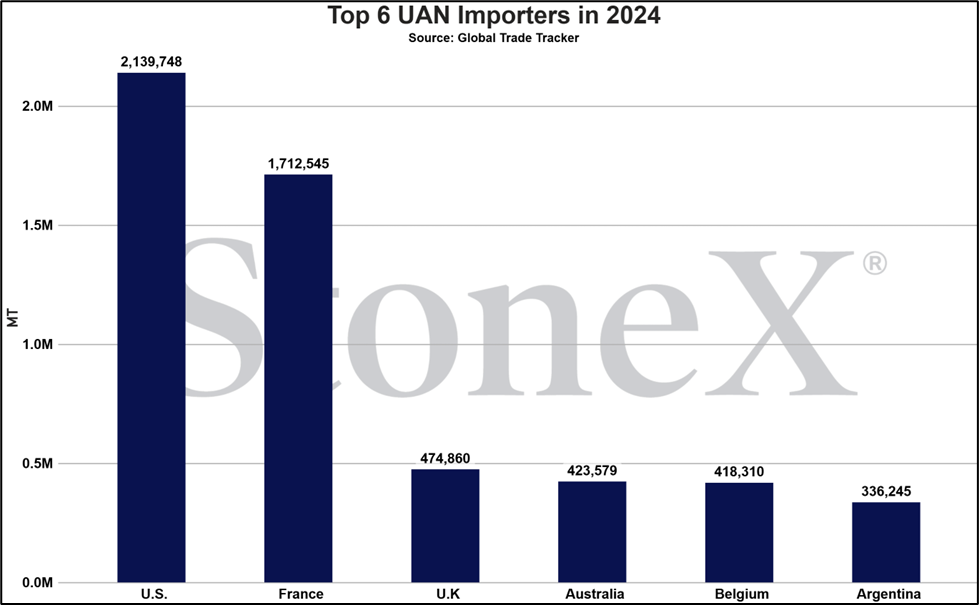
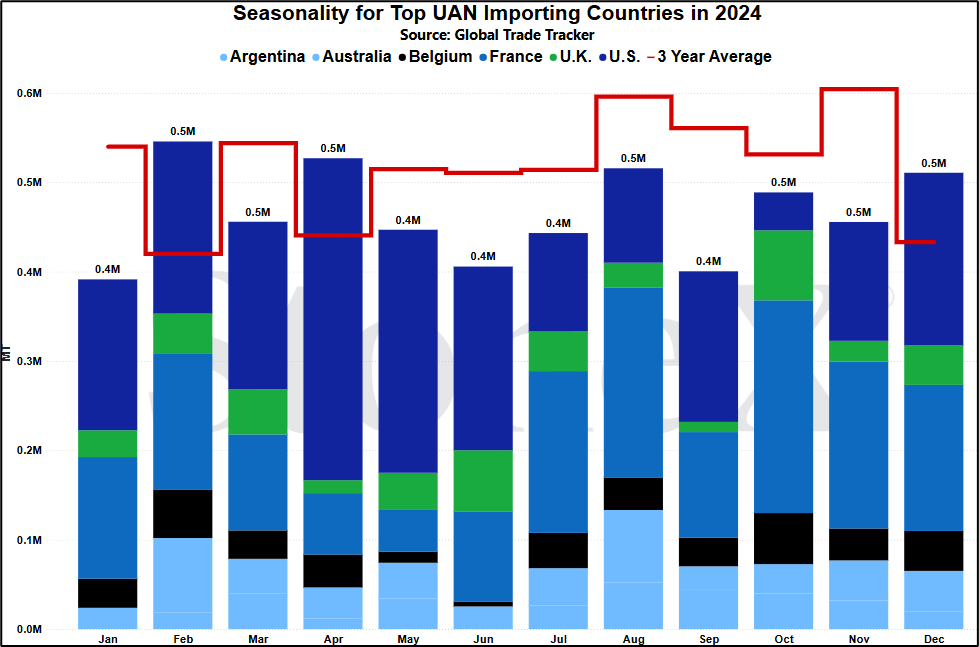
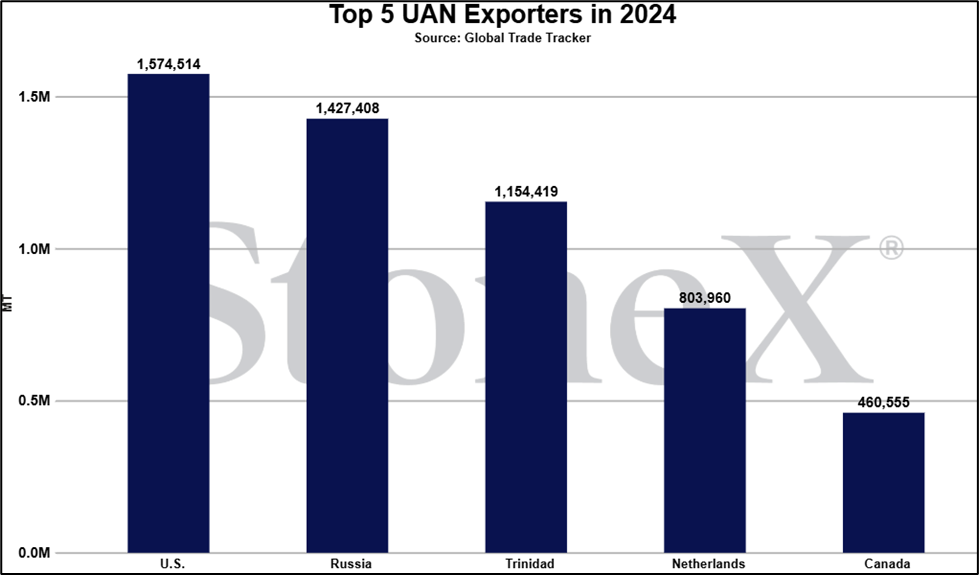
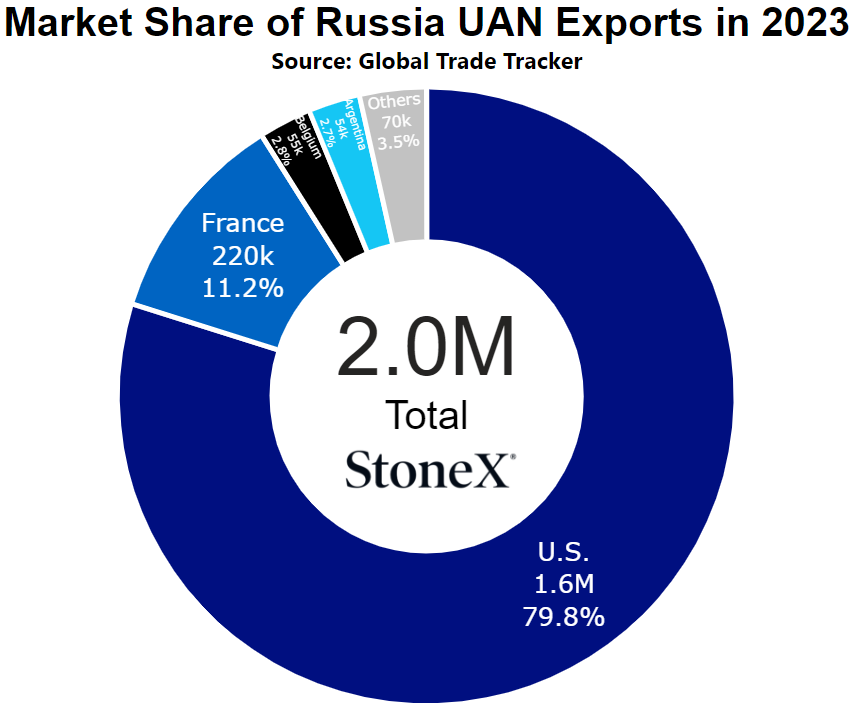
I say far too often that while UAN is a major product in the areas it is used, globally speaking it is realatively small with few players. Take a look at this chart below. We could easily see the top 4 blocking Russian goods. The amount of demand from that point on falls dramatically, so much that we limit the chart to the top 6.
If Russia continues, it will have lost most of its UAN demand options which could cause UAN producers to either consider reducing production rates or attempting to produce other nitrogen products.
If they switch to other nitrogen products, UAN global supplies take yet another hit which no doubt will boost price ideas further.

But Russia/Ukraine peace is possible. What would it mean?
While the above piece talked about what happens if there is no peace between Russia and Ukraine, but that is not a guaranteed path. No doubt both nations are tired of the war. Both would like to go back to normalcy, even if their leaders do not.
Let's think about what might happen to UAN if peace is found because it is better to be prepared than reactionary.
#1 - Global relations would start working back to normalcy - one would hope that if peace is found, nations would start to consider forgetting about old fueds. Governments would start to walk back to relationships with Russia which include removing economic barriers. Removing economic barriers would likely mean the return of efficient trade routes which would help lower UAN prices for the farmers in the nations that put them into place.
#2 - Improved relations should mean opened trade routes that boosts Russian UAN production - if peace is found and relations improve, Russian UAN manufacturers can start to target global demand points once again. Places like Europe, Canada, and Australia might suddenly become destination options. With these options once again open, Russia could shift their production back to UAN. That shift means more UAN production/supply which helps lower global price ideas.
#3 - Improved relations should mean steps toward restarting gas flows to Europe which could restart offline nitrogen production - this would be a longer term situation, but still something worth considering. The first step would be Europe willing to improve relations with Russia. Let's assume that would happen. Second would be Europe being willing to resume receiving gas shipments as it was prior to the war. Third would then be the repair of the Nordstream pipeline. Remember, that pipeline was attacked deep under water. That pipe has been blown open and saltwater allowed to rush inside which is likely corroding the pipe from the inside out. Repairs will take time. Then, we would need to watch and see if the plants that are offline in Europe are able to restart. They are old and have been offline for a while. Restarting is no guarantee.
In short, peace is a major step toward normalizing UAN prices once again. While that is always something that we should hope for, it is certainly something the UAN market should hope for.
What happened in N.A. spring season? Why is F.Y. 2026 starting worse?
Well, that was not a very fun UAN spring.
A lot of farmers and retailers across North America experienced the situation that we have worried about for years. UAN supplies became impossible to find. It wasn't a matter of paying more money. It simply was not available and it took a lot of conditions coming together to make it happen.
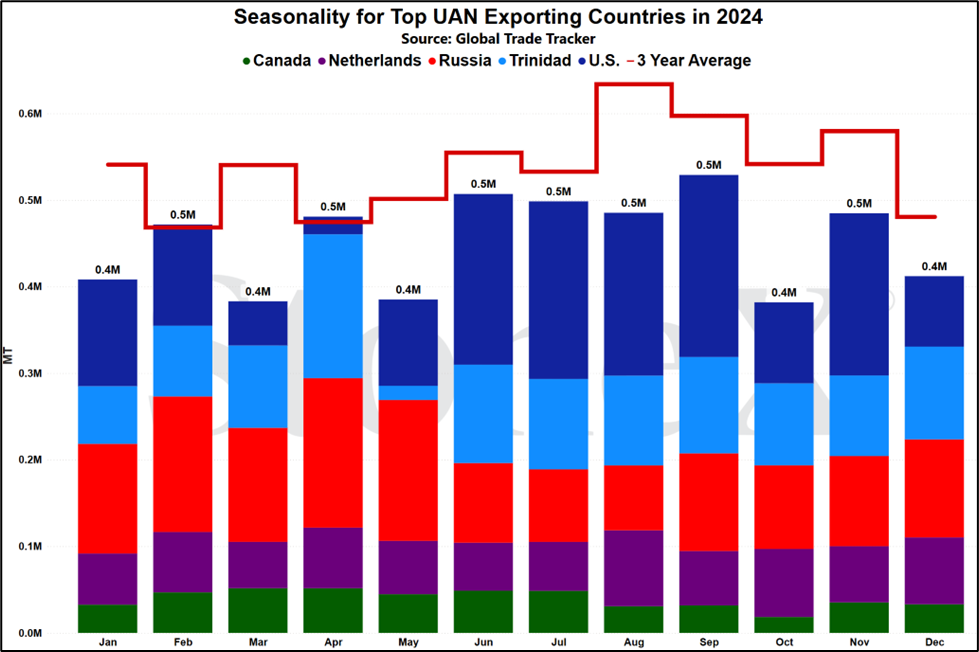
Some of those conditions we have been talking about for several months now. We knew that exports from North America were much larger than normal. We knew that production hiccups had finally gotten to a high enough level to make a difference. We knew that demand was big with a rising corn acre estimate.
However, the one thing that I personally didn't factor was the near perfect spring run. Once application opened up, demand went nuts everywhere and it never stopped. It eventually drained the market, leaving nothing for those still searching.
Lets be clear, I do not think that because this happened once that it makes it normal. Far from it. It still take a near perfect set of conditions for it to happen. I do not think that every product every season will see a similar situation as we go forward.
...but Fertilizer Year 2026, which starts on July 1, is starting FAR worse than last year for UAN.
Why do I think that?
- Extreme low starting inventories - after this spring, there is nothing left in the market. Tanks are empty from the farmer to the manufacturer. That means the refill effort will take that much more product/supply.
- Exports could be bigger - the EU proceeding to block Russian fertilizers means that they need to buy from elsewhere. Trinidad has continued to struggle with production rates with my not having a lot of confidence it gets better nearby. Guess where their next target will be.
- Imports could be smaller - if Russia does not agree to a peace deal with Ukraine, we could easily see President Trump block any Russian good, including UAN. Canada has already done that. If that step happens, Russian supplies stop and that is the U.S.'s largest importer of late.
- Demand should be big again - I know it is FAR too early to make confident predictions on the 2026 crop mix, but we have to make an initial call. With the new fertilizer year starting, we need to have an idea on crop mix as that builds your demand outlook. While corn prices are crap today, we are still seeing a chance of 93M acres next year. That is a lot of nitrogen demand.
- N.A. production facility downtime - there is a decent list of plants that we know are going to shut down for scheduled repairs. That is bad enough. What could be worse is the list of unplanned outages.
Again, let me reiterate, this does not guarantee that there will be supply outages in spring of 2026 and that you need to rush out and buy the first thing you see. I am not saying that at all.
Just know this is just trying to paint the picture of how this next fertilizer year is starting. Things can and absolutely will change. This was not written lightly just like the words of warning all winter were the same.
Please keep an eye on UAN.
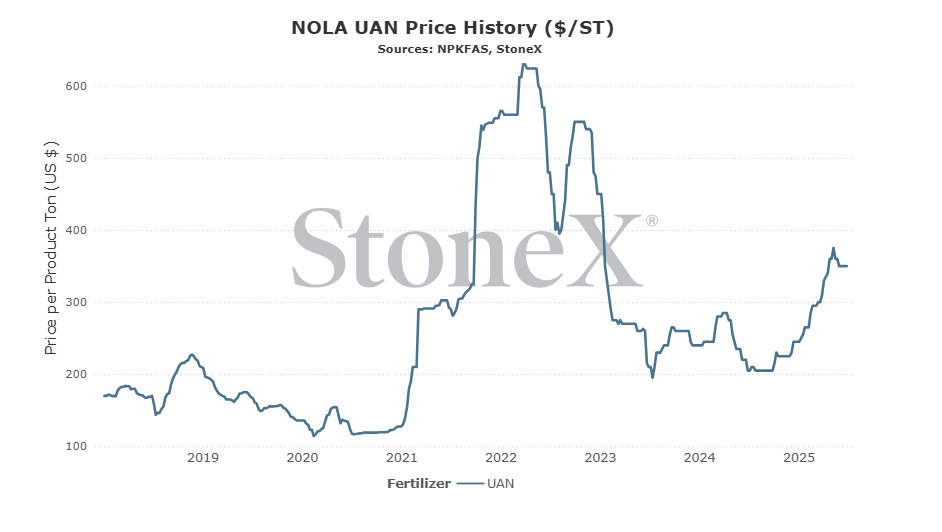
NOLA/New Orleans, Louisiana
Number 2 global importer in 2022
Number 1 global exporter in 2022
Price Comparisons
Vs 30 days ago - 0% or approximately $0
Vs 90 days ago - 6% or approximately $20 higher
Vs 6 months ago - 43% or approximately $105 higher
Vs 1 year ago - 71% or approximately $145 higher
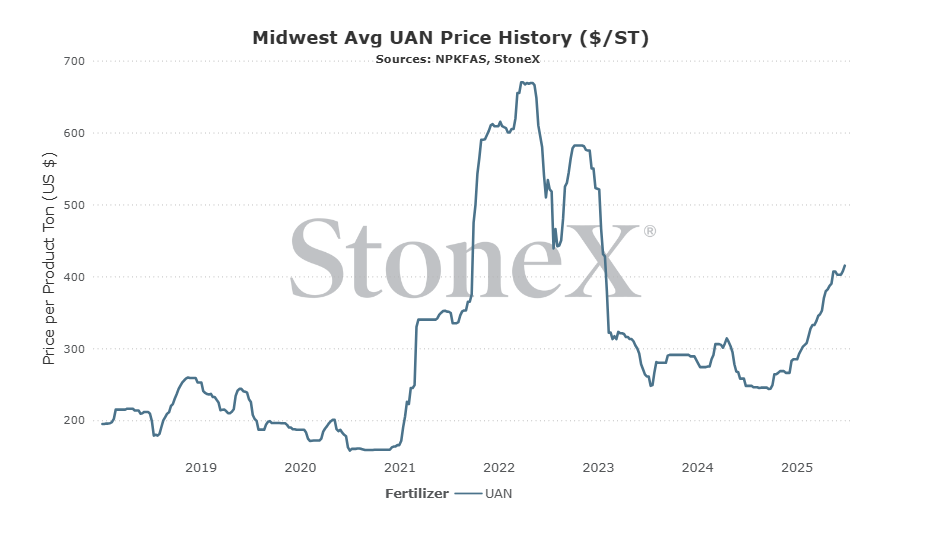
U.S. Midwest Average
Vs 30 days ago - 3% or approximately $13 higher
Vs 90 days ago - 18% or approximately $63 higher
Vs 6 months ago - 46% or approximately $130 higher
Vs 1 year ago - 67% or approximately $167 higher
Black Sea (Russia)
Number 2 global exporter in 2022
Price comparisons
Vs 30 days ago - 1% or approximately $2 higher
Vs 90 days ago - 2% or approximately $6 higher
Vs 6 months ago - 38% or approximately $81 higher
Vs 1 year ago - 65% or approximately $115 higher
- EU holds true to its process of blocking Russian fertilizer imports – this a bit more centric for European farmers. The EU looks like they have gone ahead and approved measures which will essentially block Russian fertilizers from arriving. That means those regions that typically get their product from Russia have to look elsewhere. That means longer sail times. That means more competition for that origin point. That means earlier purchas decisions needing to be made. All of it is more money.
- Russia's response to losing destinations is to make more urea – piggy backing off the previous factor would be Russia's response. Russia is already struggling with homes for UAN. Canada and Australia already blocked them. The EU is now doing the same. It is very possible that if peace isn't found between Ukraine/Russia then the U.S. might be next. Russia is running out of places to sell. If this continues, Russia will have no choice but to stop UAN production which hurts the overall S&D.
- U.S. moves to block Russian imports – I know, this has been a very Russia heavy bull factor outlook! I wish it were not so true. From a U.S. / N.A. POV, the threat of losing Russian imports is very real. Russia has been one of the largest suppliers of UAN to the U.S. for the last few years. Now that President Trump has brokered peace between Israel/Iran, no doubt his next sights will be set on Ukraine/Russia. If he is unsuccessful, I would not be surprised for economic sanctions to be put into place. If those include UAN, then the U.S. loses one of its biggest suppliers, leaving domestic manufacturers to do what they please to an extent.
- A peace between Ukraine/Russia opens new destinations to Russia and an increase to their production rates – now that peace has been found between Israel/Iran, the world (especially Trump) is going to be looking at Ukraine/Russia next. Lets say we are all surprised and suddenly a peace deal is found. Part of those agreements could be requirements that any blockades of Russian goods be removed. That will open regular trade routes once again which is beneficial for the farmers in the countries that put them into place. It would also give Russia a reason to start producing more UAN which helps global supplies. Win's all around.
- Grain values remaining under price pressure causing buyers to wait – while there is a laundry list of reasons that folks should consider buying UAN early this summer, that doesn't mean it will happen. With grain prices continuing to fall apart, it is getting harder and harder by the day for farmers to keep their head above water. At some point, something has to give. If grain prices continue to decline, farmers will say no. Some politely. Some not so politely. If enough of the market says no to fill programs, it can put some pressure back on the supplier. It might take a while given the circumstances, but it can happen.
- European gas prices falling enough to restart nitrogen production – honestly, I was struggling with a 3rd factor. I doubt this happens short term. First, we would need to see peace between Ukraine/Russia. Then we would need to see normalize relations around the world. THEN we would need the Nordstream pipeline to be repaired (remember it was blown up under water). Then we would finally see European gas values start to plummet back to normal values which might finally restart the 25% of nitrogen production which remains offline today. I know, that is a long shot.
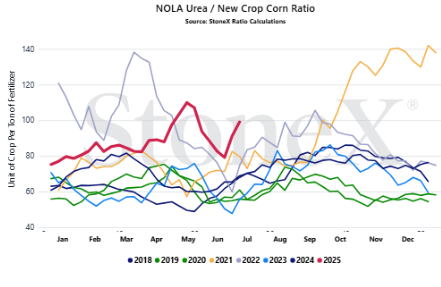
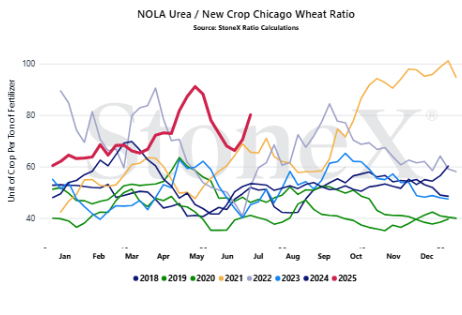
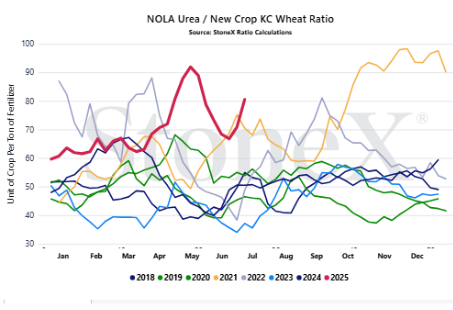
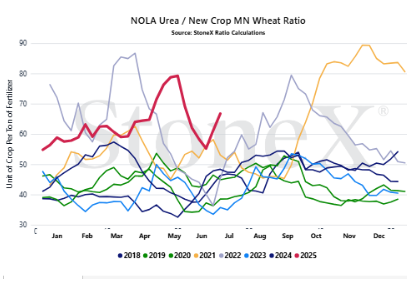
We believe that only looking at the flat price of either grains or fertilizer can be misleading:
-
Only selling grain can hurt you if fertilizer prices rise substantially
-
Only buying fertilizer can hurt you if grain prices fall
We look at the ratio "value" to get a better indication of where we are or how many bushels of X does it take to pay for 1 ton of fertilizer.
Would you rather:
-
Spend 100 bushels to pay for 1 ton of UAN
-
Spend 60 bushels to pay for 1 ton of UAN
When we compare the current ratio value against recent years, we start to see if we are high or low.
YOUR VALUES MAY LOOK DIFFERENT
This graph looks at the NOLA UAN price vs the flat grain price. There are no logistics on either product. Your location will look different due to fertilizer logistical costs, grain basis, etc.
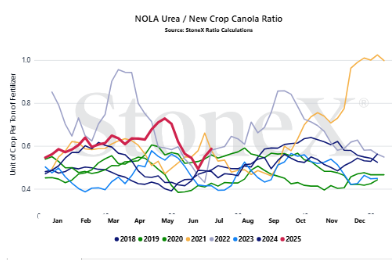
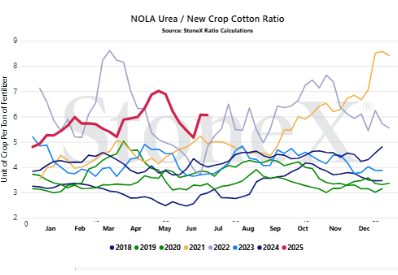
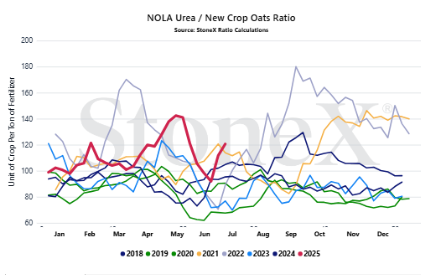
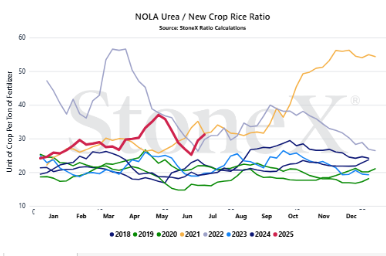
- Where will the EU turn now that they have blocked Russian fertilizer imports - now that the EU has made the decision to block Russian fertilizers (right call from political standpoint, bad call from a EU farmer standpoint), where will farmers find their products? The global UAN market is not that large in terms of export participants. Trinidad continues to have production issues. The U.S. will be on heightened alert if exports begin following their spring season. Most other fertilizer inputs have plenty of options to buy from around the world. Not UAN. Supplies could get hairy.
- Will Russian manufacturers shift more production away from UAN and toward urea - now that the EU has officially blocked Russian fertilizers, Russian nitrogen manufacturers need to reconsider the production rates. Australia and Canada were already off limits. Now the EU is off limits. The U.S. stands as one of the few remaining large destinations for Russia, and even that is in jeapordy. It is not hard to see an avenue where President Trump moves to impact Russian imports. Russian nitrogen manufacturers may have little to no choice but to shift all production to other forms of nitrogen where possible. If this happens, global UAN supplies get even tighter...and that is saying something.
- How do urea prices move - UAN has plenty of issues on its own, but it is still part of the nitrogen family which is typically driven by urea price direction. If urea prices continue to climb higher, UAN is sure to follow. However, if urea prices start to tumble (I'm writing this on the heel's of the cease fire agreement) then UAN is going to struggle to stay high priced. Urea will still have its say.
- Will the U.S. continue allowing heavy exports following this springs inventory disaster - let me start by saying we have heard nothing that points to this. This is merely my spitballing ideas. However, it isn't outlandish. The U.S. has placed tariffs on a lot of countries around the world. At the same time, very few export tariffs have been put into place. If the U.S. decides to help its farmers and put restrictions in place on UAN exports following the spring disaster, domestic supplies will be much better. That is a big if.
- How poorly will fertilizer year 2026 start - if the lead up to spring '25 was bad enough to cause the issues that were seen across N.A., 2026 could start off worse. Lower starting inventories. The possibility of bigger exports and lower imports. Continued large overall nitrogen demand. Now, buyers are going to be a bit more jumpy given what just happened. All the pieces of the puzzle are there and much earlier than last year. If they come together, could we repeat the spring?
- Just how high will summer fill values start - I really hate to say this out loud but nitrogen manufacturers control almost every narrative when it comes to UAN. This is especially true following what happened in the spring. Now, all the market can do is sit back and wait to see how they approach the first layers of summer fill. Will they go bold by setting the price high to see if the market will jump? Will they lower the price as a "gift" of sorts? Time will tell.
StoneX Ratio Calculation
The ratio calculation is derived from Bloomberg historical grains values as well as fertilizer values from StoneX, NPKFAS, and Argus.
The calculation is simply dividing the fertilizer price by each grain price.
All data was sourced from StoneX unless otherwise noted.