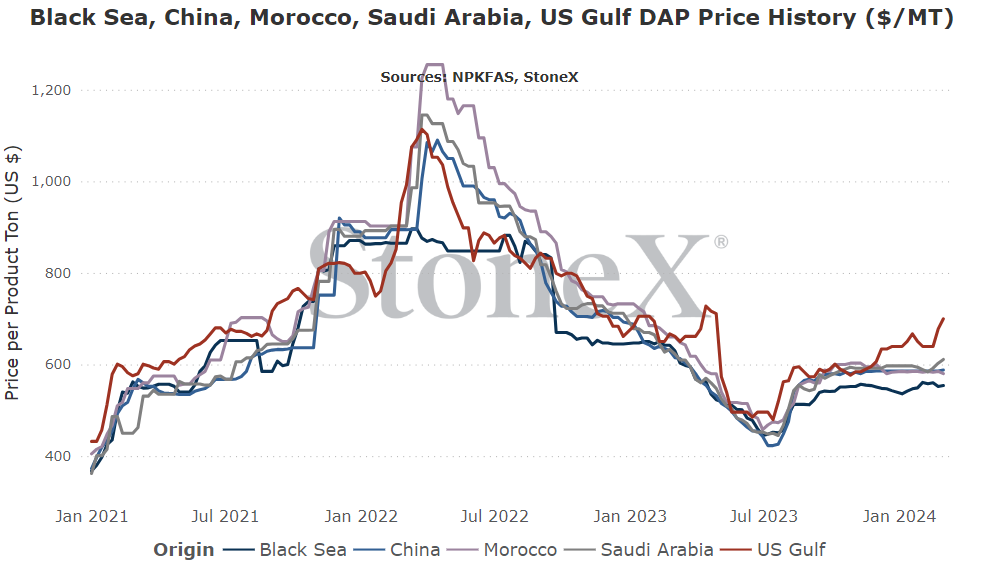
For a while, global demand has felt "sufficient"...yet prices haven't really moved. So if we are in a pattern where decent global demand is causing prices to stay steady, what happens when that demand starts to dry up? We are quickly approaching that dry demand period of the year. On top of that, there continues to be signs that China is returning as a normal exporter. With that:
For the short term, values likely remain relatively flat but we should start to see values soft in the next 60 day period.
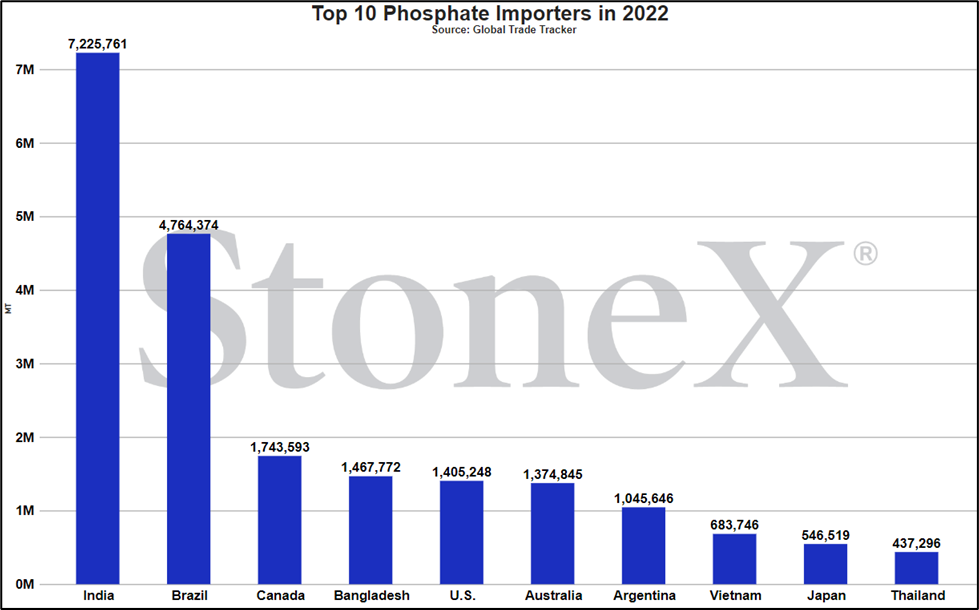
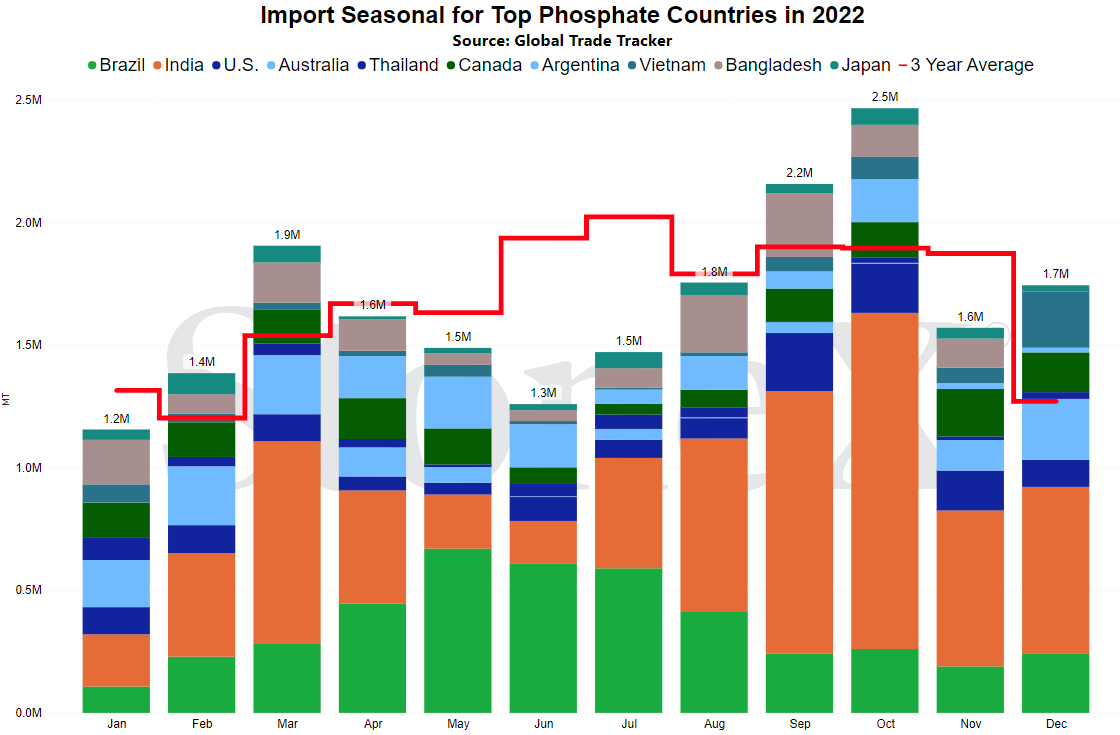
Chinese exports are returning...we think!
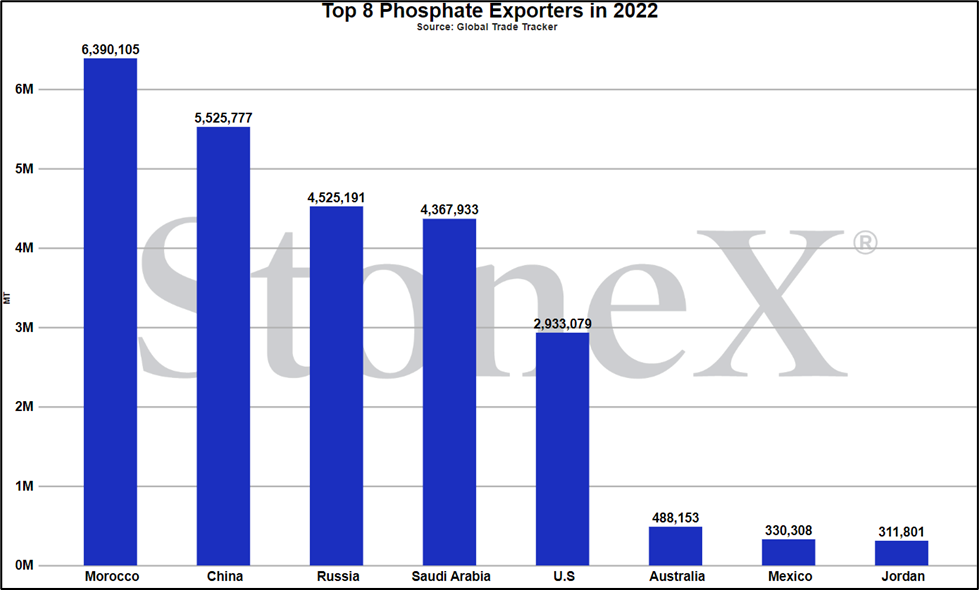
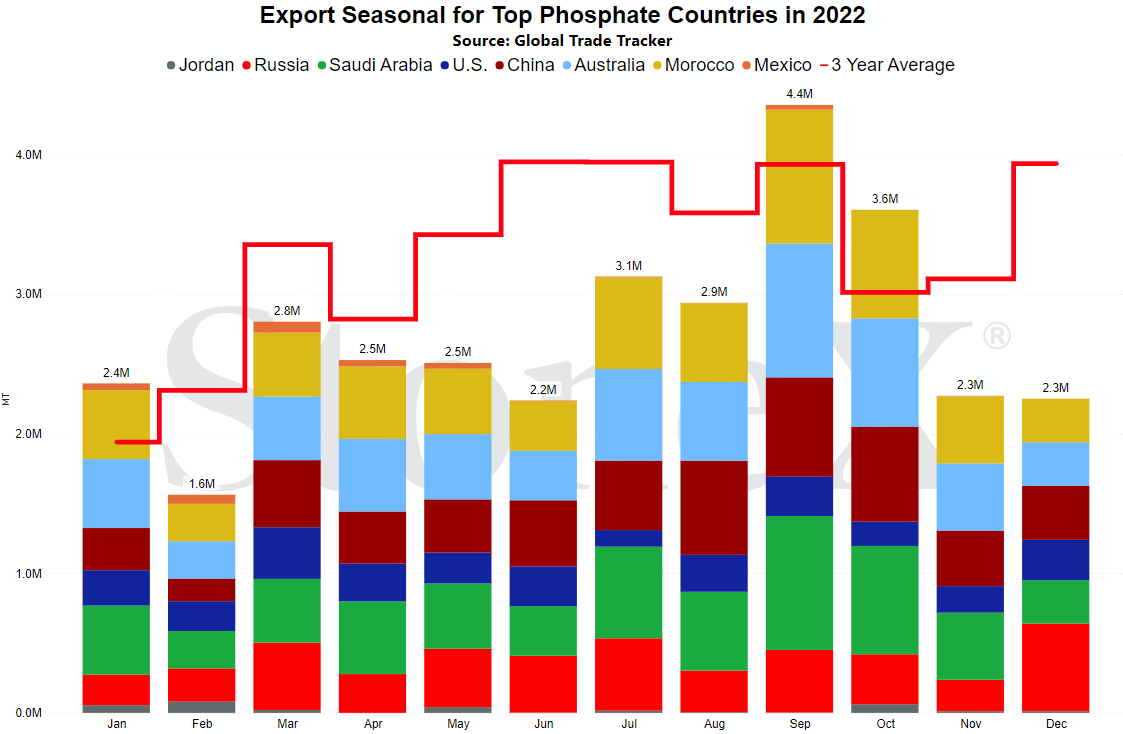
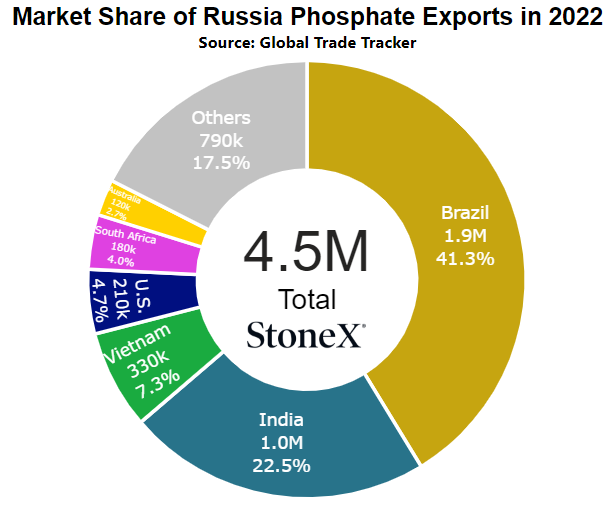
Historically speaking, China is the world's largest producer and exporter of DAP and MAP. That is why the world reacted so bullishly when it started to hear that the Chinese government was putting rather strict export policies in place. While it didn't completely shut them out of the world stage, it did result in millions of tons being removed.
So if their disappearance means that the market becomes bullish, their return means that the market will be bearish...in theory...right?!
That is the expectation, at least. However, there are a few things to consider:
- Their return will take time - this should not be seen as an "immediate" change in approach. That isn't how China works. When I think about this situation, I see it more as a "summer reset" conversation rather than a "spring game changing" situation. If anything, it would have a large effect on nearby regions (Asia/Australia).
- This can change quickly - just because they are taking steps to return to exporting does not mean that they are here for the long haul. Of course, that is the hope. I really hope that they will return and stay engaged with the market long term. Unfortunately, recent history shows that is not the case. If the central government decides that exports are too heavy or domestic inventories too tight/high priced, then restrictions can be put in place in a very short order.
- Likely not going to help spring for most of the Northern Hemisphere - again, to reiterate part of the 1st point, I do not think this will help the spring season for most of the Northern Hemisphere. There isn't enough time. If anything, it might help the tail end of spring if the market is long and distributors decide to start a fire sale rather than risk carrying it to summer. Given the price risk that has been out there, hard to see many places that are uncomfortably long.
Otherwise, I also do not think we will see China in a catch up mode meaning we are not likely to see them increase their exports vs normal to hit their average annual exports. This is more likely to mean that from March/April and onwards, they will hit their monthly averages.
Regardless, this is a fantastic step toward normalcy which has been rather difficult to find in the last few years.
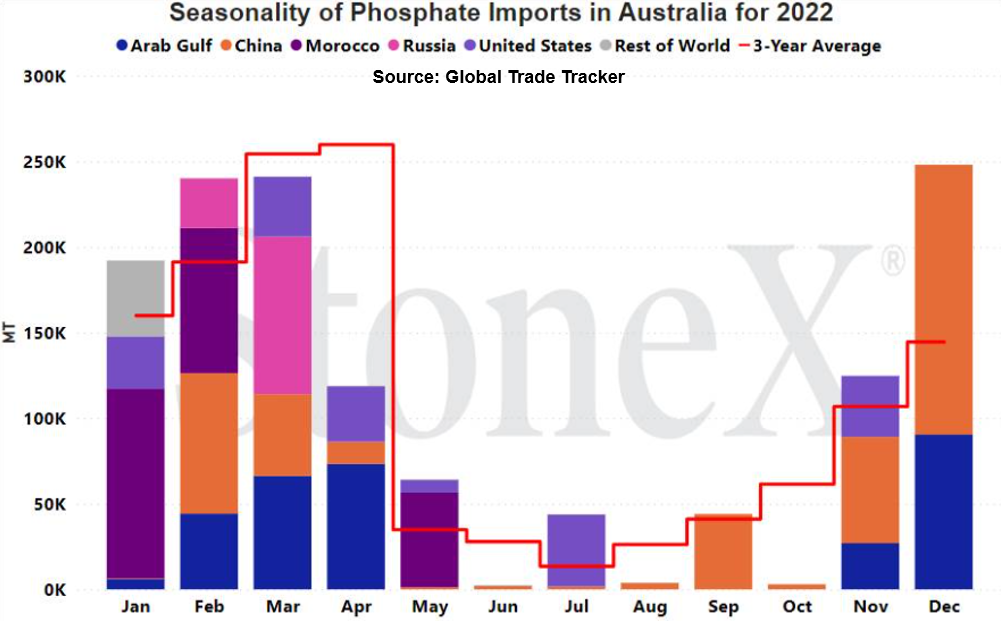
Why does this impact Australian farmers?
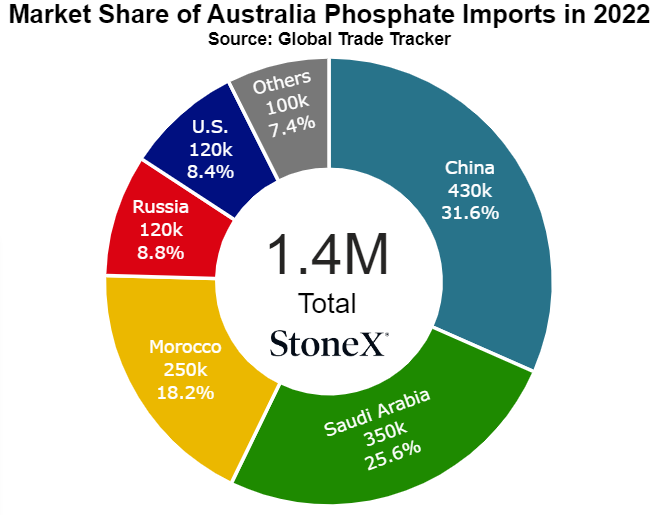
This is huge as it returns a somewhat "local" exporter as well as removes Asian demand that has been competing with Australia for supplies. More supply tends to lower price ideas!
Red Sea attacks do impact western shipping phosphate vessels
Up until a couple weeks ago, when we discussed Houthi Rebel attacks in the Red Sea, it was always other products and not fertilizer. Then it happened. A vessel that had originated from Saudi Arabia and was destined for the west was hit. While I do not believe there were injuries, the crew was forced to abandon ship due to the damage done. This brought this situation home for fertilizer. I still have not seen or heard what type of fertilizer the vessel was carrying. It really doesn't matter.
This gives ship owners/crews even more reason to opt to go south around Africa going forward and will likely continue to do so until confidence in safe passage returns. Fortunately, the southern route exists so product is not completely cut off. However, it does take more time and higher freight rates to go that direction. Normally, that isn't a huge deal but for right now, it very much is.
North America wiped out phosphate inventories last fall and ran clear until mid-December. Then, we found that N.A. production in Q4 was substantially lower than normal. Now, we have had spring starting way earlier than normal (mid-February). 2 months is simply not enough time to refill the system. Adding an additional 2 weeks of sail time can mean the difference between making it in time for spring...and having those tons only be available for summer fill.
Why does this impact Australian farmers?
If a phosphate producer like Saudi Arabia is struggling to get vessels to go west, what is the next best option? Australia is pretty high on that list!! The west will see the end of its spring season 1st half April so a ship departing now and tacking on 2 weeks sail time to go south around Africa may not make it in time. That means a larger desire to target someone more local and without an attacked waterway.
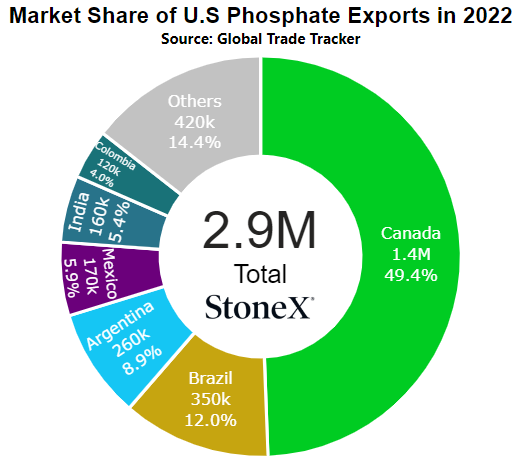
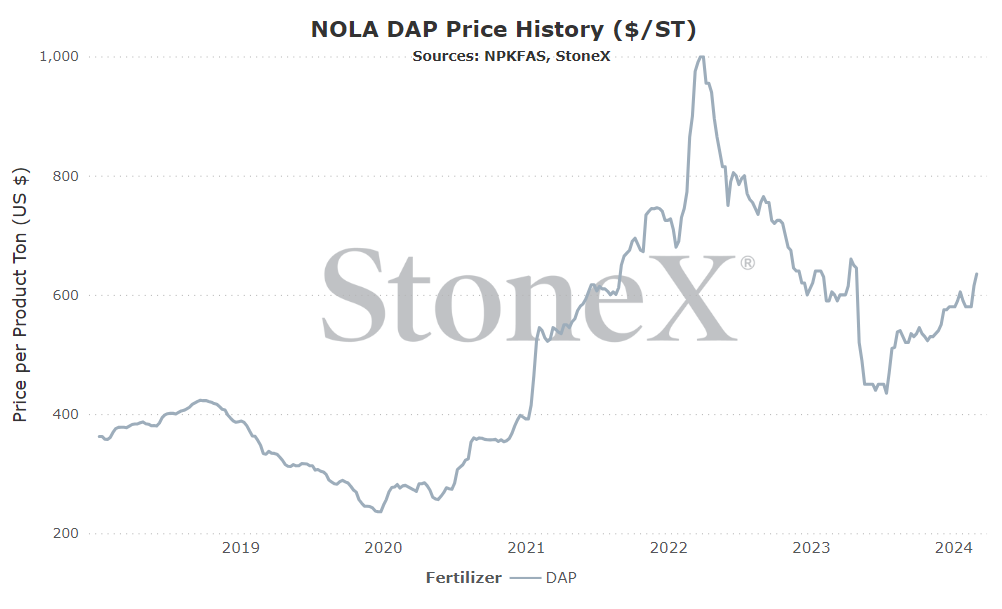
Price comparisons
Vs 30 days ago - +9% or approximately $55 higher
Vs 90 days ago - +18% or approximately $95 higher
Vs 6 months ago - +20% or approximately $105 higher
Vs 1 year ago - +6% or approximately $35 higher
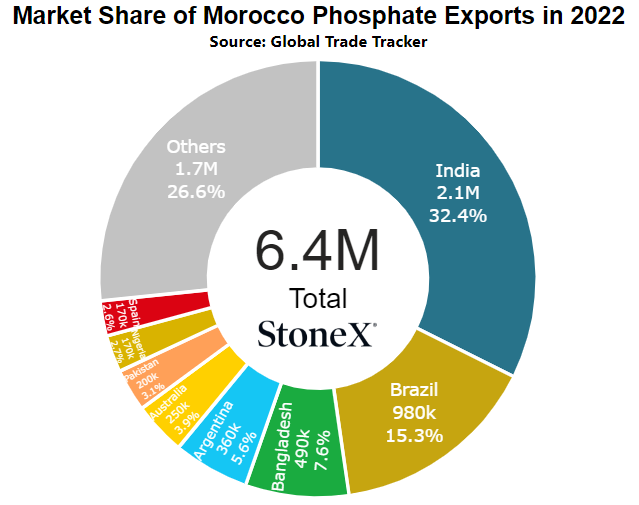
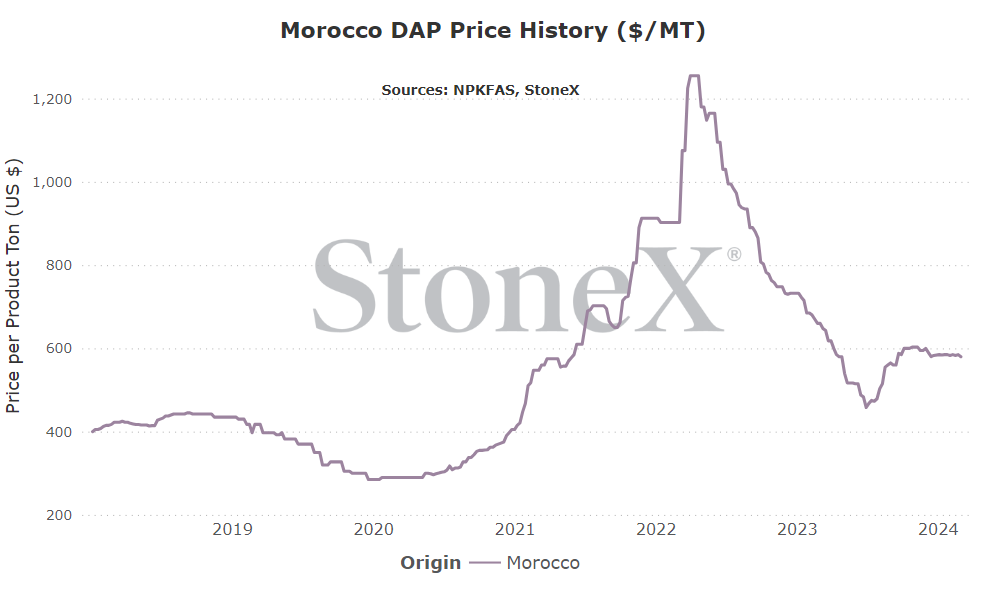
Morocco DAP price comparison
Number 1 global exporter in 2022
Price comparisons:
Vs 30 days ago - unchanged vs last month
Vs 90 days ago - -3% or approximately $17 lower
Vs 6 months ago - +4% or approximately $20 higher
Vs 1 year ago - -12% or approximately $80 lower
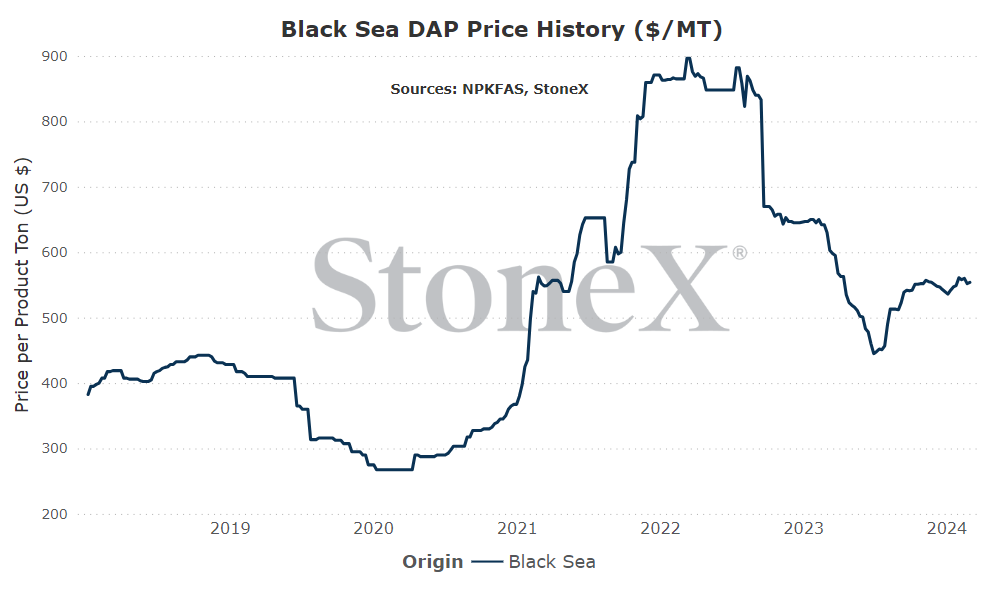
Black Sea DAP price comparison
Number 3 exporter of DAP/MAP in 2022
Price comparisons
Vs 30 days ago - -1% or approximately $7 lower
Vs 90 days ago - unchanged vs 3 months ago
Vs 6 months ago - +8% or approximately $41 higher
Vs 1 year ago - -12% or approximately $76 lower
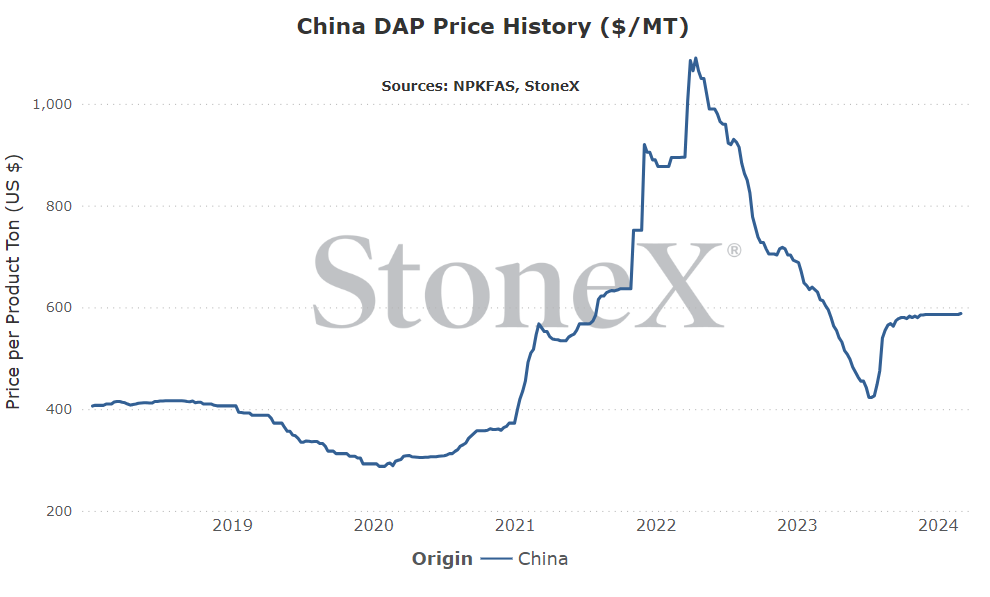
China DAP price comparison
Number 2 global exporter in 2022
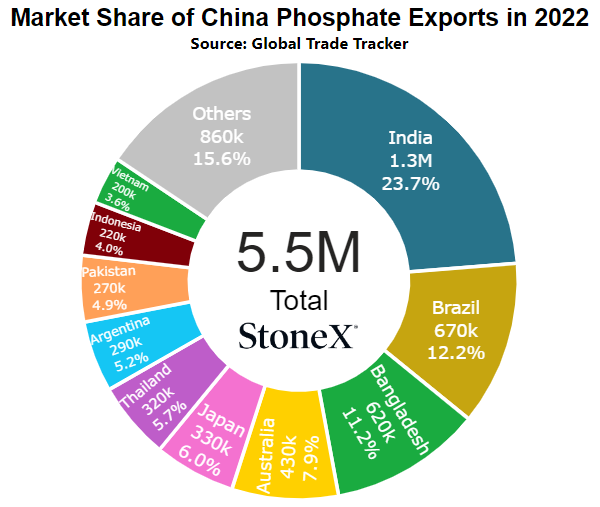
Price comparisons
Vs 30 days ago - unchanged vs last month
Vs 90 days ago - unchanged vs 3 months ago
Vs 6 months ago - +4% or approximately $23 higher
Vs 1 year ago - -4% or approximately $28 lower
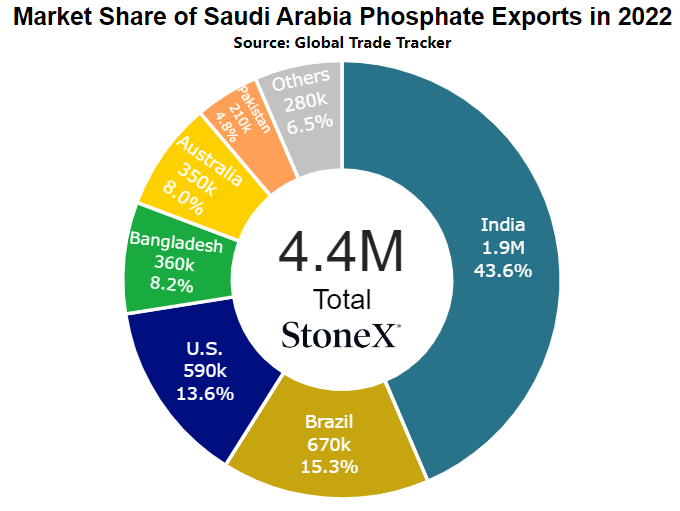
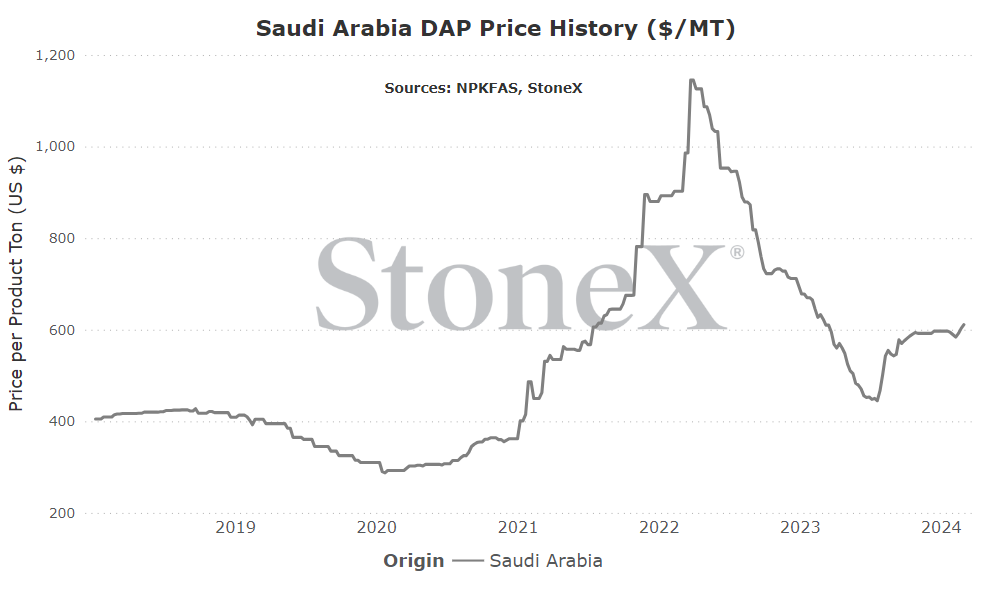
Saudi Arabia DAP price comparison
Number 4 global exporter in 2022
Price comparisons
Vs 30 days ago - +4% or approximately $22 higher
Vs 90 days ago - +3% or approximately $19 higher
Vs 6 months ago - +12% or approximately $64 higher
Vs 1 year ago - -2% or approximately $12 lower
- Russian sanctions including phosphate – Russia just cannot seem to keep itself out of international headlines. This time it was the assassination of a political opponent. While I see it as very unlikely that the world will sanction Russian fertilizer, the chance is not zero. If by some chance that does happen, it will disrupt the world of phosphate. Russia is far to large a player for it to be ignored.
- China slowing exports...again – right now, we are finally seeing positive signs that Chinese exports are set to resume...but this is China we are talking about. We have seen this before. As much progress has been made for their return, it only takes one announcement to remove them.
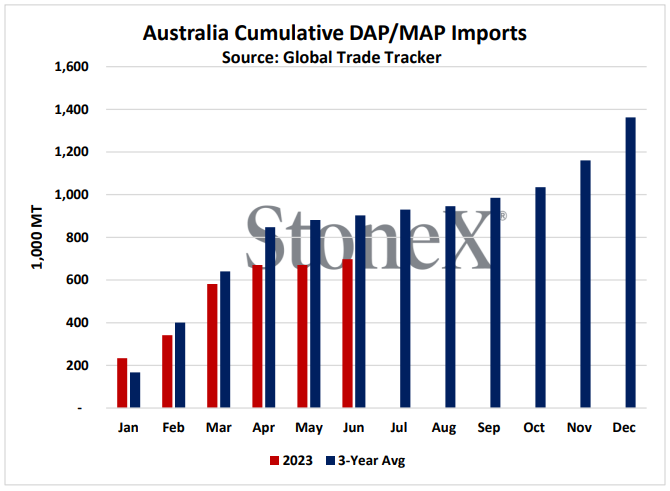
- Fear of falling global values keep importers from stepping up – there is tremendous risk for importers today. Even with global demand being decent, most world values haven't moved (with the exception of the U.S. which is on its own right now). What happens when most of the demand goes away? That is the risk importers are facing. If we find that demand was better and/or imports light, Australian values could rise regardless of the world.
- China looks as though they are allowing exports to resume – this is the big one. China is normally the world's largest exporter but recent government intervention has caused them to drop. Now, we are seeing signs/reports that exports are being allowed to resume. Will they catch up and end the year at normal levels? Not likely. However, just the simple fact that they are returning to normal should have market participants expecting values to fall.
- Not likely Russian fertilizer gets sanctioned – while this has been a topic of conversation, it does not look likely. Most of the world realizes it needs Russian fertilizer. Even if the "west" sanctioned them, Russia will have enough friends to find homes (Brazil/India/etc.). It is something to watch but not likely.
- Fear of the Q3 reset – there are a few signs pointing to a decent Q3 price reset. Mostly for me, it is the return of Chinese exports. If the market starts fearing the reset more than wanting to take advantage of the current market, prices can start to slide quickly.
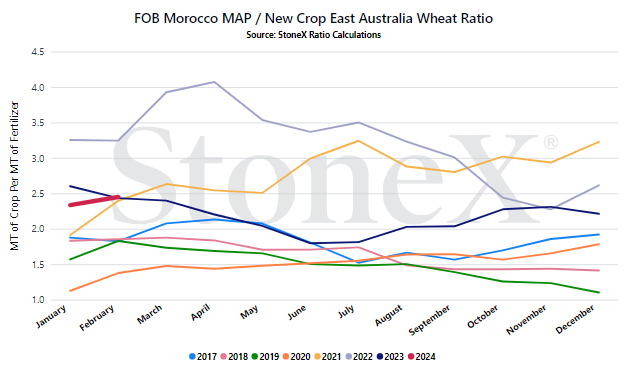
We believe that only looking at the flat price of either grains or fertilizer can be misleading:
-
Only selling grain can hurt you if fertilizer prices rise substantially
-
Only buying fertilizer can hurt you if grain prices fall
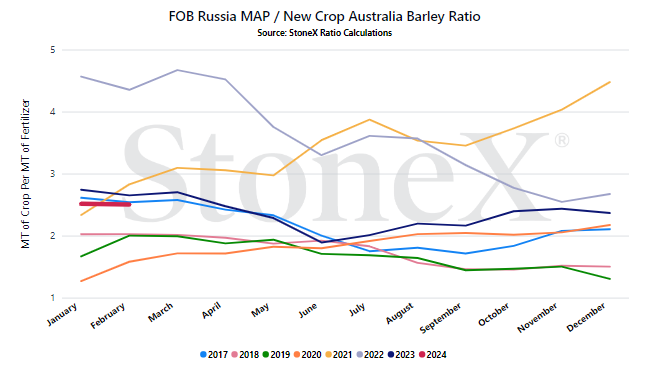
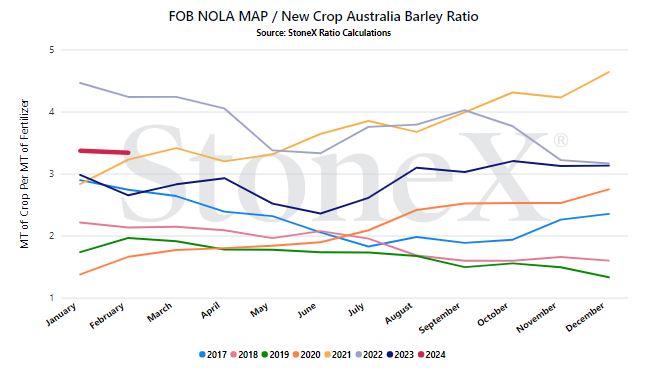
We look at the ratio "value" to get a better indication of where we are or how many bushels of X does it take to pay for 1 ton of fertilizer.
Would you rather:
-
Spend 4 ton of grain to pay for 1 ton of MAP
-
Spend 1.5 ton of grain to pay for 1 ton of MAP
When we compare the current ratio value against recent years, we start to see if we are high or low.
YOUR VALUES MAY LOOK DIFFERENT
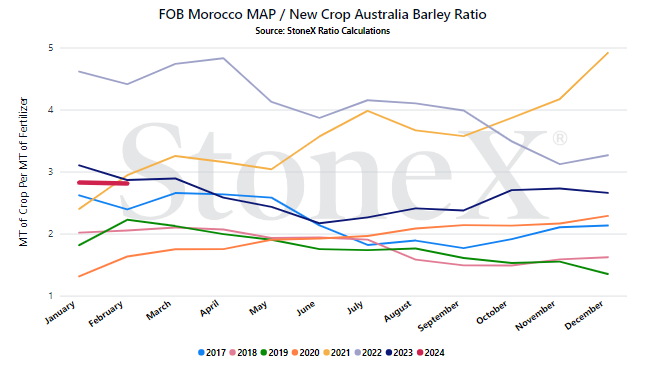
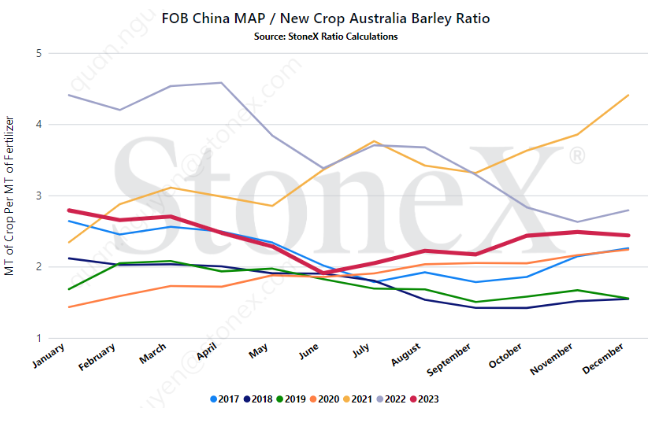
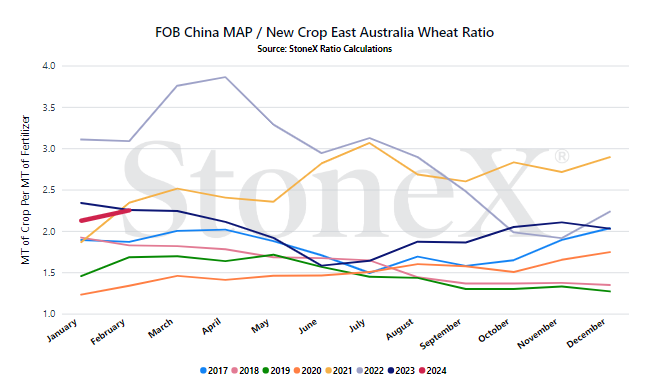
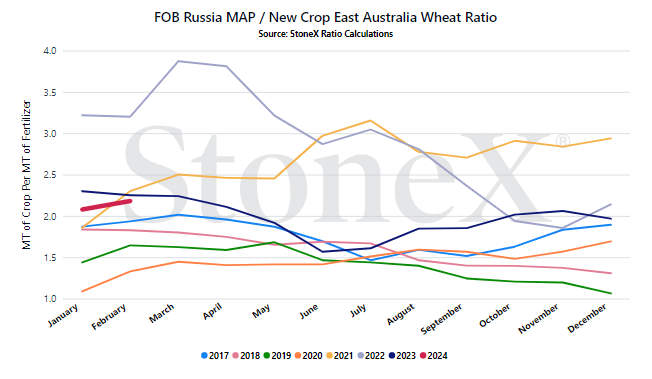
- China - when the global leader in phosphate exports restricts their programs, the world takes notice and values rise. When the global leader in phosphate exports loosens those same restrictions, we should see the opposite. While I doubt we see them try to "catch up" to their typical annual export numbers, simply returning to normal tonnage on a monthly basis is enough to send shockwaves thru the market.
- Russia - while it isn't likely, we need to watch the world's reaction to Russia. If for some reason sanctions start to include fertilizer, it is a whole new ballgame...
StoneX Ratio Calculation
The ratio calculation is derived from Bloomberg historical grains values as well as fertilizer values from StoneX, NPKFAS, and Argus.
The calculation is simply dividing the fertilizer price by each grain price.
All data was sourced from StoneX unless otherwise noted.