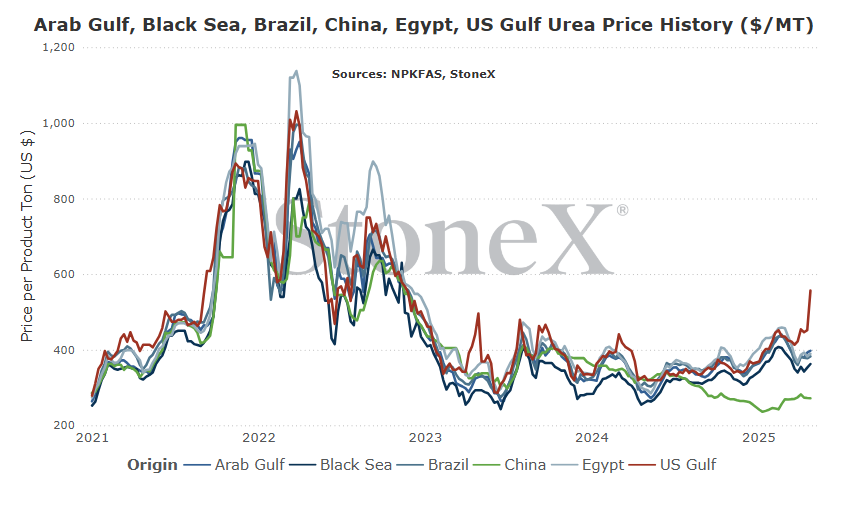
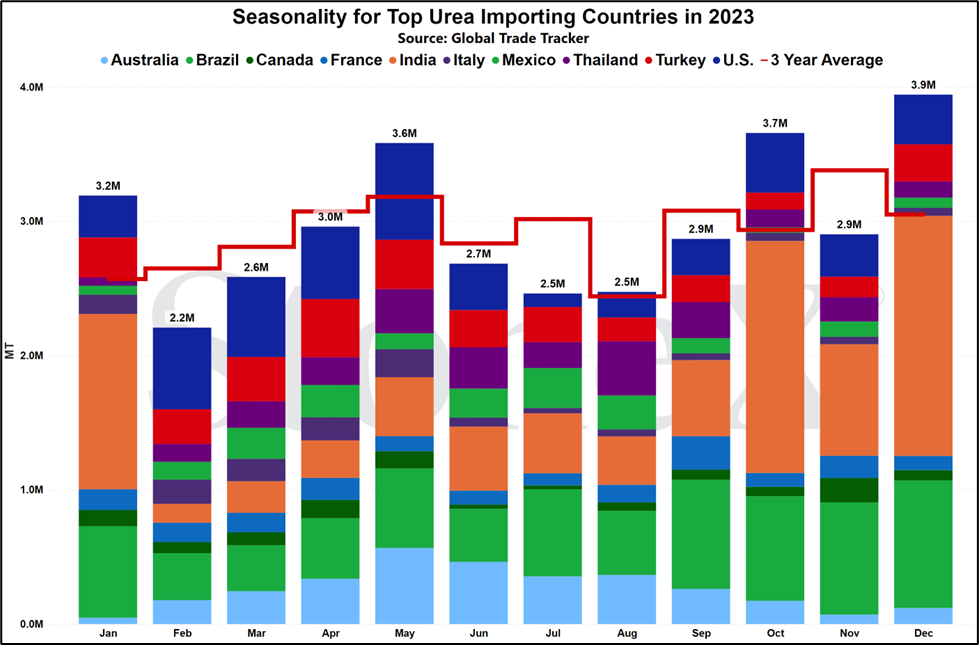
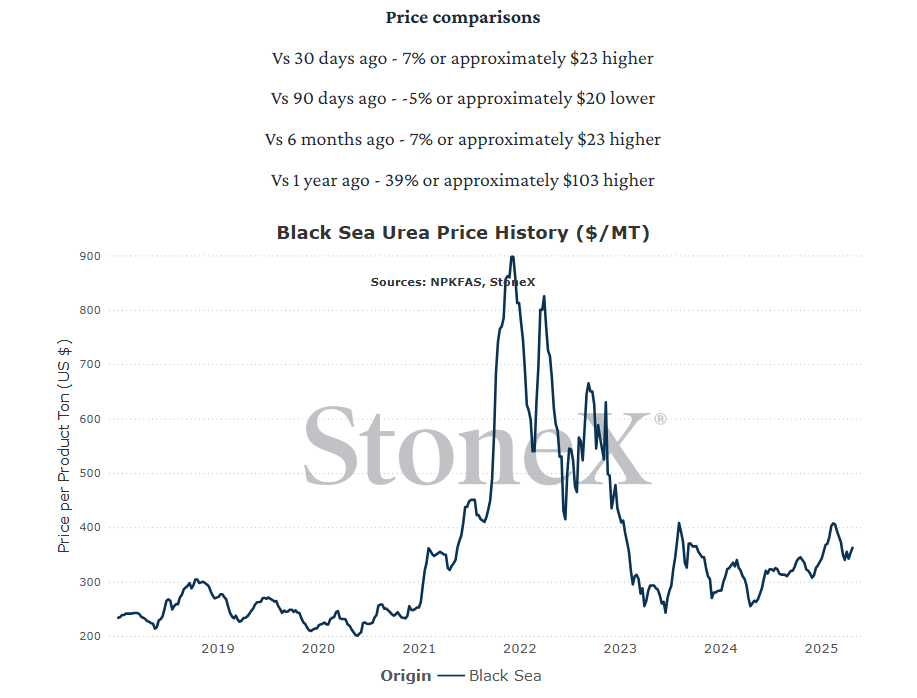
If I just took a snapshot of where global urea values were and where we are in the calendar, I would be confident in saying that prices are going lower over the next couple months. Later Q2/early Q3 are typical annual low's due to the lack of demand. Production continues to roll during this period so that combined with few buyers eventually leads to unsold inventories growing to high enough levels that manufactures are forced to drop their price low enough to bring buyers forward.
Normally.
This one is a bit different. First, North Africa should move into June more comfortable than normal. Not only are they making sales to Europe to fill in remaining spring demand, now North American sales are being made that will help wipe out more positions. Middle Eastern producers are not being heard making many sales...but India is looming. If India returns in late May/June, it could see a lot more focus on western ports. The west coast has not seen nearly as many tons purchased as their eastern counterparts. If there is a western focus, that very much puts Middle Eastern producers on the front foot. Then we still have demand from Australia and Brazil coming.
All this to say that I still have a bearish outlook for the coming months. However, a combination of India/Australia/Brazil demand could keep that from happening when we think it normally does. Especially if manufacturers are more comfortable on their positions which could be the case given that Chinese exports remain non-existent and European production struggles continue.
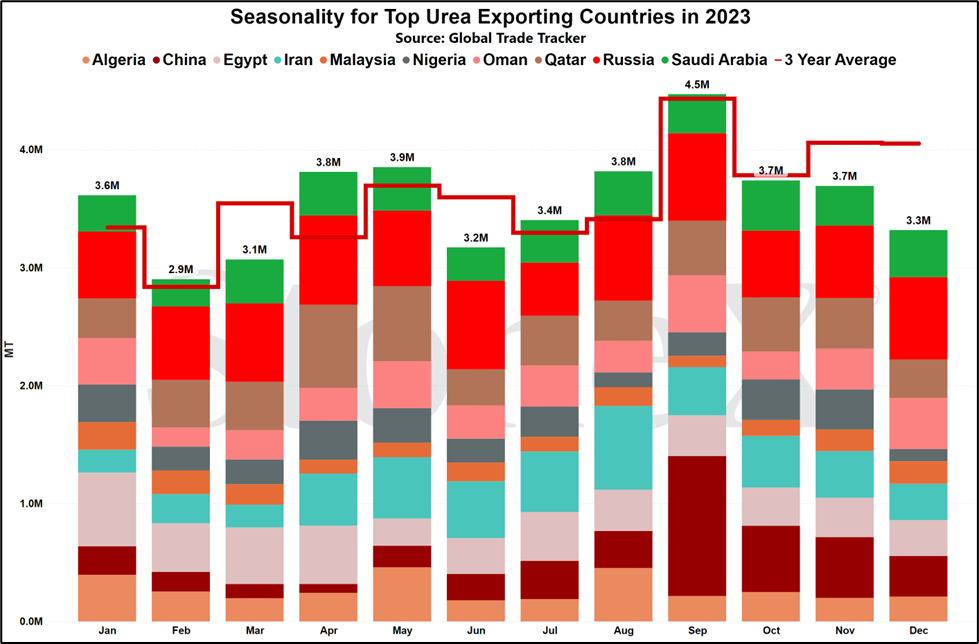
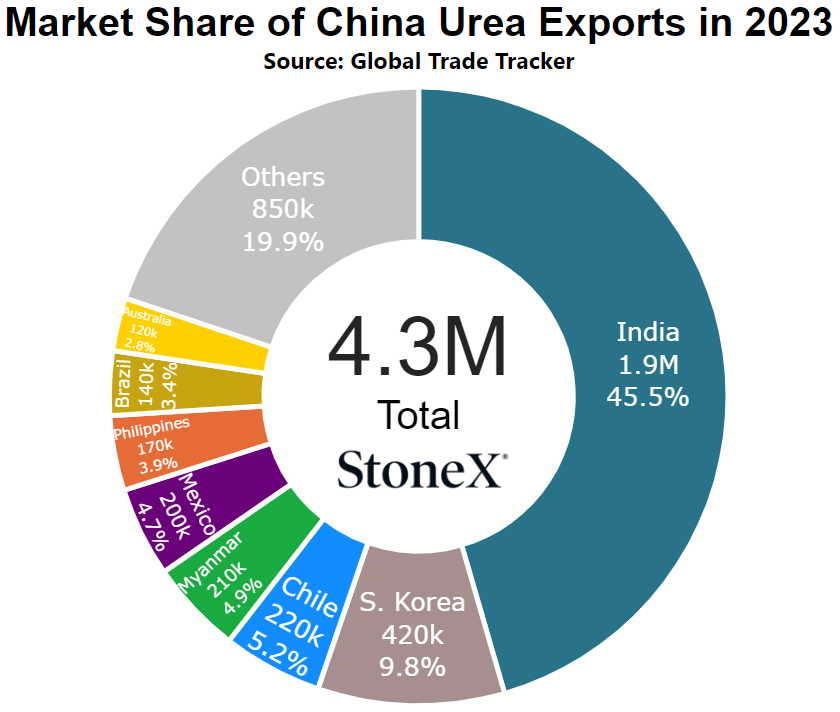
China's March export data points to few tons supplied
Well, we got China's March export data and it didn't do anything to boost hopes of global urea supplies rising.
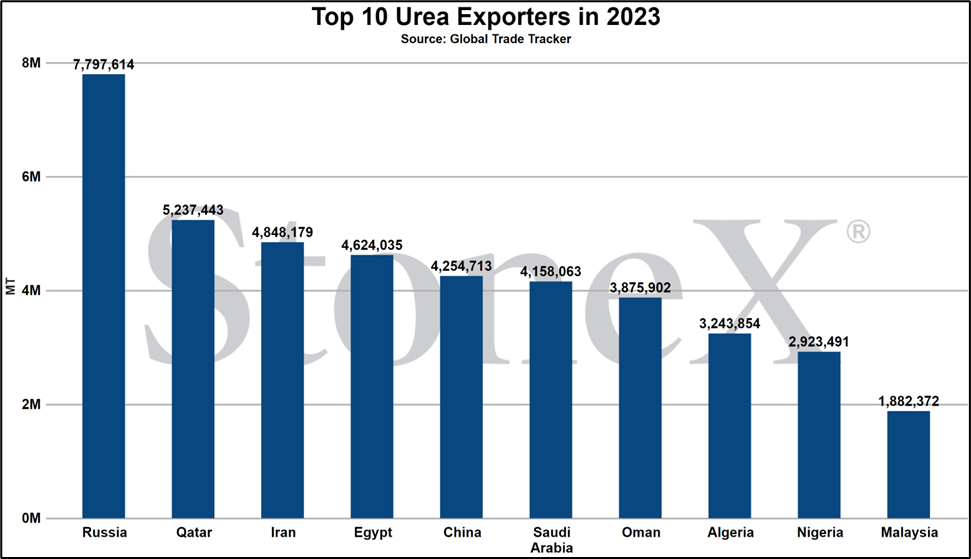
In yet another disappointing month, March urea exports only reached 2,299MT. A country that would normally export 5 to 5.5M tons per year exported just 2,299MT. The bad global urea supply times continue to roll.
To put it further into context: since the start of 2024, China has only exported a cumulative total of 268,204MT.
So the world continues on without 10% of its global export total.
Now, does this mean that prices do nothing but go higher? Absolutely not. We will continue to see volatility up and down as we proceed. Losing China will not change that story. However, it will continue to support the price floor that is generally experienced during late Q2/early Q3. During that period, demand is largely gone yet manufacturers around the world continue to produce. With no real sales to be found, inventories grow which weigh on the manufacturer. That weight typically causes them to drop their prices to a level that the market is willing to step in and take the risk.
Without China's participation, that weight is significantly less.
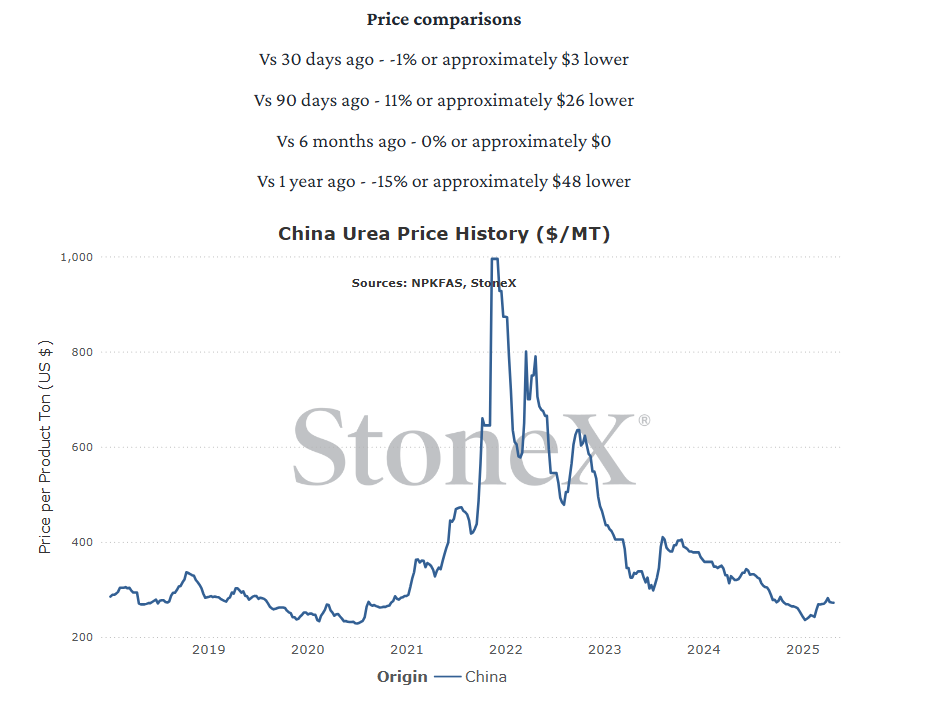
For the future, we still do not know what to expect. From the Chinese governments POV, this strategy has been massively successful. They moved to restrict exports in order to accomplish two goals: maintain adequate domestic supplies and lower domestic values vs the world. Again, this has been massively successful on both points. We continue to see where domestic stockpiles are at record levels meaning there is more than enough to go around. We also continue to see Chinese urea values well below global price ideas as can be seen above.
What is good for the Chinese farmer is bad for the rest of the world. There remains fleeting hope that exports will return. With stockpiles already at record levels and their spring season well underway, there is hope that the government will loosen export restrictions to help lessen that burden. Unfortunately, I would doubt they completely lift the rules. If they do it as I think they will, they will either allow a short window to export or will put a tonnage cap on exports...or both. By taking that approach, the market will not be able to heat up on prices as they know it is a short term event. They alleviate heavy supplies while maintaining a cheap price vs the globe.
Ultimately, it is China. We do not know what they are going to do. Very few around the world do. All we can do is watch and be reactive/ready.
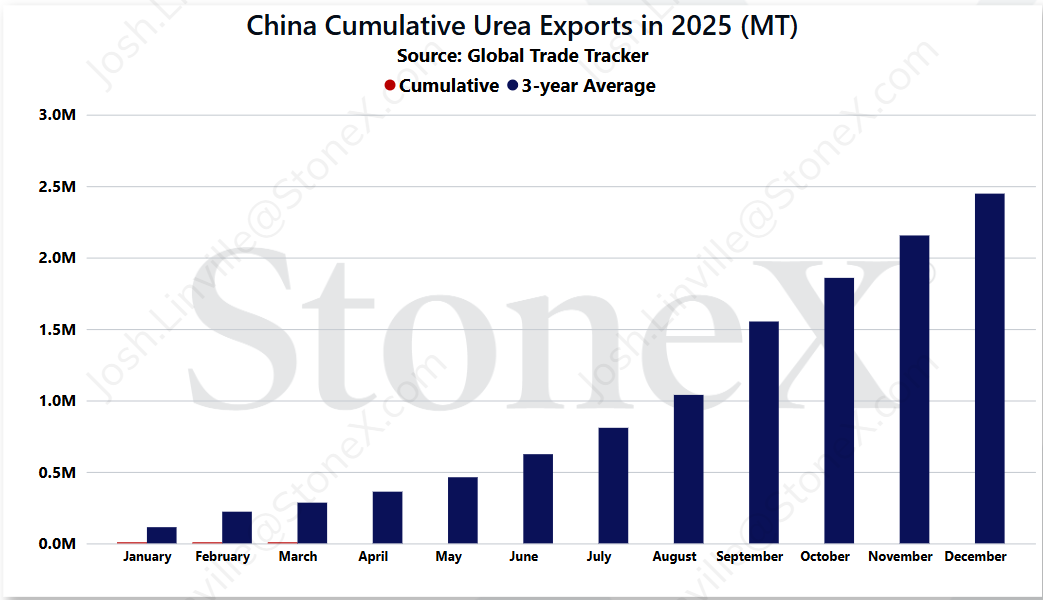
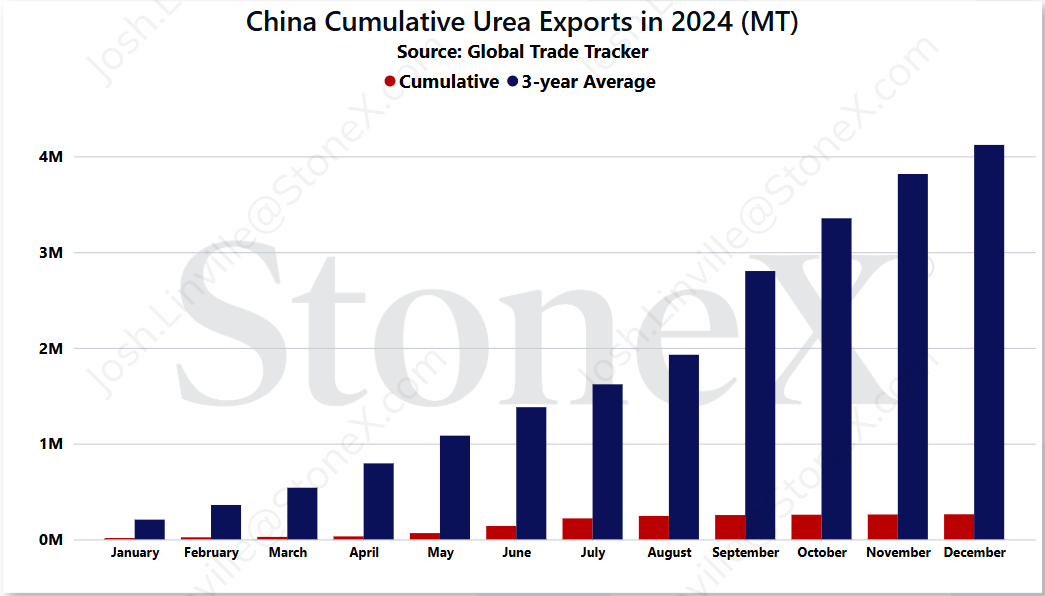
What does this mean for Aussie farmers?
Unfortunately, this is helping to keep price ideas higher here in Australia.
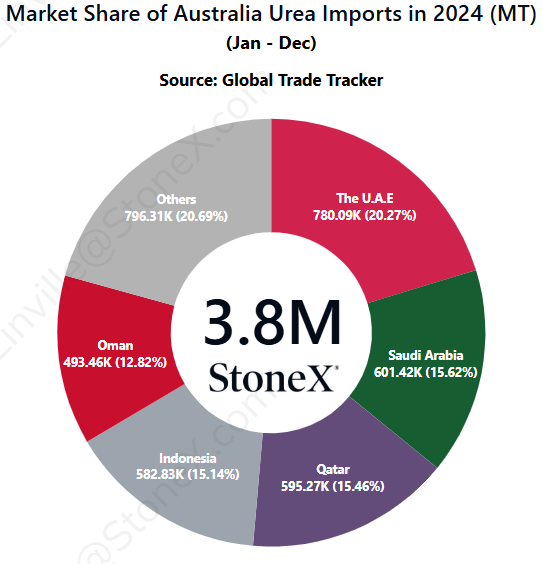
China not exporting is a major blow for world urea markets. It is an even bigger blow for the Asia/Australia markets given how close China is. Their proximity means faster ship time and lower logistical costs. With China disappearing, it forces buyers like Australia to look elsewhere and eat higher logistical costs in addition to a higher priced global market.
This hurts.
European production remains around 75% of normal
The good news is that European nitrogen/urea production has not worsened in the past month.
The bad news is that European nitrogen/urea production has not improved in the past month.
A quick recap on the European nitrogen production story:
- European nations started to push hard toward green energy in the face of typical Russian supplied natural gas
- Russia continued to push for Nordstream 2 pipeline to increase flows to the region while nations were pushing back
- Eventually, that tension started to rise faster with the fear of Russia invading Ukraine
- That came to a head with shipments through the pipelines being stopped
- Someone ultimately attacked the pipeline underwater, causing damage that not only kept shipments at zero but made sure they couldn't return short term
- Dutch TTF (the European natural gas market we track most closely) skyrocketed from its normal $4 - $6MMbtu to a high of $103MMbtu in August 2021.
- European nitrogen fertilizer production ground to a halt as high inputs costs made production highly unprofitable
- Dutch TTF values would later fall back closer to normal price ranges as the world market shifted to backfill the supply that was missing
- Values dipped to as low as $7MMbtu, but nitrogen fertilizer production never improved from 75% of normal
And that brings us to today and today is relatively unchanged.
Current Dutch TTF values continue to trade in the low teens which is significantly lower than the worst values seen, but still well above normal costs of production. The question today is not "when will production return to 100%" but "will production ever return to 100%".
From a gas perspective, that depends on tensions with Russia. For now, Russia likely sees absolutely no reason to start making repairs to the pipeline. Tensions remain high with European nations. However, even if a peace agreement was reached where Russia removed its forces from Ukraine, those relations need to be rebuilt to a place of mutual trust. Once that is reached, European nations would need to "want" the gas supplies to return. If that happened, work could start to repair the pipeline. Only then could we start to see gas values return to a low enough normal price that the 25% of nitrogen production that is currently offline might start to reconsider restarting.
...but can those plants actually restart?
A lot of the plants based in Europe are old. No doubt, efforts have been in place to maintain the facilities to a readiness state, but that is easier said than done. Not only do they need to consider the age of the plant, they also have to consider the future of European countries politics which have ebbed toward green technologies and away from "dirty/old" technologies. Even if gas prices returned to normal, they may face an uphill battle at home.
Ultimately, this continues to make Europe a global buyer where they largely were not before. We continue to see a lot of purchasing happening out of places like North Africa. This increased demand makes it easier for North African manufacturers to boost prices/keep prices high. Other manufacturers around the world see this happening and try to piggy-back to keep their prices/margins high.
From an Econ 101 perspective: supplies lower + demand bigger = prices higher
As long as European production remains around 75% (help us if it lowers...), it helps to raise the global price floor. It doesn't mean prices cannot ebb and flow up and down, but it does keep prices from falling as much as they normally would.
What does this mean for Aussie farmers?
Unfortunately, this is helping to keep global urea values high which translates to higher Australian urea values.
Having European production struggle like it still is hurts the world. Not only does it remove millions of tons of production, it forces farmers there to look elsewhere to meet their needs. That increased demand on lower supplies is a manufacturers dream.
It doesn't matter where a person farms, this impacts your price.
India tender comes and goes without much fanfare/change in market
India's most recent urea purchase tender came to a close in the last month and honestly, it was a bit of a dud.
This tender was highly anticipated by the global market as they had struggled in their last two attempts:
- December 19, 2024 purchase tender
- 1.5M ton purchase goal
- 187K tons secured
- January 23, 2025 purchase tender
- 1.5M ton purchase goal
- 558,900 tons secured
The global market was in a tizzy as February started (myself included) as the belief was that they would have to return immediately and cause them to compete with the rest of the world who was preparing for spring needs. However, mid-February came and went with no announcement. Then late February/early March with no announcement.
It wasn't until March 26 that we finally saw them return. Once again, their purchase goal was 1.5M tons but with shipment windows going well into June, excitement was much more mute.
By the end of it, we found out that they did better this round:
- 884,650 tons secured
More important was when they would return. A quick tender announcement would likely have global manufacturers/suppliers smelling blood in the water and would likely cause prices to rally. That ended up not being the case. Once concluded, the market belief organized around a late May/early June return which would give the world several weeks of quietness.
And that is where the world sits today.
There have been some smaller sales made from North African manufacturers going to Europe to fill in the last remaining pieces of spring demand. Now, as N.A. values skyrocket, larger vessel volumes are being sold for nearby shipments in an effort to arrive before spring concludes. That will also help buoy price ideas short term...but they need help.
Other regions around the world have gone quiet, and historically speaking fertilizer does not do well with quiet periods. Without constant demand to boost confidence, prices typically start to fall. We have not seen this yet, but it is high on our watch list. While supply tightness due to Europe and China will boost the price floor, that doesn't mean a price floor doesn't exist.
What does this mean for Aussie farmers?
When India returns to the purchase portal, it should lay the market bare which will be important for any buyers around the world, Australia included. The next few months should see the majority of imports arrive which may mean that India could be too late to set prices...but with imports to Australia well ahead of schedule, a disappointing India situation could weigh even more on values.
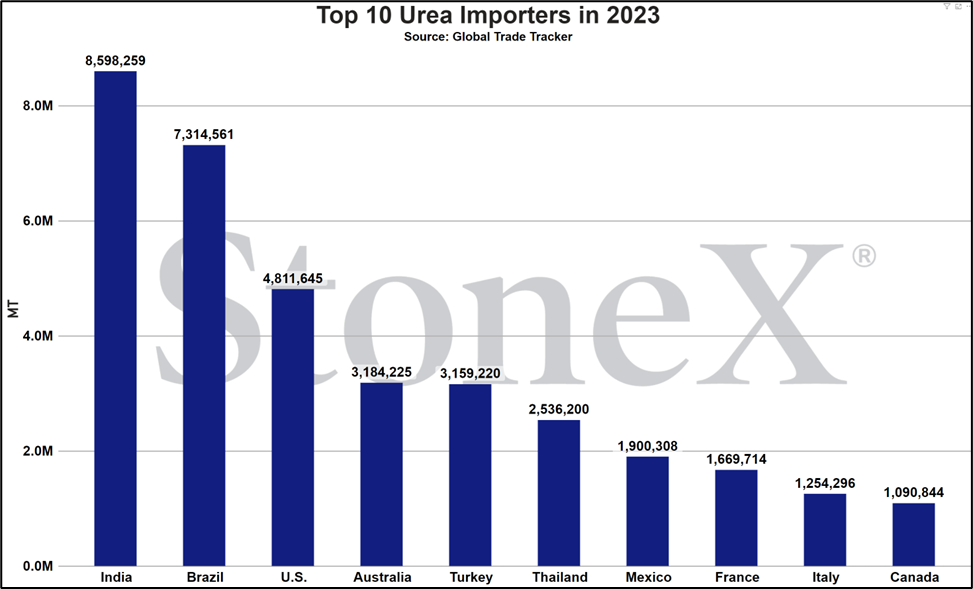
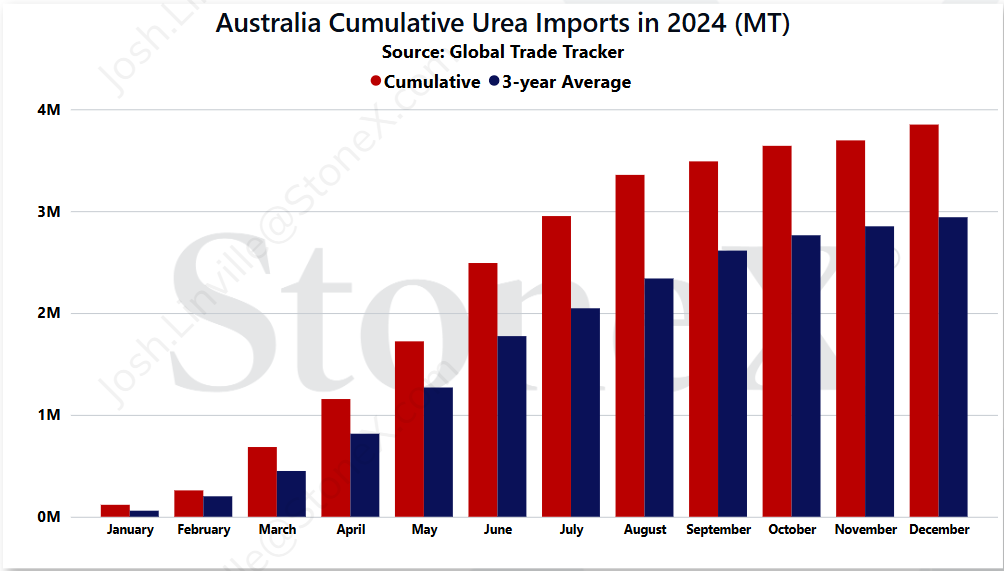
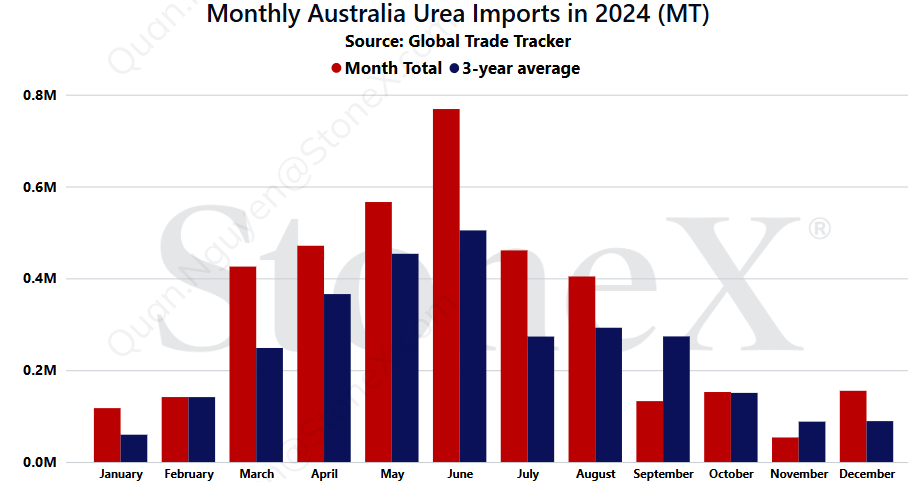
Australian urea imports well ahead of normal
Finally, a positive fertilizer story to share!!!
Australian urea imports have been well ahead of schedule since the start of 2024 which means fantastic supply availability for farmers. If we dig a bit deeper and only look at imports since October '24 (anything prior was most likely for 2024 demand season), imports are still around 250K tons ahead of the 3-year average pace!
This is a great sign that the market was/is well prepared for urea application season, but a word of warning. It does not guarantee that there will not be tightness.
The Australian market is still highly reliant on supply sources from further away as China continues to not export. This may not seem a big deal but importers are having to make decisions weeks earlier for a market when they do not know exactly when the demand rush will be. Wet/dry conditions may push/pull the resupply date. Prices can have an impact.
While this is a great start for this urea round of application, please make sure to still have the conversations with your supplier. The more communication that can be had, the better prepared the market can be.
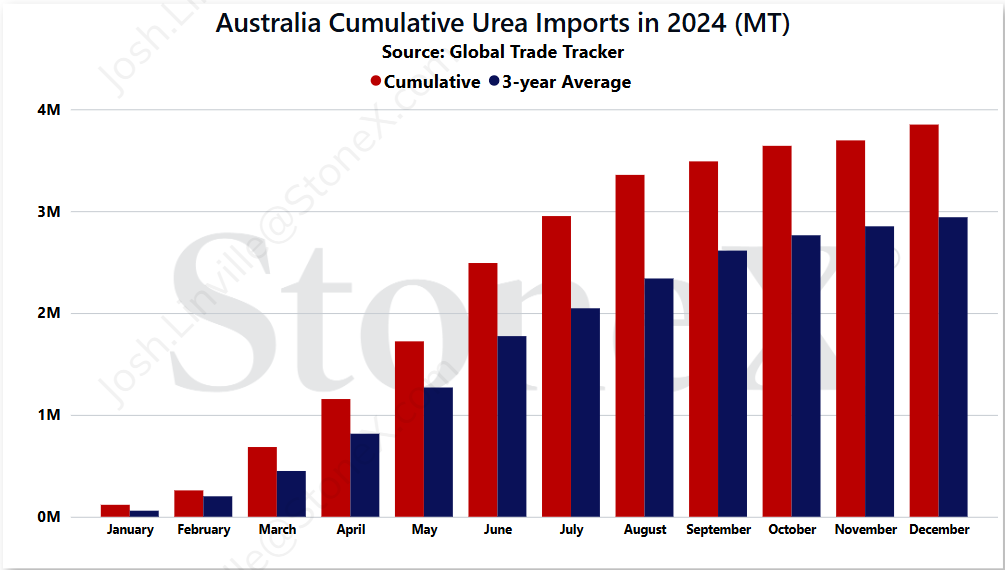
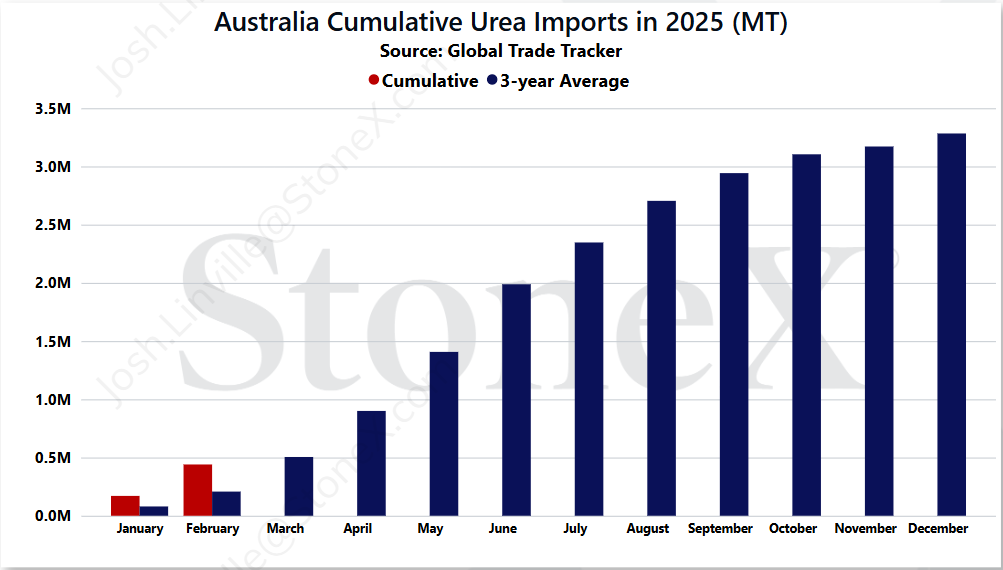
What does this mean for Aussie farmers?
Heavy imports is great for Australian farmers from two perspectives:
1. More supply should mean more competition - the more tons that are floating around needing to find homes means a greater chance that prices can hold/dip with suppliers more aggressive on pricing.
2. Less concern about supply shortages during peak demand - does it mean no concern? Absolutely not. However, the more tons laying around, the better it is for the marketplace.
All in all, importers have done a solid job so far. Let's hope it can continue this pace.
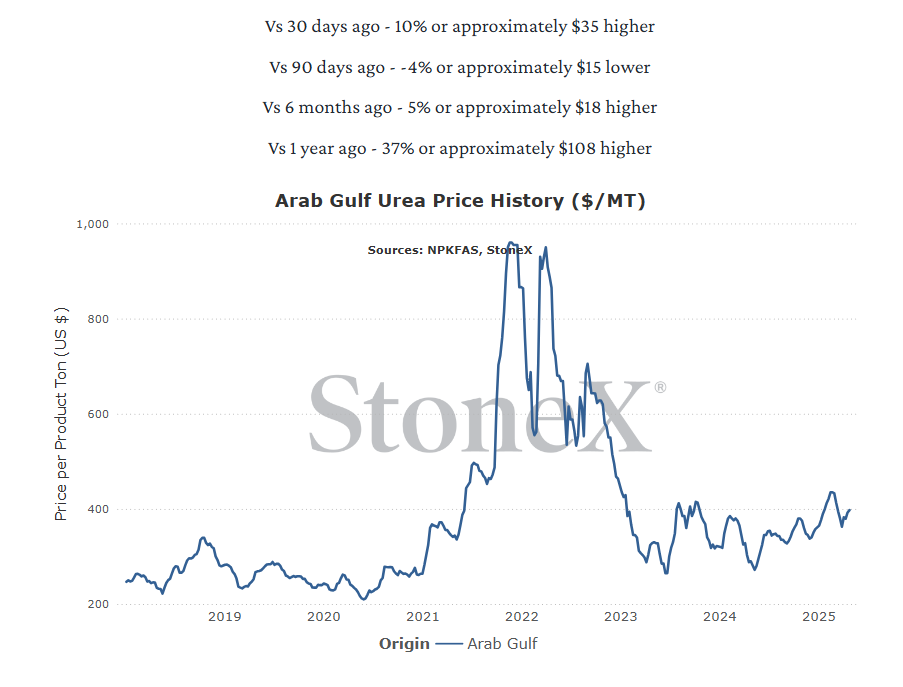
Number 1 exporter (as a region, not as individual nations)
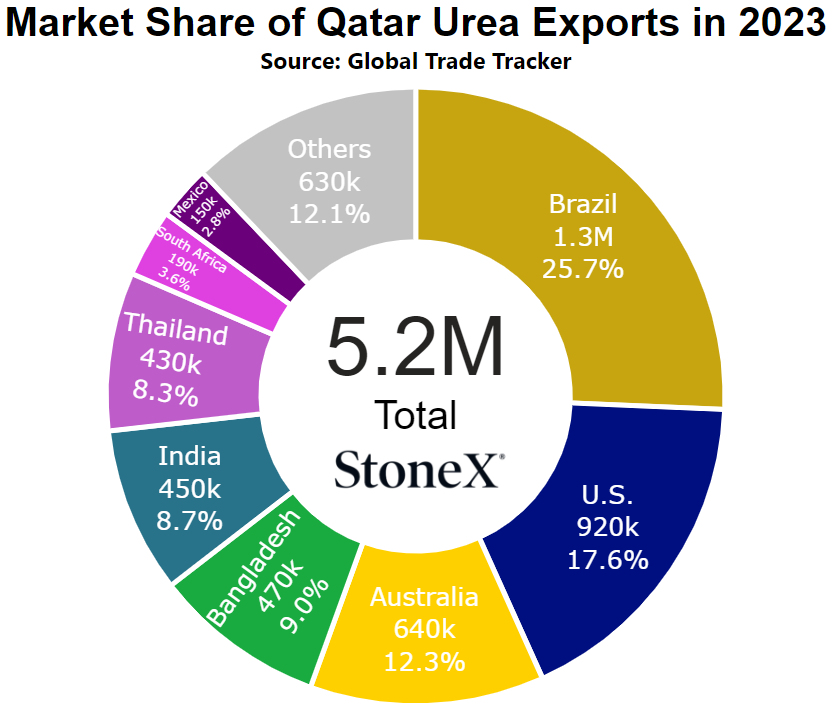
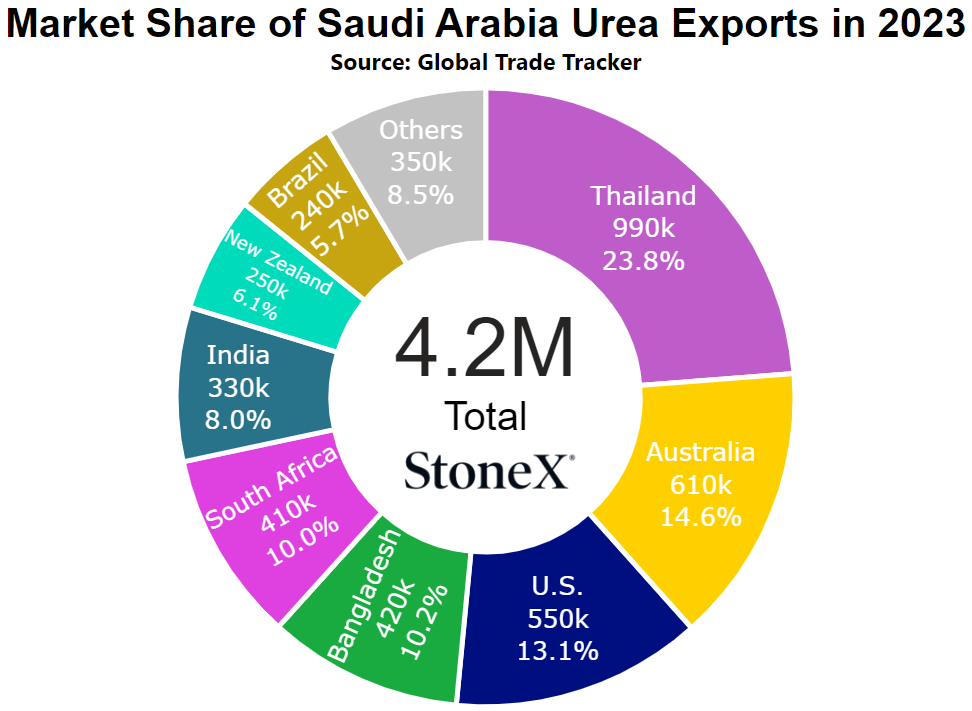
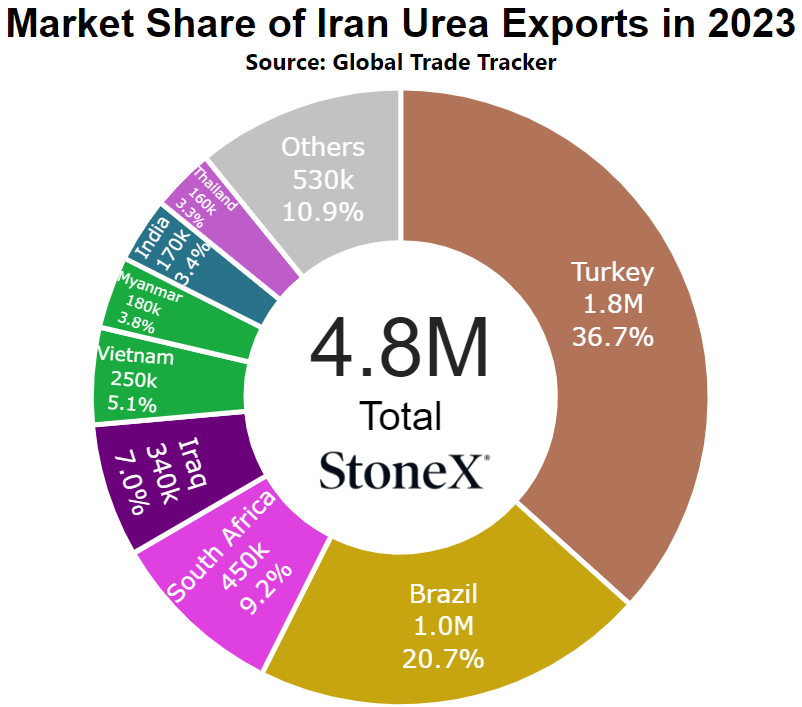
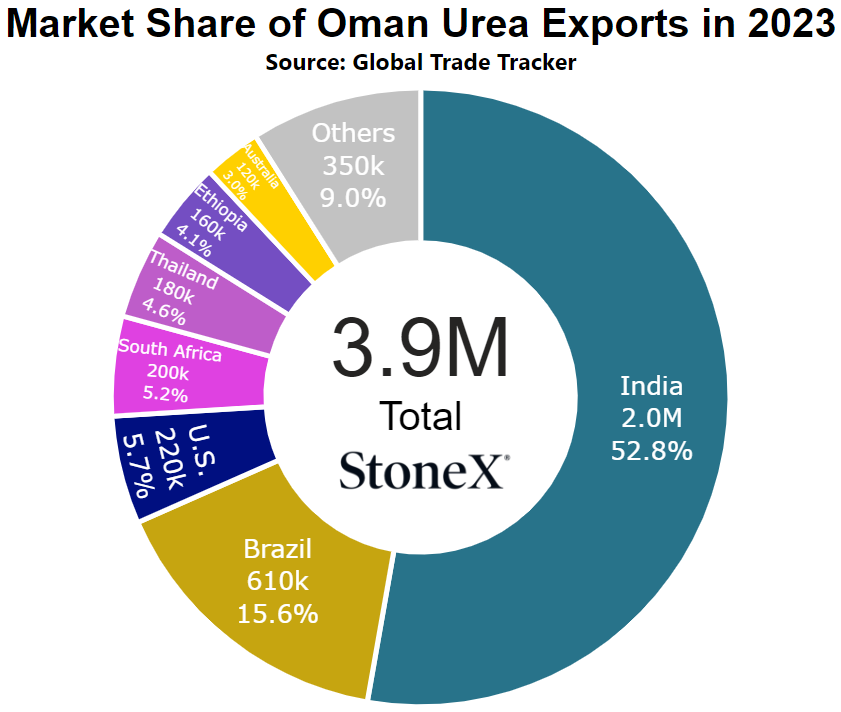
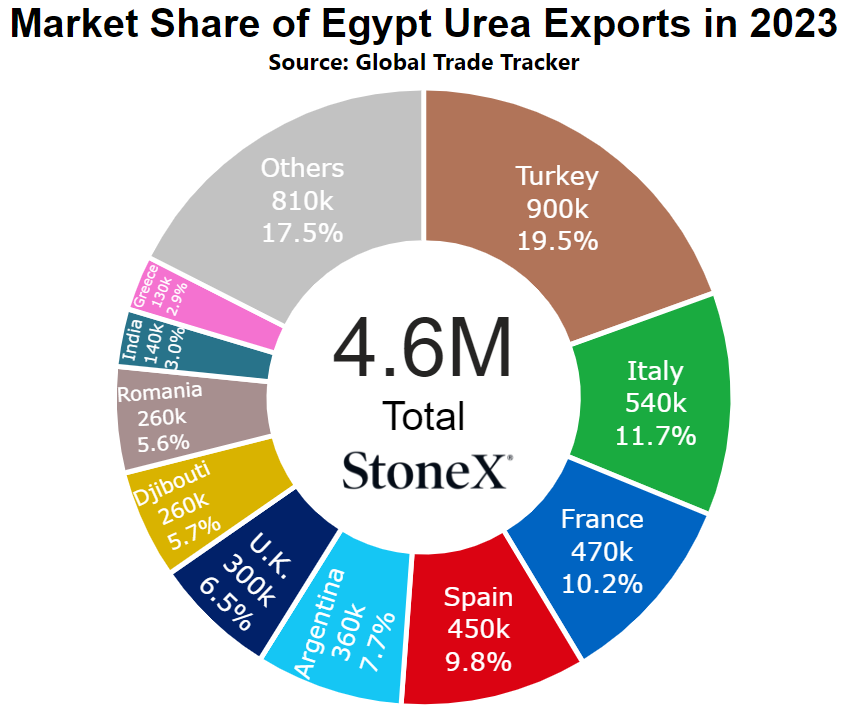
Egypt
Number 4 global exporter in 2022
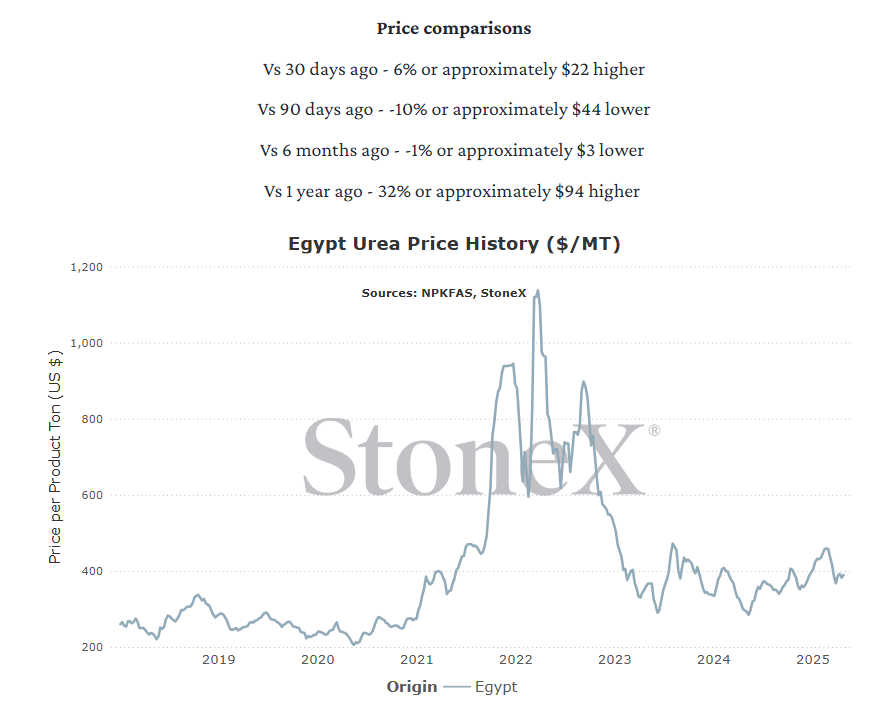
Number 1 global exporter in 2022
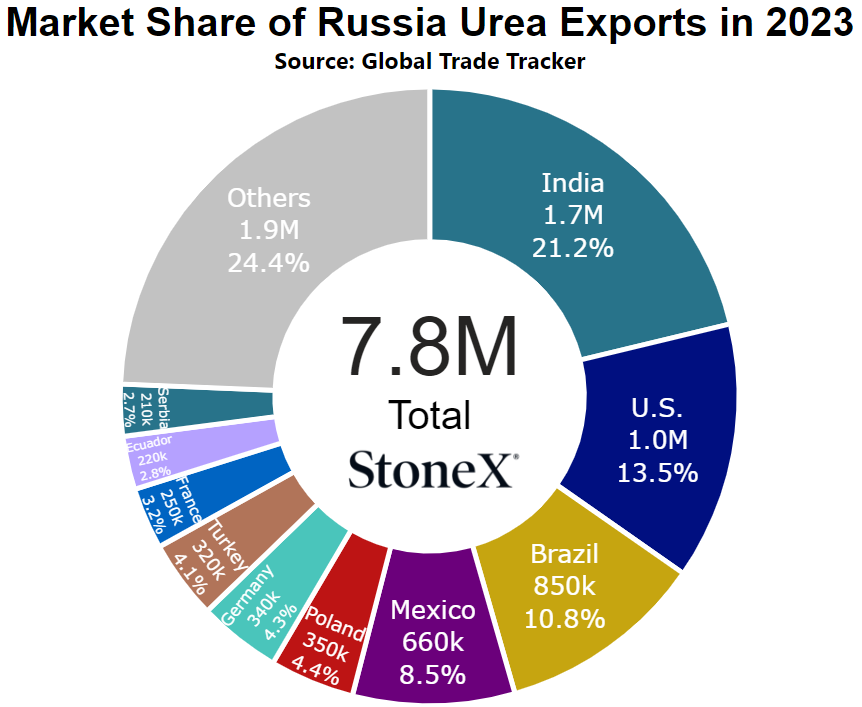
Number 9 global exporter in 2022
- Demand comes fast and hard - imports of urea are well ahead of schedule...but that doesn't mean that farmers cannot blow thru those positions quickly. Under the right circumstances, we could see a wave of demand/application that outpaces resupply efforts. Even though the start of inventories has been great, the market can still get ahead of itself.
- India steps in earlier than expected - right now, most of the market believes that India can wait until late May/early June before stepping in for another layer. That should lead to several weeks of a relative slow market that could weigh on price ideas...but what if India comes in much sooner? After 3 tenders falling well short of stated tonnage goals, their entry much sooner could shock the system and cause prices to rise as they sense desperation.
- Further global supply issues - right now, European production remains around 75% of normal and Chinese exports largely do not exist. Between those 2, that is around 8M tons per year that is missing. On its own, that is more than enough to lift the global price floor. However, if more production goes offline, the market is likely to react. This could be in the form of production downtime for repairs. It could be in the form of planned turnarounds. It could be due to input struggles. Regardless the reason, the global S&D is tight. Any impact will likely be felt in pricing.
- Aussie imports are well ahead of normal paces - the Australian urea import pace is well ahead of schedule which is great for buyers. It means less chance of any supply shortage and actually increases competition amongst importers/retailers. Win/win for buyers!
- India drags their feet, quiet around the world - the market expects their return in late May/early June. There is no guarantee that happens. Just look back to February. We were CERTAIN they were going to announce mid-month. They didn't return until the last days of March. Just because the market believes it does not make it true and if they can wait, the market might struggle.
- Global production/exports get back to normal - this does not appear likely today, but with so much of current values being supported by the lack of production/exports, it makes sense that we still watch. If we were to suddenly see China return to exporting or European production get back to normal, that should weigh on prices. It doesn't seem likely, but stranger things have happened.
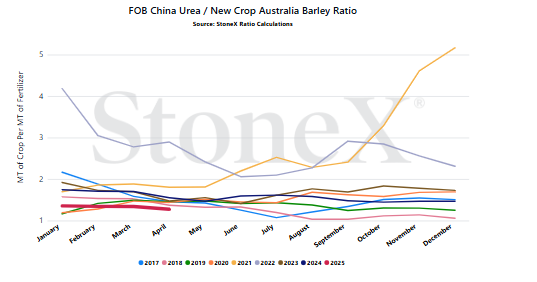
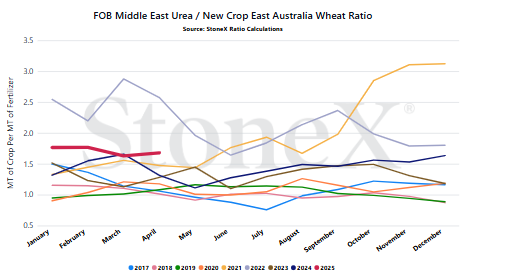
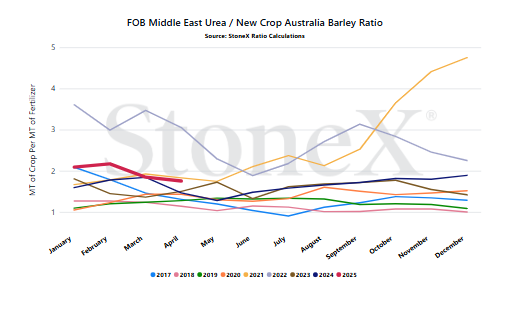
We believe that only looking at the flat price of either grains or fertilizer can be misleading:
-
Only selling grain can hurt you if fertilizer prices rise substantially
-
Only buying fertilizer can hurt you if grain prices fall
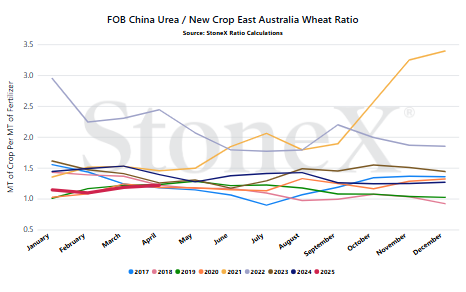
We look at the ratio "value" to get a better indication of where we are or how many bushels of X does it take to pay for 1 ton of fertilizer.
Would you rather:
-
Spend 135 bushels to pay for 1 ton of urea
-
Spend 55 bushels to pay for 1 ton of urea
When we compare the current ratio value against recent years, we start to see if we are high or low.
YOUR VALUES MAY LOOK DIFFERENT
This is a work in progress section! We plan on looking at the relationship between Aussie grains and global price points (and hopefully Aussie specific locations, though that data is hard to secure, very protected). Big reason why we are still in the "trial" stage of this newsletter!!!!
- India's return date - to me, this is the highest watch point for global urea. While the European/China situation has a bigger effect, it doesn't appear to be changing. We need to watch because they can change, they just haven't for a while. India is the looming demand that we do not know exact details. If they announce early, the market could rally as they smell desperation. If they announce "on-time" (late May/early June), could largely be a non-event. If they announce later, it could drag values even more.
- European production rates/Chinese export rates - as long as their stories remain unchanged, the global price floor remains elevated. It does not mean prices cannot fall, but it raises that floor with a much tighter S&D. Also, if we suddenly saw European production improve or Chinese exports return, it could crater price ideas as the world market runs away. While it doesn't look to have the same nearby impact as India, it is still incredibly important to the future markets.
- Early imports vs demand - the fact that imports are so well ahead of schedule is a major bearish factor to me in that suppliers want to ensure they make their sales and get rid of inventories. However, it does not guarantee lower prices. If there is a huge rush of demand, that can easily outpace the early steps and could pressure values higher. Less likely in today's situation, but still something we need to watch.
StoneX Ratio Calculation
The ratio calculation is derived from Bloomberg historical grains values as well as fertilizer values from StoneX, NPKFAS, and Argus.
The calculation is simply dividing the fertilizer price by each grain price.
All data was sourced from StoneX unless otherwise noted.