Global
Sorry to say that for all the excitement in nitrogen and phosphate, potash remains quiet.
Not much is happening around the world. Our biggest watch point continues to be global potash manufacturers approach to summer in terms of production rates. Will they continue to produce at full rates? Will they decide to pull forward any repairs which may limit production? Will they outright curtail production to fight lower prices?
Today, we do not know the answer. We just have to watch and be reactionary.
I'm going to assume that potash producers around do what they are supposed to do: produce potash. No curtailments of any sort. Under that scenario, global potash values should remain flat as supplies continue to feel more than sufficient with more tons coming over the next few years.
However, if we suddenly see a wave of announcements/actions that production is being cut, that changes the outlook.
North America
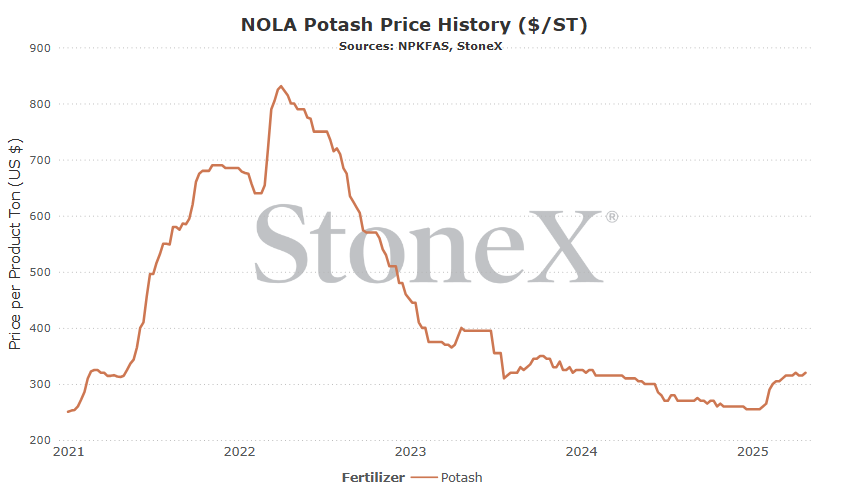
Since the start of the year, U.S. potash values are up about 25% and we have heard Canadian values are up 10% or higher.
Some of this is fundamentally driven. It was a solid fall run that emptied a lot of warehouses (lots of space to refill for spring). It was a later fall that chewed into an already short winter fill period. Spring demand grew with planted acreage forecast changes.
However, some of it was emotionally driven based on fear of tariffs.
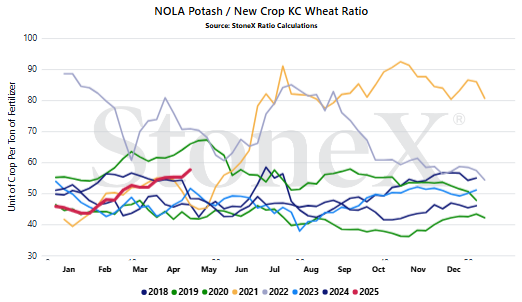
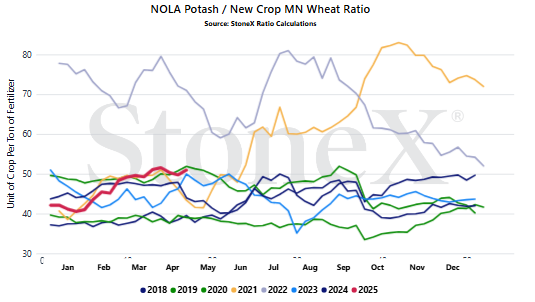
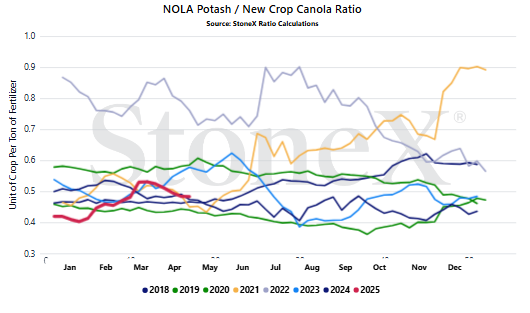
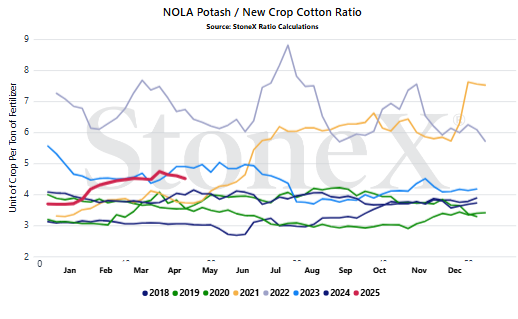
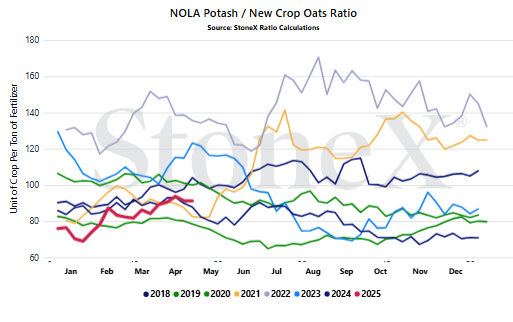
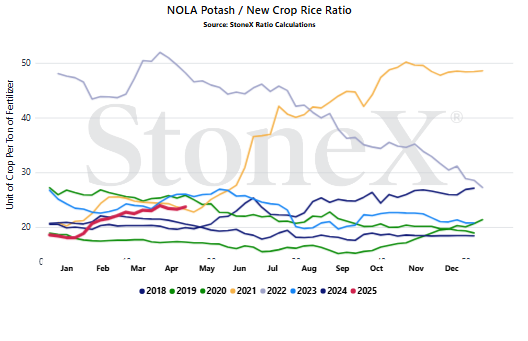
Today, as I look ahead, neither the fundamental or emotional drivers are in play near to the extent that they have been. The tariff situation regarding potash between the U.S. and Canada seems to have dropped off. It appears that spring demand has been solid and we should end the season low on inventories, but there are 6 months before the fall application period starts. It also doesn't help that current potash values are high priced when compared against grain values.
All of those factors to say that as we focus on late spring/summer values, we should see some price reset (barring some major change in the system). It might not drop back to where we started the year but buyers are not going to feel rushed to buy a high price. The onus should be on manufacturers to create a price that works for all parties involved.
I.e. I'm watching for N.A. potash prices to drop in a month or two.

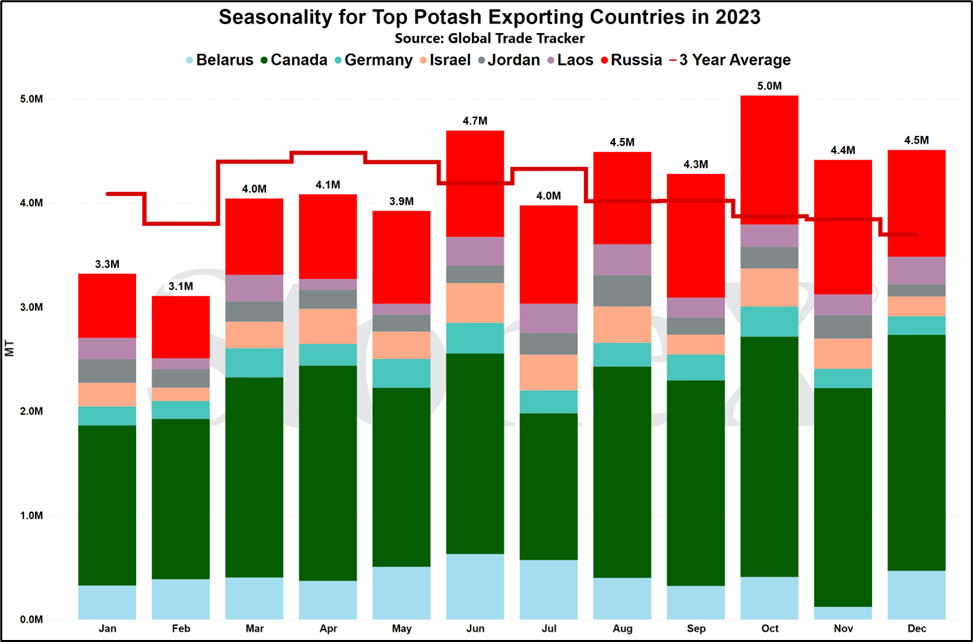
Global markets remain relatively flat priced/quiet
This is going to be a short piece!
Not much new to point to globally. Work continues on new production construction around the world which should add additional supply to a market that already feels well supplied.
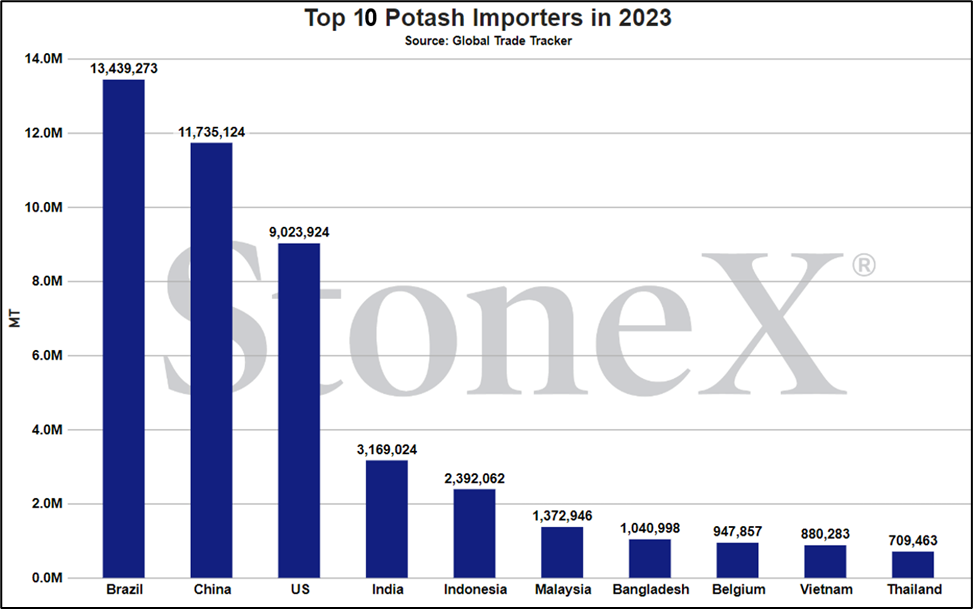
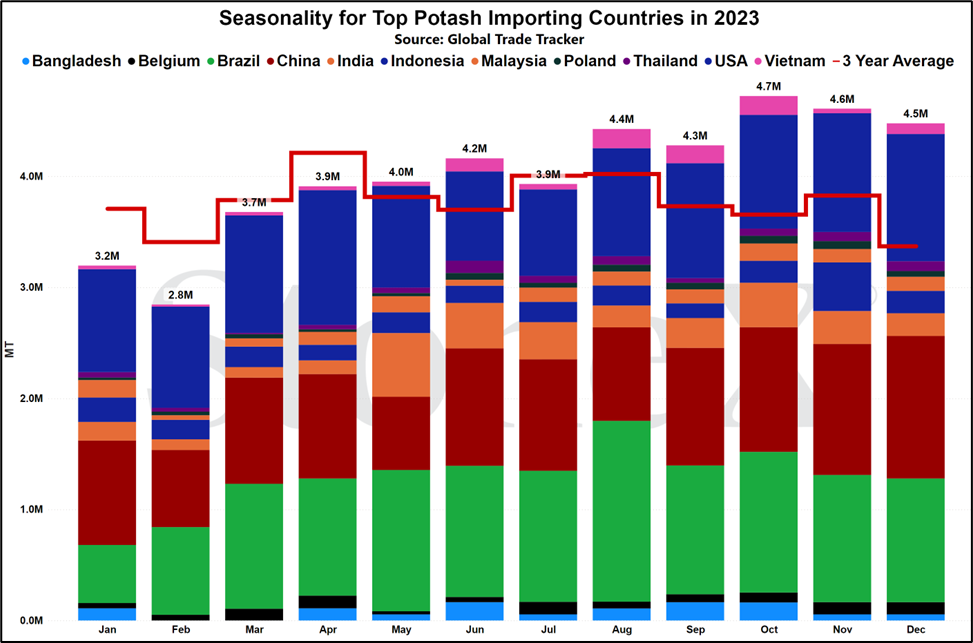
The world's biggest buyers continue to import ahead of "normal" paces. The graphs below show the world's 3 largest potash buyers (Brazil/India/U.S.) continuing to be ahead which is a pattern that started last year. Even with this surge in demand, world prices have remained relatively flat. While there are several reasons that could justify this, my POV is that it is a clear sign that global supplies are solid vs demand. If these 3 were to cut back their imports, the world would be awash with supplies.
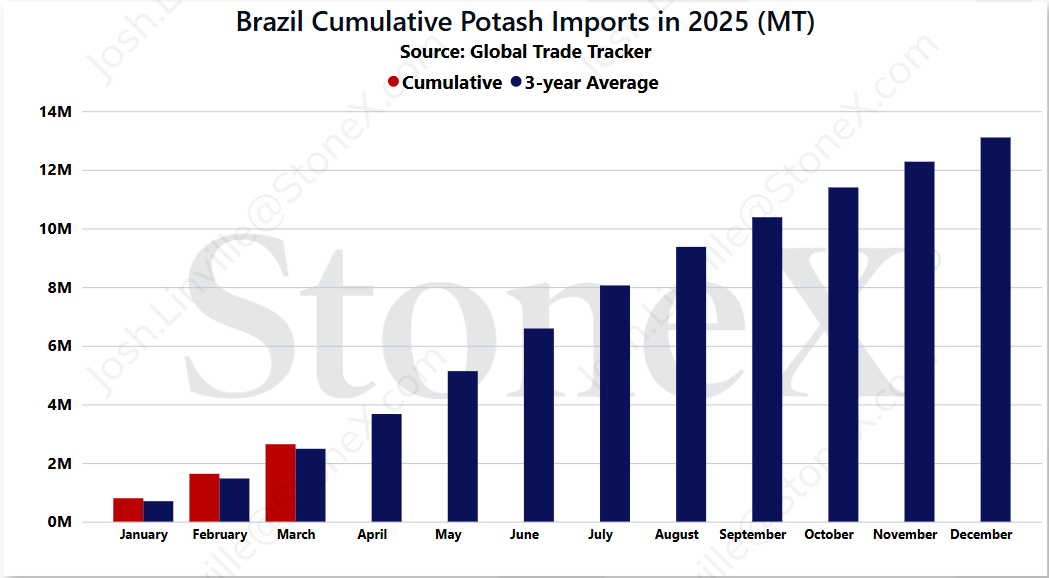
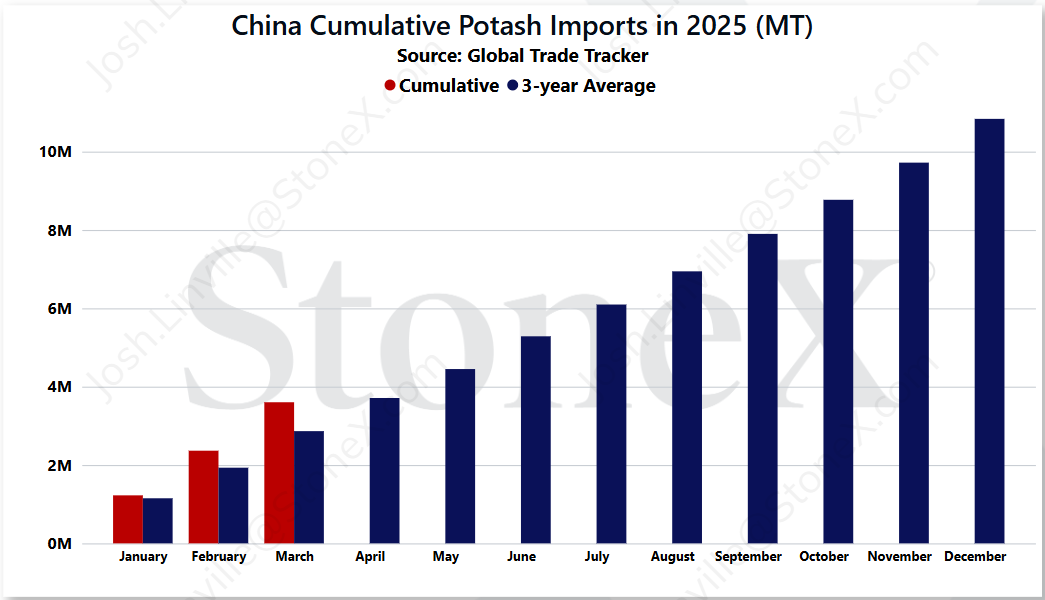
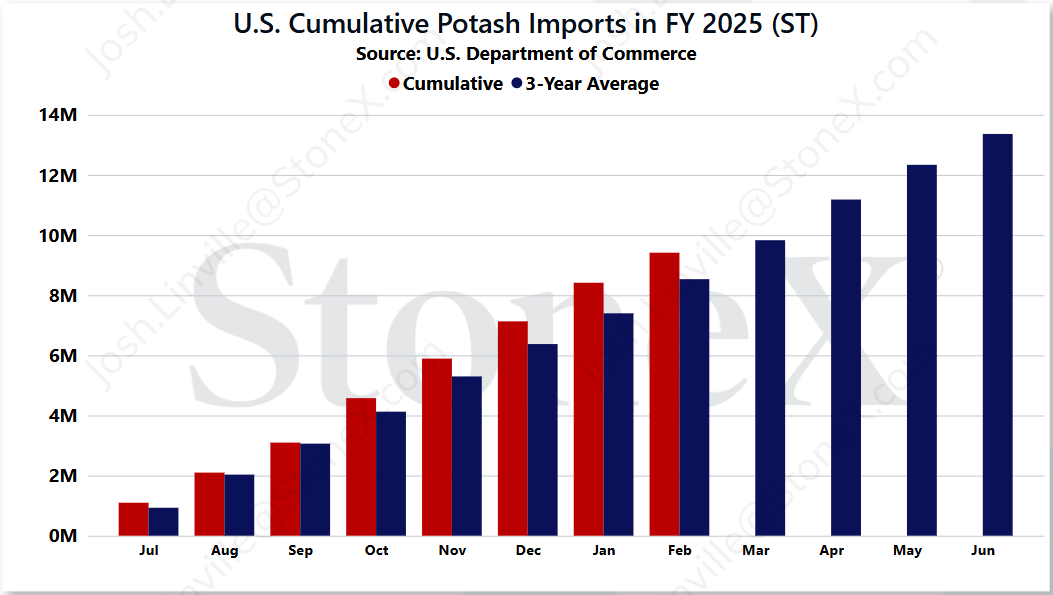
North America has seen the most excitement in terms of market/price. A very successful fall application emptied the system and caused prices to rally as it struggled to prepare for the looming spring run. Fears surrounding an on again/off again tariff fight between the U.S. and Canada helped to push prices even higher.
However, much of the Northern Hemisphere spring is now complete with a long period until the next application cycle.
All of this to say that without a major shakeup in production around the world, it appears that potash markets are set for a quiet period in the coming months. We know things can change in a hurry, but today it is hard to see that happening.
What does this mean for farmers?
Hopefully, this means at least one quiet input for farmers.
Global nitrogen and phosphate values have been incredibly volatile with current prices high. Unfortunately, I'm not sure that changes for the rest of 2025. However, potash should give a bit of stability.
Also, I'm very hopeful that this means North American farmers will see a more aggressive price offered later this year. If global prices have been quiet and N.A. values have risen on tight fundamentals, now that fundamentals are loosening, that "should" mean values correct.
It is all speculation and I know hope isn't a strategy...but I'm not above hoping!
N.A. spring preplant wrapping up, focus turning to summer reset expectations
There may be some of you saying "Josh, we have barely begun spring preplant applications". I understand this may be the case but by this point on the calendar, the peak demand period for North American potash is behind us.
So what does that mean for market prices?
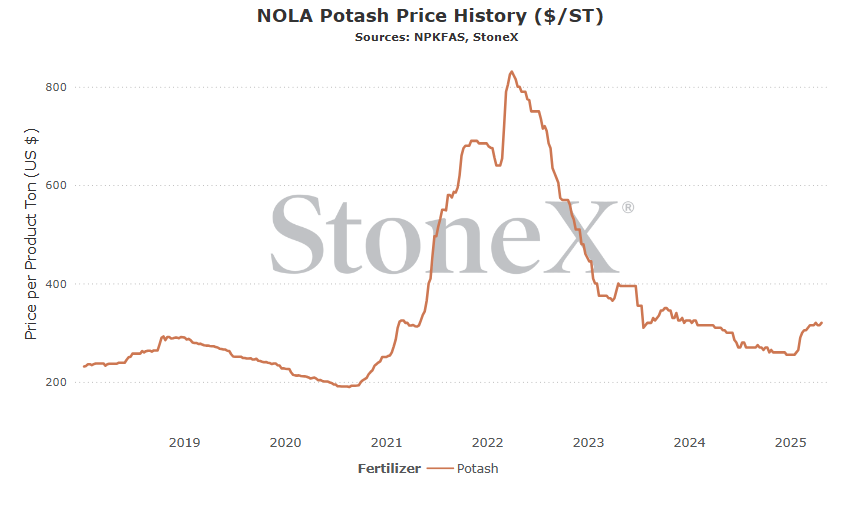
Let's remember where we started this year. For NOLA (not the best potash price point but the easiest one to find values for), price are up around 25% (23.3%, to be precise). Why did that happen?
- Large fall run emptied storage (lot of fill to prepare for spring)
- Late fall run (removed a month from an already short winter fill period)
- Demand grew for spring (corn acres jumping will do that)
It also didn't help that the market was worried/nervous/scared of the U.S. - Canada tariff fight. While it never really happened like we thought, it was enough to push buyers to a nervous/emotional state.
So now, as we look ahead, will these factors continue to hold values where they are today? I do not think so.
This has been a solid spring season. My guess is that we will end this fertilizer year (ends June 30) very low on inventories. However, there are 6 months between today and the start of fall application for a lot of areas. We cannot wait until October, but time is on the side of the buyer.
Global values have not moved much from our perspective, even with higher global demand. So if global values have remained relatively flat, North American values increased, and the global POV is that they stay flat, it makes sense that N.A. should come and meet global prices.
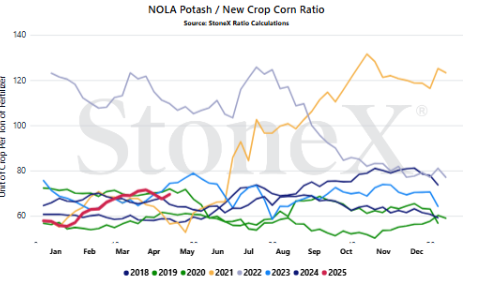
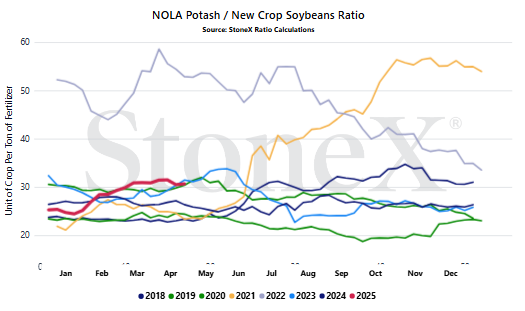
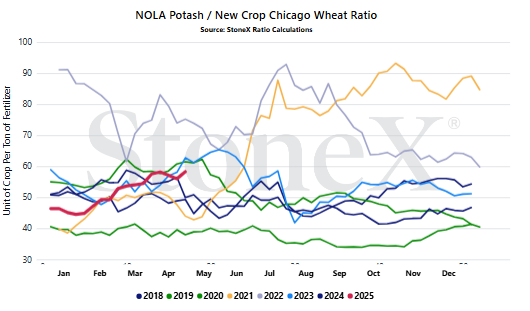
As North America moves forward, the pressure starts to slide back to the manufacturer/seller need to move product. Assuming things remain unchanged, that will hopefully result in a better buying opportunity. If you look below, potash values are pretty high vs grain values today. Farmers are not looking at a great 2025 year and 2026 is not much better.
All this to say that summer picture is starting to get more clear and that view should be a win for farmers.
What does this mean for farmers?
If this outlook is correct, it should mean an opportunity for those watching.
NOLA/New Orleans Louisiana
Vs 30 days ago - 2% or approximately $5 higher
Vs 90 days ago - 21% or approximately $55 higher
Vs 6 months ago - 21% or approximately $55 higher
Vs 1 year ago - 3% or approximately $10 higher
U.S. Midwest Average (average of several points across the Midwest)
Vs 30 days ago - 3% or approximately $10 higher
Vs 90 days ago - 17% or approximately $51 higher
Vs 6 months ago - 12% or approximately $39 higher
Vs 1 year ago - -2% or approximately $8 lower
- Global manufacturers start to slow/stop production – much like farmers like higher grain prices because it means they make more, fertilizer manufacturers like high fertilizer prices since it means they make more. One can get upset by it, but it is just reality. Another hard reality for that side is that current potash prices are well below where they were a few short years ago. They remember those margins. They can almost taste those margins! If they start to feel that current prices are just too low, we can see production start to slow/stop. If enough happens around the world, it can support prices.
- Grain prices start to rally on drought/other fears - this is a factor that to me is more emotional than fundamental. For fertilizer, grain prices do not affect the S&D if acreage forecasts do not change. Let's say the current forecast calls for 95M acres of corn. If the corn price is $4 or $8, there can be some shifts in application rates but the bulk of the S&D is unchanged. However, you and I know that $8 corn will see higher fertilizer prices than $4 corn. Because of that, we still need to watch grain prices and if some of these drought fears start to happen and drive grain prices higher, potash could get caught up with it.
- After this spring saw phosphate/nitrogen up big, demand comes forward quicker than usual – this factor is mostly wrapped around UAN. Right now, it is nearly impossible to find nearby ship UAN supplies. Most are reporting June/July before they arrive. I am NOT saying that this will happen again. It took a lot of factors all happening for this to happen. However, because it IS happening, it could change buying patterns going forward. We could see more of the market willing to lock in fertilizer needs much earlier than normal to make sure this story doesn't repeat. If enough demand comes early, it can drive prices higher.
- Spring demand gives way to quiet summer – right now, N.A. values have been supported by demand that just doesn't have a lot of options. Too late to call tons in that can reach demand in time. Corn and other potash needing acres continue to rise which boosts demand further. All of it is very price supportive...until it ends. At some point very soon, spring application/planting will be behind us and summer will be the focus. When that happens, time is on the side of the buyer. The pressure grows for the seller.
- Top global buyers slow their purchase pace after frantic period - if you look at India/Brazil/U.S./others, their import pace has been frantically high, yet global values haven't done much. So what happens if those buyers start to slow down? If prices held steady in the face of big demand, normal demand "should" see values lower. There are no signs of buying slowing down, but it is something we need to watch.
- Grain prices remain pressured – high or low grain prices should not have an effect on potash prices. Potash prices should be determined by its own fundamentals...but we all know better. When grain prices rise, fertilizer follows. That should mean if grain prices fall, it hurts fertilizer. It seems lower prices always take long/more pressure to happen, but it is something we are watching for.
Where are the current potash/grain ratio values today
We believe that only looking at the flat price of either grains or fertilizer can be misleading:
-
Only selling grain can hurt you if fertilizer prices rise substantially
-
Only buying fertilizer can hurt you if grain prices fall
We look at the ratio "value" to get a better indication of where we are or how many bushels of X does it take to pay for 1 ton of fertilizer.
Would you rather:
-
Spend 120 bushels to pay for 1 ton of potash
-
Spend 60 bushels to pay for 1 ton of potash
When we compare the current ratio value against recent years, we start to see if we are high or low.
YOUR VALUES MAY LOOK DIFFERENT
This graph looks at the NOLA potash price vs the flat grain price. There are no logistics on either product. Your location will look different due to fertilizer logistical costs, grain basis, etc.
- How manufacturers approach the summer with production rates - potash manufacturers can dial up/down production rates based on how the market looks. If prices get too low from their perspective, they can decide to ratchet back production while hoping that supports price ideas. Potash values continue to be well below other inputs like phosphate/nitrogen. If enough manufacturers decide to take action and start scaling back production rates, it can impact the market.
- N.A. conversion from spring to summer - right now, most supplies across N.A. are focused on much tighter supplied products like nitrogen and phosphate. That isn't to say that potash isn't important. Just to say that potash is not nearly in as bad a shape as the others. From my POV, it is just "there". At some point, spring season demand will start to wane which will give the market a chance to breath...and look ahead. When it gets to that point, assuming things haven't changed, they are going to see potash prices high vs grain values...which should have sellers worried.
- Global buying patterns - the biggest global buyers continue to outpace what is considered normal for them...yet prices of potash haven't moved much. We very well may be seeing a brand new normal import pace...or that higher rate might correct overnight. If demand falls away, we could see global prices fall as a result.
StoneX Ratio Calculation
The ratio calculation is derived from Bloomberg historical grains values as well as fertilizer values from StoneX, NPKFAS, and Argus.
The calculation is simply dividing the fertilizer price by each grain price.
All data was sourced from StoneX unless otherwise noted.