Morning Ferrous Markets
Market Overview
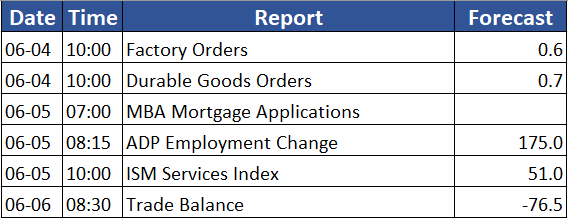
The ferrous markets are currently experiencing mixed dynamics across different regions. The European steel market is seeing increased protectionism measures aimed at reducing imports, potentially boosting demand for domestically produced steel. Chinese steel and iron ore markets face downward pressure due to lower steel production and rising inventories. In North America, the US HRC steel market is experiencing some price increases, but overall conditions reflect a market with mixed signals, including increased production but declining demand. Additionally, the latest Caixin China Manufacturing PMI showed a rise to 51.7 in May from 51.4 in April, indicating the highest reading since June 2022, and US April construction spending data showed a month-over-month increase of 1.2%, highlighting continued investment in infrastructure.
Upcoming Data Releases

North American (US) HRC Steel Market
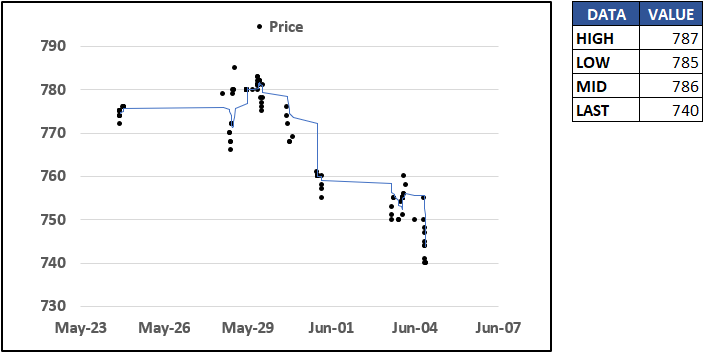
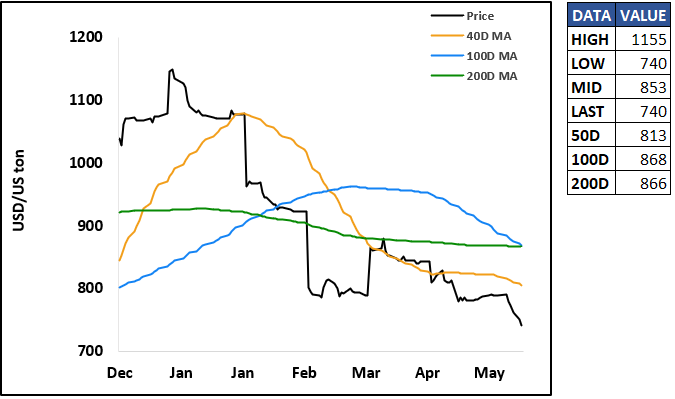
The US HRC steel market is currently facing a mix of trends. Despite recent price increases for the November and October 2024 contracts, which rose by 1.56% and 0.72% respectively, the August 2024 contract saw a notable decrease of 1.86% to $805 per ton. Trading volumes have decreased, with managed long positions down by 63 contracts and managed short positions up by 48 contracts over the past week. Net commercial positions increased by 453 contracts, indicating some hedging activity in anticipation of future price movements. The RSI for US HRC is at 28.33, indicating an oversold condition. Despite this, there are concerns about weakening demand and reduced trading activity, which has seen liquidity fall and trading volumes drop to 18,344 short tons. HRC prices have been relatively stable overall, with November 2024 HRC prices up 1.56% to $845 per ton, while October 2024 prices increased by 0.72% to $840 per ton. Additionally, US raw steel production increased by 0.5% to 1.743 million tons in the week ending June 1, with steel mills operating at 78.5% capacity, up from 78.1% the previous week. Year-to-date production is 2.6% lower than the same period in 2023, reflecting broader market conditions of volatility and an oversupplied status.
HRC Front Month 3 Day Trend
StoneX & Bloomberg
HRC Front Month 6 Month Price Trend
StoneX & Bloomberg
Chinese Steel & Iron Ore Markets - SGX Iron Ore
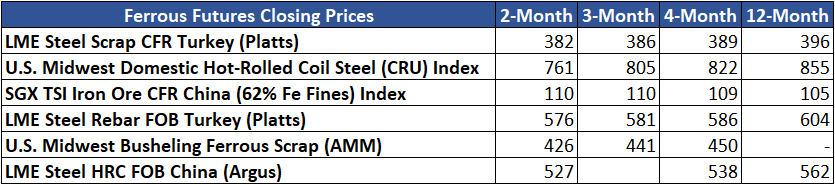
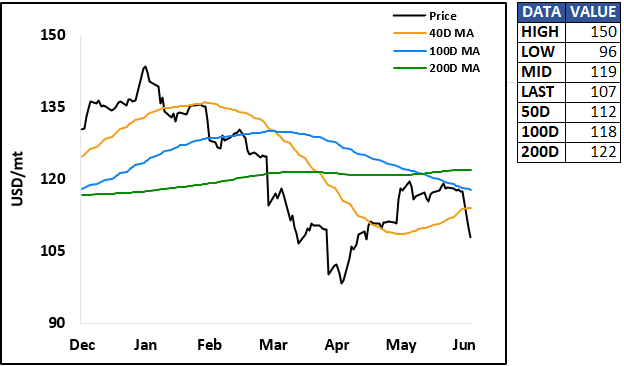
In China, the iron ore market has faced downward pressure. Despite hopes for economic recovery and supportive measures in the real estate sector, steel output has been soft. Chinese crude steel production dropped by 7.2% year-on-year in April, marking the weakest output in four years. Iron ore prices have reflected this weakness, with SGX iron ore contracts for July 2024 decreasing by 1.63% to $113.6 per metric ton, and June 2024 contracts falling by 1.6% to the same price. Inventories have risen, and the market remains well-supplied, contributing to the price decline. This surplus has pushed the RSI for SGX iron ore to an oversold level of 26.96. Additionally, iron ore prices saw significant decreases for January, February, and March 2025 contracts, dropping by over 4% each.
SGX Iron Ore CFR China (62%) Futures
StoneX & Bloomberg
Turkish Steel Scrap: Supply Constraints and Rising Costs
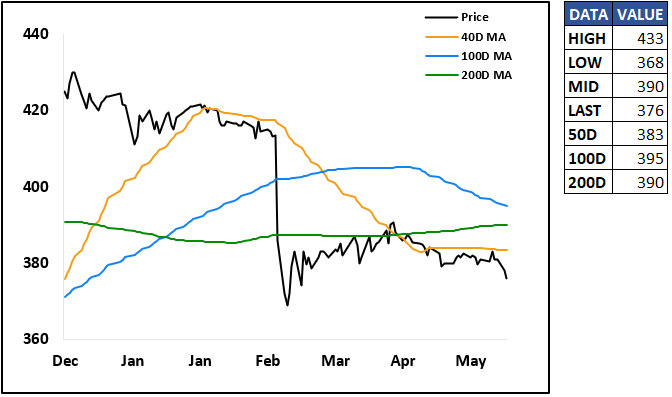
European steel markets are seeing mixed signals. Recent European Commission trade protectionism measures aim to cap imports of hot-rolled coil (HRC) steel from specific countries at 15%, reducing excess imports and potentially boosting demand for domestically produced steel. This policy could cut import volumes by 2 million tons annually, roughly 20% of 2023 EU HRC imports, and spur domestic demand. Despite these measures, European steel prices have faced pressure due to declining demand and high import volumes. In April, Turkey recorded a significant increase in crude steel production, rising by 4.4% year-on-year to 2.8 million metric tons, with total production for January-April up 22.1% year-on-year to 12.3 million metric tons. This increase contributed to Turkey’s sharp rise in crude steel output worldwide. However, Turkey’s finished steel consumption fell by 14.0% to 3.05 million metric tons in April. Turkey’s steel exports rose by 64.6% in April to 1.03 million metric tons, while imports decreased by 12.4% to 1.5 million metric tons. These dynamics indicate an overall increase in Turkish steel export activities, which has implications for the European steel market, potentially contributing to excess supply and pricing pressures.
Turkish Scrap 1st Month Futures
StoneX & Bloomberg
Current Prices