Morning Ferrous Markets
Market Overview
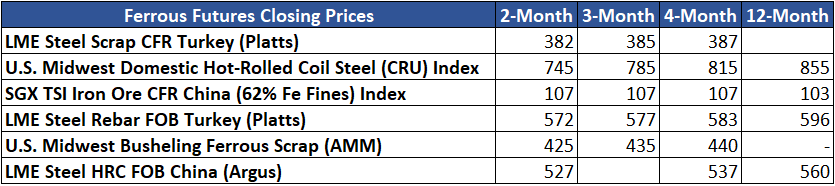
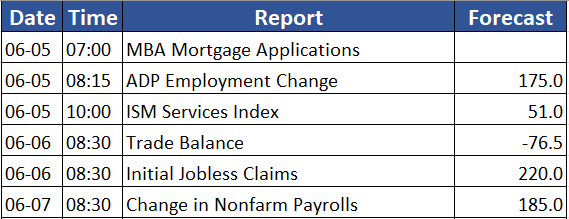
In May 2024, ferrous markets were impacted by a mix of macroeconomic trends and market-specific developments. In China, the State Council introduced the 2024-2025 energy conservation and carbon reduction action plan, aiming to boost energy efficiency and reduce emissions. Initial signs of higher demand in second-hand homes emerged due to policy changes, although new home sales remain unaffected. In the US, manufacturing is showing signs of recovery, but issues like non-farm unemployment rates, wages, and overstated employment rates persist, albeit to the benefit of inflation reduction. That said, inflation projections remain a concern, as highlighted by the Beige Book, which reported modest price gains, lower hiring expectations, and reduced personal income and spending due to higher interest rates. The PCE Core Services (excluding shelter) on a six-month annualized basis is still above the target at 4.6%. Meanwhile, EU consumer confidence is lower than post-COVID levels, reflecting ongoing economic uncertainties. These macroeconomic conditions are critical for understanding the current trends in ferrous markets, which include HRC steel in the US, LME Turkish steel scrap in the EU, and SGX iron ore futures in China.
Upcoming Data Releases

North American (US) HRC Steel Market
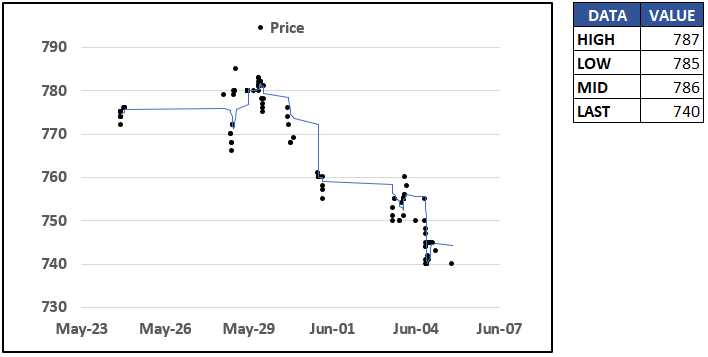
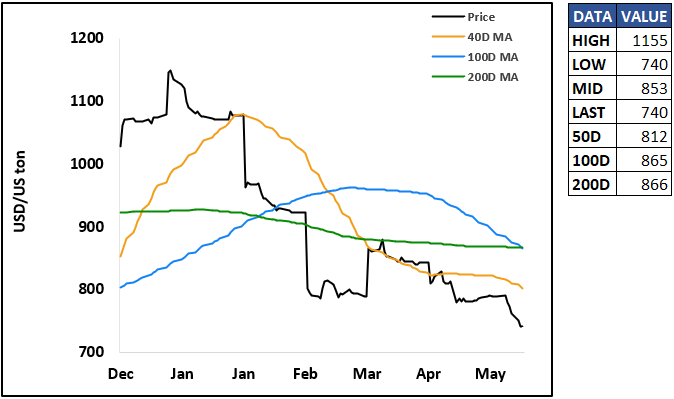
US raw steel production rose by 0.5% in the week ending June 1, reaching 1.743 million tons, with mills operating at 78.5% capacity. Year-to-date production is down 2.6% compared to 2023. Hot-Rolled Coil (HRC) steel prices experienced mixed movements. November 2024 HRC prices fell by 2.38% to $820 per ton, while August 2024 prices decreased by 2.48% to $785 per ton. The contracts for August 2024 and July 2024 HRC are among the most oversold, with Relative Strength Index (RSI) values of 27.28 and 27.58, respectively, indicating potential price rebounds. Additionally, spot prices for June 2024 are down by 1.86%, reflecting ongoing market volatility. The futures market shows minimal changes week over week, with open interest highlighting mixed sentiments among money managers. While domestic HRC prices averaged $750/st, just 3.4% higher than imports, suggesting potential price adjustments ahead.
HRC Front Month 3 Day Trend
StoneX & Bloomberg
HRC Front Month 6 Month Price Trend
StoneX & Bloomberg
Chinese Steel & Iron Ore Markets - SGX Iron Ore
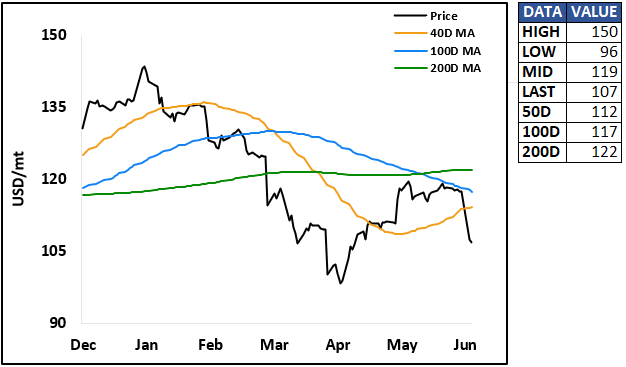
Iron ore prices slumped to an eight-week low, falling below $110 a ton due to continued demand concerns in China. Despite a brief rally in late May, rising inventories and weak manufacturing growth have weighed on the market. The Caixin China May Manufacturing PMI rose to 51.7, indicating expansion, while the official PMI showed contraction, underscoring mixed economic signals. High stocks and prices have hurt consumption, with new orders remain low. Chinese steel production decreased by 2.7% month-on-month in April, but exports grew by 16.3% year-on-year, reaching one of the highest levels in the past seven years. SGX Iron Ore futures for November 2024 saw a modest increase of 0.17% to $106.2 per metric ton, while December 2024 contracts rose by 0.77% to $106.25 per metric ton. The recent price downtrend continued with a 0.47% decrease today, reflecting ongoing market volatility. Trading activity has been rising, and the market traded 43 months forward, out to December 27, 2024. Over the past 30 days, the average daily volume traded was 19.73 million metric tons. Recent anti-competitive state-based policies center around the recent surge in Chinese exports, which domestic manufacturers contend will dampen global steel prices further.
SGX Iron Ore CFR China (62%) Futures
StoneX & Bloomberg
Turkish Steel Scrap: Supply Constraints and Rising Costs
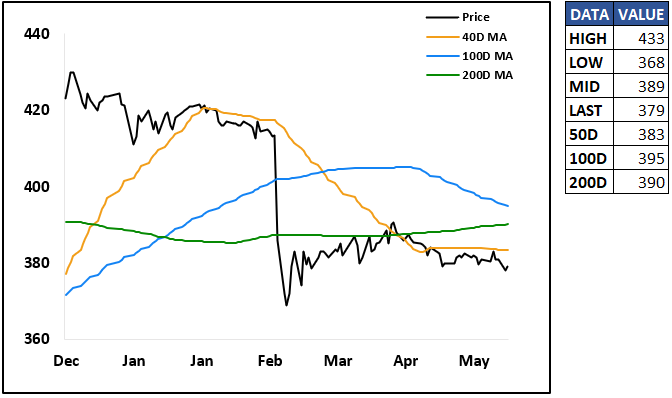
The EU significantly increased its imports of Russian metals, with March 2024 imports of iron and steel rising 1.7 times to €328 million. Belgium led the surge with imports amounting to €130.5 million, marking a 3.5-fold increase since June 2022. Italy followed with purchases worth €85 million, while Denmark imported €35 million. This dependency on Russian metals highlights the EU's ongoing challenges with sustainability standards and the geopolitical ramifications of these trade relationships. Turkish scrap prices saw a slight increase, with June 2024 contracts up by 0.26% to $379 per metric ton. European steel prices have been influenced by attempts to raise prices amidst weak demand, with mixed success. The market remains under pressure, particularly given the current economic uncertainties and fluctuating demand in construction and automotive sectors. That said, EU rate cuts, decarbonization efforts, and improving auto sales present upside risk.
Turkish Scrap 1st Month Futures
StoneX & Bloomberg
Current Prices