Dollar to Reflect FOMC Minutes, Brazil’s Electoral Landscape, and Geopolitical Tensions in the Middle East
- Bullish
- The FOMC minutes are expected to reinforce the notion that the Federal Reserve does not foresee interest rate cuts in the short term in the US, boosting Treasury yields and strengthening the dollar globally.
- News surrounding Brazil’s 2026 electoral landscape may heighten fiscal risk perception for domestic assets, which could weaken the Brazilian real.
- The ongoing diplomatic deadlock between the US and Iran reduces the likelihood of reopening the Strait of Hormuz, potentially increasing global risk aversion and contributing to the dollar's strength.
Weekly Recap
- Media coverage linked presidential candidate Flávio Bolsonaro to Daniel Vorcaro, owner of Banco Master, dampening expectations of fiscal policy changes post-2027 and significantly depreciating the real.
- On the economic agenda, strong data for the US economy heightened investor concerns about inflationary pressures and raised expectations for higher interest rates for an extended period, strengthening the dollar globally.
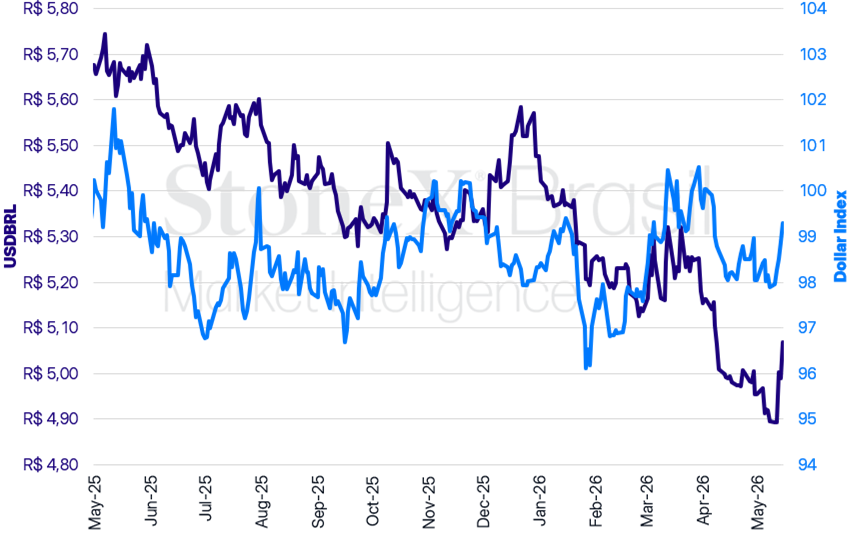
USD and Dollar Index (points)
Source: StoneX cmdtyView. Design: StoneX.
USDBRL Variations | Daily: +1.58% | Weekly: +3.53% | Monthly: +2.29% | Yearly: -7.47% | Over 12 Months: -10.78%
Dollar Index Variations | Daily: +0.42% | Weekly: +1.44% | Monthly: +1.27% | Yearly: +0.99% | Over 12 Months: -1.51%
KEY EVENT: FOMC Minutes and Inflationary Challenges in the US
Expected Impact on the Brazilian Real Exchange Rate: Bullish
US: Interest Rate History and Forecast – Updated May 15, 2026
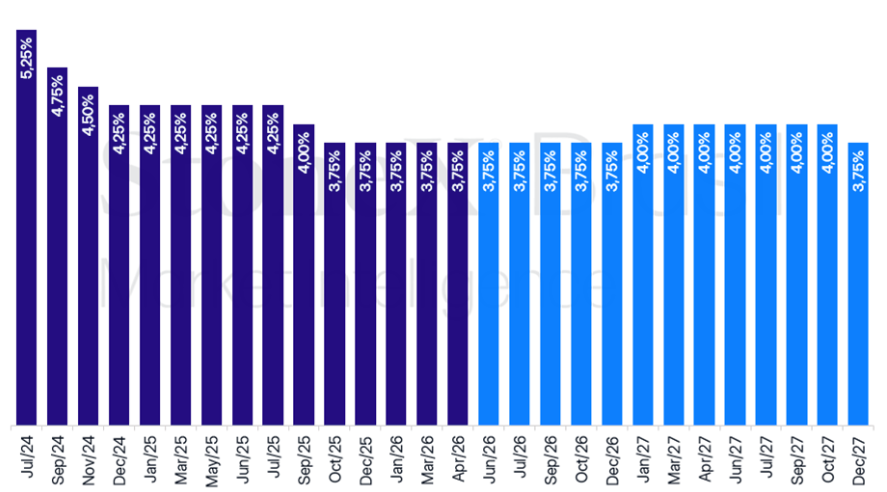
Source: CME FedWatch Tool. Design: StoneX. Reflects the market's highest probability forecast for interest rates on the indicated date.
In a week with few major indicators, investors are expected to focus on the release of the minutes from the Federal Reserve’s Federal Open Market Committee (FOMC) meeting amid concerns over inflationary trends in the US.
Why This Matters: Persistently high inflation in the US leads to expectations of prolonged higher interest rates, which favor Treasury yields and attract foreign capital, thereby strengthening the dollar globally.
Inflation Risks: Last week, US economic indicators revealed stronger and more widespread inflationary pressures.
- The core Consumer Price Index (CPI), excluding volatile food and energy components, rose 0.4% in April, surpassing the median estimate of 0.3%.
- The core Producer Price Index (PPI) jumped 1.0% in the same month, far above the median estimate of 0.3%.
- These figures indicate that inflationary pressures stemming from the closure of the Strait of Hormuz and fears of a global petroleum supply shortage have spread more rapidly beyond energy prices.
No Room for Rate Cuts: Amid this inflationary challenge, investors have reversed their expectations regarding the Federal Reserve’s next interest rate move, shifting from anticipating a cut to forecasting a hike.
- Investors will closely examine the FOMC minutes for insights into how Committee members view inflationary risks and their expectations for US monetary policy evolution.
- Although the FOMC kept rates steady, three members voted against maintaining the dovish tone in the statement, signaling greater concern over inflation risks.
Warsh’s Challenge: Notably, the US Senate has approved Kevin Warsh’s nomination as the next Federal Reserve Chair, effective Monday (18).
- Warsh steps into the role amid numerous critiques from the White House about current interest rate levels.
- As a result, investors perceive Warsh as more receptive to executive demands for lower rates.
- However, given the challenging inflationary environment and the cautious stance of other FOMC members, rate cuts are not expected in the near term.
Political Risk Perception in Brazil
Expected Impact on the Brazilian Real Exchange Rate: Bullish
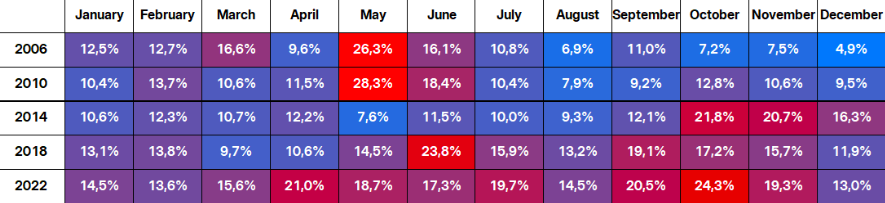
Monthly Volatility of the Exchange Rate (USDBRL) During Presidential Election Years
Source: StoneX cmdtyView. Design: StoneX.
Investors remain focused on news surrounding Brazil’s October 2026 presidential elections after the real saw significant depreciation last week due to fiscal concerns.
Why This Matters: Investors are increasingly sensitive to election-related developments, reacting strongly to news about the upcoming vote.
- Specifically, there is concern that re-election of the current administration could lead to higher public spending in subsequent years, raising fiscal risk perception for Brazilian assets and deterring foreign capital inflows, therefore weakening the BRL.
Fiscal Concerns: In recent months, investors have reacted negatively to election-related developments, such as the announcement of pre-candidates Luiz Inácio Lula da Silva and Flávio Bolsonaro.
- Market reactions indicate a preference for a new president who may adopt more conservative fiscal policies.
- Last week’s news linking Flávio Bolsonaro to controversial banker Daniel Vorcaro sparked fears that his chances of winning the election could be hindered.
- Until now, polls have indicated a tight race with no clear frontrunner.
Prolonged Middle East Stalemate
Expected Impact on the Brazilian Real Exchange Rate: Bullish
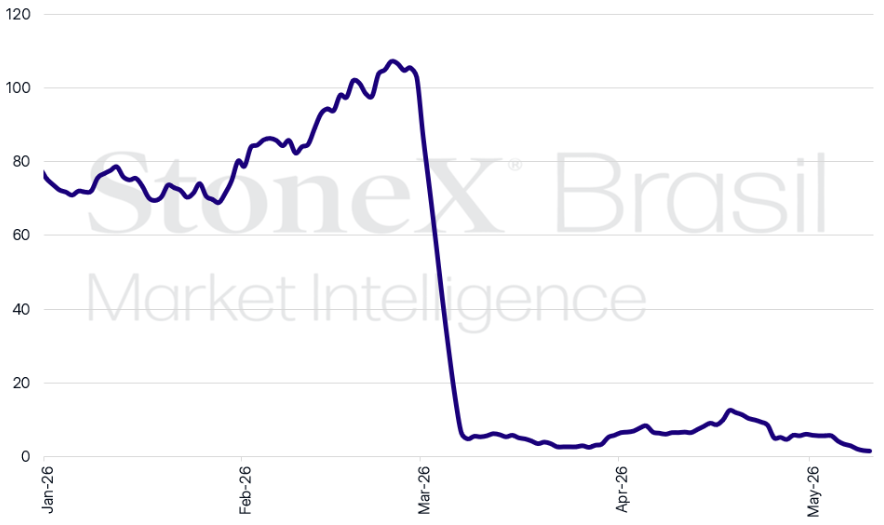
Ship Movements in the Strait of Hormuz (Seven-Day Moving Average)
Source: IMF PortWatch. Design: StoneX.
Investors are also closely monitoring the prolonged navigation blockade in the Strait of Hormuz and the lack of short-term diplomatic solutions between the US and Iran.
- During a meeting between US President Donald Trump and China’s President Xi Jinping, Trump expressed frustration with Iran, heightening fears of potential military escalation in the Middle East.
- Moreover, despite Trump’s recurring threats, the deadlock between the US and Iran persists, reducing hopes for normalizing Strait of Hormuz flows, driving up energy commodity prices, and fueling global inflationary concerns.
Why This Matters: A deterioration in the fragile US-Iran relationship tends to increase investor risk aversion, negatively impacting risky assets like the real.
- Additionally, fears of persistent global inflation may drive expectations for higher global interest rates, reducing the relative appeal of Brazilian assets and further weakening the real.
US-China Meeting: Expectations for the meeting between the leaders of the world’s largest economies included discussions about resolving the Middle East situation.
- Both leaders emphasized the need to reopen the Strait of Hormuz without tolls and opposed the idea of Iran possessing nuclear weapons.
- However, the lack of practical solutions limits the impact of their statements on investor confidence.
- Additionally, analysts suggest it is unlikely that China will pressure Iran to accept a peace proposal, given Iran’s strategic value to Beijing as a counterbalance to US influence.

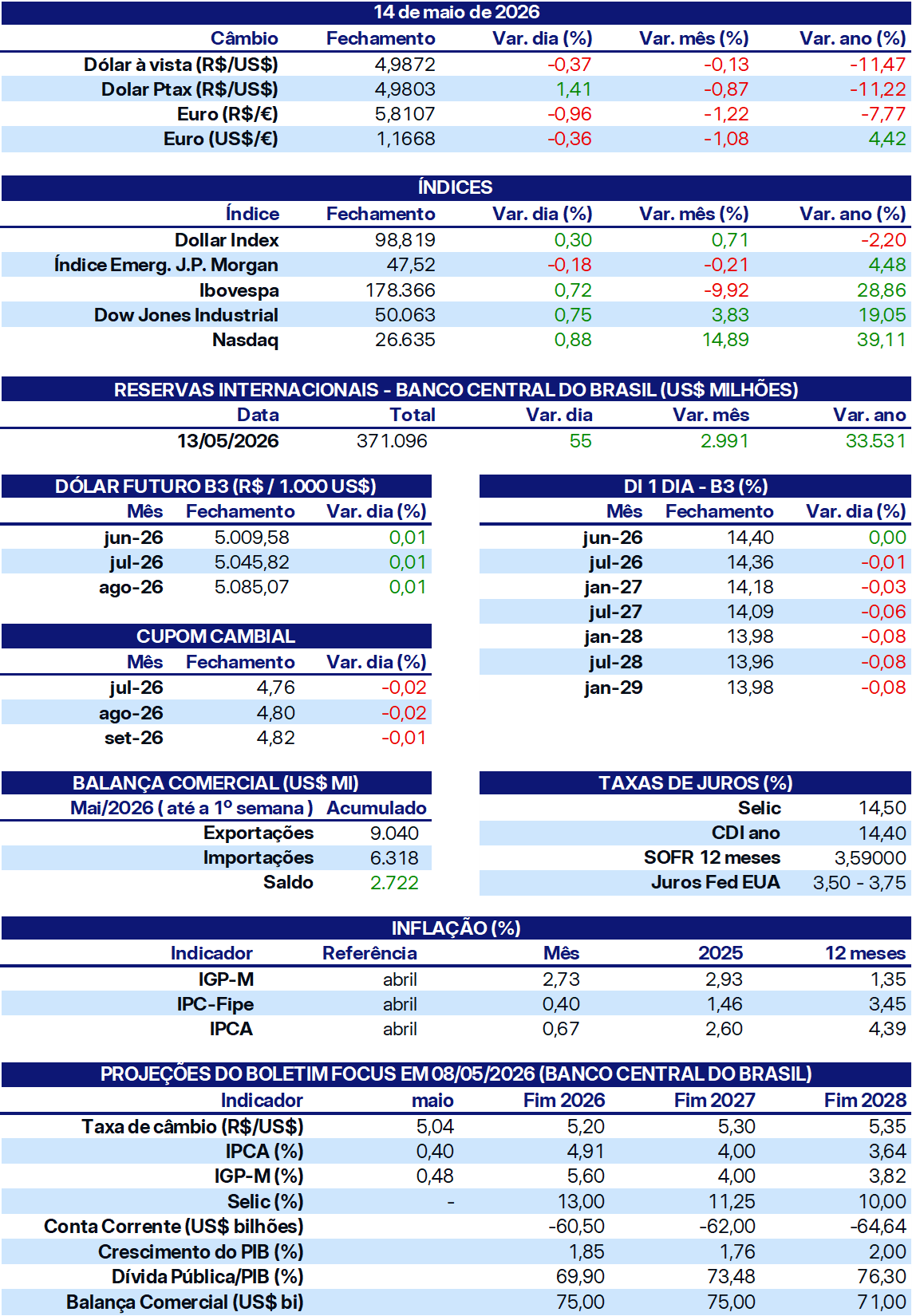
INDICATORS
Sources: Central Bank of Brazil; B3; IBGE; Fipe; FGV; MDIC; IPEA; StoneX cmdtyView.