December 30 - Stocks started the day with significant losses, but they began to trim those losses as Treasury yields declined through much of the morning. Commodity prices started largely in the green today, but they saw their values drop notably early, and then recover again with stocks. Much of this is related to end of the year book squaring in less than desirable trade volume. We'll need to test many of the recent moves in more normal trade volume next week. Nonetheless, stocks remain in the red at midday, with the VIX trading near 17, and the dollar index firming to trade near 108.2. Yields on 10-year Treasuries are trading near 4.56%, while yields on 2-year Treasuries are trading near 4.27%. Crude oil prices are 1% higher, while the grain and oilseed markets are mixed. We've seen an expanded trading range today as prices have ridden the roller coaster on both sides of unchanged, with several of the markets posting outside trading patterns. As such, today's close will be noteworthy, although confidence in what that means from a technical analysis standpoint will be hampered by the lower trade volume and end-of-the-month, end-of-the-quarter, and end-of-the-year trading.
This morning's data showed the Chicago PMI come in lower than expected at 36.9, down from 40.2 previously, and below analyst expectations of 42.7. However, the Dallas Fed manufacturing index came in higher than expected at 3.4, up from -2.7 previously. The pending home sales index rose 2.2% in November, after rising 1.8% in October, and better than analyst expectations of a 0.9% increase. The index declined in the Northeast, while rising in the other three sectors. Contract signings actually rose year-on-year in all four geographical regions of the country as consumer sentiment improved and as consumers took advantage of a dip in mortgage rates. Buyers are no longer waiting for substantial interest rate cuts, according to the National Association of Realtors.
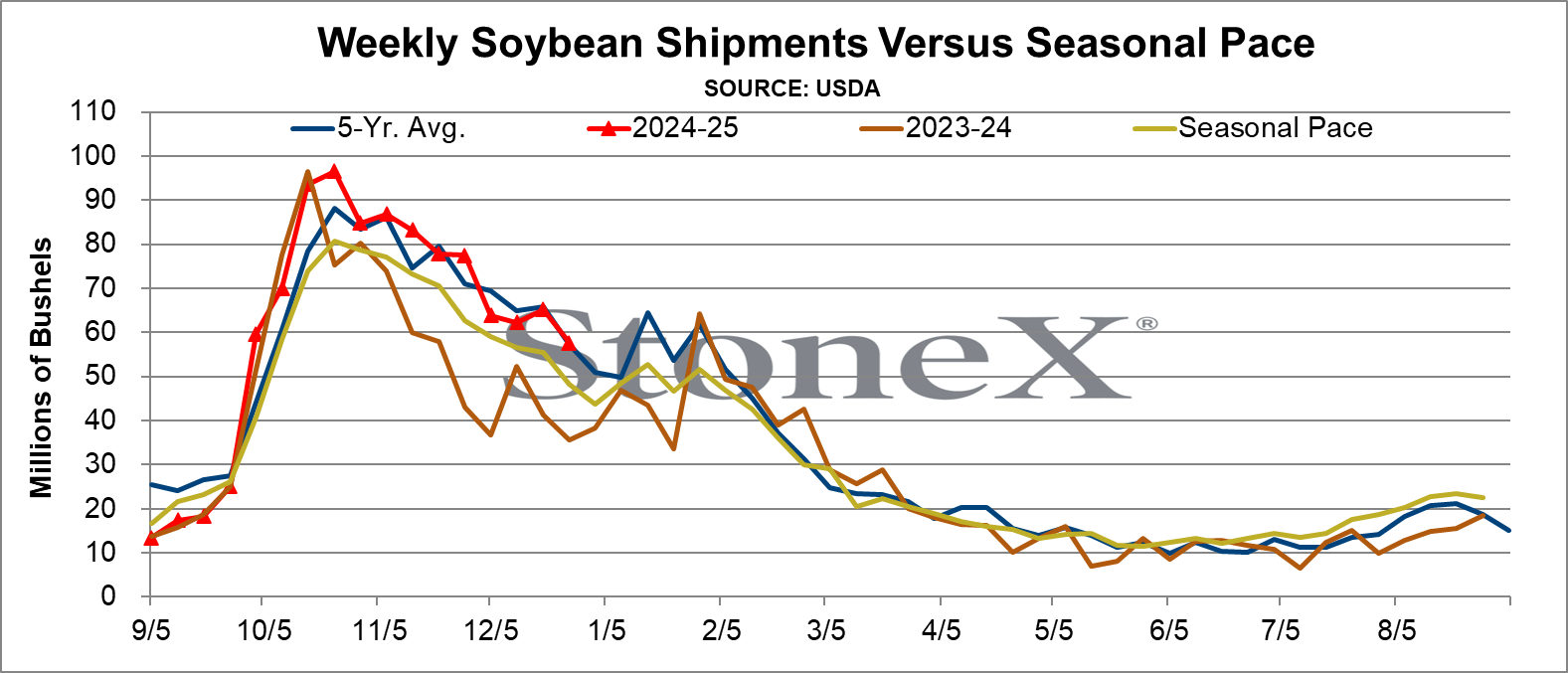
USDA inspected 57.7 million bushels of soybeans for export shipment in the week ending December 26, along with 34.6 million bushels of corn, 12.4 million bushels of wheat, and 0.5 million bushels of grain sorghum. The portion of the above that was inspected specifically for shipment to China included 27.6 million bushels of soybeans. Marketing year to date soybean export inspections total 1.051 billion bushels, up 196 million bushels or 22.9% from the previous year's pace, and up 128 million bushels from the seasonal pace needed to hit USDA's target. The surplus continues to grow as we approach the end of December. We anticipate that shipments will rapidly decline once new-crop Brazilian supplies start flooding its ports in another four weeks or so, assuming that there are not weather delays for the harvest and boat loadings. Brazilian soybeans for February loading are considerably cheaper than U.S. soybeans, largely due to basis and currency exchange rates. That said, US shipments have had a much stronger start to the new marketing year than I expected from non-China customers after China emptied Brazil's shelves, which gives me a bit more optimistic outlook for final exports.
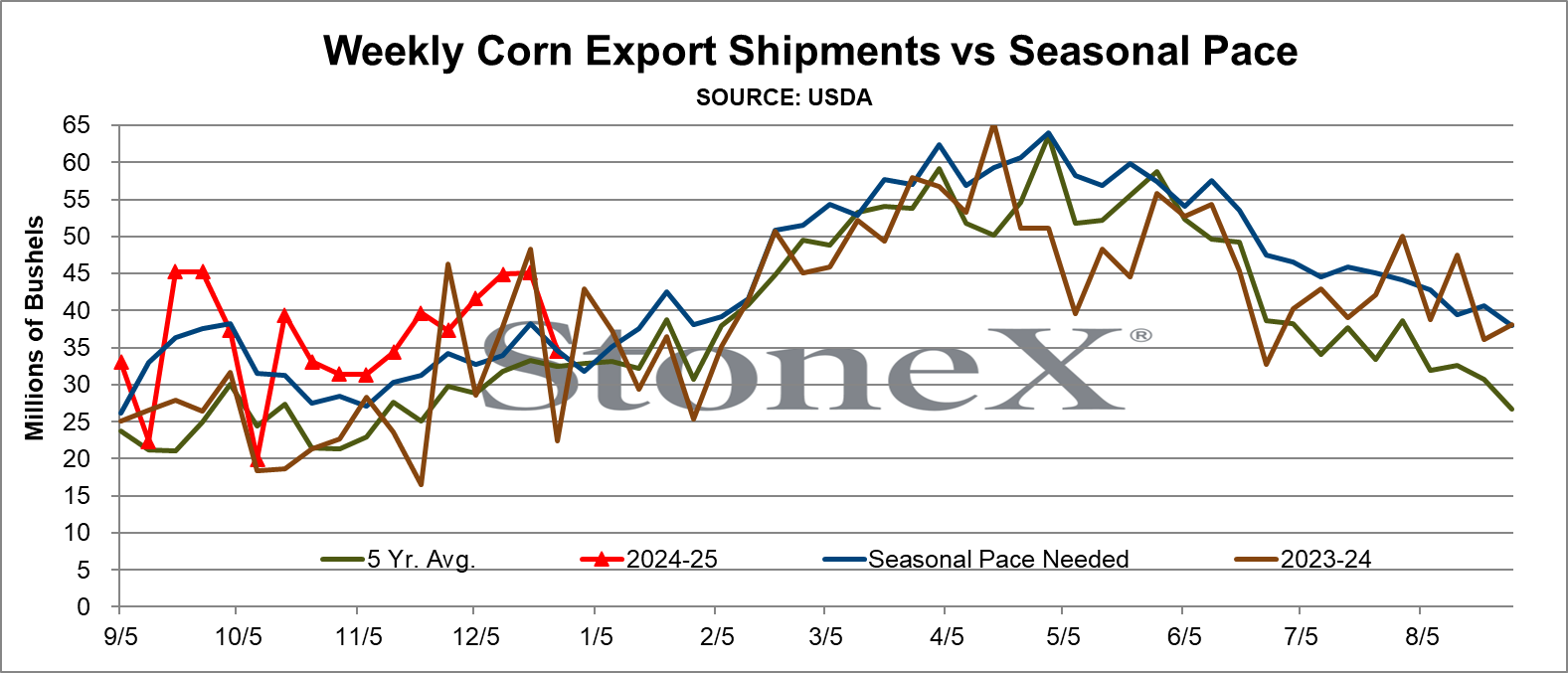
Marketing year to date corn export inspections total 605 million bushels, up 134 million bushels or 28.5% from the previous year's pace and up 52 million bushels from the seasonal pace needed to hit USDA's target. Our path from this point will largely hinge on the size of the South American crop. Early reports suggested that Argentina's corn acreage would decline by as much as 30% this year, but the current estimate is that they will decline by 16%. Argentina's corn crop is currently rated at 47% Good to Excellent, which is above the five-year average for the week of 38%, but we'll likely see those ratings trend lower in the weeks ahead as dryness builds.