January 2 - Stocks surged early to provide a strong start to the new trading year, but then came off those highs as traders took note of rising Treasury yields and the strong dollar. Hope reigns eternal on Wall Street as traders look ahead to what they expect to be a favorable business climate. In fact, the U.S. dollar is the desired currency in the world until / unless we see the economy falter, and then falter more than its rivals. The VIX is trading near 17 at midday, while the dollar index is at a fresh 25-month high near 109.3. Yields on 10-year Treasuries are trading near 4.58%, while yields on 2-year Treasuries are trading near 4.26%, as the yield curve continues to steepen, reflecting in part on the country's rising fiscal debt problem. Crude oil prices are at fresh 11-week highs just below $74 per barrel, while the grain and oilseed sector is mixed. The grain and oilseed sector saw selling emerge on its morning open, but corn and soybean prices then resumed the buying seen over the holidays, while wheat prices continue to post modest losses. Trade volume overall still remains somewhat thin, with normal volume not likely returning until next week. The strong dollar creates modest headwinds, while fund buying ahead of this year's index fund portfolio rebalancing provides modest tailwinds. Fundamental support for corn and soybeans comes from expanding dryness in Argentina and southern Brazil. That's more of a concern for Argentina's later growing season than it is for Brazil, although southern Brazil could see the top come off yields.
USDA will release its largest data dump of the year next week on Friday, January 10th, providing plenty of opportunity for market-moving surprises. We'll get the results of USDA's December wheat seeding survey, the results of its December quarterly stocks survey, revised final 2024 production estimates, and revised domestic and global supply and demand balance sheets. The stocks reports are known for their surprises, especially for corn, which are suggestive of possible big changes to production and/or feed usage that USDA may have missed. There will also be a focus on possible changes to South American production estimates. USDA bumped its Argentine soybean production estimate by 1 mmt in December due to acreage shifts from corn to soybeans this year, but it didn't cut its corn production estimate yet. That may be coming in this report, or the next. The biggest potential changes could come in Brazil's soybean production estimate, which USDA currently has at 169 million metric tons. StoneX Brazil's January customer survey pegged the crop at 171.4 mmt today, up from 166.2 mmt the previous month. Several other private estimates are north of 170 mmt following a largely ideal growing season since mid-October, although current dryness in the south may be taking the top off yield potential there.
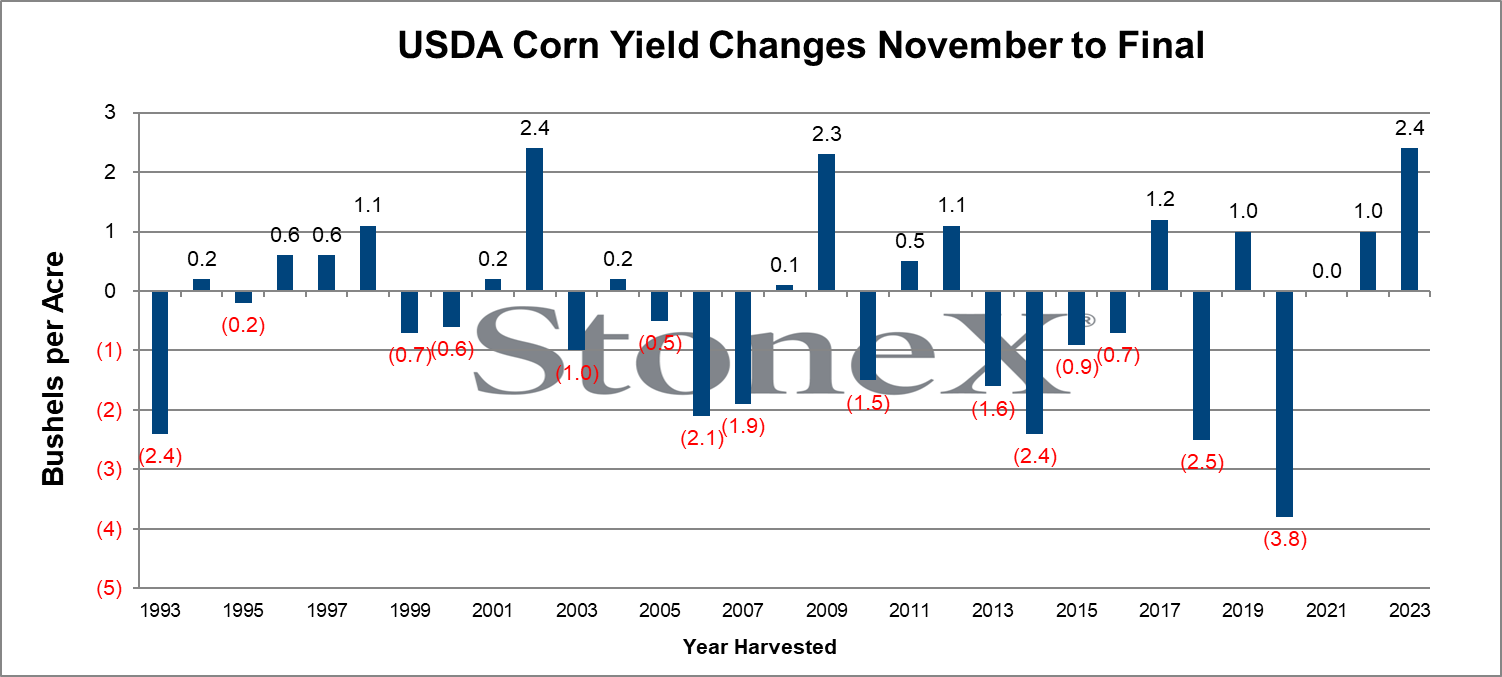
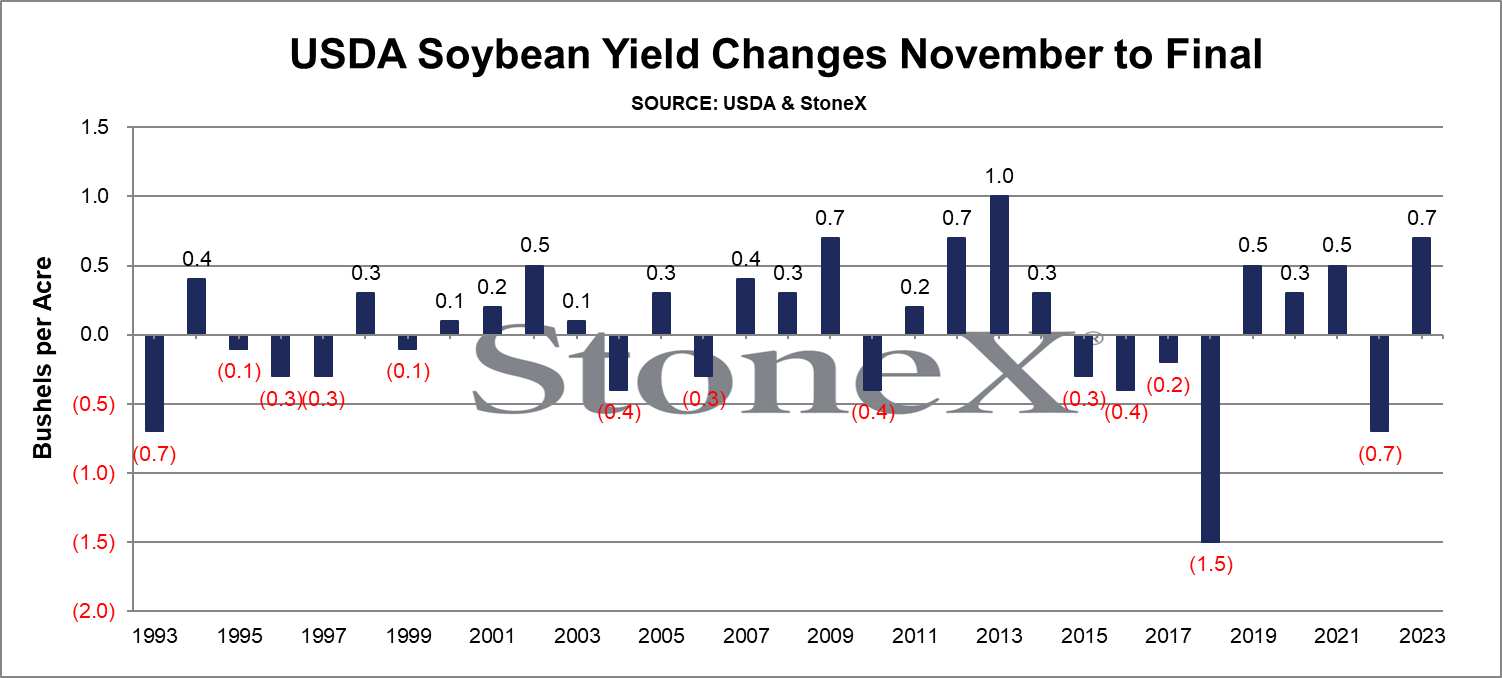
USDA will also revised its 2024 U.S. production estimates next week, with many Midwest farmers hoping for a downward revision in the agency's corn and soybean yields in hopes of a greater price bump that they could sell. I looked back at the history of USDA changes to yield, with the numbers revealed below. There's a bit of a bias toward corn yields dropping and soybean yields rising in the January final report, but every year has its own factors driving it. The bigger thing to focus on here is the potential scope of yield changes. For corn, yield increases over the past 30 years are typically a bushel or less, but have been just above 2 bushels three times. Yield cuts are generally less than a bushel, but they can be more significant. For soybeans, yield changes in January were generally less than a half bushel over the past 30 years, with a maximum increase of 1.0 bushels per acre in 2013, and a maximum cut of 1.5 bushels in 2018.