Today's Perspective Video: Tariffs, Trade & Crops: How Geopolitics Are Shaping Commodity Markets
July 14 - Stocks slowly moved higher through much of the morning, despite more tariff news from the White House. President Trump said that tariffs on countries that do business with Russia could hit 100% if we don't have a peace deal with Ukraine within 50 days, in addition to the same rate on Russia itself. He also indicated that he will send new weapons to Ukraine to help it defend itself from the Russian onslaught, including Patriot missiles and batteries. China and India in particular would be hard hit by those secondary tariffs if applied. Yet, the major stock indices are largely in positive territory at midday, while the VIX is trading at the relatively low level of 17. The dollar index is trading near 98.1. Yields on 10-year Treasuries are trading near 4.43%, after hitting fresh four-week highs this morning, while yields on 2-year Treasuries are trading near 3.90%. Crude oil prices are down 1.5% on demand concerns. The grain and oilseed markets are mixed.
Corn prices found support from strong demand and emerging crop concerns this morning. USDA is still expected to confirm high crop ratings for this time of year this afternoon, but the speculative funds currently hold large short positions that leave them vulnerable should any pollination issues emerge. And that may be happening. It's way to early to make assumptions, and the market would likely be ignoring it if the funds did not have the large short positions. But the fact that they do have large short positions makes potential pollination issues more of a story to monitor. The reports are anecdotal at this point, but they're catching people's attention because weather conditions have largely been near ideal this year for pollination, raising questions about what may have caused the problem, and how widespread is it? Meanwhile, soybean prices fell to fresh three-month lows as China remains absent from the U.S. export market. July is the time when China typically ramps up its purchases of U.S. new-crop soybeans for delivery in the fourth quarter, but that isn't happening this year. Wheat prices continue to reflect seasonal harvest pressure.
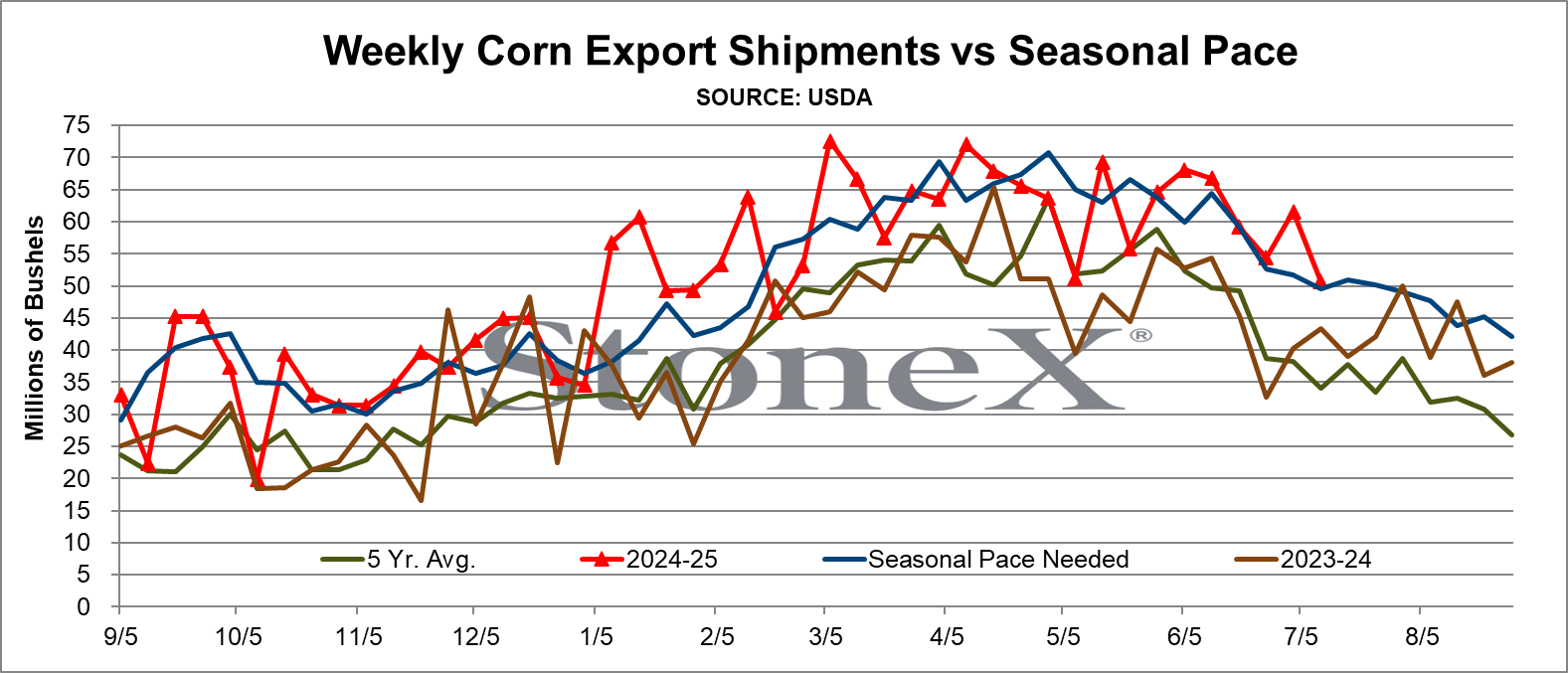
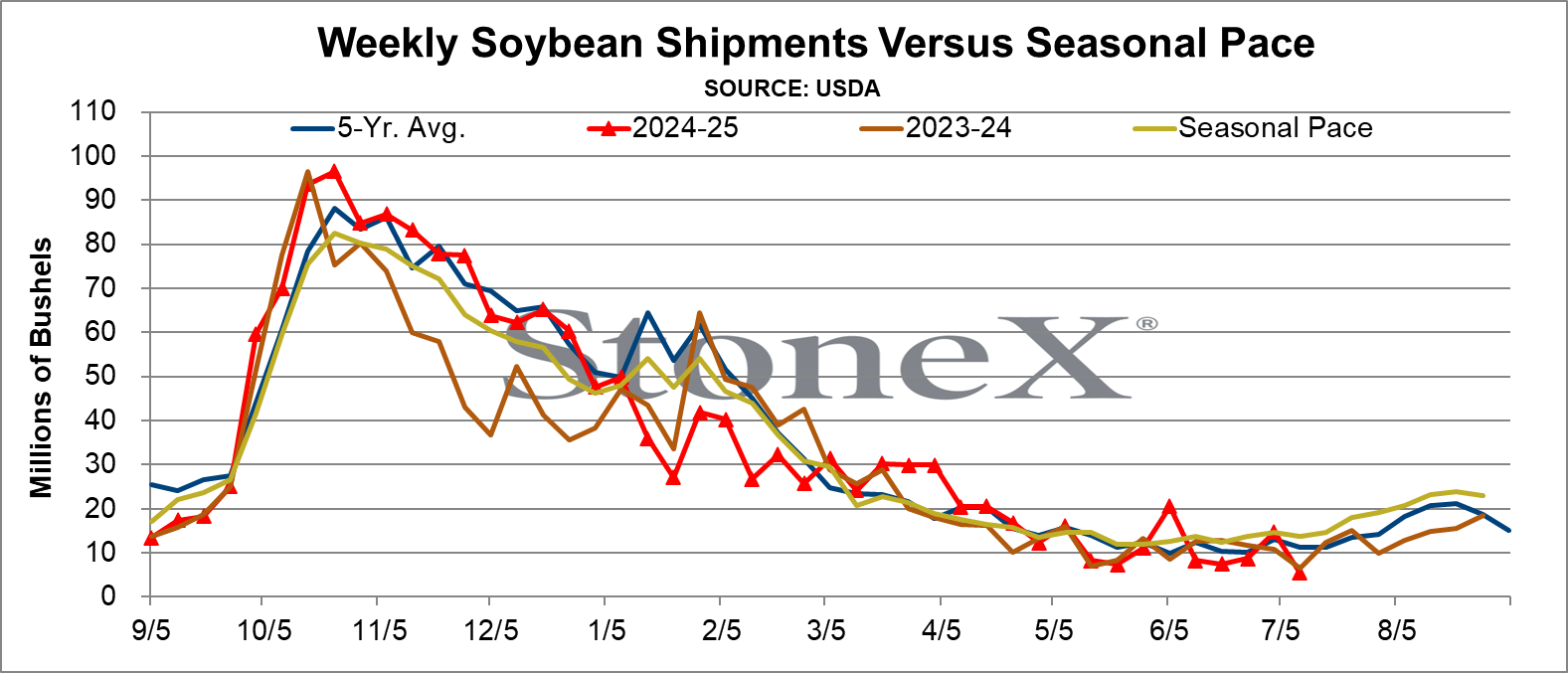
USDA inspected 50.7 million bushels of corn for export shipment in the week ending July 10, as shown below, along with 5.4 million bushels of soybeans, 16.1 million bushels of wheat, and zero grain sorghum. Once again, none of the above inspections were for commodities being shipped to China during the week. Mexico remains a strong customer of corn, along with taking some soybeans, soymeal, and even wheat. We could see Mexico put retaliatory tariffs on these products coming from the United States, but I don't expect it to do so, as it would contribute to food inflation at home. No country wants to support food inflation with its policies. But, as long as the border remains closed to feeder cattle coming north to U.S. feedlots, we should see strong export shipments of corn to Mexico.
Marketing year to date corn export inspections to all destinations total 2.276 billion bushels, up 519 million bushels or 30% from the previous year's pace, and 73 million bushels above the seasonal pace needed to hit USDA's newly increased target by August 31. And that gap is still growing. Marketing year to date soybean export inspections to all destinations total 1.705 billion bushels, up 161 million bushels or 10% from the previous year's pace, and 45 million bushels above the seasonal pace needed to hit USDA's target by August 31. However, this gap is shrinking as shipments fall short of that typical pace for mid-July. China continues to absorb record shipments flowing out of Brazil, which are cheaper than U.S. supplies even before the tariffs are applied, and that will likely remain the case into early fall due to the size of Brazil's big crop this year.