July 26 - Stocks soared this morning reflecting a sentiment that Wall Street is fully bought in to a rate cut in September. And not just September, but perhaps each meeting after that until we've seen 200 basis points come off the Fed's benchmark rate by 2026. The Dow Jones Industrial Average is up 700 points currently on those expectations after this morning's favored PCE data failed to provide any surprises to change that sentiment. The VIX is back trading below 17 at this hour, while the dollar index is trading near 104.3. Yields on 10-year Treasuries are trading near 4.21%, while yields on 2-year Treasuries are trading near 4.39%, or near levels not seen in half a year. But euphoria on Wall Street over rate cuts translates into commodity deflation fears elsewhere on fears that a recession may be coming. Crude oil prices are more than 1% lower on soft demand concerns, while the grain and oilseed markets are also taking hit, due to the above and due to changing weather forecasts.
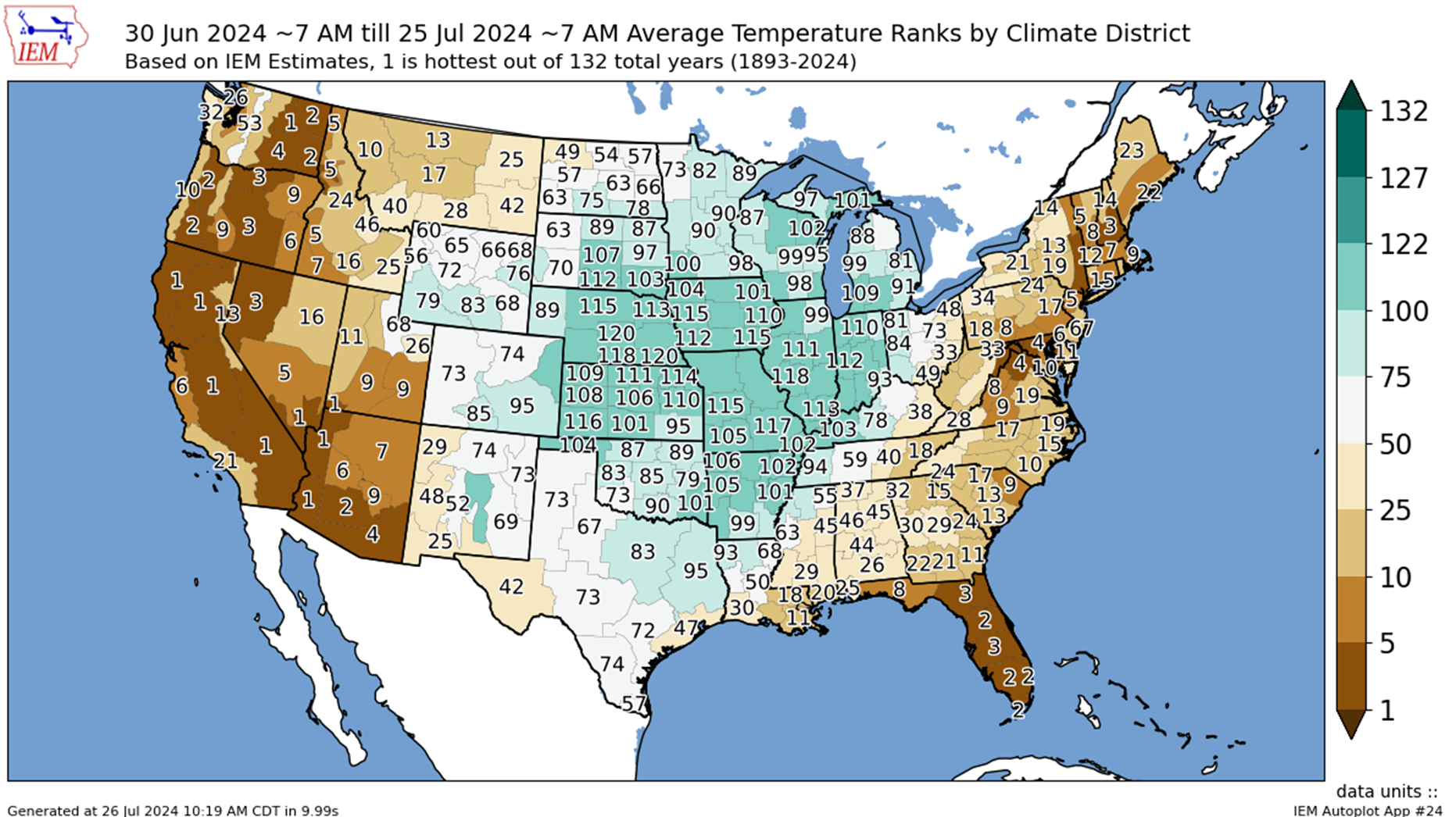
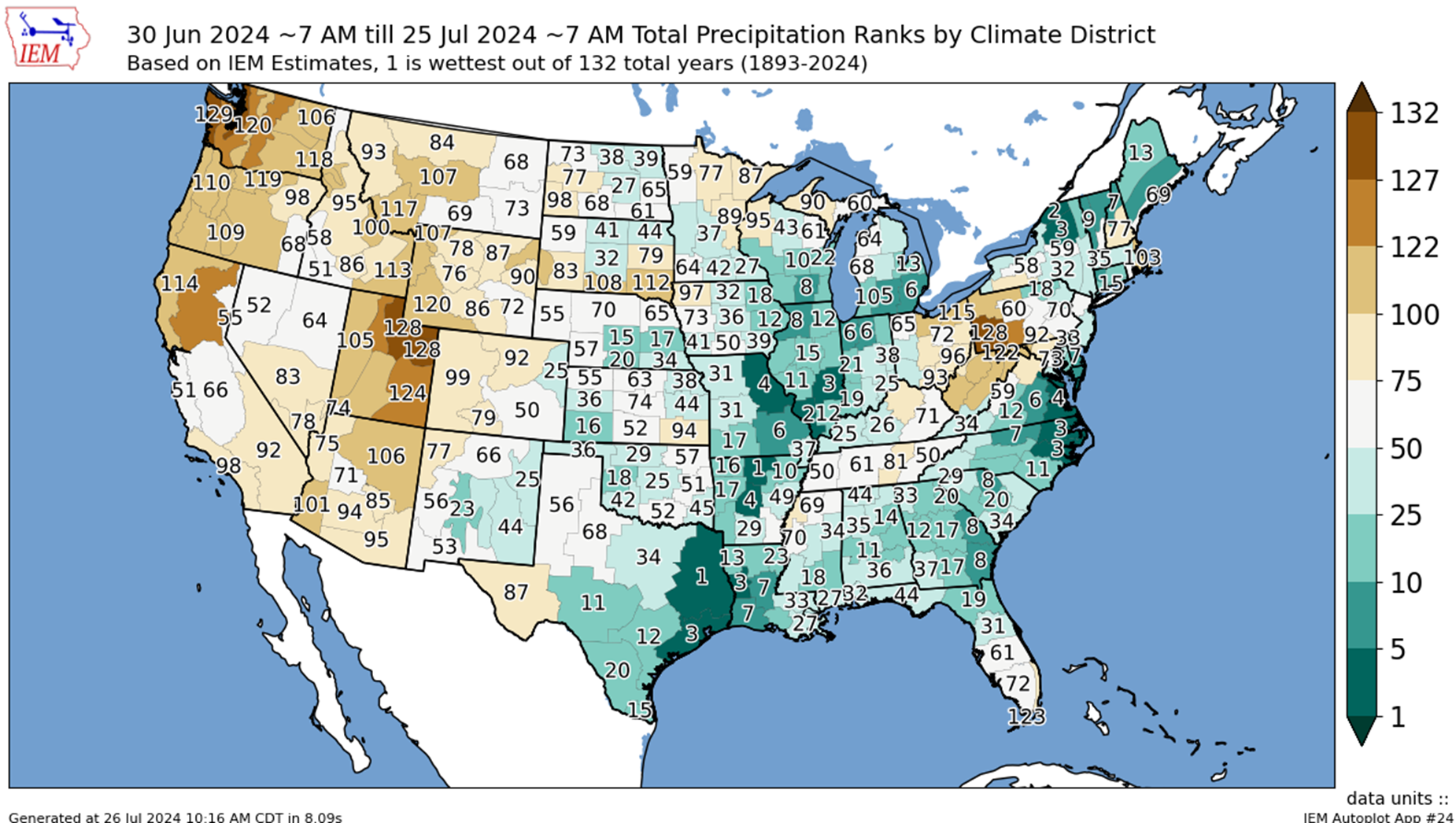
The sense of the markets is that the corn crop is made in July and the soybean crop is made in August. It's not that simple, but there is some truth to that. The most susceptible point in the growth cycle for corn is the pollination of the crop - most of which occurs in July. The must vulnerable point for soybeans is pod set and fill - most of which occurs in August. But August weather still impacts grain fill for corn, and July weather has an impact on pod set for soybeans. That said, take a look at the below maps for temperature and precipitation rankings for each climate district versus the past 132 years of history. What would your expectation had been if I would have shown you these maps two months ago? What would you have thought the size of this year's corn crop would be if I would have told you that the month of July would see the Midwest benefit from above normal rains and cooler than normal temperatures?
The Midwest Corn Belt saw very mild temperatures, for the most part, during the month of July as it was going through pollination. Rainfall was also mostly normal to above normal during July. Ironically, one of the big exceptions was southeast South Dakota, which had its second driest July to date on record, after seeing its wettest June on record. But if we had seen the maps below two months ago, we all would have thought that we were headed for big crops this year. Both the crop ratings and the satellite data would seem to confirm that expectation. Yes, we have a lot of problems in areas of the northwestern Midwest that saw record rains in June that created flooding and ponding. Yes, we have significant losses from hail storms in Nebraska. But on the whole, the rest of the Midwest looks quite good.
Recent strength in corn and soybean prices was built on expectations that we would see a major shift in the weather pattern at the end of July that would carry deep into August. The expectation was that we were shifting into a pattern with high pressure building over the Midwest to bring extreme heat and dryness to the region, taking the top off the corn crop, while notably reducing soybean yield potential. And a hot, dry August could do that. However, the market is taking much of that weather premium out of prices today on evidence that the current shift toward hot and dry is only temporary. Forecasters today see indications that, while we're going hot and dry now, persistence will over-rule as we head into August, and the atmosphere will revert back to the dominant July pattern. Doing that would again favor above-trend corn and soybean yields. Perhaps the weekend will see things go back toward a hot, dry August. Perhaps the weekend will see the models reinforce expectations that we will revert back to the dominant July pattern. Traders aren't taking a chance going into the weekend, and thus the pressure on prices today.
StoneX will issue its first official yield estimates based on our customer survey on August 1st. The month of August will be filled with private estimates based on farmer surveys and actual field crop tours. It's those field tours and farmer surveys that begin to sort out how the anticipated good yields weigh against the lost acres from flooding and hail storms. In the meantime, the expectation of the market continues to be that the total crop size for both corn and soybeans will be more than adequate to meet the coming year's demand, and that's what today's markets are pricing in.